
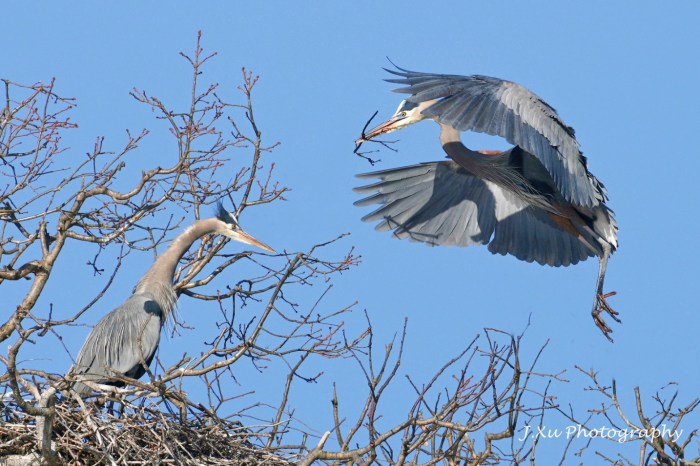
Perfect Shadow by Jiafan(John) Xu
Jiafan definitely got the perfect shadow in this shot of a pair of herons building their nest. Head over to his Flickr for more shots of this industrious pair!

Perfect Shadow by Jiafan(John) Xu
Jiafan definitely got the perfect shadow in this shot of a pair of herons building their nest. Head over to his Flickr for more shots of this industrious pair!
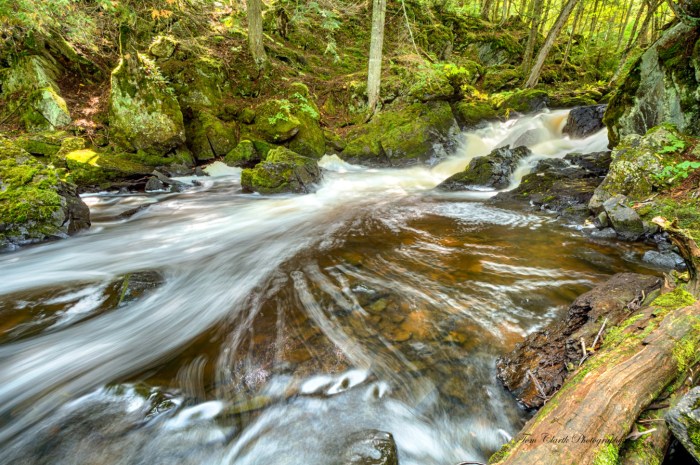
Kakabika Falls on the Ontonagon River in Michigan’s UP by Tom Clark
The Waterfall Record says that Kakabika Falls:
…is a series of small drops that adds up to a larger total. None of the drops are really that big. The largest drop might be 10′ at most (across a distance). So if you’re really into big waterfalls, Kakabika Falls will probably not be for you.
Kakabika Falls still has many redeeming qualities for those that don’t mind smaller waterfalls. First off, the falls are pretty easy to get to, requiring a short drive off of US-2. Second, the waterfall will probably be devoid of people. When I visited, nobody else was there. So if you want peace and quiet, this might be the place for you. Third, the short hike to the falls is amazing. When I visited, it had rained the night before, giving the hike to the falls a very “rain-forest” feeling, even though it’s not a rainforest. It was humid, and there were a lot of mosquitoes, so you’ll definitely want to wear bug spray! The most dangerous animals in Michigan aren’t the bears or cougars, but instead the really annoying mosquitoes and biting flies (not that they’re dangerous).
Head over to the Waterfall Record for directions.
Tom took this photo last fall. You can see more in his North Shore Waterfall Trip album on Flickr & see more photos from him on his website or Facebook page.
More Michigan waterfalls on Michigan in Pictures!
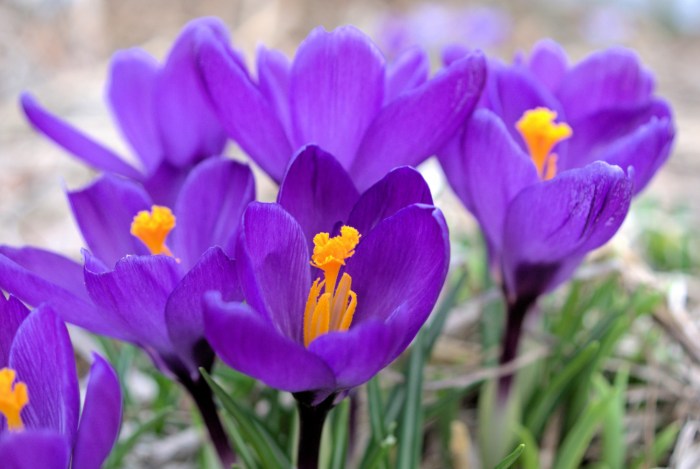
I don’t know about you, but even some snow & cold in the forecast can’t stop me from believing that spring is truly here! Scott got a lovely pic of some colorful crocuses. See more in his Flowers album on Flickr.
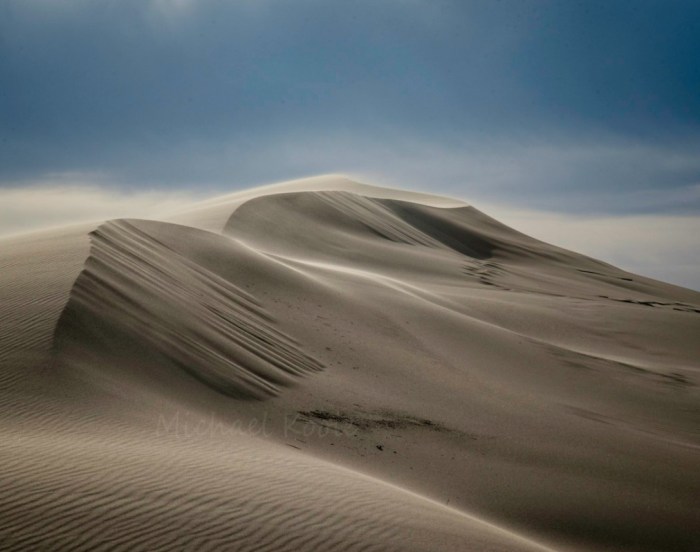
Silver Lake Dunes by Michael Koole
For me, one of the coolest things about Michigan is the incredible range of scenery our state offers including positively otherworldly vistas like Michael captured yesterday at Silver Lake Dunes in Silver Lake State Park. See more great shots from Michael in his Parks gallery on Flickr & follow him on Instagram!
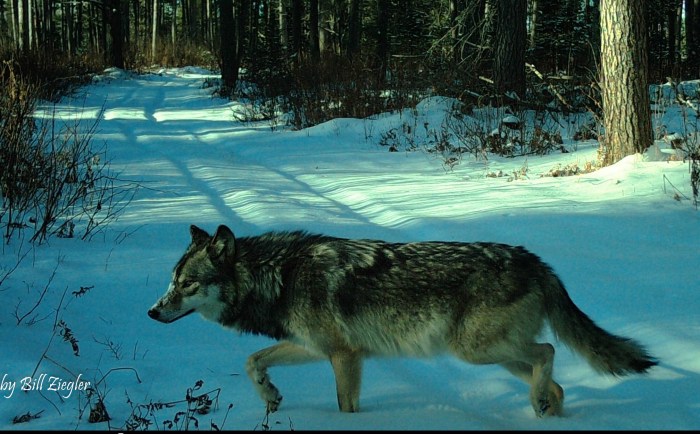
Wolf Making the Rounds by Bill Joyce Ziegler
Bill got some stunning photos of one of the wolves in a pack south of Amasa in the UP. He shared this & another in the Pure UP group on Facebook. Check it out! Bill also wrote an article last year about the US Fish & Wildlife Service’s plans to take wolves off the Endangered Species List in Michigan. This happened in January 2021 but it’s worth a read:
Michigan DNR wolf surveys indicate there is a minimum wolf population of 662 adult wolves. This is a minimum population since young of the year wolves are not surveyed.
Cody Norton, Michigan DNR Wolf Specialist said the average wolf litter is likely about four to six pups based on research in other similar states. Norton goes on to say in other studied wolf populations “up to 60 percent of the pups may die in the first six months due to disease and malnutrition.”
Norton stated, “The 2018 survey indicated there are 139 wolf packs in the U.P.” (mainland).
He went on to say the average U.P. pack was about five wolves. Norton continues, “Packs are typically comprised of a breeding pair, pups from the current year, offspring from previous litters, and occasionally other wolves that may or may not be related to the breeding pair.”
Norton said surveys indicate, “Wolf territories range in size from 5 to 291 square miles in the U.P., with an average of about 45 square miles. However, territory size has decreased over time, and the number of packs has stagnated, as the wolf population in the U.P. has increased.” Norton added “The U.P. wolf population appears to have been stable for the last eight years or so suggesting they’re likely nearing carrying capacity. This follows a long period of population growth from when we initially surveyed the first three known wolves in 1989 until 2011.”
…Regardless of how you feel about wolves, their population recovery in Michigan has been a success of a native species re-establishing itself. No matter what happens in terms of federal and state wolf management, residents of the Upper Peninsula will continue to live with wolves and will occasionally hear the howl of the wolf.
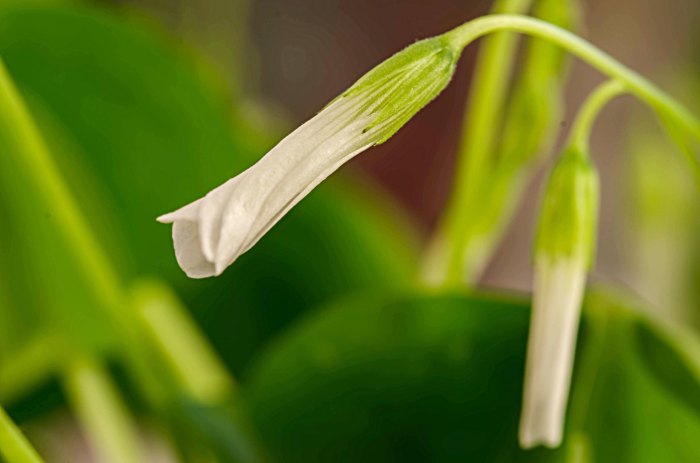
The Sleeping Shamrock by Joshua DuPuis
Happy St. Patrick’s Day to all of you! Loving this photo of a sleeping shamrock. You can see more from Joshua on his Flickr.
More St. Patrick’s Day photos on Michigan in Pictures!
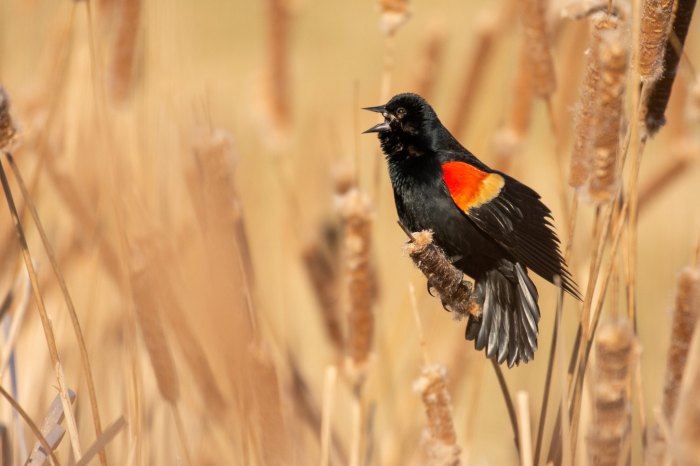
Red-winged Blackbird by Reji TV
One of my favorite signs of spring in Michigan is hearing the calls of red-winged blackbirds. I started hearing them last week in northern Michigan & just saw these pics today in our Absolute Michigan group on Flickr. The University of Michigan Museum of Zoology’s Animal Diversity Web listing for Agelaius phoeniceus (red-winged blackbird) tells us:
The range of red-winged blackbirds extends from southern Alaska at its northern most point, to the Yucatan peninsula in the south and covers the greater part of the continent reaching from the Pacific coast of California and Canada to the eastern seaboard. Winter ranges for red-winged blackbirds vary by geographic location. Northern populations migrate south to the southern United States and Central America beginning in September or October (or occasionally as early as August). Most western and middle American populations are non-migratory.
Red-winged blackbirds roost and breed in a variety of habitats, but tend to prefer wetlands. They have been known to live in fresh and saltwater marshes. On drier ground, red-winged blackbirds gravitate towards open fields (often in agricultural areas) and lightly wooded deciduous forests. In winter red-winged blackbirds are most often found in open fields and croplands.…As migratory birds, red-winged blackbirds share many characteristics with related species. They are strong fliers that will often migrate in flocks of a thousand or more. Roosting is often communal, resulting in large, centralized populations. Red-winged blackbirds are largely diurnal, spending most of their day foraging. Males defend territories during the mating season. As the mating season progresses, both males and females will spend more time within their territory or the territory of their mate. Although fighting among red-winged blackbirds is not all that common, even among males, it is known to occur. Males chase females at top speed during breeding season. Because of their broad range and tendency to colonize large roosting areas, red-winged blackbirds are extremely common, and are easy to find in the mating season when singing and sexual displays make them more visible.
This great web resource includes many more photos and blackbird calls. Go there!
Reji TV took this photo near Auburn Hills. See more in their Birds gallery on Flickr.

The Stuff DREAMS Are Made of by ShelbyDiamondstar Photography
Shelby got an absolutely stunning shot of the aurora borealis on Saturday night on Lake Superior’s Keweenaw Peninsula. Head over to ShelbyDiamondstar Photography on Facebook for more!
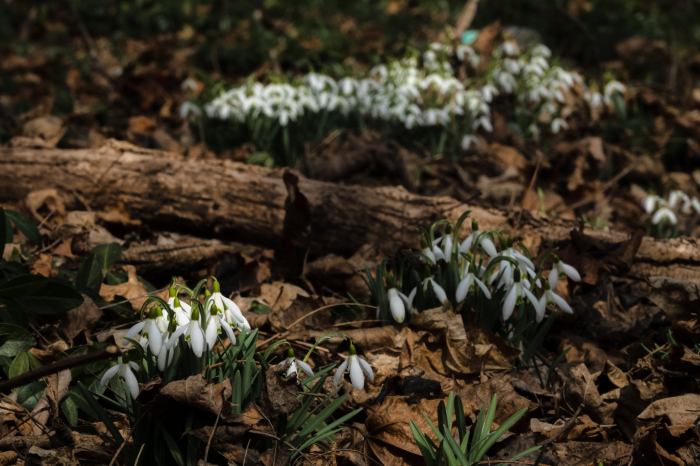
Kalamazoo Snowdrops by William Dolak
It’s said that March is the season when Michiganders get way too excited about spring. Guilty! The Michigan Gardener’s Plant Focus on Snowdrops says (in part):
The very first bulb to cheerfully announce spring is the snowdrop. As the last winter snow melts, carpets of delicate white flowers emerge through last year’s fallen leaves. Snowdrops will reliably return year after year despite Mother Nature’s most challenging winters. The botanical name, Galanthus, comes from the Greek words Gala meaning “milk” and anthos meaning “flower.” They will thrive in the rich, moist soil usually found in the shade provided by deciduous trees. Few bulbs can tolerate shade, but snowdrops develop in the winter sun well before the leaves of trees and shrubs have expanded. Their flowers last for several weeks beginning in early March and persisting through the cool days of spring in early April. Once planted, Galanthus require no maintenance.
More from the Michigan Gardener.
Bill shared this photo in our Michigan in Pictures group on Facebook. Check it out & follow him on Flickr.
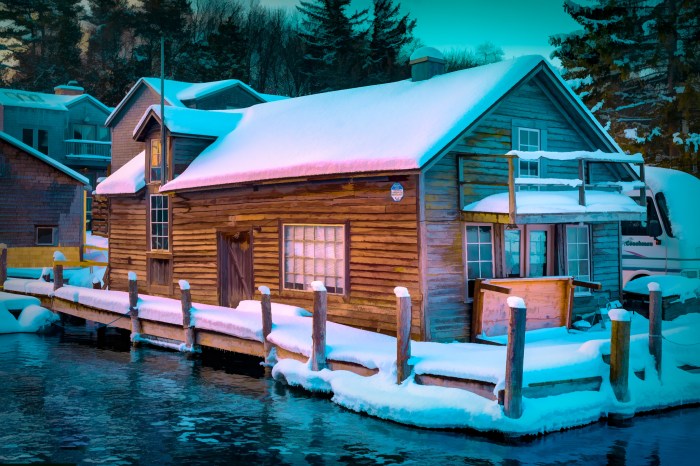
The House at the End of the Dock by Mark Smith
I can’t be the only person who wishes I lived in the Hall Cottage in Leland’s Fishtown!
See more from Mark at Downstreamer on Flickr!
 Michigan in Pictures