Looking Back on Detroit’s Super Bowl

Winterblast

Winterblast, photo by Allan M.

Allan’s photo of the brightly lit Detroit Winter Blast festivities was the most popular photo for “Super Bowl XL” on Flickr.

I’m wondering one year later, how you think the Super Bowl impacted the city of Detroit. I asked someone the other day what they recall and (to my less than surprise) they took home “Jerome Bettis is from Detroit“. Did it make a difference for the city of Detroit and Michigan? Post your thoughts in the comments!

You can get a bunch more photos from the 2006 Super Bowl on Michigan in Pictures and read a locker room full of Super Bowl XL articles at Absolute Michigan.

Lawndale Market: Detroit’s Polaroid Paradise

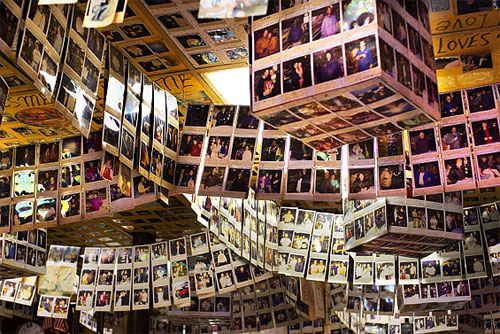
Lawndale Market by Ryan Keberly

One of my goals with Michigan in Pictures this year is to bring in more photos and photographers from all over Michigan and I can’t think of a better place to start than at Lawndale Market. Ryan Keberly writes:

Every inch of the Lawndale Market was covered in Polaroid photos — the bottle return, deli counter, ceiling, refrigerators and cigarette racks.

Each Polaroid (approximately 10,000 total) was preciously customized in ball-point pen with the date, subject’s name and the title “Gold Loves Me.”

You can see more photos at Lawndale Market on Ryan’s site, read an article about Lawndale Market from Metro Times Detroit or use this map to Lawndale Market from the Google to drive there.

Ryan Keberly is a freelance photographer and web designer who has put together some great sites including Snowsuit.net (on permanent hiatus but still amazing) and Spouse Notes (postings of notes from one loved one to another). Find a bunch more sites and photo collections at Ryan Keberly Photography.

Like all photos on Michigan in Pictures, this photo is copyrighted to the photographer. As Ryan’s site so simply reminds us: “Don’t steal. Ever.”

.closed for the season.

.closed for the season.

.closed for the season., photo by tEdGuY49.

According to the tags, this photo was taken along US-23 in (or near) the town of Oscoda on the Lake Huron shore.

I kind of sat on this photo for a couple weeks as I had just blogged one from Ted. Looking back through the pictures from Ted that we’ve featured, I realize that he has a special gift for seeing the bright things.

Lake Michigan Ice

Lake Michigan Ice

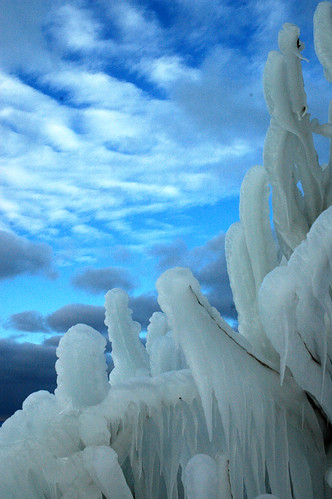
Lake Michigan Ice, photo by ojoyous1.

She has a few more shots of the icy Lake Michigan shoreline.

Almost Frozen, heavy on the “Almost”

Almost Frozen

Almost Frozen, photo by suesue2.

Sue says that Stony Creek Lake (at the Huron-Clinton Stony Creek Metropark is not quite ready for ice skating or ice fishing.

The Michigan Department of Natural Resources would like to underline that warning to ice fishing and snowmobile enthusiasts:

“Just because a lake or stream is frozen doesn’t mean the ice is safe,” said Lt. Creig Grey, marine safety and education supervisor for the DNR Law Enforcement Division. “Ice fishing has its own set of safety rules that if not followed, can cause a day of fishing to end in tragedy.”

According to Grey, you can’t always tell the strength of ice simply by its look, its thickness, the temperature or whether or not it is covered with snow. New ice, he said, generally is much stronger than old ice; a couple of inches of new clear ice may be strong enough to support you, though a foot of old, air-bubbled ice will not.

“Clear ice that has a bluish tint is the strongest,” Grey said. “Ice formed by melted and refrozen snow appears milky, is very porous and very weak.”

Three Faces of the Barton Dam

Barton Dam (Photomatix HDR)

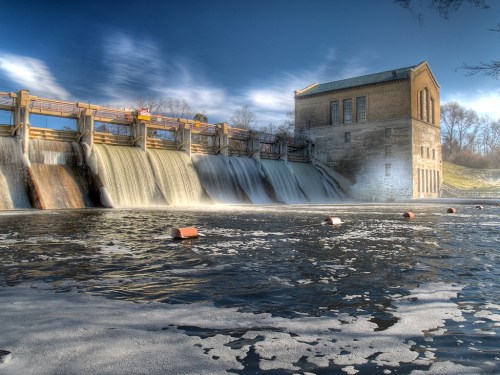
Barton Dam (Photomatix HDR), photo by jhoweaa.

The photographer has posted three versions of this photo of the Barton Dam in Ann Arbor and is interested in hearing which of the three folks prefer. They also write “I really like this dam. It was designed by University of Michigan Dean of Architecture Emil Lorch and built in 1912” and provide a link to this great historical photo of the Barton Dam being built.

Here are the other two images (original and normal HDR):

A visit to Cranbrook House and Gardens

Untitled, photo by Rhonda_Marie.

Last weekend, the Exposure.Detroit group on Flickr held a photography meetup at Cranbrook. Here is a link to many more great photos taken at Cranbrook.

Cranbrook House and Gardens in Bloomfield Hills is the heart of the over 300-acre National Historic Landmark Cranbrook campus. The English Arts and Crafts-style Cranbrook House was designed by Detroit architect Albert Kahn in 1908 for Detroit News publisher George Gough Booth and Ellen Scripps Booth. The home is the oldest surviving manor in the metro Detroit area. According to the Cranbrook House and Gardens site:

The Booths commissioned the finest artisans, craftsmen and studios of the period to furnish the house with handcrafted furniture, tapestries, tiles, stained and leaded glass, and other works of fine and decorative art.

The 40 acres of gardens that surround Cranbrook House were originally designed by George Booth to entice visitors to savor the serenity of the spring and summer months. From the symmetry of the Sunken Garden to the scent of the herbaceous garden to the casual beauty of the bog garden, there is something to capture everyone’s interest. Sculpture, fountains and architectural fragments enhance the setting with spacious lawns, specimen trees, and a lake stretching out beyond the fieldstone walls.

Also see Cranbrook’s History in the Cranbrook Archives and How one man’s bad luck paved way for creation of Cranbrook from the Detroit News Rearview Mirror. Also see this map of the Cranbrook area with geotagged photos.

longtime friends, like barns and red

Like Barns & Red

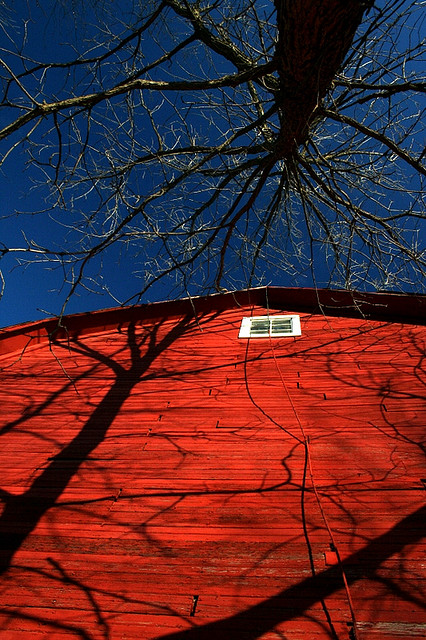
longtime friends by markmarko

Charles Leik, editor of The Barn Journal says that the question of “Why are barns red?” is their all-time most popular FAQ:

Ferric oxide (rust), a primary component of red paint, is inexpensive and this appealed to the thrifty farmers of New England and New York State. Red is the predominant barn color in that region. Natives of these areas were the early settlers of the Great Lakes states migrating there via the Erie Canal and the Lakes. I grew up in central Michigan and there were only a few non-red barns in our area. Two nearby farmers had gray buildings and soon one of them opted for white, which was also a rare color. I conclude that the early settlers brought their red barn tradition (and thriftiness) with them, and this was followed by the later immigrants (Germans in our area) who came directly from Europe.

How Stuff Works adds that “Rust was plentiful on farms and is a poison to many fungi, including mold and moss, which were known to grown on barns.”

Old Crystal Lake Trout Ice Angler

Old Crystal Lake Trout Ice Angler

Old Crystal Lake Trout Ice Angler, photo by UpNorth Memories.

This photo is part of a neat set of photos titled Older Benzie County Fishing Memories. If old photos are something you enjoy, check out Don’s astonishing collection of old northern Michigan postcards.

For a while, it looked like most lakes in Michigan would need to dig into the archives to get ice this winter. However, as Eric Sharp writes, the Iceman has (finally) cometh.

Atop Mt. Bohemia

1

1, photo by edm00se.

Here’s a photo from a few years ago of Mt. Bohemia, a ski area located on the Keewenaw Peninsula near Copper Harbor. Eric has several more photos of Mt. Bohemia that you’ll want to check out.

With a hefty vertical and a ton of back country options, Mt. Bohemia has a well-earned reputation as Michigan’s most challenging ski area. Check their web site for a great extreme skiing photo gallery!