The Detroit Tigers open the 2011 AL Playoffs tonight in Yankee Stadium.
Over on Absolute Michigan we’ve posted our 2011 Detroit Tiger Playoff Watch. In it, we note that Detroit Tiger slugger Miguel Cabrera captured the American League batting title with a .344 batting average.
After batting .390 in August, Cabrera went .429 (39-for-91) from Sept. 1 onward, racking up 12 doubles, six home runs and 21 RBIs. He had just six hitless games from Aug. 1 on and carries a nine-game hitting streak into the playoffs. The last Tiger to win the AL batting title was Magglio Ordonez who hit .367 in 2007, and that Cabrera joins Alex Rodriguez and Albert Pujols as just the third active player to win a batting title, HR title and RBI title in his career.
There is no other festival like it in the United States. The organizers have done a fantastic job of drawing both vendors and lighthouse buffs from around the globe to what has become the largest and best lighthouse festival in the nation. October is a wonderful time of the year to visit Michigan, with the beautiful fall colors, close proximity to Mackinaw City and Mackinac Island and lots of lighthouses, what more could one ask for?
~Tim Harrison, President of the American Lighthouse Foundation
The four-day event provides activities for the young and old, including lighthouse tours by personal vehicles, a helicopter tour, or boat tour, entertainment, auctions, dining events, lighthouse exhibits, and shopping. The festival boasts more than 75 maritime-related vendors, including lighthouse preservation groups, artists, nautical crafters, photographers, and authors. This year’s featured guest speakers include Terry Pepper, executive director of the Great Lakes Lighthouse Keepers Association, national gold medal award winning photographer and author Larry Wright, and Sandy Bihn, president of the Toledo Harbor Lighthouse Society, which operates the 2011 featured attraction, the Toledo Harbor Lighthouse.
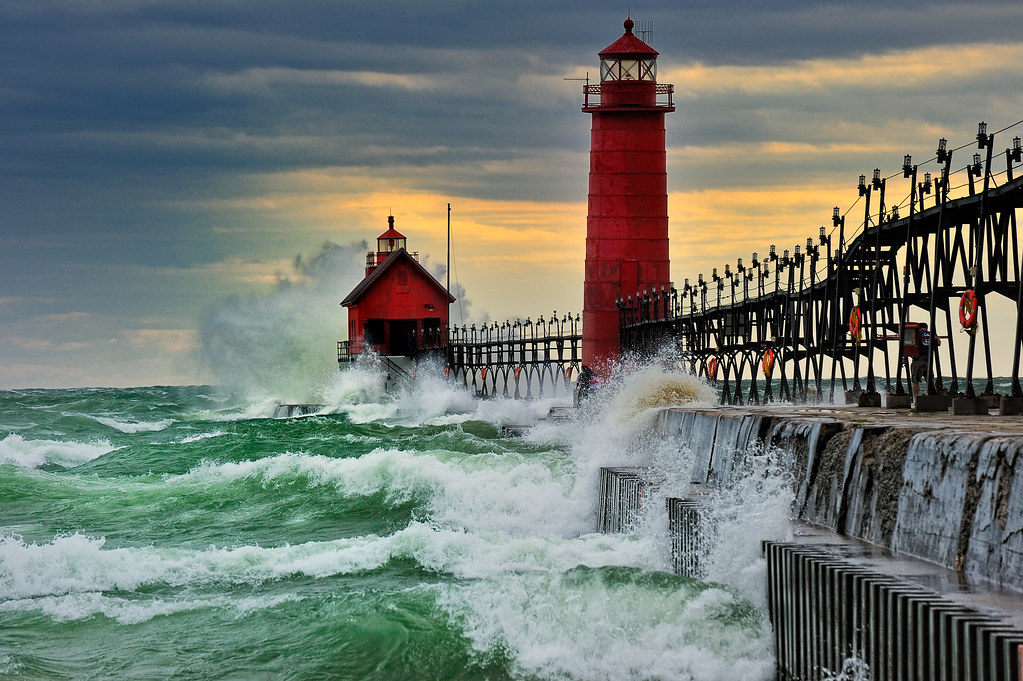
If the name Terry Pepper sounds familiar, he’s the authority we turn to for our lighthouse features and his books on lighthouses are fantastic. Check out Terry Pepper’s Seeing the Light and read much from him in the lighthouse category on Michigan in Pictures including our post on the Grand Haven Pier Light.
John took this photo last September. He says to note the guy with the pink surfboard (then see him in the waves in this shot). Check it out bigger and in his fantastic Michigan Lighthouses slideshow.
There’s no doubt that the annual fall show that Michigan puts on is one of the best, but did you ever stop to think about the process that causes deciduous trees to change color? Well, here’s your chance…
The Science of Color in Autumn Leaves from the United States National Arboretum explains that process that starts the cascade of events that result in fall color is a growth process that starts in late summer or early autumn. When the nights get long enough, a layer of cells called the abscission layer forms that begins to block transport of materials from the leaf to the branch.
During the growing season, chlorophyll is replaced constantly in the leaves. Chlorophyll breaks down with exposure to light in the same way that colored paper fades in sunlight. The leaves must manufacture new chlorophyll to replace chlorophyll that is lost in this way. In autumn, when the connection between the leaf and the rest of the plant begins to be blocked off, the production of chlorophyll slows and then stops. In a relatively short time period, the chlorophyll disappears completely.
This is when autumn colors are revealed. Chlorophyll normally masks the yellow pigments known as xanthophylls and the orange pigments called carotenoids — both then become visible when the green chlorophyll is gone. These colors are present in the leaf throughout the growing season. Red and purple pigments come from anthocyanins. In the fall anthocyanins are manufactured from the sugars that are trapped in the leaf. In most plants anthocyanins are typically not present during the growing season.
As autumn progresses, the cells in the abscission layer become more dry and corky. The connections between cells become weakened, and the leaves break off with time. Many trees and shrubs lose their leaves when they are still very colorful. Some plants retain a great deal of their foliage through much of the winter, but the leaves do not retain their color for long. Like chlorophyll, the other pigments eventually break down in light or when they are frozen. The only pigments that remain are tannins, which are brown.
The explain that because the starting time of the whole process is dependent on night length, fall colors appear at more or less the same time every year and are not overly dependent on temperature, rainfall or other factors, other than the fact that weather can shorten or prolong the show by stripping leaves from trees.
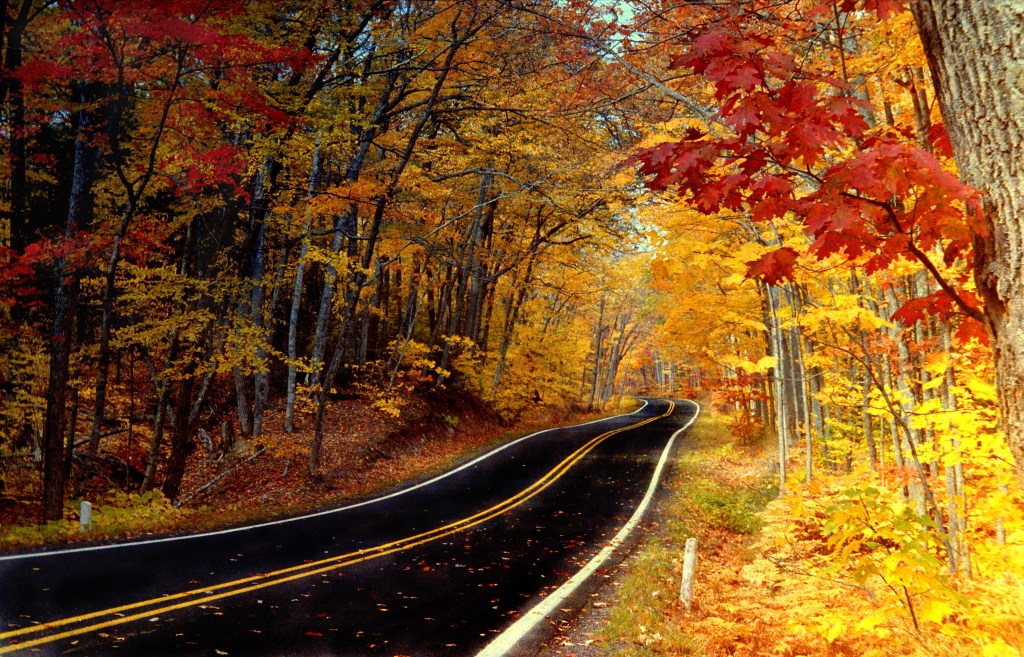
As I took a little drive yesterday in Leelanau & Benzie counties in Northern Michigan I realized that almost overnight, Autumn and fall color had arrived.
A good place to start your fall color touring is with the Fall Color section at puremichigan.org. In addition to color updates, you can get some really nice ideas for Fall Color tours all across the state along with an idea of when color is at its best in each location.
The pond is in the 1300-acre Brown Bridge Quiet Area just south of Traverse City. They say that five known species of endangered, threatened, or special concern status have been documented at the Brown Bridge Quiet Area: bald eagles, osprey, red-shouldered hawks, common loons, and wood turtles.
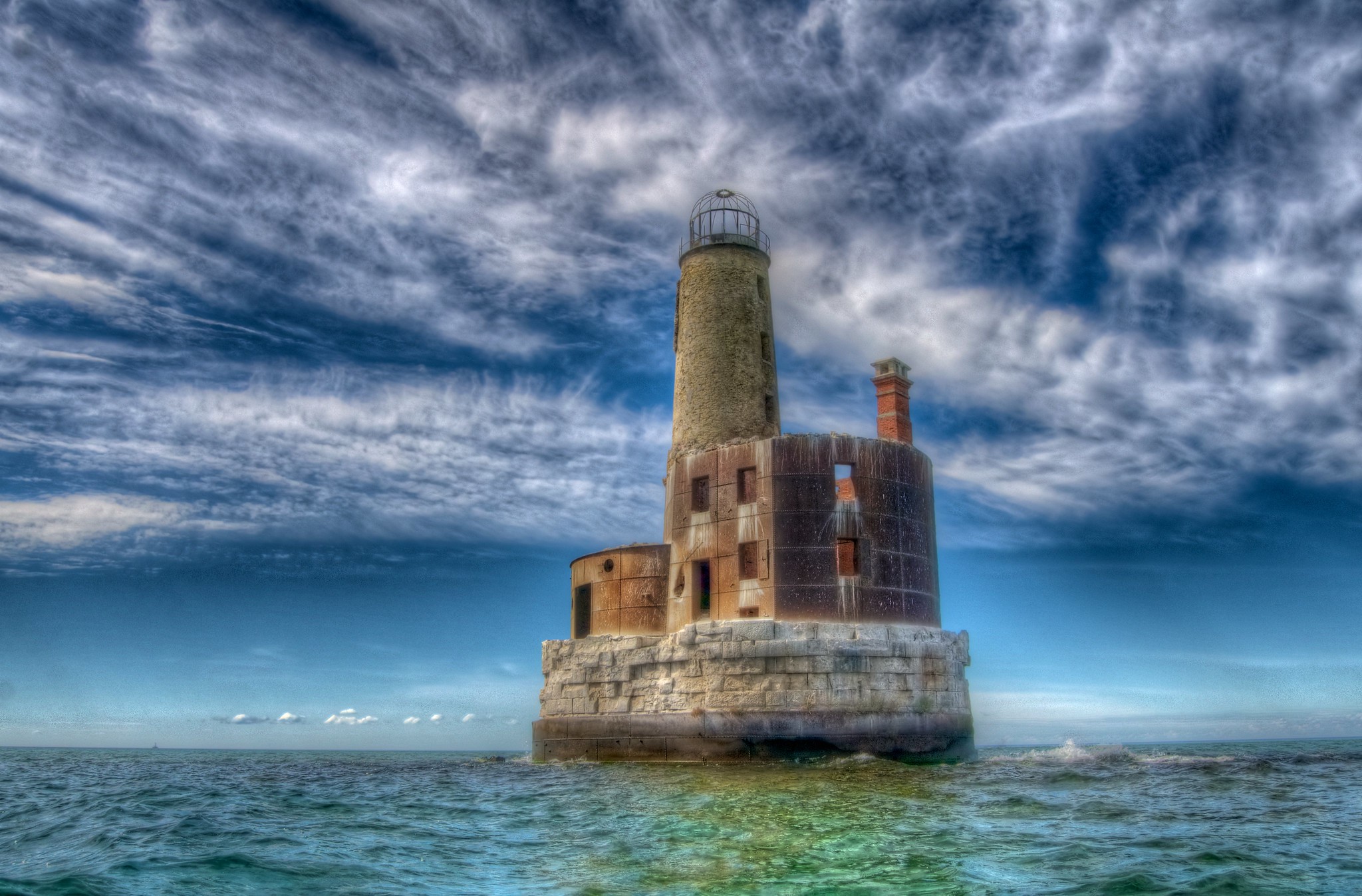
I thought that Jason’s incredible HDR – plus the fact that he paddled 14 miles to get this shot – was more than reason enough to revisit one of the most storied lights in the Great Lakes, Waugoshance Shoal Lighthouse.
This treacherous area of Lake Michigan was the location of the first Lightship, stationed on Waugoshance Shoal in 1832. It was used to help guide the many ships through the area, now known as Wilderness State Park. In 1851, the Lighthouse Board decided to replace the Lightship with Waugoshance Lighthouse.
Waugoshance Lighthouse served until 1912, when it’s services were replaced by White Shoals Lighthouse. In it’s glory the Waugoshance sported red and white horizontal strips on a steel encased tower and stone walls that are five and one half feet thick. Also, it has one of only three remaining “birdcage” lanterns left on the lakes and is considered one of the most endangered lighthouses in the world.
“I think it’s terrifying & thrilling.”
~Jerry Saltz, Senior Art Critic at New York magazine on ArtPrize
ArtPrize, the radically open competition held every year in Grand Rapids that gives away the world’s largest cash prize – all decided by public vote – starts today and runs through October 9th. You can keep up with it at absolutemichigan.com/ArtPrize and also through the mLive Artprize section.
ArtPrize is in its third year and truly is one of the most amazing events I’ve ever been to. If there’s any way you can make the trip to Grand Rapids, do it. You won’t be disappointed!







 Michigan in Pictures