Primary Colors

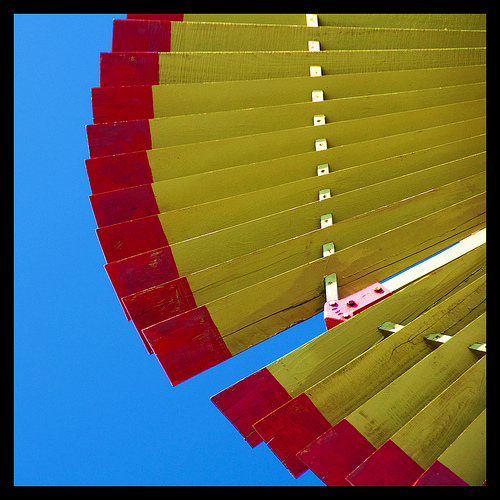
Blue (Red) Yellow

Blue (Red) Yellow, photo by Ralph Krawczyk Jr

While newspapers and television stations are probably crying today, most of the rest of us will probably be relieved to see the Republican primary in the rearview mirror at the end of the day. Get updates at our Primarypalooza on Absolute Michigan.

Check this out big as the sky and in Ralph’s Digital Goodness slideshow. Does Michigan in Pictures have more shots by Ralph? Yes, I believe we do!!

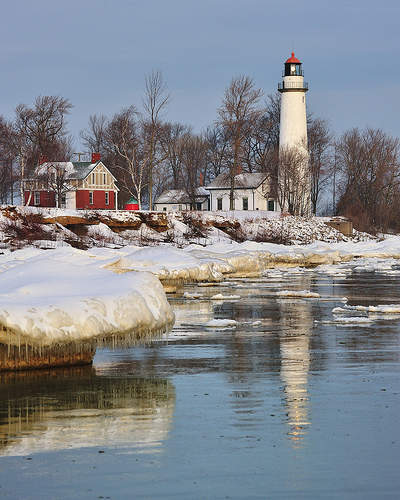
Wintertime at Aux Barques Lighthouse, Port Hope, Michigan

Wintertime at Aux Barques Lighthouse, Port Hope, Michigan

Wintertime at Aux Barques Lighthouse, Port Hope, Michigan, photo by Michigan Nut.

The page on the Pointe Aux Barques Lighthouse at Terry Pepper’s Seeing the Light says that about 75 miles north of Fort Gratiot light and two miles from shore in Lake Huron, there’s a shallow reef with only two feet of water above it. It was right where northbound vessels made their swing into Saginaw Bay, and Michigan State Representative Isaac Crary entered a motion in Congress in 1838 to establish a lighthouse on the shore to warn mariners and mark the turning point:

Congress responded with an appropriation of $5,000 for the Light’s construction on July 7, 1838.

While conducting his annual inspection of lighthouses on the lakes and selecting sites for proposed new stations a month later, Lieutenant James T Homans arrived in the area to select the site for the new station. In his report to the Fifth Auditor of the Treasury for the year, Homans reported that he selected “the most westerly of the two points, known as Point-aux-Barques, near the entrance to Saganaw Bay (sic), for the light there, because it is sooner seen by vessels approaching from the northward and westward, by which it will be most used; also, as being near a shoal, dangerous to the navigation of its vicinity.” Homans went on to report that “There is stone in considerable quantity near this location, which can be used in constructing the buildings. The land, I presume, belongs to the Government, or can be had for a moderate price, there being no settlements within several miles, and the soil very barren.”

Government apparently moved no faster then than now, and it wasn’t until 1847 that the structure was completed. There’s much more about the lighthouse and the Port Hope Lifesaving Station including photos if you read on at Seeing the Light.

The Pointe Aux Barques Lighthouse Society has the text of the contract to construct the light along with a few photos and more information including the keeper logs from 1923.

John took this photo at the end of January. You can see it bigger and see more from the area on his map. Don’t miss the Michigan Nut Photography Facebook page either!

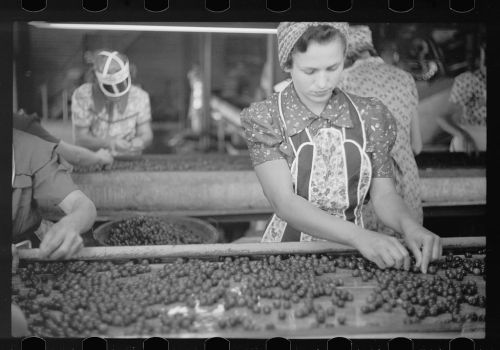
Sorting cherries … and making sense of migrant labor in Michigan

Migrant girls working in cherry canning plant Berrien County, photo by John Vachon

February is National Cherry Month and back in the day (July of 1940 to be precise), the cherry sorting machine was any able body that could tell the difference between a good and bad cherry as they sped past.

Agriculture is a vital part of the northern Michigan economy, and the League of Women Voters in Leelanau County has released an interesting study on migrant worker visas. They study contends that although the care for and harvesting of crops is a critical, labor-intensive aspect of our agriculture, Michigan workers aren’t stepping up to fill seasonal agricultural jobs, risking closure or bankruptcy for farmers and processors. The study notes that it’s an issue that’s been with us for years:

Seasonal workers have been essential to the operation of area farms since the transition from subsistence farming in the early 20th century. Agriculture was the principal livelihood for Michigan residents throughout the 1800s, but by the turn of the century, the Industrial Revolution was transforming agriculture from a small, self-sufficient family art to a large, mechanized, scientific industry. The tractor, the telephone, and the automobile revolutionized cultivation, communication, and transportation, and rural isolation was broken. Although farm conditions improved, people left the farms in droves and resettled in the cities. Rural depopulation became so severe during the 1920s that many farmers and growers had to import migrant labor.

The need for migrant labor has ebbed and flowed over the years. World War II was the catalyst for the Bracero Program, which from 1942 to 1964 brought Mexican migrant agricultural workers to the US legally. The program increased Michigan’s reliance on Mexican farm workers for harvest, and when the program ended, many workers continued to work in US agriculture.

Some crops like cherries have become largely mechanized, but apples, wine grapes and many other crops still have to be harvested by hand. Check out Migrant workers and Michigan agriculture on Absolute Michigan for a lot more about a critical issue for our farms and farmers.

You can get this photo background bigilicious and click to view the Michigan cherries gallery at the Library of Congress and you can also have a look at UpNorth Memories cherries slideshow.

The article on photographer John Vachon from the LOC’s American Memory Project says that his first job for the Farm Security Administration held the title “assistant messenger.” Vachon was twenty-one and had no intention of becoming a photographer when he took the position in 1936, but as his responsibilities increased for maintaining the FSA photographic file, his interest in photography grew. A memoir by his son quotes Stryker as telling the file clerk, “When you do the filing, why don’t you look at the pictures.”

Good advice.

Whiteout!

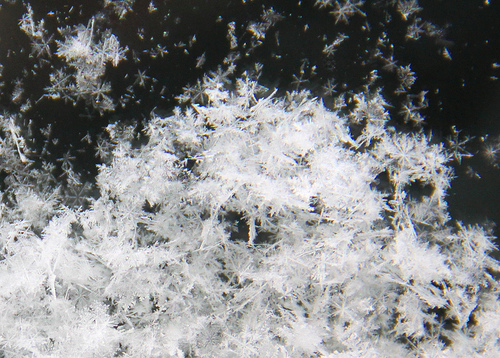
Snowflakes, photo by Stormchaser Mike Photography

Sorry for the late post. Began the day in the midst of  “Slushfest 2012” in Grand Rapids.

Check this out on black and in Mike’s Groundhog Day Blizzard of 2011 slideshow.

You might also enjoy Of snow and snowflakes… on Michigan in Pictures.

February Daffodils

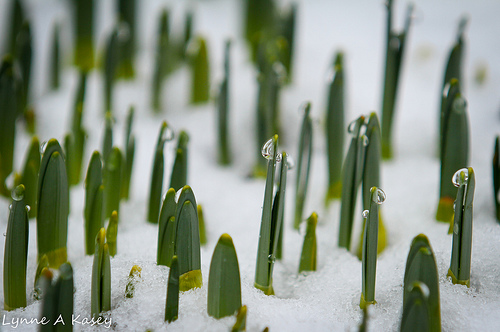
daffodils3

daffodils3, photo by mozy54

Mozy54 writes: February 21…snow, rain, daffodils. Been a strange winter. Not much to add to that except “and how.”

Click to see it bigger and check out her slideshow.

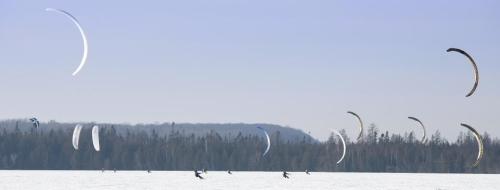
Snow kiting at the Straits with WISSA 2012

WISSA 2012 at St Ignace, photo courtesy WISSA 2012

The 2012 World Ice and Snow Sailing Championships (WISSA) take place February 20 – 26 in St. Ignace, and are in the US for the first time in 17 years. This event is a major worldwide competition and you can read all about it right here on Absolute Michigan!

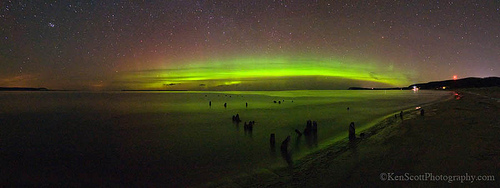
Good Harbor Bay … aurora borealis panorama

Good Harbor Bay ... aurora borealis panorama

Good Harbor Bay … aurora borealis panorama, photo by Ken Scott.

The northern lights made an appearance over the weekend, and Ken Scott was one of the Michigan photographers who made the scene!

Click to see it on black and see more in his northern lights slideshow.

A couple others were Shawn Malone of Lake Superior photo and Guy Strong who nabbed a SWEET time-lapse of the northern lights!

Click for many (many) more photos of the Northern Lights in Michigan!

American Marten: A Michigan wildlife success story

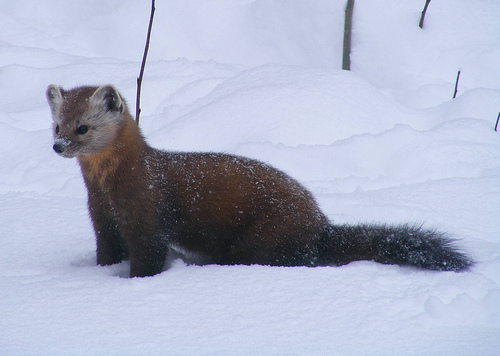
American Marten 1

American Marten 1, photo by 13Miles.

The UM Animal Diversity web page on the American marten (Martes americana) says that American marten, also known as pine marten, are found in the northern reaches of North America and sporadically in Michigan, primarily in mature, northern forests:

These animals are closely associated with lodgepole pine, Douglas fir, spruce, and mixed harwood forests. They tend to be found in structurally complex, mature forests, and can occur at all elevations where such habitat exists. They den in hollow trees, crevices, or vacant ground burrows.

…American martens are somewhat arboreal (tree dwelling) and move with great ease in trees. They mark scent trails from tree to tree with their strong scent glands. In spite of this, they are reported to do most of their hunting on the ground. Most hunting occurs at dusk and dawn, when prey species are most active. In addition, these animals are accomplished swimmers and can even swim under water.
…Home range sizes vary considerably with habitat and prey densities. American martens do not hibernate and is active all winter.

You can read more and see pictures from Animal Diversity Web and on the American marten page at Wikipedia. The Michigan DNR’s page on the American marten says that:

According to records, the American marten was eliminated from Michigan around the 1930s. Removal of the mature evergreen forests and unregulated harvest of martens reduced the species to small populations in the Upper Peninsula. These eventually disappeared from the state. The 1927-28 Biennial Report stated, “They (marten and fisher) are so nearly exterminated in Michigan that there appears no chance they will ever come back.” Recovery efforts were initiated as early as 1958 with releases of captured martens into the Upper Peninsula Porcupine Mountains. Additional releases in the UP were conducted in the 1970s.

…Biologists have followed their progress over the years tracking pine martens to learn about their habitat use and home range needs. These studies along with sighting reports from hunters and other recreationists and incidental catches indicated the martens were readapting to their native Michigan.
During the review of the current Endangered Species List, biologists felt the population has recovered enough to upgrade its status. Martens are frequently becoming a part of the outdoor experience in Michigan with more and more encounters reported by hikers, campers, trappers, and hunters.

Once gone, the martens have returned home due to the efforts of many private organizations and agencies, but especially due to the support given by the donations of Michigan’s taxpayers to the nongame income tax checkoff.

Dixie took this photo last February around Grand Marais. Check it out bigger and see a few more shots of this beautiful animal in her marten slideshow.

More Michigan animals from Michigan in Pictures.

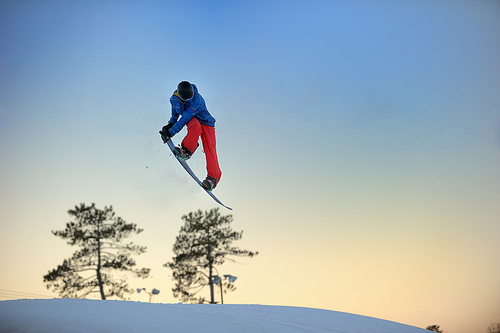
Goin’ skiing

DSC_9141copy2

DSC_9141copy2, photo by kensingt0n.

…and snowboarding. Have a great weekend!

Check this out big as this air and in Arnold’s 2/6/12 Jonas snowboarding at Pine Knob slideshow.

It’s a Free (ice) Fishing Weekend!

Vintage Ice Fishing Michigan

Vintage Ice Fishing Michigan, photo by UpNorth Memories – Donald (Don) Harrison.

Two times a year, the State of Michigan has free fishing weekends, once in the summer (Jun 9 & 10, 2012) and once this weekend (Feb 18 & 19). All fishing regulations still apply, but fishing license fees are waived for residents and out-of-state visitors who can fish on both inland and Great Lakes’ waters for all species of fish.

All over the state there are special fishing events including the Ellsworth Shiverfest in Antrim County, the Winter Festival at the Bay City State Recreation Area, the Dam to Dam Ice Fishing Contest in Newaygo, the Higgins Lake WinterFest and the Free Fishing Weekend Special Event at Brighton Recreation Area.

You can get more on the weekend and some ice fishing videos on Absolute Michigan.

Check this out on black and see a lot more cool old photos, ice fishing decoys and memorabilia in Don’s ice fishing slideshow.

Catch more fish & fishing on Michigan in Pictures!