
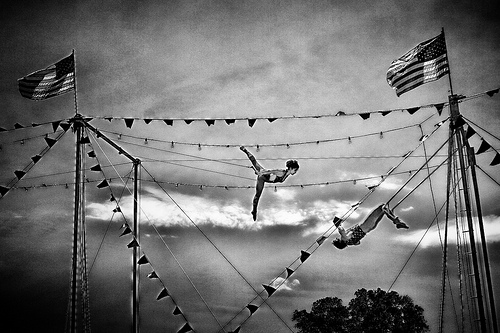
I’ll Fly To You, photo by J.M.Barclay
Check this out bigger and see more from the circus in his slideshow. You can also check out his work on Facebook.
More black & white photography on Michigan in Pictures.
I’ll Fly To You, photo by J.M.Barclay
Check this out bigger and see more from the circus in his slideshow. You can also check out his work on Facebook.
More black & white photography on Michigan in Pictures.
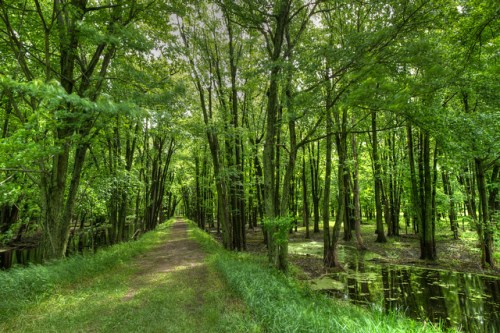
Tunnel of Trees Ferguson Slough Trail, photo by DTWpuck
Scott wonders who in Michigan doesn’t get weak in the knees when looking down a tree canopied road or trail. This trail is located alongside the Ferguson Slough in the Shiawassee National Wildlife Refuge.
Check it out background bigtacular and see more on his map.
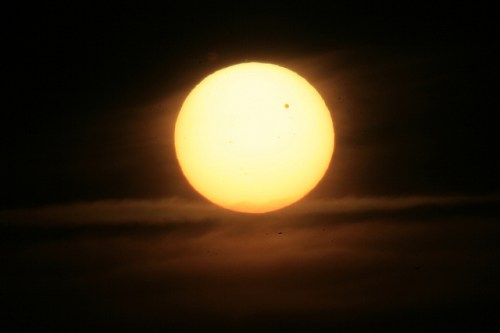
Untitled (Venus Transit), photo by ahknaten
Normally, I’m up on celestial viewing opportunities, but somehow I totally missed yesterday’s transit of Venus, the very rare occurrence of Venus passing directly between earth and the sun. The Kalamazoo News has a cool feature on the viewing of yesterday’s Venus transit that explains:
Tuesday’s transit marked the second and last time it will happen in the 21st century, with the first being on June 8, 2004. The transit was visible just after 6 until about 9 p.m. on Tuesday.
The historical speck on the sun won’t be seen in earth’s sky again until 2117.
…”Hundreds of years ago they figured out the size of the solar system based on the transit by using math to calculate the size of the sun in relation to Venus. Today is about what it gave to early astronomers.” (Kalamazoo Valley Museum Director Bill McElhone)
NASA notes that transits are still used to gain information from distant solar systems. Check out a ton of great photos in NASA’s Venus Transit Challenge group and don’t miss Brad Worrell’s The Sustainer slideshow!
See this photo bigger and see more in Kai’s Venus Transit slideshow.
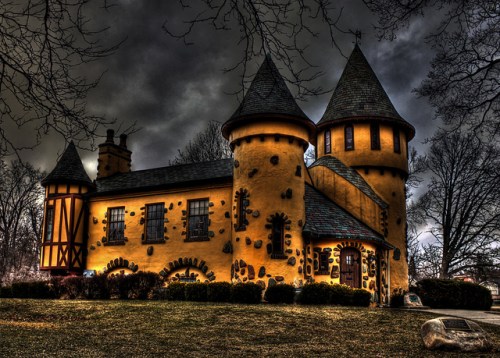
curwood castle, photo by LightuptheDarkn3ss
This weekend (June 7-10) Owosso holds their annual Curwood Festival honoring Michigan author James Oliver Curwood. The Shiawasse District Library says that James Oliver Curwood was born in Owosso, Michigan on June 12, 1878. He was in the University of Michigan journalism program for 2 years before quitting to become a reporter for the Detroit News-Tribune. Wikipedia’s entry on James Oliver Curwood says that:
By 1909 he had saved enough money to travel to the Canadian northwest, a trip that provided the inspiration for his wilderness adventure stories. The success of his novels afforded him the opportunity to return to the Yukon and Alaska for several months each year that allowed him to write more than thirty such books.
By 1922, Curwood’s writings had made him a very wealthy man and he fulfilled a childhood fantasy by building Curwood Castle in Owosso. Constructed in the style of an 18th century French chateau, the estate overlooked the Shiawassee River. In one of the homes’ two large turrets, Curwood set up his writing studio. He also owned a camp in a remote area in Baraga County, Michigan, near the Huron Mountains as well as a cabin in Roscommon, Michigan.
Curwood was an avid hunter in his youth; however, as he grew older, he became an advocate of environmentalism and was appointed to the Michigan Conservation Commission in 1926. The change in his attitude toward wildlife can be best expressed by a quote from The Grizzly King: “The greatest thrill is not to kill but to let live.”
Nearly 100 films were made from his books. You can visit Curwood Castle Museum in Owosso and definitely have a look at this great video from Michigan Magazine TV on Curwood and his castle.
Check this out bigger and also see LightuptheDarkn3ss’s Flickriver.
Also see the Curwood Castle slideshow in the Absolute Michigan pool and lots more Michigan history on Michigan in Pictures!

June 12 Moon, photo by ShaneWyatt
June’s moon is full today (June 4, 2012) at 11:12 am. The Farmer’s Almanac page on Full Moon names says the Strawberry Moon was universal to every Algonquin tribe because the relatively short season for harvesting strawberries comes each year during the month of June. In colonial times and in Europe they knew it as the Rose Moon. Other names include Lotus Moon (Chinese), the Moon of Horses (Celtic) and the Dyan Moon (Medieval England).
Check this out on black and see more in Shane’s moon slideshow.
“June is bustin’ out all over.”
~ Oscar Hammerstein II, 1945
We’ve posted our June Michigan Event Calendar on Absolute Michigan. It’s packed full of all kinds of ways to bust out in June. I’m betting we missed some fun ones, so please share your favorite June events in the comments!
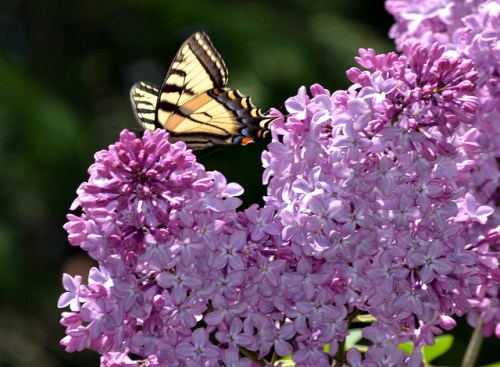
One of the events we do have is the annual Mackinac Island Lilac Festival, a celebration of lilacs and Mackinac Island that runs June 8-17th. While March’s crazy weather pushed lilacs elsewhere, the unique climate of Mackinac Island coupled with a cold snap has slowed lilacs down so that they’ll have them there. Check their Facebook page for updates and more photos.
Another microclimate where lilacs are still in force are the Les Cheneaux Islands, an archipelago of 36 islands east of the Straits of Mackinac. See this photo bigger, in Suzy’s slideshow or check it out in the Les Cheneaux Islands group!
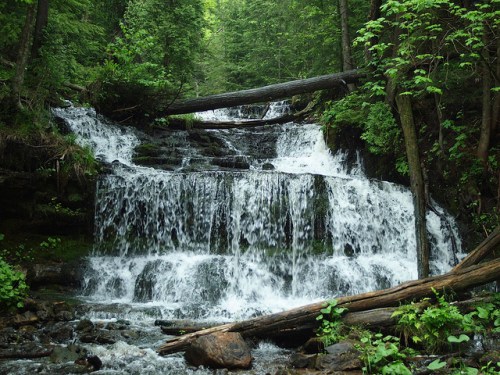
Wagner Falls, photo by karstenphoto
The Michigan DNR reports that fire crews are making good progress on the Duck Lake Fire in Luce County and that campgrounds, state parks, resorts and other businesses throughout the region and the Upper Peninsula are ready & waiting to deliver Pure Michigan fun! Tahquamenon Falls State Park was completely untouched and the Upper Falls viewing area and Lower Falls campground and visitor center are open. The fire itself isn’t putting up a smoke plume, it’s in a remote area and there hasn’t been significant activity since Monday.
One of the main businesses of the Upper Peninsula is tourism, and waterfalls like this are one of the draws. GoWaterfalling says that Wagner Falls is located south of Munising. It has its own state scenic site and after a short & pleasant boardwalk, you get to see this pretty waterfall!
Check this out background bigtacular and see more in Steven’s falls slideshow.
Update (June 1): The Michigan DNR reports that fire crews are making good progress on the Duck Lake Fire in Luce County and that campgrounds, state parks, resorts and other businesses throughout the region and the Upper Peninsula are ready & waiting to deliver Pure Michigan fun!
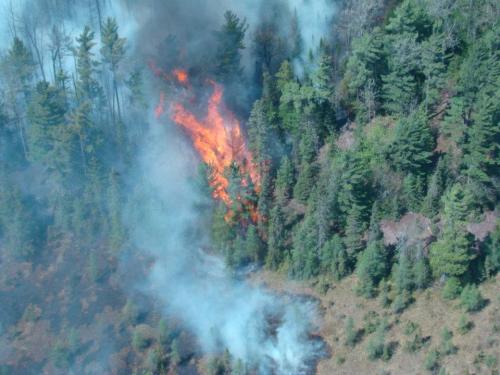
Duck Lake Fire, photo courtesy Michigan Department of Natural Resources
The massive Duck Lake Fire, which started with a lightning strike last week, has burned over 22,000 acres and destroyed almost 100 structures. Over 200 firefighters from Michigan along with aerial water bombing crews have been fighting the fire, which they estimate to be 55% contained. Absolute Michigan has a bunch of photos, videos and links for the Duck Lake Fire.
You can see more photos there and on the Michigan DNR Facebook.
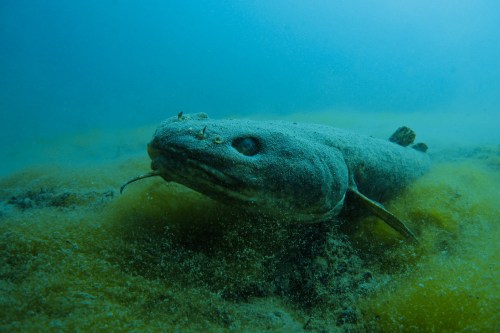
Burbot, photo by Christopher Morey
Michigan Sea Grant has this (and more) to say about burbot:
Lota is an ancient name for this fish, which has many common names. These include lawyer, eelpout, cusk, and freshwater cod. The last name is appropriate, because the burbot is a member of the cod family. Although sometimes referred to as dogfish, Michiganders more commonly use that name for the unrelated bowfin.
The burbot is a winter spawner, moving into shallows at night and often spawning under the ice. Burbot can spawn in lakes or streams. Small burbot (up to a foot long) are often common in cold and cool streams, although they are rarely encountered by anglers. Burbot are typically nocturnal, and feed during the dead of night. Divers in Lake Michigan often find adult burbot resting in rocky crevices during the daytime. Large adults are common catches while ice fishing in some lakes.
The burbot is not likely to win any beauty contests. Looking like a cross between a cod and an eel, this fish also has the odd habit of wrapping its slimy tail around the hand or arm of unsuspecting anglers when caught. Perhaps because of its appearance, the burbot has never been a popular sport or commercial species in Michigan.
The flesh of burbot is white, firm, mild in flavor, and as boneless as walleye or bass. This freshwater cod is most often prepared as ‘Poor Man’s Lobster” by steaming chunks of meat and dipping in drawn butter. They are also excellent when fried.
You can read today’s Weird Wednesday on Absolute Michigan that extolls the virtues of the burbot. This article from the Great Lakes Echo in 2010 doesn’t have a whole lot good to say about burbot, but it’s interesting to see how native fish in the lake can have an effect on pond-raised lake trout. In case you’re fearing the water a little more, consider that Wikipedia notes that the world record burbot weighed just a scale over 25 pounds. Michigan’s state record burbot, caught in 1980 from Munuscong Bay in the Upper Peninsula, weighed 18.25 pounds.
Christopher writes that Grand Traverse Bay is shockingly warm this year, with temps already between 57 and 63 degrees.
As for the Burbot. The pic was actually taken on May 25th a few years back. I was diving Elmwood – aka the Greilickville Park – and thought I saw something. I made a pass at about 15 feet of depth to get a better view and spotted a huge burbot. I dove on it with the camera in video mode, expecting it to spook. It didn’t and I was sort of alarmed to find myself mere inches from probably the weirdest looking fish I’d ever seen. I switched the camera to still mode, as I lay on the bottom at 36 feet, and took several shots of it’s amazing face. At about 3:34 in this video you can see the approach dive. For the record, I have never, before or since, seen a burbot that weird looking.
Christopher operates Michigan Freediving, and Michigan in Pictures has several more great photos from him. See this (and 83 more) bigger in his slideshow on Zenfolio.
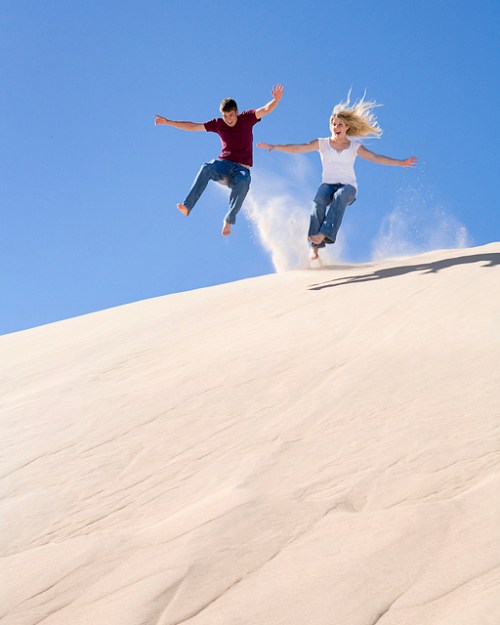
Flying High, photo by Steven White Photographic Art
Get out. Have fun. Repeat as necessary.
See this photo big as the Sulver Lake Dunes or in Steven’s Our World in Color slideshow.
Have a great weekend everyone!!
 Michigan in Pictures