Memorial Day & Michigan

History of Memorial Day and Michigan

Remember, photo by LindaB.

While the Memorial Day page at the Center for Civil War Research Center lists roles that people from many states had in creating Memorial Day, there’s no doubt that Michiganders had some part in it:

“On the sixteenth of April, 1862, some ladies and a chaplain from Michigan were chatting together at Arlington Heights. They were talking about the horrors of the war and one lady said: ‘How lonely and cheerless the bare graves of the soldiers look.’ Another proposed gathering some flowers and laying them on the graves of the Michigan soldiers that day. They did so, — and the next year they decorated the same graves. The third year [1864] the same chaplain and ladies were in Fredericksburg, and they decorated the soldiers’ graves there. So the beautiful custom grew and spread its influence with its flowers each year.”

What’s more, as detailed on Michigan in Pictures last year, Michigan was the first state to make Decoration Day a state holiday. Here’s hoping that you have a chance to remember and reflect upon those who have given their lives for our nation, and also that few more are called to do the same.

View Linda’s photo at Flickr and see more in her Great Great Grandfather slideshow.

More Memorial Day on Michigan in Pictures.

The Deadliest Game: Fort Michilimackinac Massacre of 1763

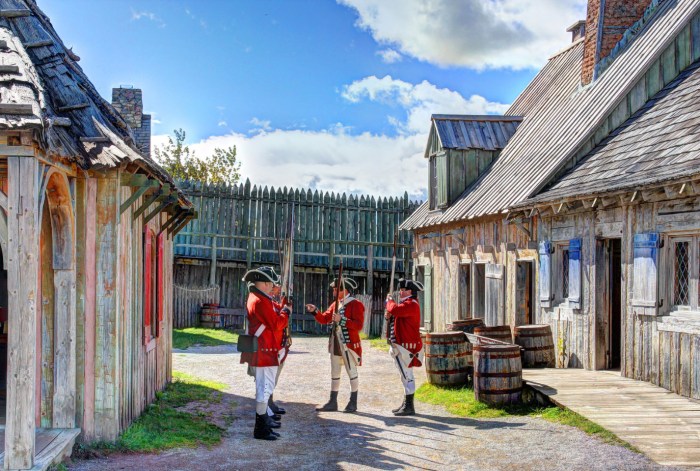
British Troops at Fort Michilimackinac by Robert F Carter

British Troops at Fort Michilimackinac, photo by Robert F Carter

This year marks the 250th anniversary of the most dramatic event at Fort Michilimackinac. On June 2, 1763 the fort was captured by Ojibwa & Sauk warriors, who gathered under the guise of playing a huge game of baggatiway. Elizabeth Edwards of Traverse Magazine has an in-depth article about the massacre that begins:

Under an unusually hot sun on a late spring day on the Straits of Mackinac, British Major George Etherington, commandant of Fort Michilimackinac, was suffering from an acute case of cultural blindness. And there was no excuse for it. Relaxed at the sidelines of a rousing game of baggatiway (similar to lacrosse) outside the fort, the major should have seen the danger signs in this Ojibwe versus Sauk contest of sweaty, half-naked bodies painted with white clay and charcoal.

The 30-year-old officer was born in the colonies, and most likely grew up on stories of Indian uprisings. He’d even served in the just-ending French and Indian War, in which the English had wrested control of North America from the French—a victory that had put this previously French fort in Etherington’s care. Though the major had been raised on American soil and had fought on it, he was still English. And in that country, a battle was a battle, and a sporting event was a sporting event.

Perhaps that explains why the major missed the clues…

Definitely read on for much more at Traverse! Every Memorial Weekend on Saturday, Sunday & Monday, they re-enact this event and much more of the fort’s history in the  annual Fort Michilimackinac Pageant. Next Sunday (June 2) they will commemorate the 250th anniversary of the attack at Michilimackinac at the fort as they open the new South Southwest Rowhouse.

Robert has some more good information about the events at the fort including a link to the painting The Conspiracy – Fort Michilimackinac by Robert Griffing that imagines the planning of the massacre. See his photo background bigtacular and see more in his My Neighborhood slideshow.

More from the Straits of Mackinac & Mackinac Island on Michigan in Pictures.

Know your Michigan turtles

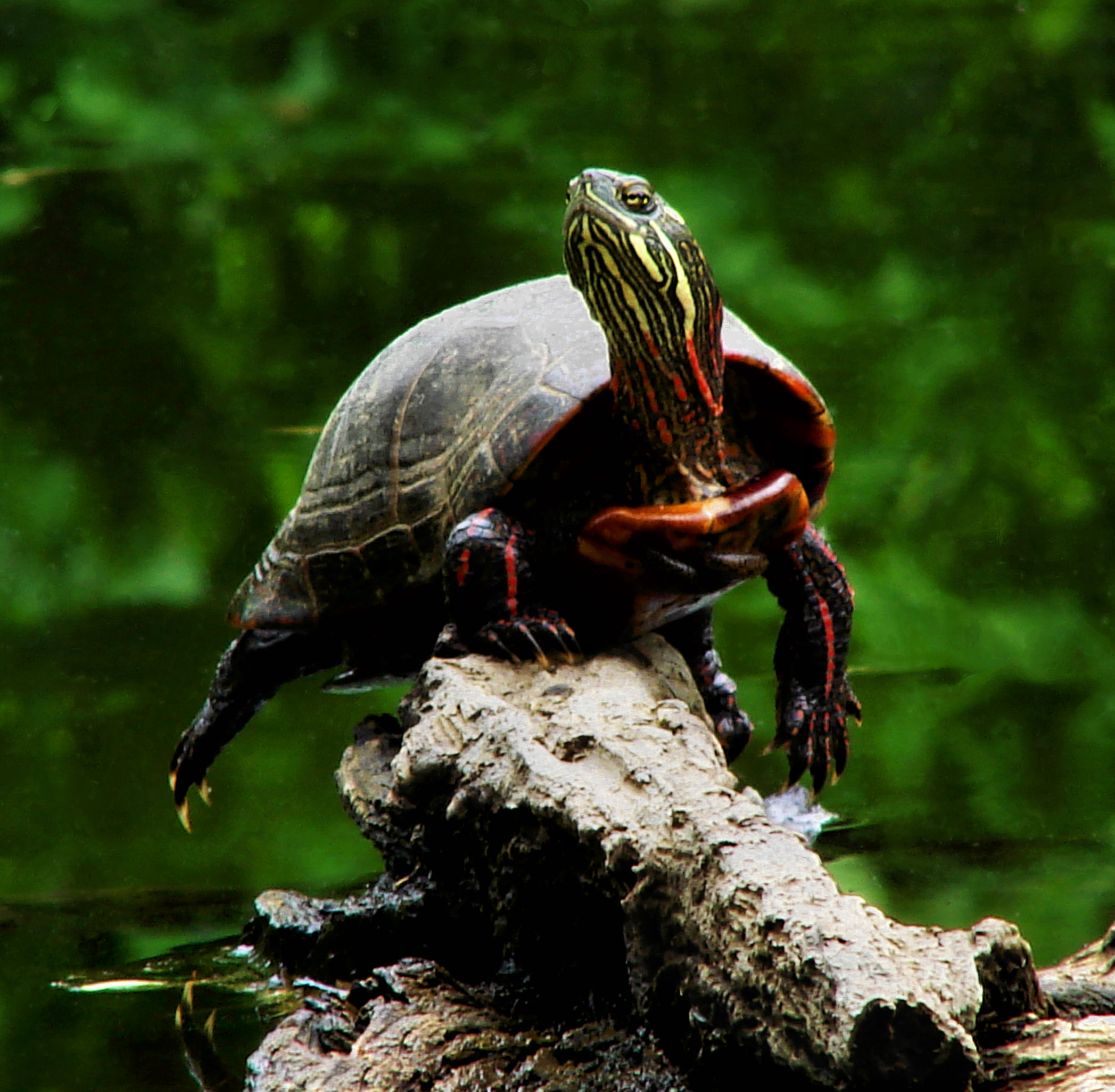
Posing Painted Turtle

I’m Posing for the Camera, photo by capcbd

It appears the turtle above is aware that Michigan’s state reptile is the painted turtle.

I thought it perfect for my day-late post celebrating World Turtle Day (May 23), an annual day of recognition that was started in 2000 by American Tortoise Rescue. They offer some tips to help preserve endangered turtles worldwide including not buying turtles or tortoises from pet shop (it increases demand from the wild), not removing turtles from the wild unless they are injured, and something that we can all do when we’re on the roads: if a turtle is crossing a busy street, pick it up and send it in the same direction it was going – if you try to make it go back, it will turn right around again!

It might surprise you to learn that Michigan is home to 10 native turtle species. Learn about all of them on Michigan in Pictures:

If you’re trying to identify a turtle you’ve found, Check out Nick Scobel’s Herping Michigan Blog and James Harding “The Critter Guy” at the MSU museum has a great Michigan turtle identification guide and loads of turtle lore.

Speaking of Turtle Lore, I always like to shout out a book I read as a kid that did more to foster my love of Michigan than any other: Lore of the Great Turtle. It was filled with Indian tales of Mackinac Island , and one of these was the formation of the island. While this version adapted by Basil Johnston is not quite the same, I think you’ll enjoy it!

Check this photo out background bigtacular and see more in capcbd’s water slideshow.

Also check out more turtles on Michigan in Pictures and definitely have a look at the turtle slideshow from the Absolute Michigan pool on Flickr!

PS: This is one of the most popular posts on Michigan in Pictures. Hooray for turtles!

Celebrate Henry Ford’s 150th at The Henry Ford Museum!

Entrance to the Museum! - HFM

Entrance to the Museum! – HFM, photo by MikeRyu

Lish Dorset of The Henry Ford museum in Dearborn writes on the Pure Michigan Blog that although summer is always a busy time at The Henry Ford, this summer is shaping up to be especially busy as they celebrate what would have been the 150th birthday of founder Henry Ford. She writes:

We’re celebrating Henry’s legacy all year at The Henry Ford, whose birthday is July 30. Starting in June and running through August, pay a visit to Miller School in Greenfield Village and step back in time to the days of Henry’s youth as he experiments with clock parts, machines and principles that challenged him.

You can also visit Henry’s T, a 15-minute dramatic play and hear how this ultimate maker was inspired to build his universal car. Follow up the play with a visit to Henry Ford Museum and learn how to build a Model T yourself.

Both Henry Ford Museum and Greenfield Village are offering guided tours to guests with an emphasis on Henry’s work.

Check out HenryFord150.com for a timeline of the legendary automotive pioneer, and you can also read more about events at the Henry Ford and keep up with everything on their Facebook.

Mike took this shot on an Exposure.Detroit photowalk at The Henry Ford. Check it out on black and see more in his Henry Ford Museum slideshow.

Also see the Henry Ford Museum slideshow in the Absolute Michigan pool on Flickr for over 400 more photos from The Henry Ford!

Rainbow Falls on the Black River

n2c_113-0377

Ragin’ Rainbow Falls, photo by sgowtham

The GoWaterfalling page on Rainbow Falls explains:

This is the last of the main falls on the Black River before it enters Lake Superior. This is an interesting waterfall. Unfortunately the best views are from the east side of the river and the observation deck is on the west side of the river. The hike from the west side trailhead is 1/2 mile. In my opinion the smarter thing to do is to drive down to end of the Black River Scenic Byway, cross the river and hike back up to the falls. A supsension bridge takes you across the river and a mile long, scenic, and mostly level trail, takes you back to the falls. The views are far superior. In low water you can wade across the river above the falls.

The Black River Scenic Byway starts north of US 2 near Bessemer. There are signs on US 2. Rainbow Falls is about 16 miles north of US 2. The scenic area is on the right and is clearly marked. It is about a 1/2 mile walk from the parking area to the falls. There are a lot of stairs at the end.

The waterfall has carved out a large pothole. Most of the river falls into the pothole, but some of the water, depending on how high the river is, goes around or jumps clear over this hole.

Head over to GoWaterfalling for more pics and information about other falls in the area.

View Gowtham’s photo on black and see more in his Nature slideshow.

Many more Michigan waterfalls on Michigan in Pictures!

A big step for Flickr

"Crickey! A Flickr in Its Natural Habitat"

“Crickey! A Flickr in Its Natural Habitat”, photo by Matt Burrows

Michigan in Pictures owes a whole lot to the photo sharing website Flickr. For starters, Flickr hosts the sprawling Absolute Michigan pool, the photo group with over 175,000 photos and 3300 members from where I draw most of the photos used. Flickr is also the web service that made me realize that a blog that featured photos from all kinds of people from over Michigan could work, and the unique social features mean that I learn a lot about Michigan from the photos that are added every day.

Yesterday Flickr made a major move, replacing their 100 photo limit on free photo hosting with a 1 terrabyte limit. While Flickr has lost its status as the leading photo site, it still has a huge number of users. It will be interesting to see if this move pushes them back to the top.

Matt has been one of my favorite photographers over the years for his unique and humorous vision, and it was great to find that he had the perfect photo! See it background big and view more in his Michigan slideshow.

Castor canadensis, the American beaver

Floating Beaver

Floating Beaver, photo by Kevin Povenz

Castor canadensis (American beaver) from the University of Michigan Animal Diversity Web explains:

Beavers are primarily aquatic animals, and the largest rodents in North America. They have a waterproof, rich, glossy, reddish brown or blackish brown coat. The underhairs are much finer than the outer, protective, guard-hairs. The ears are short, round, and dark brown in coloration. A beaver’s hind legs are longer than its front legs, thus making the rear end to be higher than the front end while walking.

Some facts:

  • Beavers eat bark and cambium (the softer growing tissue under the bark of trees). Their favorites include willow, maple, poplar, beech, birch, alder, and aspen trees. They also eat water vegetation, as well as buds, and roots. Cellulose, which usually can not be digested by mammals, is a major component of their diet. Beavers have microorganisms in their cecum (a sac between the large and small intestine) that digest this material.
  • Under favorable conditions, beavers will produce their first litters at two or three years of age. The average lifespan of a beaver in the wild is 10 to 20 years.
  • Beavers usually live in family groups of up to 8 related individuals called colonies. The younger siblings stay with their parents for up to 2 years, helping with infant care, food collection, and dam building. Beaver families are territorial and defend against other families.
  • Beavers build dams to slow down the flow of water in streams and rivers and then build stable lodges for shelter. The dams are engineered according to the speed of the water; in slow water the dam is built straight, but in fast water the dam is built with a curve in it.
  • Beavers maintain wetlands that can slow the flow of floodwaters. They prevent erosion, and they raise the water table, which acts as a purifying system for the water. This happens because silt occurs upstream from dams, and toxins are then broken down. As ponds grow from water backed up by the damn, pond weeds and lilies take over. After beavers leave their homes, the dams decay, and meadows appears.

Head over to ADW for more information including some photos.

Check this photo out on black, see it bigger in his Animals slideshow and also view more great shots from Kevin on Michigan in Pictures.

More Michigan animals on Michigan in Pictures.

Michigan Stereoscopy and the National Stereoscopic Association Convention

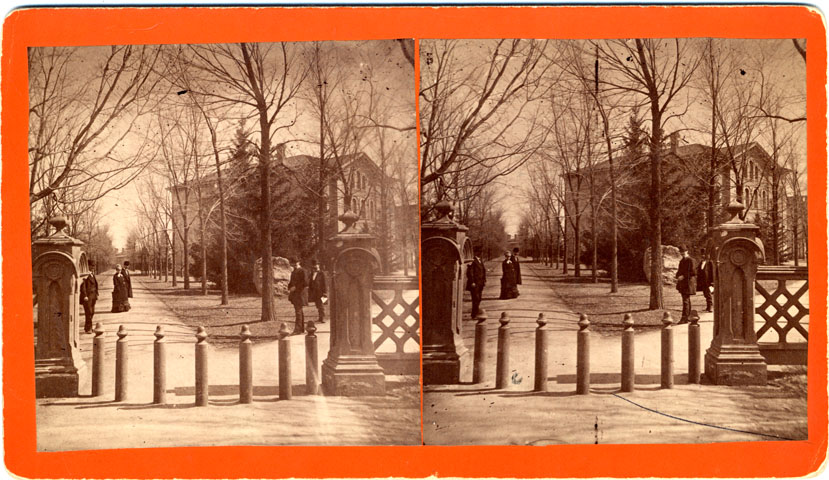
Diag at University of Michigan 3d card

Central Campus, diagonal, with fence posts, photo courtesy UM Bentley Library

Michigan in Pictures regularly features  awesome historical postcards from Don Harrison of UpNorthMemories.com. Don emailed me the other day to let me know that the 39th National Stereoscopic Association Convention will be held in Traverse City next month (June 4-10, 2013).

The event features speakers, workshops, 3D image competitions, exhibitions and a huge 3D Trade Fair where you can view and purchase equipment and photographs. While there’s no specifically Michigan tie, I thought it was pretty cool that Brian May, CBE, PhD, FRAS is one of the featured speakers. You may know Brian as the guitarist of Queen, but he apparently postponed a career in astronomy, returning to astrophysics in 2006. He’s also a life-long stereoscopy enthusiast.

Regarding stereoscopy, Wikipedia’s explains:

Stereoscopy (also called stereoscopics or 3D imaging) is a technique for creating or enhancing the illusion of depth in an image by means of stereopsis for binocular vision. The word stereoscopy derives from the Greek “στερεός” (stereos), “firm, solid” + “σκοπέω” (skopeō), “to look”, “to see”.

Most stereoscopic methods present two offset images separately to the left and right eye of the viewer. These two-dimensional images are then combined in the brain to give the perception of 3D depth. This technique is distinguished from 3D displays that display an image in three full dimensions, allowing the observer to increase information about the 3-dimensional objects being displayed by head and eye movements.

The photo above shows the Diag at the University of Michigan. You can see it bigger along with dozens more from all across Michigan in the Bentley Library’s Michigan in 3D Stereoscopic Cards gallery.

For a real treat, request your free 3d glasses from the Civil War Trust and check out the 3D images of the photos!

Happiness is a Bowlful of Morels!

A day's find

A day’s find, photo by HLHigham

Morels are popping up all over, and though you might not find 98 like Heather did, even a handful of these delectable  mushrooms will make it all worth it. If you’re in the Boyne City area this weekend, they hold their annual National Morel Mushroom Festival. You might also be interested in Five Things You Need to Know about Michigan Morel Mushrooms on Absolute Michigan.

Heather got this tasty haul near Rapid City and she might write about it on her blog, Rapid City Recess. Check it out background bigtacular and see more in her slideshow!

Lots more morel goodness on Michigan in Pictures!

Sleeping Bear Dunes Ghost Forest

Ghost Forest

Ghost Forest, photo by Neil Weaver Photography

Walk silently through the haunting landscape of the ghost forest of Sleeping Bear Point Trail
and wind spirits whisper to you and chatter among the skeletons of long dead cedars.
If you do not hear them you are not listening.
I am sure the Anishinaabek knew the song in their day on Sleeping Bear.
~Jonathan Schechter, Earth’s Almanac

Jonathan Schechter who runs the very cool blog Earth’s Almanac at the Oakland Press penned these lines about the Ghost Forest on the Sleeping Bear Dunes (thanks SleepingBearDunes.com for the link). Click through for a photographic account of his visit!

The Sleeping Bear Dunes National Lakeshore page on the Sleeping Bear Dunes Overlook explains how the ghost forest was created:

The Sleeping Bear Dune is estimated to be about two thousand years old and has a fascinating history. It is classified as a perched dune because it is perched on top of a plateau, high above the lake. When the dune was forming, it was not at the edge of the bluff, but somewhat inland.Wind carried sand from the upper portion of the Lake Michigan bluff inland and deposited it to form the Sleeping Bear Dune.

Notice the skeletons of dead trees within the eroded bowl of the dune. This called a ghost forest and tells a story of alternating stability and change. After an initial phase of active sand accumulation, a period of stability followed when trees began to grow on the dune. Later, more sand moved in and buried the trees. Two layers of buried soil within the dune indicate that there was a second period of stability and tree growth, followed by another period of sand build-up and then the final growth of the trees and shrubs that now cover the sheltered portions of the dunes.

For a long time, the sleeping Bear Dune stood at about 234 feet high with a dense plant cover. However, trough most of the twentieth century, erosion has prevailed.

By 1961, the dune was only 132 feet high, and by 1980, it was down to 103 feet. The process is a continuing one. The major cause of the dune’s erosion was wave action wearing away the base of the plateau on which the dune rests. As the west side of the dune loses its support, it cascades down the hill. The wind, too, is a major agent of erosion, removing sand and destroying the dune’s plant cover. What does the future hold? It seems that the present trend will continue and it is only a matter of time until the Bear disappears completely.

See Neil’s photo bigger and see more in his Sleeping Bear Dunes slideshow. You can see a bunch more shots from Sleeping Bear for viewing & purchase on his website!

More dunes on Michigan in Pictures.