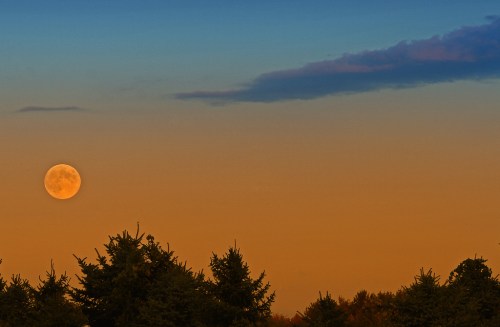
By the light of the Harvest Moon

Harvest Moon

Harvest Moon, photo by eyesontheskies

Shine on, shine on harvest moon up in the sky,
I ain’t had no lovin’ since January, February, June or July
Snow time ain’t no time to stay outdoors and spoon,
So shine on, shine on harvest moon, for me and my gal.
~Shine On Harvest Moon, Nora Bayes and Jack Norworth (1903)

The best known moon of the year (probably in large part due to that song) is the Harvest Moon. It’s the full moon nearest the autumnal equinox and is full the night of September 18th. EarthSky.org has a nice article about the Harvest Moon that explains that for all its mystique, the Harvest Moon is just an ordinary full moon:

Still, you might think the Harvest Moon looks bigger or brighter or more orange. That’s because the Harvest Moon has such a powerful mystique. Many people look for it shortly after sunset around the time of full moon. After sunset around any full moon, the moon will always be near the horizon. It’ll just have risen. It’s the location of the moon near the horizon that causes the Harvest Moon – or any full moon – to look big and orange in color.

The orange color of a moon near the horizon is a true physical effect. It stems from the fact that – when you look toward the horizon – you are looking through a greater thickness of Earth’s atmosphere than when you gaze up and overhead. The atmosphere scatters blue light – that’s why the sky looks blue. The greater thickness of atmosphere in the direction of a horizon scatters blue light most effectively, but it lets red light pass through to your eyes. So a moon near the horizon takes on a yellow or orange or reddish hue.

…The shorter-than-usual time between moonrises around the full Harvest Moon means no long period of darkness between sunset and moonrise for days in succession. In the days before tractor lights, the lamp of the Harvest Moon helped farmers to gather their crops, despite the diminishing daylight hours. As the sun’s light faded in the west, the moon would soon rise in the east to illuminate the fields throughout the night.

You can read on for more.

Check this photo from September 2012 out bigger and see more in eyesontheskies’ Phases slideshow.

More about the harvest moon on Michigan in Pictures!
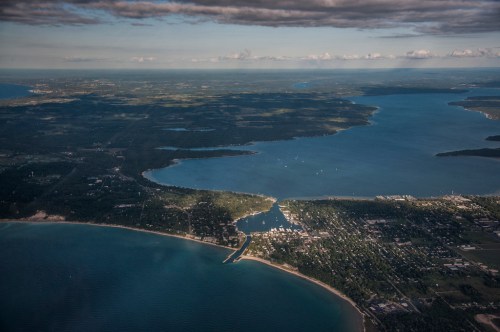
Charlevoix, the Beautiful

Charlevoix the Beautiful

Charlevoix the Beautiful, photo by GLASman1

Wikipedia entry for Charlevoix (pronounced shar-le-voy) says:

The city is situated between Lake Michigan and the western end of Lake Charlevoix, which drains into Lake Michigan through the short Round Lake/Pine River complex in the heart of downtown Charlevoix. Charlevoix’s Round Lake has been called the best natural harbor on Lake Michigan.

Charlevoix is named after Pierre François Xavier de Charlevoix, a French explorer who travelled the Great Lakes and was said to have stayed the night on Fisherman’s Island one night during a harsh storm. It was during this time that Native Americans were thought to have lived in the Pine River valley.

The City of Charlevoix website adds that Charlevoix first became a village in 1871 and was later established as a city in 1905. The city has a year round population of roughly 3,000 people. FYI, Round Lake is the little lake right off Lake Michigan whick opens into the much larger Lake Charlevoix – here’s a map of Charlevoix!

View Mark’s gorgeous aerial photo bigger and see more in his Aerials slideshow.

There’s more aerial photography and more about Charlevoix on Michigan in Pictures!

Fort Mackinac

fort-mackinac-mackinac-island-mi-by-bill-johnson

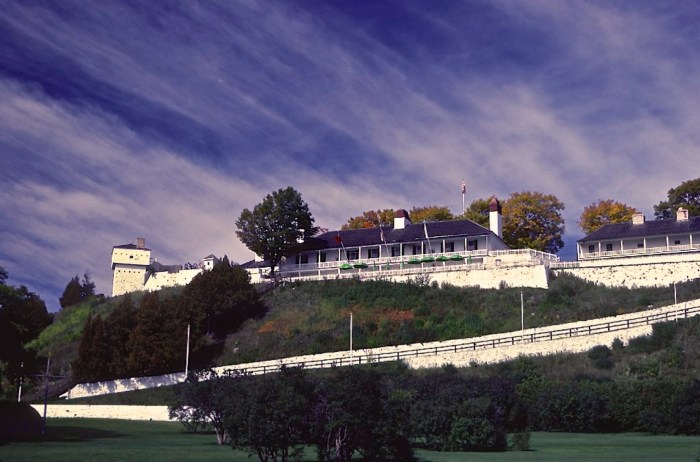
Fort Mackinac, Mackinac Island, MI, photo by Wrong Main

Every once and a while I come across something about Michigan that I can’t believe I haven’t featured. Here’s the latest…

Wikipedia’s comprehensive entry on Fort Mackinac explains that the first fort on the Straits of Mackinac was Fort Du Buade. Built by the French around 1690 near the St. Ignace Mission, Du Bade was closed in 1697. In 1715 the French constructed Fort Michilimackinac on the south side of the Straits where Mackinaw City is today. Michilimackinac became the hub of the upper Great Lakes fur trade and a French outpost until 1761 when British soldiers took control after the French and Indian War.

The Mackinac State Historic Parks history of Fort Mackinac continues:

By 1776 the American Revolution was underway. With the successes of George Rogers Clark in capturing British posts in the south, and American forces moving northward, the British grew anxious that Fort Michilimackinac , a wooden fort built on the beach, was vulnerable. Consequently, British Commandant Patrick Sinclair chose to relocate the fort to Mackinac Island where the high limestone cliffs and good harbor provided a more defensible location. Between 1779 and 1781 many buildings were taken apart on the mainland and reassembled on the island. What was not moved was burned. The civilian community was built around the bay below the fort. One of the first new buildings to be built on the island was the Officers’ Stone Quarters, the oldest building in the State of Michigan today.

The fort and island became United States territory as a result of the American victory in the Revolution. However, it took thirteen years for American troops to arrive and finally take control of the fort from the British. The latter were reluctant to leave the island, as British merchants continued to dominate fur trading, even in American territory. After leaving Fort Mackinac in 1796, the British went to St. Joseph’s Island, at the mouth of the St. Mary’s River and established Fort St. Joseph .

War broke out between the United States and Great Britain in the summer of 1812. Under the cover of darkness, a 300-man force of British soldiers and Native American allies embarked from Fort St. Joseph and landed on the north shore of Mackinac Island . They dragged their cannon to the high ground behind the fort, took positions in the woods and prepared to attack. American soldiers, about 30, were completely surprised and outnumbered by the British invasion. They quickly surrendered without a fight following a single warning shot by the British. This was the first land engagement of the War of 1812 in the United States .

You can read on to learn how the Americans ultimately got the fort back and how became a center of the Great Lakes fishing industry, its time as a Civil War prison, and the hub of the second national park in the U.S., Mackinac National Park. If you want to visit – bear in mind they close for the season October 13th!

Bill took this shot October 1, 1982 on Plustek OpticFilm 7600. Check it out background big, see more in his slideshow and definitely click to view his photo of the Mackinac Bridge taken on the same day.

More Mackinac on Michigan in Pictures, and get a little bit more about Michigan’s role in the War of 1812 in The Battle of Lake Erie.

Set your course for Fall

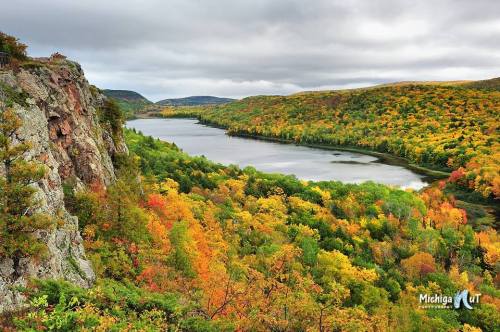
Autumn Day at Lake of the Clouds

Autumn Day at Lake of the Clouds, photo by John McCormick/Michigan Nut Photography

John McCormick comments that it won’t be long and we will be seeing scenes like this one again. With a north wind blowing and highs not expected to reach 60 today in Michigan’s northern half, it’s pretty clear that fall and fall color is right around the corner! I hope you get the time to plan a color tour or two to enjoy places like the Lake of the Clouds. Michigan is especially amazing when the hardwoods catch fire, and the show only comes once a year

John is one of my favorite photographers, and his Michigan Nut Facebook page is on fire right now with new photos every day!

Load up with Fall colorFall wallpaper on Michigan in Pictures.

Clouds over Grand Rapids

Untitled

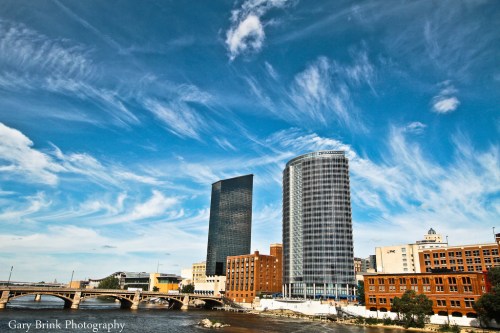
Untitled, photo by photofrenzy2000

An amazing shot of Michigan’s second largest city.

Check it out bigger and see more including some more incredible cloud shots in Gary’s slideshow.

More Grand Rapids on Michigan in Pictures.

Hurricane Huron: September 11-15th, 1996

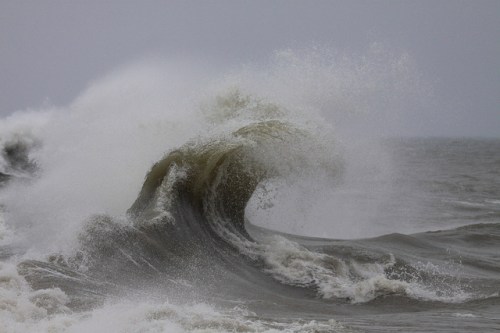
Massive Wave at Port Sanilac

September Storm: Port Sanilac, photo by StormchaserMike

Hurricanes in Michigan?? from NOAA looks at several hurricane force storms and has this to say about “Hurricane Huron”:

While this storm was not from remnants of a tropical system, its development over Lake Huron had many uncanny likenesses to tropical systems…

The first likeness was its timing, forming over the Great Lakes right at the height of the typical hurricane season, September 11-15th, 1996. What started as a typical core-cold 500 MB low pressure system evolved into a warm-core system as it settled over the relatively warm waters of the Great Lakes, in particular, Lake Huron. The low pressure system actually had moved past Lake Huron but then retrograded, or was “drawn back”, to the relatively warm waters of Lake Huron. (Similar to the tropics, the Great Lakes usually reach their warmest water temperatures late August into mid September.) The storm then deepened and intensified at the lower levels of the atmosphere compared to aloft, typical of a warm-core low. It is believed that the warm waters of Lake Huron and associated low level instability over the lake were, to a large extent, the major contributing factors in this storm’s evolution. The storm went on to form a broad cyclonic circulation, including the “spiral bands and eye”, typically seen in hurricanes! At one point, the cyclone produced tropical storm force winds (39 – 73 mph) and some of the spiral bands even had rainfall exceeding 10 cm (better than four inches), causing some flooding.

This “Hurroncane” reached its maximum intensity during the day on September 14th, when a central pressure of 29.34 inches (993 MB) was recorded in the late morning by a Lake Huron buoy that fortunately was positioned, at one point, in the “eye”. By 2 PM, that “eye” measured close to 20 miles across and had a ring of tall convective clouds surrounding it, strongly resembling that of an “eye wall”. The convective showers encircled the “eye” well out over 300 miles.

You can read on for more including a satellite photo of the distinctive storm, check out Wikipedia’s entry on the 1996 Lake Huron cyclone, or go straight to the very detailed academic paper on Hurricane Huron that this article draws from.

Check Mike’s photo out bigger and see more in his awesome September Gale on Lake Huron slideshow. Mike also has a cool video of the storm on YouTube!

More hurricane-like weather on Michigan in Pictures.

We have met the enemy and they are ours: The Battle of Lake Erie

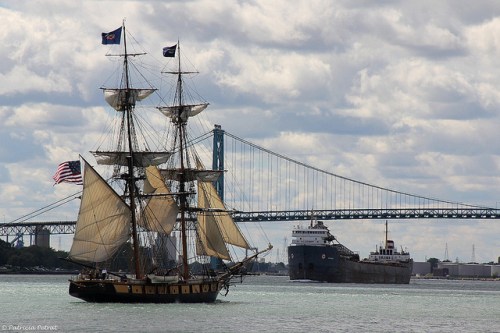
Flagship Niagara

Flagship Niagara, photo by Trish P. – K1000 Gal

“We have met the enemy and they are ours; two ships, two brigs, one schooner, and one sloop.”
~Commodore Oliver Hazard Perry

September 10, 2013 is the Bicentennial of the Battle of Lake Erie, a critical battle that helped turn the tide of the War of 1812. The Flagship Niagara page on the Battle of Lake Erie relates:

On September 10, 1813, nine small ships – six of them, including Niagara, constructed at Erie – defeated a British squadron of six vessels in the Battle of Lake Erie. A pivotal event in the War of 1812, it led to regaining Detroit, lost at the war’s outset, and lifted the nation’s morale.

The U.S. Brig Niagara is a two-masted, square-rigged sailing vessel. In 1813, she had a crew of 155 men and boys who manned her sails, 18 carronades and two long guns. The crew was organized into two watch sections (port and starboard) for routine duties while underway. More experienced sailors were stationed aloft, while others under the direction of petty officers manned the rigging which controlled the sails from deck. In battle, men also manned the guns and carronades. Boys carried the black powder charges from the magazine to the guns. Marines and soldiers were assigned to the fighting tops on the masts where they could fire their muskets on the enemy ships. Officers directed setting sails, firing cannon, and maneuvering the brig in response to orders from the captain.

…On September 10th, 1813, the British under Commodore Robert Heriot Barclay and the Americans under Perry met in battle near Put-in-Bay, Ohio. Perry’s flagship, Lawrence, engaged the British ships Detroit and Queen Charlotte, while the Niagara, for unknown reasons, did not close the enemy.

After the Lawrence was completely disabled, with most of her crew wounded or killed, Perry transferred by boat to the undamaged Niagara, hoisted his battle flag – “DONT GIVE UP THE SHIP” – sailed her into close action, broke the British battle line, and forced Barclay to surrender. In the aftermath, Commodore Perry wrote his famous report to General William Henry Harrison, “We have met the enemy and they are ours; two ships, two brigs, one schooner, and one sloop.”

You can…

Trish wrote that the Flagship Niagara was in Detroit a year ago for Navy Week to commemorate the bicentennial of the War of 1812. Detroit was chosen as a host city because of its direct link to the War of 1812. The city was an important military outpost in the war — but mainly for the British, who tricked the commander of Fort Detroit into surrendering the city without a shot and occupied it for more than a year. She also says to note the authentic 1812 U.S. flag!

Check her photo out bigger and see more in her Detroit slideshow.

More ships & boats on Michigan in Pictures.

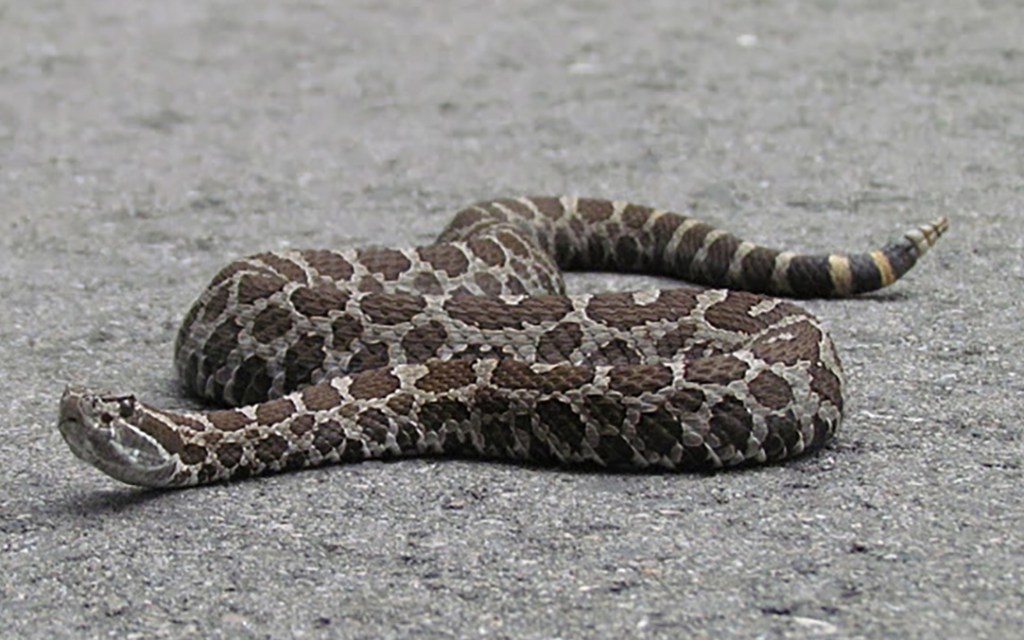
Eastern Massasauga Rattlesnake (Sistrurus catenatus catenatus)

Eastern Massasauga Rattlesnake by Jonathan Schechter/Earth’s Almanac

In Season of the Massasauga Rattler!, Jonathan Schechter writes that the massasauga  likes our sun-soaked trails in the waning days of summer and early autumn, so you may catch a glimpse of one if you’re out and about in Lower Michigan. The Michigan DNR page on the Eastern Massasauga Rattlesnake (Sistrurus catenatus catenatus) explains:

Michigan’s only venomous snake is a rare sight for most state residents. Historically, they could be found in a variety of wetlands and nearby upland woods throughout the lower peninsula. During the late spring, these snakes move from their winter hibernation sites, such as crayfish chimneys and other small mammal burrows in swamps and marshlands, to hunt on the drier upland sites – likely in search of mice and voles, their favorite food.

Females give birth to 8 to 20 young in late summer. The young snakes have a single “button” on their tails; a new rattle segment is added at each shedding of the skin, which occurs several times per year.

The massasauga can be characterized as a shy, sluggish snake. Its thick body is colored with a pattern of dark brown slightly rectangular patches set against a light gray-to-brown background. Occasionally, this coloration can be so dark as to appear almost black. The belly is mostly black. It is the only Michigan snake with segmented rattles on the end of its tail and elliptical, (“cat like”) vertical pupils in the eyes. The neck is narrow, contrasting with the wide head and body and the head appears triangular in shape. Adult length is 2 to 3 feet.

These rattlesnakes avoid confrontation with humans; they are not prone to strike – preferring to leave the area when they are threatened. Like any animal though, these snakes will protect themselves from anything they see as a potential predator. Their short fangs can easily puncture skin and they do possess a potent venom. It is best to treat them with respect and leave them alone. The few bites that occur to humans often result from attempts to handle or kill the snakes. Any bite from a massasauga should receive prompt professional medical attention. When compared to other rattlesnakes found in the United States, the massasauga is the smallest and has the least toxic venom.

Massasaugas are found throughout the Lower Peninsula, but not in the Upper Peninsula (thus there are no poisonous snakes on the Upper Peninsula mainland.)

They stress that Massasaugas are listed as a “species of special concern” and are protected by state law, so don’t kill or harm them. Read on for more including some lookalike snakes.

Jonathan adds that almost all rattler bites are on the dominant hand of the offending human! He took the photo above two years ago on a popular Oakland County hike-bike trail and notes that much of Oakland County is ratter habitat. Visit Earth’s Almanac to read more and be sure to subscribe to his blog when you’re there!

PS: Nick Scobel of the Herping Michigan blog has a great video of some Eastern Massasaugas that you should check out!

More Michigan snakes on Michigan in Pictures!

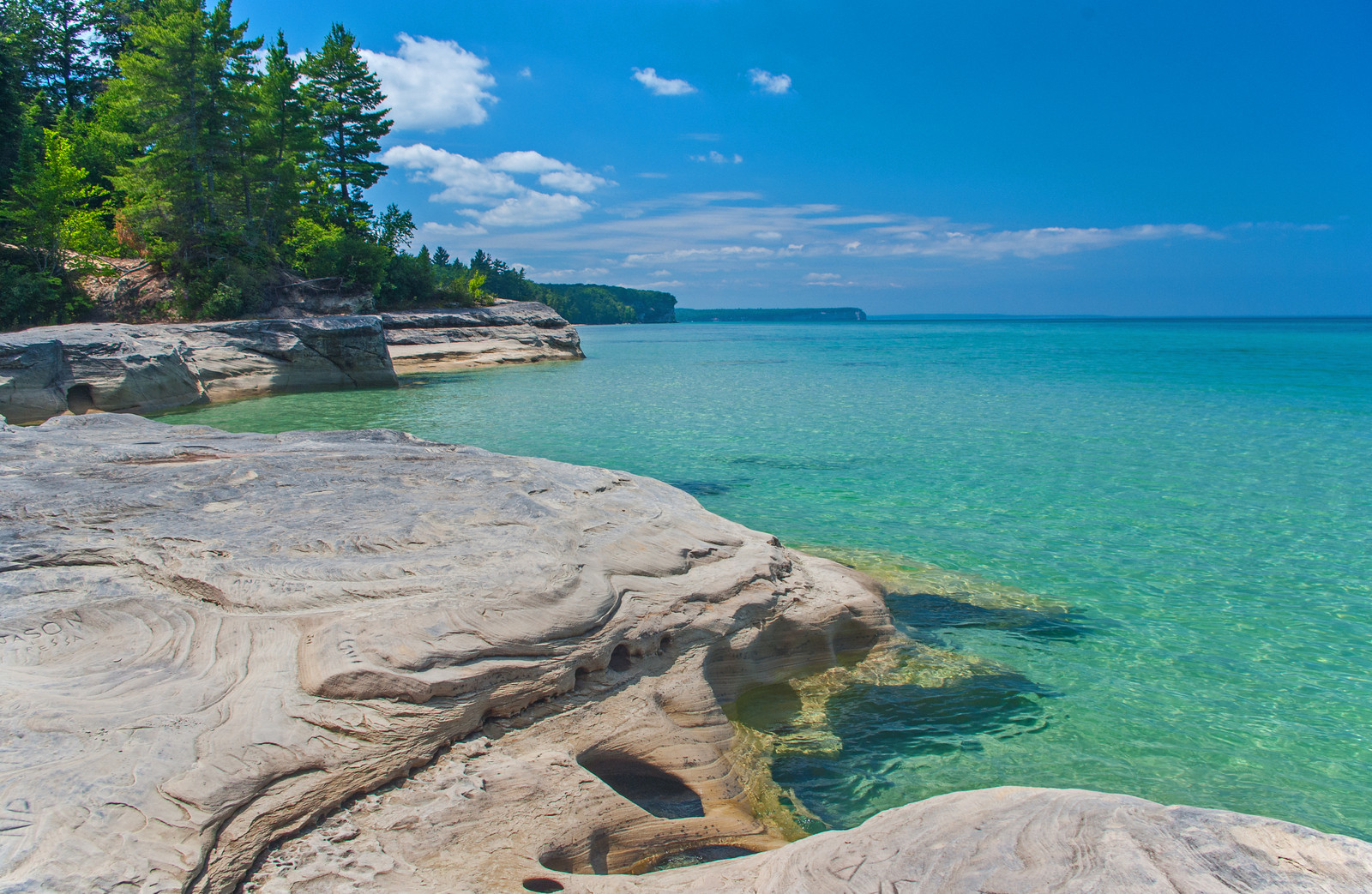
The Coves

The Coves Pictured Rocks

The Coves, photo by Gary of the North(Footsore Fotography)

Today’s photo is the latest cover for the Michigan in Pictures Facebook. It was taken at a beach known as The Coves in the Pictured Rocks National Lakeshore and is one of those photos to show your friends who don’t know Michigan.

Check it out background bigtacular and see & purchase more in Gary’s Pictured Rocks gallery at Footsore Fotography.

More great beaches on Michigan in Pictures!

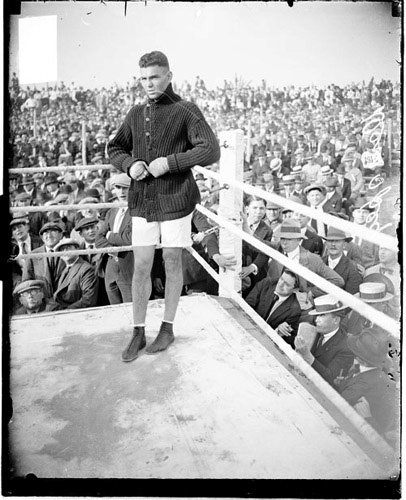
September 6, 1920: When Jack Dempsey came to Benton Harbor

Jack-Dempsey-in-Benton-Harbor

Pugilist, Jack Dempsey leaning against ring ropes, standing in a corner of a boxing ring outdoors

My first defense of the world heavyweight championship title was on Labor Day, 1920, against a dying friend of mine. I knocked him out because I loved the guy.
~Jack Dempsey

On September 6, 1920, over a year since he took the title from Jess Willard, heavyweight boxing champion Jack Dempsey met challenger Billy Miske at the Floyd Fitzsimmons Arena in Benton Harbor to defend his title for the first time. Referee Jimmy Dougherty awarded Dempsey a win by knockout at 1:13 in the 3rd round. Here are a few facts from BoxRec where they also have photos:

  • Attendance was reported to be 11,346 with total receipts at $134,904 according to promoter Floyd Fitzsimmons.
  • Dempsey received $50,000 cash plus a share of the gate receipts.
  • This was the first bout broadcast on radio.
  • This was the only time in over 100 bouts that Miske was knocked out. To quote boxing historian Eric Jorgensen from the FOX Sports biopic Billy Miske: Dead Man Fighting: “Any way you look at heart, toughness and determination–sheer guts–he (Miske) definitely had it. The fact that it took a Jack Dempsey to knock him out–that tells you what a tough guy he was.”

Miske was later revealed to have been dying of Bright’s Disease, and you can read a good account of this and the fight from The Art of Manliness.

You can’t view this photo any bigger but you can check out a series of photos from the fight at the Library of Congress and also see an incredible panorama of the crowd at the Library of Congress!