Wonder Years

Wonder Years

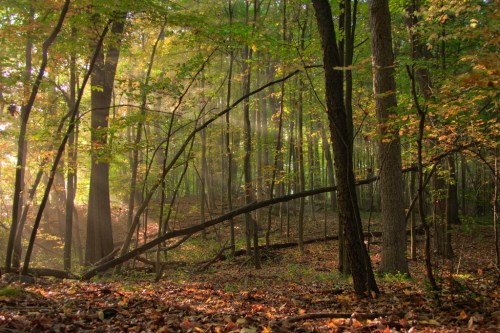
Wonder Years, photo by Aaron Springer

“Sell your cleverness, and buy bewilderment”
– Rumi

Good advice – here’s hoping you can afford a little bewilderment.

Check Aaron’s photo out bigger and see more in his fall slideshow.

Lots more fall color on Michigan in Pictures.

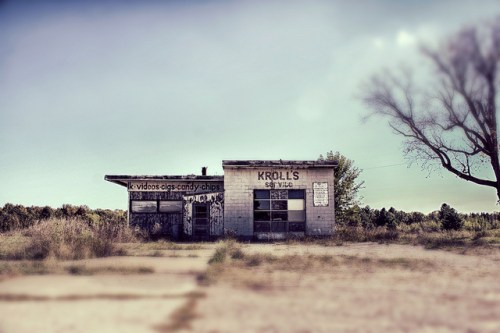
Kroll’s Service

Untitled

Untitled, photo by J.M.Barclay

Guessing the repair is going to take a while…

View J.M.’s photo bigger and see more in his slideshow.

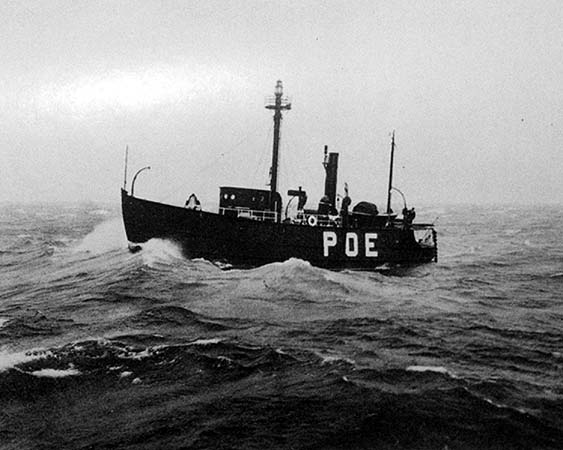
Riding the storm out with the Poe Reef Lightship

Poe Reef Lightship

Poe Reef Lightship LV62 riding out a storm on her station, courtesy the Lake Carrier’s Association

The Poe Reef Lighthouse page at Terry Pepper’s Seeing the Light begins with the story of the vessel that preceded the lighthouse:

Poe Reef lies just eight feet beneath the water’s surface between Bois Blanc Island and the Lower Peninsula mainland, and as such has long represented a significant hazard to vessels making their way through the Straits between Lakes Michigan and Huron.

In the early 1890’s the Lighthouse Board faced a vexing problem. Increasing vessel traffic created a need to install navigational aids at a number of offshore shoals and reefs. With Congressional funds increasingly difficult to obtain, and the costs of offshore lighthouse construction prohibitively high, the Board determined that the use of lightships to mark such hazards would be both significantly more expeditious and cost effective.

Unable to convince Congress to free up the funds for these lightships, the Board took the chance of redirecting an existing $60,000 congressional appropriation for a lighthouse off Peninsula Point to the purchase of four lightships.

In 1892 two contracts totaling $55,960 were awarded to the Craig Shipbuilding Company in Toledo for the construction of four lightships. Designated as Lightships LV59, LV60, LV61 and LV62, all four vessels were built to similar specifications. Framed and planked of white oak they measured 87′ 2″ inches in length, 21′ 6″ inches in the beam, with a draft of 8 feet. In a cost-cutting effort, the vessels were un-powered, outfitted with only a small riding sail carried on a short after mast. Equipped with a cluster of three oil-burning lens lanterns hoisted on their foremasts, each was also equipped with 6″ steam whistles and hand-operated bells for fog use. Work was completed on the four vessels the following year, and after sea trials, all four were commissioned by the Board and placed into service, LV59 being assigned to Bar Point, LV60 to Eleven Foot Shoal, LV61 to Corsica Shoal and LV62 to Poe Reef.

With the words POE REEF brightly painted in white on her fire engine red hull, LV62 was towed to Poe Reef by the lighthouse tender Marigold, and anchored on station to begin her vigil on September 29, 1893. For the next seventeen years LV62 spent every shipping season faithfully guarding the shoal. With the end of each shipping season, one of the lighthouse tenders would make the rounds of all lightship stations in the Straits area, and tow them into Cheboygan harbor for winter lay-up. While in Cheboygan, necessary repairs and improvements would be made in preparation for the following season. At some time in March or April, the ice would break up sufficiently to allow the vessels to be towed back to their stations to stand guard for yet another season.

Read on for another shot of this vessel and for more about the lighthouse that replaced the lightship at Poe Reef. Also have a look at these photos of Light Vessel 96, which took over for LV 62 from 1915-1920 at Poe Reef.

One of many at Forty Mile Point

EDIT: WOW!! Check out the video that Tudor did at Forty Mile Point, The Grand Hotel and Fort Mackinac!
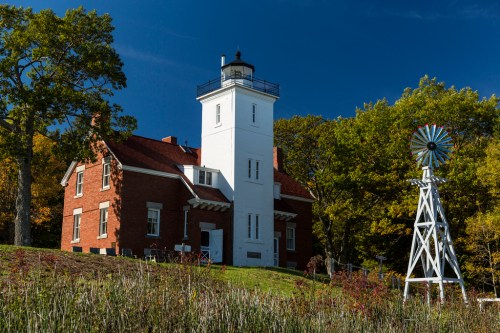
2013_10_11-WTA-5DM3-4448

2013_10_11-WTA-5DM3-4448, photo by Tudor ApMadoc

Wikipedia’s U.S. Lighthouses entry says that the United States has had approximately a thousand lights as well as light towers, range lights, and pier head lights. With the second longest coastline in the U.S. and a history of vibrant trade across the Great Lakes, it makes sense that Michigan has the most lights of any state with over 150 past and present lights (166 by their count and as many as 247 by some). While the current number varies depending on who you talk to, 115 seems to be the accepted number.

Terry Pepper’s Seeing the Light is a fabulous guide to the lighthouses of the Great Lakes and definitely a resource to review before you visit a Michigan lighthouse. The Forty Mile Point Light entry in explains:

While the Presque Isle Peninsula had been lighted since 1840, and the entrance to the Cheboygan River fifty miles to the north had been lighted since 1851, the New Presque Isle Light’s range of visibility of 19 miles and the Cheboygan Light’s visible range of 13 miles left an unlighted 18 mile intervening stretch of coastline along which mariners were forced to navigate blind. In it’s annual report for fiscal 1890, the Board recommended that $25,000 be appropriated for the construction of a new light and fog signal at Forty Mile Point near Hammond’s Bay, at the approximate mid point between the two lights.

(the project languished for nearly 60 years until…)

Eleventh District Engineer Major Milton B. Adams selected and surveyed the site for the new Light. With an offer of $200 for the property accepted by the owner, Adams approved the plans and specifications for the station in February 1896. Contracts for the ironwork for the lantern, gallery, boilers and fog whistles were awarded soon thereafter, and with receipt of the materials at the Detroit depot, were loaded aboard the lighthouse tender AMARANTH and delivered to the site on July 5, 1896. Work at the site began with the construction of a wood-framed building, which would be used by the work crew as a temporary dwelling during construction, and converted into a barn for the keeper’s horses on the completion of the work.

Adams’ plan for the main lighthouse structure was a virtual duplicate of that simultaneously under construction at Big Bay Point on Lake Superior. Consisting of a duplex dwelling with a tower incorporated into the center of one side-wall, the structure stood 35 feet by 57 feet in plan. Erected on a 20″ thick cut limestone foundation, the brick walls featured double walls with an air space between to provide insulation. The integrated tower stood twelve feet in plan, and fifty-two feet in height. The apartments on each side of the dwelling were exact mirrored duplicates and were set-up to afford complete privacy. Each apartment featured its own main entry, cellar, kitchen, parlor, tower entry door and stairway to the bedrooms on the second floor. Indicative of Adam’s thoughtfulness in designing the structure, each of the stairways incorporated a skylight in its ceiling through which the lantern could be observed, thereby allowing both keeper and his assistant to verify the correct operation of the light from within the warmth of their apartment without having to leave the building or climb to the top of the tower itself to see the light. The brick tower was capped by a square gallery with iron safety railing, and a prefabricated octagonal cast iron lantern erected at its center.

Read on for more at Seeing the Light and also check out this shot of the construction crew posing in front of the lighthouse in 1896. Forty Mile Point Light is now a museum, click here to visit their website for more including directions.

Check this photo out bigger, have a look at this panoramic shot of the light and see more in Tudor’s 2013-10 Fall Trip slideshow.

Many more Michigan lighthouses on Michigan in Pictures.

Miles of Fall Color from Landslide Overlook

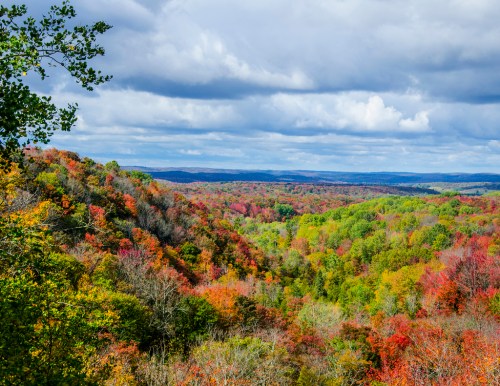
Landslide Overlook 2

Landslide Overlook 2, photo by LindaB.

Fall is a time for exploration and seeing new sights. In precisely that spirit of adventure, Linda writes:

Just by looking at the map I said ‘lets take this dirt road and see what color we find.’ I didn’t know it was a seasonal road until we turned onto it and then saw a sign that said Landslide Overlook. So we followed this dirt road, which was rather narrow in spots, until we came to a parking area. It was just a short 1/4 mile walk to this wonderful view of the Jordan River Valley.

You can read more about the Jordan Valley from the DNR and get a map to the overlook on Foursquare.

Check Linda’s photo out background bigtacular and see a couple more shots from this incredible overlook in her slideshow.

More Fall wallpaper on Michigan in Pictures.

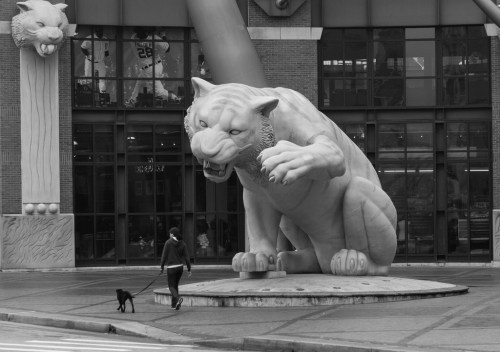
Roar

Roar

Roar, photo by Matt Gowing

Just sayin’.

Check Matt’s photo out background bigilicious and see more in his Street slideshow.

And oh yeah – go Tigers!

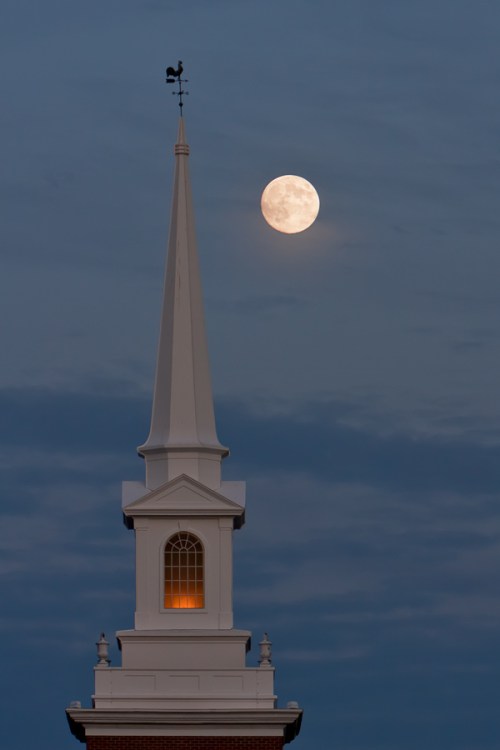
Church of the Hunter’s Moon

Church of the Hunter's Moon

Church of the Hunter’s Moon, photo by Kevin’s Stuff

Deborah Byrd is the founder of one of my favorite sites , EarthSky. Her article Everything you need to know: Hunter’s Moon 2013 explains:

If you’re in the Northern Hemisphere, look for the moon to be bright and full-looking for several nights around October 18, 19 and 20. Around all of these nights, you’ll see a bright round moon in your sky, rising around the time of sunset, highest in the middle of the night. This procession of moonlit nights is what characterizes a Hunter’s Moon.

…the full moon after the Harvest Moon, which is the full moon nearest the autumnal equinox. In the Northern Hemisphere, the Harvest Moon sometimes falls in September and sometimes falls in October. So the Hunter’s Moon sometimes falls in October and sometimes in November.

But the Hunter’s Moon is also more than just a name. Nature is particularly cooperative around the time of the autumn equinox to make the full moonrises unique around this time. Here’s what happens. On average, the moon rises about 50 minutes later each day. But when a full moon happens close to the autumnal equinox – either a Harvest or a Hunter’s Moon – the moon (at mid-temperate latitudes) rises only about 30 to 35 minutes later daily for several days before and after the full moon.

Why? The reason is that the ecliptic – or the moon’s orbital path – makes a narrow angle with the evening horizon around the time of the autumn equinox. The narrow angle of the ecliptic results in a shorter-than-usual rising time between successive moonrises around the full Hunter’s Moon. These early evening moonrises are what make every Hunter’s Moon special. Every full moon rises around sunset. After the full Hunter’s Moon, you’ll see the moon ascending in the east relatively soon after sunset for a few days in a row at northerly latitudes.

Read on for more and definitely subscribe to their email!

Kevin is our go-to guy for all things astronomical. Check his photo out bigger and see more in his The Moon slideshow.

Lots more moon fun on Michigan in Pictures!

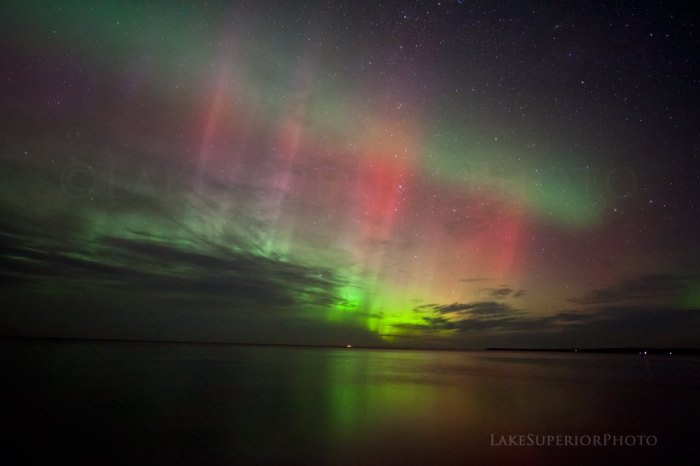
Radiance

Northern Lights by Shawn Malone

Radiance, photo by Shawn Malone/Lake Superior Photo

Run, don’t walk to watch Shawn’s latest video Radiance. It’s another eye-popping look at the aurora borealis featuring her photos set to “The Opening” from the forthcoming Album: “FOUND” by David Helpling/Jon Jenkins.

Speaking of northern lights, it looks like we have a 25% chance of the aurora over the next 3 days according to NOAA’s Space Weather Prediction Center.

Speaking of Shawn’s video, after you watch it be sure to check out North Country Dreamland, the 2013 Smithsonian In Motion Video Contest Viewer’s Choice award winner!

A little color and a little light

A little color and a little light

A little color and a little light, photo by RochesterTee

Fall color looks like it will continue to be great for at least another week – get out and wander!

Check this out bigger and see more in Tom’s Springfield Oaks slideshow.

More fall color on Michigan in Pictures!

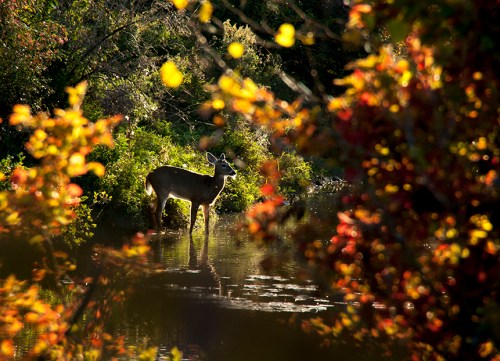
A Fall Drink of Water

Doe

Doe, photo by sarah-nussbaumer

Here’s hoping your weekend holds a lot of autumn beauty … and a little bit of wonder.

Check it out bigger and see more in Sarah’s Autumn slideshow.

More fall photos on Michigan in Pictures.