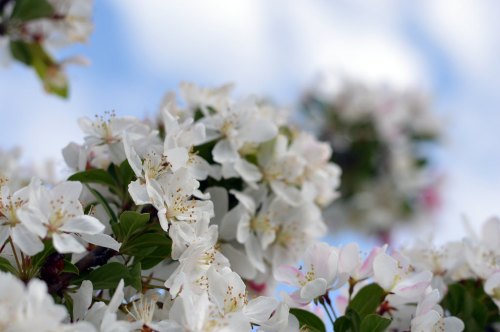
Blossom Time

White Blossoms

White Blossoms, photo by cncphotos

In addition to Michigan in Pictures, I run the website Leelanau.com. The most common question this time of year over there is “When will cherry blossoms be out?” Although this year has been slow going, I was out and about yesterday and caught some of the first blooms of the season. Click that link to see them on Leelanau.com and also a pile of morels!

Visit Traverse City’s cherry blossom section says that the blossoms on the trees last on average of four to five days, but because different parts of the region bloom at different times, it’s a safe bet you can see blossoms for one to two weeks on average if you make the rounds.

View CNC’s photo background bigilicious and see more in his Spring slideshow.

Lots more blossoms and more spring wallpaper on Michigan in Pictures.

The Camelopardalids: A New Meteor Shower for May?

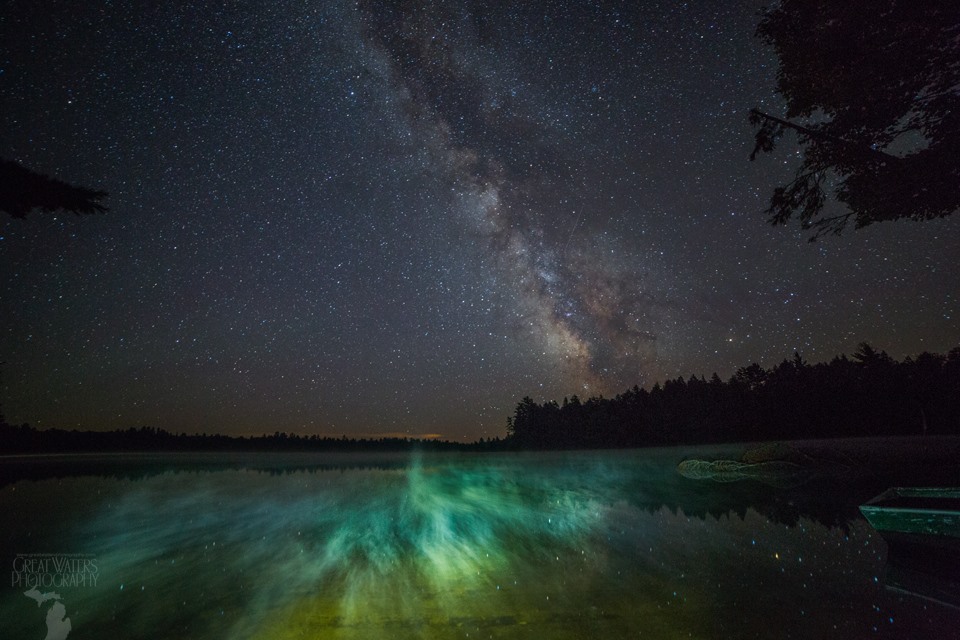
Milky Way Over Twin Lake, photo by Yooper Life Photography

EarthSky has a feature on the possible birth of a new meteor shower in May:

In 2014, an exciting new meteor shower – the May Camelopardalids – might come on the scene. And it’s coming up soon! It’s predicted for the night of May 23-24. This possible shower stems from Comet 209P/LINEAR, discovered in 2004. If the predictions hold true, Earth might be sandblasted with debris from this comet, resulting in a fine display of meteors, or shooting stars on the evening of May 23, and the morning of May 24…

The meteors will radiate from the constellation Camelopardalis (camelopard), a very obscure northern constellation. Its name is derived from early Rome, where it was thought of as a composite creature, described as having characteristics of both a camel and a leopard. Nowadays we call such a creature a giraffe! Since meteor in annual showers take their names from the constellation from which they appear to radiate – and since this meteor shower might become an annual event – people are already calling it the May Camelopardalids.

This constellation – radiant point of the May 2014 meteor shower – is in the northern sky, close to the north celestial pole, making this meteor shower better for the Northern Hemisphere than the Southern Hemisphere.

Click through for lots more about the May Camelopardalis including videos and charts of where to look!

Ken took this photo of the Milky Way over Twin Lake near Grand Marais in 2013. View his photo bigger on Facebook and see more on his Yooper Life Page.

More meteor showers on Michigan in Pictures!

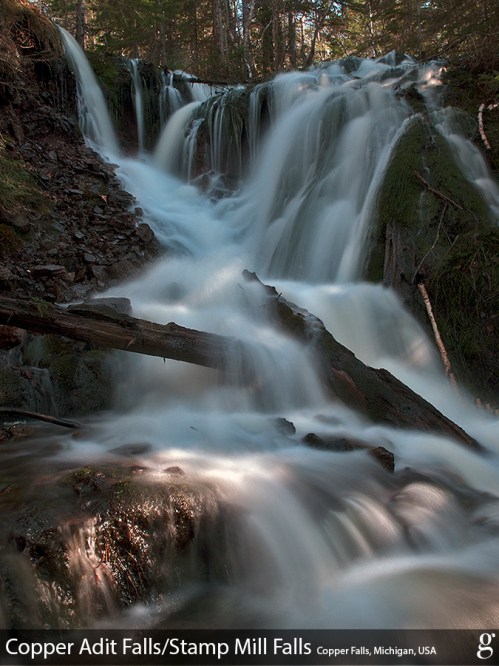
Copper Adit Falls, Stamp Mill Falls at Copper Falls Mine

n2c_113-4482

n2c_113-4482, photo by Gowtham

Gowtham writes:

Established in 1846, Copper Falls mine was a collection of several copper mine shafts and adits (definition below). Owl Creek — in what was once one of the richest fissure veins in the Keweenaw — seems to make a magical (and a seasonal) appearance out of a hillside draining the now closed Copper Falls mine to form this quite spectacular and scenic-looking Copper Adit Falls. With the nearby remnants of an old stamp mill, this waterfall is also known as Stamp Mill Falls.

Citing Wikipedia, an adit is an entrance to an underground mine which is horizontal or nearly horizontal, by which the mine can be entered, drained of water, ventilated, and minerals extracted at the lowest convenient level.

The Copper Country Explorer’s entry on Copper Falls begins:

Stamp Mills relied on two things in order to separate copper: water and gravity. Any stamp mill would be built near a source of water such as a river or lake. It also would be build along a hill, in order to make the greatest use of gravity. Because of this we started our search along the creek that had cut a path through the sands – Owl Creek.

Owl Creek was the lifeblood of the Copper Falls Mine. Steam stamps required water, and along the rugged ridges of the Copper Falls a natural source existed. Fed from atop the ridge by a lake of the same name, Owl Creek drops over 500 feet to the marshlands along Superior’s shore. This creek not only provided water to the mine and mill, but the potential energy stored in its banks could easily turn a water wheel for power (mechanical power, since electricity had yet to be invented). It was a perfect spot for a mill.

Read on for lots more and explore the Copper Falls Mill at with the Copper Country Explorer.

View Gowtham’s photo bigger and see more of his photos from the area on his website.

More waterfalls on Michigan in Pictures!

Find the Trout Lily where and when the trout hide…

Trout lily (3 of 3)

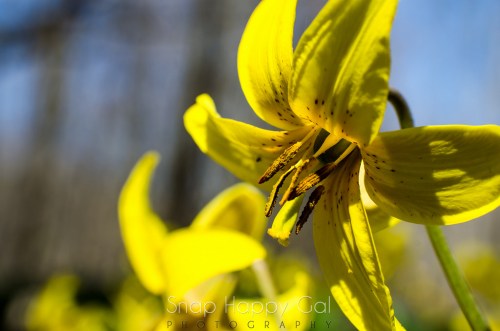
Trout lily (3 of 3), photo by Heather Higham

I love old books, and was happy to find Wild Flowers Worth Knowing by Neltje Blanchan, a 1917 book that is available online through Project Gutenberg. The entry for Yellow Adder’s Tongue; Trout Lily; Dog-tooth “Violet” (Erythronium americanum) is a good example of the descriptive & endearing turns of phrase you often find in books from another age:

Flower – Solitary, pale russet yellow, rarely tinged with purple, slightly fragrant, 1 to 2 in. long, nodding from the summit of a root-stalk 6 to 12 in, high, or about as tall as the leaves. Perianth bell-shaped, of 6 petal-like, distinct segments, spreading at tips, dark spotted within; 6 stamens; the club-shaped style with 3 short, stigmatic ridges. Leaves: 2, unequal, grayish green, mottled and streaked with brown or all green, oblong, 3 to 8 in. long, narrowing into clasping petioles.

Preferred Habitat – Moist open woods and thickets, brooksides.

Flowering Season – March-May.

Distribution – Nova Scotia to Florida, westward to the Mississippi.

Colonies of these dainty little lilies, that so often grow beside leaping brooks where and when the trout hide, justify at least one of their names; but they have nothing in common with the violet or a dog’s tooth. Their faint fragrance rather suggests a tulip; and as for the bulb, which in some of the lily-kin has toothlike scales, it is in this case a smooth, egg-shaped corm, producing little round offsets from its base. Much fault is also found with another name on the plea that the curiously mottled and delicately pencilled leaves bring to mind, not a snake’s tongue, but its skin, as they surely do. Whoever sees the sharp purplish point of a young plant darting above ground in earliest spring, however, at once sees the fitting application of adder’s tongue. But how few recognize their plant friends at all seasons of the year!

Every one must have noticed the abundance of low-growing spring flowers in deciduous woodlands, where, later in the year, after the leaves overhead cast a heavy shade, so few blossoms are to be found, because their light is seriously diminished. The thrifty adder’s tongue, by laying up nourishment in its storeroom underground through the winter, is ready to send its leaves and flower upward to take advantage of the sunlight the still naked trees do not intercept, just as soon as the ground thaws.

View Heather’s photo background bigtacular and see more in her Up Close slideshow.

Many more Michigan flowers and more Spring wallpaper on Michigan in Pictures!

Chillin’ with the Wood Ducks

Wood Duck

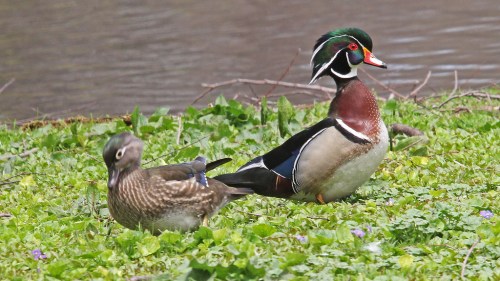
Wood Duck, photo by Dan Lockard

The All About Birds listing for Aix sponsa (wood duck) says in part:

The Wood Duck is one of the most stunningly pretty of all waterfowl. Males are iridescent chestnut and green, with ornate patterns on nearly every feather; the elegant females have a distinctive profile and delicate white pattern around the eye. These birds live in wooded swamps, where they nest in holes in trees or in nest boxes put up around lake margins. They are one of the few duck species equipped with strong claws that can grip bark and perch on branches.

Wood Ducks thrive in bottomland forests, swamps, freshwater marshes, and beaver ponds. They are also common along streams of all sizes, from creeks to rivers, and the sheer extent of these make them an important habitat. Wood Ducks seem to fare best when open water alternates with 50–75% vegetative cover that the ducks can hide and forage in.

Some wood duck facts:

  • Natural cavities for nesting are scarce, and the Wood Duck readily uses nest boxes provided for it. If nest boxes are placed too close together, many females lay eggs in the nests of other females. (click for info about building a nest box)
  • The Wood Duck nests in trees near water, sometimes directly over water, but other times up to 2 km (1.2 mi) away. After hatching, the ducklings jump down from the nest tree and make their way to water. The mother calls them to her, but does not help them in any way. The ducklings may jump from heights of up to 89 m (290 ft) without injury.
  • Wood Ducks pair up in January, and most birds arriving at the breeding grounds in the spring are already paired. The Wood Duck is the only North American duck that regularly produces two broods in one year.

View Sherri & Dan’s photo background big and see more in their Animals slideshow.

Many (many) more Michigan birds on Michigan in Pictures.

Beautiful Beast

Beautiful Beast

Beautiful Beast, photo by Jamie MacDonald

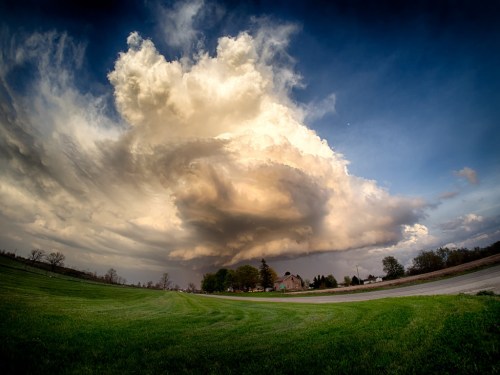
Yesterday saw strong storms in southeast Michigan including some tornado sightings (click that link for photos).

Jamie took this shot last week with a Rokinon 7.5mm Fisheye. Check his photo out bigger and see more in his Stormy Weather slideshow.

More wild & wonderful weather on Michigan in Pictures.

Know Your Michigan Turtles: Blanding’s Turtle

Blanding's Turtle

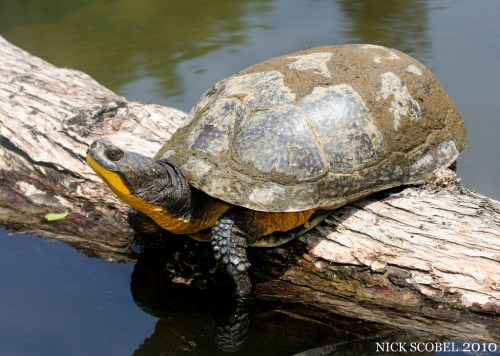
Blanding’s Turtle, photo by Nick Scobel

One of the most popular posts on Michigan in Pictures is Know Your Michigan Turtles where there’s now 6 of Michigan’s 10 turtle species profiled. For all those folks who come by to hang with our hard-shelled friends, here’s the latest installment in the series! 

The University of Michigan Animal Diversity Web entry for Emydoidea blandingii (Blanding’s Turtle) says that the Great Lakes region is currently a stronghold for this species:

Blanding’s turtles are found in and around shallow weedy ponds, marshes, swamps, and lake inlets and coves most of the year. They prefer slow-moving, shallow water and a muddy bottom with plenty of vegetation.

Blanding’s turtle are medium sized turtles with a carapace length ranging from 15.2 to 27.4 cm. These semi-aquatic turtles have moderately high, domed carapaces. They are elongate and smooth, lacking keels or sculpturing. The carapacial scutes display distinct growth annuli most prominently seen in juveniles. Coloration between individuals is highly variable. The carapace is black or gray with any variation of scattered light yellow or whitish flecks or dots. The light spots and flecks predominate in some individuals while others are almost solid black. The plastron is yellow in color with a dark blotch in the outer corner of each scute, and has a V-shaped notch near the tail.

Blanding’s turtles, like most other turtles, emerge to bask on sunny days. Basking sits include logs, grass clumps, sloping banks, or high perches near the water. Although these turtles are quite tolerant to cold, the summer heat may restrict their activities to early morning and evening or possibly a more nocturnal lifestyle. In the event of their habitat drying up some individuals will opt to migrate to new bodies of water while others simply burrow into the mud and aestivate until conditions improve. Blanding’s turtles generally hibernate from late October until early April, but quite often they can be seen moving slowly below the ice.

Blanding’s turtles are omnivores. Their favorite food items are crustaceans but they also feed on insects, leeches, snails, small fish, frogs, and occasionally some plants. Food is captured with a rapid thrust of this turtle’s long neck, similar to the feeding actions of the snapping turtle (Chelydra). Feeding mostly occurs underwater and food seized on land is generally carried to the water for swallowing. Prey is either swallowed whole or if it is too large it is held by the jaws and shredded into smaller pieces by the front claws.

The Michigan DNR notes that Blanding’s Turtle is protected as a species of special concern in Michigan and also has a map of occurences of Blanding’s Turtle.

View Nick’s photo bigger and see a lot more of his photos of Blanding’s turtles on Flickr including this shot of the turtle’s amazingly long neck. Nick also runs the Herping Michigan Blog, a great resource to see a lot of reptiles and amphibians in the wild!

Roses are red, violets are tough

Roses are red, violets are tough

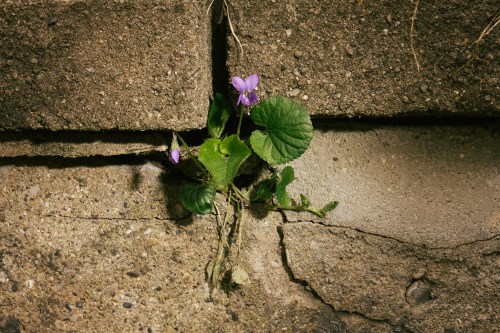
Roses are red, violets are tough, photo by Bill Dolak

View Bill’s photo background bigilicious and see more in his Flowers slideshow.

More Spring wallpaper on Michigan in Pictures.

Meanwhile, on Miners Beach

Thankful for what we are blessed with here by oni_one

Thankful for what we are blessed with here…, photo by oni_one_

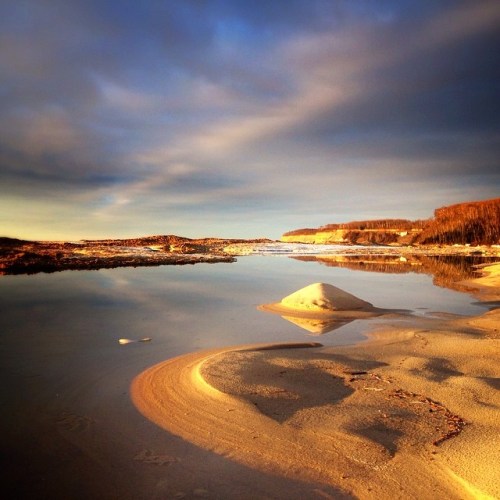
One of the neatest things for me about online photography and social media is how things come together in a synchronistic fashion sometimes. Yesterday, I posted a photo by Shawn Malone from above at Miners Castle of the frozen expanse of Lake Superior. For everyone who wondered what things were looking like at beach level, here you go!

Sarah took this pic yesterday at Miners Beach in the Pictured Rocks. View her photo bigger and see more on her Instagram.

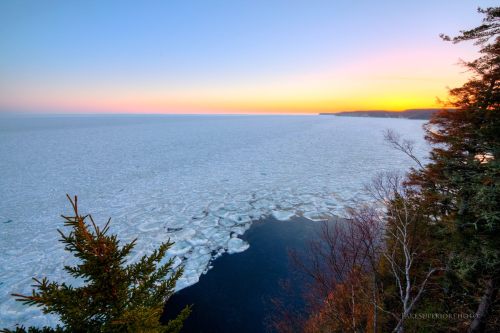
Winter won’t leave Lake Superior

Wintry Sunrise from Pictured Rocks by Lake Superior Photo

Wintry Sunrise from Pictured Rocks, photo by Lake Superior Photo

Normally ice would be gone or nearly gone from Superior and the other Great Lakes, but as the Freep reported:

Heading into May, the Great Lakes combined remain 26% ice-covered, with Lake Superior still more than half-blanketed in ice. By comparison, at this time last spring the lakes were less than 2% covered with ice.

The remaining levels of ice cover are amazing, said Jia Wang, an ice climatologist at the National Oceanic and Atmospheric Administration’s Great Lakes Environmental Research Laboratory in Ann Arbor.

“This prolonged winter will affect summer temperatures. This summer will be cold, and then a cooler fall,” he said.

In addition to wreaking havoc on the Great Lakes shipping industry and impacting fish and other aquatic species, the miles of ice cover serve as a vast, white reflector.

“All that sunlight that would normally heat up the water is just bouncing back up into space,” said Jay Austin, an associate professor at the University of Minnesota-Duluth’s Large Lakes Observatory, who agrees with Wang about the ice cover’s impacts on this summer, but disagrees about its potential impacts on weather beyond that.

Read on for more. About the photo, Shawn of Lake Superior photo writes:

A wonderful wintry sunrise from Pictured Rocks this morning…. ok I’m going to go cry now

The lake was still (of course, with ice that’s feet thick as far as the eye can see..) but a new sound, you could hear the waterfalls, prob Miners Falls in the distance.. so cool

View Shawn’s photo big as our biggest lake on Facebook, see another shot of the wintry expanse from Miner’s Castle and definitely follow her photos as “spring” unfolds in the North Country at the Lake Superior Photo Facebook along with 30,000+ others and purchase photos at lakesuperiorphoto.com!