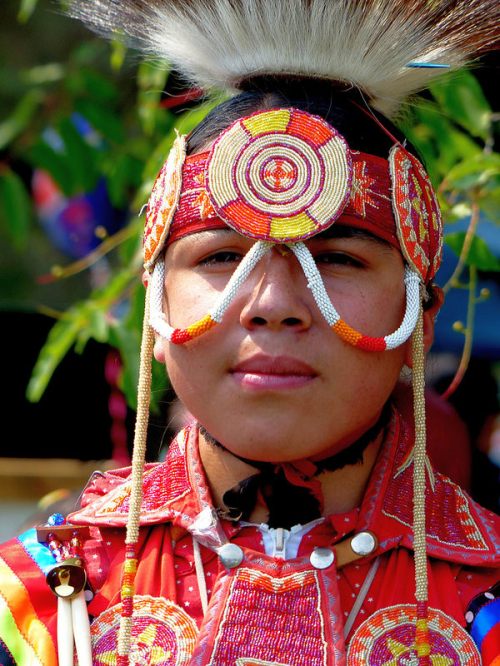
Happy Michigan Indian (Anishinaabek) Day

Odawa Indian Boy

Odawa Indian Boy, photo by Sharon

Michigan Indian Day was established as the 4th Friday in September by the State of Michigan in 1974.

The Little River Band of Ottawa Indians & Kenny Pheasant, Director of their Anishinaabemowin Program created a cool site to help people learn Anishinaabemowin, the language of the Anishinaabe nation. The history page begins:

In the beginning, Gizhemanidoo created the universe as we know it today. He created Grandfather Sun and Grandmother Moon, Mother Earth and Father Sky. And on the earth he created all things, living and nonliving. He created life in the earth, on the earth, in the sky and in the water. He created the plants, rivers, four-legged and winged creatures, and the swimmers. After this was done, he created one of the greatest mysteries of all – the four seasons – to bring harmony and balance to all.

After all creation was complete, he created man. After he created the first Anishinaabe, he came to him in a dream and instructed him that he was to name all things in the language that he gave him, Anishinaabemowin. So the first man went about on his journey and named all things he saw – all the animals, insects, birds and fish – however long this took. Afterward, he spoke to the Creator Gizhemanidoo in his dream and said, “I have finished what you have told me to do.” Then the Creator Gizhemanidoo spoke back to him and said, “Yes, you have indeed done so, and now it is time for me to give you your name. Your name shall be Nanabozho, and whenever your people meet and greet one another, they will say a part of your name. That is why whenever the Anishinaabe people greet one another, they say the word Bozhoo.

Our creation story tells us that we originally migrated to the Great Lakes region from the East Coast. There are many settlements of our original homes that still exist to this day, like Manitoulin Island, the Island of the Great Spirit.

We have always been a nation, and we knew one another as the Anishinaabek. It was not until the French and European settlers arrived on this part of the continent that we became known as the tribes now called Ojibwe, Odawa and Bodwe’aadamiinh.

Read on for more.

Sharon took this at the 2014 Odawa Homecoming Pow Wow in Harbor Springs. View it bigger and see more in her slideshow.

More portraits on Michigan in Pictures.


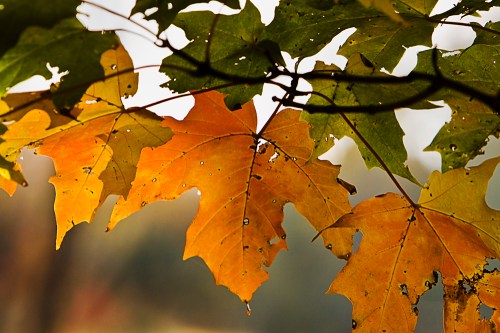
The Science of Fall Color, Revisited

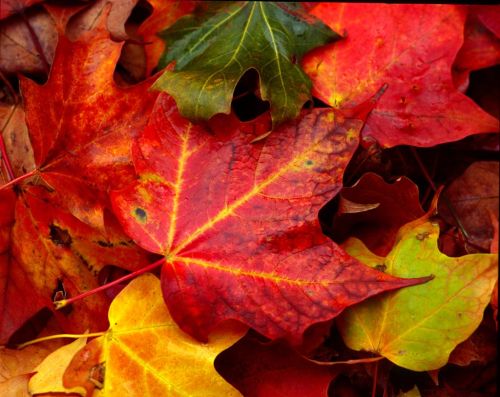
"Autumn Leaves" by Michael G.O'Callaghan

“Autumn Leaves”, photo by Michael G.O’Callaghan

Three years ago I posted this. It’s such good and useful information that I thought I’d share it again! #TBT?

The Science of Color in Autumn Leaves from the United States National Arboretum explains that process that starts the cascade of events that result in fall color is a growth process that starts in late summer or early autumn. When the nights get long enough, a layer of cells called the abscission layer forms that begins to block transport of materials from the leaf to the branch.

During the growing season, chlorophyll is replaced constantly in the leaves. Chlorophyll breaks down with exposure to light in the same way that colored paper fades in sunlight. The leaves must manufacture new chlorophyll to replace chlorophyll that is lost in this way. In autumn, when the connection between the leaf and the rest of the plant begins to be blocked off, the production of chlorophyll slows and then stops. In a relatively short time period, the chlorophyll disappears completely.

This is when autumn colors are revealed. Chlorophyll normally masks the yellow pigments known as xanthophylls and the orange pigments called carotenoids — both then become visible when the green chlorophyll is gone. These colors are present in the leaf throughout the growing season. Red and purple pigments come from anthocyanins. In the fall anthocyanins are manufactured from the sugars that are trapped in the leaf. In most plants anthocyanins are typically not present during the growing season.

As autumn progresses, the cells in the abscission layer become more dry and corky. The connections between cells become weakened, and the leaves break off with time. Many trees and shrubs lose their leaves when they are still very colorful. Some plants retain a great deal of their foliage through much of the winter, but the leaves do not retain their color for long. Like chlorophyll, the other pigments eventually break down in light or when they are frozen. The only pigments that remain are tannins, which are brown.

The explain that because the starting time of the whole process is dependent on night length, fall colors appear at more or less the same time every year and are not overly dependent on temperature, rainfall or other factors, other than the fact that weather can shorten or prolong the show by stripping leaves from trees.

Click through to the US Arboretum for more and also see Fall & Fuit from the Science of Color and Wikipedia’s entry on Autumn leaf color.

View Mike’s photo background big and see more in his Autumn slideshow.

Lots more fall color on Michigan in Pictures!

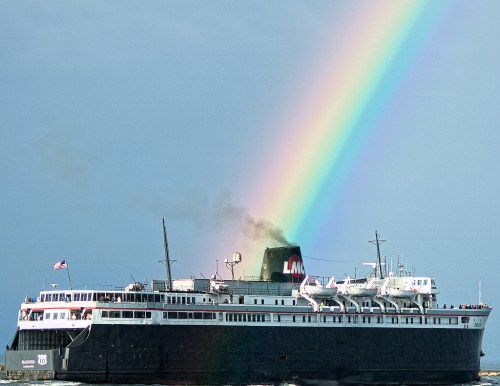
Rainbow over the Badger

Rainbow over the Badger

Rainbow over the Badger, photo by mark zacks

View Mark’s photo big as a boat and click for more of his Ludington shots including a few more of the Badger car ferry.

More ships & boats and more rainbows on Michigan in Pictures.

Fall Transition

Fall Transition

Fall Transition, photo by Terry Clark

The autumnal equinox happened last night at 10:29 PM, so today will our the first full day of fall. Here’s hoping this will be a warm & wonderful autumn for Michigan!

View Terry’s photo background big and see more of his fall photos.

Get your computer background updated for the season with more fall wallpaper on Michigan in Pictures. More fall photos too!

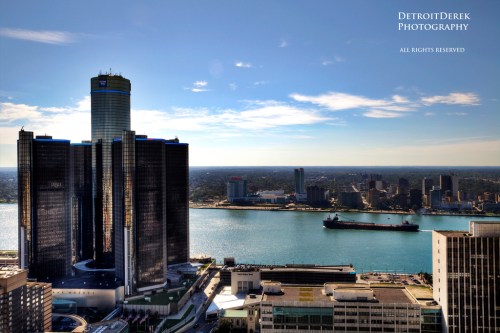
When Tall Met Long

When Tall Met Long

When Tall Met Long, photo by Derek Farr

View Derek’s photo bigger and see more in his Renaissance Center slideshow!

More Renaissance Center photos and info on Michigan in Pictures.


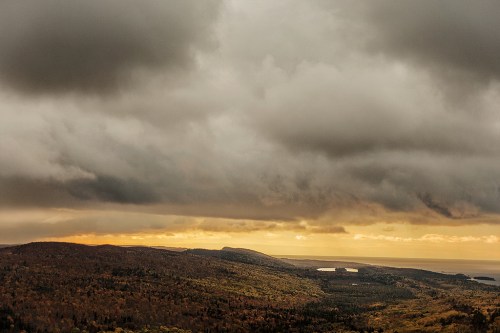
Sunset over the Keweenaw

Sunset over the Keweenaw

Sunset over the Keweenaw, photo by Ashley Williams

Here’s a beautiful shot from late October last year on the Keweenaw Peninsula in the U.P. With temps this cold, it won’t be long until the color returns! Hope you get a chance to get out and enjoy the outdoors this weekend.

View Ashley’s photo background bigtacular and see more in her slideshow. You can also follow her on Facebook or Instagram and visit her photography website.

More from the Keweenaw and more fall wallpaper on Michigan in Pictures.

Elmo’s Tower

Elmo's Tower

Elmo’s Tower, photo by David Clark

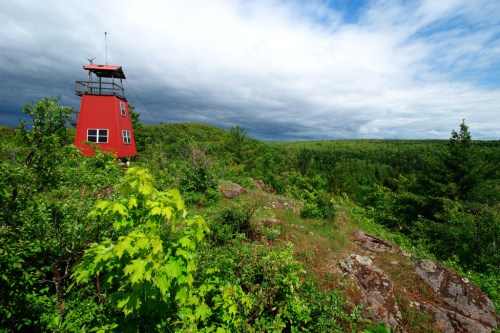
The things I learn about through Michigan in Pictures! About Elmo’s Tower on the Keweenaw Peninsula David writes:

I was amazed to find that I’ve never posted a photo of Elmo’s Tower. This tower was built — by hand! — by the late Elmo Negro, at a beautiful rock outcrop along the Cliffs. It’s just above the Phoenix mine, and overlooks the Eagle River gap. The tower has no function other than to be a pleasant place to enjoy a day (and have a barbecue).

More about Elmo (who was apparently a great dancer too) at Pasty Central.

View David’s photo background bigtacular and see more in his Summer slideshow.

The U.P. stand-off: Lions vs Packers

The U.P. stand-off

The U.P. stand-off, photo by Ann Fisher

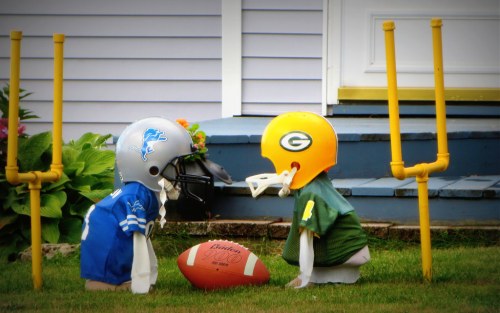
The Detroit Lions host the Green Bay Packers this Sunday at Ford Field for the first of two divisional meetings. Wikipedia notes that the longest continuously-running NFL rivalry is the Lions vs Packers. They first met in 1930 when the Lions were known as the Portsmouth Spartans (they were based in Portsmouth, Ohio until they moved to Detroit in 1934 season). They’ve been division rivals since 1933 and have always met at least twice a season since 1932, without any cancelled games.

As Ann notes, that rivalry is no contest in Marquette. Thought it may be in Michigan, the U.P. is Packers territory.

View her photo of lawn geese all dressed up for the season background big and see more in her 2014 U.P. slideshow.

Lots more Detroit Lions on Michigan in Pictures.

$80 Million Michigan Central Station Makeover?

Michigan Central Station, Detroit, MI 2013

Michigan Central Station, Detroit, MI 2013, photo by brian

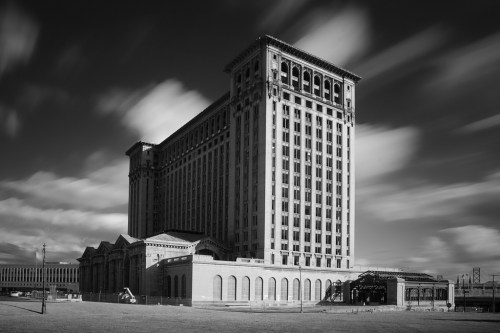
The Lansing State Journal reports on Ambassador Bridge owner Matty Maroun’s plan for an $80-million makeover of Michigan Central Station:

Michigan Central Station, a well-known symbol of Detroit’s decay, is expected to get $80 million in renovations over the next three years, according to a top aide to depot owner Manuel (Matty) Moroun. The revelation was made by Moroun associate Dan Stamper as he went before the Detroit City Council last week to discuss alternative plans to the city selling land needed for a new bridge to Canada.

…At Tuesday’s council meeting, Councilwoman Saunteel Jenkins said she was happy to see Moroun’s associate promise to help that community.

“There is one building that you all have not demolished,” Jenkins said of the depot. “Whenever they show the demise of Detroit there are two buildings they always show — one is the Packard Plant, the other is the train station.”

“We are going to renovate the train depot,” Stamper replied. “It’s probably another three years to secure the building watertight.”

…Jenkins didn’t seem impressed with Stamper’s description of plans to renovate the train station.

“That’s a pledge that I’ve heard multiple times,” Jenkins said.

So the short answer: don’t hold your breath. Read on at the LSJ for more.

Brian shot this photo of MCS last September and suggests John Coltrane’s In a Sentimental Mood as the soundtrack. Put it on as you view the photo bigger or enjoy his b&w: land and city slideshow.

Lots more photos of Michigan Central Station on Michigan in Pictures.

ArtPrize 2014, now with Fish on Rocks!

Catfish

Catfish, photo by Robert Bradley

ArtPrize returns to Grand Rapids for its 5th year next Wednesday and runs September 24 – October 12th. The 19 day event turns downtown Grand Rapids into a free & open art competition for hundreds of thousands of dollars in prizes. While you can certainly debate the merits of ArtPrize and the art displayed, there’s no question that this is one of the most engaging and immersive art events in the country.

You can check out the 2014 entries right here, look back through the years on their History page, and also see a video from 2013 that captures some on the flavor and fun. The only way to really experience it is to go, something that I heartily recommend!!

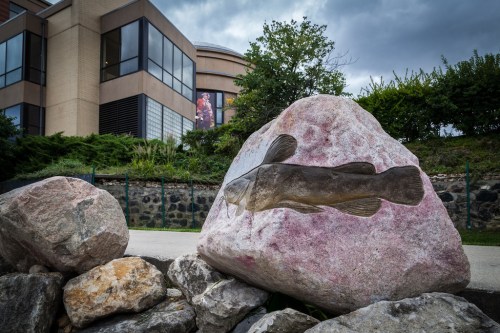
This is part of Kevin Sudeith’s Contemporary Petroglyphs installation along the Grand River.

View Robert’s photo background bigtacular and see more in his ArtPrize 2014 slideshow (which I expect will grow in the weeks to come).

Lots more ArtPrize on Michigan in Pictures!