Dancing in the Air: Birding Trails & Bird Sanctuaries in Michigan

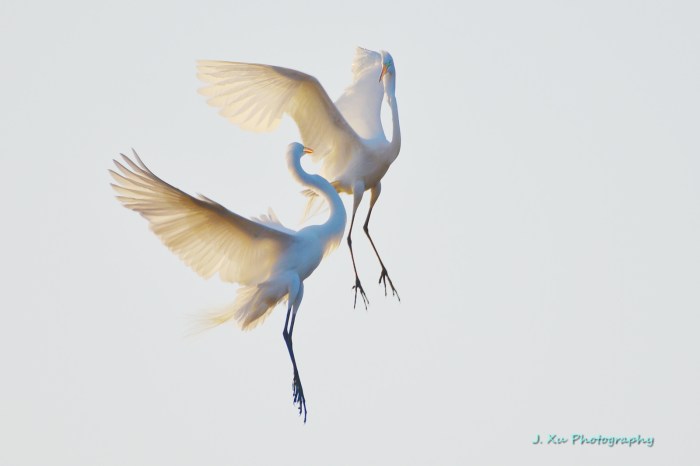
Egrets Dancing in the Air

Dancing in the Air, photo by Jiafan(John) Xu

I’m pretty sure that these are Great Egrets (Ardea alba) but would appreciate confirmation from any birders in the audience.

On the Pure Michigan blog, Mallory King of the Michigan Audubon Society writes that birding is currently the second fastest growing hobby in the United States after gardening with over 47 million people identifying as birdwatchers. She shares some great Michigan birding trails and sanctuaries to help you get going with birding:

The Superior Birding Trail: This trail covers 150 miles in the Upper Peninsula from the Seney National Wildlife Refuge to Whitefish Point; you can observe over 300 bird species here.

The Sleeping Bear Birding Trail: The SBBT West which the trial is commonly referred too, includes 123 miles from Manistee to Traverse City along the scenic M-22 highway and Lake Michigan shoreline; here over 250 bird species can be observed.

The Beaver Island Birding Trail: Located entirely on Lake Michigan’s largest island, encompasses over 100 miles of road and 12,000 acres of natural habitat; over 250 bird species can be spotted on this adventurous trail.

The Saginaw Bay Birding Trail: Also known as SBBT East, takes travelers 142 miles along the Lake Huron shoreline from Port Crescent State Park to Tawas Point State Park, the trail is home to over 200 bird species and an abundance of quaint Michigan towns.

Read on for a list of the sanctuaries and more at Pure Michigan.

John took this last month, presumably in the Keweenaw area. View his photo bigger and see more in his slideshow.

Lots more Michigan birds on Michigan in Pictures!
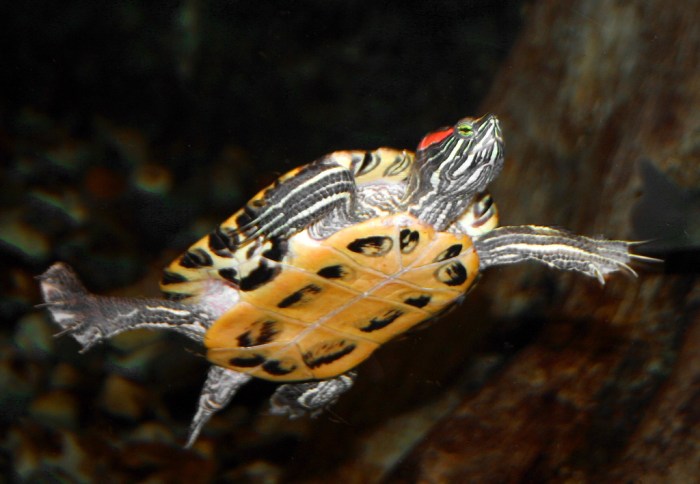
Happy World Turtle Day from the Red-eared slider

Trachemys scripta Red-eared Slider

Trachemys scripta (Red-eared Slider), photo by Nick Scobel

One of the most popular posts on Michigan in Pictures is Know Your Michigan Turtles, and World Turtle Day (May 23rd) is the perfect day to add another turtle to our list!

Jim Harding’s MSU Critter Field Guide entry for the red-eared slider (Trachemys scripta elegans) says that the turtle is named for the broad red or orange stripe behind the eye, which may extend onto the neck. He continues:

Red-eared sliders prefer still-water habitats (lakes, ponds, sloughs) with abundant aquatic plant growth and numerous basking sites in the form of logs or other emergent objects. These turtles are called “sliders” because they quickly slide from their basking spots into the water when disturbed. They feed on aquatic plants, and animals such as crayfish, snails, insects, tadpoles, and carrion. The young turtles are mostly carnivorous but eat increasing amounts of vegetation as they get older.

…This is a common turtle from northwestern Indiana south to Georgia and west to Texas and Oklahoma. Red-eared sliders are probably not native to Michigan, but breeding populations exist locally in the western and southern Lower Peninsula. Many thousands of baby sliders were once imported into this state for the pet trade, so it is likely that released or escaped specimens are responsible for the established colonies. Isolated specimens may turn up almost anywhere in Michigan.

Read on for more in the MSU Critter Guide.

Nick runs the excellent Herping Michigan Blog where you can find lots more of his excellent photos of Michigan’s reptiles and amphibians along with informative writeups. View his photo bigger and see more in his slideshow.

More Michigan turtles right here!

Michigan Front Porch is the World’s Longest!

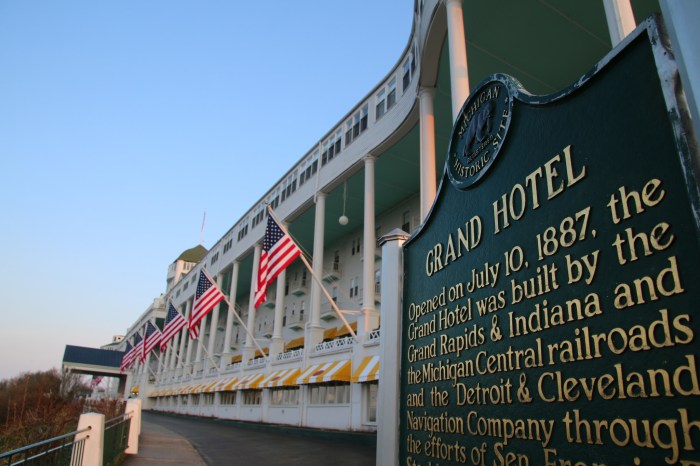
Grand Hotel

Grand Hotel in the Early 2016 Season, photo by Corey Seeman

The Grand Hotel opened on Mackinac Island in the summer of 1887. At 660 feet, Grand Hotel’s Front Porch is the world’s largest. They note that early on the porch became the principal meeting place for all of Mackinac Island, a promenade for the elderly, and a “Flirtation Walk” for island romantics. Their History photo gallery has a couple of cool photos of the porch from back in the day.

Corey took this last weekend when the Hotel opened for the season. View it background bigtacular and click for tons more of his Mackinac Island photos.

More about the Grand Hotel on Michigan in Pictures, and here’s a video look at the porch:


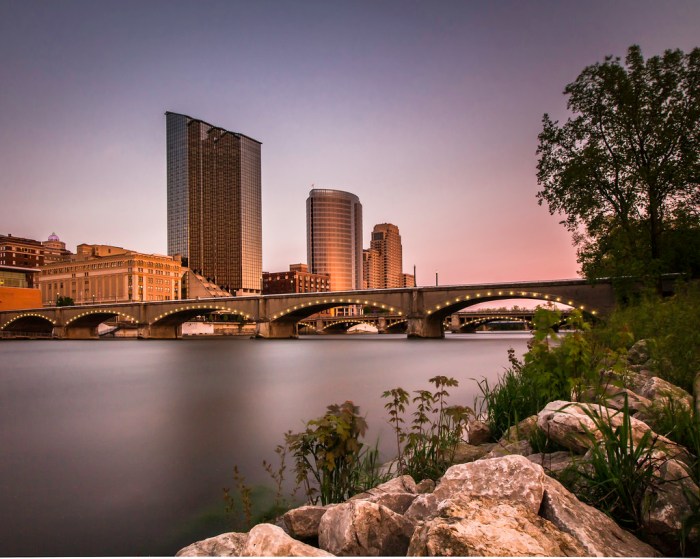
Grand Rapids skyline

Grand Rapids Skyline

Grand Rapids skyline, photo by rdmegr

Rodney smoothed out the rapids of the Grand River with this eight minute exposure of the Grand Rapids skyline.

View it bigger, see more in his slideshow, and also check out his website.

More from Grand Rapids on Michigan in Pictures.

Not In Kansas Anymore: L Frank Baum, the Wizard of Oz & Michigan

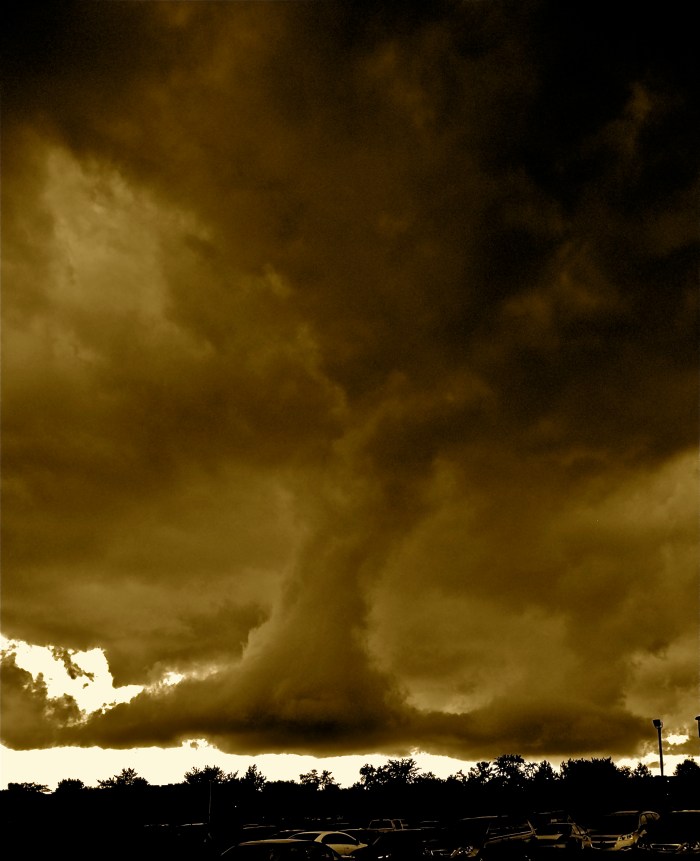
Not in Kansas Anymore

We’re Not In Kansas Anymore!, photo by Tina :O)

The Wizard of Oz rolled off the presses May 17, 1900. It’s one of my all-time favorite books. What you may not know is that L. Frank Baum, author of the beloved series, purchased a large, multi-story Victorian summer home on the southern end of the Macatawa peninsula on Lake Michigan.

Several years ago the Holland Sentinel published a cool piece about Baum and his Macatawa summer home that says (in part):

“The Wonderful Wizard of Oz” supposedly was written in Chicago, but some of the forest scenes look just like the pathways that run through the dunes, the younger Baum said.

He assumes Macatawa was where part of the book had been worked on or written, as Baum might have found inspiration from the castle in Castle Park for the yellow brick road, some say, or even based some of the characters in the book on personalities he encountered in the small lakeshore community.

“Especially in the Oz stories, a lot of characters and situations that we may not recognize … he drew lots of inspiration from Macatawa for the book.”

Check out L. Frank Baum, The Goose Man of Macatawa on Absolute Michigan for more about the author’s Michigan ties and information about the Wizard of Oz festival slated for June in Ionia.

About the photo, Tina shares:

This freakie cloud formation started at the end of our wedding photo shoot. There were clouds swirling all over us but luckily no tornados formed. I added some sepia for a little Wizard Of Oz effect.

View her photo background bigtacular and see more in her Pure Michigan slideshow.

Drifting

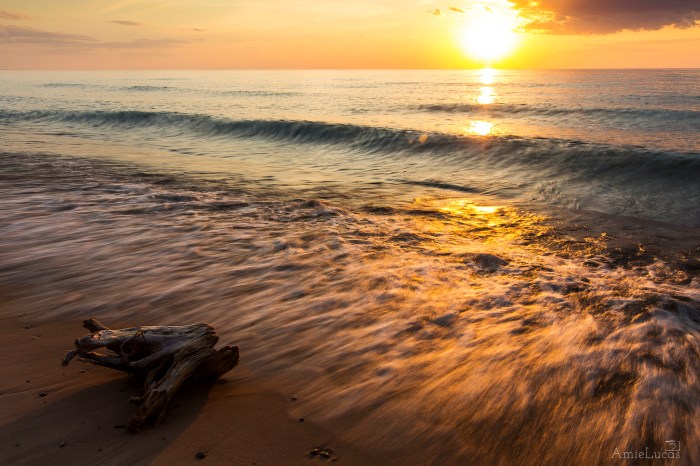
Drifting

Drifting, photo by Aime Lucas

Amie took this last year in late May, and I’m posting this to let Mother Nature know that “35 degrees in May” is not what we’re looking for out of the month of May!

View Aime’s photo background bigilicious, see more in her Pictured Rocks National Lakeshore slideshow, and be sure to follow Aime Lucas Photography on Facebook.

More beach photos and lots more summery wallpaper on Michigan in Pictures!

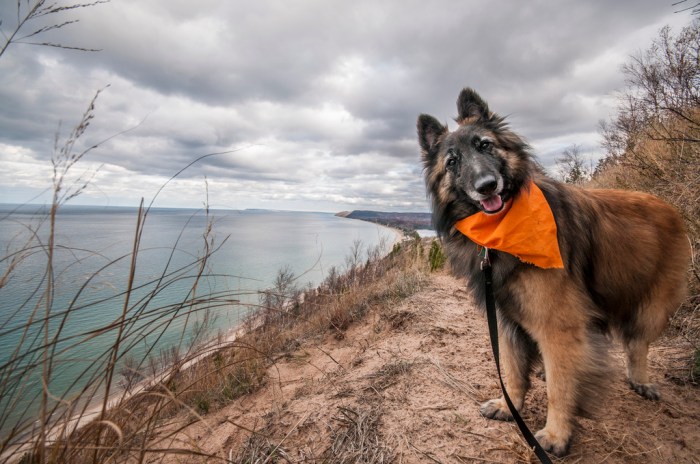
Major Explorer on Empire Bluffs

Major at Empire Bluff

Major Explores Empire Bluff, photo by Mark Miller

Over on Leelanau.com I shared upcoming meetings for folks interested in becoming “Bark Rangers” in the Sleeping Bear Dunes National Lakeshore. Major looked so awesome that I had to share him with all of you too!

Bark Ranger volunteers and their canine companions will serve as ambassadors on National Lakeshore beaches to provide visitors information about the park, highlight pet policies, and pet safety. They will also help to protect the National Lakeshore’s nesting shorebirds.

Dogs can’t come to the meeting, but Bark Rangers will receive training and Bark Ranger gear for their dog if they are volunteering with a dog. You don’t have to own a dog to become a Bark Ranger, and there’s two orientation sessions. The first meeting on Saturday, May 21 at 1 PM and the second on Tuesday, May 24th at 7 PM, and there’s also an option if you’re interested and can’t make it.

Mark is a longtime contributor to Michigan in Pictures. You can view this photo bigger and if you have any doubt that Major has more fun than you, one look at Mark’s slideshow of Major should be enough for your surrender.

More dogs on Michigan in Pictures.

PS: I promise to share some dog-friendly Michigan stuff folks – I know some of you have been asking for it!!

PPS: More about the Empire Bluff Trail from the Sleeping Bear Dunes National Lakeshore.

20 years of Pasty Central and the Pasty Cam

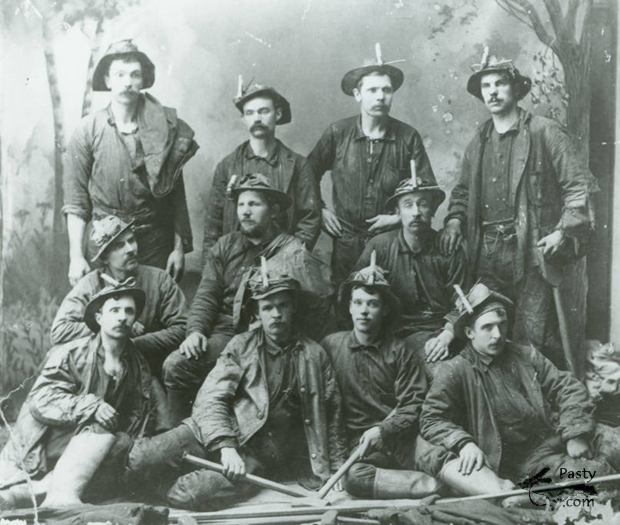
Upper Peninsula Michigan Miners

Let There Be Light, photo courtesy Pasty Central/Pasty.com

Pasty Central is  celebrating their 20th anniversary and vying for USA Today’s Best Pasty in Michigan. Click through to cast a vote for them or your favorite pasty shop.

Back in 2008, Charley of Pasty Central wrote about these UP miners who doubtless relied on the pasties in their bellies to survive:

In researching today’s Pasty Cameo I came across these men who had been entombed in Pewabic Mine at Iron Mountain for over 40 hours before they returned to the light of day. They had been trapped on the fourth level of the mine when a level above them collapsed. One of their co-workers didn’t make it out.

This picture is a good illustration of the “Tommy knocker”, a popular hat-candleholder in the 1800’s before carbide and acetylene lamps came along.

A feature of the site since 1998 has been the Pasty Cam, a daily photo that’s paired with a well-researched “This Day in History”. Today’s looks at how on on May 12, 1781 Mackinac Island (valued at 5000 pounds) passed from native tribes to the British – click to check it out!

The pasty, a savory pastry typically filled with meat & vegetables, was brought to the Upper Peninsula by Cornish miners. Check out Real Michigan Food: The Pasty on Absolute Michigan for lots more about this classic UP dish.

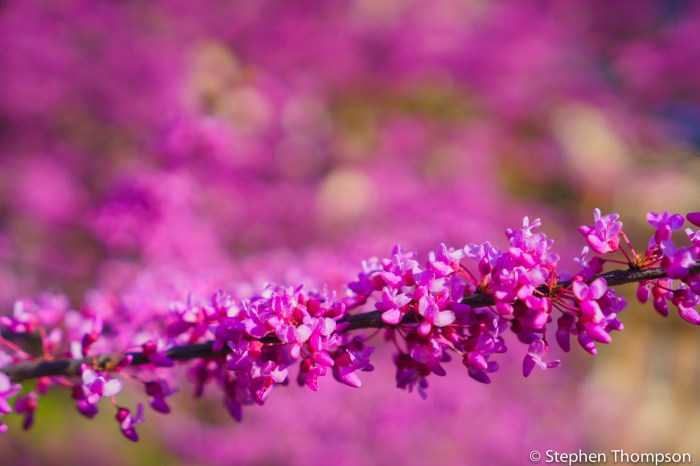
Eastern Redbud (Cercis canadensis)

Redbud

Redbud, photo by Stephen Thompson

The magenta flash of Eastern Redbud (Cercis canadensis) is one of my favorite sights in springtime. I used to think it was an exotic tree, but as Rick Meader of the Ann Arbor News shares, Redbud trees are native to southern Michigan:

…as a member of the Pea family (Fabaceae) it’s a cousin to the previous pod-producers we’ve learned about, Honeylocust (Gleditsia triacanthos) and Kentucky Coffeetree (Gymnocladus dioica). Let’s learn more about this colorful little native.

As mentioned before, Eastern redbud is native to southern Michigan, occurring naturally up to a line across the lower peninsula from Kent County to Genesee County. Nationally, it occurs naturally in an area extending from Maryland and the Carolinas west to eastern Kansas through Texas, including all of the southern states and northern Florida. Of course, because it’s a pretty little thing, it has been planted in areas beyond its native range.

If you want to use it in your landscape, it is fairly flexible in terms of where it will grow. It naturally occurs in rich soil along stream and river banks but is tolerant of a wider range of conditions. It likes sun or partial shade and can do well in most soils except waterlogged soils and dry, sandy soils.

Read on for more.

View Stephen’s photo bigger and jump into his slideshow for more great pics!

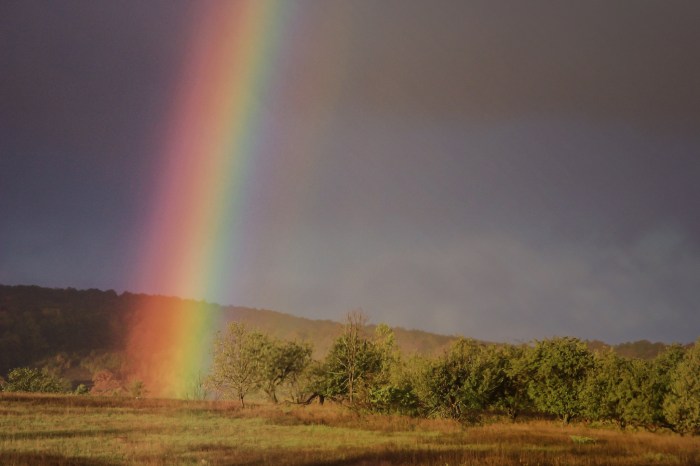
End of the Rainbow along the Breezeway

The End of the Rainbow

The End of the Rainbow, photo by T P M

Thomas says that he got to the end of the rainbow, but no Pot ‘O Gold. He took it along the Breezeway in northwest lower Michigan near East Jordan Michigan. According to the Breezeway website, which Thomas is involved with and links to from his Flickr profile:

The “Breezeway” – a rural ride along C-48 from Atwood (U.S. 31) through Ellsworth & East Jordan, and ending in Boyne Falls (U.S. 131) – boasts scenic overlooks, great motorcycle & bicycle rides, recreational amenities galore, working farms & orchards, artist galleries & studios, resale shops, lodging facilities (cottages, campgrounds, B&Bs, motels, and a resort), retail and service businesses with superb customer service, and an epicurean’s selection of dining choices along the route.

View his photo background bigtacular and see more in his Sites Along the Breezway slideshow.

Lots more about rainbows on Michigan in Pictures!