Bond Falls in black & white

Bond Falls

Bond Falls, photo by wingsfan1705

Michigan in Pictures has a number of photos from Bond Falls, but there’s always room for one more. ;)

Check this out background bigtacular and see more including some detail shots in Kim’s slideshow.

More black & white photography on Michigan in Pictures.

Roller Coaster Winter

unretouched foggy morning

unretouched foggy morning, photo by Marty Hogan

Yesterday featured some of the worst fog I’ve seen in years as temps wandered up near the 60 degree mark and melted a good deal of our snow. It’s still fairly warm around the state but today temps will drop back into the teens by tomorrow. Can you say roller coaster?

Speaking of roller coasters, the Detroit News reports that 2012 was a year of weather extremes:

When it comes to weather, 2012 was one for the record books as at least 160 extreme weather records were set in Michigan, according to the Natural Resources Defense Council.

Last year’s statewide weather broke records across the spectrum including: 139 new heat records in 44 counties, 18 rainfall records in 14 counties and three snow records in three counties.

Michigan’s weather seems to be paralleling the national trend of record breaking heat, rain and snow. Across the country, the Defense Council — an environmental action group — tallied 3,527 monthly extreme weather events, raising the bar over the 3,251 set in 2011, which was the most ever set in a single year since monthly weather was recorded in all locations in 1980.

The severe heat is also held responsible for several extreme weather events statewide. Michigan witnessed four large wildfires and four abnormally early tornadoes, including the EF-3 twister that devastated Dexter, which occurred in mid-March.

That tornado was the 2nd earliest since we started measuring that 60 years ago. Read on for more.

Marty took this shot of the lethal fog on Whites Bridge Road in Ionia County. See it background bigtacular and see more in his Ionia County slideshow.

More fog & mist on Michigan in Pictures.

Michigan Wild & Scenic Rivers: Manistee River

Manistee River, near Sharon, Michigan

Manistee River, near Sharon, Michigan, photo by gregorydseman

It is hereby declared to be the policy of the United States that certain selected rivers of the Nation which, with their immediate environments, possess outstandingly remarkable scenic, recreational, geologic, fish and wildlife, historic, cultural or other similar values, shall be preserved in free-flowing condition, and that they and their immediate environments shall be protected for the benefit and enjoyment of present and future generations.
~Wild & Scenic Rivers Act, October 2, 1968

Michigan has 16 nationally designated Wild & Scenic Rivers. The stretch of the Manistee River from the DNR boat ramp below Tippy Dam to the Michigan State Highway 55 Bridge is the designated stretch (click for map and river management plan). They explain:

The Manistee Wild and Scenic River is well known for beautiful scenery, excellent fishing and a variety of recreational activities. In the spring and fall, high numbers of anglers are attracted to the superb salmon and steelhead runs. During the summer, walleye and pike fishing become the primary recreational activity. The river supports a variety of other recreational uses including wildlife viewing, hiking, canoeing and hunting.

Private businesses and government agencies have developed a variety of facilities and services to meet the expanding recreation demands of the public. Commercial guided fishing is one of the most popular activities on the Manistee River. The amount of recreational use fluctuates from year to year, mostly based on the fishing runs and local economic factors. There are eight developed river access sites within the wild and scenic river corridor. The Forest Service maintains sites at High Bridge, Bear Creek, Rainbow Bend and Blacksmith Bayou. The state of Michigan operates a river access site at Tippy Dam. Private recreation sites include Big Manistee Riverview Campground and Coho Bend Campground. The U.S. Forest Service developed recreation sites along the Manistee River require a vehicle parking pass under the Recreation Enhancement Act.

Greg says he took this photo back in 1998 when the river had more water – check it out bigger and see more in his slideshow.

More Wild & Scenic Rivers on Michigan in Pictures!

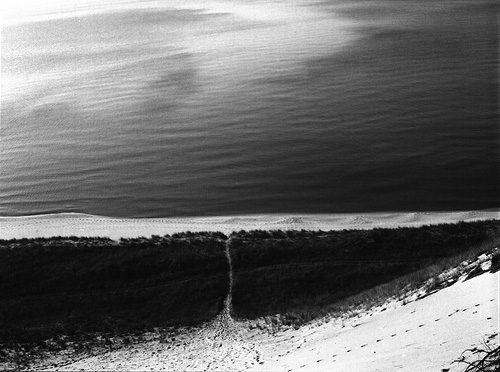
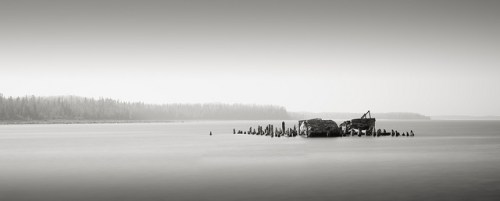
Lake Michigan

Lake Michigan

Lake Michigan, photo by karstenphoto

Check this out background bigtacular and see more in Steve’s Film! slideshow.

More black & white photography and more Lake Michigan from Michigan in Pictures.

Remembering Helen Milliken

Bill and Helen Milliken, photo from AP archives

My beliefs are not particularly unique. It’s just that I’m now in a position to do something about them.
~Helen Milliken

Yesterday Helen Wallbank Milliken passed away at the age of 89 in Traverse City. Helen was the wife of Michigan’s longest serving Governor William Milliken. Her entry in the Michigan Women’s Hall of Fame says in part:

Helen Milliken, wife of the former Governor of Michigan, has long been identified with women’s issues and concerns. She was a distinguished national co-chair of ERAmerica and traveled throughout the country speaking on behalf of the Equal Rights Amendment. She also freely gave her time and energy to raising needed funds to support this major cause. In addition, she was a convener of the International Women’s Year Delegation in Michigan and a member of the delegation to the IWY Conference, which met in Houston in 1977. She is associated with The Women’s Research in Education Institute in Washington, D.C., and chaired the National Women’s Conference Committee.

Helen Milliken has been a major patron of the arts in Michigan. She was in no small measure responsible for the development of a state public arts project and for the growth in public support of the arts.

…Independent, committed, and principled, Helen Milliken never sought, but never shrank from controversy. When her commitment to equality conflicted with her political loyalties, she clearly chose the former. Her choice, her service, and her spirit have enriched the lives of countless Michigan citizens.

The Detroit Free Press has an excellent article that includes a photo gallery of Helen Milliken. along with reminisces by those who worked with her in public life.  One of these, former press secretary & chief of staff to Gov. Milliken George Weeks,  looks at the many causes Helen championed.

The Michigan Land Use Institute has a page where some of the people who remember their longtime board member and supporter Helen Milliken – click to view it.

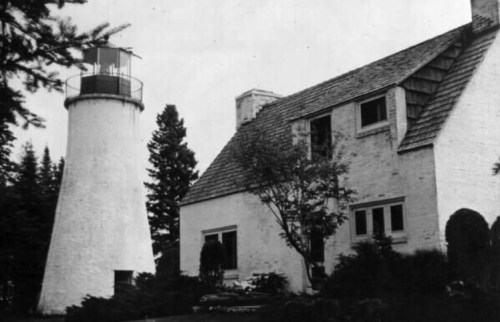
The Ghost Keeper of Old Presque Isle Lighthouse

Old Presque Isle Lighthouse, photo courtesy Archives of Michigan

The Lightkeeper’s Ghost tells the tale of George and Loraine Parris who became the beloved caretakers of the Old Presque Isle Lighthouse, running the small museum and giving tours. George was something of a trickster and delighted in playing harmless tricks on visitors. He passed away in 1992, but the story doesn’t end there.

As Loraine was driving to the property on Grand Lake Road, which had a clear view of the lighthouse, she saw that it was illuminated.

She knew that the Coast Guard had rendered this impossible, but there it was before her. By the time that she arrived at the keeper’s house, though, everything was dark. The next day she climbed the steps of the lighthouse to make sure that everything was in order, and she saw that there was no way that someone could have turned the light on. Yet, this same pattern repeated itself again and again. Loraine never said anything about it because she thought that people might think her crazy.

Soon other folks began to see the light, however – a yellowish glow was reported from the lighthouse by several people. Some thought that the light had been put back into operation, but others drove out for a closer look, only to find that it was dark once again.

It was even spotted by members of the Air National Guard, who flew a few missions over the area, and by the Coast Guard, who investigated to make sure that no one could fire the light back up. It had been permanently disabled years before, so there was no way that the light could be shining. Yet it was. Many people believe that the spirit of playful old George is occasionally paying a visit to the lighthouse that he loved so much, just to let folks know that he’s doing just fine and to keep alive the stories of the lighthouse that he loved so much.

Read more about the history of the lighthouse from TexasEscapes.com and learn more about the light and visiting from the Presque Isle Township Museum Society.

This photo from Seeking Michigan and the Archives of Michigan was taken in 1963 at Old Presque Isle Light. See it bigger and check out more of their photos of the old and new lighthouses on Presque Isle.

More ghosts and ghost stories on Michigan in Pictures.

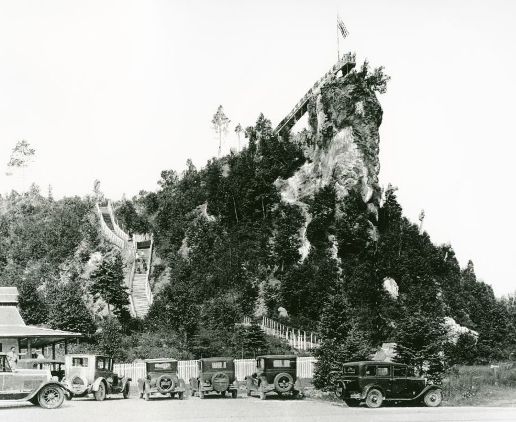
Castle Rock, a Natural Lookout

Castle Rock, circa late 1920s or early 1930s, photo courtesy Seeking Michigan

This morning I saw a photo of Castle Rock in the Absolute Michigan group on Flickr that made me wonder about the history of this iconic UP tourist stop. Bob Garrett of the Archives of Michigan has the story in A Natural Lookout at Seeking Michigan:

The Upper Peninsula contains a wealth of great scenery. One might wish to climb to a high point and “take it all in.” Fortunately, nature sometimes provides a natural lookout. One such lookout is Castle Rock.

Castle Rock is located near St. Ignace, on the Upper Peninsula side of the Straits of Mackinac. The Rock is a natural limestone tower, standing nearly two hundred feet above lake level. Wind and water erosion have shaped it into a sort of “castle.” Visitors who climb the 170 steps to the top will receive a stunning view. Looking left to right, one can see St. Martin Island, Marquette Island in Les Cherneaux (on a clear day), the town of St. Ignace, ferries coming to and from Mackinac Island and the top of the Mackinac Bridge.

Castle Rock had been an ancient lookout of the Ojibway tribe, who often called it “Pontiac’s Lookout.” A company named Norton and Lund purchased the site around 1927. Norton and Lund built a stairway to the top of the Rock, opened a souvenir stand and made cabins available for tourists.

Shortly thereafter (Sources differ on the date.), a St. Ignace photographer and businessman named Charles Clarence Eby (1890-1961) bought the property. Eby hoped to increase tourism, and he used his photography skills toward that end. He launched a high volume postcard business, and his postcards and other promotional material drew people to the Upper Peninsula and the St. Ignace area.

Around 1958, statues of the mythical lumberjack Paul Bunyan and his blue ox, Babe, were built at the foot of the stairs. These were handcrafted by Calvin Tamlyn, who was Eby’s son in law. They still greet visitors today.

Castle Rock can be found north of St. Ignace, along I-75. Take exit 348, and you’ll be there. For more information, see the Castle Rock Web site.

You can head over to Seeking Michigan for more including some books in Michigan libraries, a photo of Paul & Babe and also a stereoscopic pic from the 20s. There’s a little more info on Wikipedia, including a panorama of the view from the top of the rock.

Seeking Michigan is the web site of the Archives of Michigan and it’s packed full of articles like this in their Look section and also an extensive & searchable Michigan photo archive.

More roadside attractions on Michigan in Pictures.

Waterspout Weather

Waterspout moves across the Manitou Passage in the Sleeping Bear Dunes National Lakeshore

Waterspout moves across the Manitou Passage, photo by farlane

I don’t usually blog my own photos to Michigan in Pictures, but yesterday afternoon I had the good fortune to see a waterspout above the Manitou Passage in the Sleeping Bear Dunes National Lakeshore. If you look closely, you can see the turbulence on the water in front of South Manitou Island towards the center.

Meteorologist and Science and Operations Officer Bruce B. Smith of the National Weather Service in Gaylord writes the following about Waterspouts:

Persons living in northern Michigan are well aware that the Great Lakes have a profound impact on local weather patterns. Examples include heavy lake effect snows in winter, and cooling lake breezes in summer. As the end of the summer season approaches, another type of unique Great Lakes weather phenomena is possible — the waterspout.

Dr. Joseph Golden, a distinguished waterspout authority with the National Oceanic and Atmospheric Administration (NOAA), defines the waterspout as a “funnel which contains an intense vortex, sometimes destructive, of small horizontal extent and which occurs over a body of water.” The belief that a waterspout is nothing more than a tornado over water is only partially true. The fact is, depending on how they form, waterspouts come in two types: tornadic and fair weather.

Tornadic waterspouts generally begin as true tornadoes over land in association with a thunderstorm, and then move out over the water. They can be large and are capable of considerable destruction. Fair weather waterspouts, on the other hand, form only over open water. They develop at the surface of the water and climb skyward in association with warm water temperatures and high humidity in the lowest several thousand feet of the atmosphere. They are usually small, relatively brief, and less dangerous. The fair weather variety of waterspout is much more common than the tornadic.

He says that waterspouts occur most frequently in northern Michigan during the months of August, September, and October, when the waters of the Great Lakes are at their warmest and cold air moves in. If a spout develops, you can expect it to move at 10 to 15 knots (5-8 MPH make that 11-17 MPH) and last from two to twenty minutes. How about the 5 stages of waterspout formation from Dr Golden? Why not:

  1. Dark spot. A prominent circular, light-colored disk appears on the surface of the water, surrounded by a larger dark area of indeterminate shape and with diffused edges.
  2. Spiral pattern. A pattern of light and dark-colored surface bands spiraling out from the dark spot which develops on the water surface.
  3. Spray ring. A dense swirling annulus (ring) of sea spray, called a cascade, appears around the dark spot with what appears to be an eye similar to that seen in hurricanes.
  4. Mature vortex. The waterspout, now visible from water surface to the overhead cloud mass, achieves maximum organization and intensity. Its funnel often appears hollow, with a surrounding shell of turbulent condensate. The spray vortex can rise to a height of several hundred feet or more and often creates a visible wake and an associated wave train as it moves.
  5. Decay. The funnel and spray vortex begin to dissipate as the inflow of warm air into the vortex weakens.

Click through for more including how the NWS forecasts tornados and also see this Michigan in Pictures post from 2008 with some more Great Lakes Waterspouts.

Check this out on black and see more in my surprisingly cool You Can’t Change the Weather slideshow. I also captured a three waterspouts over North Manitou Island in September of 2008. Click the link to get it background big.

More weather on Michigan in Pictures.

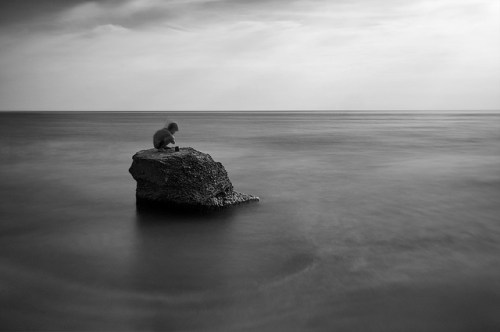
be always an explorer

be always an explorer

be always an explorer, photo by .brianday

A good motto for the weekend … or a lifetime.

Check this out on black and see this and many more shots in Brian’s long exposure slideshow.

More black & white photography (including several by Brian) on Michigan in Pictures.

Speaking of Alpena: Rockport State Park

RockPort I

RockPort I, photo by Jeff Gaydash

In the course of writing about on how Alpena was named, I ran across this great photo from Rockport. It used to be called the Rockport Property, and in February it became the newest state park in Michigan. The DNR news release explains:

Rockport State Park offers many unique and special features. With 4,237 acres of land located on the shores of Lake Huron, north of Alpena, the property includes a deep-water protected harbor, an old limestone quarry of approximately 300 acres, a unique series of sinkholes, a dedicated Natural Area (Besser Natural Area), and a broad range of land types, vegetative cover, cultural resources and recreation opportunities. At the harbor, the Department has a boat launch facility, and there is a small park developed by Alpena Township on land leased from the State.

There’s no map on the DNR Park website yet, but you can get directions and some more photos from Quiet Solo Pursuits.

Check this out on black and in Jeff’s fantastic The Great Lakes slideshow.

Happy weekend everyone…