The Great Storm of 1913 and the Last Voyage of the Henry B. Smith

Henry B Smith Great Storm of 1919

Henry B Smith LOC det 4a16048, photo by Detroit Publishing Co. (via Library of Congress)

In November I like to share stories of some of the ships that have been lost in the most dangerous month of shipping on the Great Lakes. November is a month when owners and captains have historically sought to bet the margins in their favor. Sometimes their gamble doesn’t pay off…

The Great Lakes Storm of 1913 is one that caught many ships in the wrong place at the wrong time. More or less via Wikipedia’s page:

The Great Lakes Storm of 1913 is historically referred to as the “Big Blow,” the “Freshwater Fury,” or the “White Hurricane.” It was a blizzard with hurricane-force winds that ravaged Michigan, Ontario and much of the Midwest from November 7-10, 1913. The storm was most powerful on November 9, battering and overturning ships on four of the five Great Lakes, particularly Lake Huron. Deceptive lulls in the storm and the slow pace of weather reports contributed to the storm’s destructiveness.

The deadliest and most destructive natural disaster ever to hit the lakes, the storm killed more than 250 people, destroyed 19 ships, and stranded 19 others. The financial loss in vessels alone was nearly US $5 million (or about $120 million in today’s dollars).

There’s so much more about this storm on the Wikipedia page and definitely check out this Michigan in Pictures post on the unique weather pattern on the Great Storm.

One of the ships lost to the lakes was the Henry B. Smith, a 525′ steel-hulled, propeller-driven lake freighter. Well…

The Smith arrived at Marquette on November 6 to take on iron ore. Over the next two days a southwest gale swept over Lake Superior, dropping the temperature to 24 degrees Fahrenheit. The cold weather caused the ore to freeze inside the hopper cars, requiring men to knock them loose by hand. This resulted in a loading delay for the Smith. Captain James Owen had been plagued by misfortunes all year that had resulted in the Smith being delayed or late for its destinations. Rumors abounded, then and now, that the owners of the boat made it clear to Owen that he better make this last trip on time, or else.

Around 5 p.m. on November 9, the Smith loaded its last car of ore. Since the gale seemed to be in a brief lull, the big freighter immediately backed away from the dock and began to leave. As soon as the Smith left Marquette Harbor, the fierce wind returned and the storm’s lull ended. Witnesses on shore noted that the deckhands were frantically trying to close the Smith‍ ’​s hatches. The freighter had a total of 32 hatches; each hatch required individual attention with locking bars, clamps, and tackle. It was a couple hours’ work for even the most skilled crew. And so it was that Captain James Owen was piloting the Henry B. Smith into one of the worst storms in memory with unsecured hatches.

After about twenty minutes, the full force of the gale hit the Smith as huge waves crashed over her deck, drenching the hapless deckhands who were still struggling to close the hatches. Instead of turning to starboard on the usual course for the Soo Locks, the Smith hauled to port, rolling greatly as she did so. Witnesses on shore concluded that Owen had realized his error and was heading for shelter behind Keweenaw Point to the north. With the encroaching darkness and thick snow squalls, the Smith was then lost from view.

Two days after the storm blew itself out, the beaches along Chocolay Bay, Shot Point, and Laughing Fish Point were littered with debris from the Smith. The wreckage was found high up on the beach, indicating it came ashore at the height of the storm. The body of the second cook, H.R. Haskin, was found floating about fifty miles west of Whitefish Point some days later. Only one other body of the Smith‍ ’​s crew was ever recovered; the skeleton of third engineer John Gallagher was found on Parisian Island in the spring of 1914.

A note in a bottle, allegedly from the Smith, was found in June 1914. In it, the author claimed the ship had broken in two 12 miles east of Marquette. After a long debate, the boat’s owners decided the note was a phony; it was dated 12 November, when the Smith sank either on the 9th or the early morning hours of the 10th.

Read on for more about the Smith. In May of 2013, the wreck of the Henry B. Smith was rediscovered in about 535 feet of water roughly 30 miles north of Marquette. The article is less kind to Captain “Dancing Jimmy” Owen – so named for his habit of frequenting local dance halls – than the Wikipedia version.

View the photo background big at Wikimedia.

More of the Freshwater Fury and more Michigan shipwrecks on Michigan in Pictures.
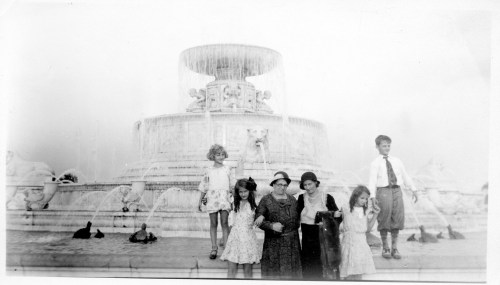
 

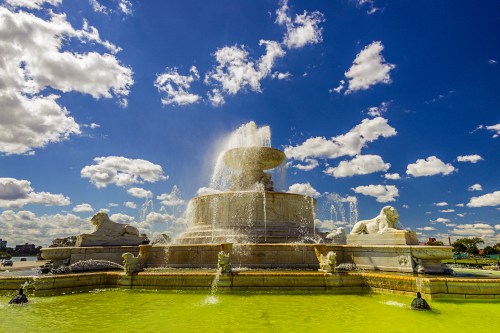
#TBT: Yesterday & today at the James Scott Memorial Fountain

James Scott Memorial Fountain 1932

James Scott Memorial Fountain, c 1932, photo by Tom Clark

Here’s a fun pair of pics. Tom went back to where this family photo was taken in the early 30s and got a picture of the scene. You can see the one above background big, the one below right here and see more including another shot from the Belle Isle Conservatory in his Wonderful Michigan slideshow.

James Scott Memorial Fountain Bell Isle

More Belle Isle including the story of the James Scott Memorial Fountain on Michigan in Pictures.

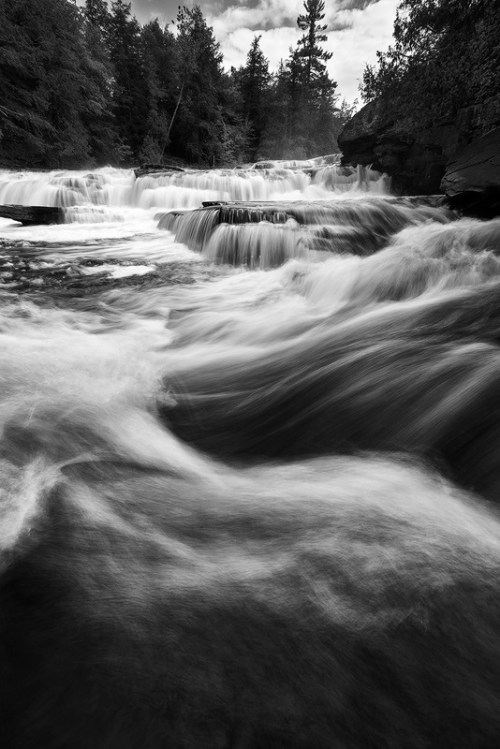
Waterfall Wednesday: Manido Falls in the Porcupine Mountains

Turbulence (Manido Falls, Porcupine Mountain)

Turbulence (Manido Falls, Porcupine Mountain), photo by Jiqing Fan

The Waterfall Record’s entry for Manido Falls says:

Manido Falls did not impress me at first, at least not as much as the downstream Manabezho Falls. After seeing the pictures I had taken, though, I discovered what an amazingly beautiful waterfall Manido Falls is. Its beauty comes from its complexity. The waterfall itself is not very tall at all. It is wide, though. As the Presque Isle River tumbles down toward Lake Superior, it comes to this set of rocks that create a beautifully cascading waterfall. I think what makes me like Manido Falls so much is that the water has taken such an interesting course here, erosion taking its effect in an oddly unique way.

Add to it that the just as spectacular Manabezho Falls is only hundreds of yards away, and Lake Superior not much more distant, this makes for one of the most beautiful waterfall stretches in the Upper Peninsula.

Visit #2: When my father and I visited Mandido Falls in late September 2010, the falls looked completely different due to the significant amounts of rainfall in the weeks previous.

Read on for directions and some photos.

View Jiqing Fan’s photo bigger and see more in his Houghton & UP MI slideshow.

More black & white photography and (many) more Michigan waterfalls on Michigan in Pictures!

Photographer Friday: Bill Schwab

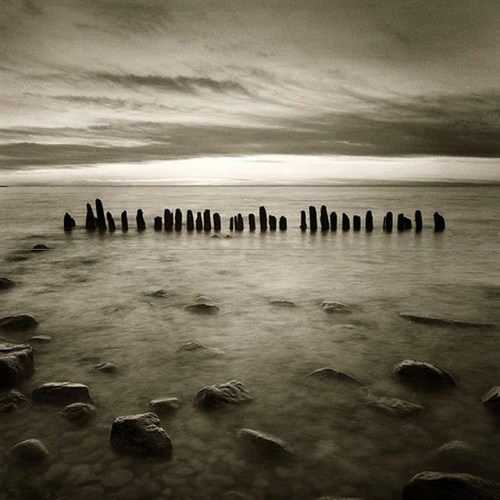
Pier Ruin, Cross Village, 2006

Pier Ruin, Cross Village, 2006, photo by Bill Schwab

One of my favorite Michigan fine art photographers is Bill Schwab, and I still remember the day when I pulled up the Absolute Michigan pool on Flickr to find he’d added some of his photos to the group, including the one above.

This morning I learned that he will be presenting an artist lecture “Across Iceland” for the Charlevoix Circle of Arts:

Fine art photographer, Bill Schwab has been taking photo-expeditions to Iceland since 2009. He will share some of his favorite photographs of Iceland’s harsh, yet beautiful, landscape. Schwab is also the founder of PhotostockFest held annually in Harbor Springs. The Artists Adventure Lecture Series are free and open to the public.

Click above for more on the event and visit the Charlevoix Circle of Arts for more about them. Bill’s PhotostockFest takes place June 18-21 and you can register and get details on workshops and the event at that link.

The photography site RFOTOFOLIO has a great interview Seeing the Beauty: Bill Schwab that starts out:

My father’s side of the family was very much into photography. My Great Grandfather, Frederic C. Lutge had a portrait studio in late 19th and early 20th century Detroit and it branched out from there. My father always had interesting cameras and my uncle had a darkroom. I was fascinated by the gear. Even when I was too young to have a camera, I would draw pictures of them. After cutting them out I would pretend to use them and then draw the pictures “taken” with my cut out cameras and show them to people. Apparently I was hooked at an early age, but it wasn’t until I was twelve that I started processing and contact printing my own film from an old Ansco kit. After that, it is all a blur.

…Growing up in Detroit, pretty much everyone worked in the automobile manufacturing industry and I knew very well at a young age that wasn’t going to be my destiny. I can remember very clearly my dad asking me what I wanted to be at about age five. I said that I would get a job like his and he basically said, no way. Then there was my mom with her unbridled curiosity. She was an early news junky and I seriously think she missed her calling by not going into journalism. The major happenings of the day were right there on the TV during dinner and I was very aware and interested in what was going on. We had subscriptions to Life Magazine and Look and I loved to go through the pages looking at the photographs.

Read on for lots more and some beautiful photos.

View Bill’s photo of the ruins of the pier at Cross Village bigger on Flickr and see lots more from across the state in his Michigan slideshow. You can view and purchase prints at billschwab.com. He’s a good follow on Facebook and also just started up an Instagram @bill_schwab, so you might want to follow along there too!

More Michigan photographers on Michigan in Pictures.

Detroit Street Photography with Brian Day

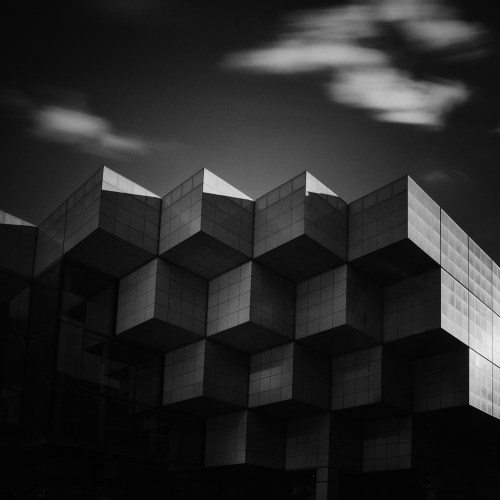
resurrection

resurrection, photo by brian

The opening reception for the show Cardiovista: Detroit Street Photography takes place next Friday (January 16) from 5-7:30 at the University of Michigan Dearborn’s Alfred Berkowitz Gallery (in the Mardigian Library). The show features the work of Carlos Diaz, Bruce Harkness, Tom Stoye and Michigan in Pictures regular Brian Day. Click the link for details!

Brian took this shot of the reborn Cobo Center in 2012. View it bigger and if you’re in the metro Detroit area, I hope you get a chance to check out one of the most original and creative photographers I know in person! Also see his street photography at brianday.org.

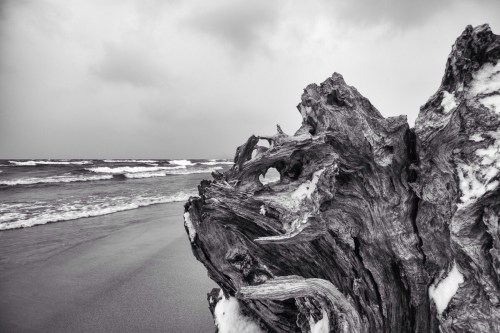
Driftwood detail

Driftwood with great detail on the Lake Michigan shore in Grand Haven.

Driftwood with great detail…, photo by Brad Terry

View Brad’s photo from the Lake Michigan shore in Grand Haven background big and see more in his Pier Series slideshow.

More black & white photography and more winter wallpaper on Michigan in Pictures!

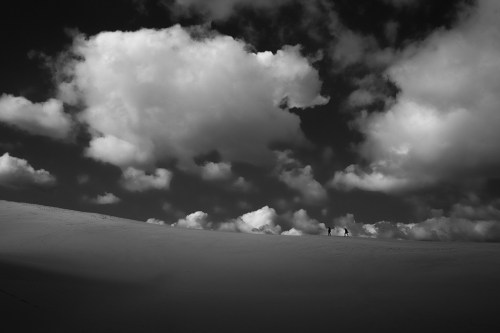
Hiking to happiness

expedition

expedition, photo by brian

A couple months ago, Trish P shared an article from Outside Magazine about findings from British & Michigan researchers that Hiking Makes You Happier:

Researchers from the University of Michigan and Edge Hill University in England evaluated 1,991 participants in England’s Walking for Health program, which hosts nearly 3,000 walks per week for more than 70,000 regular participants. They found that the nature walks were associated with significantly less depression in addition to mitigating the negative effects of stressful life events and perceived stress. The findings were published in the September issue of Ecopsychology.

Sara Warber, associate professor of family medicine at the University of Michigan Medical School and senior author of the study, said that the large sample was a defining factor.

“We observed behaviors of a large group, in which some chose to walk and some chose not to, instead of us telling them what to do,” she said. “After 13 weeks, those who walked at least once a week experienced positive emotions and less stress.”

Easy enough! Read on for more, and explore Michigan’s vast trail network at Pure Michigan.

Brian took this shot at Silver Lake Dunes State Park. View it bigger and see more in his Fractions slideshow.

More black & white photography and more dunes on Michigan in Pictures.

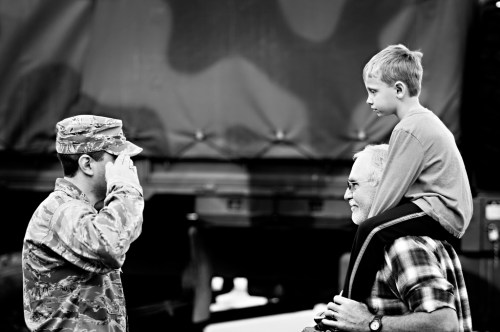
Veterans Day Salute

Veterans Day

Veterans Day, photo by SashaW

Sasha captured this special moment during a Veterans Day event at Davenport University in Grand Rapids. View it background big and see more in her slideshow.

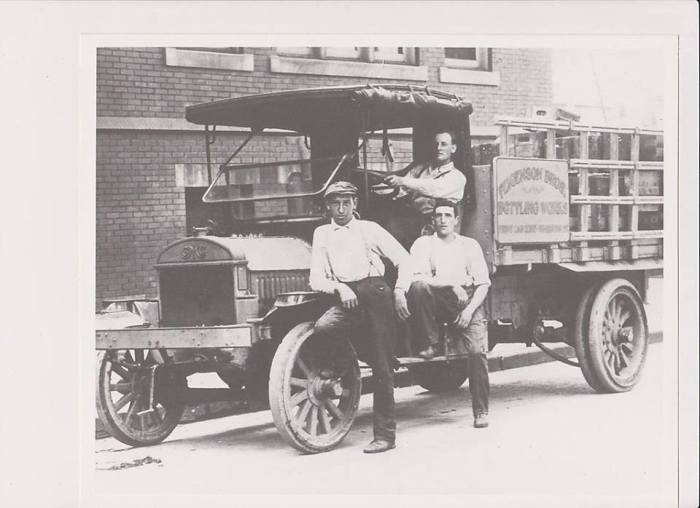
Faygo founding Feigenson brothers with their first truck

Founders of Feigenson Bros. Bottling Works  Faygo

Founders of Feigenson Bros. Bottling Works

Tomorrow (November 4th) is the 107th birthday of Detroit-based Faygo. The Encyclopedia Of Detroit entry for Faygo Pop at the Detroit Historical Society says:

In 1907, Russian immigrant brothers and bakers, Ben and Perry Feigenson, began playing around with the idea of creating soft drinks based on their frosting flavors. They bottled their soda – which they called “pop” because of the sound it made when the lid was removed – in fruit punch, strawberry and grape flavors at a factory on Pingree Street. They sold their soda pop from their horse-drawn wagon the day after it was made.

Soon, the brothers developed the Feigenson Brothers Bottling Works, but they changed the name to Faygo in 1921 because “Feigenson” was too long to fit on the labels. They moved their growing bottle works to Gratiot Avenue in 1935, which is still used today to create Faygo pop.

The brothers ran Faygo until the mid-1940s, when they gave the company to their sons. Faygo was sold only in Detroit and Michigan until the late 1950s because it had a limited shelf life. At that time, company-hired chemists determined that impurities in the water prevented the pop from staying carbonated. The company then developed a water filtering system that stretched the shelf life to more than a year.

Faygo became popular outside of Michigan in the late 1960s when the company began advertising during televised Detroit Tigers games. Today, Faygo, which comes in over 30 flavors, is sold in many states east of the Mississippi River.

In 1987, the Feigenson family sold the Faygo company to National Beverage Company which is based in Florida. National Beverage, which also owns Shasta, kept the Detroit bottling works and the company’s employees. Many have worked for Faygo for over 30 years.

Today, the most popular Faygo flavor remains one of the earliest the Feigenson brothers developed: Redpop.

Click through for a couple fun items in their collection and also check out Faygo’s history page for a nice timeline.

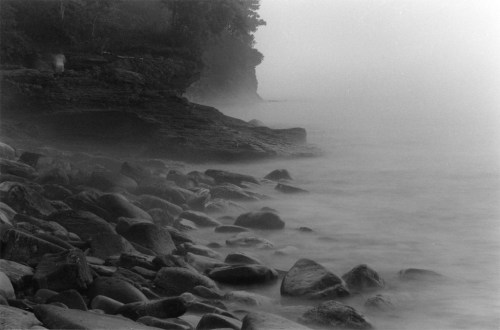
Presque Isle Fog

Presque Isle Fog by Mark Obrien

Presque Isle Fog, photo by Mark O’Brien

On Thursday October 16 from 6-8 pm, Mark’s show of black and white prints opens at the Argus Museum at 525 West William Street in Ann Arbor. The show runs through December 5th, and the museum is open 9-5 weekdays.

View Mark’s photo bigger and see more in his Recent monochrome work slideshow.

PS: There’s a nice feature on the Argus Museum on Michigan in Pictures that features one of Mark’s photos!