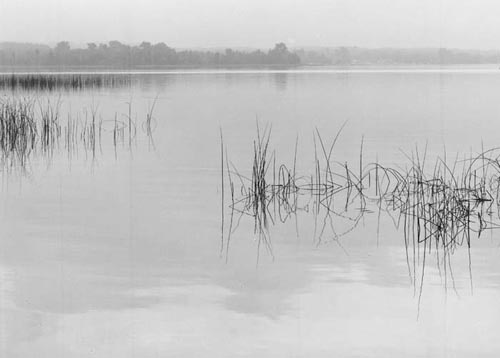
Reeds, Crooked Lake from the Waters of Michigan

Reeds, Crooked Lake photo by David Lubbers

Reeds, Crooked Lake, photo by David Lubbers

Michigan environmental writer Dave Dempsey has long been someone I admire. His biography of Michigan Governor William G. Milliken is a book that everyone who loves Michigan should read. For years I’ve had a gorgeous black & white photo of the Manitou Passage by David Lubbers hanging in my office.

I was therefore pretty darn excited when Dave told me about his new book, The Waters of Michigan.

It’s a rich and thoughtful journey through Michigan’s rivers, lakes and other manifestations of water with words and photos, and today I am honored to have some more photos from the book and an excerpt titled Water and Michigan’s Destiny on Absolute Michigan.

I hope you get a chance to read it.

Taking the Long Shot

Long Shot by Muvv

Long Shot, photo by Muvv

Matthew says that this dock sits on Point Lookout in AuGres, Michigan (on Lake Huron). It’s part of his My Photographic Love Affair set (slideshow).

I’m not old enough to remember a summer starting on a more down note in Michigan (and the rest of the country). A war with no end in sight, sour economy, mortgage crisis, assorted disasters and $4 a gallon gas have created a mood that suggests the best thing to do right now is huddle at home and wait for things to get better.

As I drove through Farwell the other day, I heard an unknown AM talk show host ask:

“Are you going to trade the memories of your children, husband, wife or yourself for an extra $50 in your pocket?

Gas is $4. It will be $5 or more by the end of the summer, but the memories will still be worth a hundred times more.

That made me think of how many times we as a nation have faced times when things weren’t easy, when everything wasn’t neatly laid out, when we had to work a little harder to make it all work out. I don’t think that any one of those challenges was overcome by choosing to seek less out of life for ourselves and those we love.

Here’s hoping we can take the long shot, beat the odds and win this game. All of us.

Have a magnificent weekend!

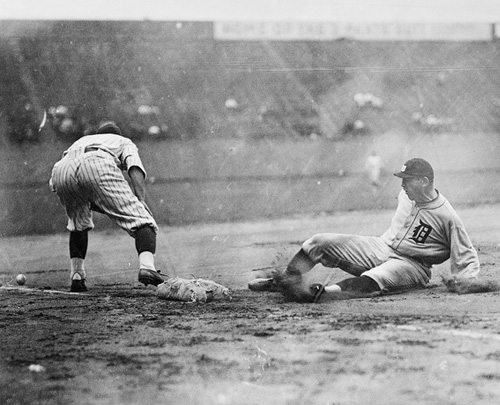
Detroit Tigers: Who’s safe at third?

Detroit Tigers, Safe at Third

Safe at Third, photo courtesy Library of Congress

The Library of Congress captioned this photo Detroit ball player slides safely into third base as fielder reaches to the left for ball on the ground during baseball game. It’s from a game between the Washington Senators and the Detroit Tigers sometime between 1910 and 1930, but beyond that, it’s one of the many photographic mysteries waiting to be solved.

Be sure to click through and check it out larger – that third base is amazingly tattered … sort of like our Detroit Tigers.

LC-USZ62-135402

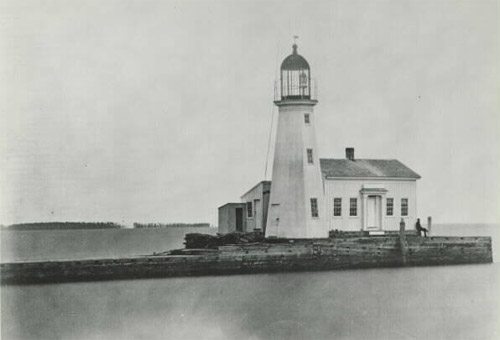
Monroe Pier Lighthouse and Uncle Peter

Monroe Pier Lighthouse, c. 1859

Monroe Pier Lighthouse, photo courtesy Archives of Michigan

This photo of the Monroe Pier light on Lake Erie in the city of Monroe was taken somewhere around 1859. Here’s another shot of Monroe Lighthouse c. 1900 with what looks to be a Mackinaw boat from the HAL Digital Lighthouse Collection. There is incredibly little information about the Monroe Pier Lighthouse, so I have to assume that it’s long gone. Anyone know anything more?

The Monroe County Library has an article titled The Lighthouse Keeper in their very cool Bygones of Monroe with some recollections of and insight into the life of a lighthouse keeper:

“Uncle” Peter Gussenbauer keeps the government lighthouse at Monroe Piers. For fifteen years he has tended the great light that has served as a beacon to incoming yachts and steam craft, or as a guide to the merchant boats passing up and down Lake Erie between Toledo and the upper lake regions. One expects to find the average seafaring man gruff in his manners, and little inclined to the companionship of land-lubbers. But not so with “Uncle” Peter, for he has become famous for his genial hospitality and his courteous bearing toward the hundreds who visit the lighthouse during the summer months.

They have another item marking the passing of Uncle Peter and a whole lot more great historical clippings including a bit of bragging about the poundage of Monroe’s menfolk.

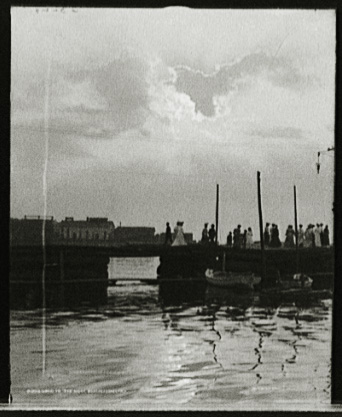
Going to the Night Boat

Going to the night boat, Petoskey, Mich.

Going to the night boat, Petoskey, Mich., Detroit Publishing Co.

This photo from the Detroit Publishing Co. Touring Turn of the Century America collection at the Library of Congress is the winner of this month’s “Book or Movie Title Waiting to Happen.” Put Petoskey in the search and check the photos out!

As you read this, I’m in the Petoskey area, unplugging and (hopefully) taking some pictures.

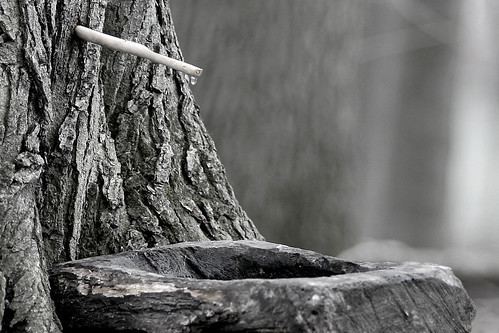
Native American Maple Sugaring: One Drip at a Time

One Drip at a Time

One Drip at a Time, photo by Graphic Knight.

Eric took this photo of an American Indian demonstration on how maple trees were tapped for collecting the sap to make maple syrup at the Kensington Metropark Farm Learning Center. He also has a couple photos of them boiling the say to make maple syrup.

It’s said that there was a time when the sap of the maple tree was as thick and sweet as honey. More practical tales are told of how Nanahboozhoo taught the making of maple sugar:

Then Nanahboozhoo gave the Indians a bucket made of Birch bark, and a stone tapping-gouge with which to make holes in the tree-trunks; and he shaped for them some Cedar spiles or little spouts, to put in the holes, and through which the sap might run from the trees into buckets. He told them, too, that they must build great fireplaces in the woods near the Maple groves, and when the buckets were full of sap, they must pour it into their kettles, and boil it down. And the amount of Sugar they might boil each Spring would depend on the number of Cedar spiles and Birch bark buckets they made during the Winter.

You can learn about a traditional Native American sugarbush from NativeTech and take a look inside the book Ininatig’s Gift of Sugar: Traditional Native Sugarmaking.

Also be sure to check out The Cycle of Sweetness: From Sap to Maple Syrup on Michigan in Pictures for more photos of this fascinating process.

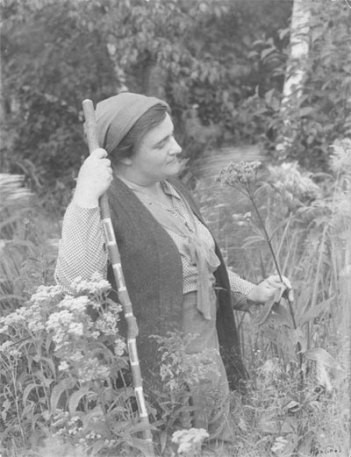
Michigan conservationist Genevieve Gillette

Michigan conservationist Genevieve Gillette

Genevieve Gillette, photo courtesy Archives of Michigan

In honor of Women’s History Month, the Archives of Michigan is highlighting conservationist Genevieve Gillette, one of the prime movers in the creation of Michigan’s State Park system. Gillette was born in 1898 and in 1920 she became the first woman to earn a degree in Landscape Architecture from the Michigan Agricultural College. Over the course of her lifetime, the number of Michigan state parks increased from one to ninety-six.

She was instrumental in creating P.J. Hoffmaster State Park near Muskegon, and the park includes the E. Genevieve Gillette Nature Center (Michigan’s Sand Dune Interpretive Center). Gillette was one of the inaugural inductees of the Michigan Walk of Fame in 2006 and is also in the Michigan Women’s Hall of Fame. Also see Emma Genevieve Gillette in Wikipedia.

Sol

Sol

Sol, photo by rckrawczykjr.

Ralph took this with his holga from the shoreline of Belle Isle. Be sure to check it out bigger.

If you have a little time, tune in his Belle Isle slideshow. If you have a little more time, you might enjoy some Holga Goodness.

Exploring the Masonic Temple of Detroit

Untitled by zakzorah

Untitled, photo by zakzorah

My original thought was to remind folks of tonight’s Exposure.Detroit show at the Bean & Leaf Cafe in Royal Oak.

This photo is part of Cris’s Masonic Temple set and you can see more photos from the March 1, 2008 Exposure.Detroit trip to the Masonic Temple of Detroit (view slideshow). One of the photos linked to the History of the Masonic Temple, which says (in part):

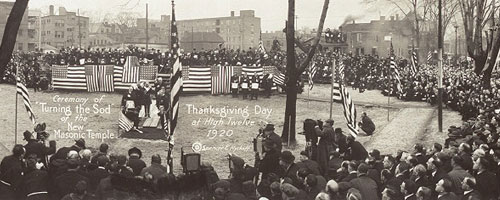
It was on Thanksgiving day in 1920 that the sod was first turned. And with many more months of planning and labor ahead, the Craft was at work on this undertaking of worldwide interest. A great host stood in Cass Park for this occasion and flowed in human currents up and down Second Boulevard and what was then Bagg Street. It is certain that no man will forget the occasion.

George Washington’s own working tools, brought from his Virginia Lodge, were employed. The first mortar was spread with the same trowel that our first president used in the corner stone laying of the National Capitol. On September 18, 1922, thousands of Master Masons and their families witnessed the corner stone of the Masonic Temple of Detroit being placed into position.

That jogged my memory and I recalled seeing the photo below of the “Turning of the Sod” ceremony in the Library of Congress from Thanksgiving Day, 1920. There’s also an exterior view of the completed Detroit Masonic Temple from 1922.

Turning of the Sod ceremony at the Detroit Masonic Temple

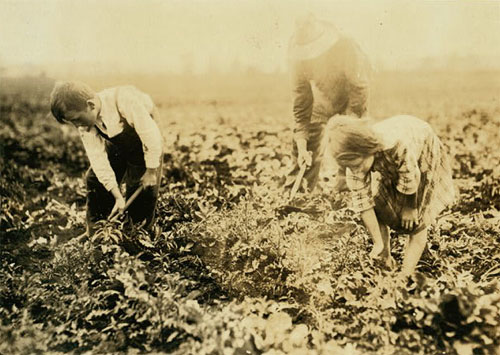
Corunna, Michigan beet farmers and the photography of Lewis Wickes Hine

Corunna, Michigan beet farmers by Lewis Wickes Hine

Corunna, Michigan beet farmers, photo by Lewis Wickes Hine

This photo from the Library of Congress from July 17, 1917 is captioned: Jo Durco. This man, his wife and two children, Mary 8 years, Tony 10 years, do all the work on a large plot of beets. They are blocking and thinning now. Location: Corunna, Michigan / L.W. Hine. Here are several more from Hine’s visit to Corunna.

Not too many of Hine’s 5000 photos in the Library of Congress (hit “Preview” to see thumbnails) are from Michigan, but I figured a tiny opening was all that was required to introduce the work of one of this country’s truly legendary portrait photographers.

You can read more about Hine in Wikipedia, search the National Child Labor Committee’s collection at the Library of Congress and view some selected photos of child laborers from the collection at The History Place. There’s a few videos on YouTube – I thought this one titled Lewis Hine: Taking a Stand Against Child Labor was by far the most informative, relating details of how Hine gained access to closed factories and other aspects of his “sociological photography”.