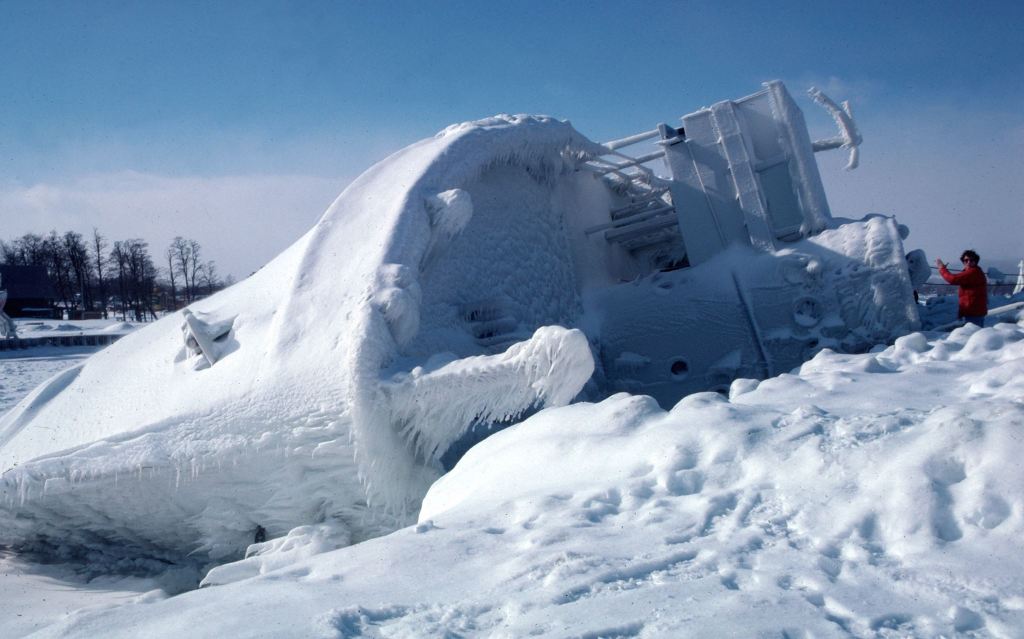
Michigan’s Ultimate Snow Day: The Blizzard of ’78

The Blizzard of '78 by John Russell

The Blizzard of ’78 by John Russell

“The most extensive and very nearly the most severe blizzard in Michigan history raged throughout Thursday January 26, 1978 and into part of Friday January 27. About 20 people died as a direct or indirect result of the storm, most due to heart attacks or traffic accidents. At least one person died of exposure in a stranded automobile. Many were hospitalized for exposure, mostly from homes that lost power and heat. About 100,000 cars were abandoned on Michigan highways, most of them in the southeast part of the state.” -National Weather Service Ann Arbor Meteorologist in Charge, C.R. Snider on January 30th, 1978

48 years ago one of the most powerful blizzards in Michigan history brought the state to a standstill. In her feature on historical Michigan snow days in the now defunct Seeking Michigan,  Jessica Miller of the Archives of Michigan related:

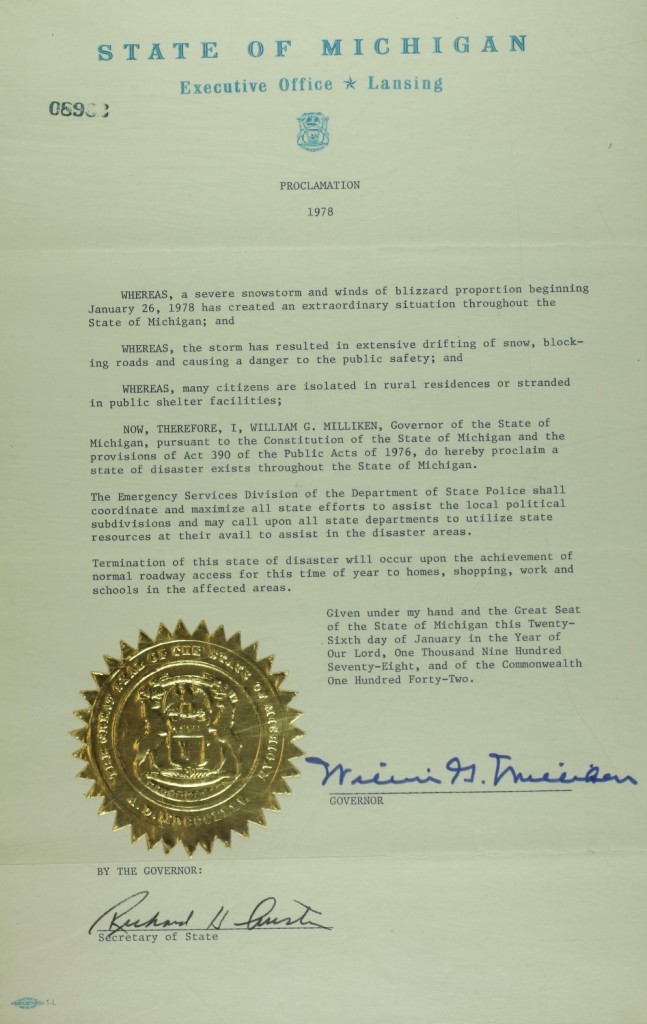
On January 26-27, 1978, snowstorms with fifty-to-seventy-mile per hour winds pummeled much of Michigan. Snowfall totals ranged from eighteen inches in Lansing to an incredible fifty-one inches in Traverse City. More than 100,000 cars were abandoned on roads and highways, and travel was impossible for days. Governor William G. Milliken declared a state of emergency on January 26 (See the image below.) and activated the National Guard to assist with the cleanup. The governor also requested financial assistance from the federal government and estimated damage totals to be more than $25 million, not including lost productivity from workers who were unable to get to their jobs.

Regarding the photo, John wrote: Marty Lagina stands on the frozen pier at the Great Lakes Maritime Academy on January 29, 1978, viewing the capsized training vessel Allegheny, which capsized from ice buildup during the Blizzard of ’78. This image was on assignment for TIME magazine, who had seen my b&w image on the UPI wire and wanted a color image. Marty and I were lucky – the sky cleared and the wind stopped for about 20 minutes, then the storm began again. I wondered at the time who TIME knew to make that happen…

See the latest from John on his TC Photo Facebook page & stay warm folks!!
Support Michigan in Pictures with Patreon

Lake Michigan Icebox

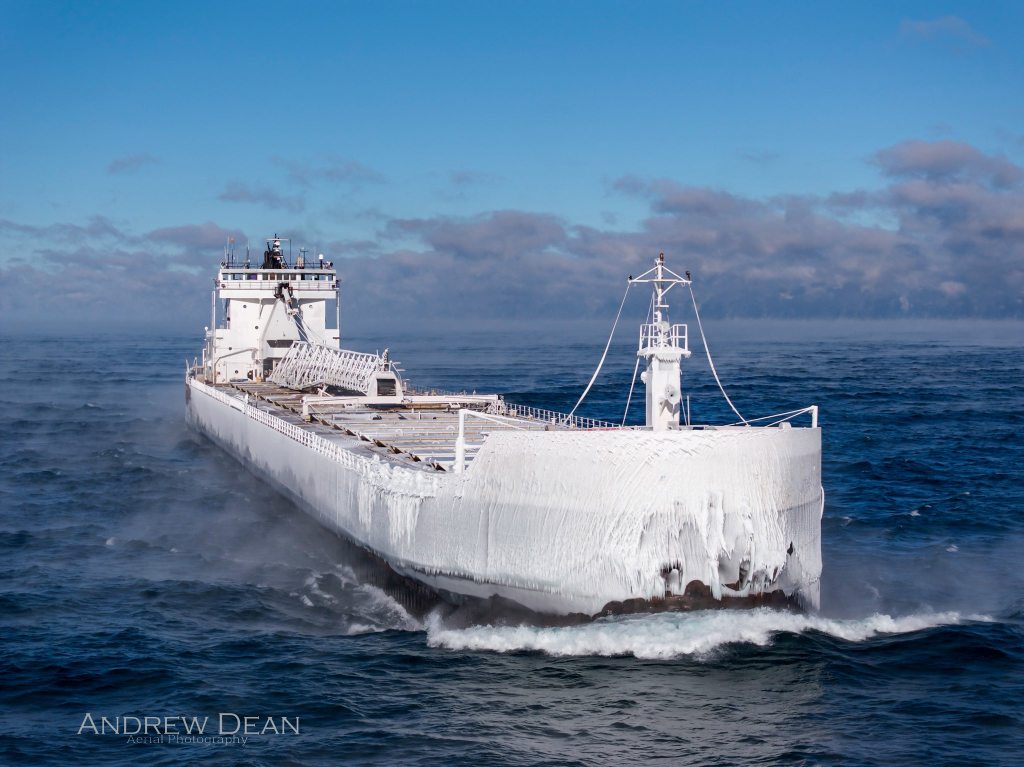
M/V John J Boland by Andrew Dean Aerial Photography

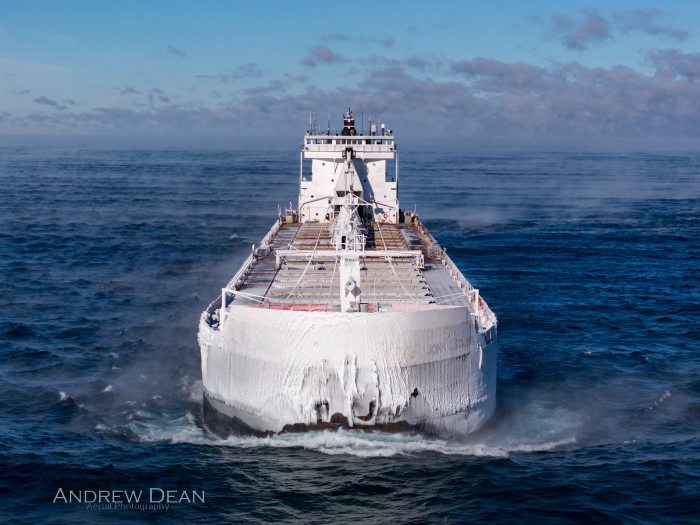
M/V John J Boland by Andrew Dean Aerial Photography

mLive shares that although Lake Michigan will still help “warm” lower Michigan this week, it will still be dangerously cold. The coldest air will come around the south end of Lake Michigan and plunge wind chills for southern Michigan into the -25 to -35 degree range Monday into Tuesday morning & it’s not much better for the rest of the state!

  • Detroit, Ann Arbor and Southeast Michigan: Sub-zero wind chills on Monday and Tuesday, falling as low as -15 degrees.
  • West Michigan: Monday and Tuesday’s wind chills could hit -20 degrees.
  • Northern Michigan: Wind chills could fall to -25 by Tuesday morning.
  • Upper Peninsula: “High confidence (>75%) for wind chills near or below -25F Monday morning and Tuesday morning for most of the U.P.,” the National Weather Service in Marquette said.“ Cold Weather Advisory for northern Houghton and Keweenaw Counties Monday morning.”

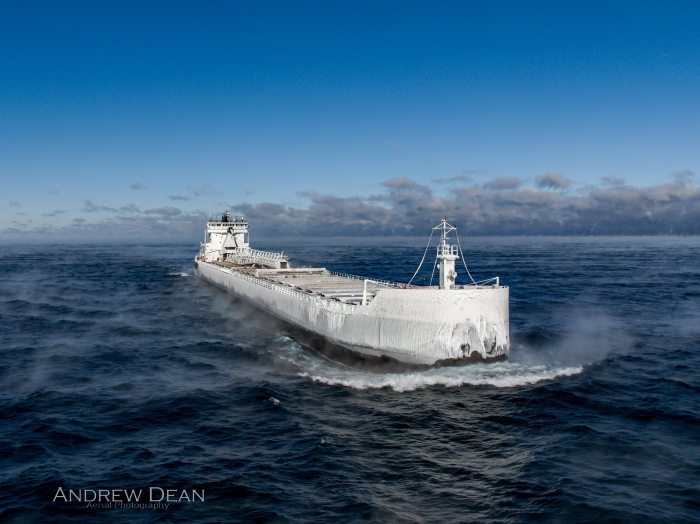
Andrew got these photos of freezing fog & spray turning the M/V John J. Boland into a floating icebox on Lake Michigan as she headed towards Indiana back in December. Follow him on Facebook and for sure visit his website for photos and information about his drone photography services!

Support Michigan in Pictures with Patreon

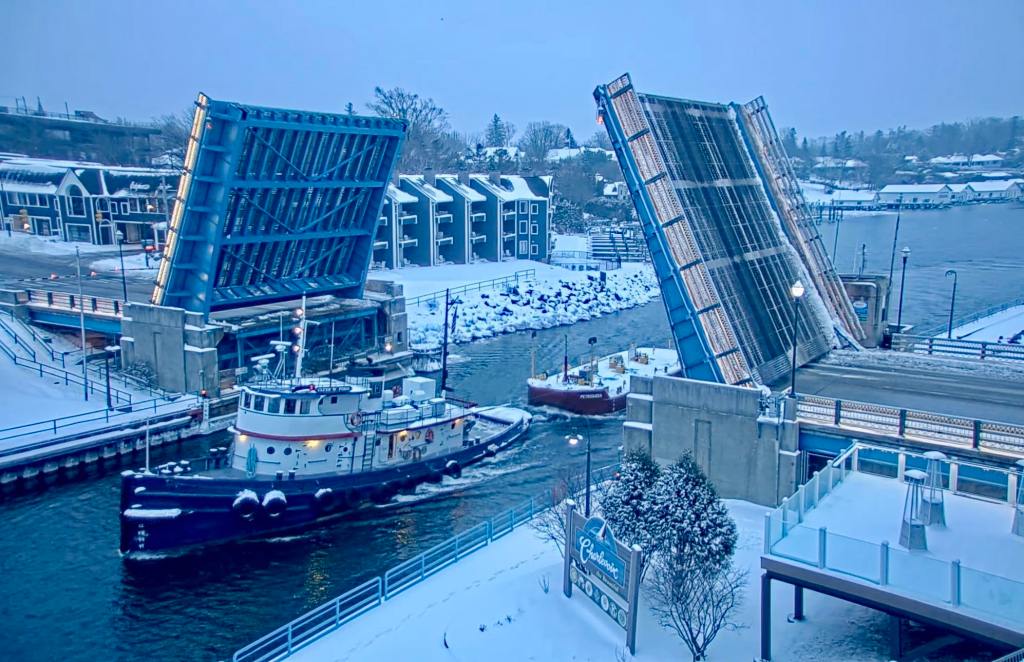
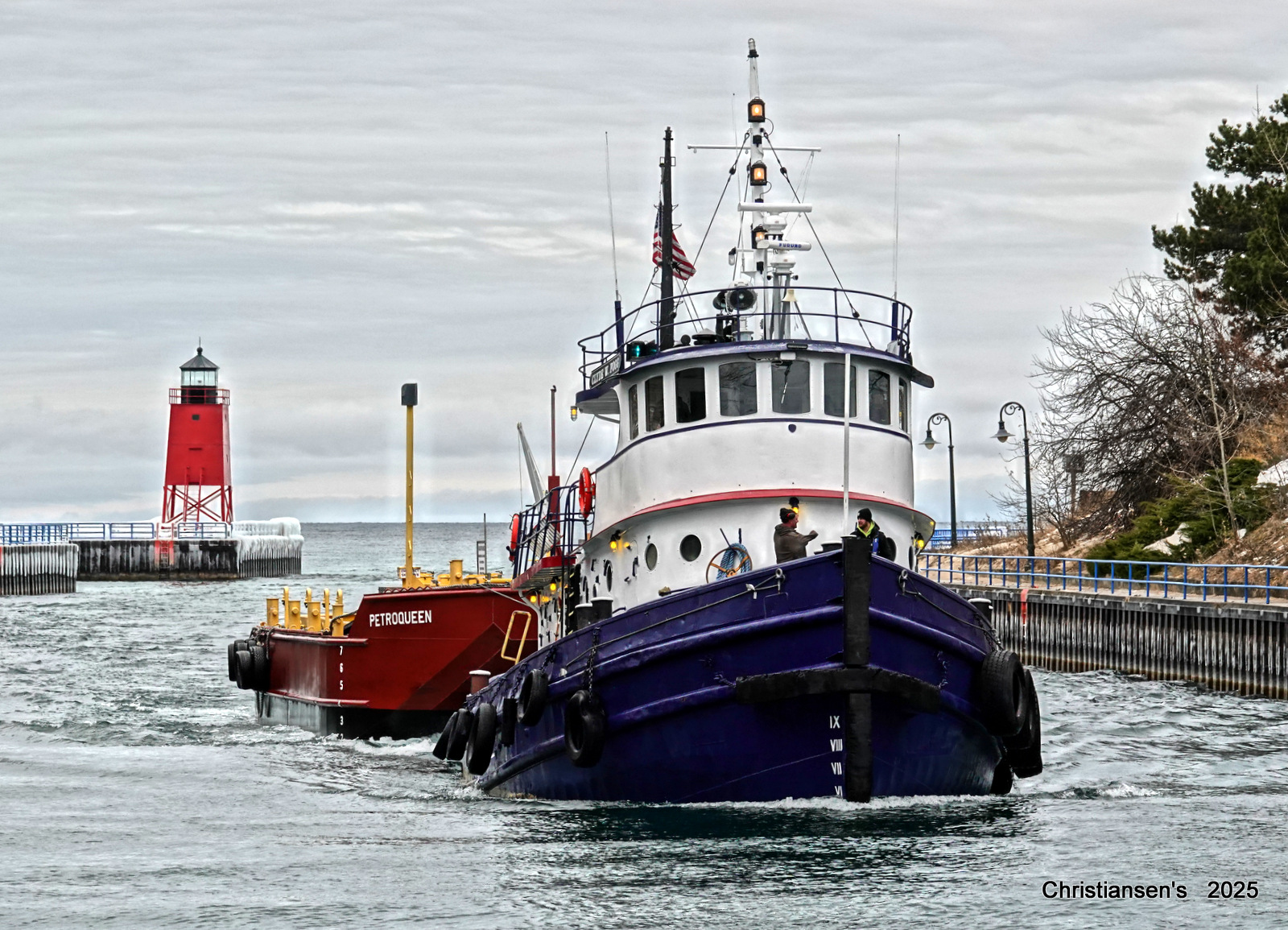
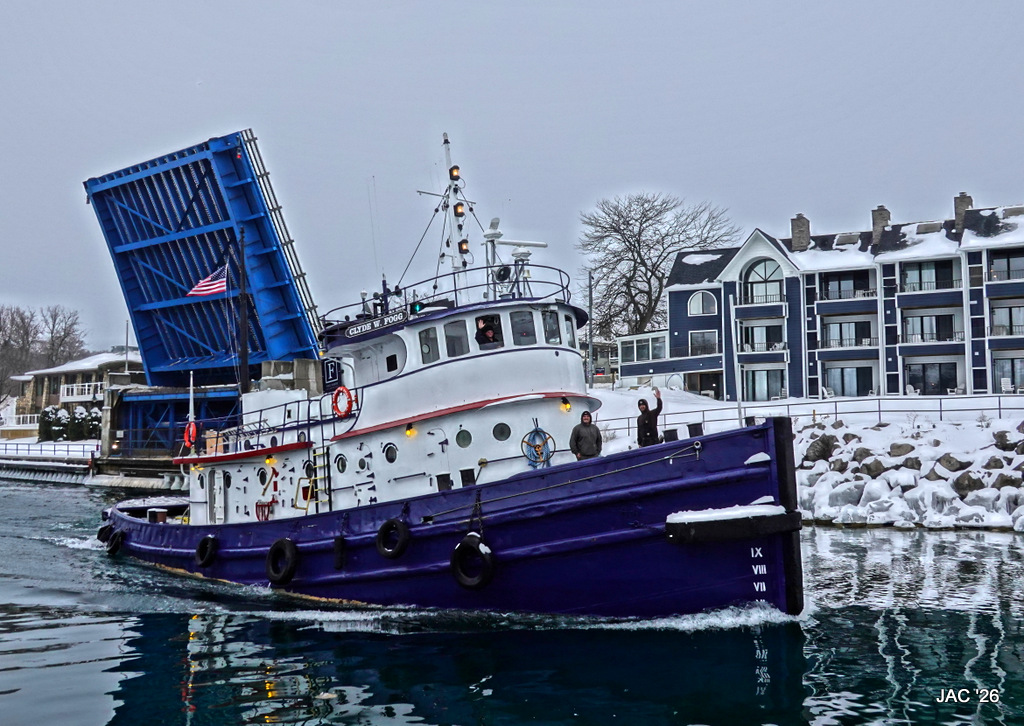
Clyde W Fogg is keeping the lights on at Beaver Island

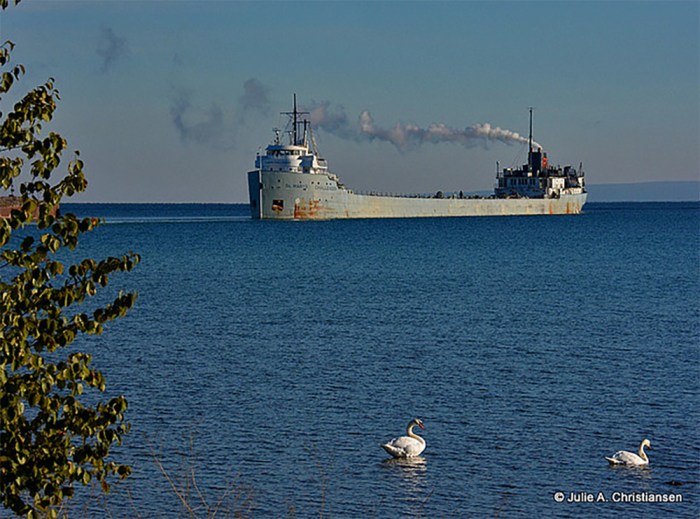
Clyde W. Fogg heading to Beaver Island by Julie A Christiansen

Clyde W. Fogg heading to Beaver Island by Julie A Christiansen

St. James Marine Company shares that it was founded in the early 1970’s by Clyde Fogg as a hobby business and is now run by Clyde Fogg’s grandson, Matt, a graduate of the Great Lakes Maritime Academy in Traverse City. The company has two tugs, the Jennifer Anne Fogg and Clyde W. Fogg.

Julie shared this shot of the Clyde W. Fogg heading to Beaver Island with a fuel barge loaded with 35,000 gallons of fuel for the winter months in our Michigan in Pictures group. She captured it from the Charlevoix Bridge Cam and let me say that it’s way less frustrating watching the bridge from your computer than from your car!

Although Julie didn’t take the photo above, here are two more she did take from her Facebook. She has also shared a ton on Michigan in Pictures over the years, and I’ve linked to a few of my favorites below!


Support Michigan in Pictures with Patreon

Yesterday & Today with Michigan’s Christmas Tree Ships

USCG Cutter Mackinaw with a load of Christmas Trees by MightyMac.org

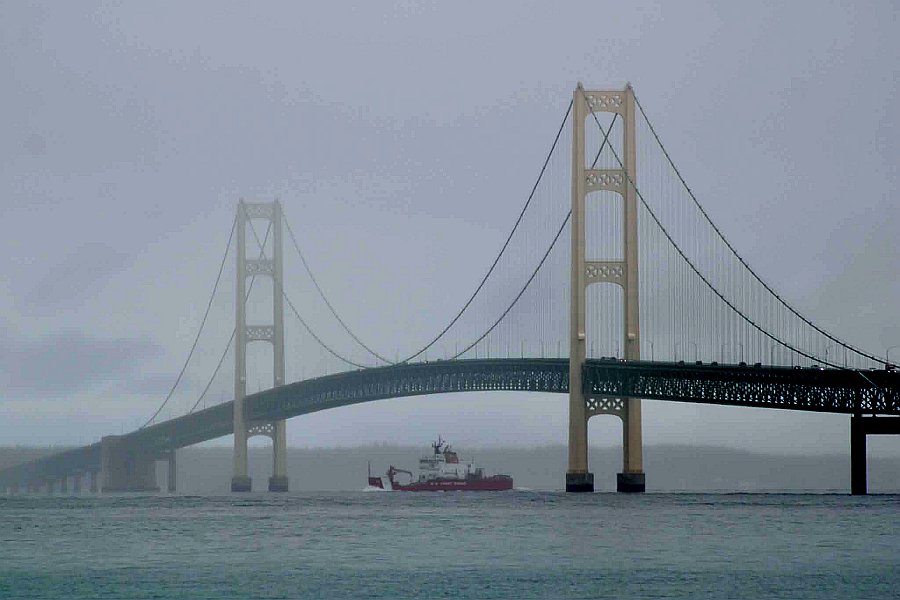
USCG Cutter Mackinaw with a load of Christmas Trees by A.M. / MightyMac.org

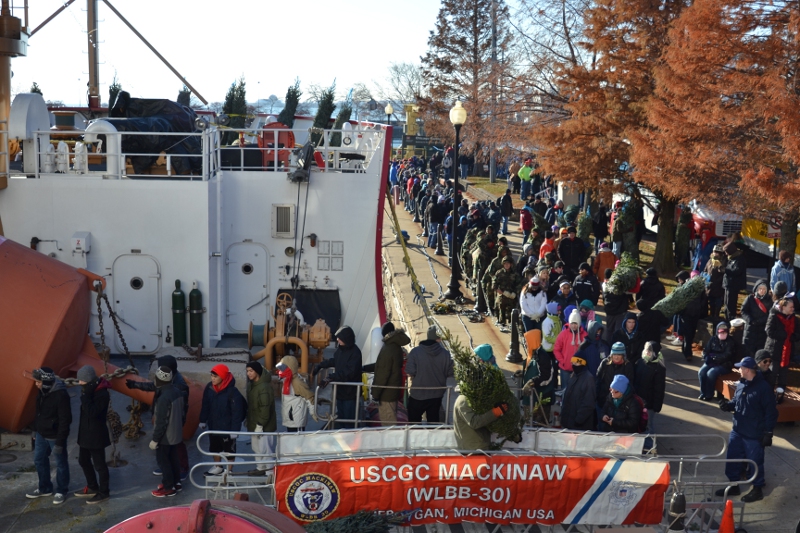
MightyMac.org is the leading resource for Mackinac Bridge news & photos. On Monday shared this shot of the USCG Cutter Mackinaw passing under the Mackinac Bridge Saturday on its journey to Chicago with 1,200 Christmas trees for families in need aboard. The ship is scheduled to arrive today (Friday, December 5th) and if you’re in the Windy City, you can head over to the Chicago Christmas Ship for all the info on the ship, the Christmas tree distribution, and how you can support this cool project.

The annual journey honors the tradition of the original Christmas Tree Ship Rouse Simmons which sank in 1912 in a storm during its annual transit from northern Michigan to Chicago. Way back in 2006, the National Archives shared that the saga of the Schuenemann family and the Rouse Simmons is a microcosm of Great Lakes maritime history. Their excellent article says (in part):

The 1868 peak in sail-powered ships on Lake Michigan also marked the year the 123-foot Rouse Simmons was launched from Milwaukee’s shipyards. The ship was built by the firm of Allan, McClelland, and Company, one of Milwaukee’s preeminent shipbuilding firms …In the early 1870s, the Rouse Simmons joined the sizeable shipping fleet of wealthy lumber magnate and philanthropist Charles H. Hackley of Muskegon, hauling loads of lumber for Hackley’s fleet from company mills to the various markets around the lake for roughly 20 years.

By the late 19th and early 20th centuries, the popular German tradition of decorating an evergreen tree in the home was widely practiced, and it was not uncommon for a handful of lake schooners to make late-season runs from northern Michigan and Wisconsin loaded with thousands of Christmas trees for busy Chicago waterfront markets. Estimates of the number of Christmas schooners vary, but perhaps up to two dozen vessels in any season delivered evergreens to markets in Great Lakes states.

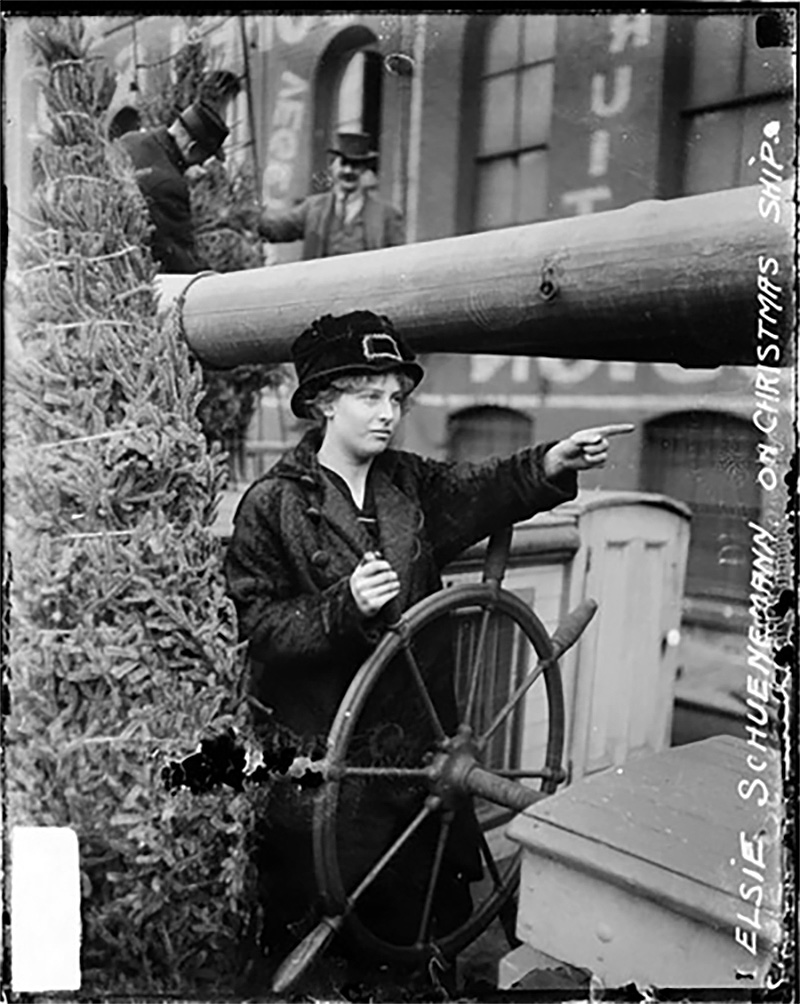
In Chicago, most vessels, including the Rouse Simmons, sold the trees directly from their berths along the Chicago River’s Clark Street docks. Electric lights were strung from the schooner’s bow to stern, and customers were invited to board the ship to choose their trees. In addition to selling Christmas trees, many boat operators, including Schuenemann, made and sold wreaths, garlands, and other holiday decorations. Barbara Schuenemann and her three daughters (Elsie is pictured above) helped make and sell these items as part of the family’s holiday trade.

You can read on for much more about Herman Schuenemann’s long career as “Captain Santa” which tragically came to an end on Friday, November 22, 1912 when the Rouse Simmons, heavily laden with 3,000–5,000 Christmas trees filling its hold & deck, left the dock at Thompson, Michigan looking “like a floating forest.” Sadly, the Rouse Simmons sailed into a powerful winter storm on the lake that sent her and several other ships including the South ShoreThree Sisters, and Two Brothers to the bottom of Lake Michigan.

Here’s a photo of Elsie Schuenemann at the helm of the Rouse Simmons along with one of the offloading in Chicago. Also be sure to check out a great video on the wreck of the Rouse Simmons by Richie Bravo.

Support Michigan in Pictures with Patreon

Saving whitefish in the Great Lakes

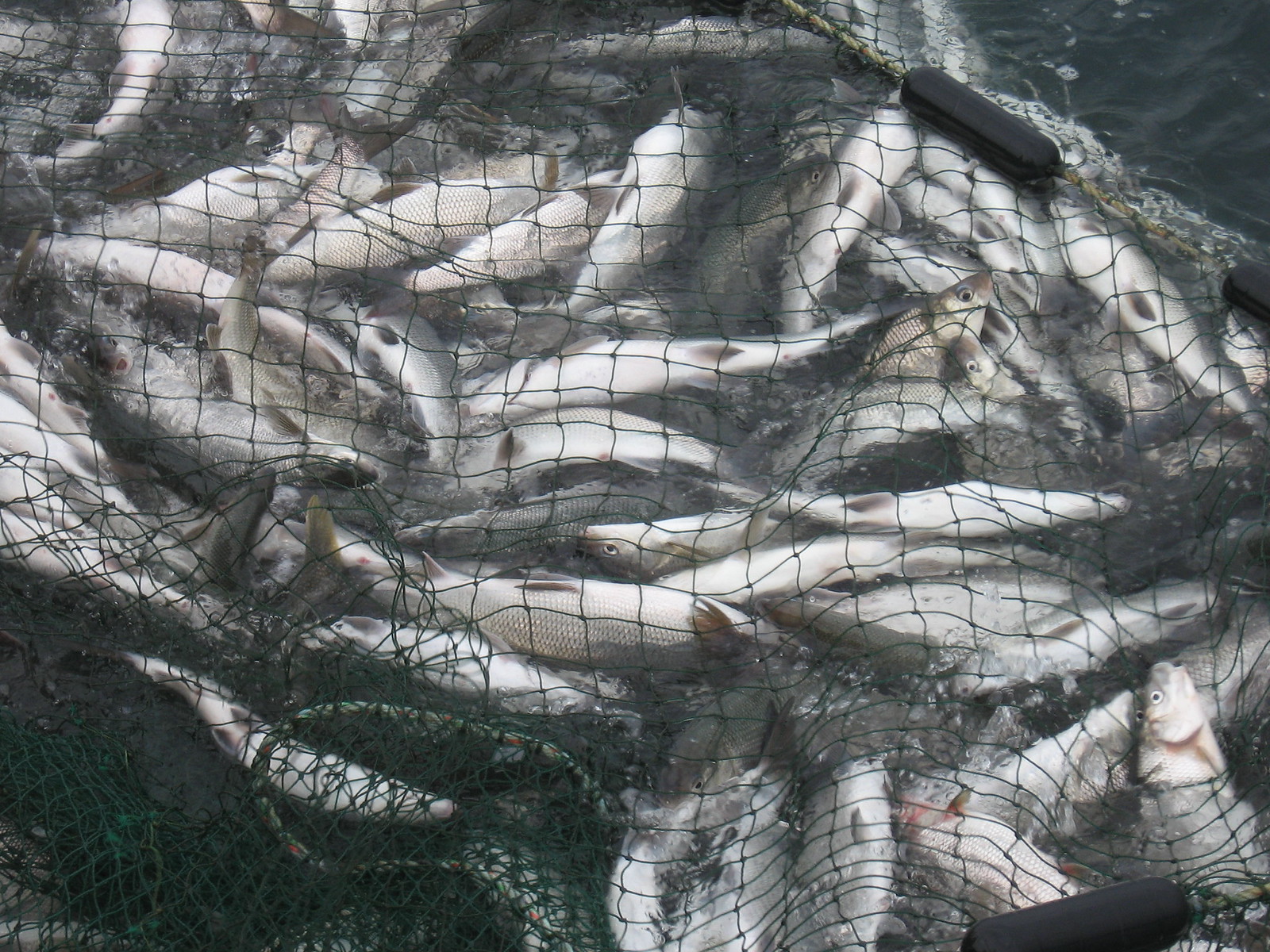
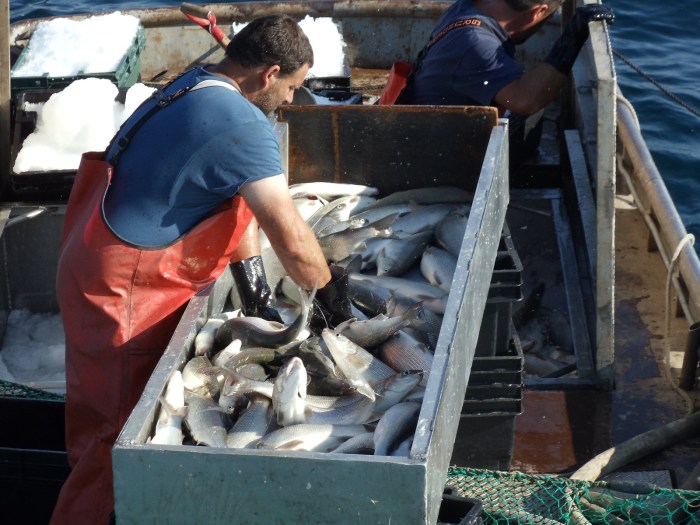
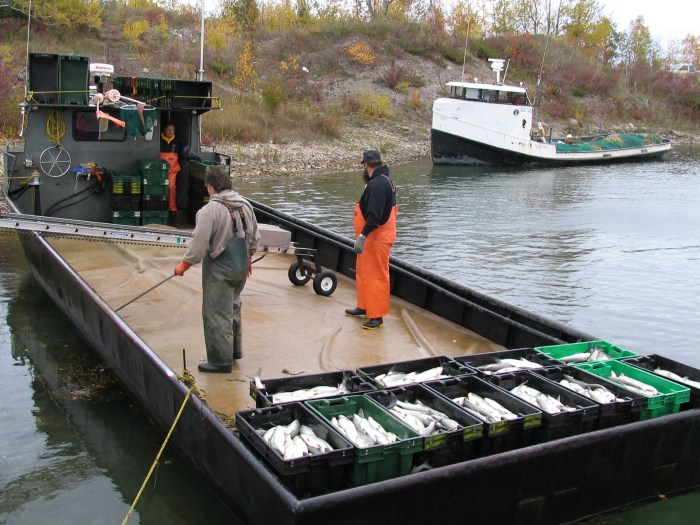
Fishing in Michigan by Abigail Lynch

Fishing in Michigan by Abigail Lynch

“Since first arriving in the Great Lakes in the 1980s, invasive mussels have spread to all five lakes, and altered the ecosystem in profound ways. Today we understand that zebra and quagga mussels are an existential threat to the Great Lakes and without a coordinated response, they will continue to inflict harm on the environment, infrastructure, and critical species such as lake whitefish. Just as invasive sea lamprey require a coordinated, binational response for effective control, we must partner with national, state, provincial, Indigenous, regional, and local partners to find a solution to the mussel invasion. This bill makes that happen.”Great Lakes Fishery Commission Chair Ethan Baker

Bridge Michigan shares that two Michigan lawmakers are set to unveil legislation to dramatically increase funding to prevent invasive mussels from wiping out whitefish in the lower Great Lakes:

US Reps. Debbie Dingell, D-Ann Arbor, and Tim Walberg, R-Tipton, want to increase funding for mussel control research more than fiftyfold to $500 million over the next 10 years. (EDITOR: They released it on Tuesday)

Otherwise, the “fish that we take for granted are going to just disappear,” Dingell told Bridge Michigan.

The damage wrought by invasive mussels is among the biggest threats to the Great Lakes in history. Yet Bridge found that while the US government has spent mightily to combat other threats, the fight against mussels has received a comparative pittance.

The main funding program for Great Lakes science has devoted an average of less than $1 million annually to the cause since 2010, according to spending records analyzed by Bridge. The federal government spends about 20 times that amount to keep sea lamprey out of the Great Lakes and has promised 90 times as much to build a barrier against invasive carp.

Read on for much more & kudos to these two Representatives for working together to protect the livelihoods and meals of Michiganders!

The photos are from Michigan Sea Grant and the one of the boat moored was taken by Brandon Schroeder. Sea Grant is an excellent organization that works hard for Michigan waters and the Great Lakes as a whole!

Support Michigan in Pictures with Patreon

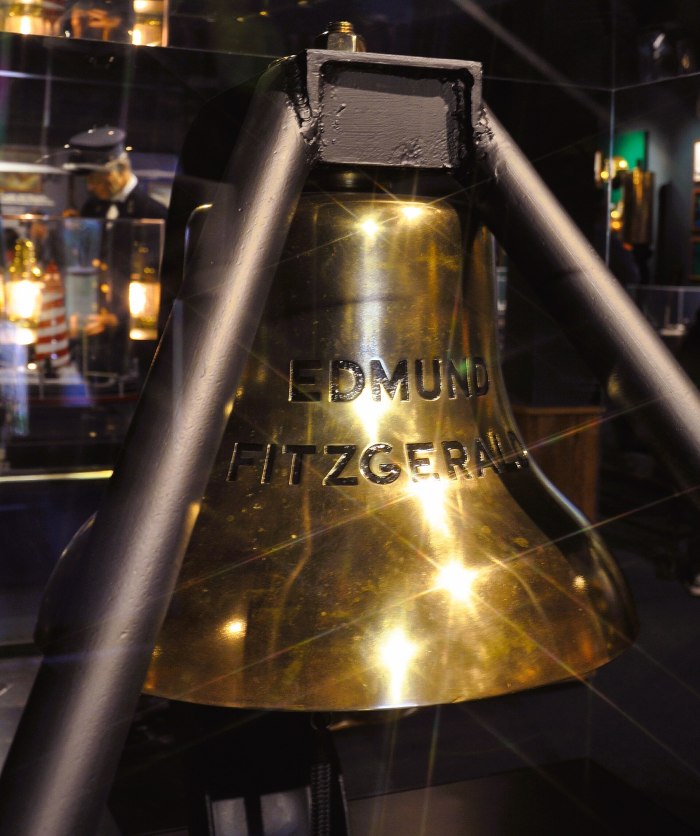
The Legend still lives on: 50 years after the wreck of the Edmund Fitzgerald

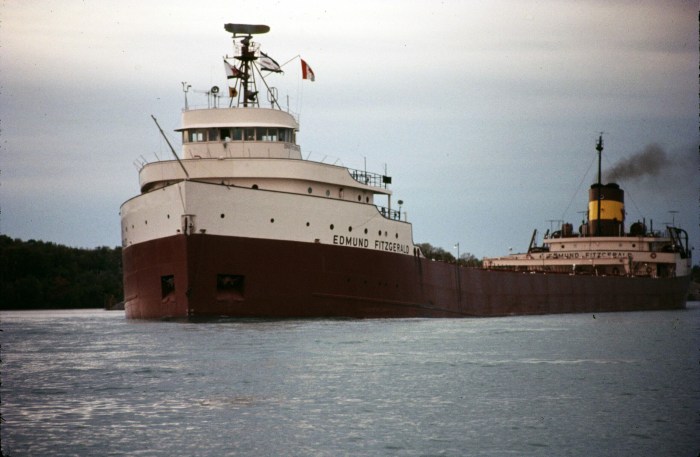
Edmund Fitzgerald, 1971 by Greenmars

50 years on November 10, 1975, the mighty SS Edmund Fitzgerald was lost with all hands in a powerful storm on Lake Superior. At 729-feet long, it was the largest ship on the Lakes at the time and the largest vessel to ever sink in the Great Lakes.

While Gordon Lightfoot’s classic song The Wreck of Edmund Fitzgerald undoubtedly contributed to the legend of the Fitz, the documentary Backstory: The Edmund Fitzgerald from Click on Detroit/Local 4 on the sinking of the Edmund Fitzgerald explores the myriad ways the ship in woven into Michigan’s culture & consciousness. I really encourage you to make some time to watch this excellent documentary. In addition to exploring the mystery of the wreck and the impact of Lightfoot’s iconic song, it features anecdotes like the fact many of the furnishings were from Hudson’s and a truly beautiful recounting of the stories of the sailors lost. Seriously excellent work!

I color corrected both of Greenmars’ photos of the Fitzgerald. The photo of the Fitzgerald’s bell was taken & shared by Hazelridgegirl & you can see them all and many more at SS Edmund Fitzgerald on Wikimedia Commons.

Much (much) more about the Edmund Fitzgerald on Michigan in Pictures.

Support Michigan in Pictures with Patreon

What lies beneath might be a shipwreck

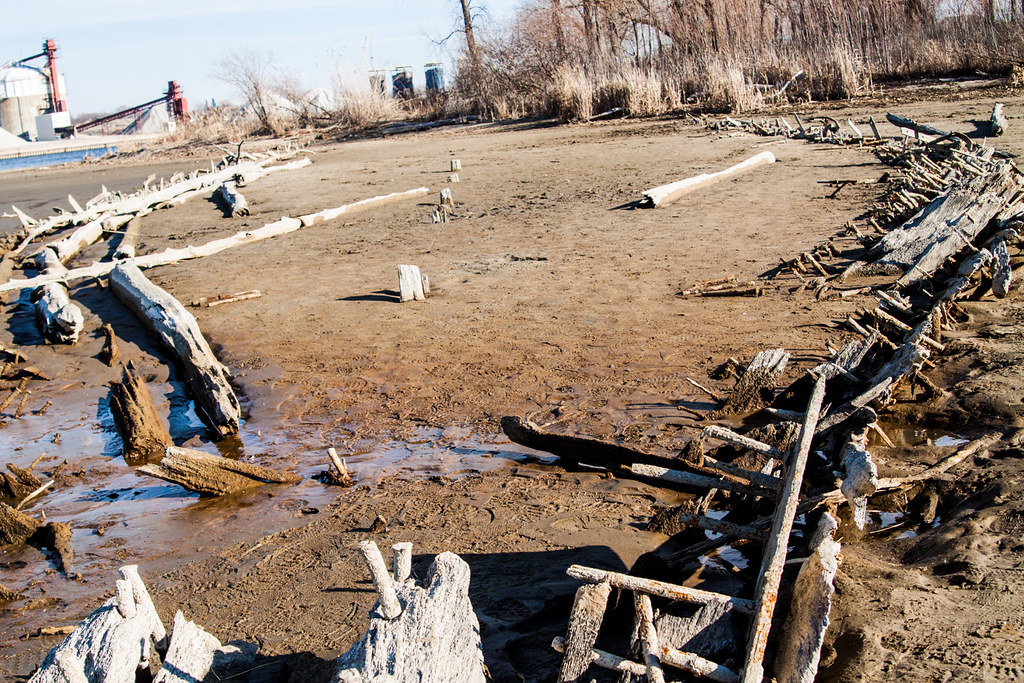
The Great Lakes Shipwreck Aurora by Bob Gudas

The Great Lakes Shipwreck Aurora by Bob Gudas

Janelle D. James of Bridge Magazine wrote last week that Michigan is facing the worst drought in over a decade. Although we’ve gotten some much needed rain with more on the way, the Michigan Storm Chasers share that it probably won’t be enough to make a significant difference. Rather than bum you out with ways that drought sucks, let’s focus on this cool photo & story from when drought was even worse!

When Bob shared this photo in October of 2012 he wrote, “The remains of the Great Lakes steamer Aurora. The wreck recently became visible due to record low waters in Lake Michigan basin. The 300 foot wooden steamer was built in 1887 and burned to the waterline at this spot in 1932. The stern was subsequently covered with water where it remained until the drought of 2012. Approximately 2 weeks ago the water receded off of the wreck. This view shows approximately 200 feet of the wreck with another 100 feet being buried under a sand dune.

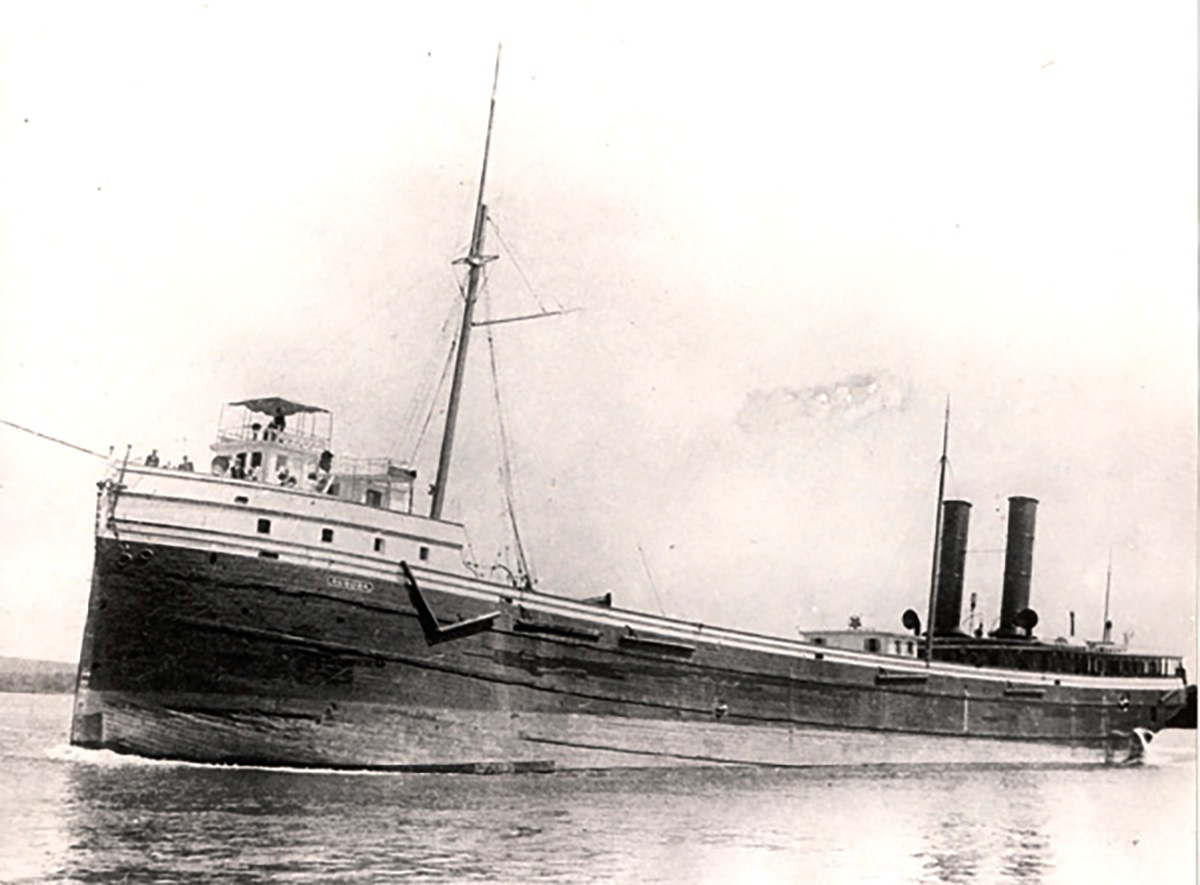
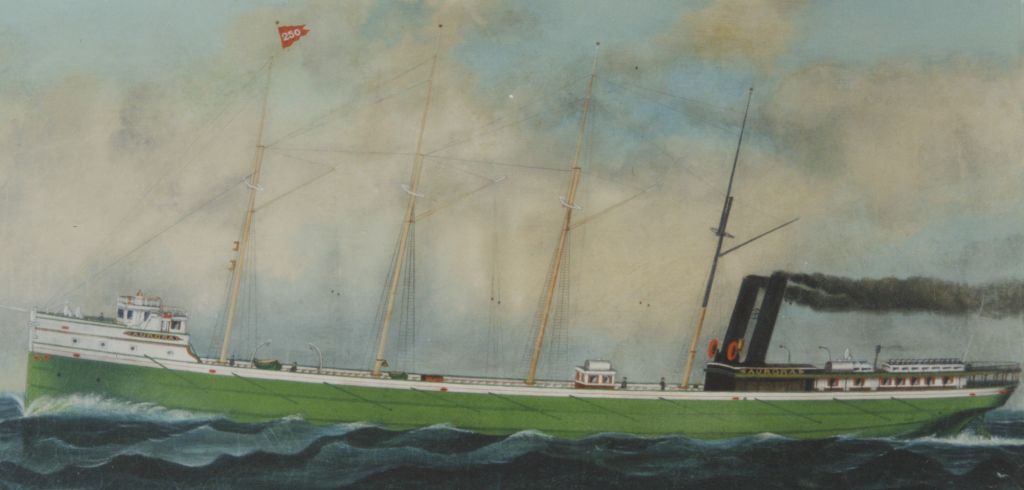
A Shipwreck World article on the Aurora add that the Aurora was significant as one of the last great wooden steamships: When launched by the Murphy and Miller of Cleveland on August 23, 1887, the 290-foot, steam-driven propeller was the largest and most powerfully built wooden vessel on the Great Lakes. The 3000-ton vessel was initially owned by John Corrigan of the Aurora Mining Company of Milwaukee which paid $150,000 for its construction. It was used to ship iron ore from the Gogebic Range Ironwood, Michigan, to Cleveland and coal from Cleveland on the return trip.

View & purchase Bob’s work on his website, and check out a seasonally appropriate pic in Autumn’s Rainbow: the colors of fall on Michigan in Pictures!

Support Michigan in Pictures with Patreon

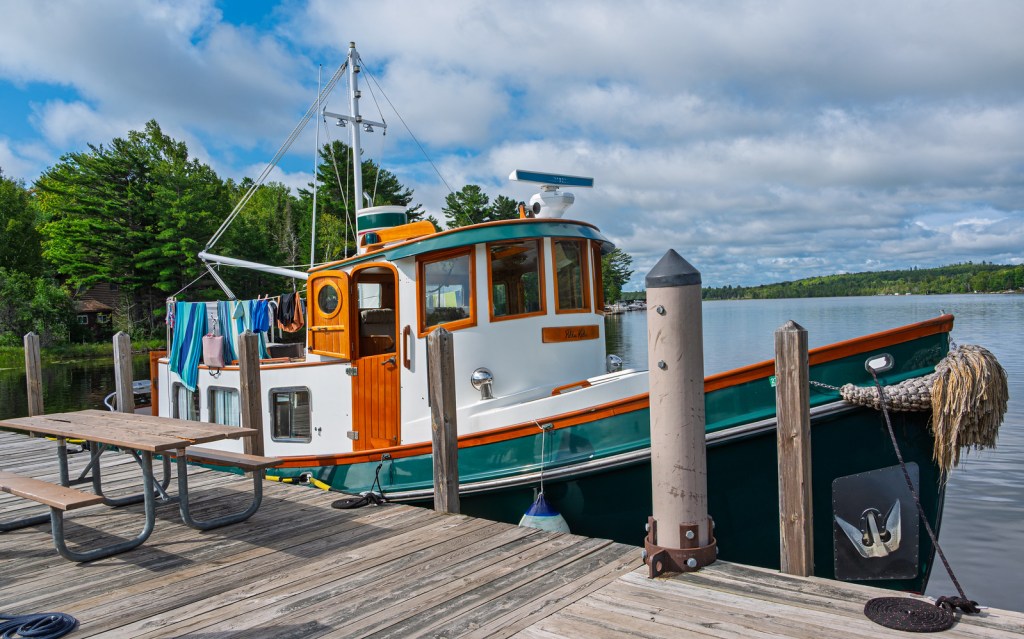
Spend the weekend Hanging Out

Hanging Out by Stephen Trynoski

Hanging Out by Stephen Trynoski

Stephen took this at Lac la Belle Marina WAAAAYYYY up north in Michigan on the Keweenaw Peninsula. You can click to see this on the Flickr photo map and see more in his Boats gallery on Flickr.

Hope you get to spend at least a little time hanging out before summer is gone!

Support Michigan in Pictures with Patreon

2025 opening of Gordie Howe Bridge in question

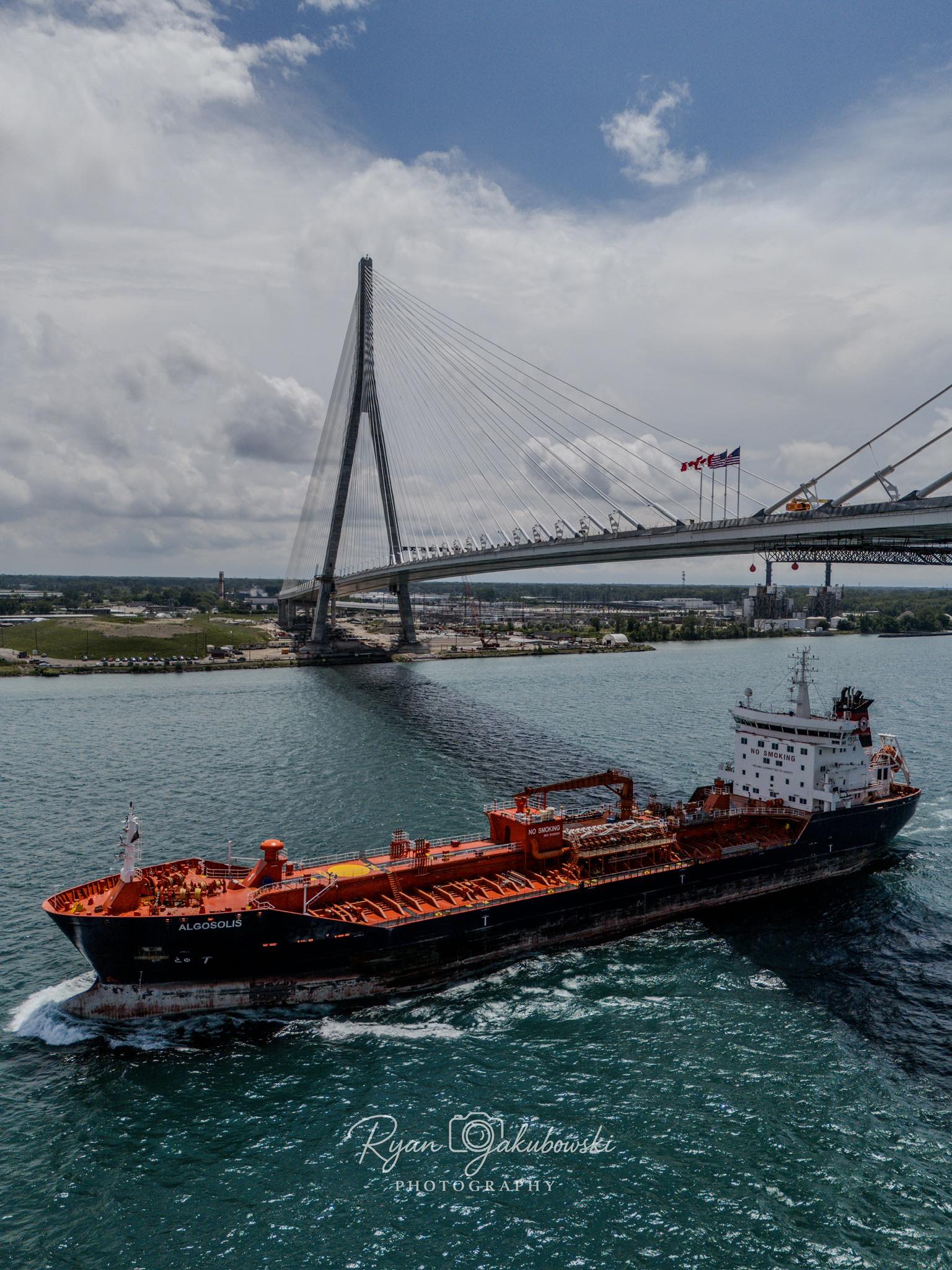
Freighter passing under Gordie Howe Bridge by Ryan Jake Jakubowski

Freighter passing under Gordie Howe Bridge by Ryan Jake Jakubowski

The Detroit News digs into emerging signs that the planned Fall 2025 opening of the Gordie Howe will be delayed due to issues with new construction at the US Port of Entry & multiple links to the bridge in southwest Detroit:

The S&P analysis said delays at the future U.S. Port of Entry “may delay substantial completion by about six months.” The 167-acre U.S. Port of Entry includes border protection facilities for passenger and commercial vehicle and maintenance facilities. The southern edge of the complex is on the 6300 block of West Jefferson Avenue near Historic Fort Wayne in the Delray neighborhood.

The S&P analysis pointed out that a key “handover date” was missed last September that would have allowed U.S Customs to begin its six months of work needed to make the facilities ready to open. That new target for the handover date was July 31. It is unclear if the handover occurred. The WBDA cited security concerns that won’t allow it to comment on “certain aspects” of the U.S. Port of Entry.

Completion of the Michigan interchange portion of the project in southwest Detroit is not expected to be done until Aug. 31, more than 120 days longer than contractually planned, the S&P report said. The work involves building four new road bridges, five new pedestrian bridges and four bridges crossing a railway and connecting to I-75. Work on this can be seen on blocks of Fort Street, I-75 and the freeway service drive. Bridge officials said that various aspects of the Michigan Interchange work continue but did not give a completion date.

Read on for more but it’s sounding like we might not be riding bikes to Canada on the Gordie Howe this fall after all. 🫤

Ryan shares that this is one of his favorite shots of the new bridge. Click the pic to follow him on Facebook & head over to J&C Photography to view & purchase his work and to hire him for photographic services including drone photography & 360 degree panoramas.

More freighters & bridges on Michigan in Pictures!

Support Michigan in Pictures with Patreon

2025 Chicago to Mackinac Race

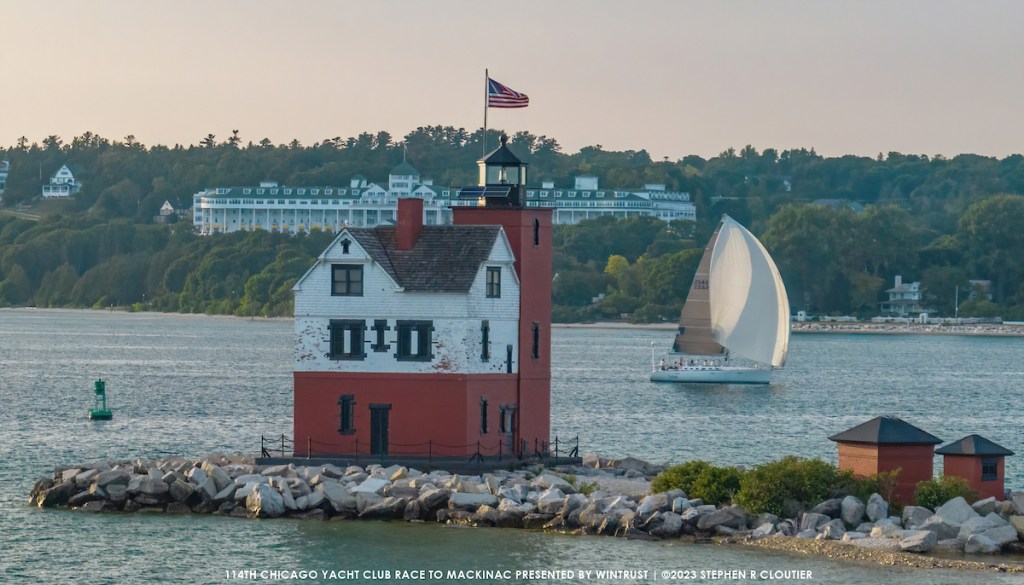
Chicago to Mac Sailing Race at Mackinac Island by Stephen R. Cloutier

Chicago to Mac Sailing Race at Mackinac Island by Stephen R. Cloutier

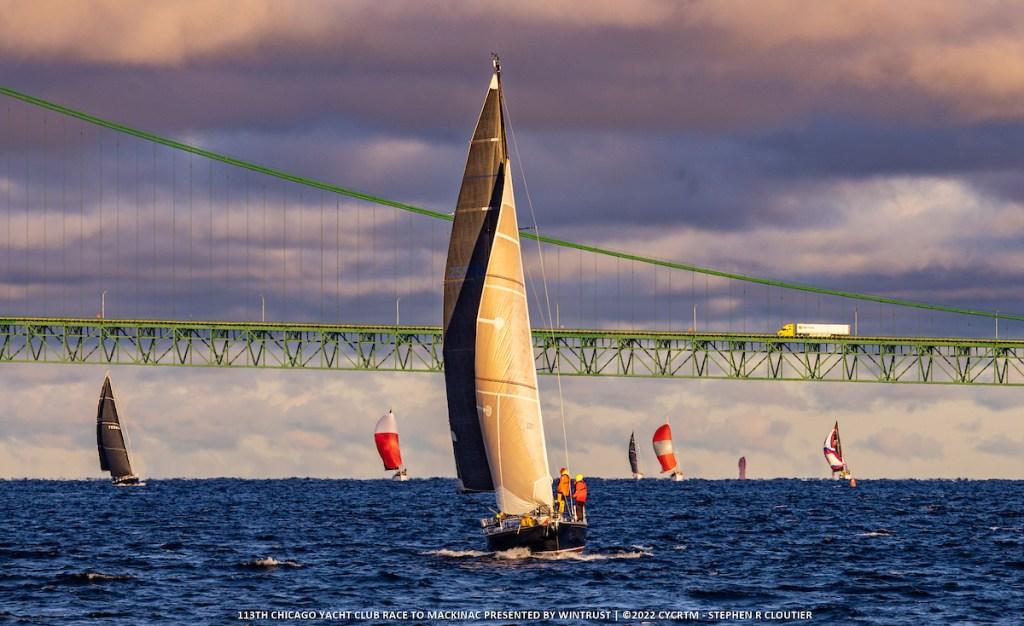
The Chicago Yacht Club Race To Mackinac starts Friday morning (July 18). The Chicago to Mac is the longest annual freshwater sailing race in the world, spanning 333 statute miles from the start at the Chicago Yacht Club, up the western shore of Lake Michigan, passing under the Mackinac Bridge to finish at Mackinac Island. They explain that:

…the race’s unpredictable weather and shifting winds on Lake Michigan make it a supreme test of sailing skill, rivaling many offshore ocean races. What first began in 1898 with just five boats has now evolved into a world-class sporting event. The origins of the Race to Mackinac date back to 1898, when Joseph Myers designed two fin-keel sloops, Siren and Vanenna. These vessels sparked a competition between their owners, George Peate of Siren and W.R. Crawford of Vanenna, and after three races in June of 1898, Vanenna remained undefeated. This prompted the idea of a unique, challenging race – one that would forever change the history of sailing.

Lots more on the Race to Mackinac website. If you click the pic above, you can see more of Stephen’s photos. For sure follow him on Instagram for his latest! Also more about Round Island lighthouse on Michigan in Pictures!

Chicago to Mac at Mackinac Bridge by Stephen R. Cloutier

Chicago to Mac at Mackinac Bridge by Stephen R. Cloutier

Support Michigan in Pictures with Patreon