Red-Tailed Hawk (buteo jamaicensis)

Red Tailed Hawk

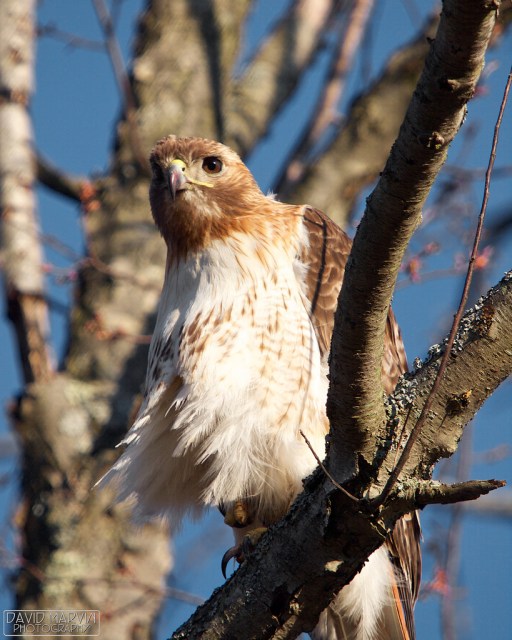
Red Tailed Hawk, photo by David Marvin

Sometimes the photos I link to go away, so here’s an old post with a new face!

All About Birds page on the Red-tailed Hawk (Buteo jamaicensis) says:

This is probably the most common hawk in North America. If you’ve got sharp eyes you’ll see several individuals on almost any long car ride, anywhere. Red-tailed Hawks soar above open fields, slowly turning circles on their broad, rounded wings. Other times you’ll see them atop telephone poles, eyes fixed on the ground to catch the movements of a vole or a rabbit, or simply waiting out cold weather before climbing a thermal updraft into the sky.

A couple fun facts:

The Red-tailed Hawk has a thrilling, raspy scream that sounds exactly like a raptor should sound. At least, that’s what Hollywood directors seem to think. Whenever a hawk or eagle appears onscreen, no matter what species, the shrill cry on the soundtrack is almost always a Red-tailed Hawk.

The Red-tailed Hawk is one of the largest birds you’ll see in North America, yet even the biggest females weigh in at only about 3 pounds. A similar-sized small dog might weigh 10 times that.

Courting Red-tailed Hawks put on a display in which they soar in wide circles at a great height. The male dives steeply, then shoots up again at an angle nearly as steep. After several of these swoops he approaches the female from above, extends his legs, and touches her briefly. Sometimes, the pair grab onto one other, clasp talons, and plummet in spirals toward the ground before pulling away.

Red-tailed Hawks have been seen hunting as a pair, guarding opposite sides of the same tree to catch tree squirrels.

The oldest known Red-tailed Hawk was 28 years 10 months old.

Click through for more info, photos and hawk sounds. Also see Buteo jamaicensis (red-tailed hawk) from the ADWRed-tailed Hawk on Wikipedia and Red-tailed hawk for Kids (also ADW).

View David’s photo background bigtacular and see more in his Birds slideshow.

More Michigan birds from Michigan in Pictures!
Fancy Feathers, Fashion and the Dawn of Bird Conservation

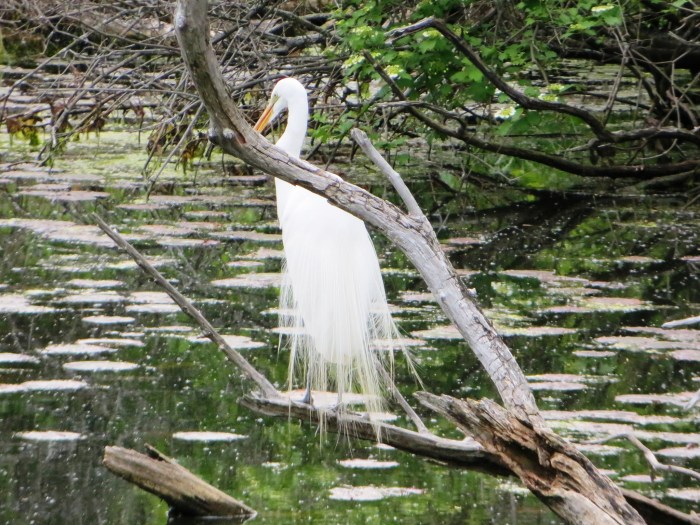
Spring Arrival Egret

Spring Arrival, photo by Cowboy*

How the Great White Egret Inspired Bird Conservation in the Smithsonian says:

One particular group of birds suffered near extermination at the hands of feather hunters, and their plight helped awaken a conservation ethic that still resonates in the modern environmental movement. With striking white plumes and crowded, conspicuous nesting colonies, Great Egrets and Snowy Egrets faced an unfortunate double jeopardy: their feathers fetched a high price, and their breeding habits made them an easy mark.

To make matters worse, both sexes bore the fancy plumage, so hunters didn’t just target the males; they decimated entire rookeries. At the peak of the trade, an ounce of egret plume fetched the modern equivalent of two thousand dollars, and successful hunters could net a cool hundred grand in a single season. But every ounce of breeding plumes represented six dead adults, and each slain pair left behind three to five starving nestlings. Millions of birds died, and by the turn of the century this once common species survived only in the deep Everglades and other remote wetlands.

This slaughter inspired Audubon members to campaign for environmental protections and bird preservation, at the state, national and international levels. The Lacey Act passed Congress in 1900, restricting interstate transport of wild fowl and game. In 1911 New York State outlawed the sale of all native birds and their feathers, and other states soon followed suit. Passage of the Weeks-McLean Act (1913) and the Migratory Bird Act (1918) took the protections nationwide and mirrored legislation in Canada, Britain, and Europe, effectively ending the fancy-feather era.

More about Great Egrets on the UM Animal Diversity Web.

You can view Cowboy’s photo from last May background big and see more in his Animals & Wildlife slideshow.

More birds and more Spring wallpaper on Michigan in Pictures!

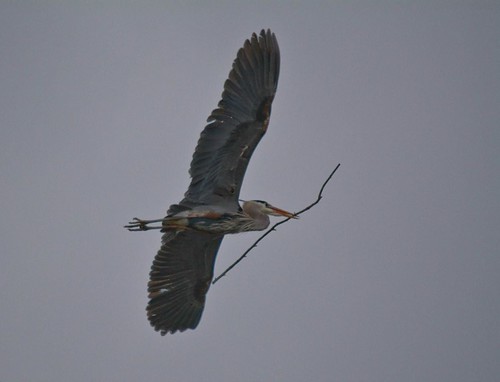
Nest Building Heron

Nest Building Heron

Nest Building Heron, photo by Dawn Williams

Last year I cited the Michigan Natural Features Inventory entry for Great Blue Heron Rookeries. It remains the definitive source, so I guess a rewind is in order:

The great blue herons in Michigan are largely migratory, with almost all leaving the state during the winter months. Most leave by end of October and return in early to mid-March.

The great blue heron is mostly a colonial nester, occasionally they nest in single pairs. Colonies are typically found in lowland swamps, islands, upland hardwoods and forests adjacent to lakes, ponds and rivers. Nests are usually in trees and may be as high as 98 ft. (30 m) or more from the ground. The platform like nests are constructed out of medium-sized sticks and materials may be added throughout the nesting cycle. Nests are usually lined with finer twigs, leaves, grass, pine needles, moss, reeds, or dry gras. The same nests are refurbished and used year after year…

Most great blue herons return to southern Michigan heronries in mid-March although a few may remain through the winter if there are areas of open water. Courtship and nest building commences from early April in southern Michigan to early May in the extreme northern portions of the state. Both sexes are involved in the nest building process with males primarily gathering sticks from the ground, nearby trees, or ungarded nearby nests. Males pass sticks to females who then place them on the nests.

Click to read more and you can see more on these herons at the Kensington Metropark’s annual Heron Days May 17 & 18, 2014.

View Dawn’s photo background big and see more in her slideshow.

You can read more about heron rookeries and Michigan herons and get more spring wallpaper on Michigan in Pictures.

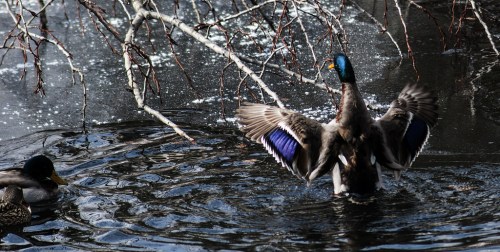
Rising Duck

Rising Duck

Rising Duck, photo by spang1mw

It’s been too long since a photo was added to the Michigan in Pictures Duckie Project.

View Matt’s photo background big and see more in his slideshow.

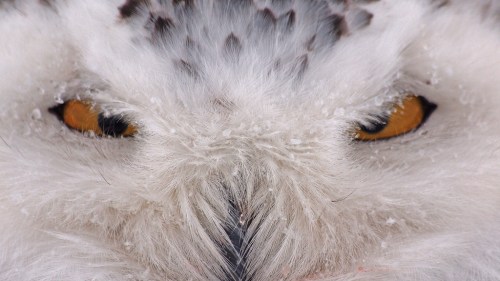
Crosseyed & Snowblind

Snowy Owl

Snowy Owl, photo by Sherri & Dan

Enough with the vortexes already.

Sherry & Dan took their photo of a snowy owl near Muskegon. background bigtacular and see more in their 100+ photo Owls slideshow.

More about snowy owls on Michigan in Pictures.

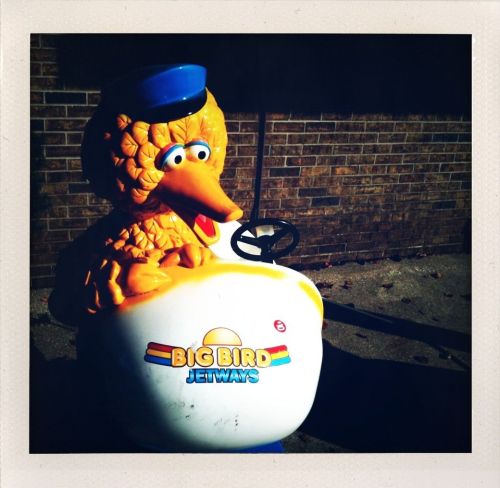
Brought to you by the letter J … and the iPhone

Today's Photo is Brought to You by the Letter J (for Jetsetter)

Today’s Photo is Brought to You by the Letter J (for Jetsetter), photo by Matt Burrows

On January 9, 2007 Steve Jobs announced the iPhone. Within months, photography apps for Apple’s pocket computer with a crappy digital camera began showing up. Apps like Hipstamatic and Shake It made the phone’s resolution weakness tolerable and spawned a resurgent interest in the lomo ethic.

Here’s a nice article on apps to trick your iPhone out for a new year of photography.

Check Matt’s photo out big as Big Bird and see more in his iPhoneography slideshow.

White Christmas dreams will come true in Michigan!

I'm Dreaming Of A White Christmas!

I’m Dreaming Of A White Christmas!, photo by Spring Noel

mLive meteorologist Mark Torregrossa makes the question of whether we’ll have a white Christmas or not pretty simple, saying: “If you will be in Michigan this Christmas, your dream of a white Christmas will come true – wherever you are.” Read on for his detailed forecast.

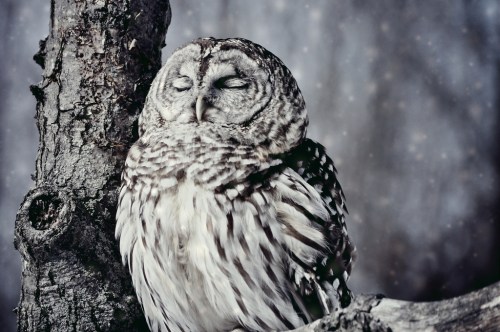
Alert readers will note the first back-to-back owling in Michigan in Pictures history. What can I say? This shot of a barred owl is simply perfect!!

View Spring’s photo bigger and see more in her Birds of Prey slideshow.

More birds on Michigan in Pictures.

Let’s Do Lunch (Snowy Owl Style)

Snowy Owl 1

Snowy Owl 1, Sherri & Dan

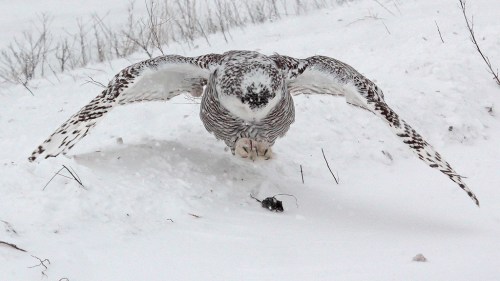
Dan Lockard captured a cool sequence last weekend of a snowy owl on the hunt. View his photo background big, watch the hunt (which doesn’t end well for Mr. Mouse) or check out his owls slideshow.

The Owl Pages entry for the Snowy Owl (Bubo scandiacus) says in part:

The Snowy Owl is a large diurnal white Owl with a rounded head, yellow eyes and black bill. The name “scandiacus” is a Latinised word referring to Scandinavia, as the Owl was first observed in the northern parts of Europe. Some other names for the Snowy Owl are Snow Owl, Arctic Owl, Great White Owl, Ghost Owl, Ermine Owl, Tundra Ghost, Ookpik, Scandinavian Nightbird, White Terror of the North, and Highland Tundra Owl.

…Most hunting is done in the “sit and wait” style. These Owls are highly diurnal, although they may hunt at night as well. Prey are captured on the ground, in the air, or snatched off the surface of water bodies. When taking snowshoe hares, a Snowy Owl will sink its talons into the back and backflap until the hare is exhausted. The Owl will then break its neck with its beak. Snowy Owls have been known to raid traplines for trapped animals and bait, and will learn to follow traplines regularly. They also snatch fish with their talons. Small prey up to small hares are swallowed whole, while larger prey are carried away and torn into large chunks. Small young are fed boneless and furless pieces. Large prey are carried of in the Owl’s talons, with prey like lemmings being carried in the beak.

…Snowy Owls produce large, rough-looking cylindrical pellets with numerous bones, feathers, and fur showing. They are usually expelled at traditional roosting sites and large numbers of pellets can be found in one spot. When large prey are eaten in small pieces with little roughage, pellets will not be produced.

Read on for much more about these winter visitors, who the DNR explain migrate to Michigan in wintertime and have been sighted as far south as Lansing. They add that because snowy owls see few if any humans in their Arctic home, they are not very timid and easier to observe than other owl species.

More Michigan owls on Michigan in Pictures!

American Kestrel, the Sparrow Hawk

American Kestrel with mouse

American Kestrel with mouse, photo by Kevin Povenz

The American Kestrel entry at Wikipedia says:

The American Kestrel (Falco sparverius), sometimes colloquially known as the Sparrow Hawk, is a small falcon, and the only kestrel found in the Americas. It is the most common falcon in North America, and is found in a wide variety of habitats. At 19–21 centimeters (7–8 in) long, it is also the smallest falcon in North America. It exhibits sexual dimorphism in size and plumage, although both genders have a rufous back with noticeable barring. Juveniles are similar in plumage to adults.

The American Kestrel hunts by hovering in the air with rapid wing beats or perching and scanning the ground for prey. Its diet typically consists of grasshoppers, lizards, mice, and other small birds. It nests in cavities in trees, cliffs, buildings, and other structures. The female lays three to seven eggs, which both sexes help to incubate. It is a common bird to be used in falconry, especially by beginners.

All About Birds adds that it’s perhaps the most colorful raptor in the world, Wing over to their American Kestrel (Falco sparverius) page for photos, kestrel calls & more info.

More birds on Michigan in Pictures.

Check it out on black and see more in Kevin’s amazing Birds of Prey slideshow.

Many more Michigan Birds on Michigan in Pictures!

The Turn of the Tern

Turn of the tern

Turn of the tern, photo by MI photographer

The Michigan DNR says that the common tern (Sterna hirundo) is a small colonial waterbird and one of four breeding species of terns in Michigan (Caspian, black, common, and Forster’s terns):

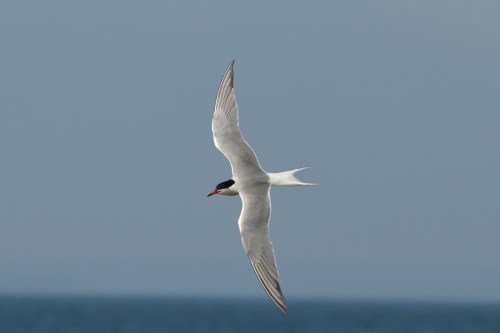
Common terns are white with a black cap, and pale gray back and wings. Their bill is red orange with a black tip. The tail is deeply forked and dark along the outer edges. Immature common terns and adults in their winter plumage have only a partial black cap. It can be distinguished from its close relative the gull by a smaller body size and longer wings. The common tern’s call is a rolling ter-arr and rapid kip-kip-kip.

Common terns are frequently seen hovering in the air over a school of fish. With a sudden plunge downward into the water, they seize fish with their bills. Sometimes they will dive entirely below the surface of the water. Terns eat small fish such as shiners, chubs, and other minnows. They will also eat crustaceans and occasionally, insects such as dragonfly nymphs.

Their winter migration takes these birds to the Atlantic coastal areas in Florida, the Caribbean, and South America. They return to their nesting sites in early spring.

Arriving on their breeding grounds in May, common terns nest in colonies of 10 to 1,000 breeding pairs. They prefer sandy, well drained areas away from mammalian predators and human disturbances. Currently, common terns are using natural and human made islands in the Great Lakes with a few nesting on inland lakes. Common terns construct their nests by creating a depression in the sand with their feet, smoothing and shaping it by sifting in it and turning their bodies. Egg laying and incubation lasts until late June or early July. Both adults take turns sitting on the nest. The adults defend the eggs and young fiercely, diving at intruders, and even striking them with their bills.

Once numbering over 6,000 breeding pairs in Michigan, common terns were found on every Great Lakes shore. Data from 1992 suggest that the population has decreased to an estimated 1,400 breeding pairs. Several factors have contributed to this decline including loss of habitat, competition with gulls, predation, and effects of contaminants. As a result of these factors, the common tern was officially listed in Michigan as a “threatened species in 1978 and has recently undergone a status assessment by the US Fish and Wildlife Service in the Great Lakes for possible listing as Federally endangered.

You can read on for more including information about the huge breeding colony on Lime Island. Also see the Common Tern Sterna hirundo from the Audobon Society andCommon Tern at All About Birds.

William caught this photo off the coast of Mackinac Island in Lake Huron. Check it out bigger and see more shots of this beautiful bird his Mackinac Island slideshow.

Many more Michigan birds on Michigan in Pictures.