
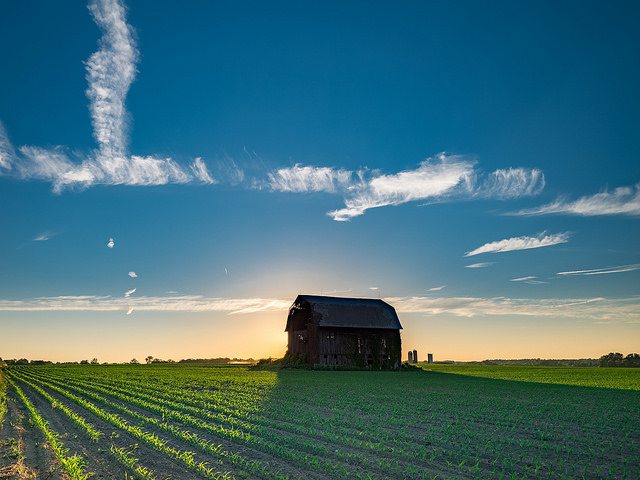
Eminant, photo by Jamie MacDonald
View Jamie’s photo bigger and see more in his NiSi Filters slideshow.
More Michigan barns on Michigan in Pictures.
Eminant, photo by Jamie MacDonald
View Jamie’s photo bigger and see more in his NiSi Filters slideshow.
More Michigan barns on Michigan in Pictures.
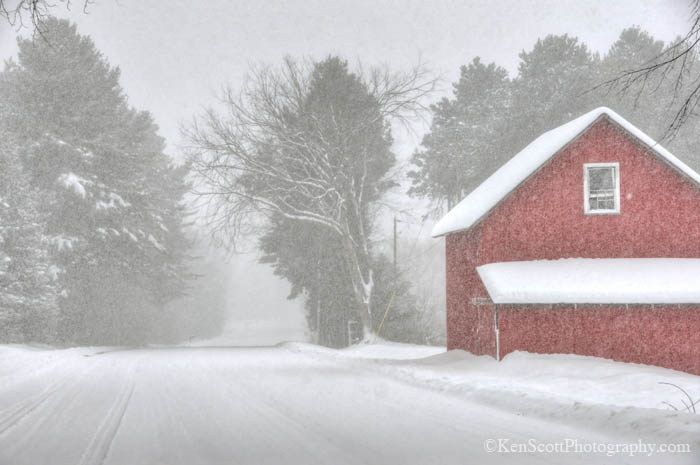
Red Barn … snowy’d, photo by Ken Scott
For all their possible danger when you’re driving too fast for the conditions, our winter roads can be lovely at the right speed!
View Ken’s photo bigger, see more in his Barns slideshow, and if you’re looking for a last-minute gift, how about his 2017 Best of the Back Pages calendar.
Definitely watch Ken’s Perseid video at the end!
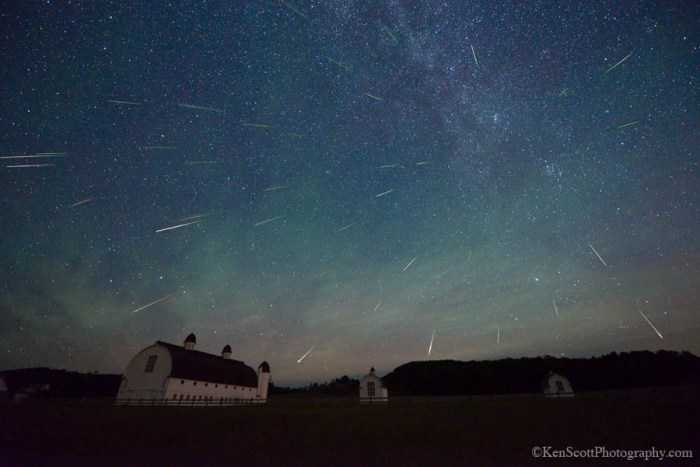
D H Day Farm … perseid meteor shower, photo by Ken Scott
I’ve shared this before, but Space.com has an interesting story about how the upcoming Perseid Meteor shower (peak August 11-13) came to be known as “The Tears of St. Lawrence” and also some of the science behind this annual August sky show:
Laurentius, a Christian deacon, is said to have been martyred by the Romans in 258 AD on an iron outdoor stove. It was in the midst of this torture that Laurentius cried out: “I am already roasted on one side and, if thou wouldst have me well cooked, it is time to turn me on the other.”
The saint’s death was commemorated on his feast day, Aug. 10. King Phillip II of Spain built his monastery place the “Escorial,” on the plan of the holy gridiron. And the abundance of shooting stars seen annually between approximately Aug. 8 and 14 have come to be known as St. Lawrence’s “fiery tears.”
…We know today that these meteors are actually the dross of the Swift-Tuttle comet. Discovered back in 1862, this comet takes approximately 130 years to circle the Sun. With each pass, it leaves fresh debris — mostly the size of sand grains with a few peas and marbles tossed in.
Every year during mid-August, when the Earth passes close to the orbit of Swift-Tuttle, the bits and pieces ram into our atmosphere at approximately 37 miles per second (60 kps) and create bright streaks of light.
Read on for more including diagrams and viewing tips.
Ken Scott captured these Perseid meteors last August over a 2 1/2 hour period at the D.H. Day Farm in the Sleeping Bear Dunes National Lakeshore. He says that the barn is lit by rogue lightning and that this is a composite of many meteor images, where each photo is rotated around the north star so that the ‘point of origin’ of the shower can be seen better. He understands it visually but not scientifically – anyone have a simple explanation for him?
View his photo bigger, see more in his Skies Above slideshow, and view and purchase his work at kenscottphotography.com.
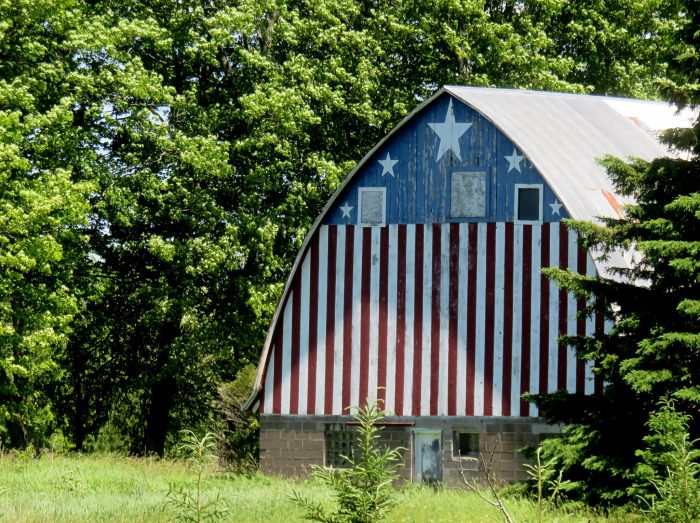
Ready for the 4th of July, photo by Ann Fisher
This barn in Chatham (Alger County) is definitely ready for Independence Day – here’s hoping you are too!
View Ann’s photo background bigtacular and see more in her 2016 UP slideshow.
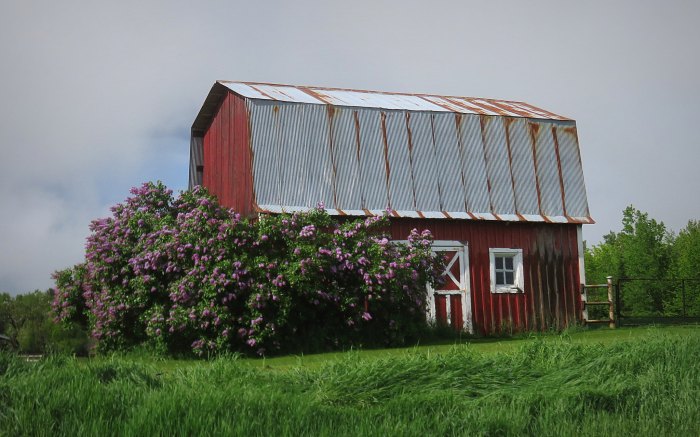
Red barn with Lilacs, photo by Ann Fisher
While lilacs are fading in much of the state, they’re just getting going in the Upper Peninsula!
View Ann’s photo background big and see more in her 2016 UP slideshow.
More barns on Michigan in Pictures.
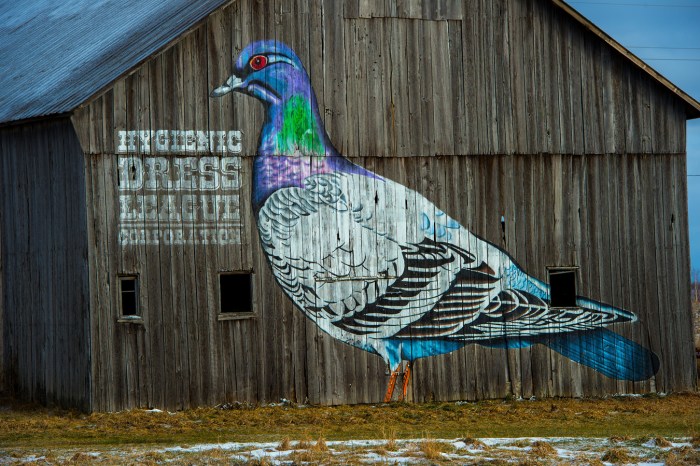
Hygienic Dress League, photo by Jeff Caverly
You can follow the Detroit-based Hygienic Dress League on Instagram for more interesting public art and see a video about their artwork on Vimeo.
View Jeff’s photo from Huron County background big, see more in his slideshow, and also visit his photography website.
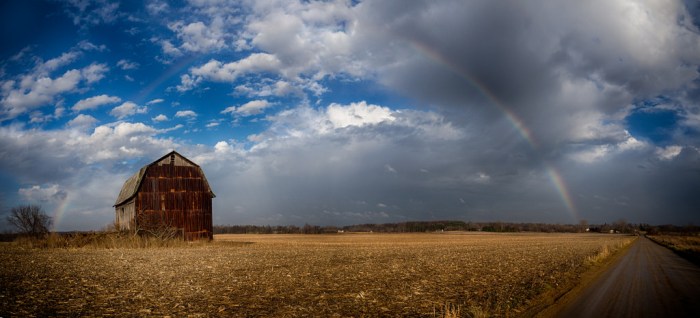
Incomplete, photo by Jamie MacDonald
I’ve never found a better website for information about rainbows and other optical phenomena than Atmospheric Optics. They have information about all flavors of rainbows including the primary rainbow, and explain that rainbows are disks of light rather than sets of coloured rings:
Early morning and late afternoon are the best times to see them because the sun must not be too high. Rainbows are always opposite the sun and their centres are below the horizon at the the antisolar point. The lower the sun the higher is the bow.
Red is always outermost in the primary bow with orange, yellow, green and blue within. Occasionally, when the raindrops are small, fainter supernumerary arcs of electric greens, pinks and purples lie just inside the main bow.
A rainbow is not just a set of coloured rings. The sky inside is bright because raindrops direct light there too. The primary bow is a shining disk brightening very strongly towards its rim.
About this particular rainbow, Jamie writes:
This is the first time I have ever seen part of a rainbow in open skies. Look to the sky above the barn and you can just make out the missing portion of the rainbow.
View his photo bigger and see more in his Landscapes slideshow.
More rainbows on Michigan in Pictures!
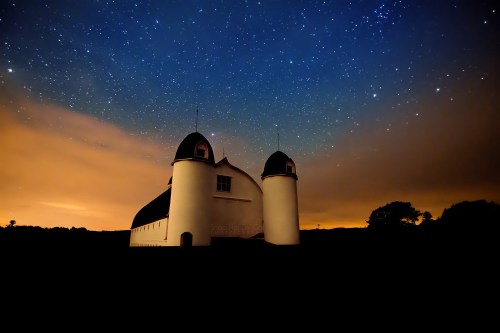
Night and DH Day Barn, photo by Heather Higham
This shot of the iconic D.H. Day barn in the Sleeping Bear Dunes National Lakeshore from a couple of days ago is beautiful, dramatic and … wrong. While the orange looks cool against the deep blue, it’s a very visible reminder that our night skies suffer from serious light pollution, even in our most preserved spaces. I encourage everyone to learn about night-sky friendly outdoor lighting options and to advocate in your community for better lighting decisions.
On a less preachy note, if you’re in the Traverse City/Sleeping Bear area tonight, the National Lakeshore is hosting the latest in their “Find Your Park After Dark” night sky events from 9-11 PM at the Pierce Stocking Scenic Drive #3 Overlook. They write:
All sky programs offered by the National Lakeshore are free. Participants need only purchase the Park Entrance Pass or have an Annual Pass displayed in their vehicle to join in the fun. Programs will be cancelled if the sky is not visible due to weather conditions. The decision to cancel is usually made three hours in advance. Please call 231-326-4700, ext. 5005, for a voicemail message with the decision. For all evening astronomy events, bring a flashlight for the walk back to your car and bug spray, if needed. Park rangers and Grand Traverse Astronomical Society (GTAS) staff will wear red glow bracelets at the events.
Each special event takes place at a different location throughout the National Lakeshore to take advantage of strategic viewing opportunities. You can come for star-gazing, eclipses, meteor showers, solar viewing, and storytelling. These events are the perfect opportunity to Find Your Park in the stars. Starry night skies and natural darkness are important components of the special places the National Park Service protects. National parks hold some of the last remaining harbors of darkness and provide an excellent opportunity to experience this endangered resource.
“Harbors of darkness” – what a cool turn of phrase! Head over to the National Lakeshore’s website for more about this and upcoming events.
Over at her blog, the Rapid City Recess, Heather writes about her experience shooting at night with two other photographers – I encourage you to read it.
View Heather’s photo bigger, see more in her Night Sky slideshow and definitely follow her at Snap Happy Gal on Facebook!
More night photography and more Michigan barns on Michigan in Pictures.
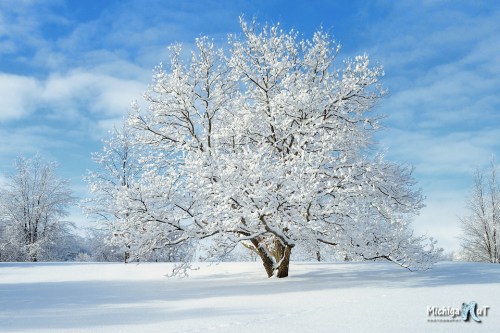
“Winter Blues” Rural Michigan Countryside, photo by John McCormick
Editor’s Note: I inadvertently re-blogged a barn photo by John that I posted last year. This one’s a beauty too though!!
After a promising start, the Great Lakes snow machine has shut down leaving us to wonder if a white Christmas is on the horizon. mLive meteorologist Mark Torregrossa seeks to answer that as he looks at three storms headed our way:
The first storm is mostly a rain maker for most of Michigan. As the colder air moves in this Tuesday and Wednesday, some accumulating snow will occur in the U.P. and far northern Lower Michigan. It looks like points north of Gaylord, and into the U.P. will pick up a few inches of snow… Storm number two will be a stronger, moisture laden storm. Right now and for several days in the past, the track has been projected to be to our south.
…The third storm I can see is still quite uncertain since it is about 10 days out into the future. Both of the most widely accepted weather computer models show a storm system dropping southeast out of Canada toward Christmas. This storm could bring a swath of light snow across Michigan around Christmas Day. There is still a lot of uncertainty on the exact track and amount of moisture. Definitely watch this storm with me, as it looks like it is Lower Michigan’s only chance of a white Christmas.
Here’s hoping!
John took this photo in Montcalm County last year on Christmas Day after an 8″ snowfall. View it bigger on Flickr, see more in his Winter slideshow and definitely join 30,000 other fans by tuning into Michigan Nut Photography – it’s one of the best follows on Facebook!
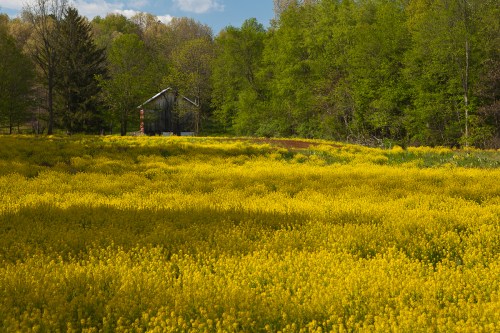
Field of Dreams, photo by Terry Waggoner
As winter closes in I can’t help but remember warmer times…
View Terry’s photo background big and jump into his slideshow for more!
More barns on Michigan in Pictures.
 Michigan in Pictures