Wienerlicious

Wienerlicious, Mackinaw City

Wienerlicious, Mackinaw City, June, 2016, photo by Norm Powell

Remember folks: I don’t take the photos, choose the titles … or name businesses Wienerlicious. That said, have a Wienerlicious Wednesday Friday!

View Norm’s photo bigger, click for more of his Pure Michigan photos, and view & purchase photos at normpowellphotography.com.

More Roadside awesomeness on Michigan in Pictures.

Michigan Front Porch is the World’s Longest!

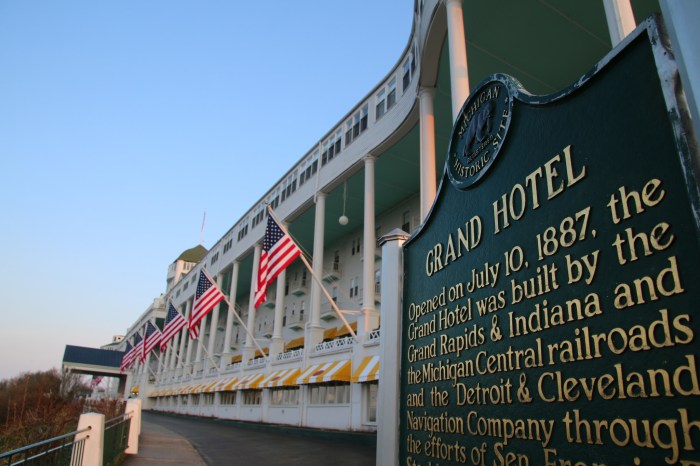
Grand Hotel

Grand Hotel in the Early 2016 Season, photo by Corey Seeman

The Grand Hotel opened on Mackinac Island in the summer of 1887. At 660 feet, Grand Hotel’s Front Porch is the world’s largest. They note that early on the porch became the principal meeting place for all of Mackinac Island, a promenade for the elderly, and a “Flirtation Walk” for island romantics. Their History photo gallery has a couple of cool photos of the porch from back in the day.

Corey took this last weekend when the Hotel opened for the season. View it background bigtacular and click for tons more of his Mackinac Island photos.

More about the Grand Hotel on Michigan in Pictures, and here’s a video look at the porch:


#TBT: Detroit’s Masonic Temple

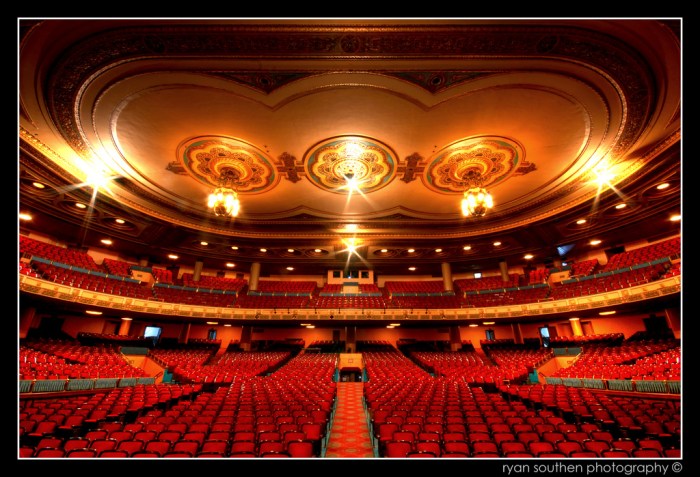
masonic temple auditorium detroit

masonic temple, photo by ryan southen

On April 27, 1764, a charter for the “Zion Lodge of Masons, No. 1” – the first Masonic Lodge west of the Alleghenies – was granted to Masons in Detroit. Since I’m going to see Portugal the Man/Cage the Elephant there next weekend, that’s close enough for me to learn a little bit more…

Detroit’s Masonic Temple (aka The Masonic) is the largest building of its kind in the world. Construction began in 1920 and was completed in 1926. They explain:

By 1908, interest and membership in Masonic fraternities had grown to such an extent that the Masonic Temple Association of Detroit began to consider either enlarging the existing Masonic Temple on Lafayette Boulevard or building a new, larger facility.

Land on Bagg Street (now Temple Avenue) was acquired and by 1920, the architectural firm George Mason and Company had completed an integrated design of a multi-function complex. Ground was broken on Thanksgiving Day, 1920. The cornerstone was laid on September 18, 1922, during a ceremony attended by thousands of Detroiters, using a trowel previously used by George Washington during the construction of the U.S. Capitol.

Significantly, the opening of the theater was celebrated during a concert by the Detroit Symphony Orchestra, conducted by Ossip Gabrilowitsch, on February 22, 1926–George Washington’s birthday. The formal dedication of the building took place on Thanksgiving Day, 1926. Once again, thousands of Detroiters were present for the ceremony.

George Mason’s unique design included three theaters (one was never completed, but is sometimes used by movie-production crews), a Shrine building, the Chapel, eight lodge rooms, a 17,500 square foot drill hall, two ballrooms, office space, a cafeteria, dining rooms, a barber shop, 16 bowling lanes–1037 rooms in total–in addition to a powerhouse that generated all electricity for the complex.

Mason also incorporated the artistic conceptions of the sculptor, Corrado Parducci, in the building’s magnificent lobby, which was an adaptation of the interior of a castle he had visited in Palermo, Sicily. Parducci also designed light fixtures and chandeliers, decorative arches, medallions, plaster decorations, and a myriad of other artistic details that are unique to the many varied spaces in the building.

Head over to The Masonic for lots of panoramic tours and also a panoramic view of the Corner Stone Laying. Also, if the name George Mason rings a bell, click that link to learn about this prolific architect whose works include Mackinac Island’s Grand Hotel!

View Ryan’s photo bigger, see more in his HDR slideshow, and follow him on Facebook at Ryan Southen Photography.

PS: Lots more Michigan architecture on Michigan in Pictures.

PPS: It’s also supposedly very haunted!

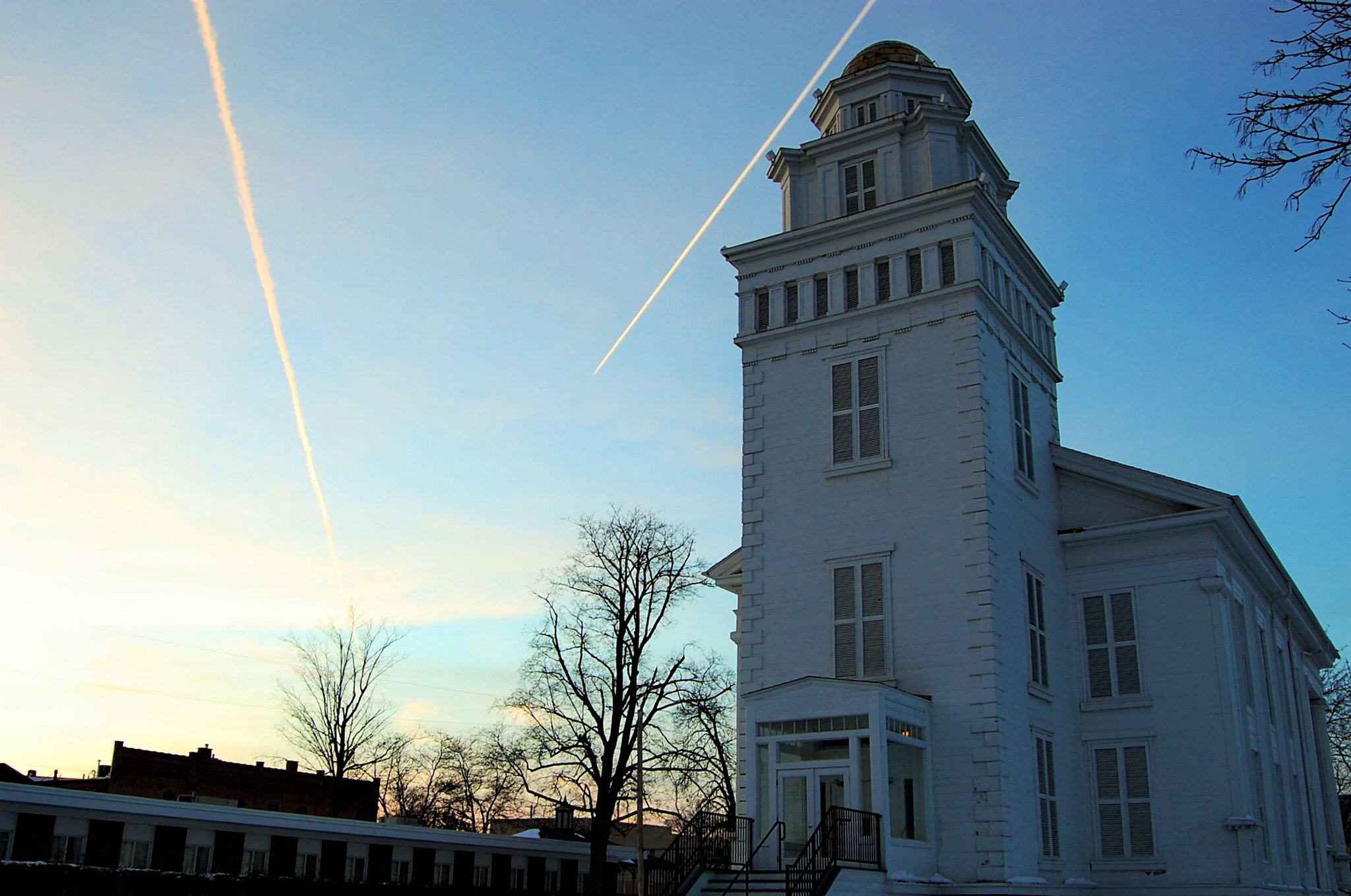
Lapeer Courthouse, oldest in Michigan

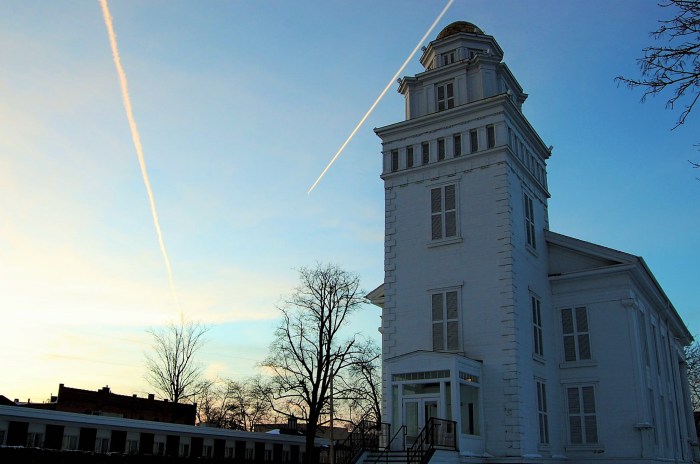
Downtown Lapeer MI

Downtown Lapeer MI, photo by paula liimatta

Wikipedia says that the the Lapeer County Courthouse is the oldest original courthouse structure still in use in the state of Michigan, and one of the ten oldest in the nation.

The City of Lapeer’s history page adds:

Folklore claims Lapeer was derived from the naming of the south branch of the Flint River, which flows northwestward over quite a long distance of rocky bed in Lapeer County. French and Indian traders frequently passed over this section of the county and through the river, ultimately naming our city for the stone that lay at the river bottom. The translation of stone in French is “LePierre”; the English translation of Canadian French accent of this word is “Lapeer”. The river was named Flint, synonymous with stone.

Lapeer County was once part of the Northwest Territory. By an ordinance of the Congress of the United States passed July 13th, 1787, the whole of the territory of the United States lying northwest of the Ohio River, though still occupied by the British, was organized as the Northwest Territory. In January of 1820 the County of Oakland was formed. Governor Lewis Cass set Lapeer County’s boundaries on September 18th, 1822, although it remained part of Oakland County until it was organized. Lapeer County officially became a county on February 2nd, 1835.

Read on for more and click for information about renting the courthouse.

View Paula’s photo background big and see more in her 2016 slideshow.

Charles Stewart Mott and the Mott Foundation Building

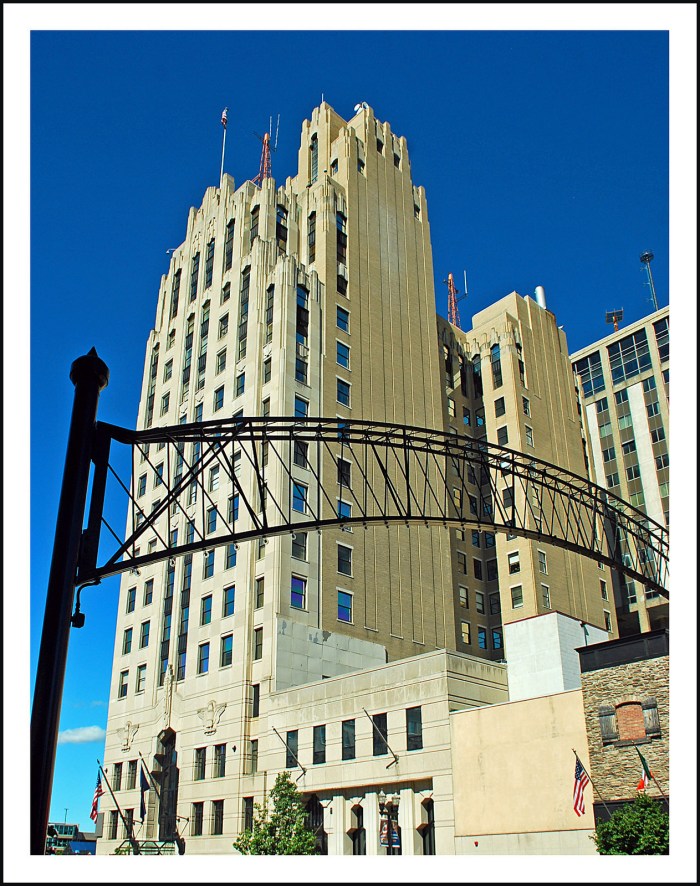
Mott Foundation Building in Flint

The Mott Foundation Building in Flint, photo by Steve Brown

My post on Tuesday generated a little controversy because I stated who I was supporting in Michigan’s primary and also that I’d continue to share my personal opinions here on Michigan in Pictures. Most readers who commented agreed, including Jim Schaefer who shared the most powerful comment I’ve ever read on my work:

Dear Farlane…I’m so glad you posted item #4 today along with the great photo. I had to move to Sheboygan, WI in 2014 for health reasons, leaving behind 45-yrs of life in Flint, MI. I’ve been saving your photos and their accompanying stories on a daily basis for several years now in their own special folder on my laptop. They are my daily reminder about all of the good things about Michigan that some Michigan residents seem to take for granted.

Unfortunately, some of these same people have conveniently forgotten about your 1st Amendment rights to editorialize on your own website. Shame on them! I am also a 72-yr old Army veteran who served a 13-month tour in a combat zone in Korea in 1966. That’s why I’m so glad that you reminded people to vote today. I was drafted against my will back in 1966 but I served my country and did my job over there and I’ll be damned if I’m going to let anyone take away my right to vote. So you keep right on posting all of those great photos along with the Michigan history behind them.

May God bless you always…Jim Schaefer

God bless you too Jim, and here’s something for your desktop folder from Flint! The Charles Stewart Mott Foundation shares this about their founder:

Charles Stewart Mott

Charles Stewart Mott established the C.S. Mott Foundation in 1926, in response to his deep concern about the welfare of Flint, Mich., as well as his abiding affection for his adopted community.

An automotive pioneer, Mr. Mott was an original partner in the creation of the General Motors Corporation, founded in Flint in 1908. As one of the city’s leading industrialists, Mr. Mott was elected mayor, serving three terms (1912–13, 1918) during periods of overwhelming and turbulent growth in the city. As mayor he was responsible for instituting fair property assessments, orderly accounting audits, health and safety ordinances, building codes and a house numbering system.

Read more about Mott in Autos not Apples. Here’s a few facts about the 16-story Art Deco building that bears his name and houses the Mott Foundation:

  • Flint’s first skyscraper with a total height of 226 feet to the top of the passenger elevator penthouse.
  • Designed by Smith, Hunchman & Grylls (SmithGroup) the oldest practicing architectural firm in the US.
  • Construction took one year to complete at a cost of approximately $2,000,000.
  • Original design included seven retail stores on the first floor. There were also originally men’s rooms on every floor, but women’s restrooms only on every other floor.
  • The Freight elevator is still operated with the vintage 1930 controls.
  • Building name was changed to the Mott Foundation Building on January 1, 1945.

View Steve’s photo big as a building and see more in his Flint, Michigan slideshow.

More Flint and more architecture on Michigan in Pictures. Also check out this guide to the architecture of Flint for more of the city’s architectural heritage.

Holler, Detroit

Detroit by Ryan Southen

Detroit, Michigan, photo by Ryan Southen

Hey Motor City cats & kittens – I’m visiting Detroit this Friday & Saturday. If you have thoughts about what I should be doing, please email me or hit me up through Facebook.

View Ryan’s photo bigger, follow him at Ryan Southen Photography, and check out his incredible Detroit slideshow.

PS: Ryan was one of many Detroit photographers whose photos were featured in this classic Absolute Michigan video featuring the Detroit Cobras Holler:

PPS: More about the Fisher Building and the Penobscot Building on Michigan in Pictures.

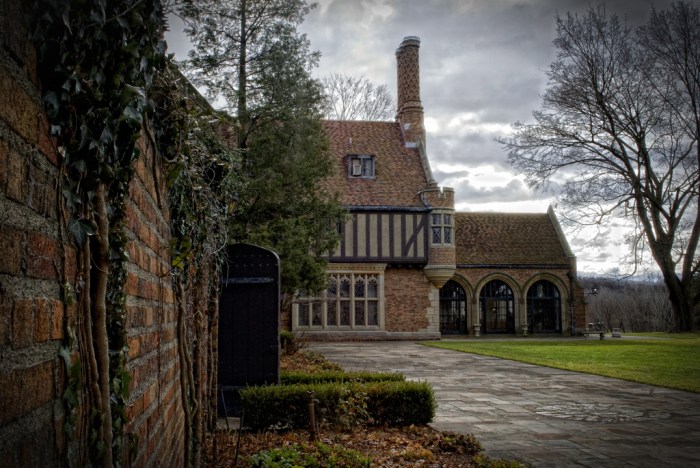
Michigan Castles: Meadow Brook Hall in Rochester

Meadowbrook Castle by Anna Lysa

Meadow Brook Hall, photo by Anna Lysa

The Lansing State Journal had a recent feature about Five Michigan Castles that includes Michigan’s largest castle, Meadow Brook Hall in Rochester:

Meadow Brook Hall was built between 1926 and 1929 by Matilda Dodge Wilson, widow of early auto magnate John Dodge, and her second husband, lumber baron Alfred Wilson. The 110-room home features carved wood and stone details and plaster ceilings and is modeled after the great country estates of England, which they toured on their honeymoon. During construction of the home in 1927, they went on a second architectural tour of England with their architect in tow. The house cost $4 million to build (more than $54 million in today’s dollars), and the Wilsons hosted a gala housewarming party for 850 people in November 1929.

Matilda died in 1967, bequeathing the estate and $2 million in seed money to create Oakland University. The house opened to the public in 1971.

Tours are available and you can get more info about those along with photos and info about four more castles in the LSJ. The Meadow Brook Hall history page has a lot more information, and adds that the castle:

…represents one of the finest examples of Tudor-revival architecture in America and is especially renowned for its superb craftsmanship, architectural detailing and grand scale of 88,000 square feet. Inspired by the country manor homes in England, it was designed and built by the Detroit architectural firm of Smith, Hinchman and Grylls between 1926 and1929, at a cost of nearly $4 million.

The exterior combines various textures and patterns using American materials of brick, sandstone, wood timbers and a roof of clay shingle tile. The house also features 39 uniquely designed brick chimneys that distinguish the picturesque roofline.

….The exterior and most of the interior rooms at Meadow Brook Hall were designed in the Tudor-revival style. However, a few rooms were decorated in other period-revival styles: the dining room and Matilda’s study are 18th-century Neo-classical, Matilda’s room and the French bedroom are 18th-century French Rococo, and Frances’ bedroom is American Colonial.

View Anna Lysa’s photo bigger and see more in her Michigan slideshow.

PS: There’s features on Owosso’s Curwood Castle and Kalamazoo’s Henderson Castle (now a B&B) as well as lots more Michigan architecture on Michigan in Pictures!

Detroit’s Grande Ballroom

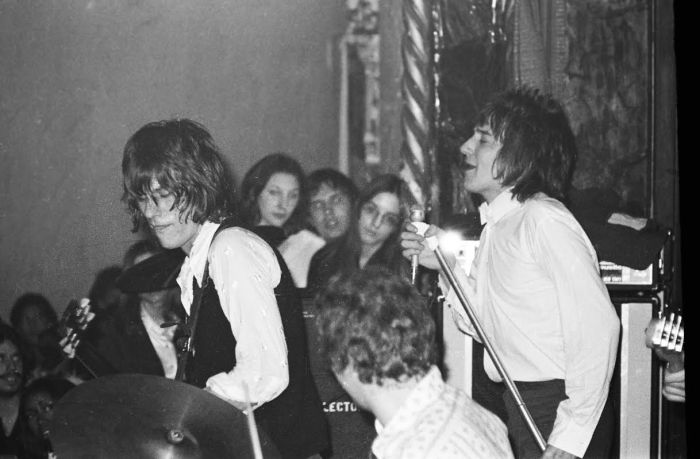
Jeff Beck Group and Rod Stewart at the Grande Ballroom

Jeff Beck Group and Rod Stewart at the Grande Ballroom, photo courtesy Louder Than Love

The documentary Louder Than Love: The Grande Ballroom Story premieres on Detroit Public Television this Friday (Dec 18) at 8 PM. Dan Austin of Historic Detroit has a great look at the history of Detroit’s Grande Ballroom that says (in part):

Designed in 1928 by Charles N. Agree for dance hall entrepreneurs Edward J. Strata and his partner Edward J. Davis, the Grande started off as a place Detroiters would go to dance and listen to jazz and big band sounds, but it would later achieve immortal status in the annals of music history as a rock venue. It is arguably the birthplace of punk and hard-driving rock, where bands like The MC5 and The Stooges cut their chops and became legends.

The building was designed in the Moorish Deco style and contained storefront space on the first floor and on the second a ballroom with Moorish arches featuring a floor on springs that gave dancers the feeling of floating. The dance floor held 1,500 dancers and was one of the largest in the city. Its ground floor had several retail tenants, such as W.T. Grant Department Stores, Beverly’s and a drugstore. The neighborhood was a predominately Jewish enclave in the 1930s and ’40s.

…Russ Gibb, a social studies teacher at Maples Junior High School in Dearborn was a popular local radio DJ at the time. Gibb took a trip out to San Francisco to visit a friend in early 1966 and paid a visit to the storied Fillmore Auditorium and saw The Byrds. When he returned to Detroit, he set out to bring Bill Graham’s Fillmore to the Motor City. He scouted out several locations, including the then-closed, since-demolished Gayety Burlesque theater on Cadillac Square downtown and the ballroom of the Statler Hotel on Grand Circus Park, which also has been razed. He settled on the Grande, which was near the neighborhood he grew up in back in the 1940s and entered a rent-to-buy deal with the Kleinman family.

Read on for the story of how the Grande Ballroom grew through local acts like the MC5 to become the place to play in Detroit in the late 60s, hosting amazing acts including Led Zeppelin, John Lee Hooker, the Yardbirds, The Who, Cream, Pink Floyd, Canned Heat, the Jeff Beck Group, The Byrds, Big Brother and the Holding Company, Chuck Berry, Howlin’ Wolf, the Velvet Underground, Canned Heat, and many more.

Watch the trailer for the movie below and see many more photos of the Grande past & present, on the Louder Than Love website. Also don’t miss their collection of posters for some of the concerts at the Grande Ballroom from artists Gary Grimshaw, Carl Lundgren, and Donnie Dope and be sure to check out the Louder Than Love group on Facebook for many more great photos!

Detroit’s Buhl Building

Buhl Building Detroit Michigan

buhl building | detroit, michigan, photo by Ryan Southen

Detroit1701.org is an excellent resource for the history of Detroit. Their page on the Buhl Building says (in part):

The Buhl brothers, Frederick and Christian, came to Detroit early in the Nineteenth Century. They made their money in the fur trade and then in the hat business. As Detroit became a leading industrial metropolis, they turned to manufacturing as well as retailing and property development. They founded the Detroit Locomotive Works and then the Buhl Iron Works that later became the Detroit Copper and Brass firm. They added to their wealth by entering the hardware business and then erected an office building at the corner of Griswold and Congress that became an attractive location for prosperous law firms. Frederick Buhl served as mayor of Detroit in 1848, while his brother, Christian, served as mayor twelve years later after holding a variety of other political offices.

The skyscraper building boom in Detroit reached its zenith in the late 1920s, reflecting the demand for office space generated by the vehicle industry. A third generation of Buhls decided to make more profitable use of their prime downtown land by replacing their small office building at Griswold and West Congress with the 26 story building that you see. They selected the Smith, Hinchman and Grylls firm and, fortunately for them, the skilled and imaginative Wirt Rowland was selected as the architect. His most magnificent accomplishment is the nearby Guardian Building but he created a beautiful structure in the Buhl Building, one that has great appeal some eight decades after he first sketched it.

Read on for more and also check out Historic Detroit for more about the Buhl & architect Wirt C. Rowland, avid modernist, supporter of the Arts and Crafts movement, and key contributor to the Art Deco-style skyscrapers along Detroit’s skyline.

View Ryan’s photo bigger, see more in his Detroit slideshow, and be sure to follow him on Instagram. If you’re interested in a great wedding photographer, head over to his photography website!

More architecture and lots more Detroit on Michigan in Pictures!

New Pharaohs of GR: Steelcase Pyramid May Host SUPERNAP Data Center

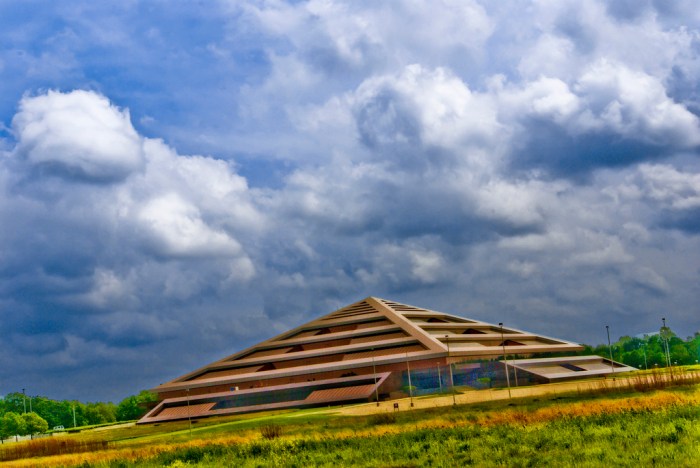
Steelcase Pyramid Grand Rapids Data Center

Squished Pyramid, photo by Gary Syrba

Fox 17 reports that a Nevada-based company has chosen the former Steelcase pyramid as the site for a large data center.

Switch will build a $5 billion, 2 million square-foot SUPERNAP data center at the former Steelcase office building.

The deal is contingent on the passage of three bills currently in the Michigan state legislature.

The $5 billion reflects the costs for both the data centers and the computer servers that will be placed inside the buildings over a multi-year period, according to the company.  SUPERNAP Michigan will be the largest data center campus in the eastern U.S. and will serve Switch’s current and new clients.

Switch says that have 1,000 clients, including eBay, Intel, Shutterfly, Amgen, HP, JP Morgan Chase, Google, Amazon, Fox Broadcasting and many more.

Read on for more and get the details on the legislative changes the deal hinges on at the Freep. Here’s some cool drone footage of the Steelcase Pyramid as well. Site Selection Magazine has a writeup on the building with the tale of the tape to one of Michigan’s most iconic structures designed by Grand Rapids architectural firm The WBDC Group:

In addition to its pyramid-shaped design, the Steelcase Corporate Development Center offers several other unique amenities. The central atrium features a five-story rotating pendulum suspended over a reflective water pool. Vaulted ceilings and expansive windows throughout the building, combined with exterior balconies, provide an open and spacious workplace that makes liberal use of natural light.

The building has 333,000 sq. ft. of office space and 242,000 sq. ft. of research and development space.

Other on-site amenities include a 14,995-sq.-ft. full-service cafeteria, 12,500-sq.-ft. data center, 8,351-sq.-ft. two-story photo studio, exercise and locker rooms, card-access security, on-site video surveillance and 1,014 parking spaces.

View Gary’s photo bigger and see more in his In the City (Grand Rapids) slideshow.

More buildings & architecture on Michigan in Pictures.