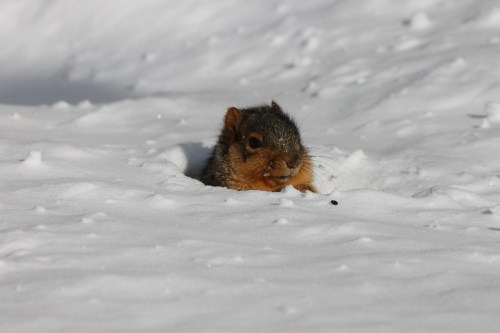
Buried by the Polar Vortex in Michigan

Squirrels and other pictures at the University of Michigan on an awful cold wintry day (January 6, 2014)

Squirrels and other pictures at the University of Michigan on an awful cold wintry day (January 6, 2014), photo by cseeman

If yesterday’s Michigan temps seemed chilly, today’s are worse! Ironwood is still the coldest, but they are up a few degrees at -20 (before the -33 windchill of course). Most of the rest of the state is joining them below zero this morning. Detroit and Lansing are at -11, Marquette is at -15 and Grand Rapids is at a balmy 1.6 degrees!

Dr. Jeff Masters blog on the Extreme Cold Blast at Weather Underground, the site he founded and runs in Michigan says:

The most extreme cold air outbreak since 1994 is in store for much of the U.S. on Monday and Tuesday, as Arctic air behind a major winter storm invades the Midwest. The powerful 989 mb storm blasted the Upper Midwest on Sunday, bringing snows in excess of a foot over portions of Illinois, Michigan, Indiana, Missouri, and Ohio. The 11.4″ that fell on Sunday in Indianapolis, Indiana made it that city’s second snowiest day on record (the all-time record: 12.1″ on March 19, 1906); Flint, Michigan also recorded its second snowiest day on record: 14.5″ (the all time record: 15.0″ on November 28, 1937.) … The high temperature in Detroit on Tuesday is expected to remain below zero; the city’s list of days with a high temperature below zero is a short one, with only three such days in recorded history. The frigid air is being propelled by strong Arctic winds of 15 – 25 mph, which will generate dangerously low wind chill readings in the -30° to -60°F range from Michigan to Minnesota on Monday and Tuesday.

In the winter, the 24-hour darkness over the snow and ice-covered polar regions allows a huge dome of cold air to form. This cold air increases the difference in temperature between the pole and the Equator, and leads to an intensification of the strong upper-level winds of the jet stream. The strong jet stream winds act to isolate the polar regions from intrusions of warmer air, creating a “polar vortex” of frigid counter-clockwise swirling air over the Arctic. The chaotic flow of the air in the polar vortex sometimes allows a large dip (a sharp trough of low pressure) to form in the jet stream over North America, allowing the Arctic air that had been steadily cooling in the northern reaches of Canada in areas with 24-hour darkness to spill southwards deep into the United States. In theory, the 1.5°F increase in global surface temperatures that Earth has experienced since 1880 due to global warming should reduce the frequency of 1-in-20 year extreme cold weather events like the current one. However, it is possible that climate change could alter jet stream circulation patterns in a way that could increase the incidence of unusual jet stream “kinks” that allow cold air to spill southwards over the Eastern U.S., a topic I have blogged about extensively, and plan to say more about later this week.

Read on for more and to see a shot of Jeff shoveling 14″ off his metro Detroit roof!

Corey took this shot on the campus of the University of Michigan. View it background big and see more in his massive Squirrels of the Univ. of Michigan slideshow.

PS: Curiously enough, there’s a Campus Squirrels photo group on Flickr.
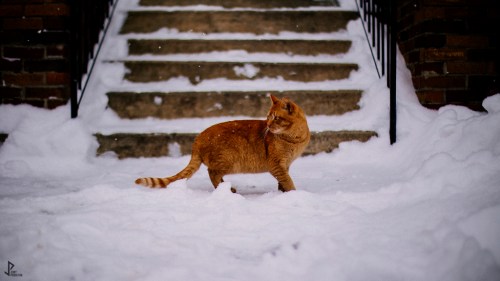
Don’t look back, winter might be gaining on you

IMG_9393

Untitled, photo by JerryPHD

Check Jerry’s photo out background bigilicious and see more in his slideshow.

More winter wallpaper on Michigan in Pictures.

Roar

Roar

Roar, photo by Matt Gowing

Just sayin’.

Check Matt’s photo out background bigilicious and see more in his Street slideshow.

And oh yeah – go Tigers!

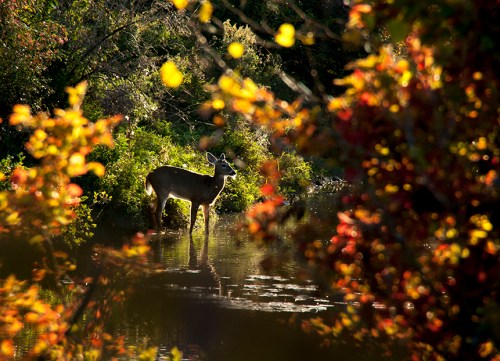
A Fall Drink of Water

Doe

Doe, photo by sarah-nussbaumer

Here’s hoping your weekend holds a lot of autumn beauty … and a little bit of wonder.

Check it out bigger and see more in Sarah’s Autumn slideshow.

More fall photos on Michigan in Pictures.

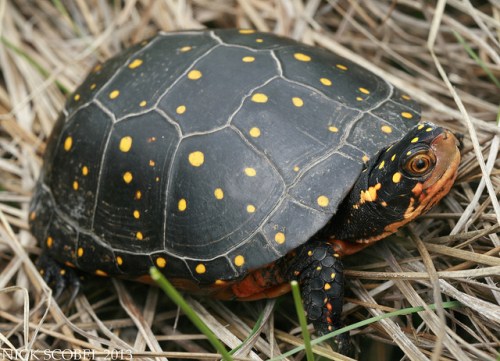
Know your Michigan Turtles: Spotted Turtle (Clemmys guttata)

Spotted Turtle

Spotted Turtle, photo by Nick Scobel

One of the most popular posts on Michigan in Pictures is Know Your Michigan Turtles, drawing around 100 people each day. Along with “Yay turtles!”, “Give the people what they want” has always been one of my philosophies so let’s get up close with one of our hard shelled neighbors. 

The UM Animal Diversity Web entry for Spotted Turtle (Clemmys guttata) says (in part):

Spotted Turtles prefer shallow waters with a soft bottom substrate and some submergent and emergent vegetation. These can include sedge meadows, boggy ponds, fens, tamarack swamps, sphagnum seepages, and slow, muddy streams. These turtles also frequently wander on land between wetlands, and may aestivate on land for weeks at a time.

Clemmys guttata is a very small species that rarely exceeds a straight-line carapace length of 11.4 cm (4.5 inches); the maximum recorded carapace length is 13.6 cm (5.4 inches). The adult carapace is smooth, without obvious growth ridges (annuli), and is black or brownish-black with a variable number of round yellow spots. These spots may fade in old adults, and occasional specimens lack carapace spots altogether.

…Spotted Turtles become active very early in the spring, and (as noted above) are often active at relatively cold water temperatures. Activity appears to peak during April and May in the northern part of the range. Spotted Turtles tend to become inactive in the warmest part of the summer (when water temperatures exceed 30°C) and they may aestivate aquatically or terrestrially for long periods of time. During summer dormancy, the turtles may burrow into leaf litter in woodlands or open fields or marsh edges; others remain in muskrat burrows or other aquatic refuge

…Spotted turtles are listed as vulnerable on the IUCN’s Red List, and they are considered threatened in the state of Michigan.

Read on for more and also see the Michigan DNR page on Spotted Turtles.

Check Nick’s photo out and see more in his Clemmys guttata slideshow which includes some pics of adult male spotted turtles. Nick runs the Herping Michigan Blog as well and has an interesting article about the recent division of the Clemmys genus into three genuses. The spotted turtles got to keep theirs with the other two being Wood Turtle (Glyptemys insculpta) & Bog Turtle (Glyptemys muhlenbergii).

More turtles on Michigan in Pictures!

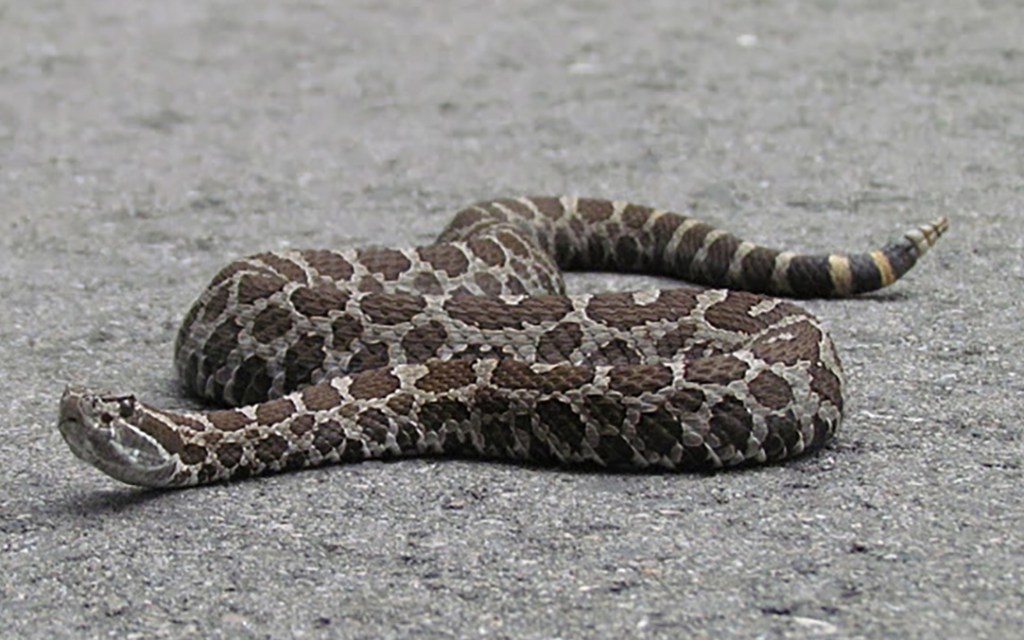
Eastern Massasauga Rattlesnake (Sistrurus catenatus catenatus)

Eastern Massasauga Rattlesnake by Jonathan Schechter/Earth’s Almanac

In Season of the Massasauga Rattler!, Jonathan Schechter writes that the massasauga  likes our sun-soaked trails in the waning days of summer and early autumn, so you may catch a glimpse of one if you’re out and about in Lower Michigan. The Michigan DNR page on the Eastern Massasauga Rattlesnake (Sistrurus catenatus catenatus) explains:

Michigan’s only venomous snake is a rare sight for most state residents. Historically, they could be found in a variety of wetlands and nearby upland woods throughout the lower peninsula. During the late spring, these snakes move from their winter hibernation sites, such as crayfish chimneys and other small mammal burrows in swamps and marshlands, to hunt on the drier upland sites – likely in search of mice and voles, their favorite food.

Females give birth to 8 to 20 young in late summer. The young snakes have a single “button” on their tails; a new rattle segment is added at each shedding of the skin, which occurs several times per year.

The massasauga can be characterized as a shy, sluggish snake. Its thick body is colored with a pattern of dark brown slightly rectangular patches set against a light gray-to-brown background. Occasionally, this coloration can be so dark as to appear almost black. The belly is mostly black. It is the only Michigan snake with segmented rattles on the end of its tail and elliptical, (“cat like”) vertical pupils in the eyes. The neck is narrow, contrasting with the wide head and body and the head appears triangular in shape. Adult length is 2 to 3 feet.

These rattlesnakes avoid confrontation with humans; they are not prone to strike – preferring to leave the area when they are threatened. Like any animal though, these snakes will protect themselves from anything they see as a potential predator. Their short fangs can easily puncture skin and they do possess a potent venom. It is best to treat them with respect and leave them alone. The few bites that occur to humans often result from attempts to handle or kill the snakes. Any bite from a massasauga should receive prompt professional medical attention. When compared to other rattlesnakes found in the United States, the massasauga is the smallest and has the least toxic venom.

Massasaugas are found throughout the Lower Peninsula, but not in the Upper Peninsula (thus there are no poisonous snakes on the Upper Peninsula mainland.)

They stress that Massasaugas are listed as a “species of special concern” and are protected by state law, so don’t kill or harm them. Read on for more including some lookalike snakes.

Jonathan adds that almost all rattler bites are on the dominant hand of the offending human! He took the photo above two years ago on a popular Oakland County hike-bike trail and notes that much of Oakland County is ratter habitat. Visit Earth’s Almanac to read more and be sure to subscribe to his blog when you’re there!

PS: Nick Scobel of the Herping Michigan blog has a great video of some Eastern Massasaugas that you should check out!

More Michigan snakes on Michigan in Pictures!

Eastern Tiger Swallowtail Butterfly

Eastern Tiger Swallowtail Butterfly (Saline, Michigan)

Eastern Tiger Swallowtail Butterfly (Saline, Michigan), photo by cseeman

The University of Michigan Animal Diversity Web entry for the eastern tiger swallowtail butterfly (Papilio glaucus) says in part:

The eastern tiger swallowtail ranges from Alaska and the Hudsonian zone of Canada to the southern United States, east of the Rocky Mountains.

This species occurs in nearly every area where deciduous woods are present, including towns and cities. It is most numerous along streams and river, and in wooded swamps.

As with most butterflies, Eastern tiger swallowtails tend to be solitary. Males “patrol” for a mate, flying from place to place actively searching for females. “Patrolling” male tiger swallowtails can recognize areas of high moisture absorbtion by the sodium ion concentration of the area. It is believed that the moisture found by these males helps cool them by initiating an active-transport pump. Both male and female tiger swallowtails are known to be high fliers. Groups of fifty butterflies have been spotted in Maryland flying 50 meters high, around the tops of tulip trees.

The tiger swallowtail is thought of as the American insect, in much the same way as the Bald Eagle is thought of as the American bird. It was the first American insect pictured in Europe; a drawing was sent to England from Sir Walter Raleighs’ third expedition to Virginia.

You can read on for more including photos. I also found a page with a listing of Michigan butterflies and apparently we have eight species of swallowtail butterfly. You can also see some great eastern swallowtail photos from Butterflies & Moths. Spoiler alert: the female can look a lot different.

Corey writes that he got this shot at the butterfly bush he planted this year. Check it out background big and see more great shots of this fellow in his butterfly slideshow.

Northern Water Snake

Northern Water Snake

Northern Water Snake, photo by Brian Laskowski

The Michigan Department of Natural Resources page on the Northern Water Snake says:

Description: A water snake with dark bands or blotches on a light brown or gray background color. Some old adults may appear solid black or brown. The belly is white with reddish half moon shaped markings; some specimens have an orange belly speckled with brown or black. (The endangered Copper Bellied Water Snake has an unmarked reddish or orange belly.) Adult length: 2 to 4 feet.

Habitat and Habits: These snakes inhabit the shorelines of lakes, ponds, or streams. They swim well, seeking food (frogs and fish) and safety in the water, and often bask on objects hanging over the water. Water snakes are not venomous, but will bite if cornered or handled. They are sometimes mistakenly called “water moccasins” (which are not native to Michigan).

Reproduction: Females give birth to their 7 to 9 inch young in late summer. There are 8 to 48 babies in a litter. The young are gray or brown with bold black bands.

Range and Status: Northern water snakes are found throughout the Lower Peninsula and the eastern Upper Peninsula. Needless persecution by humans has eliminated water snakes from many places where they were once common.

The DNR’s Michigan Snake Page adds that there are just 17 species of snake in Michigan, so do what you can to protect this snake and its kin.

Check it out bigger and see more in Brian’s Michiganscapes slideshow.

More Michigan snakes on Michigan in Pictures.

Sizzle

Sizzle

Sizzle, photo by corinne.schwarz

I think this squirrel accurately reflects the feelings of many of us following a week of sauna-like conditions. The squirrel is heat dumping, shedding maximum heat by flattening its body. You can see some more examples of this in the hilarious Squirrel Pancakes photo group.

Check this out background big and see more (including a couple more shots of this squirrel or a relative) in Corinne’s slideshow.

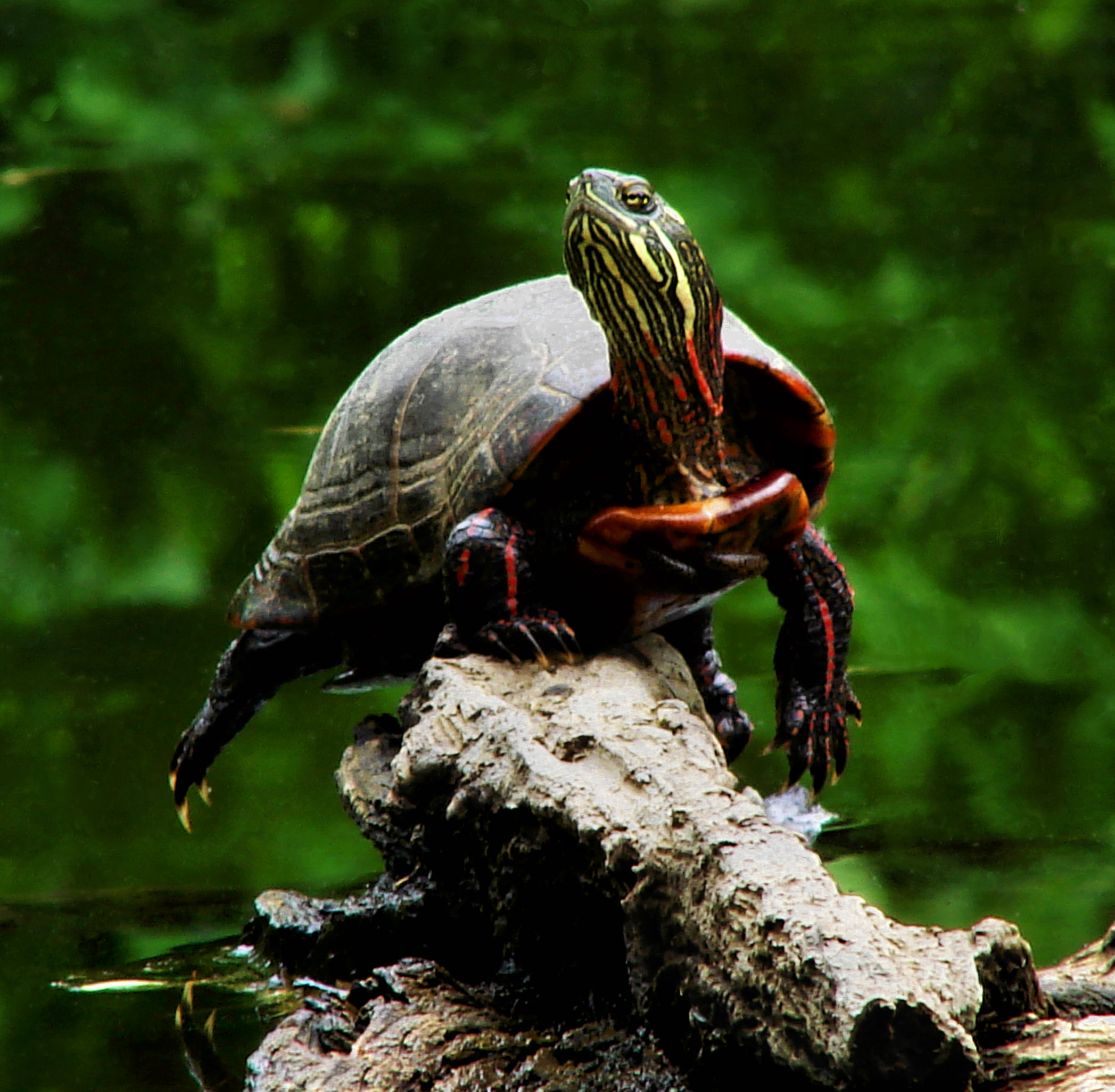
Know your Michigan turtles

Posing Painted Turtle

I’m Posing for the Camera, photo by capcbd

It appears the turtle above is aware that Michigan’s state reptile is the painted turtle.

I thought it perfect for my day-late post celebrating World Turtle Day (May 23), an annual day of recognition that was started in 2000 by American Tortoise Rescue. They offer some tips to help preserve endangered turtles worldwide including not buying turtles or tortoises from pet shop (it increases demand from the wild), not removing turtles from the wild unless they are injured, and something that we can all do when we’re on the roads: if a turtle is crossing a busy street, pick it up and send it in the same direction it was going – if you try to make it go back, it will turn right around again!

It might surprise you to learn that Michigan is home to 10 native turtle species. Learn about all of them on Michigan in Pictures:

If you’re trying to identify a turtle you’ve found, Check out Nick Scobel’s Herping Michigan Blog and James Harding “The Critter Guy” at the MSU museum has a great Michigan turtle identification guide and loads of turtle lore.

Speaking of Turtle Lore, I always like to shout out a book I read as a kid that did more to foster my love of Michigan than any other: Lore of the Great Turtle. It was filled with Indian tales of Mackinac Island , and one of these was the formation of the island. While this version adapted by Basil Johnston is not quite the same, I think you’ll enjoy it!

Check this photo out background bigtacular and see more in capcbd’s water slideshow.

Also check out more turtles on Michigan in Pictures and definitely have a look at the turtle slideshow from the Absolute Michigan pool on Flickr!

PS: This is one of the most popular posts on Michigan in Pictures. Hooray for turtles!