Haunted Michigan: The Dogman

Nightmare at Muskegon State Park II

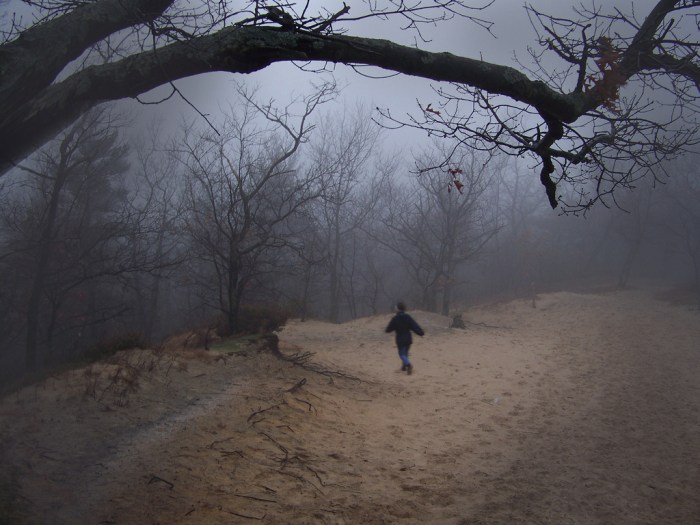
Nightmare at Muskegon State Park II, photo by otisourcat

When legends are way back in the past, they aren’t as scary. This one isn’t, and the fact that many of the sightings take place in my own backyard make me reluctant to share it. So, reluctantly, via Steve Cook’s Michigan-Dogman.com, I give you a Dogman tale from Oceana County, Michigan in 2005. Italics are the notes from Cook to the witness’s account.

Most dogman encounters are very brief, and usually rather benign. Very few witnesses have ever had more than a single encounter (a fact which makes most of them quite grateful). Our next event is unique in that the witnesses shared repeated encounters in a very narrow window of time. All of these events took place in Oceana County in Michigan’s Lower Peninisula. The contributor wishes to remain anonymous.

“The first incident happened while I was home alone. I had moved my bed into my closet to further open up my room. My dog was in there with me and we were getting ready for bed. Then my dog began to growl, which was very unusual. He never growls. I had maybe heard him growl or bark twice in his entire ten years of life. This growl was so fierce and mean that it actually made me scared. He was looking up at the ceiling and his hair was standing on end.

Then I heard it. It was loud, like something big was walking across the roof. There was snorting and light growls, so at first I feared that a bear had wandered into the area. I tried to keep my dog quiet, but he was shaking and going wild. There was a lot of scratching, like something was trying to dig through the roof – then it was gone, suddenly and without warning. A few minutes later my uncle arrived, I rushed out to tell him the story, he looked around but found nothing. He tried to pass it off as a raccoon. Let me tell you – there is no way on earth that a raccoon could have caused that reaction from my dog or made that much noise.”

A few weeks later, the witness had convinced herself that her uncle was probably correct. She had a friend spending the night, and they decided to camp out in the yard. They built a small campfire in a firepit, and were sitting next to it talking. Hearing a sound, they looked toward the woods. Just beyond the light cast by the fire…

“Something was walking out there. The features were canine; legs were shaped like a wolf, bushy tail, everything. But, it was way too tall to be a regular dog or even a wolf, it stood a bit higher than a deer and it was very thin. I only caught the back end of it walking behind a lilac bush, but it was enough for me. I calmly told my friend that we needed to go inside. I told her to walk slowly, since I live in the middle of no mans land, I know that wild animals are attracted to fast moving objects, and the last thing I wanted was to get up close and personal with whatever that thing was.”

Safely back inside, they talked about what they had seen. Whatever it was had seemed more curious than threatening. Later that same night, that assessment would change.

“…we were having a cigarette out my window, and my friend dropped hers. She put a chair up to the window and crawled out. She walked a few steps, paused, looked back at me. “Did you hear that?” she asked. I hadn’t heard anything, but apparently, she had heard rustling from the field beside her. Then we both heard it, a very close and very loud snarl. It was like nothing I have ever heard before and hope to never hear again. No animal that I know of sounds or looks like that. “

Lots more available from The Legend of Michigan’s Dogman including a 1961 encounter in Big Rapids that includes a purported photo of the Dogman! There’s also a DVD you can purchase that’s pretty cool. Best of all, proceeds have raised over $60,000 for charities, primarily those involved in domestic animal rescue, rehabilitation, and placement in permanent homes.

Wikipedia explains that the Michigan Dogman is a cryptozoological creature first reported in 1887 in Wexford County. Sightings have been reported in several locations throughout Michigan, primarily in the northwestern quadrant of the Lower Peninsula. In 1987, the legend of the Michigan Dogman gained popularity when a disc jockey at WTCM-FM (Steve Cook) recorded a song about the creature and its reported sightings.

You should also check out Linda Godfrey’s writings about the Dogman from her books including Weird Michigan, and also my buddy Rick Brauer’s movie Dogman and Dogman 2: Wrath of the Litter.

Muskegon County borders Oceana to the south, and has had its own Dogman sightings. View the photo bigger and see more of otisourcat’s Muskegon photos.

Happy Halloween everyone! More ghost stories & haunted tales on Michigan in Pictures!
Haunted Michigan: Mishipeshu, the Water Panther

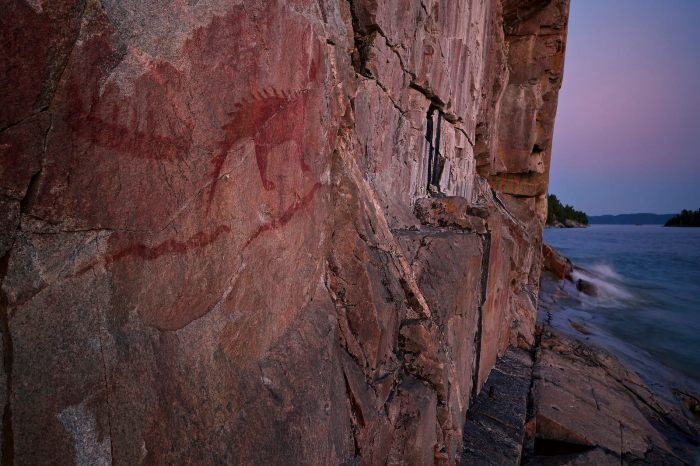
Note: While this is a tale of Michigan, it’s not a photo of Michigan, but rather Ontario!! That might be the scariest thing about today’s post – I hope that you all can deal with it! ;)

agawa pictographs lake superior provincial park ontario

agawa pictographs, lake superior provincial park, ontario, photo by twurdemann

Monstropedia says that the name Mishipeshu can be translated as Great Lynx and that this beastie was also known as “Gichi-anami’e-bizhiw” which means fabulous night panther.

The Cryptid Chronicles on Tumblr shares the tale of the Underwater Mystery Cat:

Native North Americans have a long tradition of stories regarding the Mishibizhiw, an underwater panther. Some tribes, particularly Anishinaabe, Odawa, Ojibwe, and Potawatomi, of the Great Lakes region of Canada consider this being as the most powerful underworld being. The Ojibwe held them to be the master of all water creatures. Some myths include this water lynx in their creation legends.

In the Ojibwe language, this creature is called “Mishibizhiw”, “Mishipizhiw”, “Mishipizheu”, “Mishupishu”, “Mishepishu”, “Michipeshu”, or “Mishibijiw”, which translates as “Great Lynx,” or Gichi-anami’e-bizhiw (“Gitche-anahmi-bezheu”), which translates as “the fabulous night panther.” Often, it is referred to as the “Great underground wildcat” or “Great under-water wildcat.” In Lake Superior Provincial Park on Ontario, there are pictographs of a mishibizhiw and two giant serpents. These creatures were described as water monsters that live in opposition to the Thunderbirds which are masters of the powers of the air.

With the body of a cat, usually like a lynx and the horns of a deer, it also sports scales on its back and sometimes even bird feathers. They typically are sporting long tails. Like many other creatures in native lore, it is said to be a shape shifter. It is said they roar or hiss like the sound of rushing water. Mishipizheu were said to live in the deepest lakes and rivers and can cause storms. Other traditions claim they can sometimes be helpful and protective, but generally they are viewed as bringing death or other misfortune. Traditionally, offerings are made to help with safe passage across the water.

“While skirting some rocks, which by their height and length inspire awe, we saw upon one of them two painted monsters which at first made us afraid, and upon which the boldest savages dare not long rest their eyes. They are as large as a calf: they have horns on their heads like those of a deer, a horrible look, red eyes, a beard like a tiger’s, a face somewhat like a man’s, a body covered with scales, and so long a tail that it winds all around the body, passing above the head and going back between the legs, ending in a fish’s tail.”
—French missionary Jacques Marquette, 1637

It was a widely held belief that copper came from the creature and charms were made to bring luck to hunters. After the hunt, these charms would be destroyed. Native Canadian preferred guns with brass plates depicting European dragons; they likely were interpreted to be images of Mishepishu. An Anishnaabe Ojibwa club from around 1800 has a Mishepishu figure on the end closest to the blade. In 2011, one of the Canadian Mint Mythical Creatures coins depicted a Mishepishu. The Canadian Museum of Civilization includes an underwater panther in its coat of arms. While often depicted in both ancient and modern art, modern sightings are virtually nonexistant.

Read on for more and you can also watch an episode of Grimm featuring the Mishipeshu right here!

Twurdemann writes that the Agawa Pictographs are at Agawa Rock, at the base of a 30 meter (100 foot) cliff and precarious ledge on the shore of Lake Superior. The site is sacred to the local Ojibwa and depict both historical events and legends. The paintings are believed to between 150-400 years old and were painted with a mixture of hematite (mineralized iron oxide) and animal fats. Check out the photo bigger, and see more in his Lake Superior slideshow.

More ghost & spooky stories on Michigan in Pictures.

PS: I’ve been to Agawa Rock, and if you ever get a chance to drive around all or part of Lake Superior, definitely stop here. These are some very cool pictographs!!!

Best Friends in Nature: Crayfish & Green Frog Edition

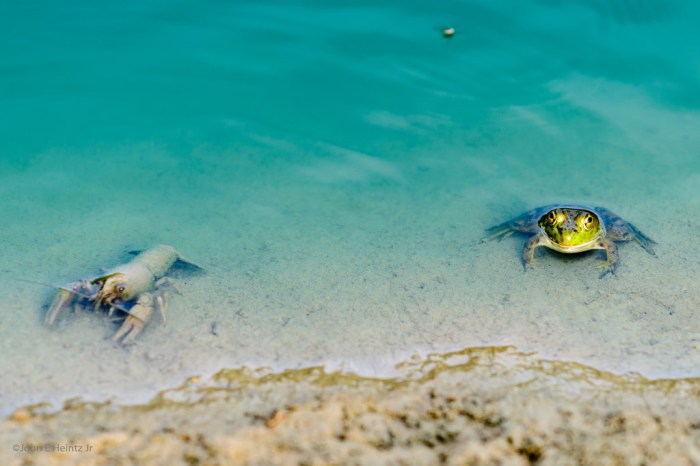
Best Friends Crayfish & Green Frog

Crayfish & Green Frog, photo by John Heintz Jr.

The next installment of the critically acclaimed Michigan in Pictures exclusive “Best Friends in Nature” series. I believe what these two have in common is a long list of shared predators, so this could well be a pond-side support group meeting. ;)

View John’s photo bigger and see more of his cool wildlife photos. Seriously, I feel like he’s the long-lost nephew of Doctor Doolittle when I look at his photos!

More animals on Michigan in Pictures, and also more about the Northern Green Frog.

Frog Friday

Frog Friday

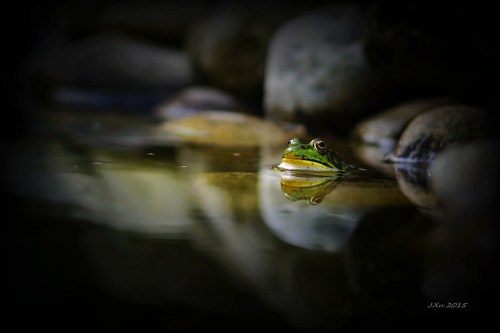
A frog in the backyard pond, photo by jiafanxu

Anyone feeling like this at the end of the week? Fortunately, one of our last summer weekends awaits!

View Jiafanxu’s photo bigger and see more in their slideshow.

More frogs on Michigan in Pictures!

Know Your Michigan Turtles: Eastern Box Turtle

Eastern Box Turtle

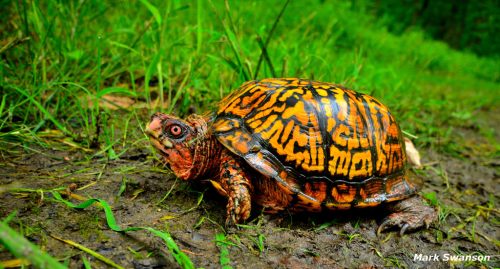
Eastern Box Turtle, photo by Mark Swanson

It’s been a while since I posted a turtle pic, and while I have a couple more Michigan turtles left to profile, this photo caught my eye today. The Herping Michigan Blog page on the Eastern Box Turtle says (in part) that:

Of all Michigan turtles, the Eastern Box Turtle is by far the most charismatic. A Species of Special Concern in Michigan, this species has declined drastically from its former distribution in the state. Nest predation, habitat fragmentation, road mortality, and illegal collection are the catalysts for the decline of the Eastern Box Turtle. Today, populations persist in pockets where grassland and mature woodlands still exist without fragmentation. Michigan individuals are often brightly colored with yellow or orange and have much broader carapaces than individuals of the same species which exist farther south in the range. This summer, my internship has allowed me to get direct involvement with the study and management of this species through captive head starting programs and aiding in telemetry studies.

…Farther south in their range, Box Turtles are traditionally known as a woodland species. But in Michigan, they prefer a mosaic of community types. Michigan Turtles often are found along woodland edges in grasslands but they occasionally wander into wetlands such as fens. They are often found in some sort of cover and are rarely out in the open except after summer rainstorms.

Box Turtles have a wide diet which includes worms, insects, plants, berries, and fungi. In the late summer when wildberries fruit out and drop to the ground, Box Turtles can often be found concentrated under or around large berry patches. Sometimes the evidence of Box Turtles is hard to miss.

Click through for lots more from Herping Michigan including a bunch of photos of the Eastern Box Turtle in action!

View Mark’s photo bigger and see more in his Michigan – Color slideshow.

Lots more Michigan turtle goodness on one of Michigan in Pictures most popular posts: Know Your Michigan Turtles, where this post has now become the definitive Eastern Box Turtle entry.

The Future of Wolves on Isle Royale

Wolf on Isle Royale

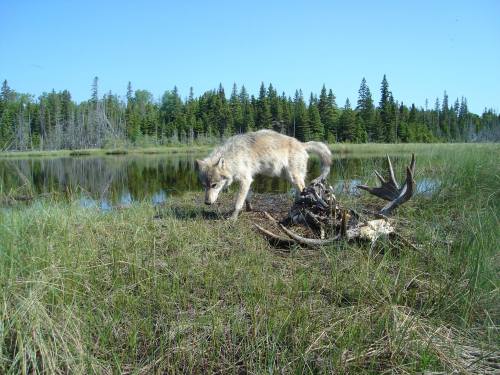
Alpha Male, photo by Rolf Peterson/Wolves and Moose of Isle Royale

The National Park Service has opened a formal public comment period that will close on August 29, 2015 regarding future management options for wolves in Isle Royale National Park. The wolf population has plummeted because of a lack of gene flow from the mainland and park management is considering an array of options. If you have commented before, do it again as anything preceding the current comment period is now considered informal input and won’t be considered further.

Moose have important effects on island vegetation, including forest cover, and wolves are the only moose predator on the island. The wolf population on Isle Royale is very low. With their long-term survival on the island in question, the moose population is likely to increase in the short term (5-10 years), which could result in impacts to vegetation and forest cover because of over-browsing.The six plan options they lay out in this PDF are:

  1. No-action alternative: Current management would continue; the park would not actively manage vegetation or the moose and wolf populations
  2. Introduce wolves once: Reestablish wolves on the island by bringing in new wolves one time to mimic a migration event; no moose management
  3. Maintain both species: Maintain populations of moose and wolves on the island, which could include wolf reintroduction or augmentation
  4. Introduce wolves once and reduce the moose population: Reestablish wolves on the island by bringing in new wolves one time; reduce moose density if/when the wolf population is no longer impacting the moose population and moose herbivory is having a demonstrated impact on park resources
  5. Reduce moose population: No wolf reintroduction or augmentation; reduce moose density if/when the wolf population is no longer impacting the moose population and moose herbivory is having a demonstrated impact on park resources
  6. Intensively manage the moose population: No wolf reintroduction or augmentation; intensively manage moose population to a low level; potential for direct vegetation restoration through seed gathering and planting on offshore islands

Click over for more and to comment.

The Wolf Moose Project on Isle Royale is the longest continuous study of any predator-prey system in the world. Rolf Peterson began leading the wolf moose project in the early 1970s, and remains a world authority on wolves and moose. About this photo he says:

It was a remote camera photo that I set up. It shows the alpha male in the Chippewa Harbor Pack in 2009, revisiting the remains of a moose the pack killed in the adjacent pond the previous autumn.  The wolves managed to yank the remains out of the pond the next summer and consume the rotting carcass.

You can view this photo background bigtacular and follow the Wolves & Moose of Isle Royale on Facebook for updates.

More wolves on Michigan in Pictures.

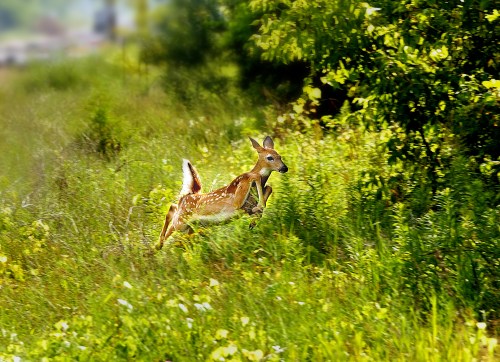
Fawn Finding Forest Fast

Fawn Finding Forest Fast, photo by jdehmel

We’ve all heard of f-stops, but look at this fawn f-GO!! Here are a couple of fun fawn facts from Outdoor Life:

  • Fawns average 6-8 lbs. at birth
  • Fawns are capable of walking within a few hours
  • Does usually remain within 100 yards of their fawns
  • A 3-week-old fawn can outrun most danger
  • The average number of spots on a fawn is 300

View Jeff’s photo background bigtacular and see more in his slideshow.

More Michigan fauna and more summer wallpaper on Michigan in Pictures.

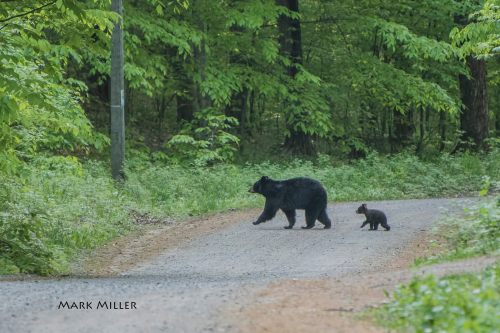
Saturday Morning Stroll: Black Bear in Michigan

Saturday Morning Stroll Michigan Black Bears

Saturday Morning Stroll, photo by Mark Miller

Recently there have been several reports of black bear sightings in Michigan, in traditional ranges like Leelanau County where these bear were photographed and even as far south as the state line in southwest Michigan and Washtenaw County, where  The Hastings Banner shared that while some are escapees from private facilities, others are ranging south:

“We’re interested in learning more about how they use the landscape in southern Michigan,” explained DNR wildlife research biologist Dwayne Etter. “The landscape in southern Michigan is very different from traditional bear habitat further north.”

…The Saginaw County bear is the southernmost collared bear in Michigan. Other collared bears south of traditional Michigan bear country include a male that was trapped and collared outside of Whitehall in orchard country, as well as a sow with cubs in Newaygo County, and a male in Oceana County. “We got a good break getting this bear collared this far south,” said Etter, who is studying how bears disperse in southern Michigan.

In recent years, bears have been documented in Washtenaw, Ionia and Ingham counties. “There was a bear sighted just north of Lansing several years ago,” Etter said. “We have photos of tracks from Sleepy Hollow State Park in April.

Read on for more including how they tranquilized and collared the Saginaw in an effort to learn more about bear movements. The DNR’s Living with Bears page shares some good tips for staying safe:

With the exception of baiting for hunting purposes in remote areas, placing food to attract bear near homes, cottages, parks, campgrounds and picnic areas may teach them to associate people with food. This may place them and people at risk of injury.

Black bear have enormous appetites and an excellent sense of smell, and are capable of remembering the locations of reliable food sources from year to year. They will travel great distances to find food. When natural foods such as tender vegetation, nuts, berries and insects are scarce, bear are likely to come into contact with people. Problems occur when bear attempt to feed or actually feed on human foods, garbage, pet foods or birdseeds.

Although most bear are secretive and shy by nature, they will tolerate contact with people when their natural food is scarce. Because they are large and powerful animals, they must be respected.

Black bear are generally fearful of humans and will leave if they are aware of your presence. In the rare circumstance that you encounter a bear that does not turn and leave, first try to scare it off by yelling while leaving a clear, unobstructed escape route for the bear. If the bear stands its ground, makes threatening sounds or bluff charges, you are too close. Take slow steps backward while continuing to talk to the bear in a stern tone. In the rare event of an attack, fight back with a backpack, stick or your bare hands. Black bears have retreated in similar situations.

Mark took this photo on the Leelanau Peninsula and wrote: When my neighbor called me early on a Saturday morning to tell me a bear was heading my way, I had to go looking for him. View his photo bigger and see more in his In My Backyard slideshow.

Want to know more about bear cubs with triple the bear cuteness? Check out Bear Triplets on Michigan in Pictures!


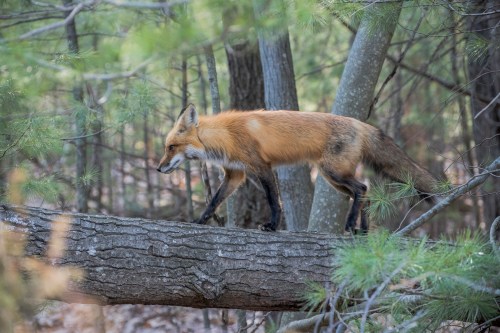
Foxy Friday

Fox Crossing

Fox Crossing, photo by Mark Miller

What an incredible catch by Mark!

View his photo bigger and see more of this little lady in his slideshow.

PS: More about red fox in Michigan from Michigan in Pictures.

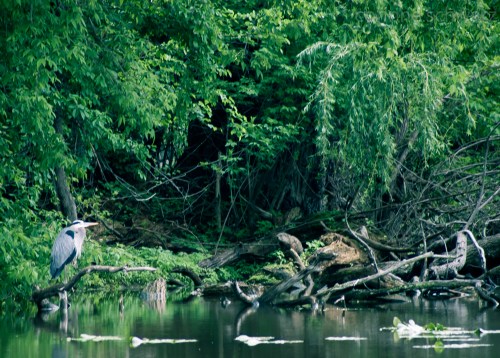
Best Friends in Nature: Heron & Beaver Edition

Heron & Beaver

Heron & Beaver, photo by Corinne Schwarz

Here’s a cool photo from May of 20111 that I never featured for some reason. That reason might have been so I could link to this article from the Birdwatchers General Store in Cape Cod about the symbiotic relationship between beavers & blue herons. It says in part:

It is thought that the Bay State’s famed naturalist, Henry David Thoreau, never saw a Great Blue Heron nest in Massachusetts. Why? It’s partly because there were no beavers living in MA during Hank’s lifetime. Way back in the 1700s, unregulated cutting eliminated the trees beavers needed for survival.

…Today, beavers are once again thriving in MA. That’s not only great news for anyone who enjoys seeing beavers, but it’s great news for Great Blue Herons as well.

I think we all know how beavers operate. They find a secluded stream, cut down a few trees and dam it up. The area behind the dam becomes flooded and turns into a beaver pond. Why do beavers need to go through all the work to build their very own pond? The beavers create a pond so they can have underwater access to their lodge, even when everything is frozen in the winter. However, the newly built pond often entraps large trees, which eventually drown and die. Dead trees growing out of the center of a pond may look eerie to us, but they are magnets to herons. The dead trees provide excellent platforms for the birds to build their nests on. In addition, the water prevents terrestrial predators from munching on the eggs and babies. Between the swampy setting, the dead trees, the bulky stick nests and the gangly herons, the whole scene looks a Gothic nursery, but the birds love it.

Read on for lots more, and for more about these two species, see Know Your Michigan Birds: Great Blue Heron and Castor canadensis, the American beaver on Michigan in Pictures.

View Corrine’s photo background bigtacular and see more in her Water Wheel slideshow.

More spring wallpaper and more “Best Friends in Nature” on Michigan in Pictures.