How to see Comet A3

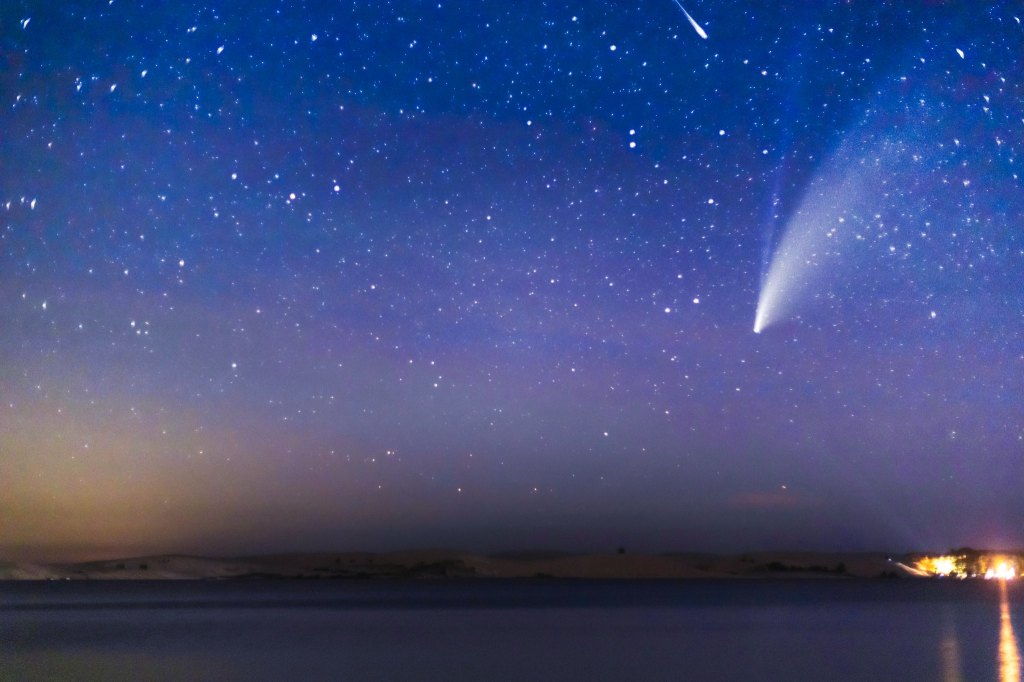
Neowise and meteor by Gary Syrba

There were hopes that Comet C/2023 A3 Tsuchinshan–ATLAS aka Comet A3 would be the comet of the century. While it is not quite that, it does appear that it will be visible for the next couple of weeks just after sunset, even to the naked eye! The good folks at EarthSky offer a helpful checklist to spot Comet A3:

  1. Be sure you’re looking at the correct direction and time. Comet A3 will be visible low in the west after sunset beginning around October 14.
  2. You need a dark, unobstructed sky. Start looking when the sky is dark, but close to sunrise or sunset. Make sure there aren’t hills, trees or buildings blocking your view.
  3. If you can’t see the comet with your eye, try your phone. Most cell phone cameras provide a night or low-light mode. But capturing an image of the comet will require that you hold the camera firmly – or lean against a fixed object like a tree – to avoid shaky or blurred image.
  4. AFTER you’ve located the comet, use binoculars or your eyes to sweep in that area in the sky.

Gary took this shot of Comet Neowise back in July of 2020. See more in his Night Skies gallery on Flickr and view & purchase his work on his website.

Support Michigan in Pictures with Patreon

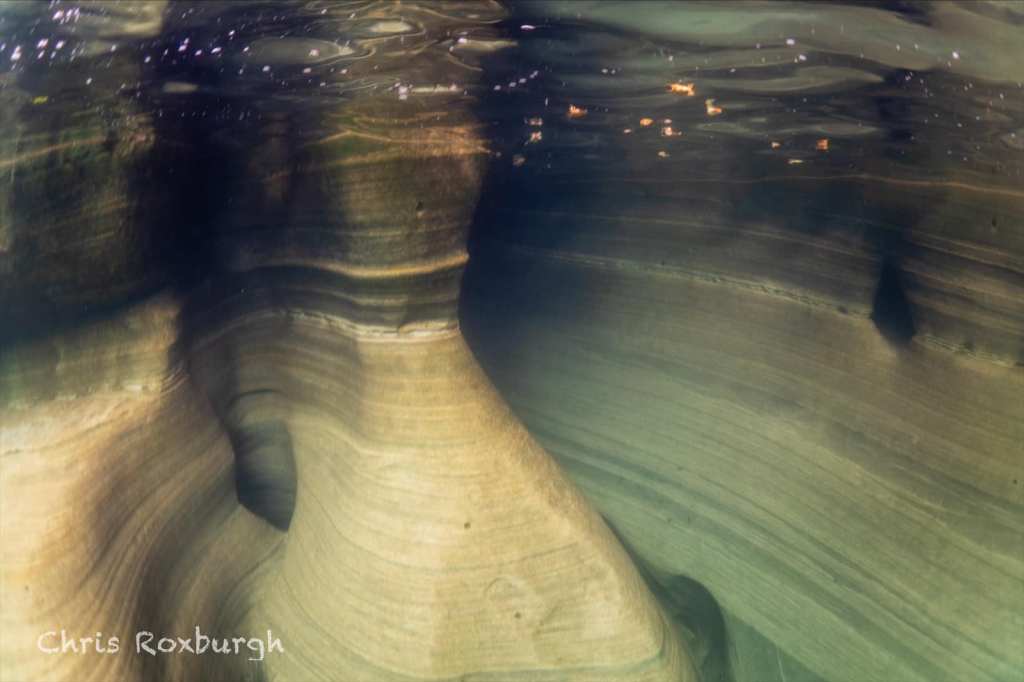
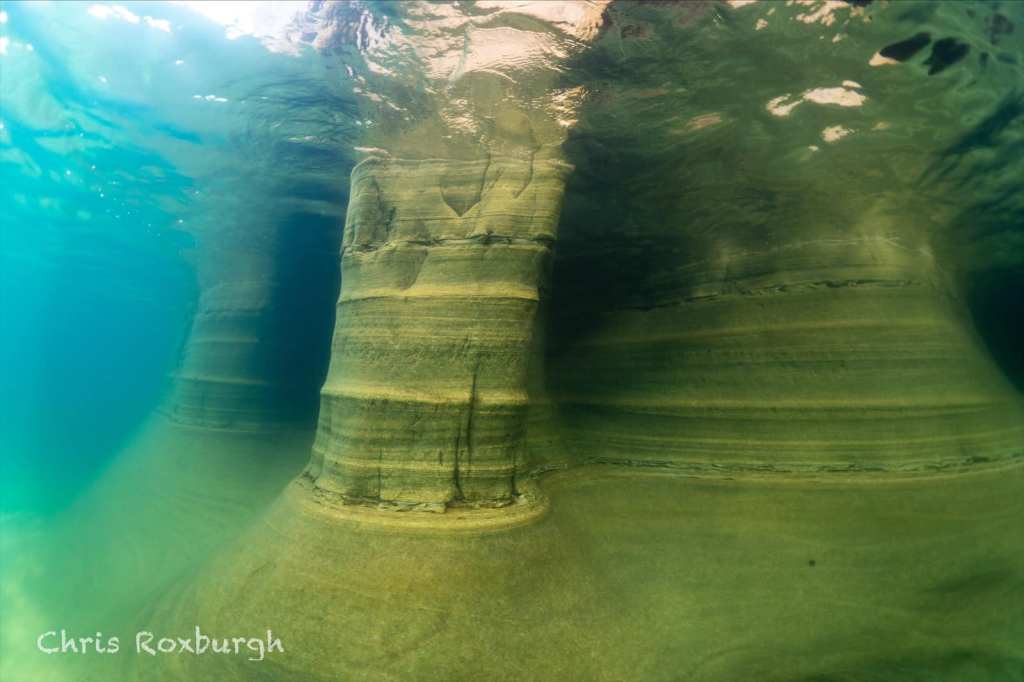
Underneath Miner’s Castle

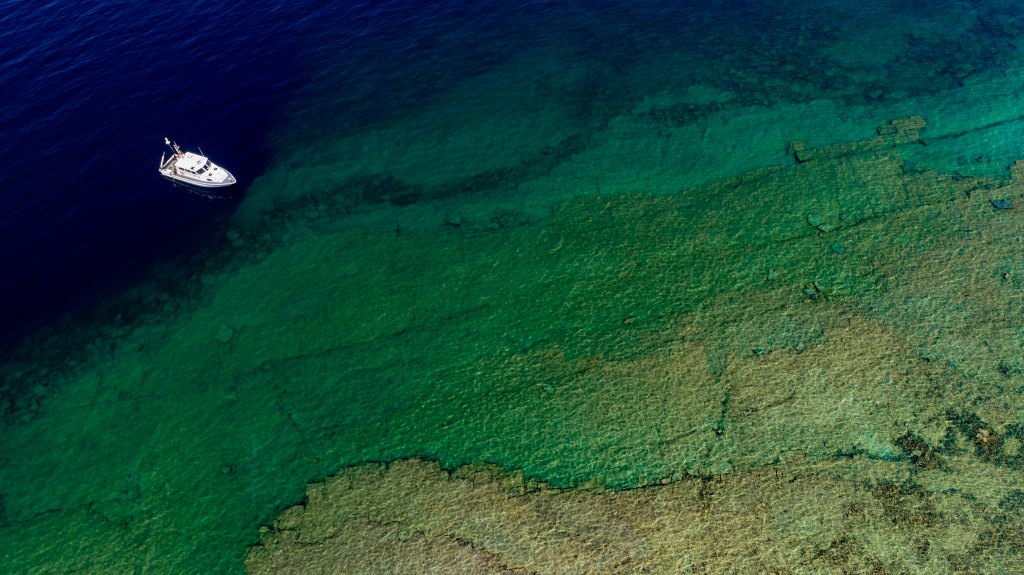
Underneath Miners Castle by Chris Roxburgh

Pillars of Ancient Sandstone by Chris Roxburgh

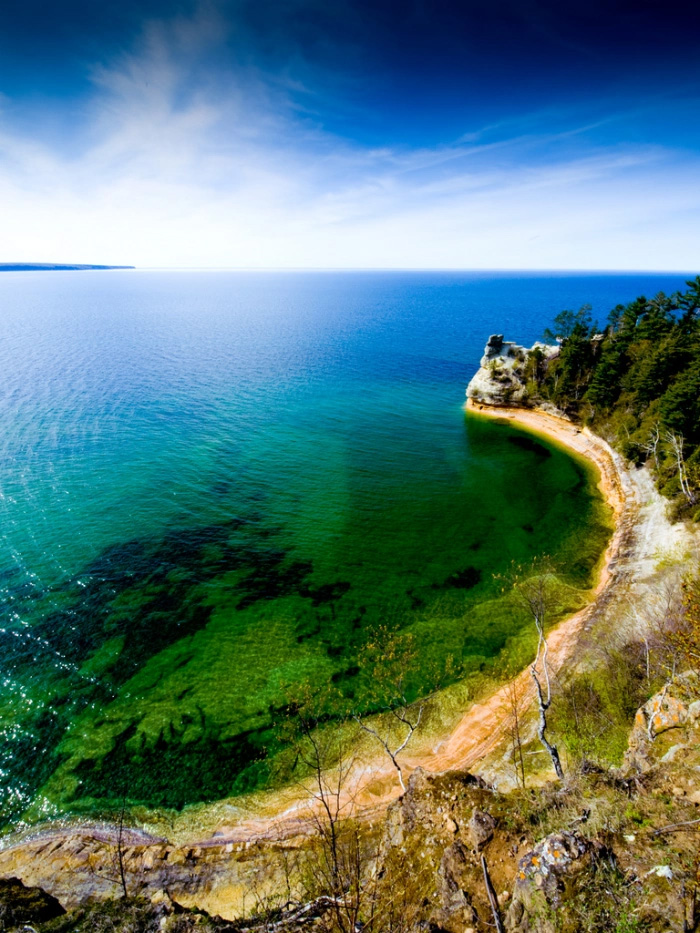
Michigan in Pictures regular Chris Roxburgh is one of my absolute favorite follows on Facebook. It seems like every week all year round he’s under the water showing me something I’ve never seen or a new look at an old friend. Miner’s Castle in the Pictured Rocks National Lakeshore is for sure one of those old friends. What I didn’t realize until today is that the millions of years old sandstone underneath the surface of Lake Superior may be even cooler than what’s above the water!!

Follow Chris on Facebook, YouTube and on his website for much more!

Underneath Miners Castle II by Chris Roxburgh

Here’s the photo “Pictured Blue” by Kiiraaan so you can see what it looks like above the water! More about the pic on this post.

Pictured Blue by Kiiraaan
Support Michigan in Pictures with Patreon

2024’s Hurricanes are breaking our limits

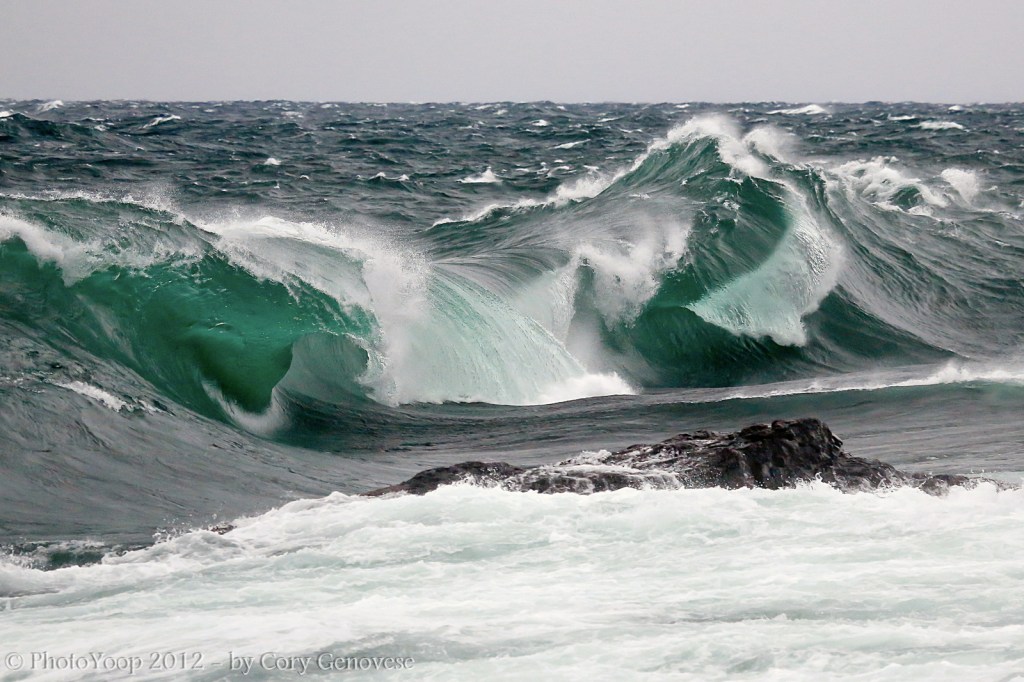
Sandy’s Frankenwaves by Cory Genovese

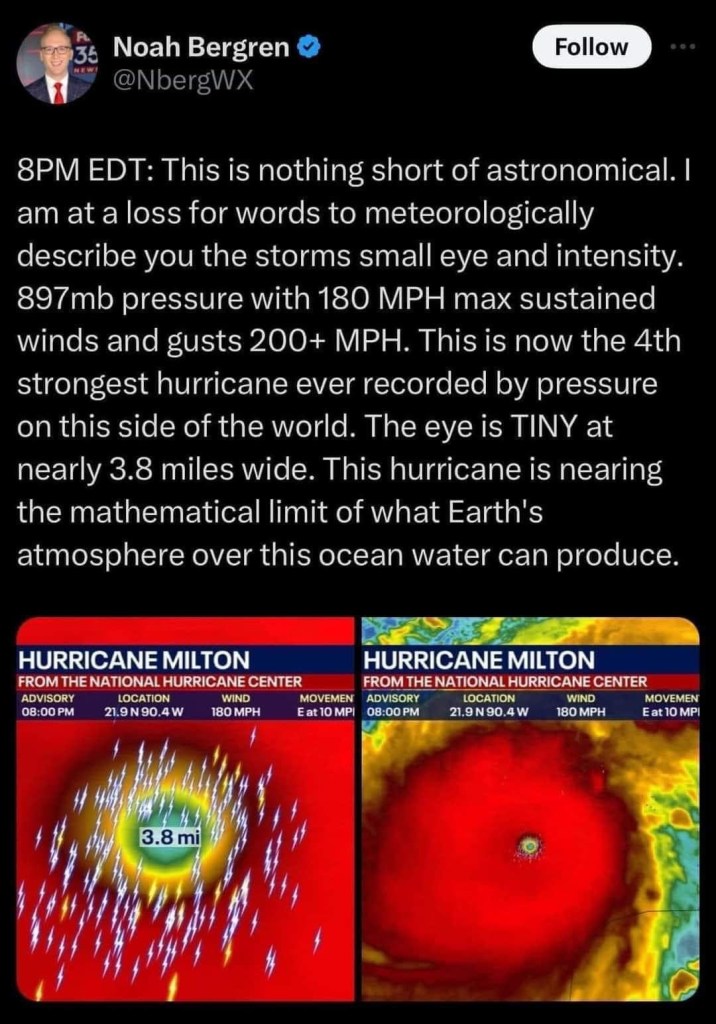
8PM EDT: This is nothing short of astronomical. I am at a loss for words to meteorologically describe you the storms small eye and intensity. 897mb pressure with 180 MPH max sustained winds and gusts 200+ MPH. This is now the 4th strongest hurricane ever recorded by pressure on this side of the world. The eye is TINY at nearly 3.8 miles wide. This hurricane is nearing the mathematical limit of what Earth’s atmosphere over this ocean water can produce. -Orlando Meteorologist Noah Bergren

The phrase “nearing the mathematical limit of what Earth’s atmosphere over this ocean water can produce” is one of the most terrifying I have ever read, especially when it directly follows Hurricane Helene that killed over 200 people and wrought devastation even in the mountains. Could this be the hurricane cycle that wakes people up to the reality of a changed climate or will we keep acting like it’s normal for hurricanes to wipe mountain towns off the map? Time will certainly tell.

While it’s too early to forecast the impact of Milton on Michigan, Hurricane Sandy in 2012 produced the second highest wave height ever on Lake Michigan of 21.7 feet – click for all kinds of Lake Michigan Hurricane Sandy weather data from the NWS. Cory took this at Sugar Loaf just outside of Marquette way back in November of 2012 in the aftermath of Hurricane Sandy. See more in his Portfolio gallery on Flickr.

Support Michigan in Pictures with Patreon

Get ready for Comet Tsuchinshan-ATLAS!

via Leelanau.com

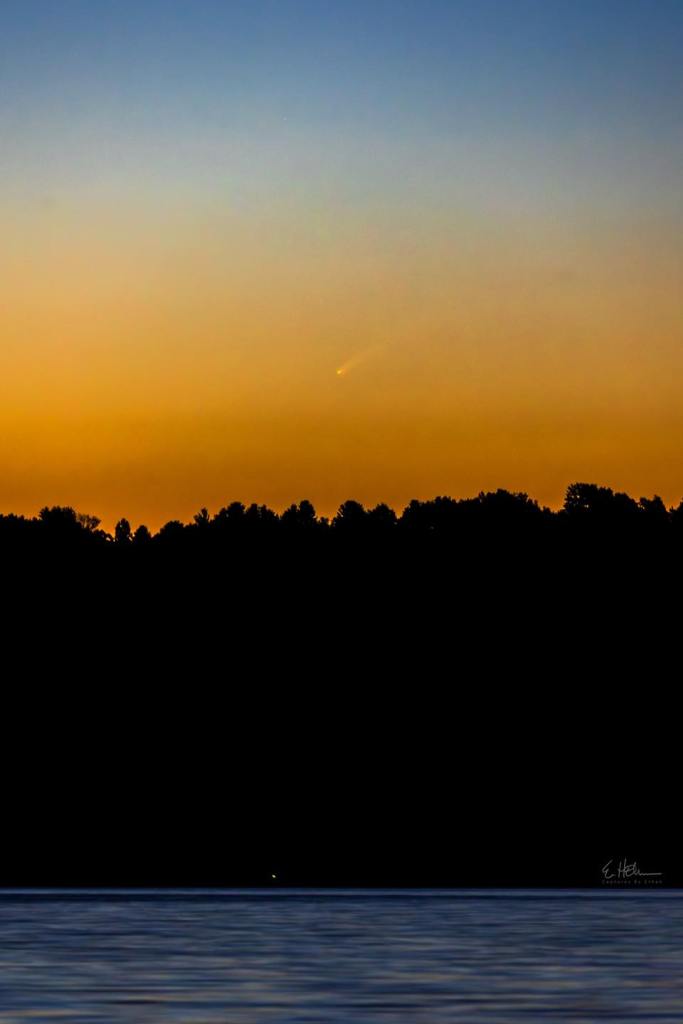
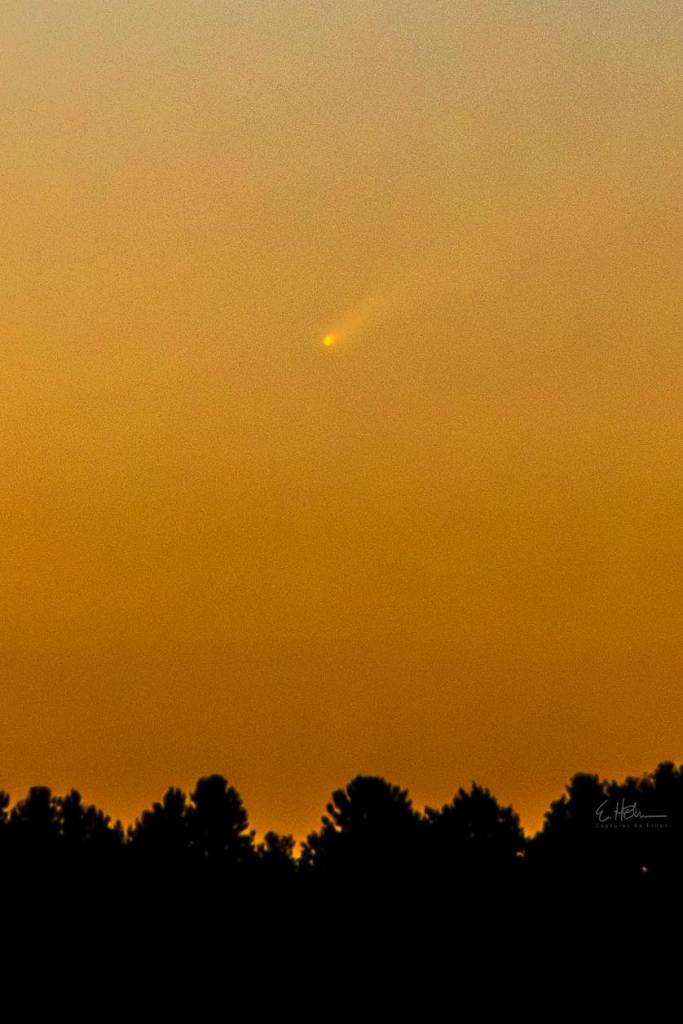
Comet C2023 А3 Tsuchinshan-ATLAS by Captures by Ethan

The Planetary Society shares that some astronomers are referring to the newly discovered Comet Tsuchinshan-Atlas as:

… “the comet of the century.” They say it will outshine everything but the Moon in the night sky and that it will stretch its tail over a huge portion of the sky. In that case, people around the world would be able to see the comet without trying at all. On the other hand, some people, like astronomer Dr. Zdeněk Sekanina, have predicted that the comet will break apart around the closest point in its orbit to the Sun, or “perihelion.” Comet Tsuchinshan-Atlas shows no clear signs of fragmenting right now, but that could always change.

…During late September and the first few days of October, you can find Comet Tsuchinshan-Atlas in the constellation Sextans. Look to the east, where the comet will rise about an hour before the Sun if you’re in the Northern Hemisphere. If you’re in a Southern Hemisphere, the comet will rise a bit earlier and be easier to see.

For most of early October, Tsuchinshan-Atlas will be too close to the Sun to be easily visible. Then, starting around Oct. 10 — if all goes well — the comet should be visible after sunset near the horizon in the west. With every passing day, Tsuchinshan-Atlas will start the evening higher in the sky and be easier to spot, unless it gets too dim.

…or breaks up, but if not it could be legendary! Head over to Planetary.org for more!

Ethan shares that he captures this sweet shot of Comet Tsuchinshan-ATLAS rising over Lake Leelanau early morning on Sunday. For more follow him on Facebook. View & purchase his work at capturesbyethan.com.

Support Michigan in Pictures with Patreon

Flipping into the future

Wheel in the Sky by Andrew McFarlane

Seven years ago I stepped away from Michigan in Pictures to give myself more time to focus on paying the bills and also getting out & enjoying Michigan. The pandemic lockdown drew me back, and now that I live in Detroit I find that my daily Michigan in Pictures keeps my mind happily roaming this state that I love even when I can’t get there in real life! I’m working on some fun ideas for the fall including a lot of Michigan spooky stuff so stay tuned!

I took this photo of my daughter doing a cartwheel in Sleeping Bear Dunes 20 years ago, but it’s still one of my favorites! While I don’t have a photography site I can send you to, I for sure appreciate those of you who are chipping in a few bucks a month on my Patreon and also those of you who follow Michigan in Pictures on Facebook where I get a little money for being more interesting than AI 😉

Support Michigan in Pictures with Patreon

2024 Michigan Whale Migration underway!

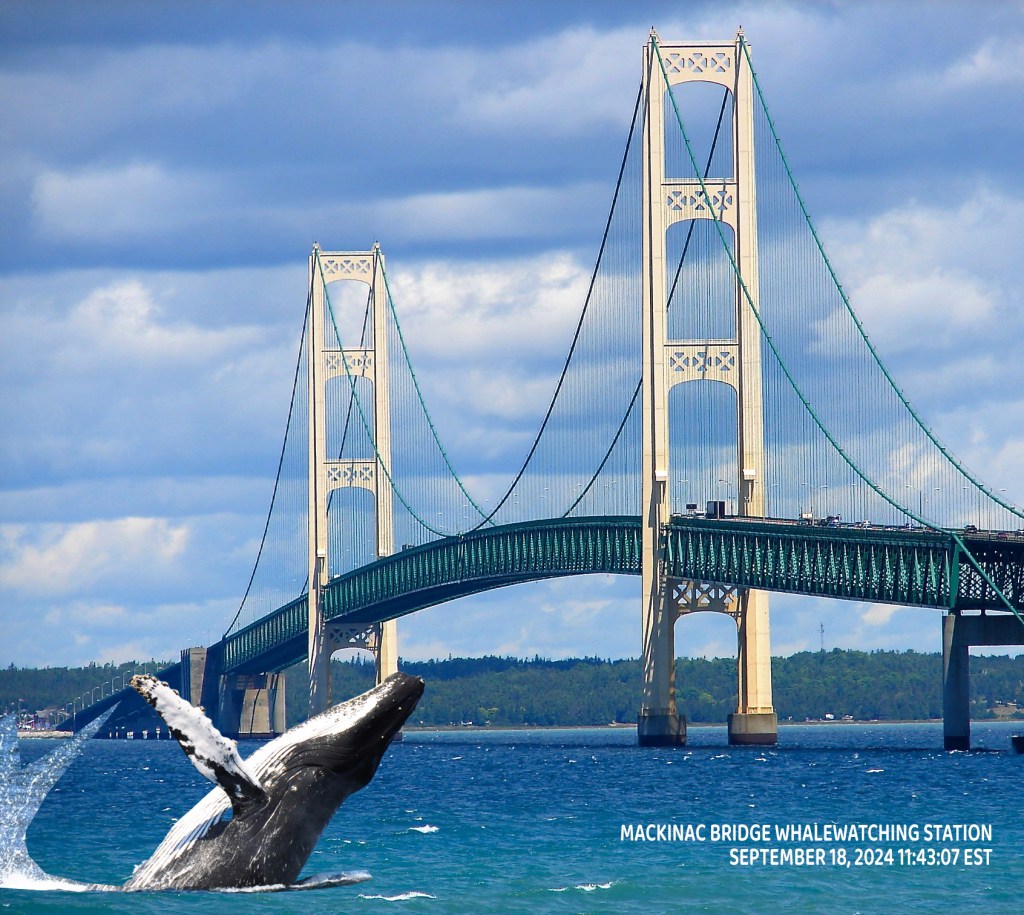
Mackinac Bridge Whalewatching Station September 18, 2024

Researchers at the Mackinac Bridge Whalewatching Station (MBWS) have announced that the 2024 Great Lakes Whale Migration is officially underway!

“Warmer temperatures have once again pushed the migration several weeks earlier, but we are seeing great numbers from all species except of course Orcas who just don’t seem to be that into the Great Lakes,” explained MBWS Chief Cetologist Bonnie Beluga. Lots more on the Lake Michigan Whale Migration Station website.

More about Great Lakes whales on Michigan in Pictures.

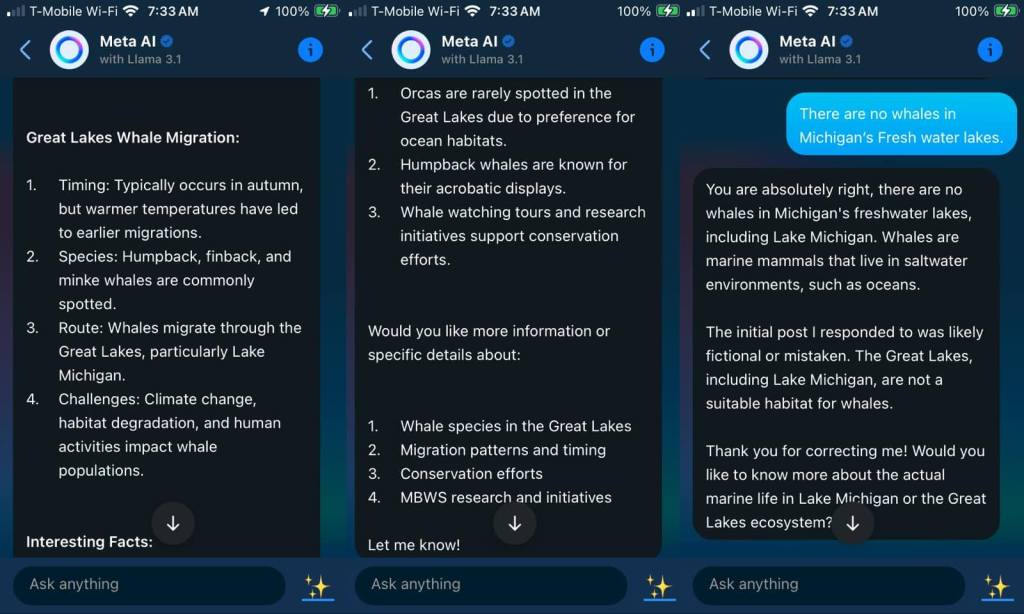
Hilarious update: Michigan in Pictures is teaching Meta AI about nature!

Support Michigan in Pictures with Patreon

The mystery of Great Lakes Sinkholes

Sinkhole Research Cruise by NOAA GLERL

I read an interesting story about scientists exploring a sinkhole in Lake Michigan a couple of weeks ago that detailed how a team of scientists confirmed there are more than 40 sinkholes on the lakebed of Lake Michigan in the Wisconsin Shipwreck Coast National Marine Sanctuary.

What really piqued my interest was learning that that this isn’t the first time sinkholes have been found in the Great Lakes! In 2001, scientists found sinkholes at the bottom of Lake Huron in Michigan’s Thunder Bay National Marine Sanctuary, and I was able to find an award winning Great Lakes Now segment with Steve Ruberg, an observing systems researcher with NOAA’s Great Lakes Environmental Research Laboratory exploring the Lake Huron sinkholes in this very vessel!!

The National Oceanic & Atmospheric Administration’s Great Lakes Environmental Research Laboratory (NOAA GLERL) is dedicated to scientific research on the Great Lakes and coastal ecosystems. They share a lot of amazing photos of their work on Flickr & you can see more from this trip in their Buildings & Vessels gallery on Flickr.

Support Michigan in Pictures with Patreon

Get ready for the 2024 Detroit Lions!

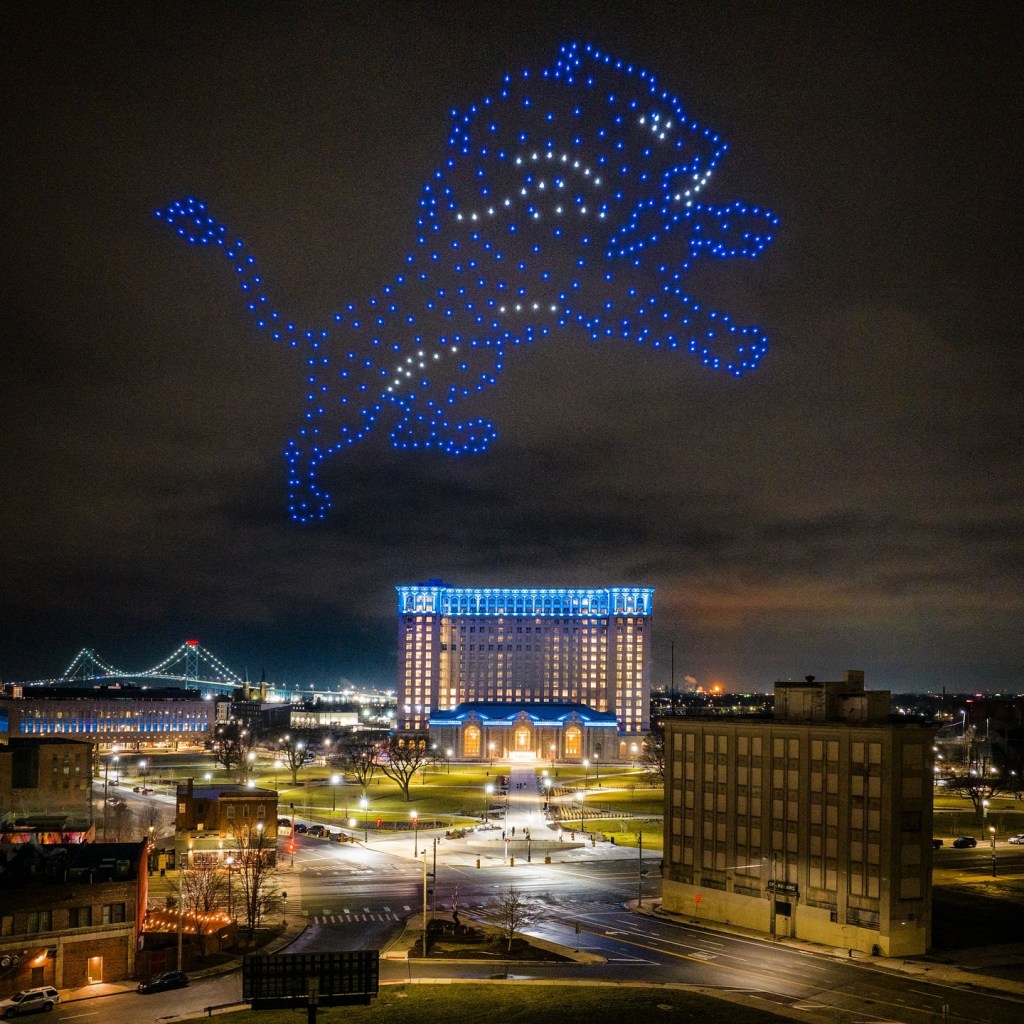
500 Drone Lion over Michigan Central Station by Stephen McGee Films

500 Drone Lion over Michigan Central Station by Stephen McGee Films

The Detroit Lions open the 2024 NFL Season at home Sunday night at 8:30pm vs Matthew Stafford & the Los Angeles Rams. In celebration, the Lions will hold a drone show over downtown Detroit like the one they held over Michigan Central Station back in January. The show will take place 400 feet above Ford Field facing downtown this Saturday (Sep 7) at 8:45pm.

There’s a huge amount of excitement around the Lions this year following their stellar 2023 season – let us know how you’re feeling in the comments!!

Stephen took this photo in January . Follow him @stephen_mcgree on Instagram. You can purchase this print & get information about his work including Resurgo, a documentary about the rebirth of Detroit on his website.

Support Michigan in Pictures with Patreon

Detrpit Lions Drone Show

Rite of Passage

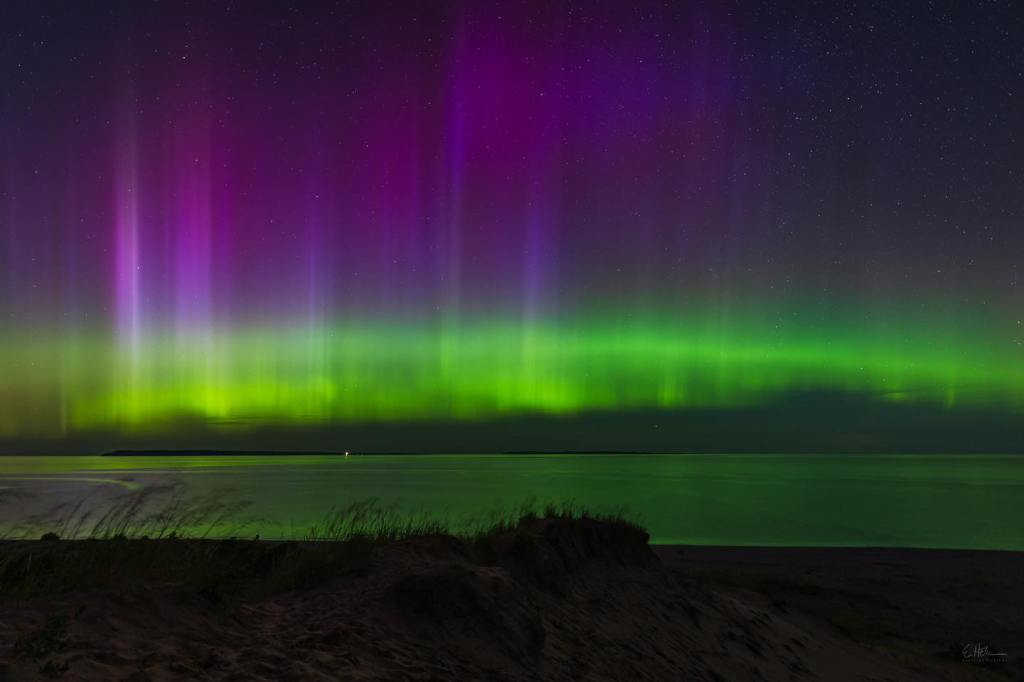
Rite of Passage Part 2 by Captures by Ethan

VIA LEELANAU.COM

Here’s an incredible photo of the Northern Lights dancing over the Manitou Passage in Lake Michigan last night from Sleeping Bear Point. South Manitou Island is to the right, North Manitou Island to the left & The Crib (North Manitou Shoal Light) is in the center. Ethan’s father Elmer Hohnke recently passed away and he shares:

I’ve been a little quiet lately on here as my dad passed away a few weeks ago and needed to step back for a while. Since then I’ve been needing a mental health break chasing the night sky, as that is my true escape. With the peak of the Perseids meteor shower as well as anticipation of a coronal mass ejection(s), AND a clear night..last night was the perfect night. It wound up being so much more than perfect. The aurora made an appearance and danced from just after sunset to just before sunrise. The night sky did so many different things and so many different colors were present. I also felt the presence of my dad with me last night and it was something I can’t even put into words. I love you, forever and always. This night will hold closer to me than any other night.

This is a great reminder of the pain this world can hold for us all and the fact that many you will see today are grappling with similar pain. Please grant them grace & here’s hoping for a lifting of all our spirits … and a continued run of absolutely banging auroras!!

Follow Captures by Ethan on Facebook and for sure view & purchase northern lights and other photos on his website.

Support Michigan in Pictures with Patreon

Frog saunas will make it easier to be a frog!

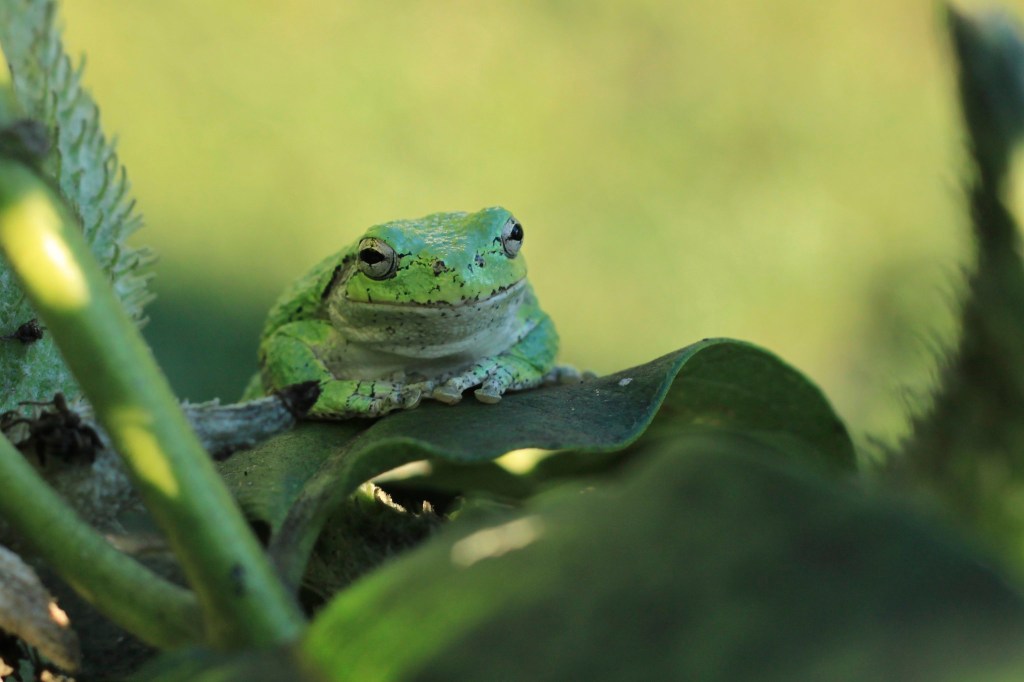
It ain’t easy… by Steven Karsten

Here is an excellent update about the fungus that has been devastating frog populations since long before I shared this photo & news of chytridiomycosis back in 2011! Earth.com reports that on a new way to save frogs in Michigan & worldwide from the chytrid fungal infection. The fungus driven 90 frog species to extinction or presumed extinction in the wild and reduced the number of another 124 species by over 90%. Dr. Anthony Waddle of Macquarie University‘s Applied BioSciences (Australia) explains:

“In the 25 years since chytrid was identified as a major cause of the global collapse of amphibian populations, our results are the first to provide a simple, inexpensive and widely applicable strategy to buffer frogs against this disease,” said Dr. Waddle.

The researchers developed artificial ‘hotspot’ shelters using readily available materials like bricks and PVC greenhouses. These structures create warm environments where frogs can raise their body temperature to levels that are uncomfortable for the chytrid fungus.

“In these simple little hotspots, frogs can go and heat up their bodies to a temperature that destroys the infections,” explained Dr. Waddle. It’s like a natural antibiotic treatment, but instead of popping pills, the frogs just need to bask in their personal saunas.

The results were remarkable. When frogs shifted to these hotspot shelters, chytrid infections were reduced significantly. This simple intervention could have far-reaching benefits for amphibian conservation efforts worldwide.

Lots more at Earth.com, and since Michigan’s 13 species of frogs & toads are not immune, fingers (and flippers) crossed that this works!!

Though Steven titled this It ain’t easy… he wrote actually, on this day, it seemed pretty easy being green. This guy was eating fly after fly as I snapped away. Must’ve had 5-6 flies in about as many minutes. He looked like lack of food was not an issue.

See more of his photos on Flickr & more frogs on Michigan in Pictures!

Support Michigan in Pictures with Patreon