La Chappelle: The incredible Chapel Rock

Chapel Rock by John Gagnon

Chapel Rock by John Gagnon

Atlas Obscura says that although there’s a whole lot to see in the Pictured Rocks National Lakeshore, hikers should keep their eyes peeled for one feature in particular: Chapel Rock, once known as La Chappelle:

Composed of Cambrian age sandstone dating back approximately 500 million years, Chapel Rock is the result of the erosion caused by a proglacial lake somewhat confusingly referred to as “Nipissing Great Lakes.” This giant body of water consisted of separate basins joined by straits, and once occupied present-day Lake Superior, Lake Huron, Lake Michigan, and Georgian Bay. Around 3,800 years ago, the high waters of Nipissing Great Lakes carved through the soft sandstone, resulting in today’s dramatic formation, which juts out into Lake Superior.

Although Chapel Rock’s stone is mostly beige, its base is a warm orange, thanks to mineral concentrations. The sandstone cliffs that comprise Pictured Rocks are full of iron, copper, manganese, and limonite, which impart red, orange, blue, green, brown, black, and white hues. Not long ago, a natural rock bridge spanned the area between Chapel Rock and the mainland. It collapsed in the 1940s, leaving the formation unconnected with the rest of the shore. Thankfully, the rest of the structure has remained intact and is protected from climbers by order of the Lakeshore Superintendent.

The rock isn’t the only thing that has proven to be remarkably durable. Charles Penny, a member of the Douglass Houghton expedition responsible for exploring Lake Superior’s southern shore, admiringly described a single pine tree that grew like a “spire” out of the sparse dirt covering the top of the outcropping. Till this day, the same resilient pine stands sentinel over Chapel Rock, connected to the mainland by its extensive root system.

More at Atlas Obscura & check out more Chapel Rock photos on Michigan in Pictures that include pictures of the pine tree’s astounding root system.

See more in John’s Pictured Rocks gallery on Flickr.

 

Support Michigan in Pictures with Patreon

TBT: Last Week’s Eclipse

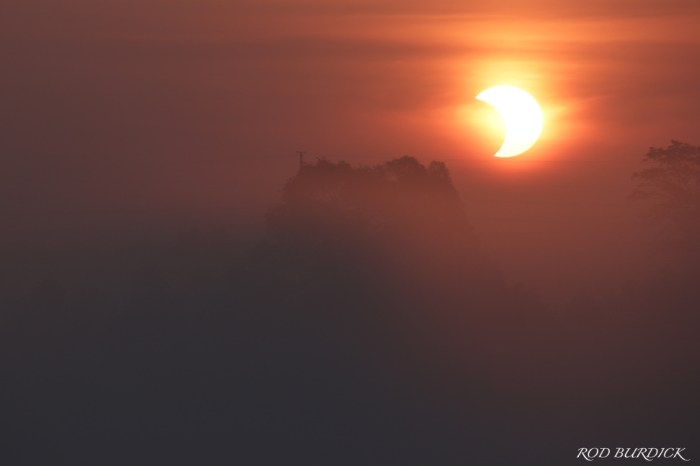
Eclipse June 10 2021 by Rod Burdick

Eclipse June 10, 2021 by Rod Burdick

Sure it’s a little early for a “Throwback Thursday” pic, but I had to share this shot from last week’s eclipse over the foggy St. Clair River.

Head over to Rod’s Flickr for many more shots of the St. Clair River & Great Lakes marine subjects!

Support Michigan in Pictures with Patreon

Scientists now know what causes the northern lights!

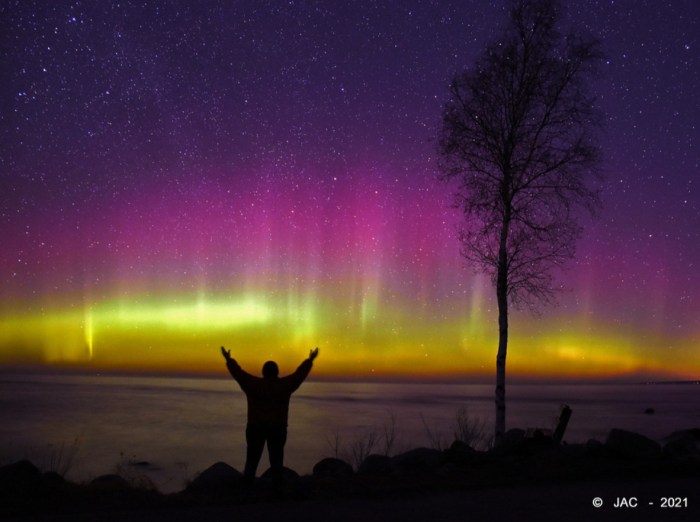
Thanks by Julie

Thanks by Julie

NPR reports that scientists have finally confirmed the source of the Northern Lights:

An article published in the journal Nature Communications this week suggests that the natural light show starts when disturbances on the sun pull on Earth’s magnetic field. That creates cosmic undulations known as Alfvén waves that launch electrons at high speeds into Earth’s atmosphere where they create the aurora.

“It was sort of theorized that that’s where the energy exchange is occurring,” said Gregory Howes, associate professor of physics and astronomy at the University of Iowa. “But no one had ever come up with a definitive demonstration that the Alfvén waves actually accelerate these electrons under the appropriate conditions that you have in space above the aurora.”

The sun is volatile, and violent events there such as geomagnetic storms can echo out into the universe. In some cases, the sun’s disturbances are so strong that they yank on the Earth’s magnetic field like a rubber band, pulling it away from our planet.

But, like a taut rubber band when it’s released, the magnetic field snaps back, and the force of that recoil creates powerful ripples known as Alfvén waves about 80,000 miles from the ground. As those waves get closer to Earth, they move even faster thanks to the planet’s magnetic pull.

…”Think about surfing,” said Jim Schroeder, an assistant physics professor at Wheaton College and the article’s lead author. “In order to surf, you need to paddle up to the right speed for an ocean wave to pick you up and accelerate you, and we found that electrons were surfing. If they were moving with the right speed relative to the wave, they would get picked up and accelerated.”

When the electrons reach Earth’s thin upper atmosphere, they collide with nitrogen and oxygen molecules, sending them into an excited state. The excited electrons eventually calm down and release light, which is what we see as the aurora.

More at NPR.

Julie took this celebratory photo back in March. See more in her massive Michigan gallery on Flickr & keep your eyes on the skies!!

More Northern Lights on Michigan in Pictures.

Support Michigan in Pictures with Patreon

Get all the stars at Wilderness State Park

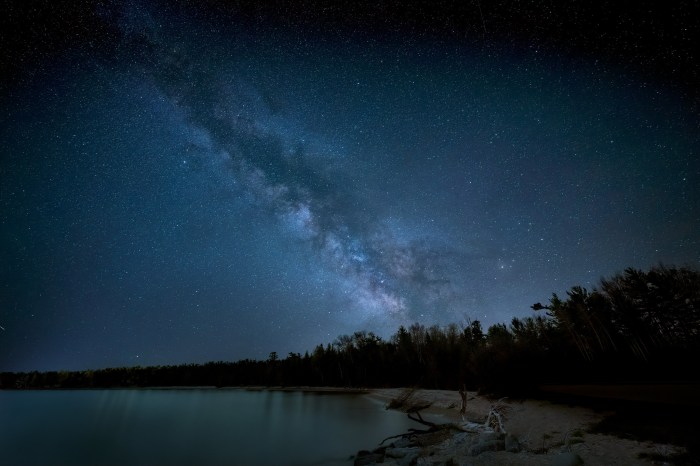
The Milky Way over Lake Michigan at Wilderness State Park by Diana Robinson

The Milky Way over Lake Michigan at Wilderness State Park by Diana Robinson

The Michigan DNR explains that Wilderness State Park is one of Michigan’s Dark Sky Preserves:

Michigan is lucky to play host to both dark sky preserves and parks that offer stellar celestial landscapes. These locations are specially designated because they have qualities that complement nighttime viewing, such as the ability to limit the amount of artificial light. There are also plenty of excellent night-sky viewing opportunities across more than 15,000 square miles in Michigan’s Upper Peninsula.

Diana took this photo earlier in May & you can see more in her Night Photography gallery on Flickr.

More great night photography on Michigan in Pictures!

Support Michigan in Pictures with Patreon

Ring of Fire Eclipse on Thursday

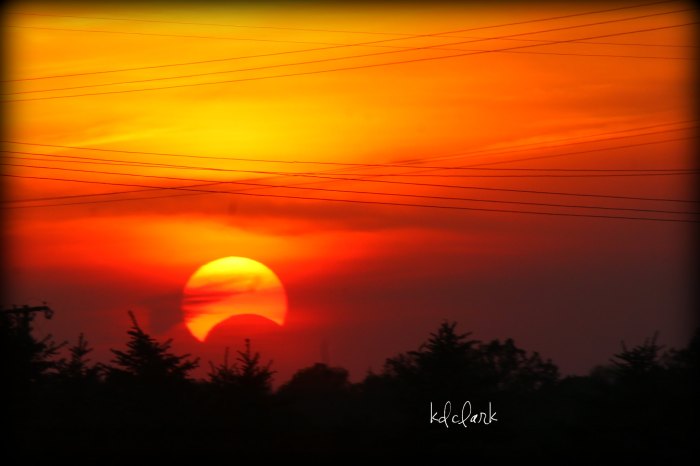
Sunset during a partial solar eclipse by Diane

Sunset during a partial solar eclipse by Diane

The naming of astronomical events has certainly gotten cooler in recent years, and Thursday morning’s “Ring of Fire” annular eclipse certainly reflects that trend! WOOD-TV explains that on June 10th Michiganders will be able to view this year’s first solar eclipse:

Unlike a total solar eclipse, which occurs when the moon passes directly between the Earth and the sun, causing the sun to be completely blocked, next week’s eclipse will be annular, which only occurs when the moon is in its first phase.

The new moon will be farther from Earth in its elliptical orbit and will appear smaller — too small to cover the sun completely. As a result, a bright ring of sunlight will surround the moon’s silhouette at mid-eclipse. That bright outer rim has become known as the “ring of fire.”

“As the pair rises higher in the sky, the silhouette of the Moon will gradually shift off the sun to the lower left, allowing more of the sun to show until the eclipse ends,” NASA said.

The new moon will eclipse the sun at 6:53 a.m. ET. on June 10.

Look east to see it, but remember it’s unsafe to look directly at the sun unless you wear special eclipse glasses to protect your eyes.

More at WOOD-TV.

Diane took this photo way back in 2012. See more in her sunrise~sunset gallery on Flickr!

Support Michigan in Pictures with Patreon

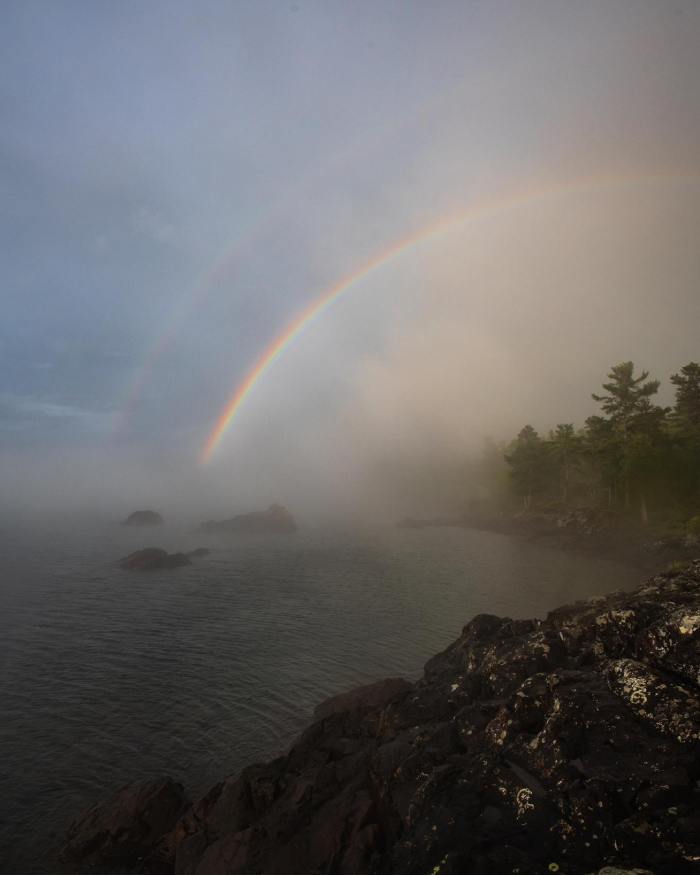
Fog Rainbows

Fog Rainbows by Noah Sorenson

Fog Rainbows by Noah Sorenson

Noah caught some awesome shots on a recent visit to the Keweenaw Peninsula. For sure follow him @noahsorensenphoto on Instagram!

Support Michigan in Pictures with Patreon

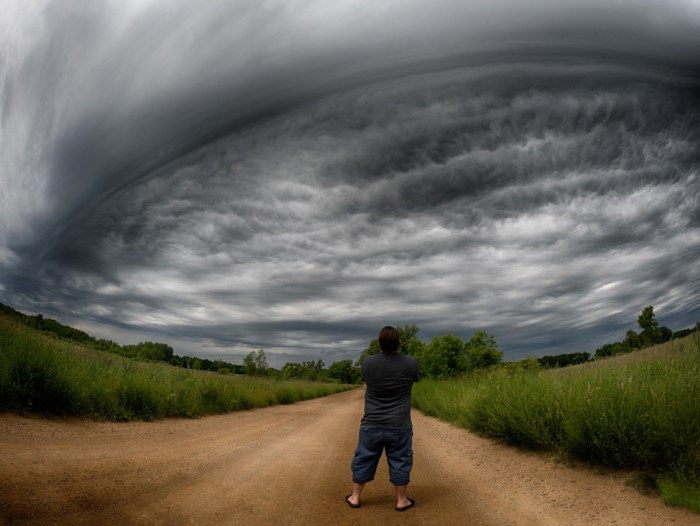
The UFO Show

The UFO Show by Jamie Macdonald

The UFO Show by Jamie Macdonald

In 1973, the nation (and my 8-year-old self) were captivated by a wave of Unidentified Flying Object sightings. Clipping the stories from the paper for a scrapbook left me with a lifelong fascination for UFOs which is apparently becoming mainstream. Last night 60 Minutes showed some declassified UFO footage previously leaked to The New York Times by Christopher Mellon and Luis Elizondo:

“It’s bizarre and unfortunate that someone like myself has to do something like that to get a national security issue like this on the agenda,” Mellon said. Everyone Whitaker spoke with underscored that unidentified means just that, not yet identified, there’s no evidence these phenomena are extraterrestrial, and they are a potential national security risk no matter who created them because the technology seems far beyond what the U.S. can currently produce.

Mellon said the UFOs are not secret U.S. government technology, and “I can say that with a very high degree of confidence in part because of the positions I held in the department, and I know the process.”

Former Navy pilot Lt. Ryan Graves told Whitaker that fellow pilots began seeing UAPs hovering over restricted airspace off Virginia Beach in 2014, after upgrades to their radar, and continued seeing UAP’s off the Atlantic Coast “every day for at least a couple years.”

Jamie took this photo back in June of 2016. See more in his Stormy Weather gallery on Flickr & for sure head over to his website at mirrorlessminutes.com for more!

Support Michigan in Pictures with Patreon

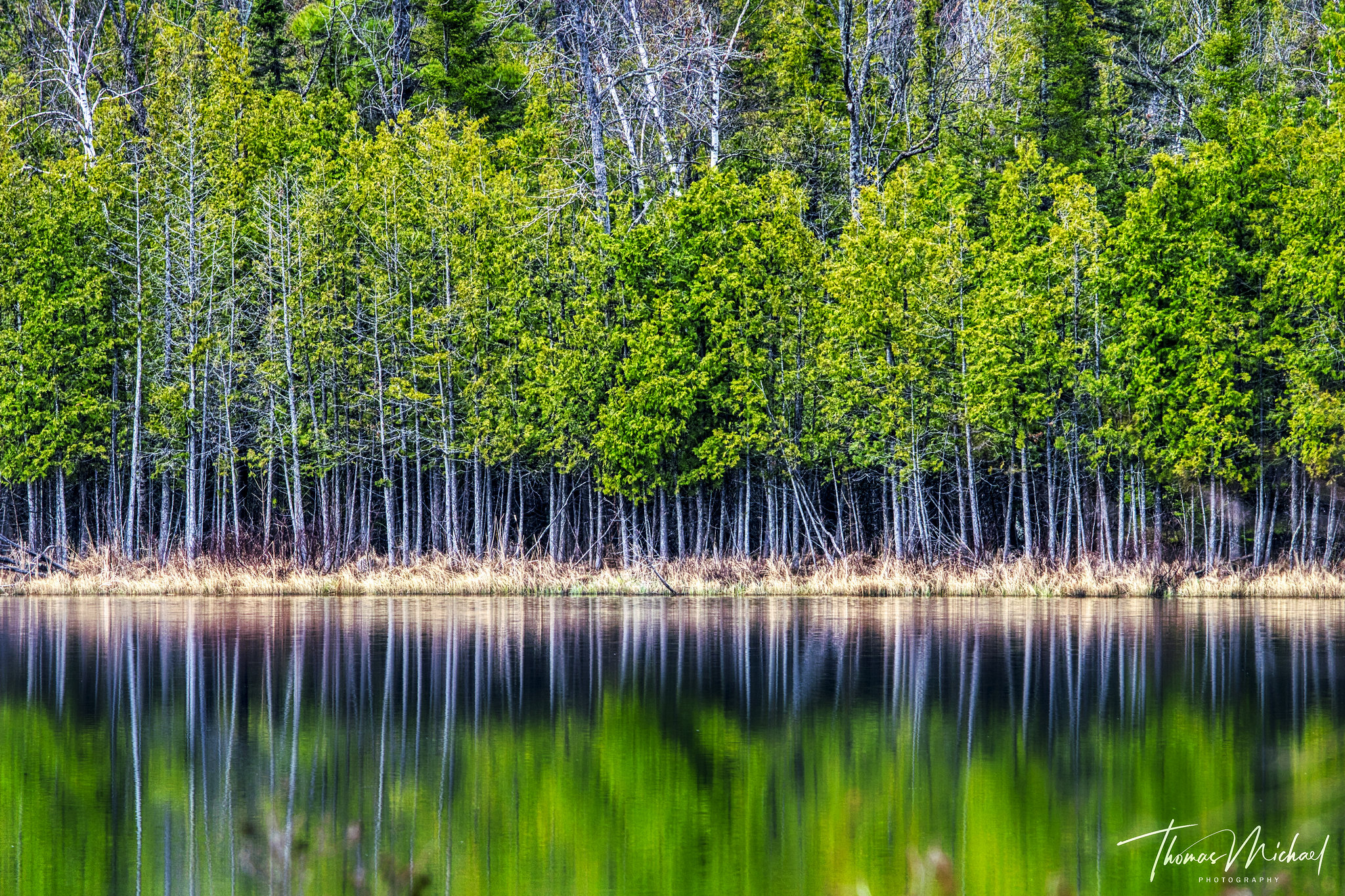
Cedar(eflection)

Cedar by Thomas Michael

Cedar by Thomas Michael

Just love this photo from Thomas – see more in his April 21 gallery on Flickr!

Support Michigan in Pictures with Patreon

Sunset over Munising Bay

Sunset over Munising Bay by Michigan Nut Photography

Sunset over Munising Bay by Michigan Nut Photography

The hits just keep coming from Michigan Nut!! See lots more from John on his Facebook page and view & purchase his work at michigannutphotography.com.

Support Michigan in Pictures with Patreon

Happy Birthday, Tiger Stadium

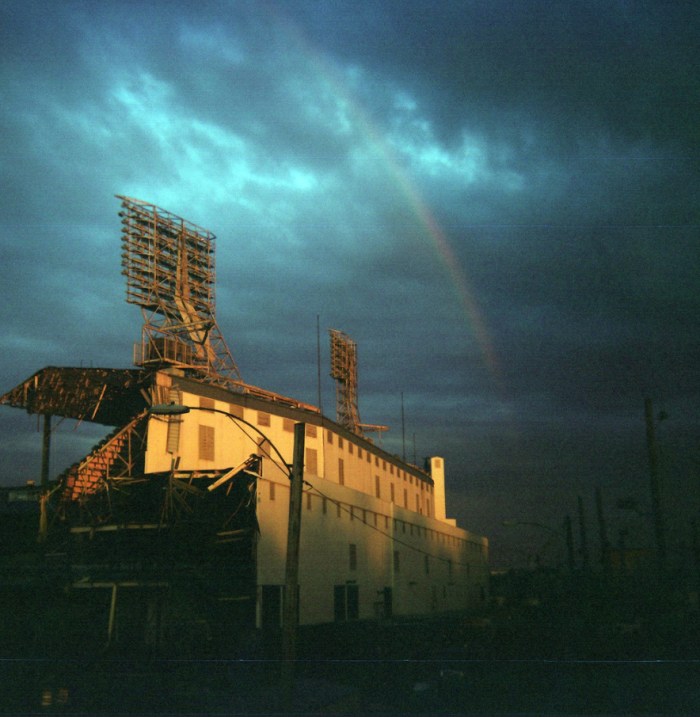
Tiger Stadium Deconstruction by Paul Hitz

Tiger Stadium Deconstruction by Paul Hitz

Tiger Stadium at the corner of Michigan & Trumbull in Detroit opened 109 years ago on April 20, 1912. As good of a field as Comerica Park is (and it’s pretty darned good), I’m never not going to miss Tiger Stadium. If you’d like to read a wonderful account of the history of the stadium and The Corner, head over to Historic Detroit. It begins:

Whether as a 103-year-old site for pro baseball or as an 87-year-old stadium, the corner of Michigan and Trumbull is the home of memories for millions of fans. The park sat vacant since hosting its final game on Sept. 27, 1999, until June 30, 2008, when demolition began.

Professional baseball was first played on the site, at a 5,000-seat ballpark known as Bennett Park, on April 28, 1896 — three years before Detroit even had an auto plant. The field, named after fan favorite Charlie Bennett, was built on the former site of a municipal hay market. The park was razed after the 1911 season and replaced with 23,000-seat Navin Field. The ballpark as we know it today opened April 20, 1912, the same day as Fenway Park in Boston — and five days after the RMS Titanic sank.

Paul took this photo back in 2008 when they were demolishing the ballpark. It’s long been one of my favorites. See more from Paul in his Detroit gallery on Flickr & at United Photo Works.

PS: The Corner Ballpark sits where Tiger Stadium. It is the home of the Detroit Police Athletic League program and features a great ballpark with the Willie Horton Field of Dreams.

PPS: Tons more Tiger Stadium photos on Michigan in Pictures!

Support Michigan in Pictures with Patreon