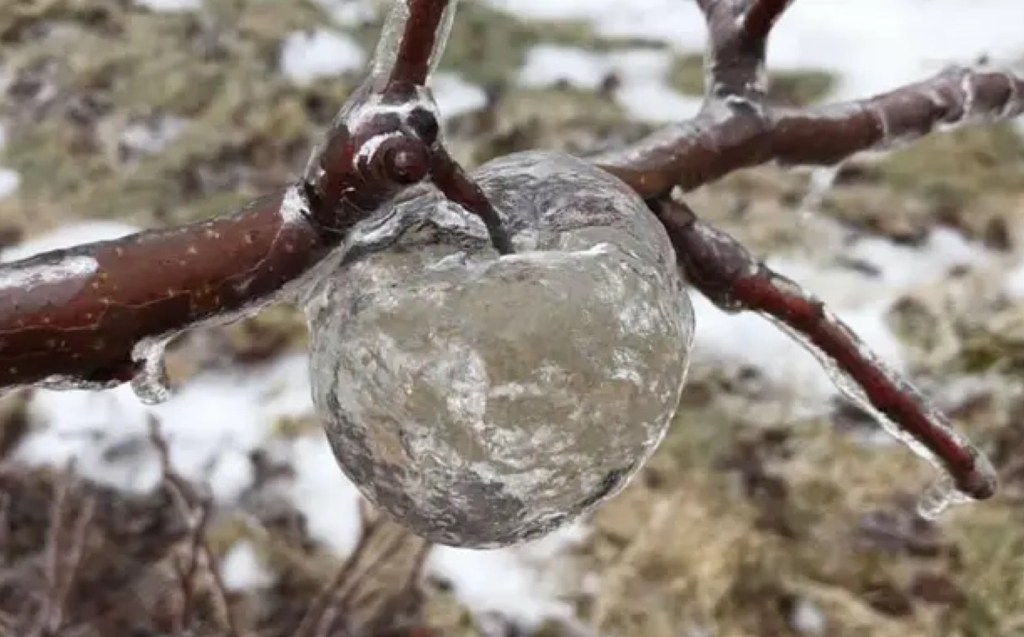
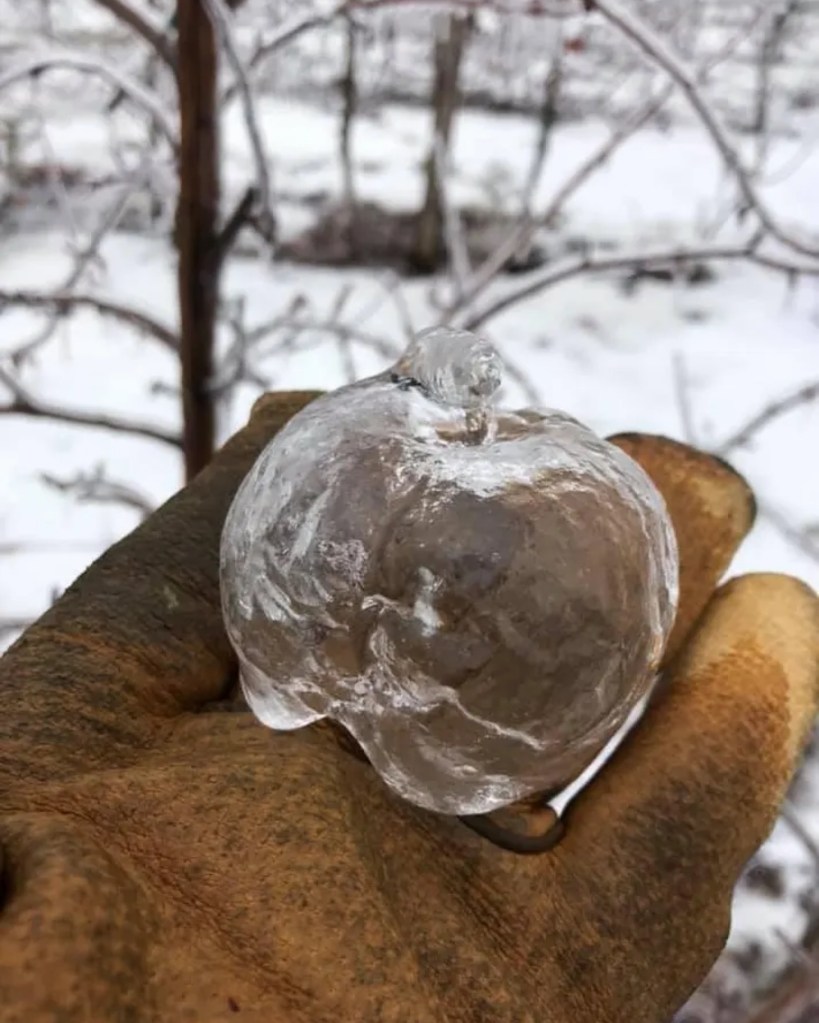
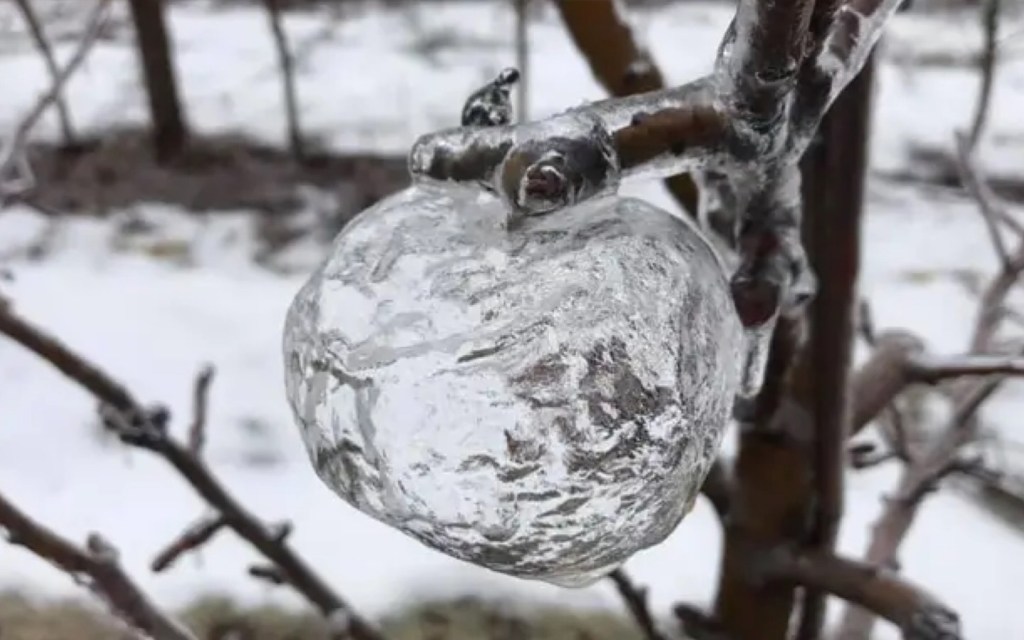
This rare winter phenomenon was captured in the Fruit Ridge area of Kent County, Michigan when freezing rain coated apples still hanging on the trees. The fruit eventually fell away, leaving behind these wild, hollow ice apples ❄️ Moments like this are uncommon, these photos were taken several years ago during just the right conditions 🧊🍎
I confess that even though I grew up surrounded by orchards that I have not, and it is extremely cool! Here are a couple more shots from Robinette’s Facebook post!
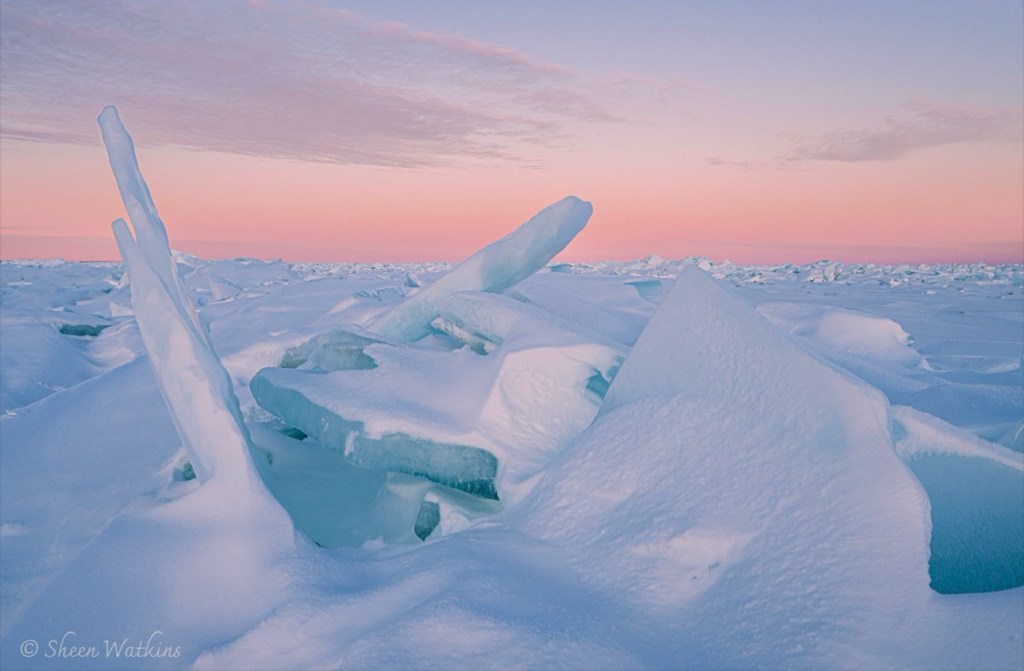
Sheen captured the crystal blue of the ice with a bit of pastel sky thrown in on the Straits of Mackinac over the weekend. Head over to her Facebook page for the latest including a tasty shot of the mighty Mackinac Bridge with the same sky & for sure check out her website for more work!
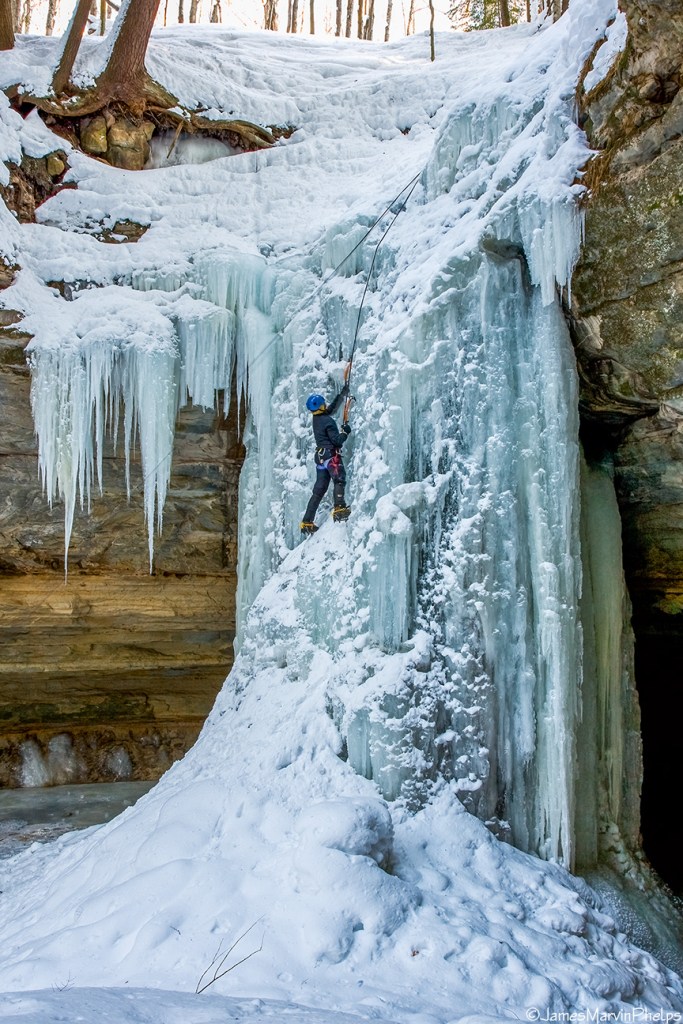
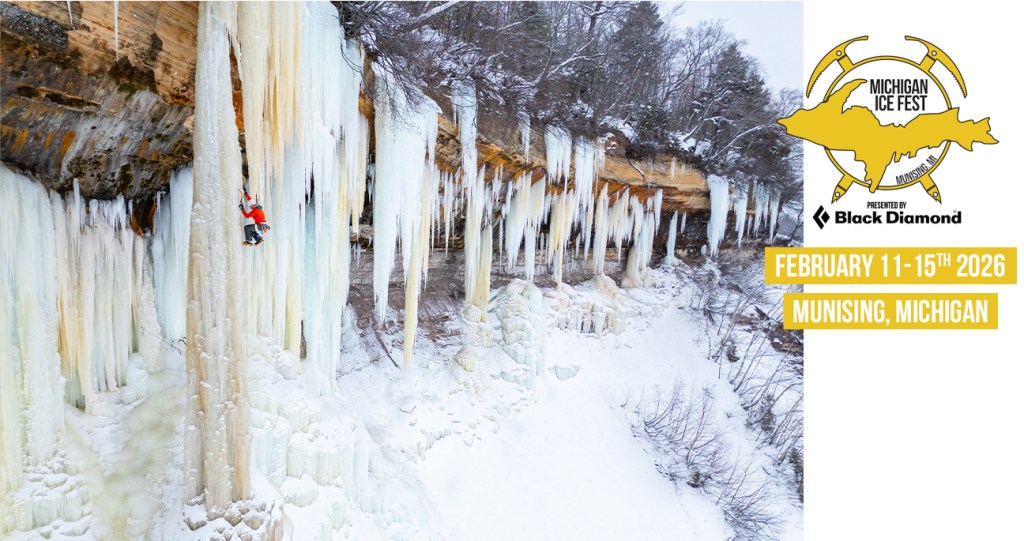
Michigan Ice Fest is an annual ice climbing event that kicks off today and runs February 11-15, 2026 in Munising in the Pictured Rocks National Lakeshore. The event is an annual celebration of the sport of ice climbing with competitions, clinics, and plenty of social fun! National Parks of Lake Superior Foundation has an interview with Michigan Ice Fest organizer Bill Thompson below that you should check out.
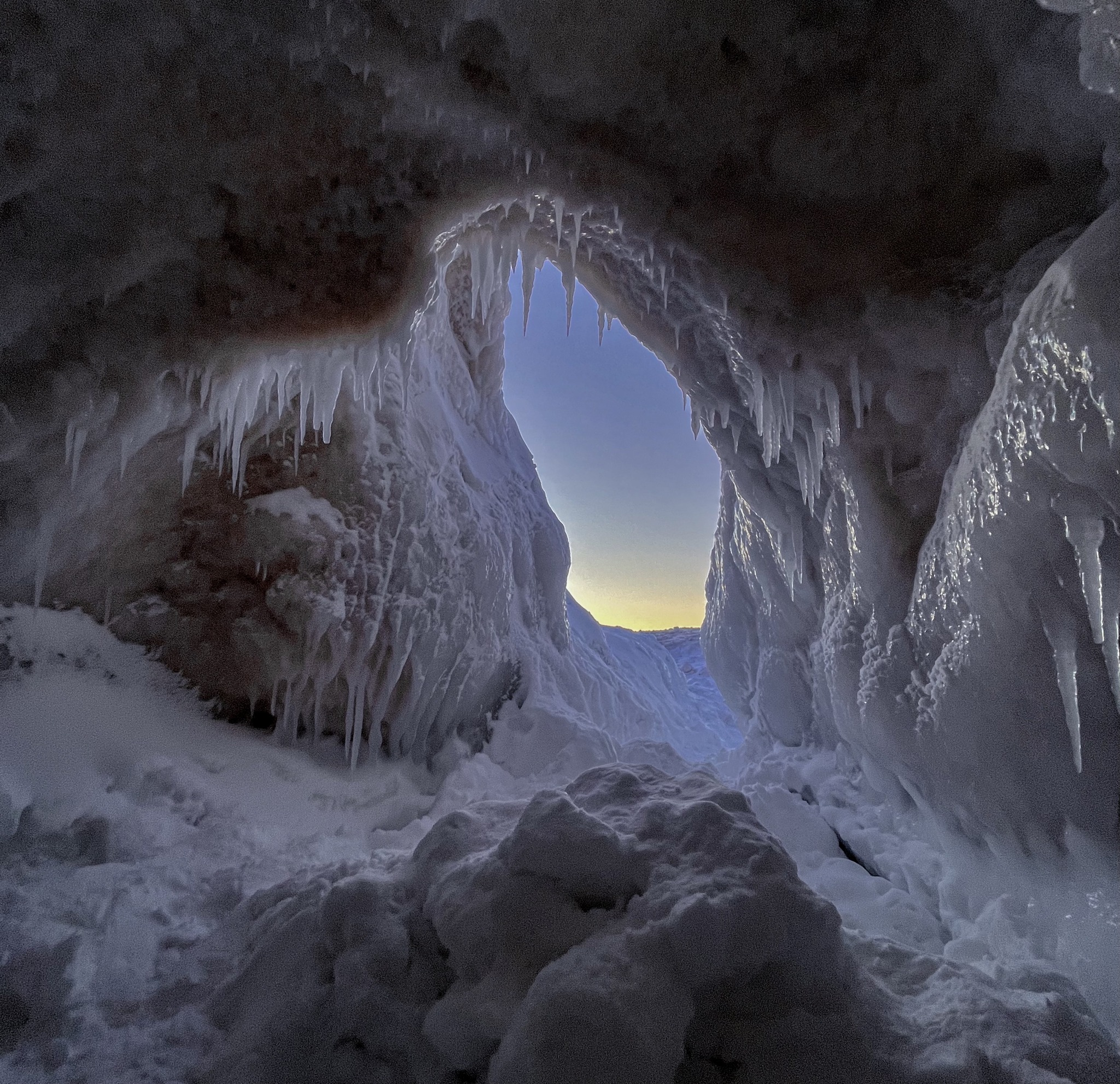
Robin shared these otherworldly shots of the ice caves on Empire Beach in the Sleeping Bear Dunes National Lakeshore earlier this week. Click the pics to see them bigger & follow her on Instagram for more!
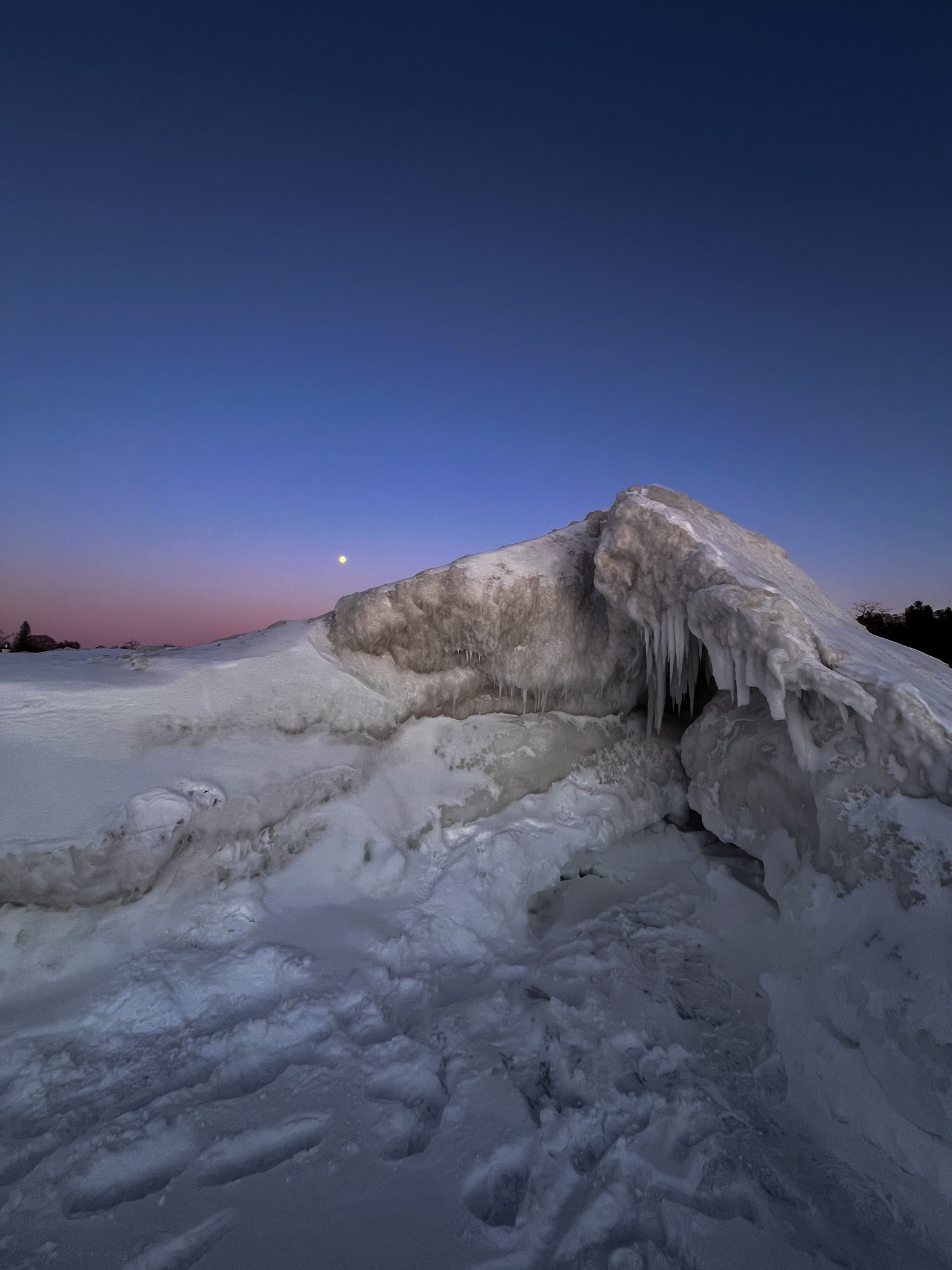
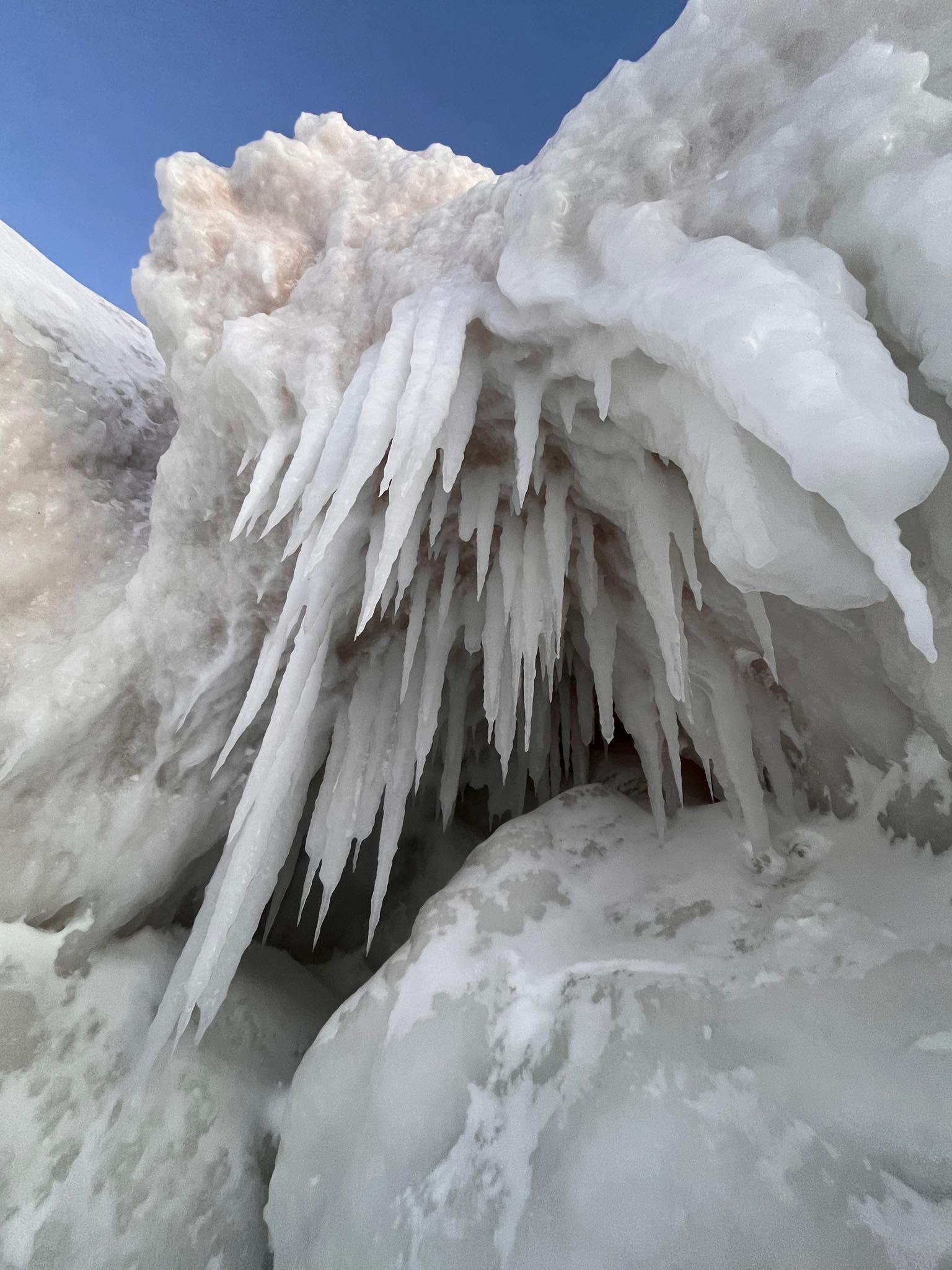
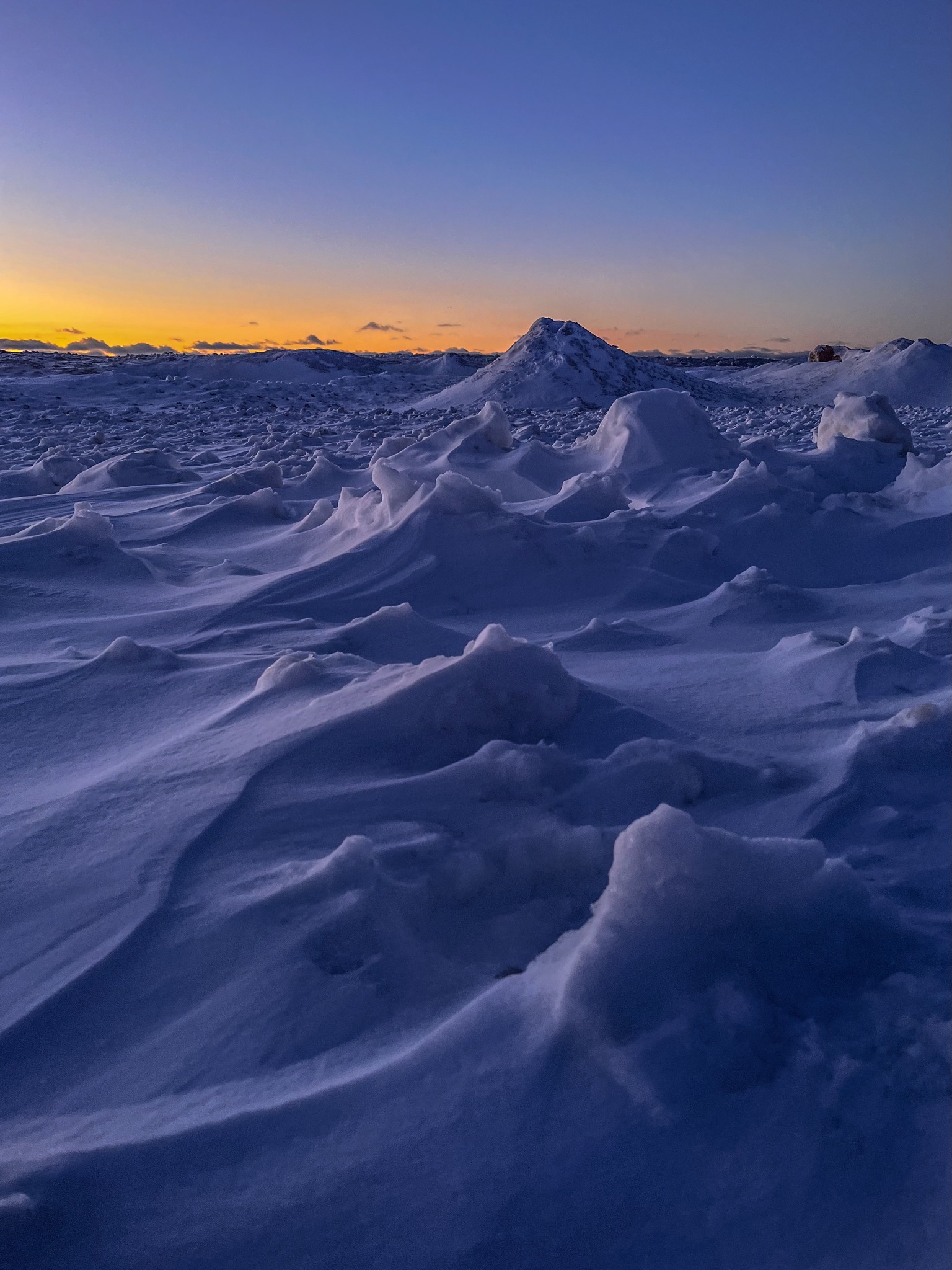
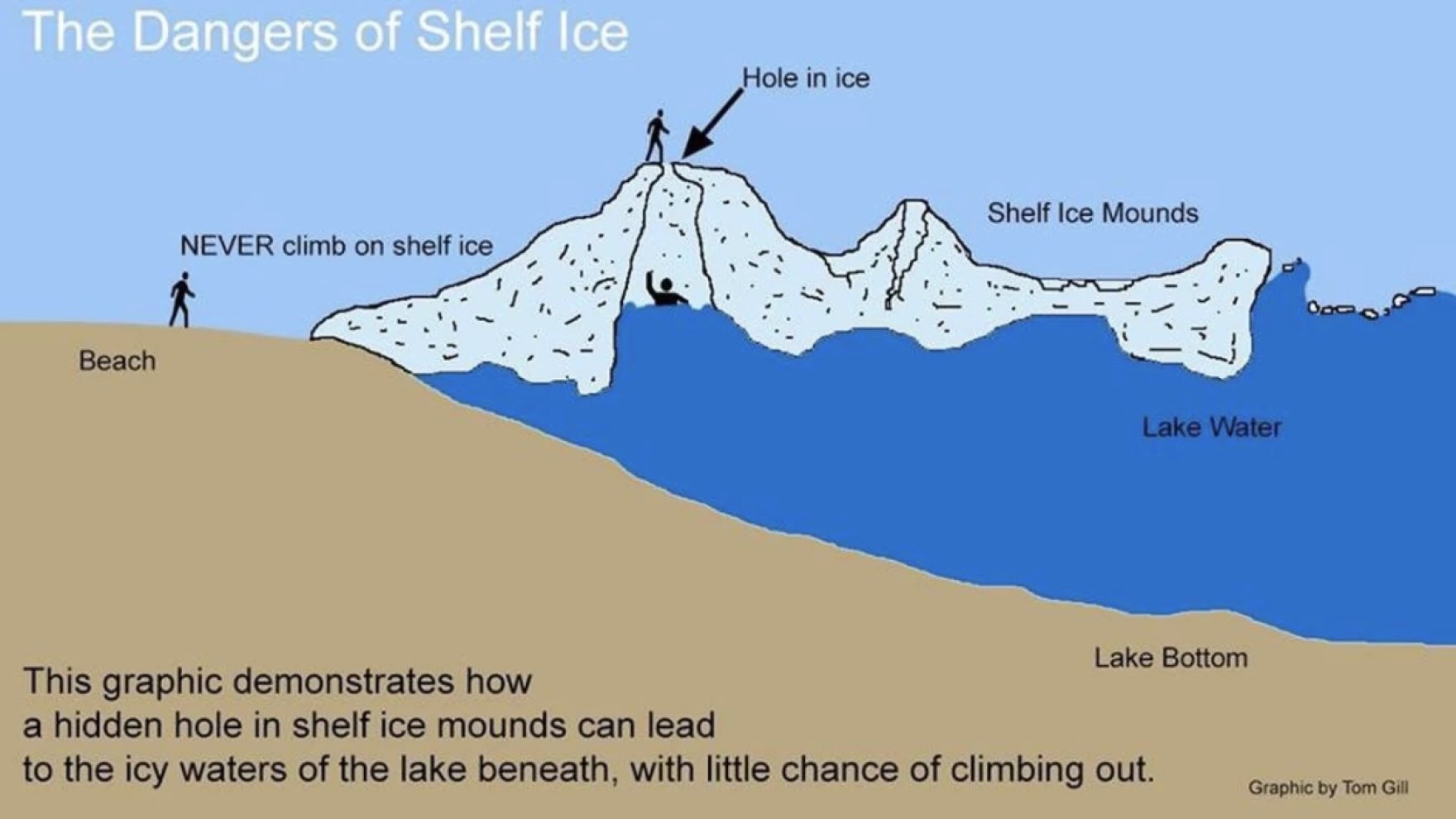
As with any time we share photos of ice caves, we need to caution you that you can 100% lose your life exploring ice caves. Be smart.
It can be dangerous because you might think you’re walking on solid ground, when actually you’re out over the water. Due to the layered nature of shelf ice, even if you’re out over four feet of water, if you were to fall through a thin spot in the ice, you could find yourself trapped in an ice cavern and even though you may not be fully submerged in the water, you’re unable to get out because the walls of the cavern are ice and impossible to climb.
“The most extensive and very nearly the most severe blizzard in Michigan history raged throughout Thursday January 26, 1978 and into part of Friday January 27. About 20 people died as a direct or indirect result of the storm, most due to heart attacks or traffic accidents. At least one person died of exposure in a stranded automobile. Many were hospitalized for exposure, mostly from homes that lost power and heat. About 100,000 cars were abandoned on Michigan highways, most of them in the southeast part of the state.” -National Weather Service Ann Arbor Meteorologist in Charge, C.R. Snider on January 30th, 1978
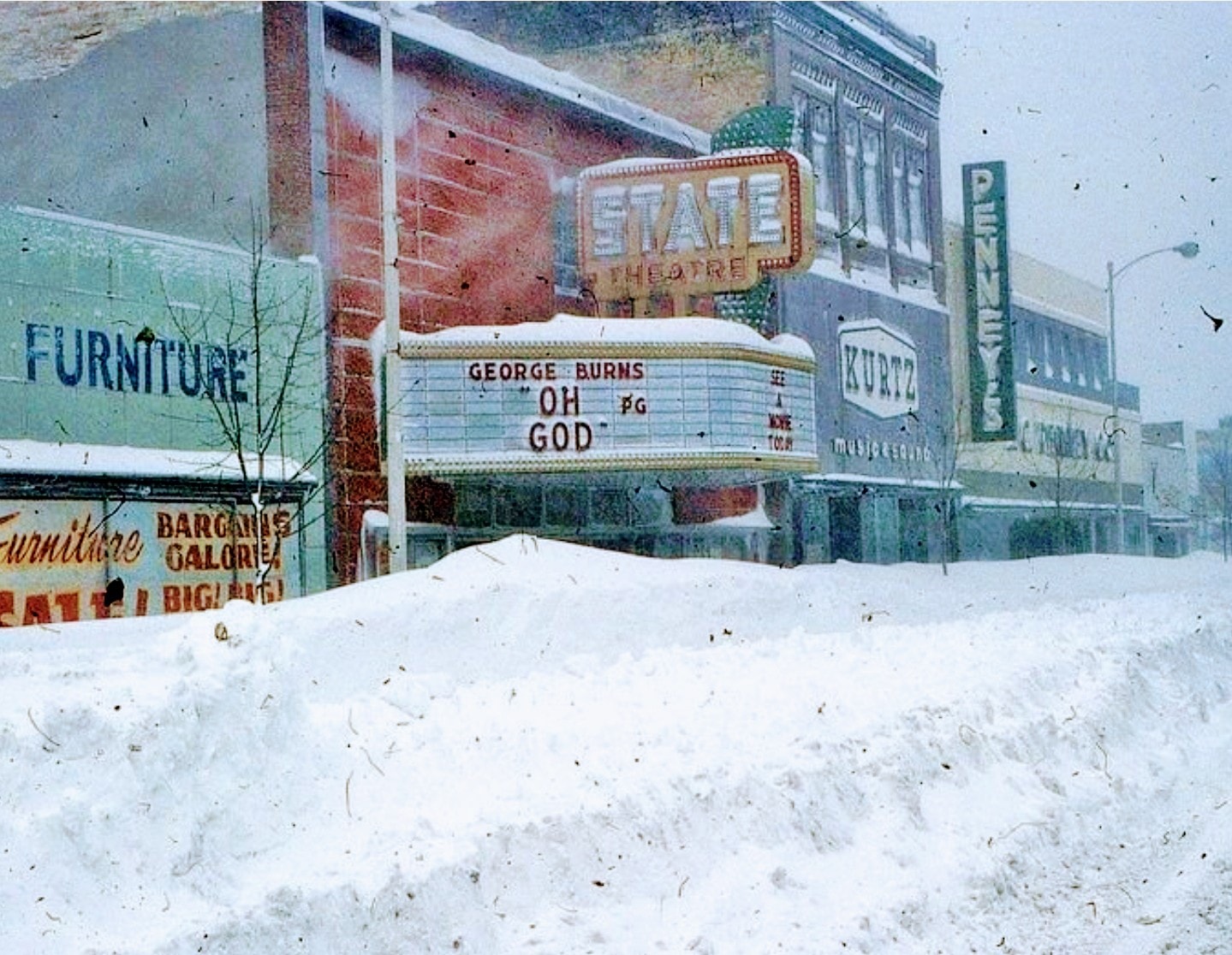
48 years ago one of the most powerful blizzards in Michigan history brought the state to a standstill. In her feature on historical Michigan snow days in the now defunct Seeking Michigan, Jessica Miller of the Archives of Michigan related:
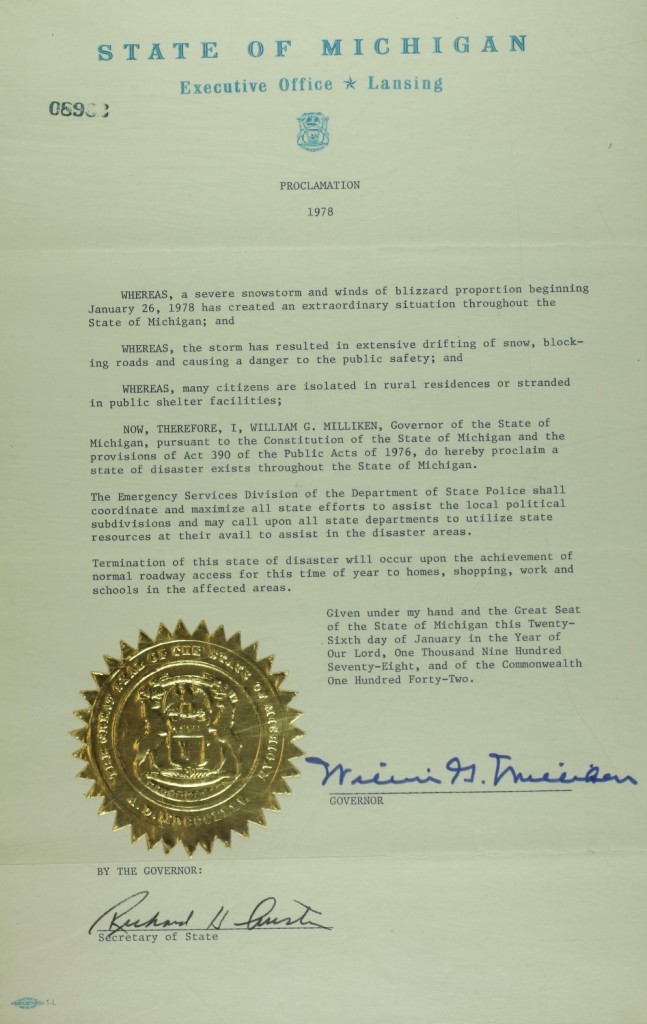
On January 26-27, 1978, snowstorms with fifty-to-seventy-mile per hour winds pummeled much of Michigan. Snowfall totals ranged from eighteen inches in Lansing to an incredible fifty-one inches in Traverse City. More than 100,000 cars were abandoned on roads and highways, and travel was impossible for days. Governor William G. Milliken declared a state of emergency on January 26 (See the image below.) and activated the National Guard to assist with the cleanup. The governor also requested financial assistance from the federal government and estimated damage totals to be more than $25 million, not including lost productivity from workers who were unable to get to their jobs.
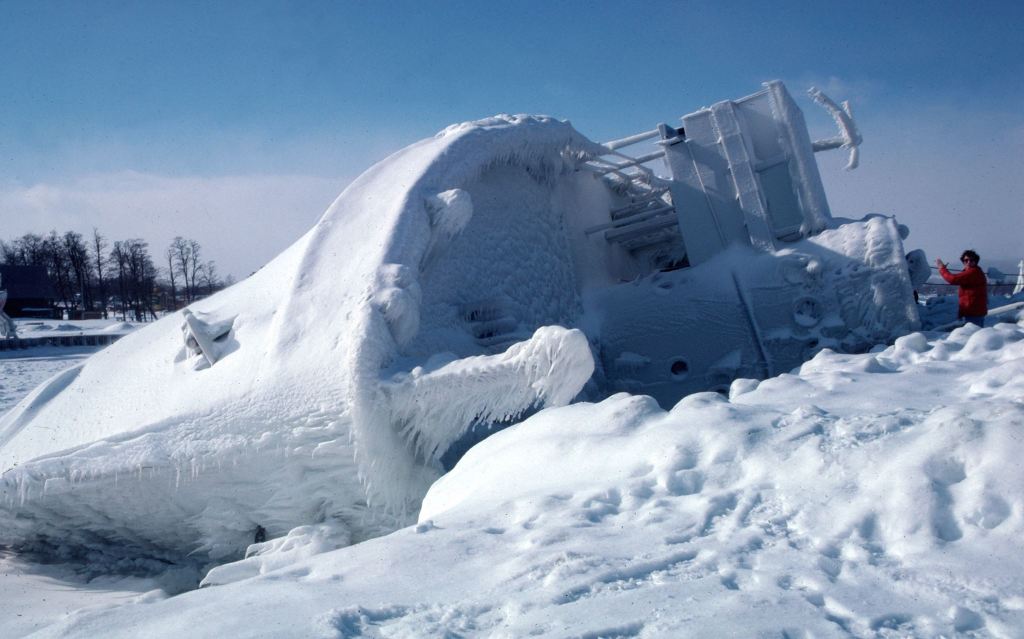
Regarding the photo, John wrote: Marty Lagina stands on the frozen pier at the Great Lakes Maritime Academy on January 29, 1978, viewing the capsized training vessel Allegheny, which capsized from ice buildup during the Blizzard of ’78. This image was on assignment for TIME magazine, who had seen my b&w image on the UPI wire and wanted a color image. Marty and I were lucky – the sky cleared and the wind stopped for about 20 minutes, then the storm began again. I wondered at the time who TIME knew to make that happen…
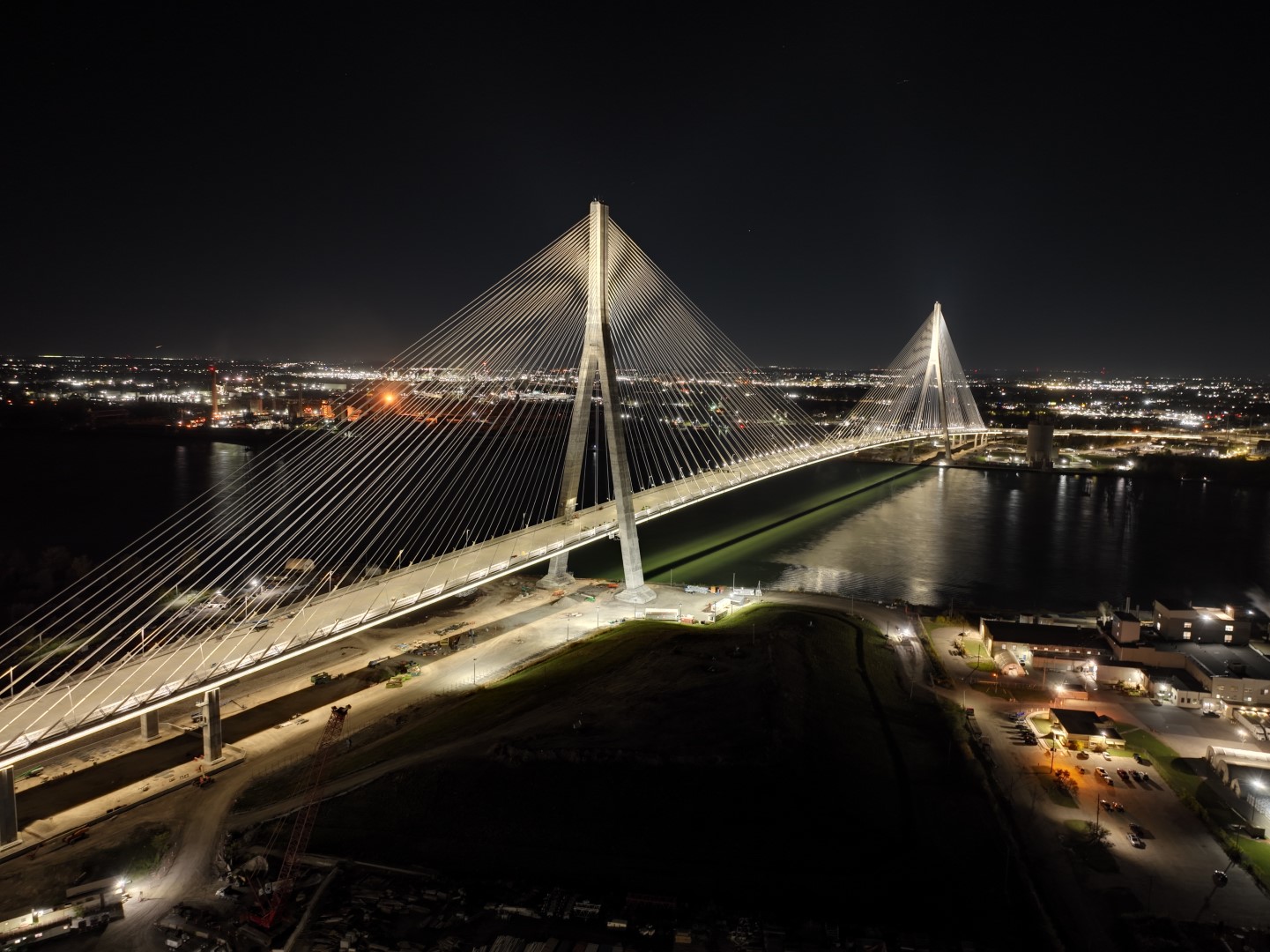
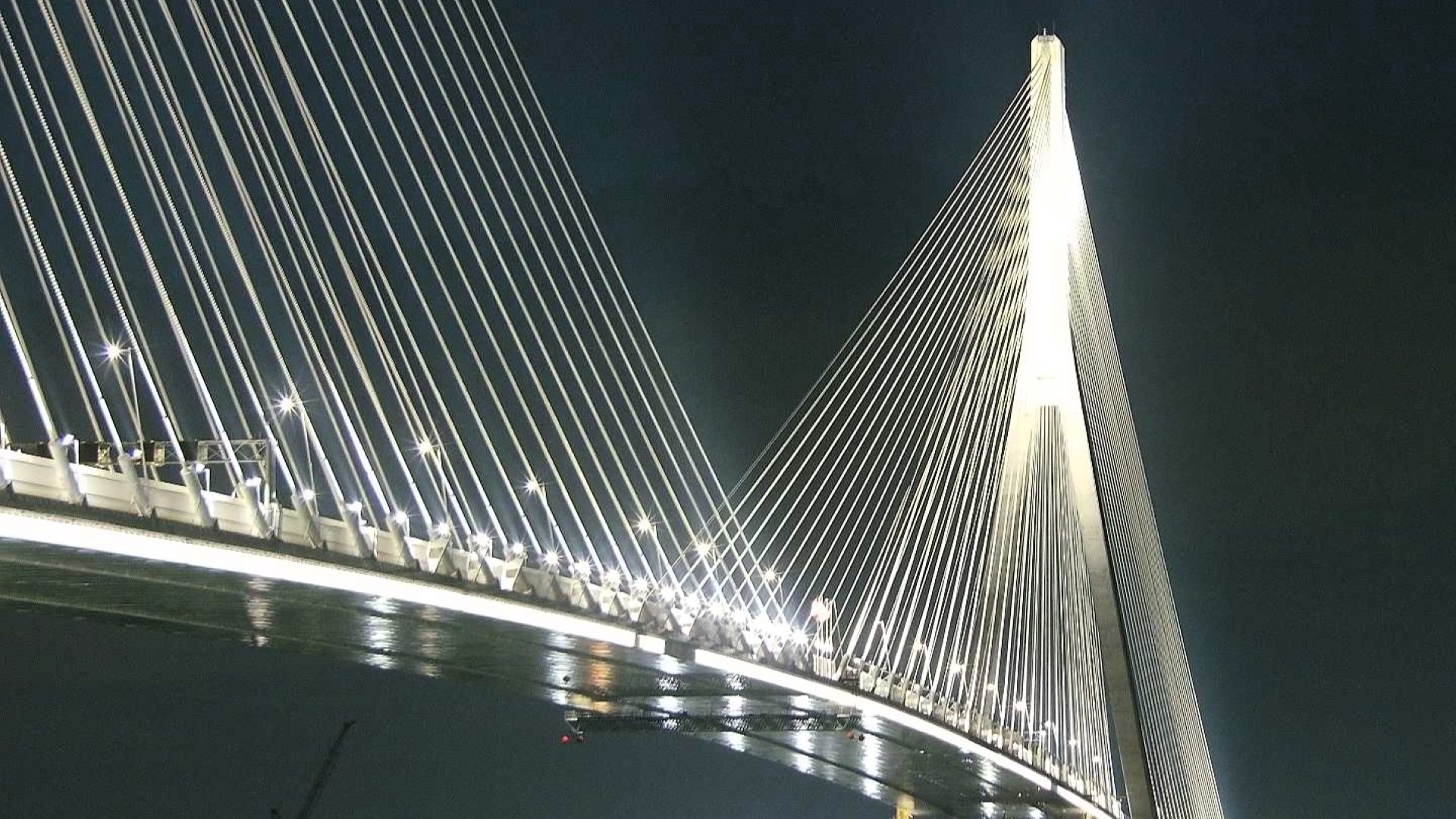
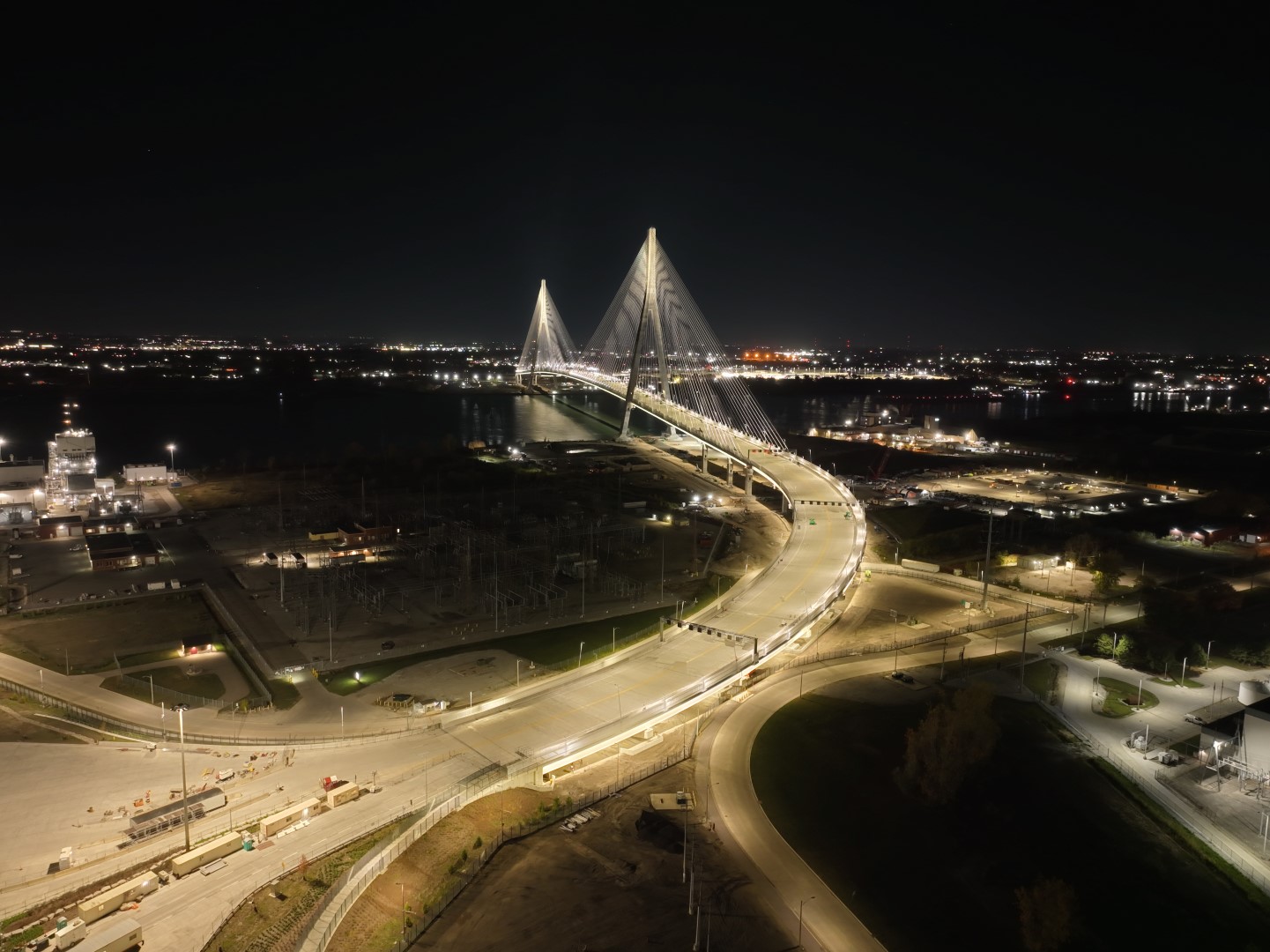
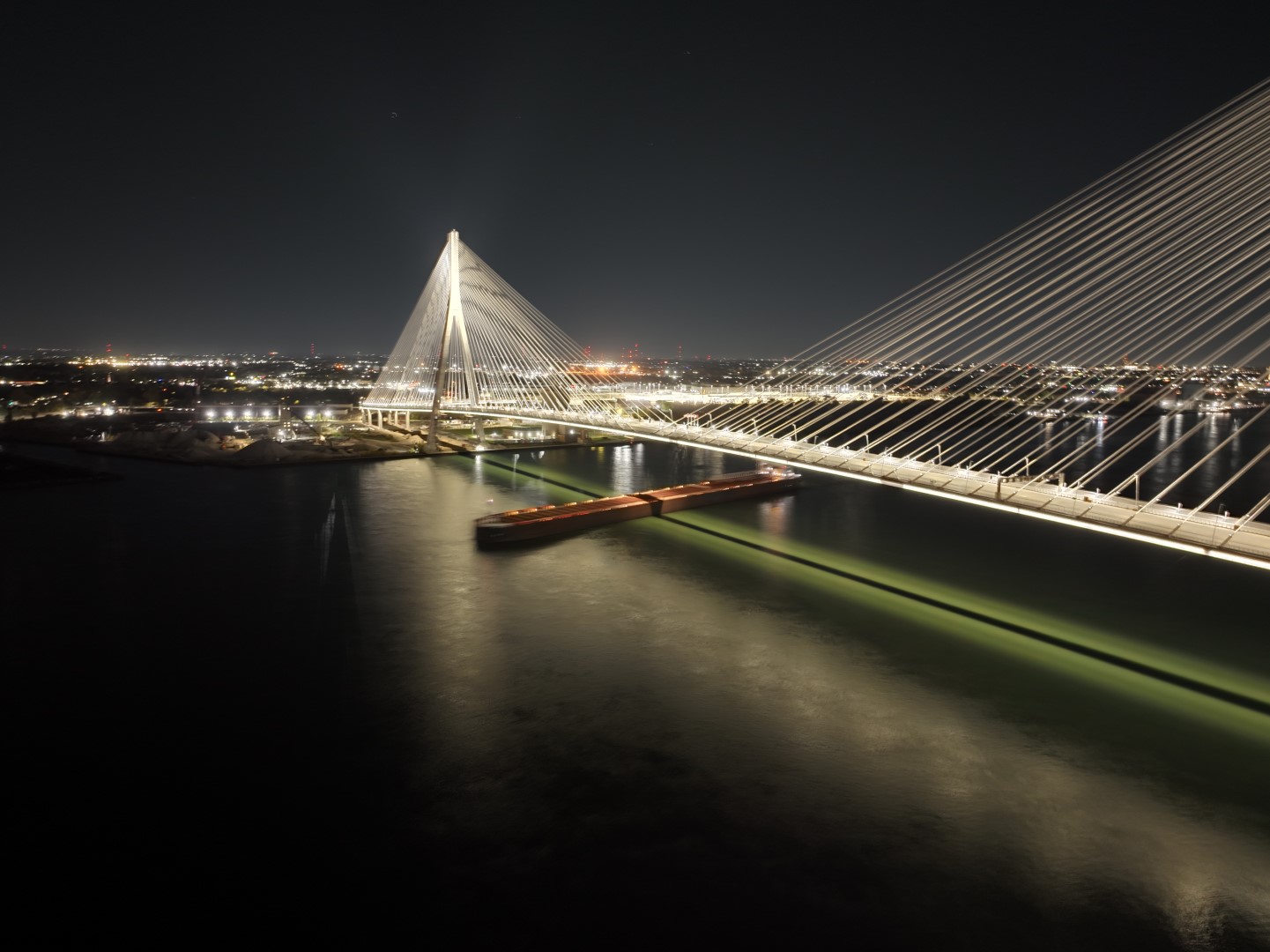
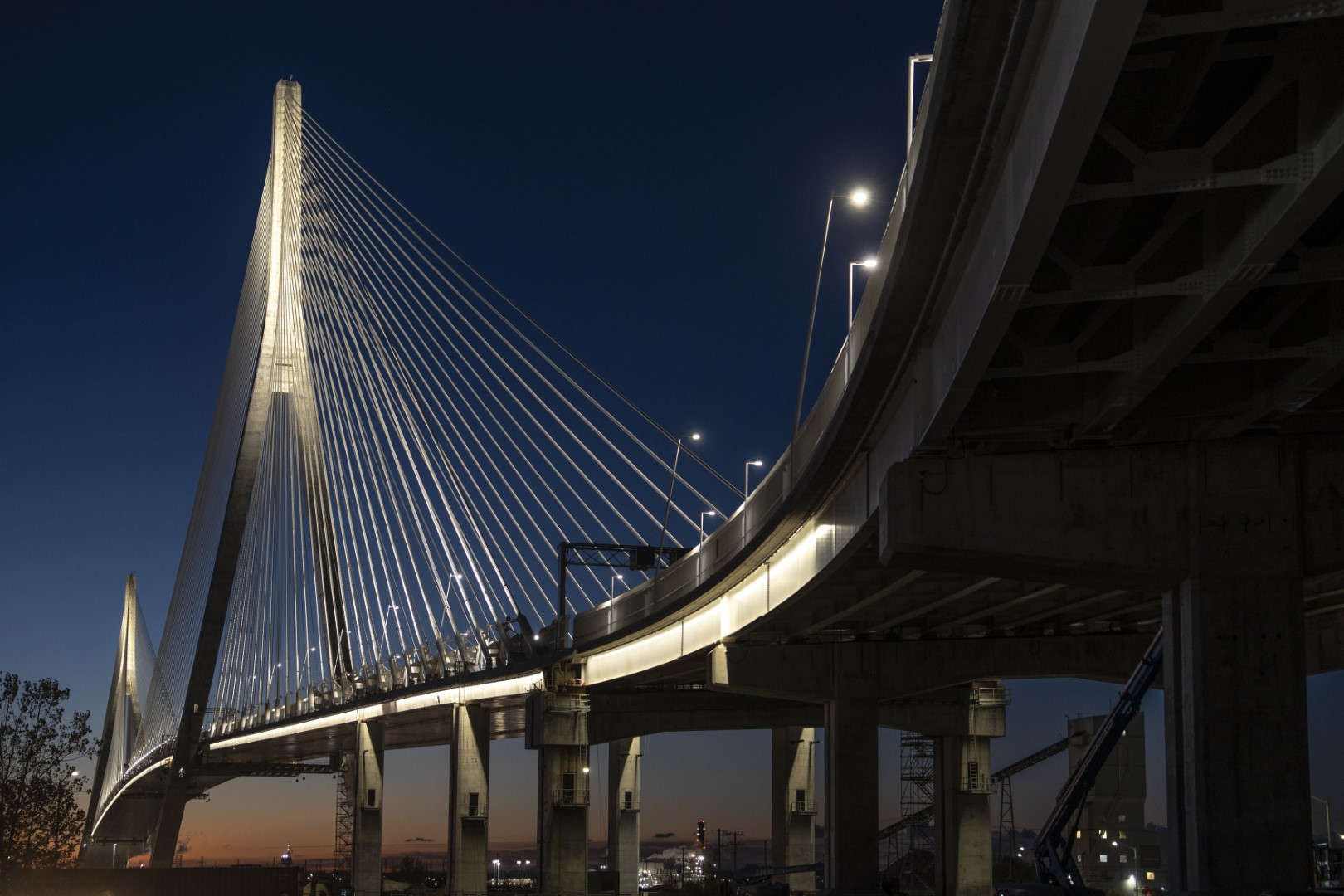
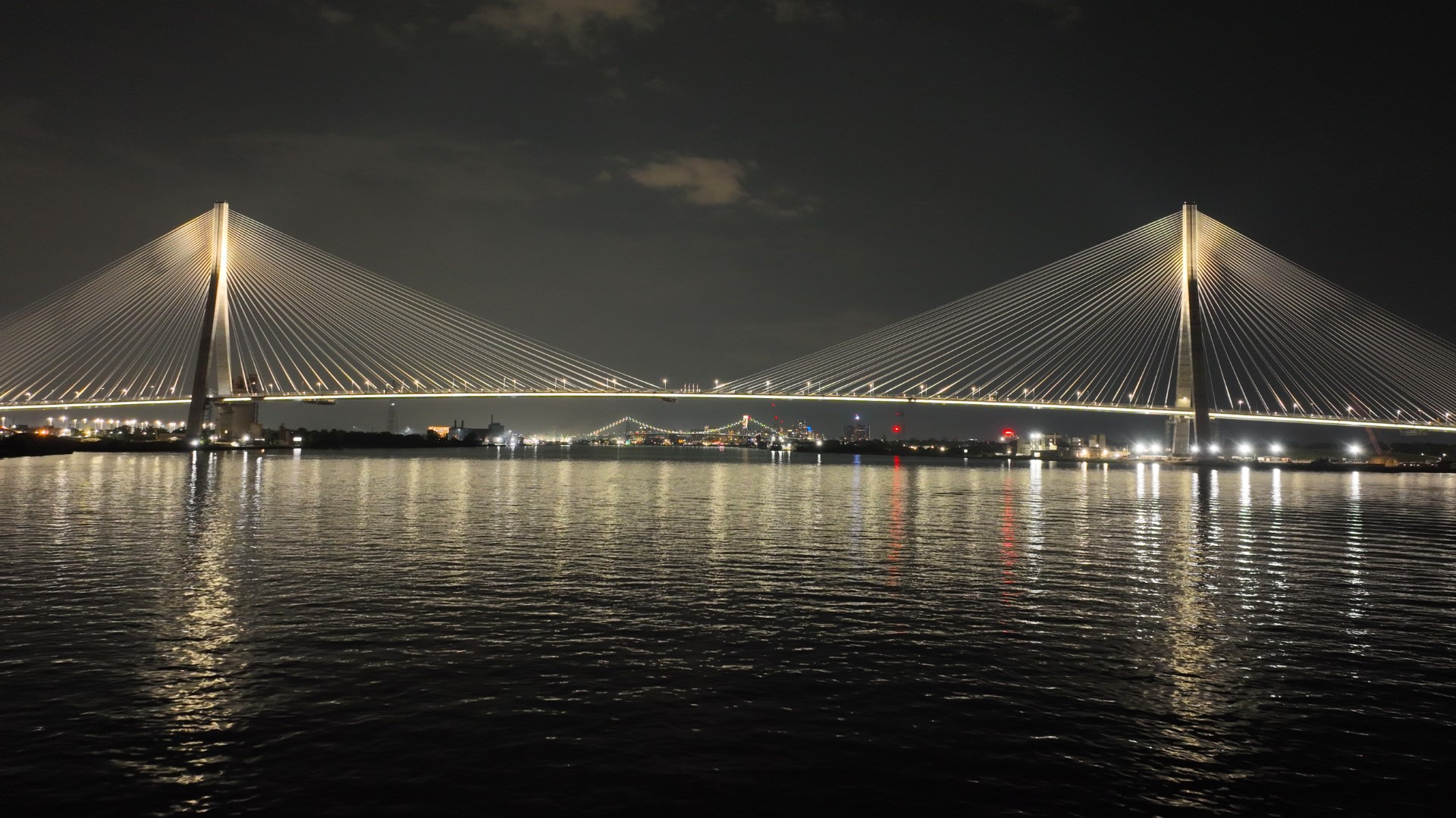
The Gordie Howe International Bridge shares an interesting article & video on their ongoing Aesthetic Lighting Testing than 6,000 programmable, energy-efficient white LED fixtures have been installed across the bridge towers, stay cables, back span, piers, approach span and bridge deck. Each fixture is designed to last more than 100,000 hours with linear lights having the longest lifespan lasting up to 280,000 hours (10 to 30 years!).
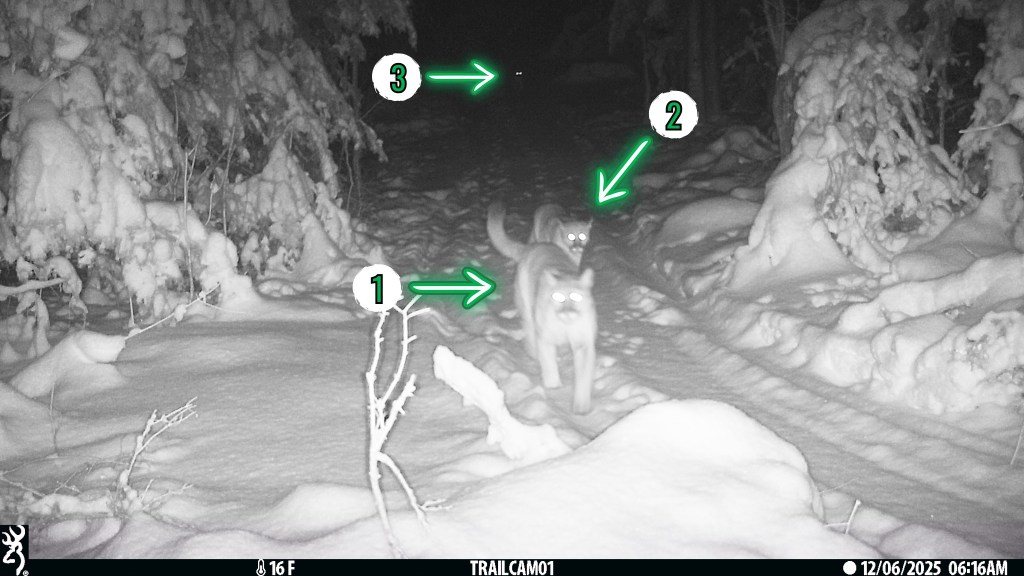
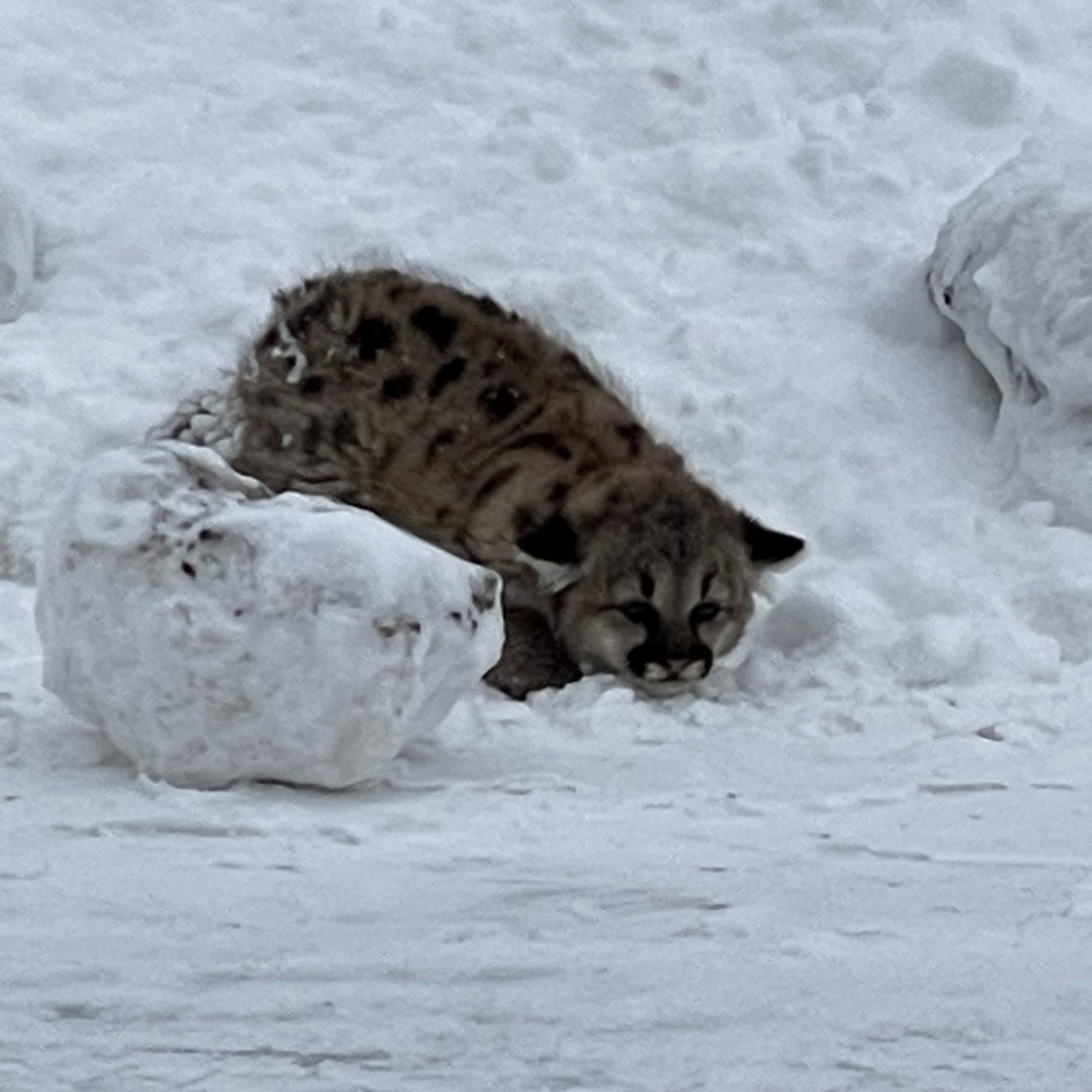
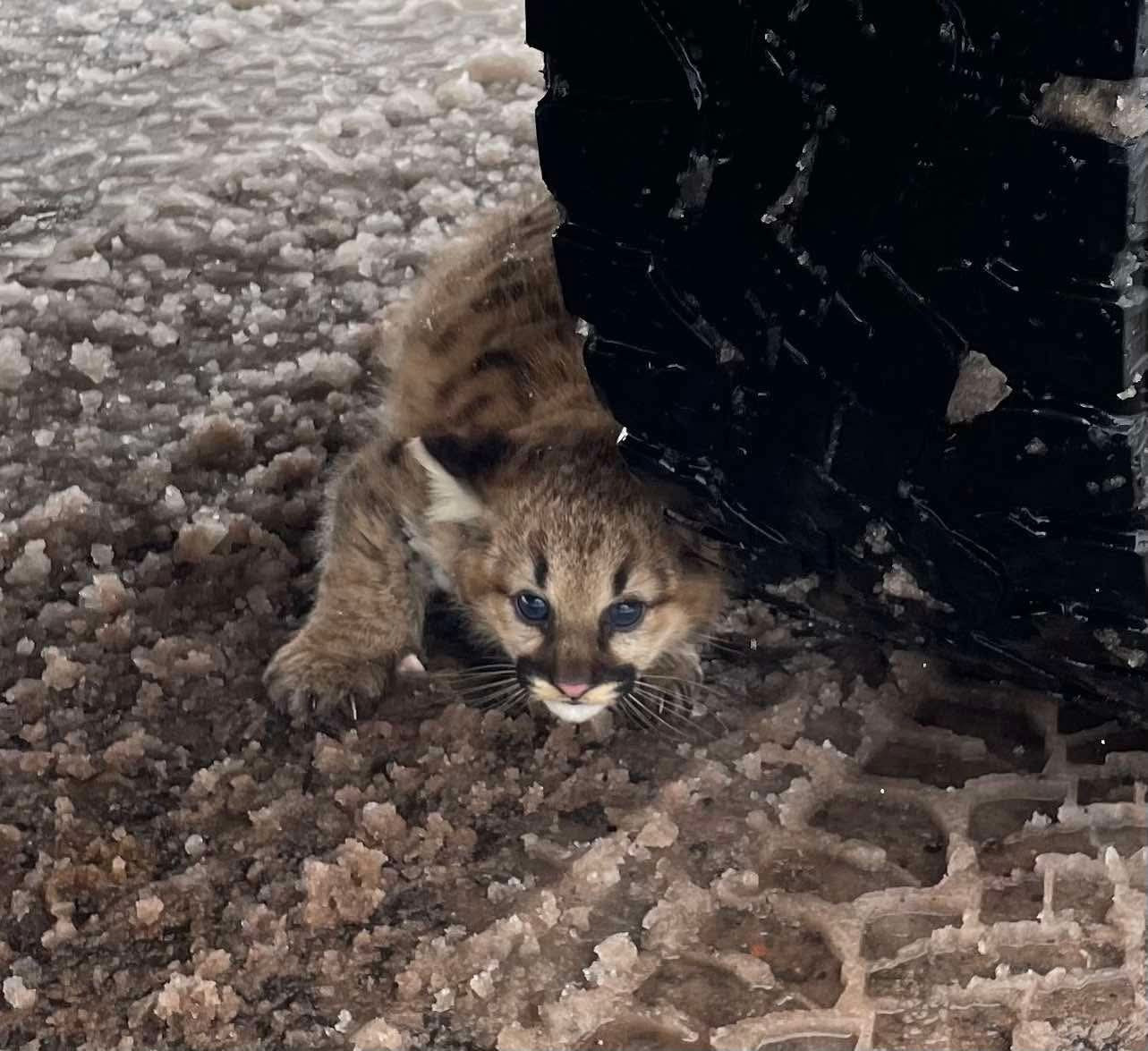
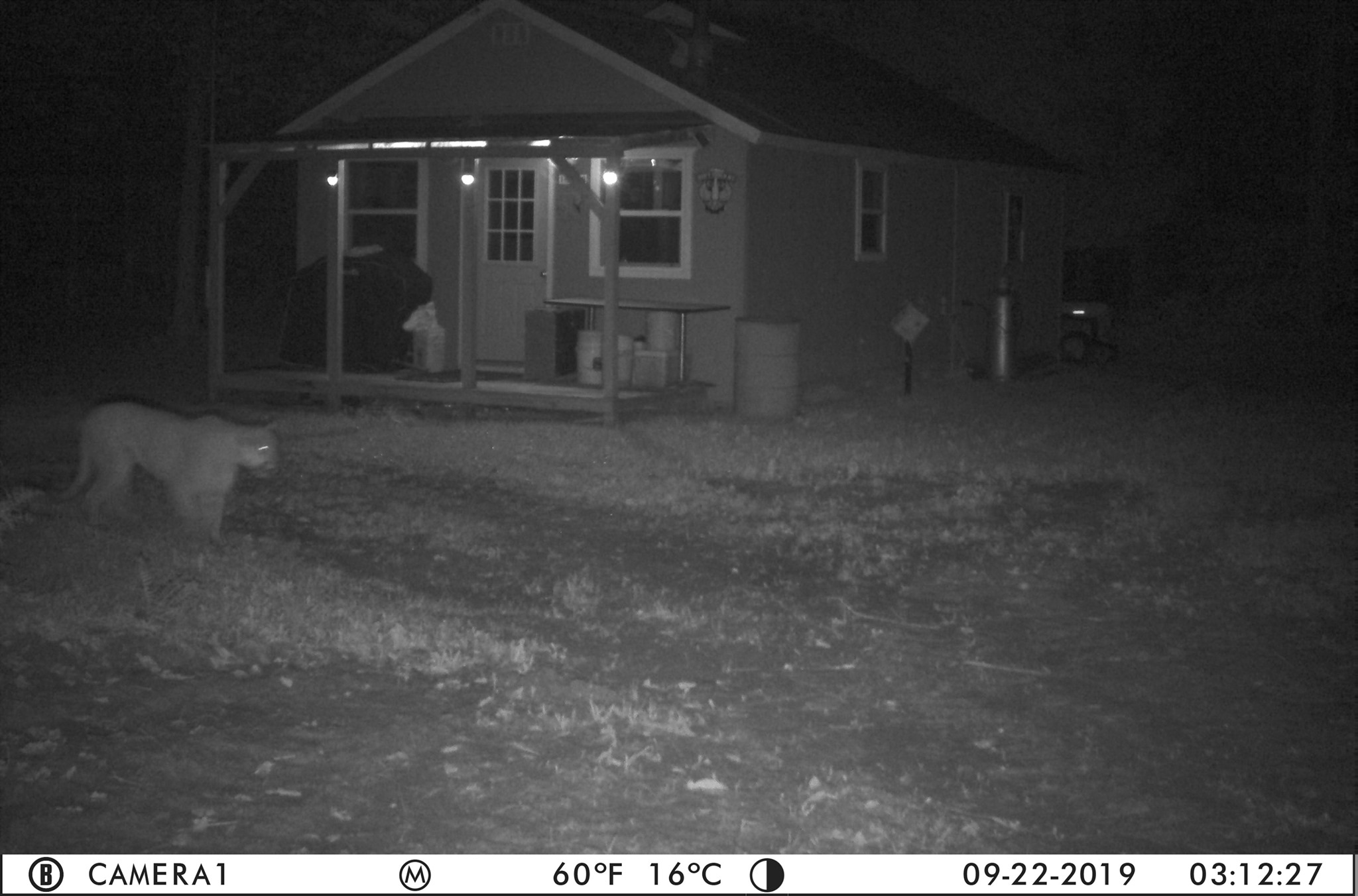
Nine months after two cougar kittens were documented in the Upper Peninsula, a new trail camera photo indicates the elusive animals are still alive and living with their mother.
…“This is a historic confirmation for Michigan since it is the first time in over 100 years that verified cougar reproduction has occurred east of the Mississippi River and possible even east of the Missouri River,” Roell said.
A private landowner sent the trail camera photo of the cougars to the DNR on Sunday, Dec. 14. Roell verified the site of the photo Monday and the DNR’s cougar team confirmed the photo Tuesday by enhancing the nighttime image to verify the existence of the three cougars. The sex of the kittens is unknown. Cougar kittens, or cubs, generally stay with their mother for about two years before venturing out on their own. “
The kittens’ chances of survival are actually pretty high because just like bears, cougars invest a lot of their energy into their young,” Roell said. “So these kittens will stay with their mom through this winter and possibly even into next winter. They already have a leg up, seeing as how they’ve been with her for a year now.”
Under perfect viewing conditions, the Geminids deliver up to 120 meteors per hour, though factors like light pollution and atmospheric conditions can reduce that number. But unlike most meteor showers, the Geminids don’t come from a comet. They’re created by debris from 3200 Phaethon, a strange asteroid that brightens and grows a faint tail, helping make this shower especially bright.
Most meteor showers occur when Earth passes through debris trails shed by orbiting comets— the bits of ice and dust burn up in our atmosphere, producing shooting stars. Conceptually, the same process creates the Geminids. But instead of passing through a comet’s tail, Earth passes through the trail of Phaethon 3200, which sheds larger, tougher, and rockier debris than comets.
“This material is larger on average and survives further into our atmosphere and tends to produce brighter meteors,” says Rubert Lunsford, the journal editor of the American Meteor Society. Phaethon 3200’s debris also contains more metal. “When these metals are heated during the passage through our atmosphere, they produce colors associated with each type of metal,” he adds. Calcium and silicon produce orange; iron and sodium produce yellow; nickel produces green; and magnesium produces blue.
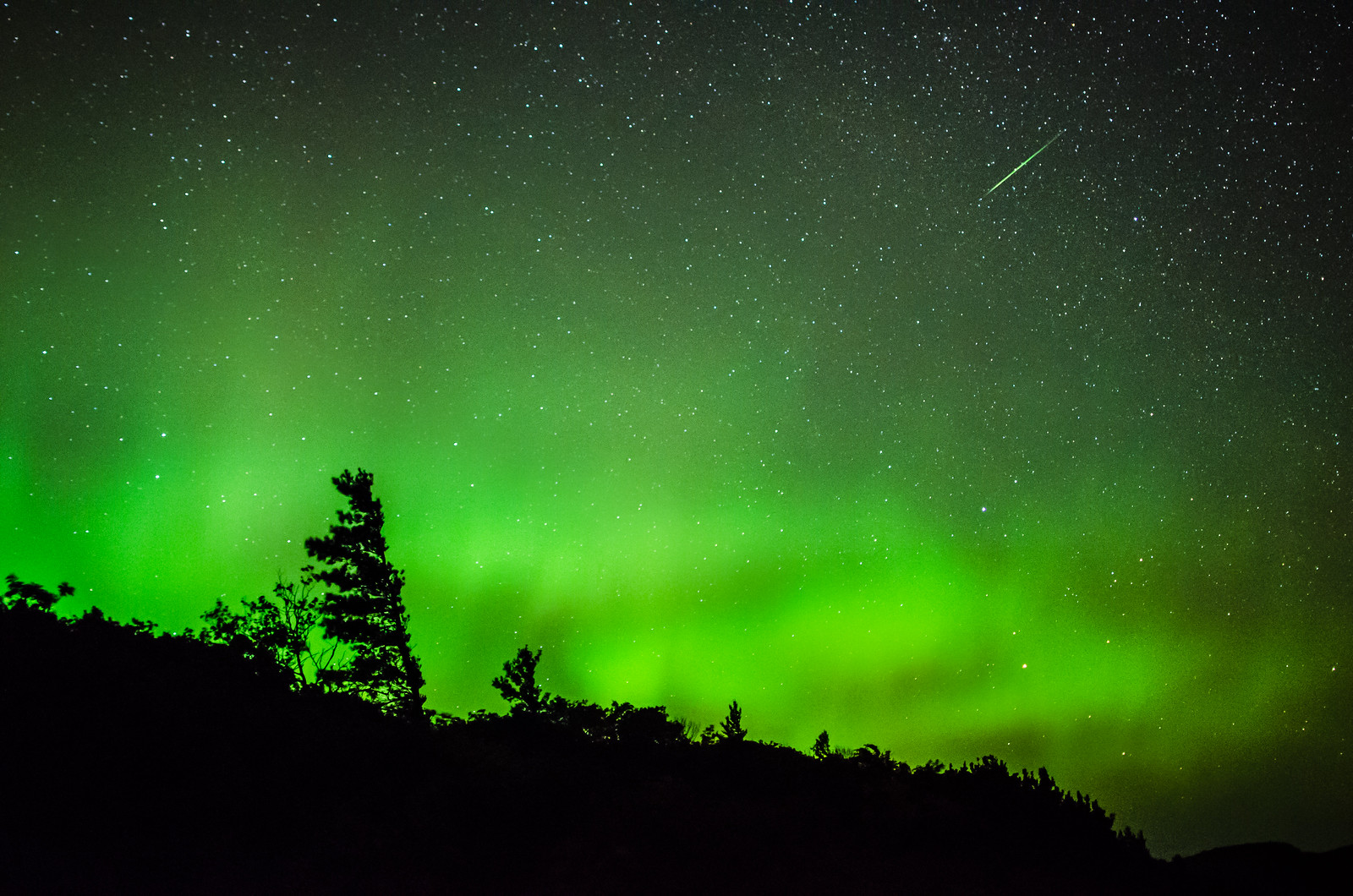
As an added bonus, we have a pretty active solar situation making bonus northern lights a definite possibility. Ross took this back in September of 2014 in the Porcupine Mountains backcountry. See many more amazing shows in his incredible Aurora gallery on Flickr.
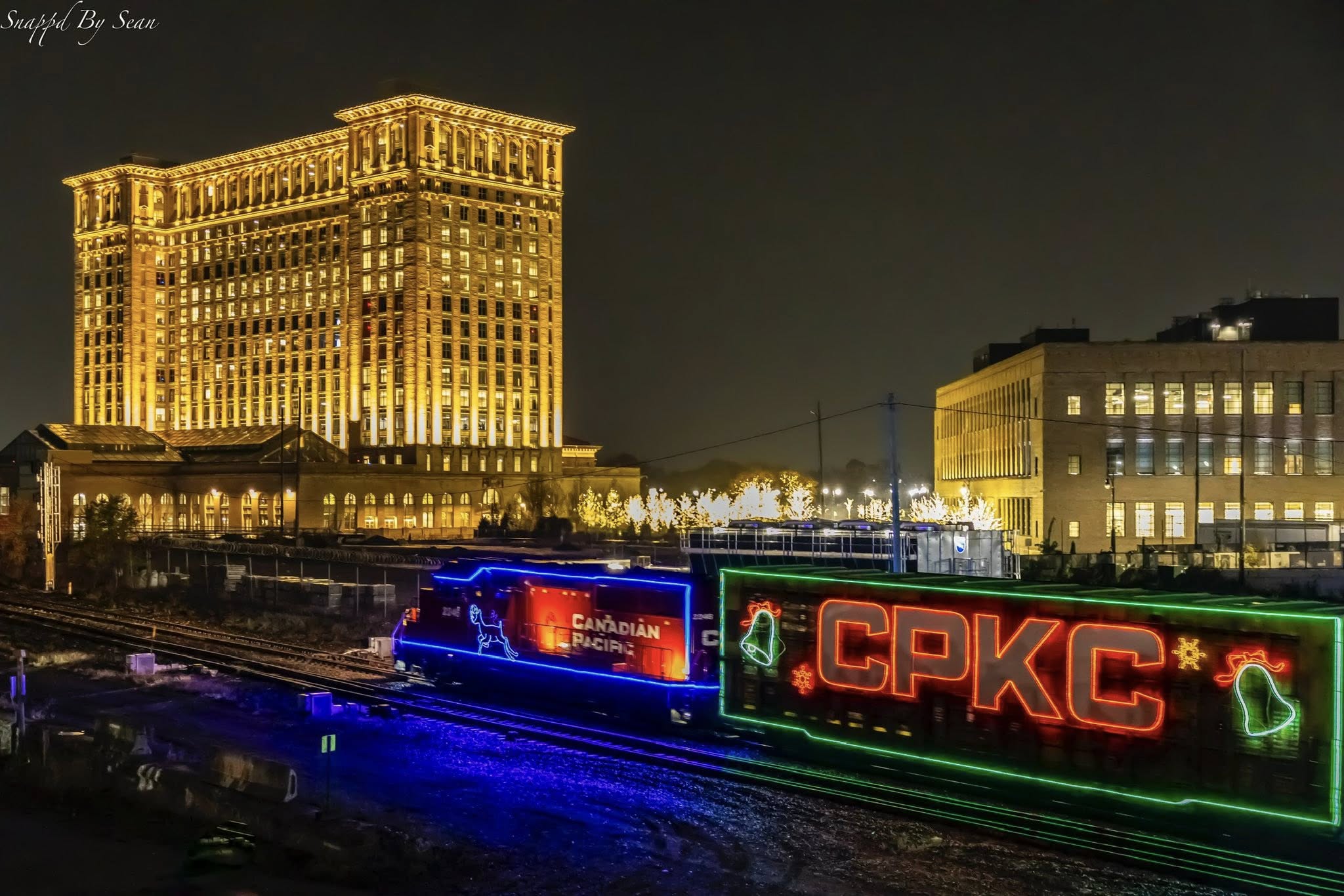
The 2025 CPKC Holiday Train will tour Canada and the United States November 19 through December 21st raising money, food and awareness to support food banks across their rail network. Professional musicians play free concerts from the brightly decorated train’s stage, and CPKC donates to the local food bank at each stop and encourages all attendees to make a monetary or heart-healthy food donation! Since its inaugural journey in 1999, the CPKC Holiday Train has raised more than $26 million and collected approximately 5.4 million pounds of food for community food banks in Canada and the U.S.
Sean shares that he got these shots from near Detroit’s Michigan Central Station last year – click the pic above for more photos! He recommends it as a really good spot, especially if you can make it there before the crowds. You can see lots more if Sean’s work on his Facebook, where you can also subscribe for exclusive content including live videos.
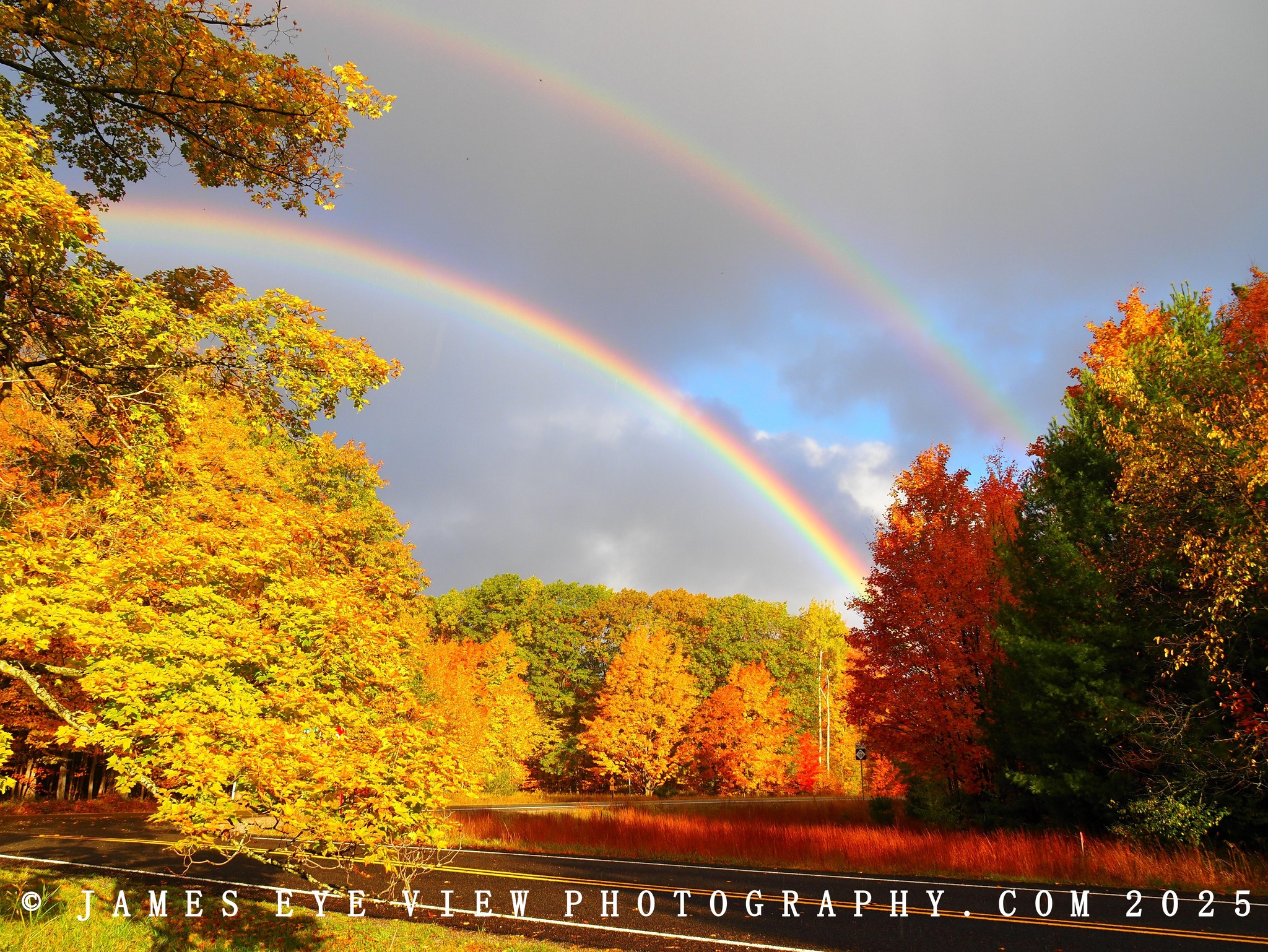
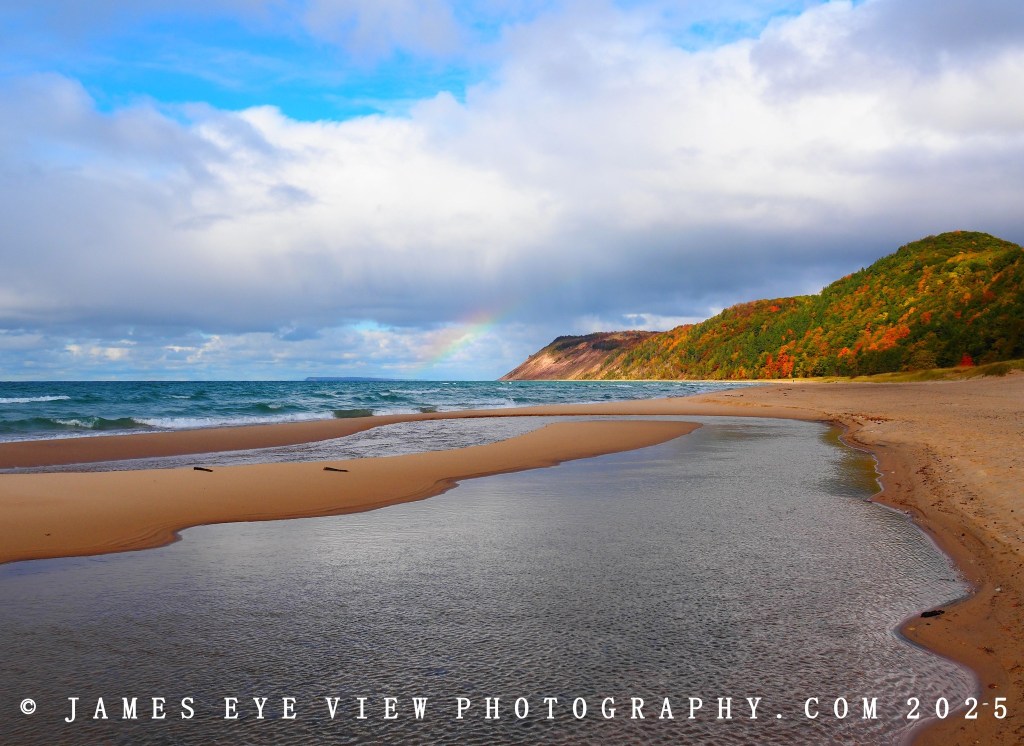
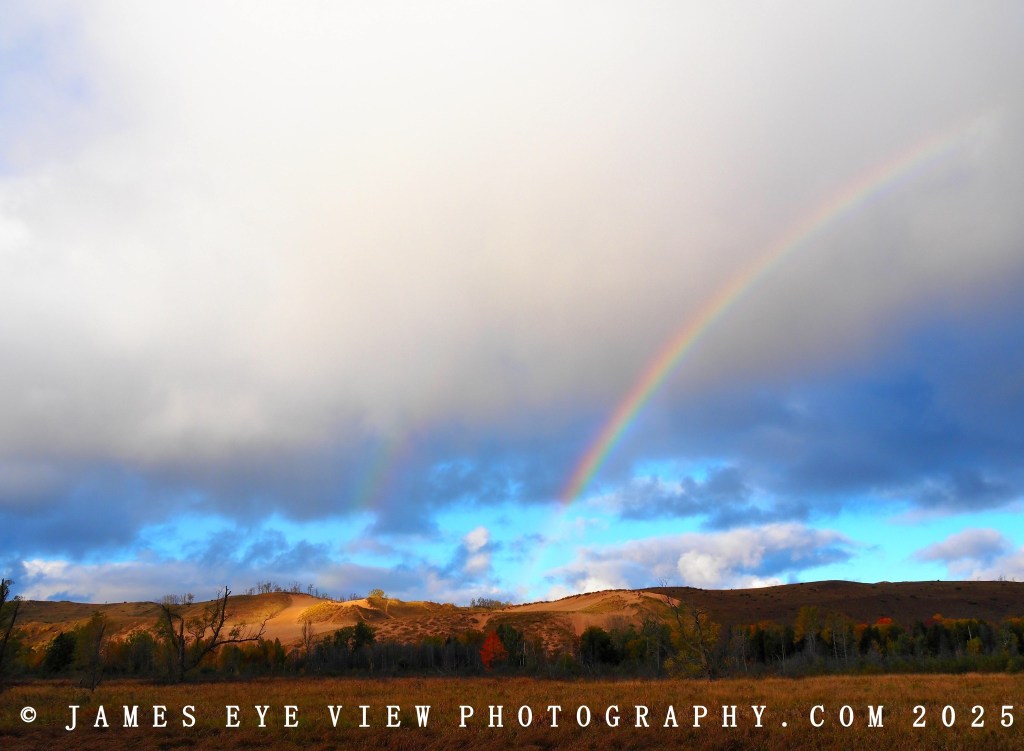
To have rainbows, we need rain and sun at the same time. What weather pattern is classic for rain and sun at the same time? The current lake-effect rain shower situation is perfect for rainbows. The rain showers are small, maybe only five miles wide. There is a lot of clear sky around the rain showers.
…So we know why we have had and currently have a lot of rainbows in Michigan in the past few days- the spotty lake-effect showers combined with sunshine. But why have there been numerous double rainbows? It has to do with the angle of the sun, combined with the daily weather pattern.
For a double rainbow, the sun has to be fairly low on the horizon, lower than 40 degrees above the horizon. It just so happens the lake-effect showers reach their peak intensity and coverage during the late afternoon heating of the day, when the sun is low on the horizon.



 Michigan in Pictures