The Grand Traverse Lighthouse

The Grand Traverse Lighthouse [2/2]

The Grand Traverse Lighthouse [2/2], photo by jimflix!.

The Grand Traverse Lighthouse is located at the tip of the Leelanau Peninsula in Leelanau State Park. If you have a lighthouse buff on your holiday list, you might consider a volunteer lightkeeper position in winter or summer at the light.

Construction of the Lighthouse was approved in 1849 at the northern tip of the Leelanau Peninsula at Cathead Point, the northern point of the important Manitou Passage and Grand Traverse Bay.

The Grand Traverse Lighthouse page from Terry Pepper’s Seeing the Light notes that – as was often the case with lighthouses constructed under the “fiscally tight-fisted Pleasonton administration” – work was shoddy and:

The old tower and dwelling were demolished in 1858, and a work on a new structure began on higher ground on the point. Over that summer a dirt-floored cellar with rubble stone walls was excavated and a two-story Cream City Brick keepers dwelling took shape. A short square wooden tower with white painted clapboard siding was integrally mounted at the center of the roof ridge, and both floors contained four rooms, with a centrally located entryway with stairs connecting the two floors. A narrower second set of stairs on the second floor led through the attic into the tower. The building featured first-class construction, with hardwood floors throughout and varnished wooden trim and wainscoting.

Atop the tower, a cast iron lantern with copper sheathed roof contained a new fixed white Fifth Order Fresnel lens illuminated with a sperm oil fueled lamp. With its ventilator ball standing 48 feet above the structure’s foundation, the building’s location on high ground provided a focal plane of 103 feet, and a range of visibility of 12 miles in clear weather.

Read on for much more and some historic photos. You can see more old photos of the Grand Traverse Light in the Lighthouse collection at the Michigan Arvchives.

Check this out background big and in Jim’s Lighthouses slideshow.

There’s a whole bunch more Michigan lighthouses at Michigan in Pictures!

Get Ready for a Cold Winter, Michigan

Untitled

Untitled, photo by Anapko.

“Harsh, brutal, snowy and cold. What other adjectives can I use?”
~AccuWeather.com meteorologist Henry Margusity

I’ve been sitting on this Detroit News feature that says Old Man Winter will pack a wallop in Michigan this year. The Farmers Almanac winter outlook for the upper Midwest says:

Winter will be colder than normal, especially in February. Other cold periods will occur in mid- and late December and mid- and late January. Precipitation and snowfall will be below normal in the east and above normal in the west. The snowiest periods will be in early and mid-December, early to mid-February, and mid-March.

Get your computer background ready for the season with Michigan Winter Wallpaper from Michigan in Pictures!

Check this out background big and in Anapko’s Ice Storm 2011 slideshow.

Eastern Black Walnut and Thousand Cankers Disease

Walnut Tree, Looking Up (Michigan)

Walnut Tree, Looking Up (Michigan), photo by Philosopher Queen.

Just a little Editor’s note rant to say that I grew up with a simply gorgeous black walnut tree in my yard, and it really upsets me when I have to write about yet another species that I love under threat of destruction by our out-of-control ecology. Some days it feels like all we’ll have left is squirrels, asian carp, emerald ash borers and kudzu. Also, sorry this is so long … I just kept learning stuff.

The Great Lakes Echo has a feature on Thousand Cankers Disease that attacks black walnut trees. The disease is caused by the walnut twig beetle and a newly identified fungus, geosmithia morbida, that act together to destroy walnut trees and is especially deadly to eastern black walnut. Both beetle and fungus prefer warm weather, and the theory is that it could be spreading north because of temperature. It has already been found in Pennsylvania, and Michigan and other states have a quarantine. (we know how well that worked for ash trees though)

Wikipedia’s entry for Juglans nigra aka Eastern Black walnut says that black walnut is a deciduous, flowering tree in the hickory family that is native to eastern North America. It can reach heights over 100 feet, growing tall and straight in the forest or spreading with a large crown in the open. The history of black walnut at the Walnut Council says that:

The tree once grew abundantly in the eastern bottomland forests, where the soil was deep and rich. Trees 150 feet tall with 50-foot clear stems and 6-foot diameters were not uncommon. Black walnut was the number one prized fine hardwood in America at a time before the use of veneers. Early colonists exported the wood to England from Virginia as early as 1610. Solid walnut wood was used in every sort of homemade furniture imaginable, during the Colonial and Federal periods, but rarely was the fine grain appreciated. Most pieces were covered with a coat of paint. The rage for walnut as a fine furniture wood occurred in a period from 1830-1860, during the popularity of the Empire, Victorian, and Revival styles. Unfortunately by this time, black walnut wood was already becoming scarce.

During pioneer times in the Midwest states, black walnut was still very abundant, although the extremely large trees were already gone. The tree was often cut for rudimentary things as split rail fences. Millions of railroad ties were made from walnut, since it resisted rot when in contact with the soil…

Black walnut never faltered in its use as gunstock material. It is unsurpassed, since no other wood has less jar or recoil, it doesn’t warp, shrink or splinter, and it is light in proportion to its strength. The smooth, satiny surface makes it easy to handle. The U.S. Government used black walnut gunstocks for generations and it is still the favored wood for shotguns and rifles used by hunters and sportsmen.

In a 1993 Michigan forest inventory, it was estimated that there are about 8.5 million walnut trees in Michigan’s forests. Mike has a nice detail of walnuts on the tree, Julie has a cool shot of a cardinal in a walnut tree, and you can see a gorgeous photo of a walnut tree in France on Wikipedia that really shows the spread of the tree and is big enough to make a great background! There are also some photos and drawings in the USDA Plant Profile for black walnut. If you have a wheelbarrow full of walnuts, you might want to read about growing & harvesting walnuts or watch this video. And finally, if you’re looking to plant some walnut trees, click that link!

View Cynthia’s photo on black and in her Trees slideshow.

Brighter Days Ahead

Brighter Days Ahead

Brighter Days Ahead, photo by Kim.Kozlowski.

Great sentiment, great photo. Learn about the Renaissance Center on Michigan in Pictures.

Check it out bigger and in Kim’s Detroit Slideshow.

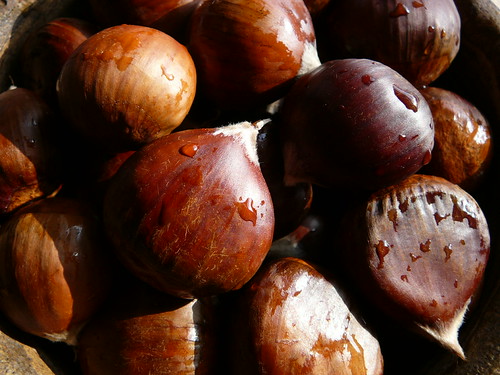
That old chestnut: American Chestnuts in Michigan

Beautiful Chestnuts

Beautiful Chestnuts, photo by jpwbee.

Happy Thanksgiving everyone!

Wikipedia’s entry for the American Chestnut (Castanea dentata) explains that this large, deciduous tree of the beech family was once one of the eastern United States dominant hardwoods before it was nearly wiped out by chestnut blight. Curiously enough, one of the few pockets to survive were some 600 to 800 large trees in northern lower Michigan. I couldn’t find much about these trees other than that reference, so if anyone knows something about that, post it in the comments!

I do know that Chestnut Growers, Inc. is a 37 member cooperative based in Michigan with members in Lower Michigan and Washington state. Their page on sweet chestnuts says that:

In Europe, chestnuts are consumed in a wide variety of dishes, from soups, stews, and stuffing to fancy deserts. Matter of fact, chestnut flour is the secret to many of the fancy French pastries. In other parts of the world, such as China, the chestnut is a staple food in the peoples’ diet. Chestnuts have about half the calories of other nuts and have the lowest fat content of all the main edible nuts. Chestnuts have only four to five percent fat as compared to sixty-two percent for the hazelnut and seventy-one percent for the pecan. In composition and food value, the chestnut, with its high carbohydrate content of about seventy-eight percent, is more akin to cereal grains, such as wheat, than to nuts with a low carbohydrate content. Since chestnuts are starchy rather than oily, they are readily digestible when roasted or boiled.

Read on for more and suggestions on cooking. They take orders for fresh chestnuts and ship beginning in October, and are at farm markets through the fall. You can also but them online through Michigan-based Earthy Delights. I found a recipe for Michigan chestnut pie that looks tasty too.

Julie bought these Michigan-grown beauties at Zingermans. Check them out background bigalicious and see more in Julie’s Food slideshow.

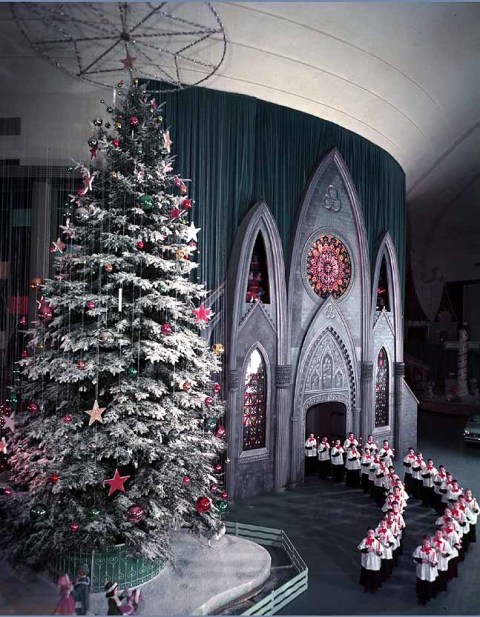
Ford Rotunda Building at Christmas 1961

Ford Rotunda Building at Christmas 1961

Ford Rotunda Building at Christmas 1961, photo by kbreenbo.

Today on Absolute Michigan, we’re featuring the Ford Rotunda and the annual Christmas Fantasy. The feature on the Rotunda in the Detroit News tells how it burned in 1962 and explains:

Over the nine years the Christmas Fantasy was held, almost 6 million people visited it. Thousands of Detroiters had their first visit with Santa at the Rotunda, and memories of Story Book Land and the miniature circus mingle with childhood memories of stockings by the fireplace and cookies for Santa.

Check this out on black and see more in Karen’s Ford Historic Archives slideshow.

Pere Marquette Beach, Muskegon

Pere Marquette 4

Pere Marquette 4, photo by kmoyerus.

Here’s one of a fantastic series of black & white photos from Pere Marquette Beach in Muskegon taken after it had been swept smooth by the surf.

In 2011, Pere Marquette Beach was named one of the nation’s Blue Wave Beaches by the Clean Beach Coalition along with Esch Beach & South Manitou Island in the Sleeping Bear Dunes National Lakeshore and Sand Point Beach in Pictured Rocks National Lakeshore. Of course there’s no doubt that Michigan has miles and miles more pristine beaches, but this is still something to shout about.

Check it out background big, in kmoyerus’ peremarquette slideshow or on their map.

More great beaches on Michigan in Pictures.

The People of Detroit: G.R. N’namdi

The People of Detroit: G.R. N'namdi

The People of Detroit: G.R. N’namdi, photo by Noah Stephens.

We’ve featured The People of Detroit before on Michigan in Pictures. Noah Stephens started the project in April of 2010 after seeing a Dateline NBC special on Detroit that profiled a man who shot, ate, and sold raccoon meat. Never having eaten a raccoon or indeed knowing someone who had, Noah decided to chronicle the intelligent, attractive, industrious, talented people who enliven the city and make it a place he’s happy to call home.

Right now, he’s started a petition asking General Motors to exhibit portraits from The People of Detroit Photodocumentary in the Renaissance Center during the 2012 North American International Auto Show. You can read about it here and sign the petition right here.

Regarding this photo, he begins:

The G.R. N’namdi Gallery in Detroit’s Cultural Center is one of my favorite places to view contemporary art. Light flows into the 16,000 square foot facility through skylights set in a 30-foot high ceiling held aloft by exposed wooden beams. The space is populated by works from artists such as Romare Bearden and Jacob Lawrence. The collection is sophisticated and abstract but not so obtuse as to defy intelligibility.

George N’namdi founded the gallery 30 years ago. He’s pictured here in front of Angelbert Metoyer’s “Icon Execution.”

Read on and check this out on black and in Noah’s The People of Detroit slideshow.

frose

Taken today 11/17/2011 This Rose just started to open in my backyard 2 days ago, must like cold weather. Boyne City, Michigan

Taken today 11/17/2011 This Rose just started to open in my backyard 2 days ago, must like cold weather. Boyne City, Michigan, photo by rickrjw.

Couldn’t resist. Stay warm!

Check it out background big and in Rick’s Flowers slideshow.


Wild UP Cranberries

Wild UP cranberries

Wild UP cranberries, photo by Blondieyooper.

We’re gearing up for Thanksgiving on Absolute Michigan today with two features. One will help you make it a Michigan Thanksgiving and the other has a bowlful of information about Michigan cranberries.

A few years ago Waterland Living wrote about wild cranberries. It’s packed with great advice about finding and harvesting cranberries so check it out!

See April’s photo background bigtastic and in her tasty cups of things slideshow.