Winter at Tahquamenon Falls

winter-at-tahquamenon-falls

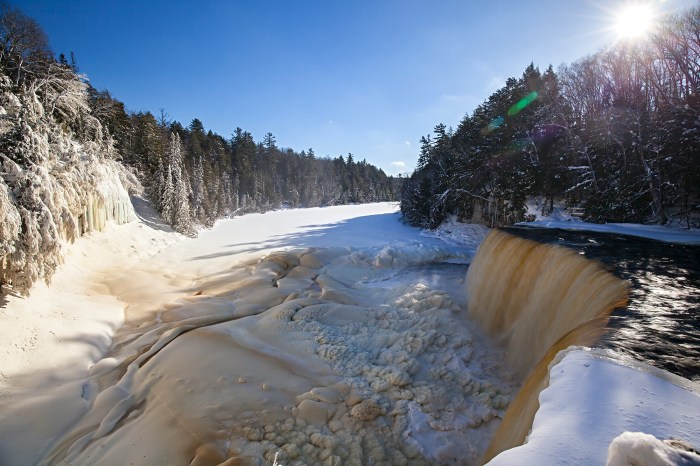
Winter at Tahquamenon Falls, photo by Ali Majdfar

Beautiful shot from Michigan’s largest waterfall, Tahquamenon Falls. Click that link for more – the next photo down is the same angle without ice & snow!

View Ali’s photo background bigtacular and see more in his slideshow. (warning – there’s a couple of AMAZING bug closeups in there too!)

Cracking Ice

cracking-ice

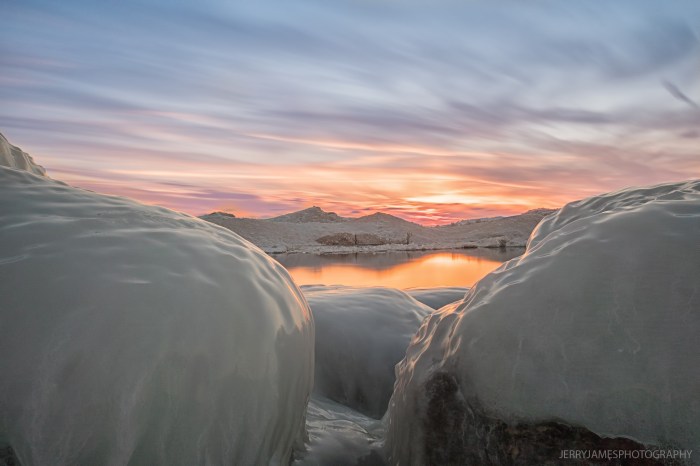
Cracking Ice, photo by Jerry James Photography

Jerry writes: As I stood on the Ice waiting for the sun to set ( we was 1 1/2 hours early ) I could here all the ice around me cracking. talk about being paranoid, I wasn’t out to deep but it was still pretty cold and I wasn’t dressed to get wet. but everything ended good though, I stayed dry.

Always a good idea to be careful and know what’s below you when the temperatures rise.

View his photo from Muskegon bigger, see more in his slideshow, and follow Jerry James Photography on Facebook.

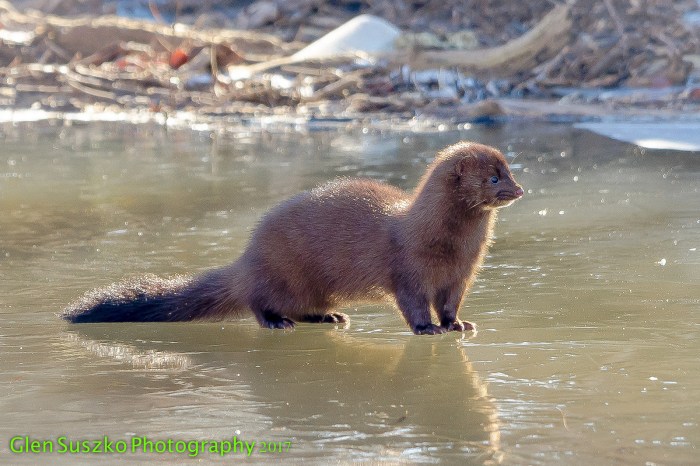
Michigan Mink (Mustela vison)

michigan-mink

Hello Mink, photo by Glen Suszko

The Michigan Wildlife Conservancy has an excellent article on the mink (Mustela vision) that says in part:

Some predators are highly specialized, honed by evolution to efficiently hunt certain prey in distinct habitats and situations. And then there’s the mink (Mustela vison). The sleek, dark- bodied weasel is about as versatile as predators come – taking a wide variety of prey on land and water, day or night. If a mink played baseball, it would be the utility player who could step in at almost every position.

Mink are found throughout North America except in the extreme northernmost reaches of Canada and the arid southwestern U.S. Much larger than the short-tailed and long-tailed weasels (see the March – April 2012 issue of The Wildlife Volunteer), adult males reach 28 inches in length and can weigh up to 3.5 pounds. Females are smaller, but are still big enough to prey on muskrats, rabbits, small woodchucks, chickens, a host of smaller animals, and birds’ eggs.

A mink’s foot has five toes that are slightly webbed and with semi-retractile claws. That combination lets the animals swim well and keep its claws sharp enough to grab fish and other slippery prey.

Mink can dive 15 feet and swim fast enough to catch muskrats underwater as well as in muskrat houses and burrows. They stalk lakeshores, river banks, and wetlands, matching hunting times to prey availability. This past winter, I watched a mink follow a lakeshore, then walk the edge of open water on ice in broad daylight far away from cover. Yet, mink also frequently hunt at night, slinking in and out of thick brush, cattail stands, log jams, or rock piles.

Read on for lots more!

View Glen’s photo from the Sterling Heights Nature Center bigger and see more in his slideshow.

Lots more Michigan animals on Michigan in Pictures!

Ice is Nice: Tracking Ice Cover on the Great Lakes

shoreline-ice-on-lake-michigan

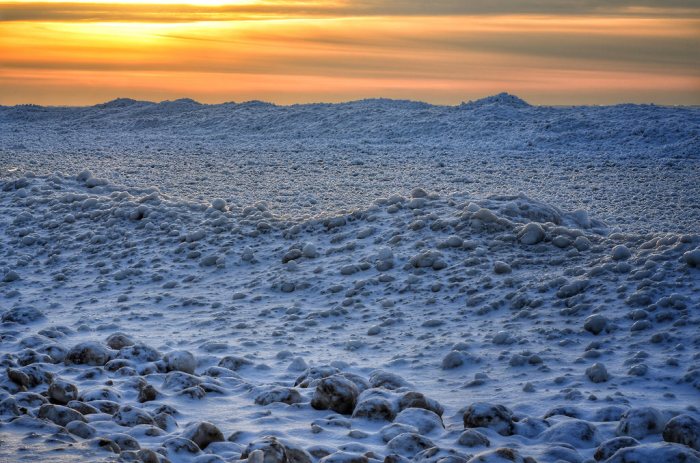
Shoreline Ice, photo by Mark Swanson

Ice on Michigan’s Great Lakes has become something of a phenomenon in the last few years, attracting photographers and thousands more to see the ephemeral beauty created by wind, water, and freezing temperatures. But ice has other important purposes, as NOAA’s Great Lakes Environmental Research Laboratory page on Great Lakes Ice Cover explains:

Ice formation on the Great Lakes is a clear signal of winter. Looking back in time, the lakes were formed over several thousands of years as mile-thick layers of glacial ice advanced and retreated, scouring and sculpting the basin. The shape and drainage patterns of the basin were in a constant state of flux resulting from the ebb and flow of glacial meltwater coupled with the rebound of the underlying land as the massive ice sheets retreated.

Heavy ice cover can reduce the amount of evaporation from the Great Lakes in the winter, thus contributing to higher water levels.

In bays and other nearshore areas, ice forms a stable platform for winter recreational activity such as ice fishing. This stable ice also protects wetlands and the shoreline from erosion.

  • 94.7% ice coverage in 1979 is the maximum on record (data began in 1973)
  • 9.5% ice coverage in 2002 is the lowest on record
  • 11.5% ice coverage in 1998, a strong El Niño year
  • The extreme ice cover in 2014 (92.5%) and 2015 (88.8%) were the first consecutive high ice cover years since the late 1970s.

NOAA pegs the current ice cover at 9.9% and you can also watch an animation of the last 60 days of ice formation. You can check out satellite images of the Great Lakes for current ice cover and also this cool animation of Great Lakes ice cover from 1973 – 2016.

Mark took this photo a little over a week ago at Lincoln Township Park near Stevensville. With the warmer weather, there’s probably less. View his photo bigger and see more in his Michigan Winter slideshow.

Turtle Club

turtle-club

Turtle Club, photo by Andrew McFarlane

“Am I not turtley enough for the turtle club?”
-Dana Carvey, Master of Disguise

Pretty sure it’s just sleeping.

I took this photo last weekend on a walk along Lake Michigan in the Leelanau Conservancy’s Whaleback Natural Area just south of Leland.

View it background big and see more in my Lake Michigan, Pearl of America slideshow.

More winter wallpaper on Michigan in Pictures.

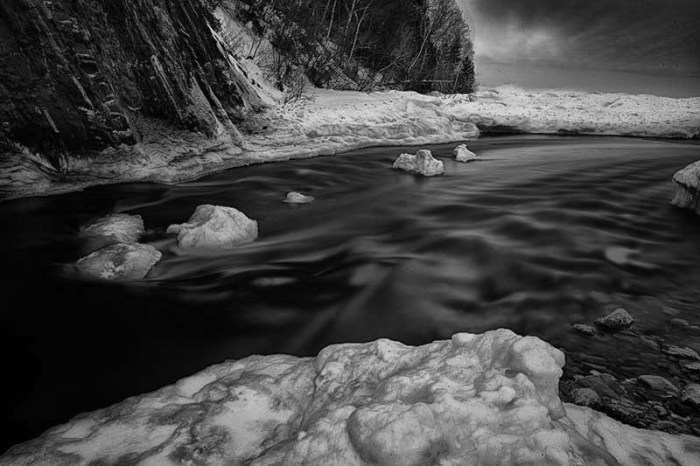
Confluence of Montreal River and Lake Superior

confluence-of-montreal-river-and-lake-superior

Confluence of Montreal River and Lake Superior, photo by Kirt E. Carter

Waterfalls of the Keweenaw has a nice feature on the Montreal River and Montreal Falls that says in part:

Located right at the mouth of the Montreal River as it tumbles into Lake Superior, Montreal Falls is a rugged, beautiful cascade over blocky volcanic rocks. The views over the lake are incredible: to the west you can see Bare Bluff and Mt Bohemia rising along the lake shore, to the southwest the distant side of Bete Gris Bay, and to the south (on a clear day) the Huron Mountains ripple up above the lake. The drop sits at the last easily accessible southern spot on the tip of the Keweenaw, with Fish Cove, Keystone Bay, and Keweenaw Point a tough drive/hike beyond.

Some flat ground for camping sits on the shore of the waterfall, complete with a few fire rings and a convenient beach for kayakers, and during summer weekends a few tents can be found near the falls. A narrow trail leads up along the river towards Upper Montreal Falls, more traveled by fishermen than anyone else, and an even fainter path can be found leading further east to Fish Cove.

Read on more maps & more!

View Kirt’s photo bigger, see more in his slideshow, and see more work on his website.

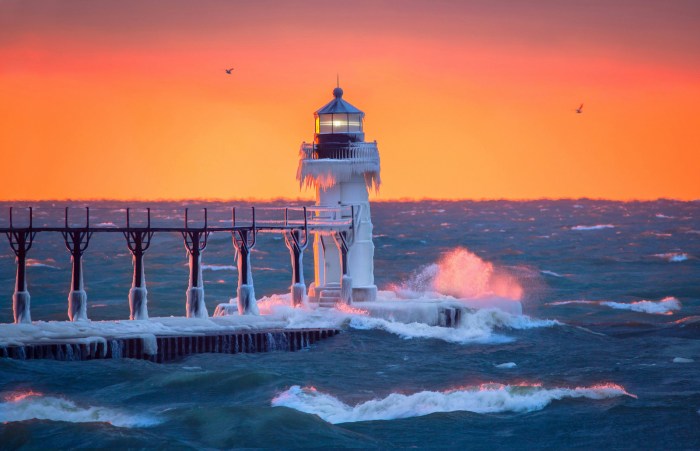
Golden Light at the Lighthouse

golden-light-at-the-lighthouse-by-photojacko-jackie-novak

Golden Light at the Lighthouse, photo by PhotoJacko – Jackie Novak

View Jackie’s photo bigger, see more in her Winter slideshow, and be sure to follow Jackie Novak Photography on Facebook.

PS: You can do a little Throwback Thursday to January 12, 2015 and the Polar Vortex at the St. Joseph Lighthouse.

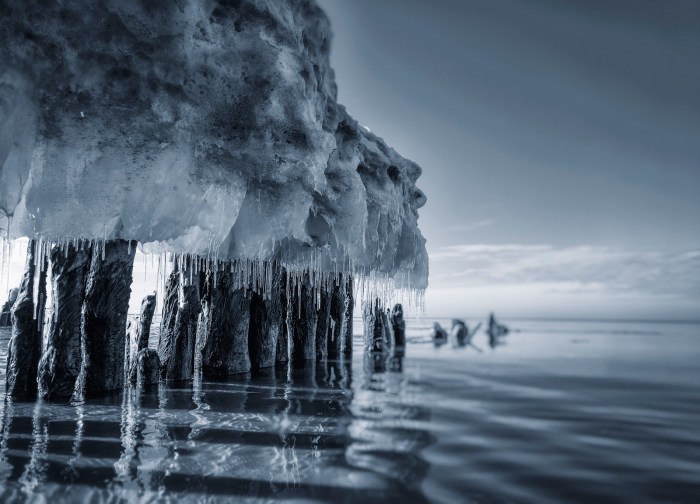
Suspended

suspended

Suspended, photo by paulh192

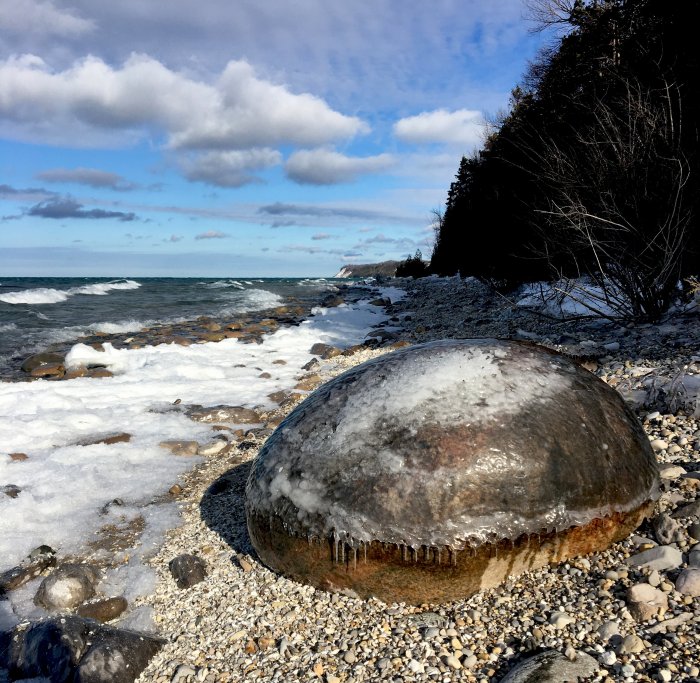
Paul captured this very cool ice formation along the shoreline of Lake Michigan last week. View it photo bigger and see more in his slideshow.

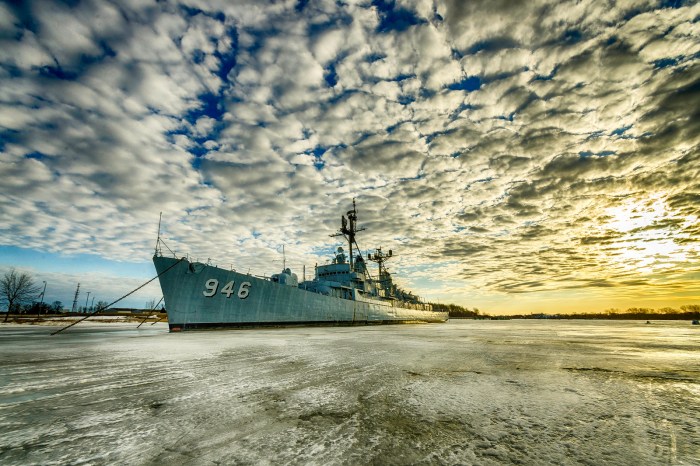
USS Edson at the Saginaw Valley Naval Ship Museum

uss-edson-frozen-in-the-saginaw-river

USS Edson frozen in the Saginaw river, photo by Tom Clark

The USS Edson is located at the Saginaw Valley Naval Ship Museum in Bay City. The say (in part):

The keel for the Forrest Sherman class destroyer USS EDSON (DD-946) was laid at Bath Iron Works in Bath, Maine, on 3 December 1956. EDSON is one of the relatively few ships of the U.S. Navy named for a United States Marine, in this case Major General Merritt Austin Edson.

Edson was launched on 4 January 1958 by General Edson’s widow, Ethel Robbins Edson, who broke the traditional bottle of champagne over the ship’s bow. EDSON’S final fitting out and sea trials occupied the next ten months, and on 7 November 1958, EDSON was commissioned under the command of CDR Thomas J. Moriarty, USN. She then sailed in early 1959 to the Caribbean and through the Panama Canal to reach her original homeport of Long Beach, California, on 2 March 1959.

For the next two decades, EDSON served as a valuable member of the U.S. Pacific Fleet, earning a reputation as a Top Gun ship and the nickname, “The Destroyer.” Her ship’s crest included a skull copied from the shoulder patch worn by then Colonel Edson’s First Marine Raider Battalion.

Note that the Museum itself is closed for the winter until March!

View Tom’s photo bigger and see more in his Ships & Boats slideshow.

More ships & boats on Michigan in Pictures!


Warren Dunes in black & white

warren-dunes

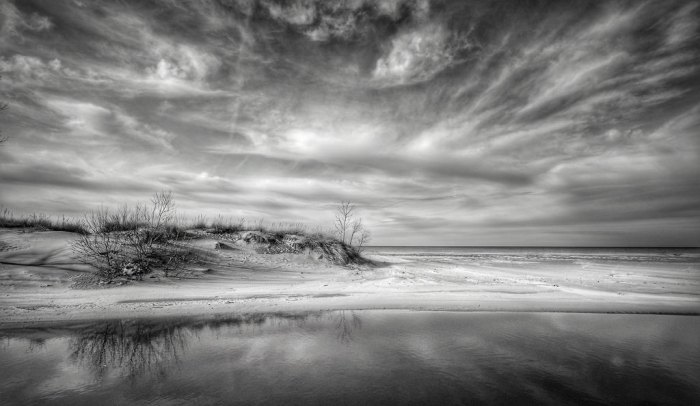
Warren Dunes, photo by Mark Swanson

Warren Dunes State Park has three miles of shoreline and six miles of hiking trails on nearly 2000 acres. It is open year-round, and the centerpiece is the dune formation that rises 260 feet above the lake and offers spectacular views. It’s also our busiest state park!

View Mark’s photo bigger and see more in his Michigan – Black & White slideshow.

More about Edward K Warren & Warren Dunes on Michigan in Pictures.