The Eyes of the Earth

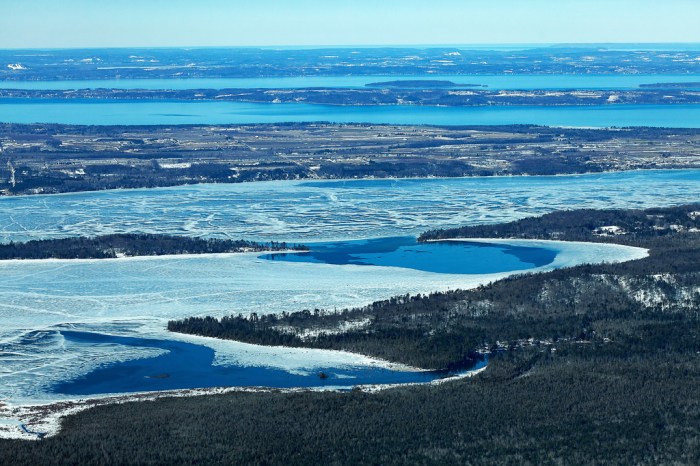
aerial-shot-sandy-hansen-photography

aerial shot, photo by Sandy Hansen Photography

“A lake is the landscape’s most beautiful and expressive feature. It is the earth’s eye; looking into which the beholder measures the depth of his own nature.”
—Henry David Thoreau, Walden

One of Thoreau’s most beautiful thoughts in my mind, and we are certainly blessed in Michigan to have the eyes of the earth upon us here as they are in few other places.

Sandy says that at the top of the photo are West & East Grand Traverse Bay and then Elk Lake and Lake Skegemog. You can get your bearings and have a little fun exploring the lakes from above in this 3d view from Google Earth.

View her photo bigger and see more including more from this February flight in her Traverse City Area slideshow.

More aerial photography on Michigan in Pictures.

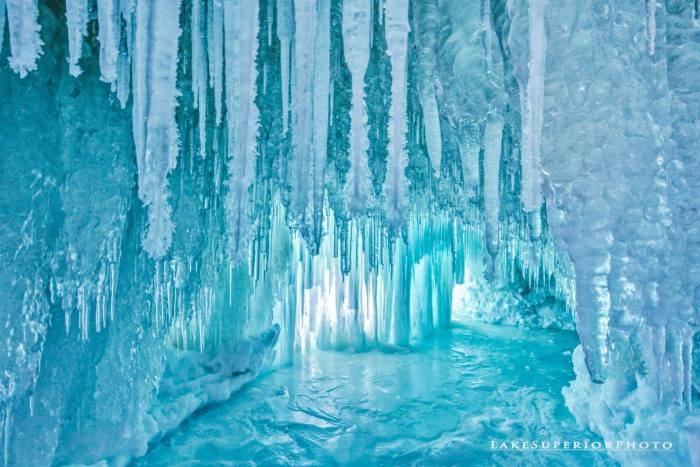
Words escape me: Grand Island Ice Caves, 2015

lake-superior-brilliant-ice-curtains

Words escape me, photo by Lake Superior Photo

Words escape ME on the beauty of the video that Shawn of Lake Superior Photo shared. The ice caves on Grand Island near Munising didn’t happen this year, a very unfortunate thing for everyone in Michigan who makes their livelihood from winter recreation. However, thanks to the magic of the video below, we can travel back to 2015.

You can view Shawn’s photo from winter of 2015  bigger on Facebook and purchase the photo right here. I can’t stress enough that you should follow Shawn and Lake Superior Photo on Facebook. Please do it.

Now here’s that video. Be sure to turn your volume up and watch in HD – there’s a “boom” from the ice sheet at 4 seconds that’s incredible!

At home in the fog

fog-signal-fog

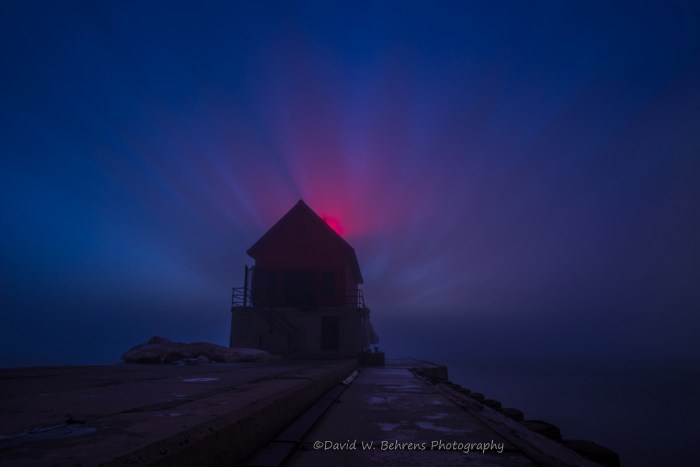
Fog, Afterglow, and Persistence!, photo by David Behrens

David says that the fog signal at Grand Haven wasn’t visible from the shore the other night, so he went out to it. View the photo bigger and see more in his slideshow.

PS: Here’s a shot of the fog signal covered in ice that I featured from David on Michigan in Pictures last February. Quite a change!

Morning on the North Country Trail

hacking-site-camping-trip-february-2017

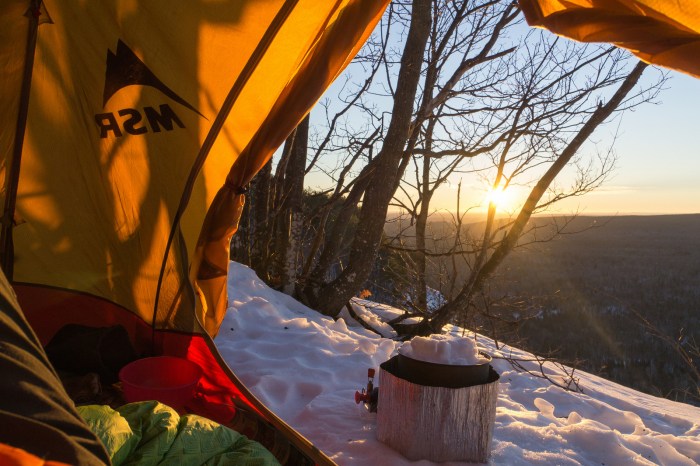
Hacking Site Camping Trip, February 2017-25, photo by Nathan Miller

Nathan took this photo in the Ottawa National Forest’s Trap Hills along the North Country Trail in winter.The Trail winds 4600 miles through 7 states in America’s northern heartland. It is our longest National Scenic Trail, stretching from New York to North Dakota. Michigan holds more of the North Country Trail than any other state:

Entering Michigan from Ohio the first completed segment of NCT is within the Lost Nation State Game Area near Pittsford.  The route then threads through a mix of forest and farm country and is a mix of road walks and completed segments. Off-road trail exists in Fort Custer National Cemetery (near Battle Creek), Yankee Springs State Recreation Area (near Hastings) Middleville and Barry State Game Areas.  In Lowell, hikers can walk down East Main Street and stop in at North Country Trail headquarters to purchase some official trail gear.  Heading north from Lowell, hikers will travel through two more areas with built trail before arriving at the southern boundary of the Manistee National Forest. These include the Lowell State Game Area/Fallasburg County park segment just outside of the city of Lowell and the Rogue River Game Area near Rockford.

Hikers get their first glimpse of the Northwoods in the Manistee National Forest.  Within Manistee National Forest, enjoy sandy soils that support a pine-hardwood forest and great hiking along the Manistee River Trail, which forms a great loop hike opportunity.  The NCT leaves the Manistee National Forest near the Hodenpyl Dam Pond which features a fabulous new (2009) trail along the Hodenpyl Dam Pond and Manistee River.  Continuing south of Traverse City to Kalkaska the NCT is routed through state forest land (the Pere Maruette SF) which offer a number of year round recreation opportunities.  The next jewel along the NCT is the Jordan River Pathway, which offers a scenic loop hike near Alba.  From here the trail heads towards Petoskey through the Mackinac State Forest.  North of Petoskey wonderful hiking opportunities exist in Wilderness State Park, where the trail follows the Lake Michigan shoreline. As one leaves Wilderness State Park and heads towards Mackinaw City the lights of Mackinac Bridge become visible.

…The U.P.’s prime scenery includes large lakes, old growth forests, rugged hills and the Lake Superior shoreline, all set amid some of the most remote, uninhabited country found on the North Country Trail.  From St. Ignace the trail heads through the eastern unit of the Hiawatha National Forest towards Tahquamenon Falls State Park (home to the second largest waterfall in the eastern United States).  Continuing west, the trail passes through Muskallonge Lake State Park and Lake Superior State Forest towards Pictured Rocks National Lakeshore. Within Pictured Rocks, enjoy the 43-mile Lakeshore Trail along the Lake Superior shore, one of the greatest hits of the entire North Country Trail.  West of Pictured Rocks the trail enters the western unit of the Hiawatha National Forest passing through public and private lands before reaching Marquette.  West of Marquette the trail passes through Presque Isle City Park, McCormick tract Wilderness, Craig Lake State Park, Copper Country State Forest, Sturgeon River Gorge Wilderness and cuts through historic copper mining sites near Old Victoria.  Once entering the Ottawa National Forest segments run along the Black River canyon, towards the wild country of Porcupine Mountains Wilderness State Park. The NCT leaves Michigan’s Upper Peninsula near the community of Ironwood.

Read on for more at the North Country Trail website, including maps!

View Nathan’s photo bigger and see more in his North Country Trail Camping Trip, February 2017 slideshow.

The Jaws of Point Betsie

the-jaws-of-point-betsie

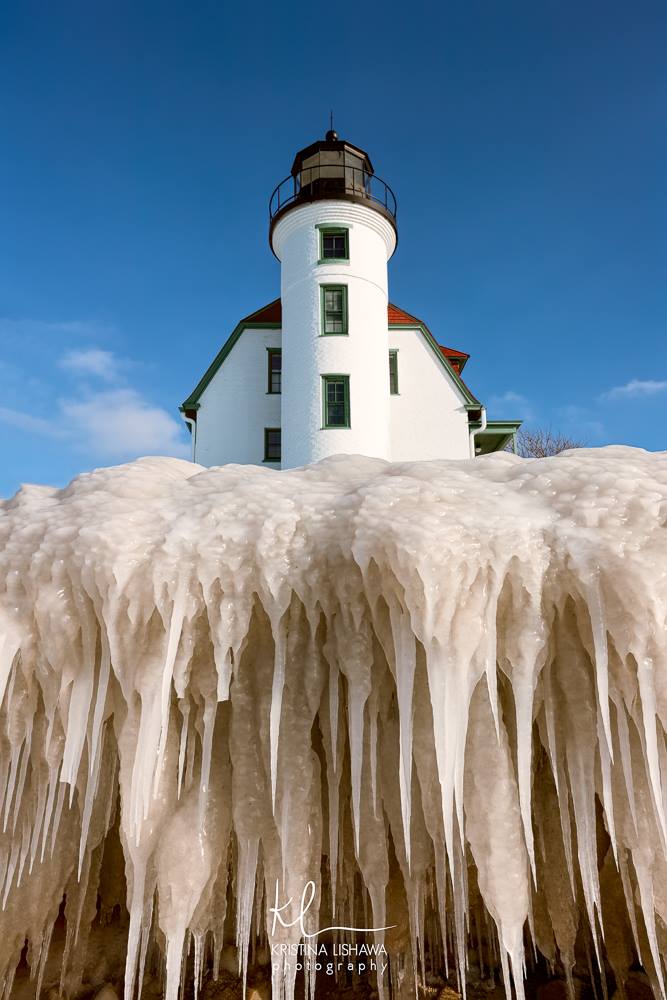
The Jaws of Point Betsie, photo by Kristina Lishawa Photography

Sweet shot of Michigan’s most photographed lighthouse, the Point Betsie Light just north of Frankfort. Kristina writes:

Ordinarily, someone trying to take a photo from this angle would be pounded mercilessly into the break wall by crashing waves. Lake Michigan granted me an unusually calm window in which to see Point Betsie from a new perspective.

View the photo bigger, follow Kristina Lishawa Photography on Facebook, and view and purchase prints on her website at kristinalishawa.com.

Time for the 2017 Michigan Ice Festival!

dairyland-ice-climbing

dairyland, photo by Wilkinson Visual

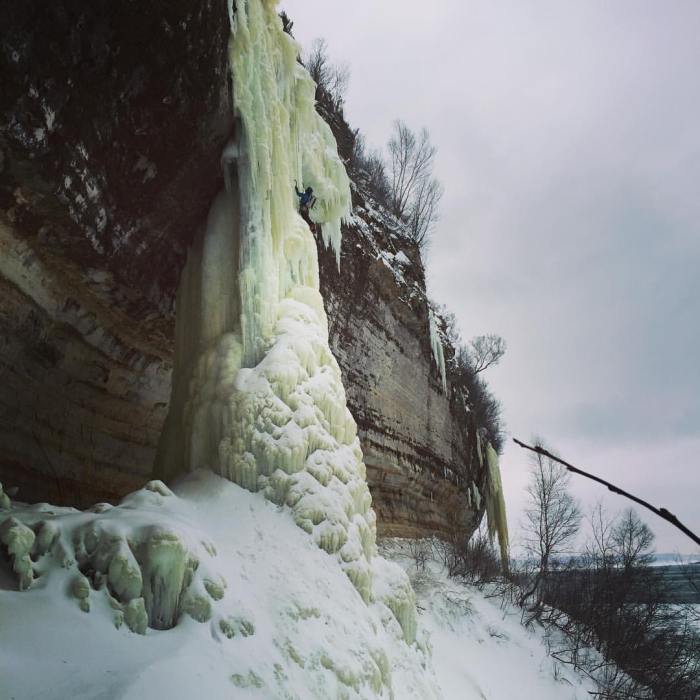
Wilkinson Visual writes that this photo shows David Hixenbaugh scrapping up dairyland on a blustery day out on the lakeshore. Great climbing, very unique features formed by the wind making for an exciting top out!

The annual Michigan Ice Fest runs today through Sunday (Feb 15-19, 2017) in Munising. It’s an annual celebration of the sport of ice climbing that brings together some of the world’s best climbers and experts for climbing exhibitions, seminars, guided climbs, get togethers and much more! Click the link above for all the details.

View the photo bigger on the Wilkinson Visuals Facebook and visit their website for all kinds of photos including this cool Michigan Ice Climbing Gallery.

Here’s climbing video from the Pictured Rocks National Lakeshore by David (@alpine_elevation on Instagram):

February Ice … and 10,000 Leelanau Photos

february-ice

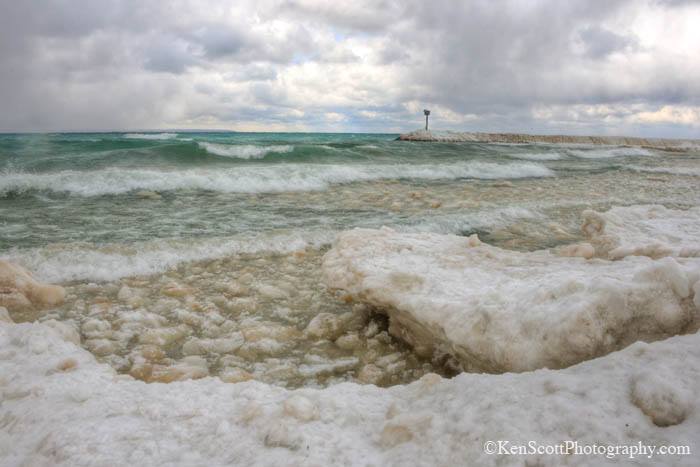
Lake Michigan … February ice, photo by Ken Scott Photography

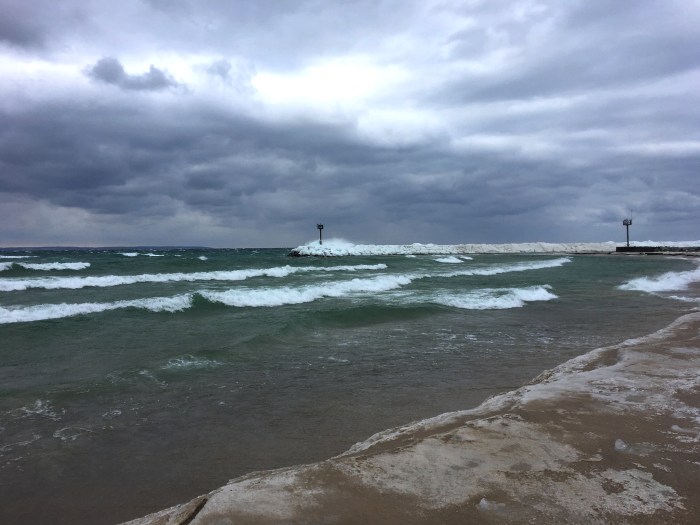
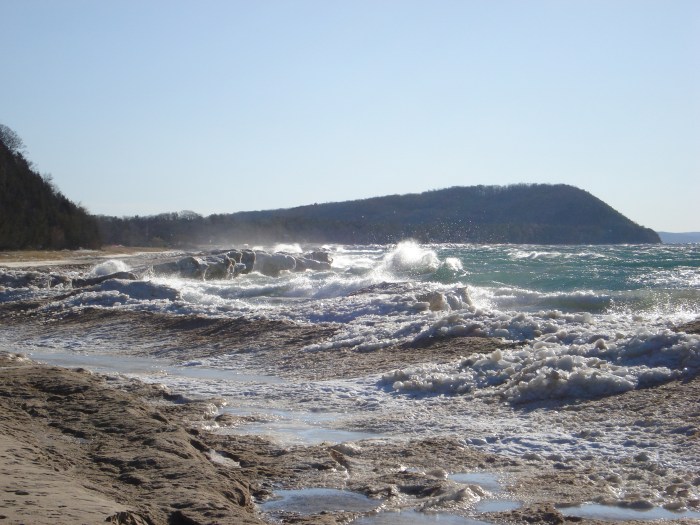
Some followers of Michigan in Pictures may know that I live in Leelanau County, the village of Leland to be precise. The first website I ever built was Leelanau.com, and as with Michigan in Pictures, I have a photo group on Flickr. One of my favorite pursuits is hiking the shoreline, and when I returned from a hike yesterday, I noticed that the Leelanau.com Group had 9,999 photos. The 9999th is the one above from a year ago, fittingly by top contributor, professional photographer, and dedicated Leelanau-booster Ken Scott.  I realized that I had a pic from almost exactly the same spot!

View Ken’s photo on Flickr, see more in his Lake Michigan Ice & Caves slideshow, and follow Ken Scott Photography on Facebook!

wavy-day-in-leland

You can see mine and more photos & videos from the day in my Wavy Day in Leland slideshow.

PS: The Absolute Michigan pool is the one I use for Michigan in Pictures, and it has well over 200,000 photos!

Bradley Fleet in “the Frog Pond”

Bradley Fleet in the Frog Pond

Layed-up in the Frog Pond, photo courtesy Presque Isle County Historical Museum

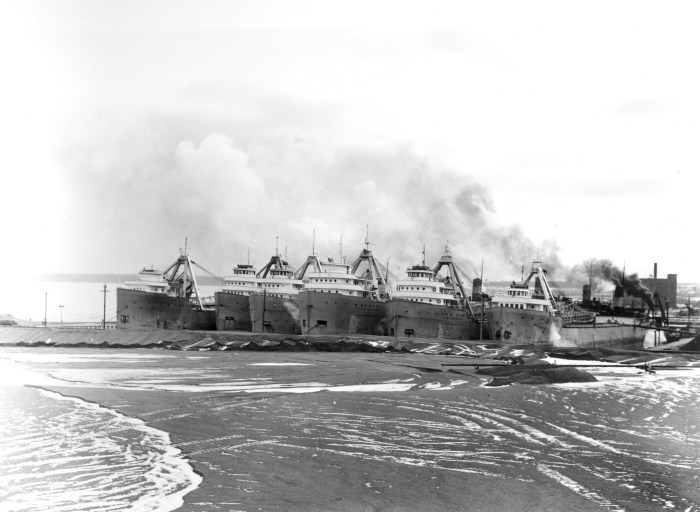
This would be where I would tell you the fascinating history of why the winter harbor at Rogers City was referred to as the Frog Pond, but I’m unable to find much except for that’s what everyone calls it. There’s one in Toledo too.

The Presque Isle County Historical Museum is located in the historic home of Carl D. Bradley, general manager of Michigan Limestone and subsidiary Calcite Transportation. About the photo, they write:

The Bradley fleet layed-up in the “frog pond” at Calcite in 1949. From left to right are the W. F. White, B. H. Taylor, John G. Munson, Carl D. Bradley, T. W. Robinson, and Calcite.

View it big as the Bradley and see more in their Bradley Transportation Fleet slideshow including this aerial shot of the Frog Pond.

Click for more about the Carl D Bradley which ultimately became one of Michigan’s most tragic wrecks.


Threepeat: 2016 once again our warmest year

meltdown

Methdown, photo by Andrew McFarlane

“2016 is remarkably the third record year in a row in this series We don’t expect record years every year, but the ongoing long-term warming trend is clear.”
– NASA Goddard Institute for Space Studies Director Gavin Schmidt

NASA reported last week that 2016 was the warmest year on record: You can read about it below, but I would like to offer two thoughts to the people who are getting angry about me ruining their daily photo with “politics”:

This is not politics. This is provable science backed up with excellent data.

While NASA (and I) believe in anthropocentric climate change (climate change driven by human activity) disbelief in that model DOESN’T MEAN IT’S NOT HAPPENING.

Earth’s 2016 surface temperatures were the warmest since modern recordkeeping began in 1880, according to independent analyses by NASA and the National Oceanic and Atmospheric Administration (NOAA). Globally-averaged temperatures in 2016 were 1.78 degrees Fahrenheit (0.99 degrees Celsius) warmer than the mid-20th century mean. This makes 2016 the third year in a row to set a new record for global average surface temperatures.

The 2016 temperatures continue a long-term warming trend, according to analyses by scientists at NASA’s Goddard Institute for Space Studies (GISS) in New York. NOAA scientists concur with the finding that 2016 was the warmest year on record based on separate, independent analyses of the data.

Read on for more at NASA.

You can view my photo from a thaw in early February 2009 background big and see more in my Frozen Shore slideshow.

Pike on the Ice

northern-pike-and-ice-fishing

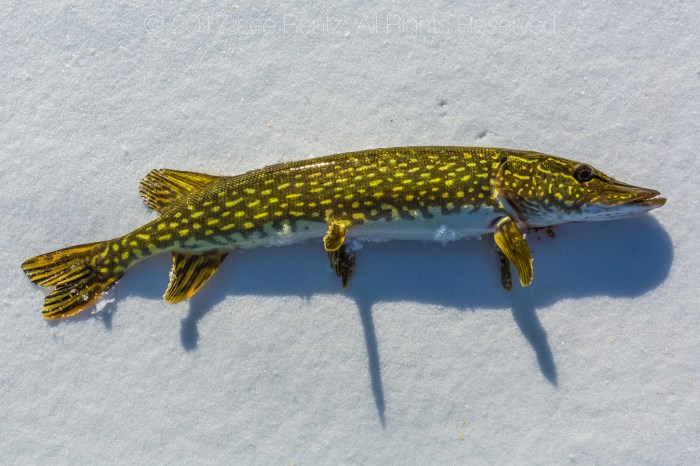
Northern Pike Caught while Ice Fishing in Central Michigan, photo by Lee Rentz

The Michigan Department of Natural Resources page on Northern Pike says that they spawn in early spring and are found in the Great Lakes and connecting waters of the Lower Peninsula year-round and that:

Pike are popular quarry of ice fishermen. Though they are primarily pursued with tip ups, baited with live minnows or suckers, they can be taken with rod and reel, either jigging or fishing with bait. Pike are a prime target of spear fishermen as well, who often use decoys or suspend suckers below their shanties to lure pike within range in relatively shallow water.

Pike typically spawn in the weedy backwater marshes; low water levels on the Great Lakes in recent years have probably hampered their reproductive success. Still, the shallow weedy bays of the Great Lakes and connecting waters, such as Lake St. Clair and the Detroit River, the Portage Lake system of Lake Superior and the bays of Lakes Michigan and Huron, remain productive pike waters. winter pike fishing

Inland, the drowned river mouths along the Lake Michigan shoreline – such as Muskegon Lake, Portage Lake and Manistee Lake – are all noted pike waters. Some of the larger inland lakes and reservoirs, such as Michigamme and Houghton, have significant pike populations, though they can be found in many lakes and virtually all the larger rivers in the state.

View Lee’s photo of his caught & released pike background big and see more of his fish & fishing photos on Flickr.