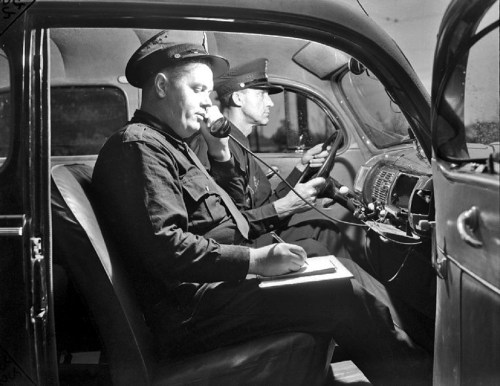
#TBT Detroit Police Radio Prowl Car

Detroit Police Radio Prowl Car
Detroit Police Radio Prowl Car, photo by Ronnie

I think the guy on the right is replaced by a computer in the 2015 version. About the photo, Ronnie writes:

Before the World War II started in Europe, 1939 was expected to be an exceptional year. America was filled with optimism, and with the Great Depression winding down, the nation was looking forward to what the coming decade of the 1940s would bring. Even the theme of the World’s Fair in New York was billed as “the world of tomorrow,” especially when it came to consumer and industrial electronics. However, for the Detroit Police Department one of the most important technological advancements in the world of law enforcement had become a reality.

Many electronics experts at the turn of the 1920s, said it would take another five decades before you would see two-way radios available for use in motor vehicles. While this philosophy was taken as gospel; several Amateur Radio operators pushed the envelope of experimentation to it’s zenith in their basements, and workshops across America. The fruits of their labor came to the forefront in the mid-to-late 1930s, which proved that two-way radio technology was viable for use by police officers in the field.

Earlier attempts at using two-way radio communications in the Motor City in 1934 had several drawbacks. The biggest was the cost, which was around $700 to equip each vehicle with the very large, and bulky equipment that took up the entire back seat and trunk of the patrol car. Not only did it take up a lot of space, but it really added a lot of weight that was hard on the vehicles’ suspension system.

Read on for more and to see the picture bigger and definitely check out Ronnie’s History photos for 100+ more photos from Michigan’s past with all kinds of great details!

More #TBT and more Michigan history on Michigan in Pictures.
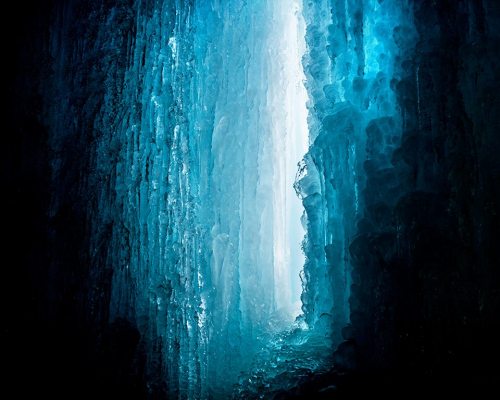
#TBT Fortress of Solitude Edition at the Grand Island Ice Caves

Grand Island Ice Cave

Grand Island ice cave, Winter 2012/13, photo by Ash W Photography

A cool site that really gives you to tools to have a lot of fun in the Upper Peninsula is Things to Do in the U.P. #64 is visiting the Grand Island Ice Caves. After providing very detailed tips & information about how to get to these spectacular formations on Lake Superior off Munising, Brian Marticcui writes (in part):

For an intimate look at nature’s awesome power, sidle up to one of the columns and peer into its core. Expecting a solid tower of frozen water? Not a chance. These columns, especially the newer and/or sun-exposed ones, are actually made up of tiny beads and icicle-like formations separated by vertical channels that allow water to pass through them. It’s one of those mind-numbingly complex natural things that’s simultaneously random and orderly – kind of like a geode, but mostly frozen and not quite as colorful.

Inside, things are a bit more stable – and a whole lot more interesting, if that’s possible. For starters, many of the “entrances” to the caves are little more than elevated holes between solid ice columns. Depending on how the caves have set during the weeks leading up to your visit, you may have to scramble up a mound and squeeze yourself through an opening to actually gain access. (Clip-on crampons might be a good idea.)

Once you get in, be careful, both for your own physical safety and for the integrity of the caves themselves. The floors are often mirror-smooth, making regular walking a major challenge. Meanwhile, the ceilings can be low and/or spiky, and some of the most intricate formations – the fuzzy, mold-like bits of “shaved” ice that project from the bare rock of the walls and ceilings – are extremely fragile. Don’t be the guy or girl who ruins a particularly awesome formation for everyone else – those things don’t reform in their original states.

Since the caves’ outer walls aren’t comprised of a single, solid curtain, and blockages abound, you’ll have to enter and exit several times to get the full measure of their interior spaces. Be careful each time you do; in particular, don’t lean on any dubious-looking columns. Ice is heavy, and you’ll probably see the chilling remains of spectacular collapses. You don’t want to be under an unsafe formation when it goes.

Read on for much more and also follow Jesse’s Things to Do in the U.P. on Facebook.

Ash took this shot at Grand Island’s ice caves a couple of years ago. View it bigger on Facebook and see more of her work in her Upper Peninsula of Michigan gallery at ashwphotography.com.

PS: If you’re in the Marquette area, Ash be displaying February 17 through the end of March at Sweet Water Cafe in Marquette from Feb 17th to the end of March, just a few doors down from Zero Degrees Artist Cooperative where she has her work.

PPS: For a little discussion on current conditions on the crossing to Grand Island, see this thread on Facebook, and before you go be sure to talk to someone who knows something about it. Feel welcome to use that advice for anything that’s possibly dangerous that you know little about.

#TBT The Ice Caves of Leelanau from Ken Scott

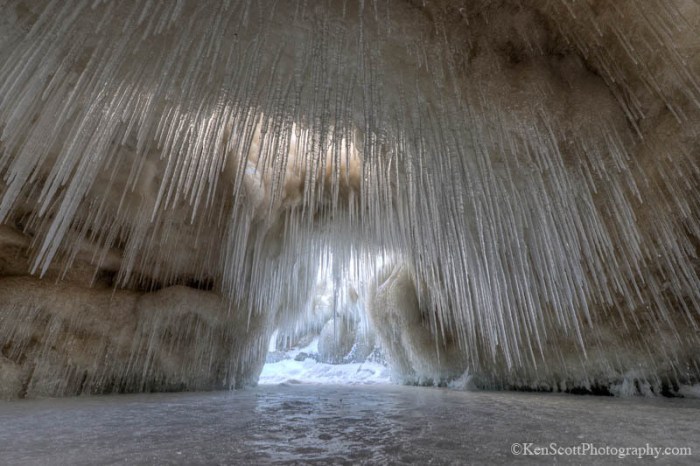
Ken Scott Ice Cave

Lake Michigan … crystal cave II, photo by Ken Scott Photography

“My creative eye is always on. It doesn’t get bored. A lot of people get stuck on seeing things only one way, like the wide view or closeup view … but there’s everything in between. Boredom would come when you’re getting stuck in seeing things only one way. You just have to shift it a little bit and it can open up a whole other world.”
~Ken Scott

Kudos to Michigan in Pictures regular Ken Scott, whose photography of last winter’s ice caves on Lake Michigan is featured in the Huffington Post today. They write:

Scott’s documentation of the ice caves last year on Facebook drew likes, attention and, eventually, the book deal. In Ice Caves of Leelanau, he shows numerous views of the caves, blue ice, volcano ice, pancake ice, the large sheet of anchor ice along the shore, and the rounded and smoothed chunks of ice known as ice balls. Meteorologist Ernie Ostuno captioned Scott’s photographs for the book, and nature writer Jerry Dennis introduced them:

The caves were the surprising thing. Many of us had seen similar structures during other winters, but never many of them, and never this large. These were big enough to stand in — for a dozen people to stand in — and as elaborate as caves in limestone. They were domes and keyholes and grottos. Wave spray and intermittent thawing and freezing had embellished them with columns and pillars. Their surfaces were so smooth they gleamed in sunlight, and from their ceilings dripped hundreds of daggers of clear ice, like crystal stalactites.

George Leshkevich, a researcher with the North American Ocean Administration’s Great Lakes Environmental Research Laboratory, noted that last winter was particularly severe for the Great Lakes, resulting in unique conditions where ice reached peak thickness two separate times in the season.

Different kinds of ice formations occur because of a confluence of reasons, Leshkevich explained, including meteorological conditions, the physical location and wave action, so they’re hard to predict and will vary widely along the shore.

Click through for more great photos. You can check out a short video or a long one from this particular formation, and definitely get a copy of Ice Caves of Leelanau if you can!

PS: I hope all this ice caveyness isn’t bothering you – I’m so happy to see Michigan getting some wintertime love.

Woodland Hipsters

Woodland Hipsters

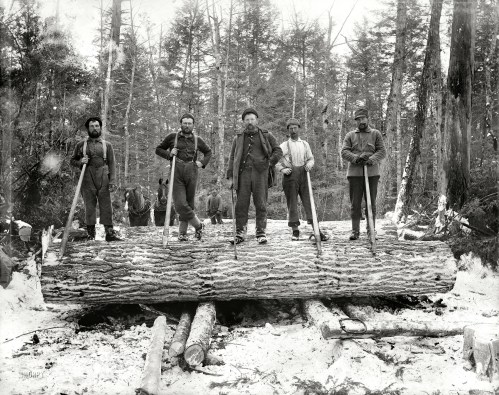
I’m a Lumberjack: 1899, photo courtesy Shorpy.com

While you might feel like you saw these stylish gents at the coffee shop the other day, Dave shares that the hipster look is timeless: Upper Michigan circa 1899. “The loggers.” 8×10 inch dry plate glass negative, Detroit Publishing Company.

View the photo background bigtacular and see TONS more incredible vintage photos (lots from Michigan) at Shorpy.com. You can also get prints of this and any photo they have.

#TBT: Petoskey Pierhead Light

Petoskey Pierhead Lighthouse 1913

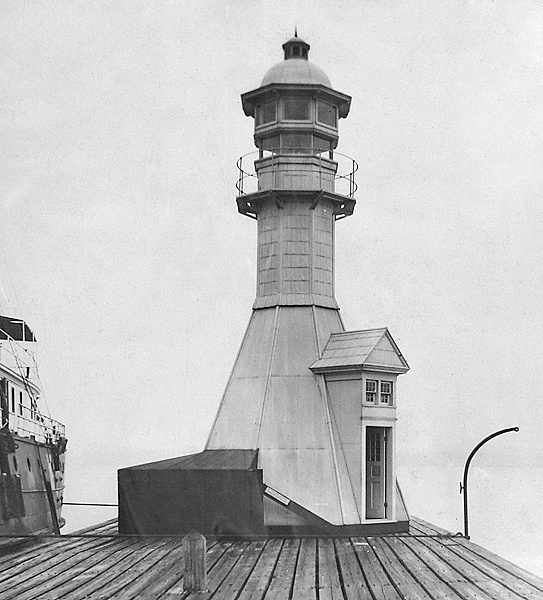
Petoskey Lighthouse in 1917, courtesy National Archives & Lighthouse Friends

Last month I featured a cool shot of the Petoskey Pierhead lighthouse that people really liked. Here’s a pic of what that light looked like a hundred years ago. The entry for the Petoskey Pierhead Light at Lighthouse Friends says (in part):

Named after the Ottawa Indian Chief Ignatius Petosega, Petoskey is situated at the southeast corner of Little Traverse Bay. In westerly winds, the lake steamers had difficulty offloading summer visitors at Petoskey, prompting Congress to pass an act on August 17, 1895, authorizing construction of breakwaters to protect the landing pier. One breakwater, connected to shore, was built west of the landing pier, and a second detached breakwater was built to the north.

Work on the breakwaters commenced in 1896, and in 1899, a metal post with a lamp house at its base was placed fourteen feet from the outer end of the western breakwater. Two lantern lights, a red one above a white one, were exhibited from the post starting on July 1, 1899. The beacon light was damaged by the schooner Willia Loutit on July 11, 1900, but repairs, paid for by the schooner’s owners, were soon made.

In 1903, structural steel and cast-iron metalwork were ordered to enclose the pier’s metal post, but the work was evidently not carried out until 1912. The resulting thirty-four-foot-tall lighthouse resembled an inverted funnel and consisted of a pyramidal base, a vertical mid-section, and an ornate lantern room. This funnel-like style of lighthouse was also deployed on piers at five other Lake Michigan cities: Waukegan, Illinois and at Kenosha, Milwaukee, Racine, and Sheboygan, Wisconsin.

…During a severe storm in December 1924, the lighthouse was washed from the breakwater and destroyed. A newspaper account noted that the “self-lighting lighthouse” had been discontinued for the season on December 8, just six days before it was swept off the breakwater. A temporary light was displayed from an unpainted post until 1930, when a concrete foundation was constructed on the breakwater, and a new light was displayed from a thirty-foot, skeletal, steel tower, painted red.

Read on for more information & photos and head over to lighthousefriends.com for many more Michigan lighthouse features.

…and of course Michigan in Pictures has lots more Michigan lights too!

#TBT Ice Wine Season

Ice Wine Season

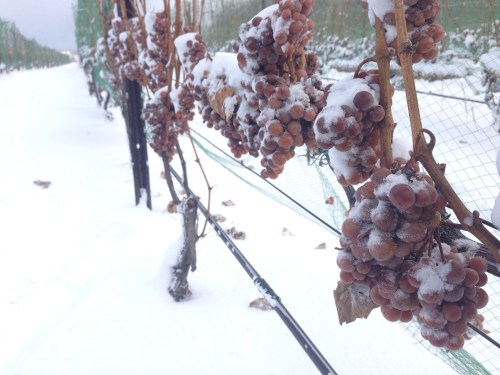
Ice Wine Season, photo by Andrew McFarlane

This morning as I was working on a Facebook post announcing the release of Black Star Farms’ 2013 A Capella Ice Wine, I stumbled upon a cool synchronicity that brought together several of my personal and professional pursuits into such a neat package that I had to share it!

It turns out that exactly one year ago today, I spent a very cold day on the Old Mission Peninsula shooting a photo feature for eatdrinkTC of the ice wine harvest & pressing at Black Star Farms. Ice wine, eiswein in the original German, is a rare dessert wine that requires care and skill to produce and…

While December 11, 2013 was by no means the coldest December 11th on record (that would be 1977 at -11), it was a bone-chilling day with temps hovering around 11 degrees with a wind chill that never got above zero after 9:30 AM.

In short, as Black Star Farms winemaker Vladimir Banov explained, the perfect day for the ice wine harvest.

Ice wine is not made every year, and not by every winery. U.S. law for ice wines specifies that the grapes must be naturally frozen to be sold as ice wine.

To begin, a winery will leave a portion of the harvest to hang. Even under the bird netting, it’s a gamble against mercurial weather and clever creatures. Many years, it will leave the winery with nothing.

In some years however, such as this one, patience is rewarded.

Click through for a photographic look at the ice wine process along with some videos. If you’re interested, here’s information about A Capella Ice Wine.

You can view my photo background big and see more in my Ice Wine at Black Star Farms slideshow.

More wine and more winter wallpaper on Michigan in Pictures!

#TBT: Wreck of the Carl D. Bradley

Carl D. Bradley

Carl D. Bradley, photo by John Rochon

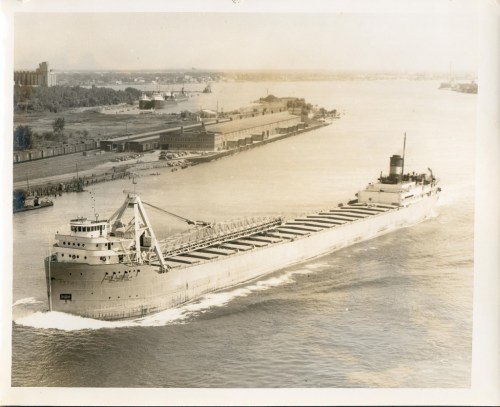
If you know of any shipwreck on the Great Lakes, chances are it’s the S.S. Edmund Fitzgerald. While that was no doubt a terrible tragedy, my vote for the most grievous loss is the S.S. Carl D Bradley which sank 56 years ago next Tuesday on November 18, 1957. I found a really excellent article on the ship and shipwreck at Lake Effect Living titled Lost To The Lake: The Wreck of the Carl D. Bradley:

Known as ‘Queen of the Lakes’, the Carl D. Bradley was the largest ship on the Great Lakes from 1927 to 1949. At 639 feet, it was the longest freighter on the Lakes until the launch of the SS Wilfred Sykes twenty-two years later. The largest self-unloading ship for its time, the Bradley was the Bradley Transportation Company’s flagship. Named after the president of Michigan Limestone, Carl David Bradley, this state of the art freighter had its maiden voyage in the summer of 1927. Since Michigan Limestone’s company base was in Rogers City, Michigan, the freighter drew most of its crew from this small community.

…On Monday, November 17, 1958, the steamer left Buffington, Indiana bound for Port of Calcite harbor in Rogers City, Michigan.

The Bradley’s captain was 52-year old Roland Bryan, a veteran seaman. Manned by a crew of thirty-five and carrying a light cargo, the Bradley headed out onto Lake Michigan at 9:30pm. But signs of severe weather were already in evidence when they left Buffington, where winds gusted at more than 35 miles an hour. It was the first ominous indications of an extreme cold front forming over the plains. Temperatures in Chicago plummeted twenty degrees in one day, and thirty tornadoes were sighted from Texas to Illinois.

Aware that gale winds were forecast, the crew readied the steamer for bad weather. They traveled along the Wisconsin shore until reaching Cana Island, where they shifted course for Lansing Shoal which lay across Lake Michigan. The winds on the lake reached 65 miles an hour by 4pm the following day. Still, the Bradley seemed to be weathering the gale force winds and heavy seas with little problem. This changed at 5:30pm when the Port of Calcite received a radio message from First Mate Elmer Fleming informing them that the Bradley, approx. twelve miles southwest of Gull Island, would arrive home at 2am. As soon as this message was sent however, a loud thud or bang was heard on the ship.

When the day was done, 33 of the 35 member crew were dead, 23 of the from Rogers City, Michigan. For a town of less than 4000, it was a heavy blow. Read on for much more and also see Seeking Michigan: The Wreck of the Carl D. Bradley on Absolute Michigan and the tribute site at carldbradley.org.

John Rochon shared this photo of the Bradley was taken from the Blue Water Bridge by Schjelderup Marine Studio and shows the ship heading towards the mouth of Lake Huron. View it big as the Bradley and see more in his massive Great Lakes Ships & Shipping slideshow.

More shipwrecks on Michigan in Pictures.

#TBT: Detroit Trolley 1980 and Detroit’s Municipal Vehicle Auction

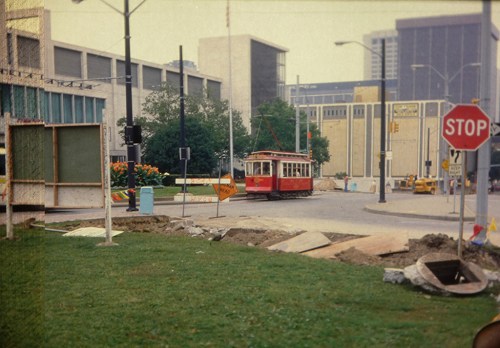
Detroit trolley 1980
Detroit trolley 1980, photo by creed_400

FOX News Detroit reports that the city of Detroit will be auctioning off hundreds of municipal vehicles on November 5th to raise money for the city:

“This is an opportunity to put out to the general public some high quality equipment and property we are hoping will generate some cash will go back to the departments and help buy equipment to serve the city of Detroit,” said Gary Brown, chief of staff.

The auction will begin on Nov. 5 and run for two days in a webcast/onsite public auction.

According to published reports there will be more than 450 vehicles including 115 automated side load garbage trucks, 79 transit buses and historic trolley cars. Also available will be 41 truck-mounted snow plows and 130 public lighting service vehicles.

Read on for more and note the picture of the trolleys – pretty sure this is one of them. I guess that’s one of the advantages of having 200,000+ photos available to choose from!! Here’s the full info from the City with links to the online auction site and information about the vehicles being auctioned.

View creed’s photo background big and see lots more in his Grandpa Molt’s slides slideshow.

More #TBT on Michigan in Pictures!

#TBT: The Bear of Sleeping Bear Dunes

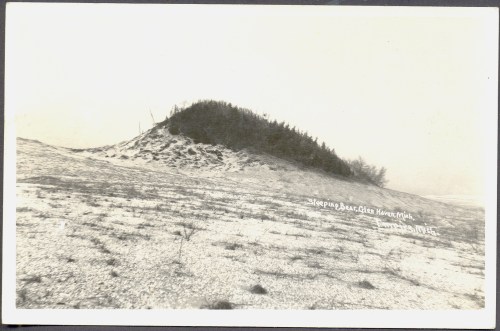
Glen Haven MI Sleeping Bear Dunes Empire and Glen Haven Marked RPPC Kodak Stampbox Unsent what looks like a hump of low scrub bushes is actually a forest hill buried in sand

Glen Haven MI Sleeping Bear Dunes, photo by Don…The UpNorth Memories Guy… Harrison

Tuesday was the 44th anniversary of the founding of the Sleeping Bear Dunes National Lakeshore. You may have heard the Chippewa tale that inspired the name of the park:

“Long ago, along the Wisconsin shoreline, a mother bear and her two cubs were driven into Lake Michigan by a raging forest fire. The bears swam for many hours, but eventually the cubs tried and lagged behind. Mother bear reached the shore and climbed to the top of a high bluff to watch and wait for her cubs. Too tired to continue, the cubs drowned within sight of the shore. The Great Spirit Manitou created two islands to mark the spot where the cubs disappeared and then created a solitary dune to represent the faithful mother bear”.

You might not be aware, however, that “the Bear” was also an actual formation atop a dune about a mile north of the Pierce Stocking Overlook. The Lakeshore says that the formation pictured above…

…hardly looks like a bear now, for it has been changing rapidly in recent years. At the turn of the century, it was a round knob completely covered with trees and shrubs. You can still see some of the thick vegetation that gave it a dark shaggy appearance.

…For a long time, the Sleeping Bear Dune stood at about 234 feet high with a dense plant cover. However, through most of the twentieth century, erosion has prevailed. By 1961, the dune was only 132 feet high, and by 1980, it was down to 103 feet. The process is a continuing one. The major cause of the dune’s erosion was wave action wearing away the base of the plateau on which the dune rests. As the west side of the dune loses its support, it cascades down the hill. The wind, too, is a major agent of erosion, removing sand and destroying the dune’s plant cover.

You can see what the area looks like now and read more right here.

View Don’s photo background bigtacular and get daily blasts from the past in his Northern Michigan Photo Postcards – Our History and Heritage group on Facebook!


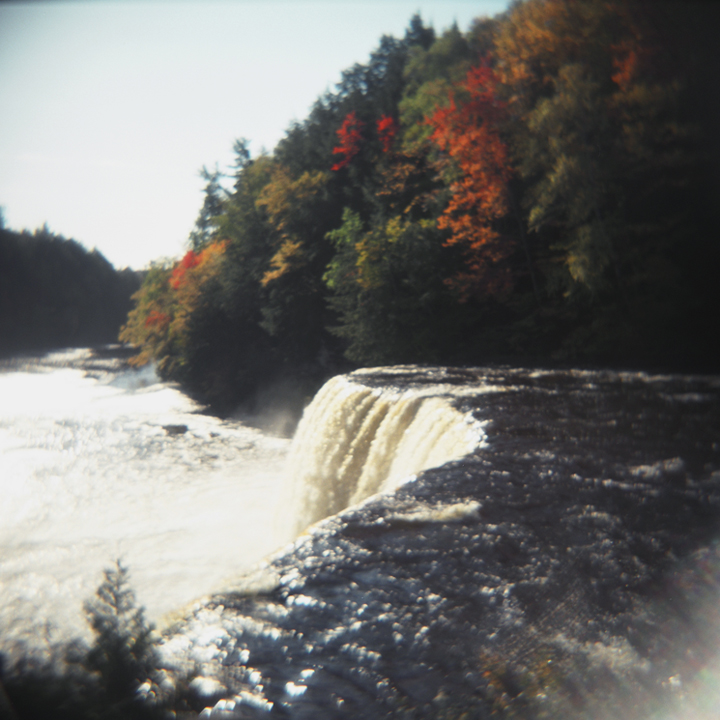
#TBT: the brink – tahquamenon falls

the brink - tahquanemon falls

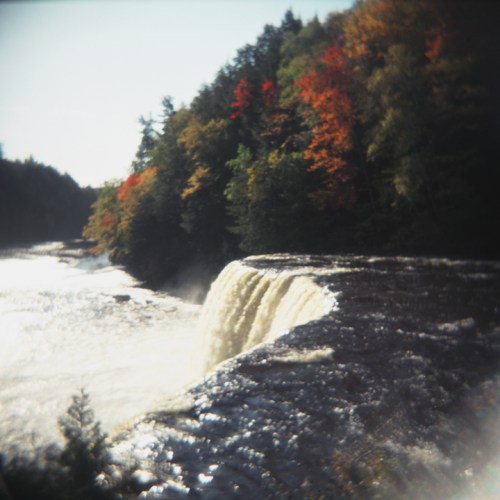
the brink – tahquamenon falls, photo by Scott Jones

Reaching all the way back to October 2006 for this photo of Tahquamenon Falls taken with a Holga 120N.

Check it out background big and see more of his Holga photos right here.

More Holga on Michigan in Pictures! More Tahquamenon Falls too!