Castle Rock, a Natural Lookout

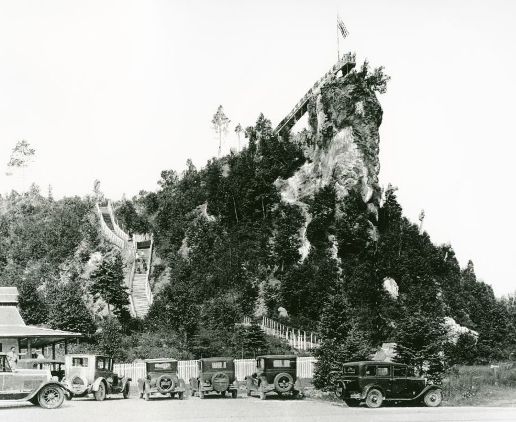
Castle Rock, circa late 1920s or early 1930s, photo courtesy Seeking Michigan

This morning I saw a photo of Castle Rock in the Absolute Michigan group on Flickr that made me wonder about the history of this iconic UP tourist stop. Bob Garrett of the Archives of Michigan has the story in A Natural Lookout at Seeking Michigan:

The Upper Peninsula contains a wealth of great scenery. One might wish to climb to a high point and “take it all in.” Fortunately, nature sometimes provides a natural lookout. One such lookout is Castle Rock.

Castle Rock is located near St. Ignace, on the Upper Peninsula side of the Straits of Mackinac. The Rock is a natural limestone tower, standing nearly two hundred feet above lake level. Wind and water erosion have shaped it into a sort of “castle.” Visitors who climb the 170 steps to the top will receive a stunning view. Looking left to right, one can see St. Martin Island, Marquette Island in Les Cherneaux (on a clear day), the town of St. Ignace, ferries coming to and from Mackinac Island and the top of the Mackinac Bridge.

Castle Rock had been an ancient lookout of the Ojibway tribe, who often called it “Pontiac’s Lookout.” A company named Norton and Lund purchased the site around 1927. Norton and Lund built a stairway to the top of the Rock, opened a souvenir stand and made cabins available for tourists.

Shortly thereafter (Sources differ on the date.), a St. Ignace photographer and businessman named Charles Clarence Eby (1890-1961) bought the property. Eby hoped to increase tourism, and he used his photography skills toward that end. He launched a high volume postcard business, and his postcards and other promotional material drew people to the Upper Peninsula and the St. Ignace area.

Around 1958, statues of the mythical lumberjack Paul Bunyan and his blue ox, Babe, were built at the foot of the stairs. These were handcrafted by Calvin Tamlyn, who was Eby’s son in law. They still greet visitors today.

Castle Rock can be found north of St. Ignace, along I-75. Take exit 348, and you’ll be there. For more information, see the Castle Rock Web site.

You can head over to Seeking Michigan for more including some books in Michigan libraries, a photo of Paul & Babe and also a stereoscopic pic from the 20s. There’s a little more info on Wikipedia, including a panorama of the view from the top of the rock.

Seeking Michigan is the web site of the Archives of Michigan and it’s packed full of articles like this in their Look section and also an extensive & searchable Michigan photo archive.

More roadside attractions on Michigan in Pictures.
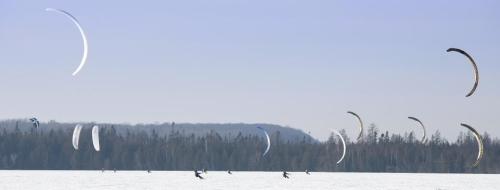
Snow kiting at the Straits with WISSA 2012

WISSA 2012 at St Ignace, photo courtesy WISSA 2012

The 2012 World Ice and Snow Sailing Championships (WISSA) take place February 20 – 26 in St. Ignace, and are in the US for the first time in 17 years. This event is a major worldwide competition and you can read all about it right here on Absolute Michigan!

Watch your step atop Castle Rock

Watch your step!

Watch your step!, photo by robizphoto.

In their entry about Castle Rock, Hunt’s Guide to the UP says that Castle Rock is a limestone stack, eroded by water and wind to form a “castle” nearly 200 feet above Lake Huron:

Clarence Eby, a St. Ignace photographer and pioneer of area tourism, acquired Castle Rock and, in 1928, opened it as a destination, just as somewhat better area roads enabled motorists to go sightseeing in outlying areas. He made postcards of sights in Mackinac County, the island, and the Straits, created a guidebook with ads from resorts and cabins, and worked to create a Chamber of Commerce information center in town. Today Eby’s grandson Mark runs Castle Rock

Click the link above to see one of Eby’s colorized postcards and get more info including a panoramic photo from Wikipedia.

Check this out bigger and in robizphoto’s Landscapes slideshow.

Before the Mackinac Bridge: City of Munising

Mackinac MI UP Great Lakes Passenger and Auto Ferry City of Munising connecting Mackinaw City and St Ignace before the Mackinaw Bridge was build

Mackinac MI UP Great Lakes Passenger and Auto Ferry City of Munising connecting Mackinaw City and St Ignace before the Mackinaw Bridge was built, photo by UpNorth Memories – Donald (Don) Harrison.

Before the Mackinac Bridge was built (check Absolute Michigan for lots more on that), going to or from the UP was by ferry. The City of Munising was the last of the breed:

Built by the American Ship Building Company of Cleveland in 1903 for the Pere Marquette Railway Company, the “Pere Marquette 20” became the “City of Munising” in 1937. The Michigan Department of Highways used the ship to ferry autos across the Straits of Mackinac until 1959. The ship was used for potato storage by a Washington Island, Wisconsin firm until 1973.

Michigan State Ferry Album has some photos of the City of Munising and other ships that plied the Straits.

Check this out bigger and see some shots of the old ferry docks in Don’s slideshow of old Mackinac photos

2009 Ice Breaking Cruise on the Straits of Mackinac

Mackinaw Bridge

Mackinaw Bridge, photo by SMCphotography.

Shirley was lucky enough to be aboard the USCGC Biscayne Bay out of St. Ignace as she opened a channel under the Mackinac Bridge early last week. She writes:

Ever have one of those days that you wouldn’t trade for anything? This is it. Unbelievable cold weather , well below zero. Traveled in an Army bus with little to no heat, broke down, froze for 2 hrs, 2nd bus rescued us, little to no heat. Finally made it to the cruise, froze everything, ate medium warm food, met lots of great people and shot over 700 photos. So much fun. The views of the ice and Mackinaw Bridge in the dead of winter are absolutely beautiful. Thanks to ESGR Employer Support of the Guard and Reserve for giving me this absolutely wonderful day.

You can view photos from the ice breaking cruise and definitely check out the slideshow!

Read more about the Coast Guard Cutter Biscane Bay from Hunts UP Guide.

Castle Rock: Another (Michigan) Roadside Attraction

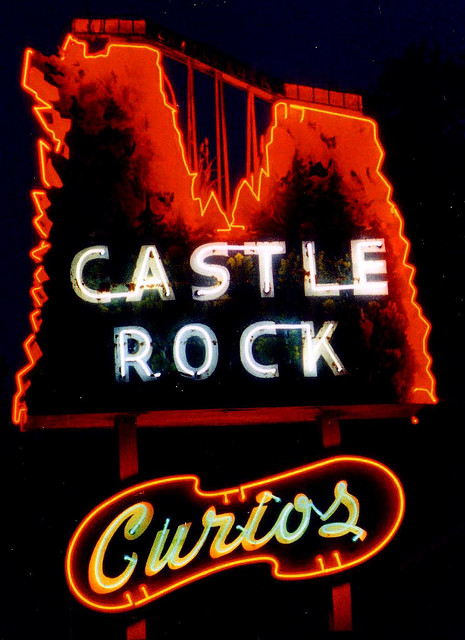
Castel Rock Curios

Castle Rock Curios, photos by Alan C of Marion,IN

This photo is just one of very many in Alan ‘s Roadside Finds set (slideshow) and you’ll also want to wander through his Michigan pics!

Michigan’s Roadside Tourist Attractions will be showcased in a special exhibit opening at the Michigan Historical Museum in Lansing on January 10, 2009.

Michigan’s Roadside Attractions, set to run through Sept. 14, 2009, features more than 50 roadside attractions that grew up as Michigan expanded its highway system from the 1930s through the 1970s. Many of these attractions still provide fun and excitement for millions of tourists each year.

“Deer parks and dinosaur gardens are just a couple travel experiences that take center stage again in this exhibit. Places like Castle Rock in St. Ignace, the Soo Locks Boat Tours and the multiple locations where Paul Bunyan has been spotted are also featured through photos, artifacts and souvenirs,” said Phillip C. Kwiatkowski, director of the Michigan Historical Museum System. ” Michigan’s Roadside Attractions is about treasured mementoes, from miniature Paul Bunyan statues and plastic purses to dinosaurs, seashells and even ceramic doll dish sets.”

Learn more about the exhibit from the Michigan Historical Museum.

I know you’re all wondering about Castle Rock – here’s what Roadside America has to say:

Castle Rock is an abrupt, geologic protuberance just north of the Mackinac Bridge on Michigan’s Upper Peninsula. The nearly 200-ft. column of rock was long ago augmented with a man-made ramp and walkway to provide tourists a climb for an unparalleled view of Lake Huron and distant Mackinac Island.

At the base of the Castle Rock lookout is an amusing Paul Bunyan statue accompanied by his mythical sidekick, Babe the Blue Ox. This Bunyan is rare. Instead of standing, ready to deforest Michigan, Paul sits, staring googly-eyed towards the lake. With a newspaper in his hands, we’d complete the visual that Paul is halfway through one of his mighty bowel movements.

OK, probably should have cut that one sentence earlier. Read more about Castle Rock from Hunt’s UP Guide (I learned that it only costs 50¢ to climb – definitely stopping next time!)

Pasties: A UP Tradition

Pasties

Pasties, photo by G0Da.

Lehto’s Famous Pasties are located 7 1/2 miles west of the Mackinac Bridge and the town of St. Ignace. I was pretty shocked to find that I didn’t have a post about pasties on Michigan in Pictures. As the official food of the Upper Peninsula, it definitely merits one, so here goes!

Real Michigan Food: The Pasty on Absolute Michigan says that the pasty came to the Upper Peninsula with tin miners from Cornwall England in the 1800s. Along with a lot of mining knowledge, the Cornish brought advanced lunch technology: the small, portable, and oh-so-filling pasty.

The Cultural Context of the Pasty – yes, we take our meals seriously in Michigan – has even more history and some recipes. If cooking isn’t your thing, head over to Pasty.com’s Pasty Central to buy pasties online. Pasty Central is an employee-owned company in Calumet that has shipped over 300,000 pasties.

You can find other places to purchase pasties (and more articles) at Absolute Michigan keyword pasty and the Absolute Michigan pool has a number of Michigan pasty photos including a perplexingly popular pasty picture and this pasty packed postcard (includes history and recipe). As with just about anything, there’s a Wikipedia entry for the pasty and pasties (not to be confused with other uses of pasties).

I should add that the photo above is part of Dan’s Michigan slideshow, something you should definitely check out if you are a fan of photography with 110% of the Michigan RDA for Awesome.