
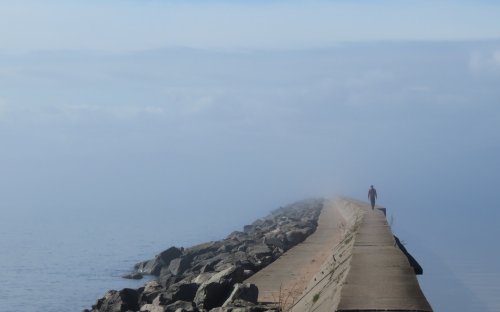
Walking the breakwater in the fog, photo by Ann Fisher
View Ann’s photo of the Marquette breakwater background bigtacular and see more in her 2015 UP slideshow.
There’s more spring wallpaper, fog & mist & Marquette on Michigan in Pictures.
Walking the breakwater in the fog, photo by Ann Fisher
View Ann’s photo of the Marquette breakwater background bigtacular and see more in her 2015 UP slideshow.
There’s more spring wallpaper, fog & mist & Marquette on Michigan in Pictures.
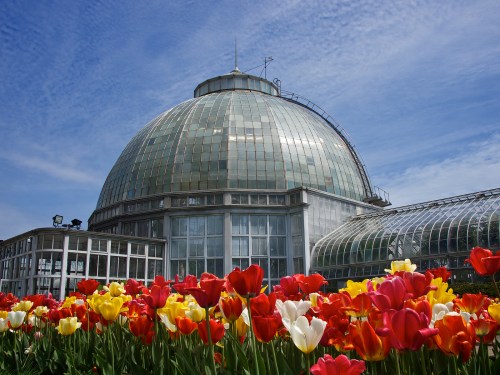
Belle Isle Conservatory – Detroit, Michigan, photo by David Marvin
Dan Austin of Historic Detroit has an excellent article on the Anna Scripps Whitcomb Conservatory on Belle Isle that begins:
If Belle Isle is Detroit’s crown, then the Anna Scripps Whitcomb Conservatory is its brightest emerald, full of brilliant green ferns, palms and cacti and plant life from all over the world.
The conservatory, opened in the center of the island on Aug. 18, 1904, the same day as its next door neighbor, the Belle Isle Aquarium. Both were designed by Albert Kahn, who for the conservatory turned to Thomas Jefferson’s Monticello for inspiration. It sits on 13 acres and features a lily pond on its north side and is fronted by formal perennial gardens on the west. These gardens are home to theLevi L. Barbour Memorial Fountain. For the first 51 years of its existence, the building was known as simply the Conservatory or the Horticulture Building. Today, the Anna Scripps Whitcomb Conservatory is the oldest, continually operating conservatory in the United States.
The building covers about an acre and has five areas, each housing a different climate, and features a north wing and a south wing and a 100,600 cubic feet dome 85 feet high to accommodate soaring palms and other tropical plants. The north wing houses hundreds of cacti and desert plants, and just beyond that is a room packed with ferns from floor to ceiling. The south is home to hundreds of tropical plants and the Children’s Christian Temperance Fountain. The collection also includes perennial gardens and displays of annuals. The show house, remodeled in 1980, features a continuous display of blooming plants.
Definitely read on at Historic Detroit on for how the Conservatory got its name and became home to the largest municipally owned orchid collection in the country. There’s also a great historic photo gallery.
Here’s the official site for Belle Isle Conservatory. The hours are Wednesday-Sunday, 10 AM – 5 PM and the Belle Isle Aquarium is open Saturdays and Sundays as well.
View David’s photo background bigtacular and see more in his slideshow.
More spring wallpaper on Michigan in Pictures.
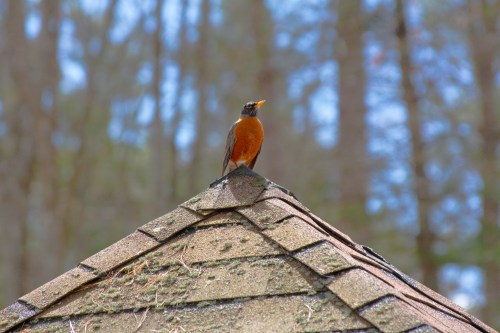
Perched Robin, photo by matt.swope
Top of the morning to you from Michigan’s state bird, the American robin!
View Matt’s photo background big and see more in his Northern Michigan slideshow.
More Michigan birds and more spring wallpaper on Michigan in Pictures.
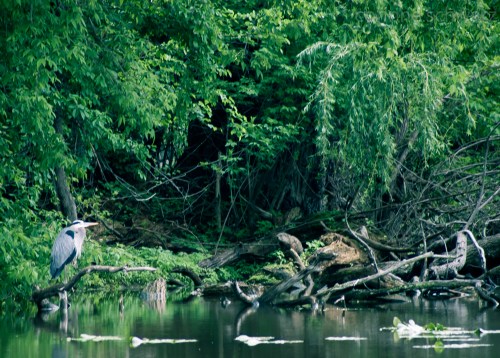
Heron & Beaver, photo by Corinne Schwarz
Here’s a cool photo from May of 20111 that I never featured for some reason. That reason might have been so I could link to this article from the Birdwatchers General Store in Cape Cod about the symbiotic relationship between beavers & blue herons. It says in part:
It is thought that the Bay State’s famed naturalist, Henry David Thoreau, never saw a Great Blue Heron nest in Massachusetts. Why? It’s partly because there were no beavers living in MA during Hank’s lifetime. Way back in the 1700s, unregulated cutting eliminated the trees beavers needed for survival.
…Today, beavers are once again thriving in MA. That’s not only great news for anyone who enjoys seeing beavers, but it’s great news for Great Blue Herons as well.
I think we all know how beavers operate. They find a secluded stream, cut down a few trees and dam it up. The area behind the dam becomes flooded and turns into a beaver pond. Why do beavers need to go through all the work to build their very own pond? The beavers create a pond so they can have underwater access to their lodge, even when everything is frozen in the winter. However, the newly built pond often entraps large trees, which eventually drown and die. Dead trees growing out of the center of a pond may look eerie to us, but they are magnets to herons. The dead trees provide excellent platforms for the birds to build their nests on. In addition, the water prevents terrestrial predators from munching on the eggs and babies. Between the swampy setting, the dead trees, the bulky stick nests and the gangly herons, the whole scene looks a Gothic nursery, but the birds love it.
Read on for lots more, and for more about these two species, see Know Your Michigan Birds: Great Blue Heron and Castor canadensis, the American beaver on Michigan in Pictures.
View Corrine’s photo background bigtacular and see more in her Water Wheel slideshow.
More spring wallpaper and more “Best Friends in Nature” on Michigan in Pictures.
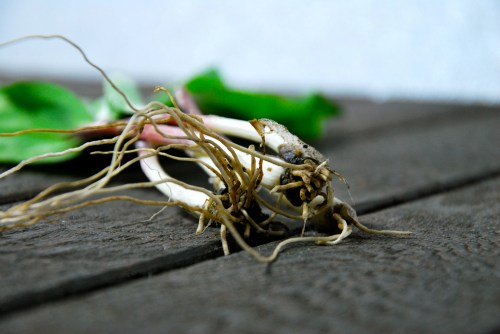
Wild Leeks, photo by CherryCapitalFoods
Here’s some of a Wild Food Wednesday on Wild Leeks I wrote for eatdrinkTC.com. You often find these oniony treasures when you’re morel hunting. Leeks are in the woodse now, and more than one little bird has told me of morels popping around the state as well!
Whether you know them as ramps, wild leeks, spring onions or by their scientific name of Allium tricoccum, ramps are a wild onion with a delicious & pungent garlicky flavor. Wild leeks are found from as far south as Alabama all the way up into Canada. To the south, they are more commonly known as ramps while in the north, wild leek is more common. Wikipedia’s page on Allium tricoccum says that “ramps” comes from the English word ramson, a common name of the European bear leek (Allium ursinum) that is related to our American species.
Regarding harvesting, Ramp-age at the Earthy Delights blog says:
Good ramps or wild leeks should have two or three whole bright green leaves with the small white bulb attached by a purplish stem. The leaves are generally about 6 inches long, although ramps tend to be harvested at a somewhat earlier stage than are wild leeks. Depending on where you get them, ramps or wild leeks may be still muddy from the field or all cleaned and trimmed. The key is that they be fresh. Yellowing or withering in the leaves is a sign that they have gone too long.
A papery wrapper leaf (and some dirt) may surround the bulb and should be pulled off as you would with scallions. Trim away any roots along with their little button attachment. The entire plant is now ready for eating.
Once ramps / wild leeks have been cleaned, store them in the refrigerator tightly wrapped to keep them from drying out (and to protect the rest of the contents of the fridge from the heady aroma). They should keep for a week or more, but use them as soon as possible after harvest.
Some wild leek facts & lore:
View this photo background bigtacular and see more in Cherry Capital Foods’ Spring Hollow Farms slideshow.
I’m especially happy to feature today’s photo because we buy incredible lettuce, greens and duck & quail eggs from Richard & Diana of Spring Hollow Farms of Buckley. If you see them at the Traverse City Farmer’s Market, be sure to buy a bag or two of their spring mix!
More Michigan food and more spring wallpaper on Michigan in Pictures.
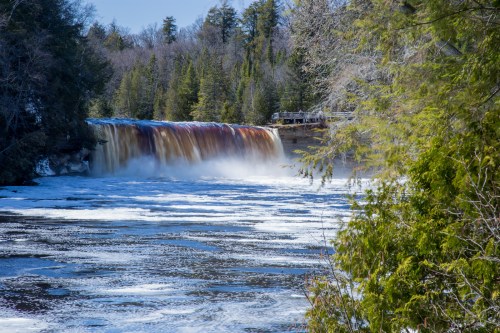
Tahquamenon Falls, photo by ptrefftz
Hey beautiful!
View the photo background bigtacular and see more including some beautiful night sky photos in ptrefftz’s slideshow.
More Spring wallpaper on Michigan in Pictures.
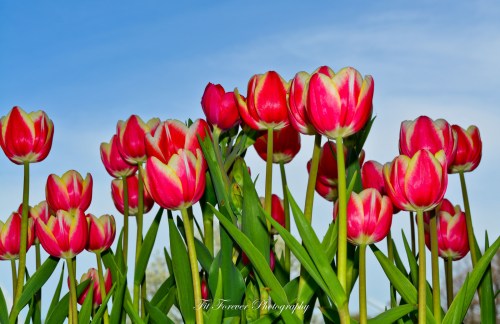
Tulips, Tulips, Tulips, photo by Dawn Williams
Holland’s annual Tulip Time starts this Saturday (May 2) and continues through May 9th. The annual celebration features parades, music, displays of Dutch Heritage and of course tulips, 4.5 million of them!
Dawn took this photo last year. See it background bigtacular on Flickr and check out more of her Tulip Time photos.
More tulips & Tulip Time and more spring wallpaper on Michigan in Pictures.
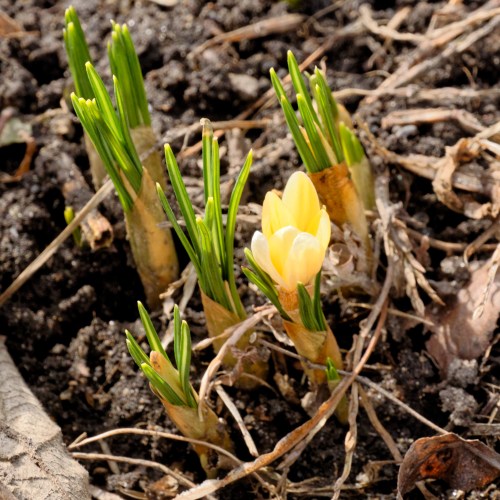
Spring!, Photo by Joel Dinda
View Joel’s photo background bigtacular and then just lay back and watch his massive Flowers slideshow until you too believe in SPRING!
There’s lots more spring wallpaper on Michigan in Pictures.
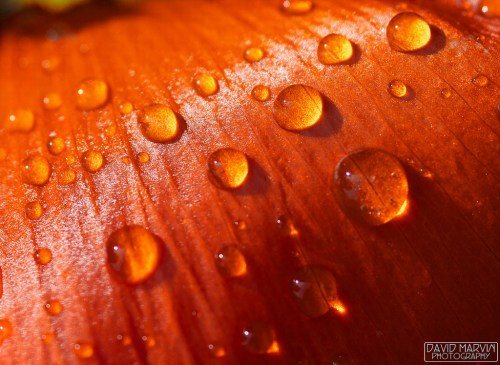
Spring Showers on Spring Flowers, photo by David Marvin
View David’s photo background big and see more rainy, tulipy, irisy goodness in his slideshow.
More Spring wallpaper on Michigan in Pictures.
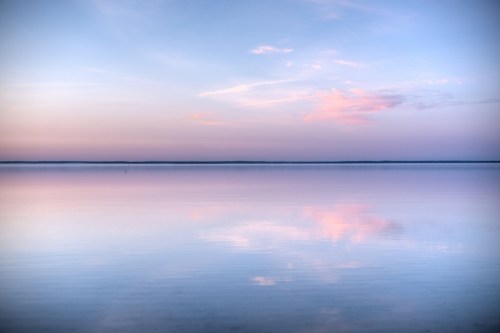
Haserot Beach, photo by lomeranger
One of the things I love about Spring and early Summer is how calm the water can be.
Jason shot this at 6 AM on the Old Mission Peninsula near Traverse City. View his photo background bigtacular, see more in his Landscapes VII slideshow and purchase it if you wish at his photography website.
There’s more sunrises and more Spring wallpaper on Michigan in Pictures!
 Michigan in Pictures