The Scary Sound of Meteors

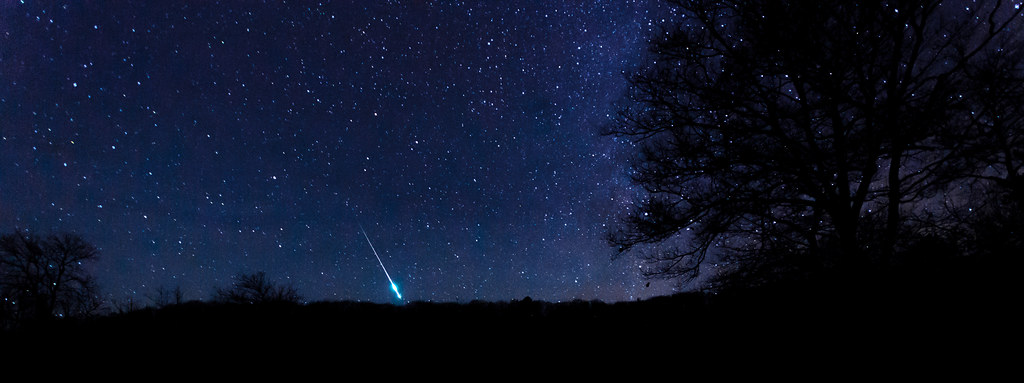
Bolides & Electrophonic Sounds by Aaron Springer

Bolides & Electrophonic Sounds by Aaron Springer

While much of Michigan was shrouded in clouds for the peak of the Orionids, the October meteor shower will still be producing a lot of meteors for the next few days. As you are watching the skies, you may hear sounds that have been reported along with meteors for millenia, and dismissed for the same amount of time by such luminaries as Edmund “The Comet Guy” Halley. This Space.com article says that you might be able to believe your ears that meteors can make hissing sounds:

These faint sounds are probably created when bright pulses of light from the meteors heat up certain objects on the ground below, a new study reports. These objects — for example, leaves or hair — radiate thermal energy into the nearby air, producing pressure waves that generate a variety of sounds.

“I think our answer is pretty solid,” said study co-author William Sweatt, a researcher at Sandia National Laboratories in New Mexico.

The mysterious sounds are associated with very bright fireballs, meteors that blaze up at least as intensely as the full moon shines in the sky. Generally, an incoming object must weigh 1.1 lbs. (0.5 kilograms) or more to make noise audible to humans, Sweatt said.

The faint, whispery sounds have been described in many different ways by people who have heard them; popping, sizzling, rustling and hissing are commonly employed adjectives. And hearing them is a rare treat indeed. “I think a person’s lucky if they get one per lifetime,” Sweatt told Space.com.

You can read more & check out the video below. A very cool twist on the story for me is that a friend shared my experience of hearing the sounds with today’s photographer Aaron Springer when he shared this back in November of 2015. Aaron referenced the American Meteor Society’s theories on the sounds which appear to have been correct!!

Another form of sound frequently reported with bright fireballs is “electrophonic” sound, which occurs coincidentally with the visible fireball. The reported sounds range from hissing static, to sizzling, to popping sounds. Often, the witness of such sounds is located near some metal object when the fireball occurs. Additionally, those with a large amount of hair seem to have a better chance of hearing these sounds. Electrophonic sounds have never been validated scientifically, and their origin is unknown. Currently, the most popular theory is the potential emission of VLF radio waves by the fireball, although this has yet to be verified.

Head over to Aaron’s Flickr for his latest & don’t forget to look up!!

Support Michigan in Pictures with Patreon

Comet of Unknown Origin

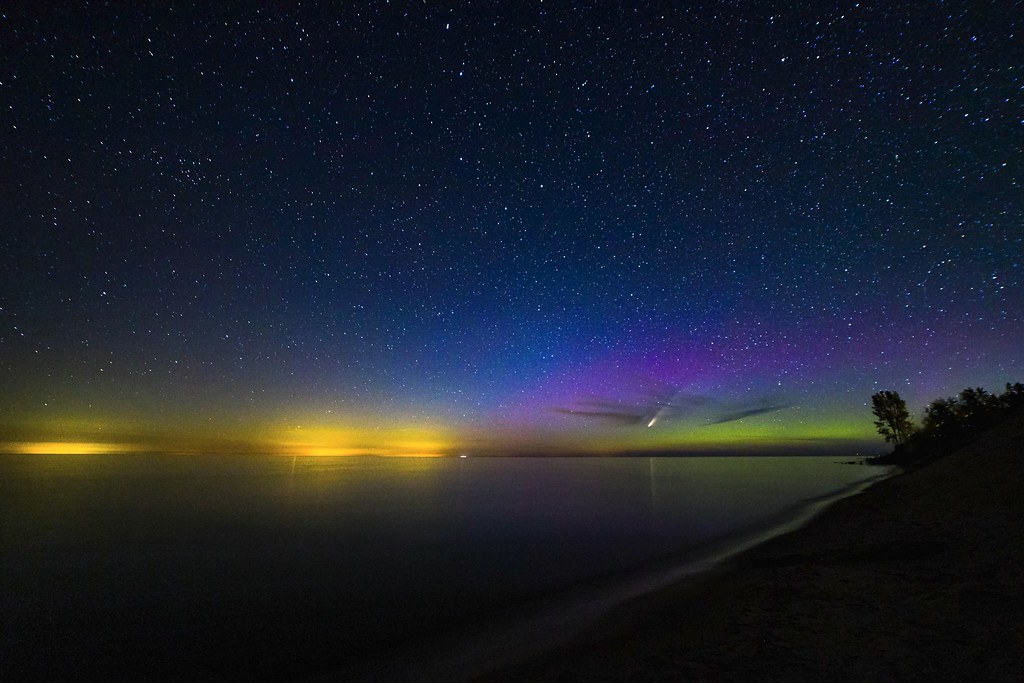
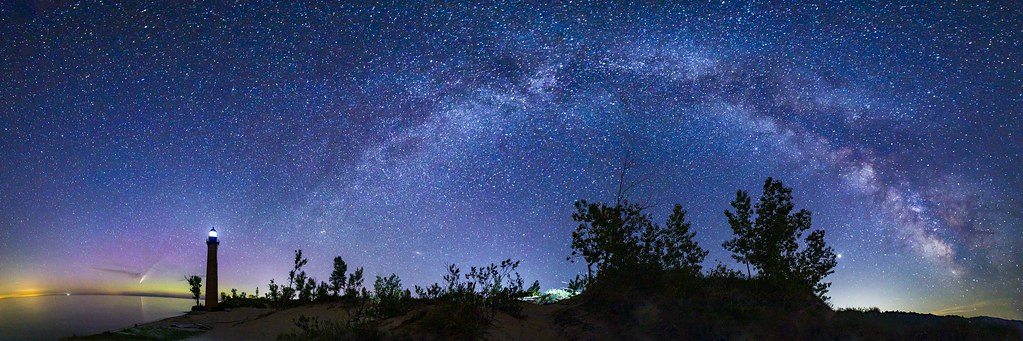
Northern Lights and Comet Neowise by Gary Syrba

Northern Lights and Comet Neowise by Gary Syrba

Our friends at EarthSky share that the latest observations of Comet 3I/ATLAS show it brightening more quickly than predicted:

Up until now, the interstellar comet had been brightening as expected. But now, the observations from mid-September 2025 are beginning to rise above the upward-sloping line of brightening that would have been typical for a comet nearing the sun.

(There has been a lot of talk that 3I/ATLAS might be an interstellar probe due to its great speed & a trajectory that takes it close to Jupiter, Mars & Earth before it slingshots away using the Sun’s gravitation.)

A team of scientists, led by Xabier Pérez-Couto of the University of A Coruña in Spain, has traced the path of interstellar object 3I/ATLAS back 10 million years. Indeed, this is only the 3rd-known object found traveling in our solar system that didn’t originate with our sun and its planets. Its trajectory tells us it must have come from another star system, but which one?

They traced the path back over 100 million astronomical units (9.3 quadrillion miles) but couldn’t find where it started towards Sol. You can read on for lots more!

Gary took these photos of the Northern Lights & Comet Neowise over Lake Michigan back in 2020. See more in his Night Skies gallery on Flickr and view & purchase Gary’s work on his website.

Support Michigan in Pictures with Patreon

Under the Sign of the Lion

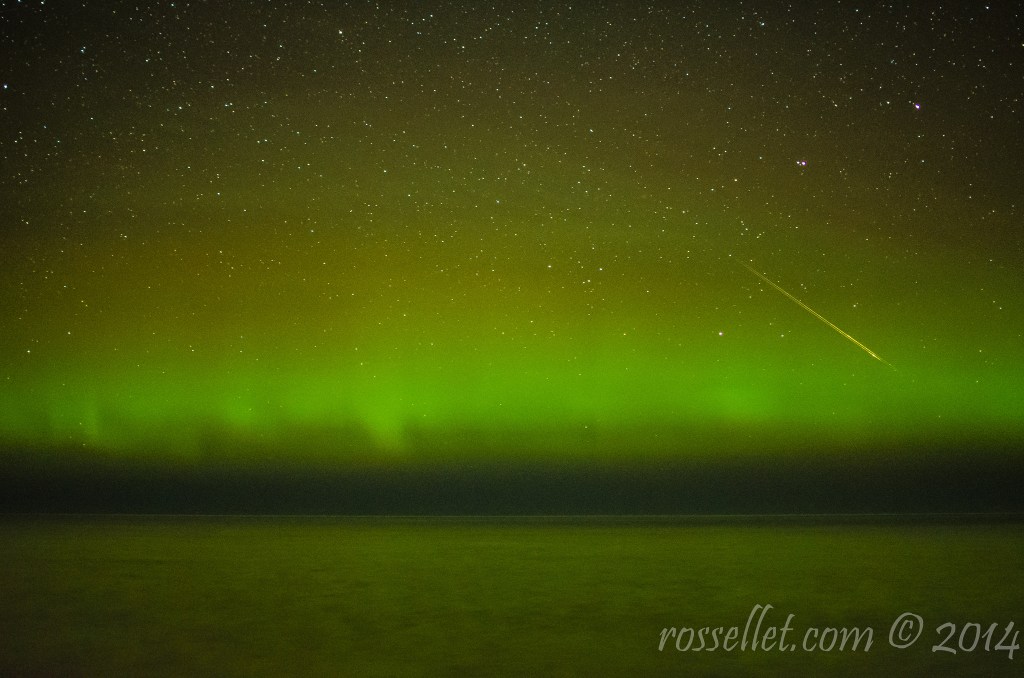
Aurora Fireball by Ross Ellet

I featured this photo 8 years again, but with the incredible run of northern lights we’ve been having and the massive spike in interest in getting out under the night sky coupled with the rise of the Detroit Lions as an NFL superpower, it’s a great time to bring back this feature from Space.com on How to Watch the Leonids Meteor Shower:

The Leonid meteor shower will be active from Nov. 3 to Dec. 2 this year and will peak overnight from Nov. 17 to 18. The Leonids are produced when Earth passes through the debris left behind by comet 55P/Tempel-Tuttle during its highly elliptical orbit around the sun every 33 years. The Leonids are considered some of the fastest meteors, zipping through the sky at 44 miles (71 kilometers) per second, according to NASA. They can also result in impressive fireballs producing long, bright and colorful meteor streaks.

The Leonids’ radiant is located in the sickle-shaped head of the constellation Leo, the lion. Leonid meteor hunting can be incredible, or a total bust. It all depends on where its parent body, Comet 55P/Tempel-Tuttle, will be in its orbit and the kind of debris clumps that will be around when our planet passes through this comet’s orbit. The Leonids put on big shows in 1966, 1999 and 2001, according to AMS, when the comet was making its closest approach to the sun. It will be several years until observers get a big show from the Leonids.

Ross took this photo ten years ago in late September of 2014 and shared:

The sky was cloudy most of the night, but at 3:30am there wasn’t a cloud in the sky. We made our way to the lakeshore and sure enough the northern lights were dim on the northern horizon. At one point you could hear the howl of a distant wolf pack while the northern lights were out. Then moments later a slow move fireball flashed across the sky. It lasted a couple seconds and the brightness pulsed as it moved through the atmosphere. After that the aurora faded, but several more meteors (some very bright) streaked above us.

Ssee more in his Porcupine Mtns gallery on Flickr, and definitely check out Ross Ellet’s Picturesque Adventures for much more!!

Support Michigan in Pictures with Patreon

How to see Comet A3

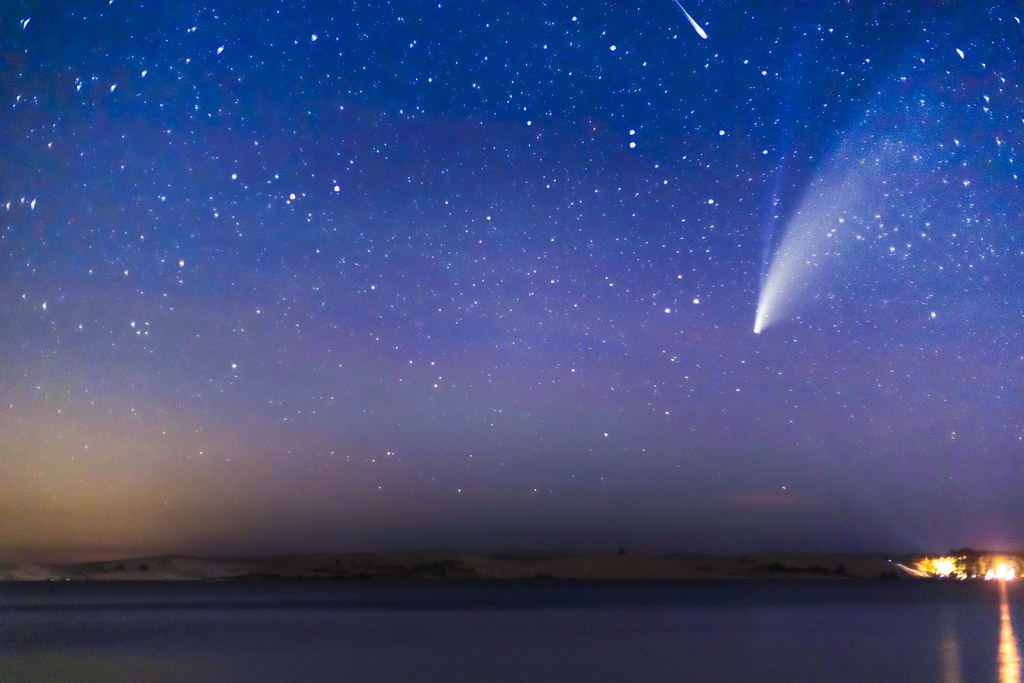
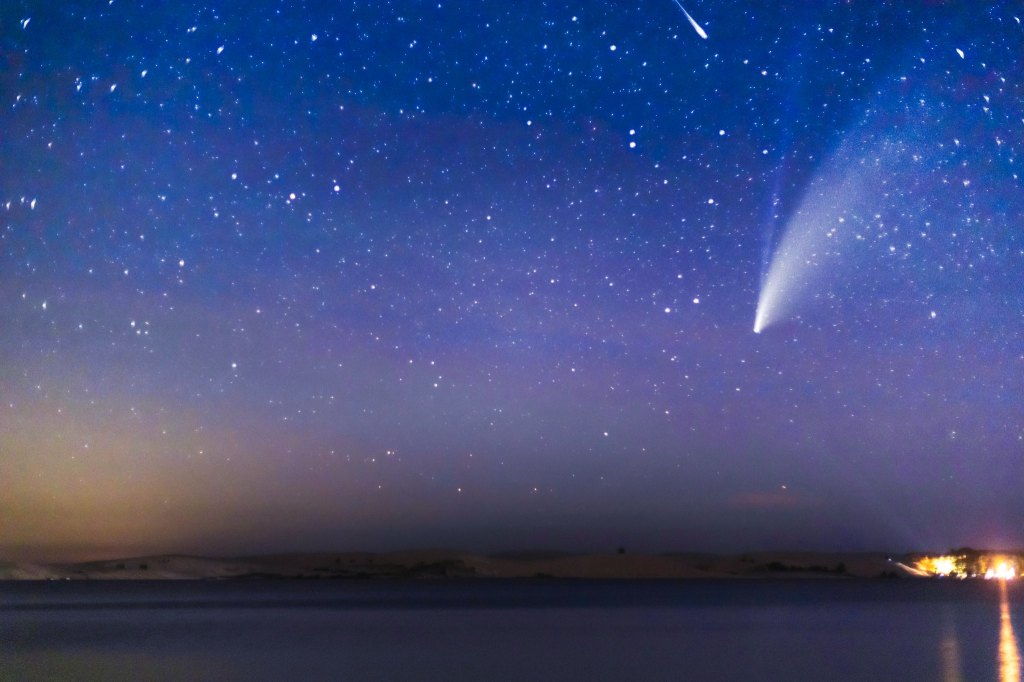
Neowise and meteor by Gary Syrba

There were hopes that Comet C/2023 A3 Tsuchinshan–ATLAS aka Comet A3 would be the comet of the century. While it is not quite that, it does appear that it will be visible for the next couple of weeks just after sunset, even to the naked eye! The good folks at EarthSky offer a helpful checklist to spot Comet A3:

  1. Be sure you’re looking at the correct direction and time. Comet A3 will be visible low in the west after sunset beginning around October 14.
  2. You need a dark, unobstructed sky. Start looking when the sky is dark, but close to sunrise or sunset. Make sure there aren’t hills, trees or buildings blocking your view.
  3. If you can’t see the comet with your eye, try your phone. Most cell phone cameras provide a night or low-light mode. But capturing an image of the comet will require that you hold the camera firmly – or lean against a fixed object like a tree – to avoid shaky or blurred image.
  4. AFTER you’ve located the comet, use binoculars or your eyes to sweep in that area in the sky.

Gary took this shot of Comet Neowise back in July of 2020. See more in his Night Skies gallery on Flickr and view & purchase his work on his website.

Support Michigan in Pictures with Patreon

Get ready for Comet Tsuchinshan-ATLAS!

via Leelanau.com

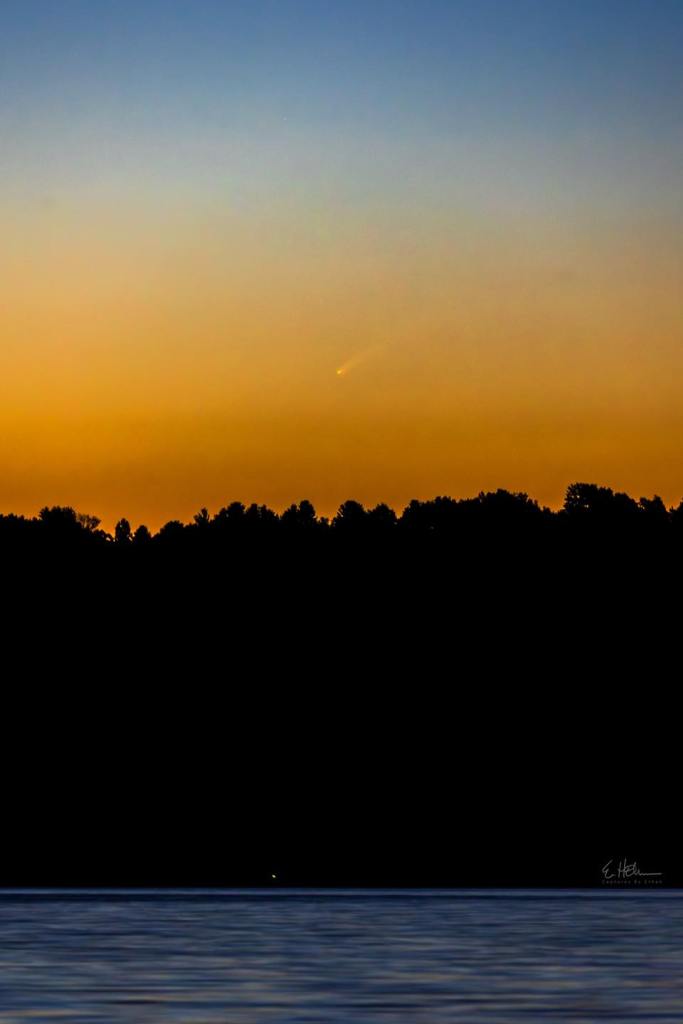
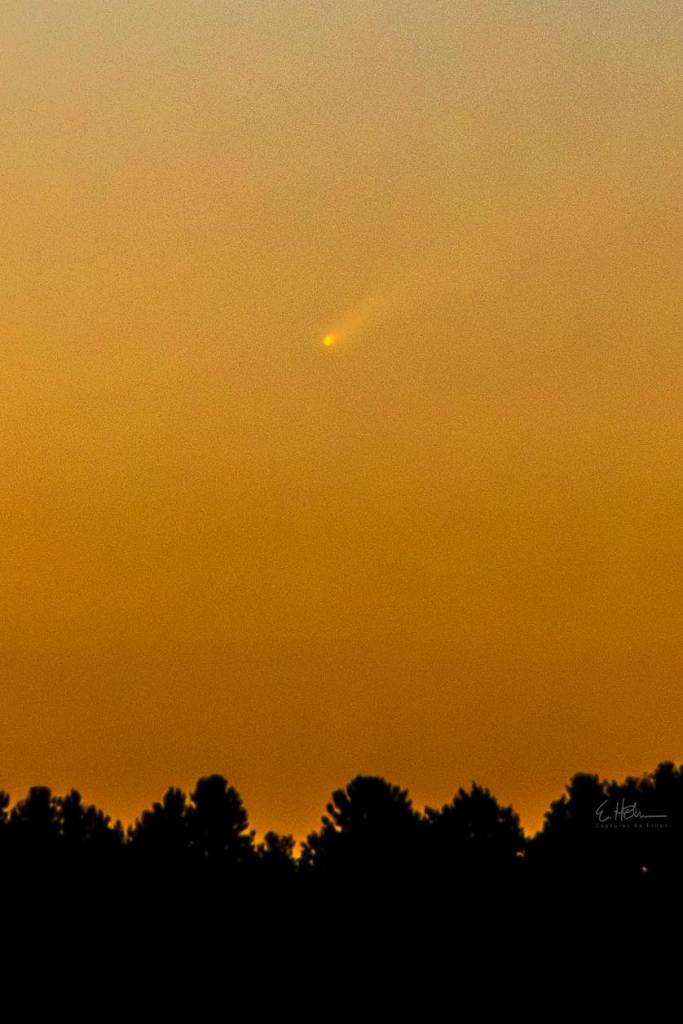
Comet C2023 А3 Tsuchinshan-ATLAS by Captures by Ethan

The Planetary Society shares that some astronomers are referring to the newly discovered Comet Tsuchinshan-Atlas as:

… “the comet of the century.” They say it will outshine everything but the Moon in the night sky and that it will stretch its tail over a huge portion of the sky. In that case, people around the world would be able to see the comet without trying at all. On the other hand, some people, like astronomer Dr. Zdeněk Sekanina, have predicted that the comet will break apart around the closest point in its orbit to the Sun, or “perihelion.” Comet Tsuchinshan-Atlas shows no clear signs of fragmenting right now, but that could always change.

…During late September and the first few days of October, you can find Comet Tsuchinshan-Atlas in the constellation Sextans. Look to the east, where the comet will rise about an hour before the Sun if you’re in the Northern Hemisphere. If you’re in a Southern Hemisphere, the comet will rise a bit earlier and be easier to see.

For most of early October, Tsuchinshan-Atlas will be too close to the Sun to be easily visible. Then, starting around Oct. 10 — if all goes well — the comet should be visible after sunset near the horizon in the west. With every passing day, Tsuchinshan-Atlas will start the evening higher in the sky and be easier to spot, unless it gets too dim.

…or breaks up, but if not it could be legendary! Head over to Planetary.org for more!

Ethan shares that he captures this sweet shot of Comet Tsuchinshan-ATLAS rising over Lake Leelanau early morning on Sunday. For more follow him on Facebook. View & purchase his work at capturesbyethan.com.

Support Michigan in Pictures with Patreon

Earth to get an extra moon on Sunday!

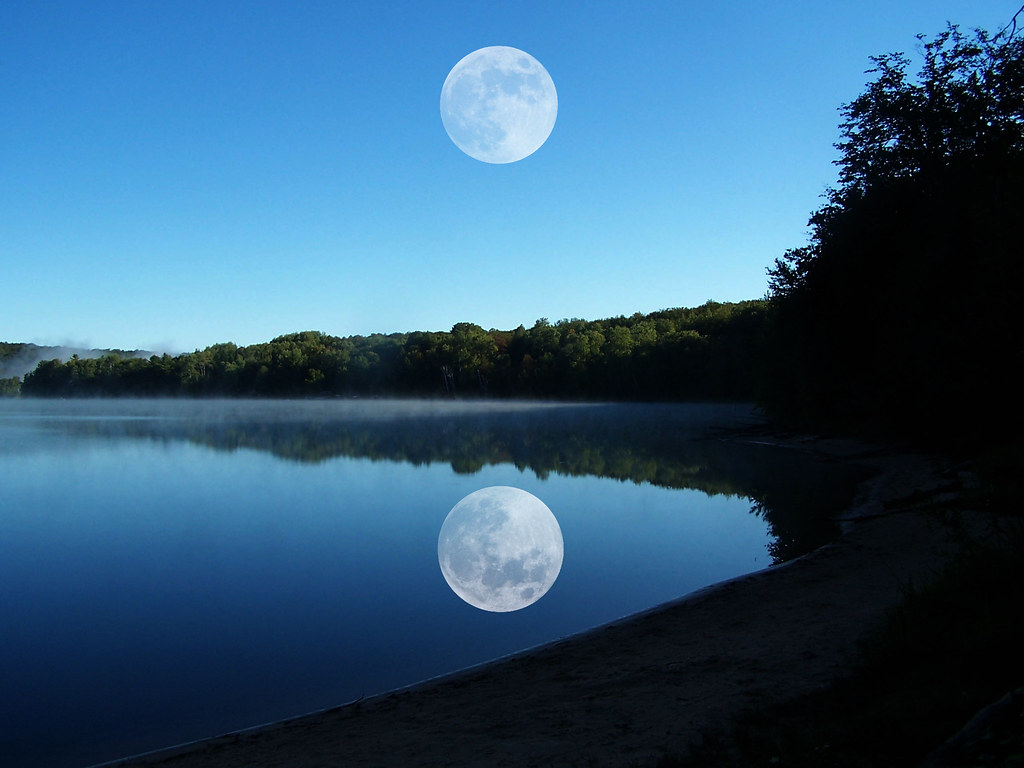
He leads me beside the still waters… by Kathy

CNN shares that the Earth will (briefly) be getting a “mini-moon” on Sunday:

The newly discovered asteroid, named 2024 PT5, will temporarily be captured by Earth’s gravity and orbit our world from September 29 to November 25, according to astronomers. Then, the space rock will return to a heliocentric orbit, which is an orbit around the sun.

…The space rock could be anywhere between 16 and 138 feet (5 and 42 meters) in diameter, potentially larger than the asteroid that entered Earth’s atmosphere over Chelyabinsk, Russia in 2013 … But as a mini-moon, Asteroid 2024 PT5 isn’t in any danger of colliding with Earth now or over the next few decades, de la Fuente Marcos said. The space rock will orbit about 2.6 million miles (4.2 million kilometers) away, or about 10 times the distance between Earth and the moon.

Kathie shares that Thumb Lake in Charlevoix County was foggy and lovely when she took this back in October of 2009. See more in her Top 40 gallery on Flickr. Also I get that we’re all worked up about AI, but please look at the 2009 date of the photo ;)

Support Michigan in Pictures with Patreon

Of rockets & plovers

Piping Plovers by JamesEyeViewPhotography

Piping Plovers by JamesEyeViewPhotography

“Musk is a very smart man. But he either was ignorant of the ecology out there or he felt his project was so much more important that it really didn’t matter what he did to the area.”
-Texas environmentalist Jim Chapman.

This article about the impact of Elon Musk’s Space X launchport on its neighbors spiked my blood pressure this morning. It’s bad enough hearing the dashed retirement dreams of Celia Johnson, a former Michigan social worker. The realization that it also impacts piping plovers, a beloved & endangered seasonal resident of the Great Lakes State, turned my anger up to 11:

The company’s presence, while welcomed by local politicians lured by the promise of taxable income and employment opportunities, has become a nightmare for many residents and wildlife conservationists attempting to protect the sensitive habitat surrounding the development.

Since SpaceX started construction in late 2015 and testing rockets in 2019, explosions have showered debris across previously unspoiled tidal flats and blown out residents’ windows, including Johnson’s. Rare species of birds like the piping plover and mammals have dwindled, and intense periods of construction and testing have closed off public access to the beach for more days than were authorized by the Federal Aviation Administration, which has federal oversight of the development. The company has also installed bright floodlights to illuminate the road and construction site.

…“This is a very important area for migratory birds as it’s a huge stopover area,” said Jared Margolis, a senior attorney at the Center for Biological Diversity, who submitted comments to the FAA questioning the legality of the SpaceX expansion. “Even a power plant would be concerning. But here you have giant rockets powered by methane that tend to explode, causing debris and noise impact, and we want to make sure the impacts are mitigated.”

Amid the constant construction noise, truck traffic, enormous floodlights over the site and debris from explosions, some species have already dwindled at an alarming rate, said David Newstead, director of the Coastal Bird Program for the Coastal Bend Bays & Estuaries Program, a nonprofit group that works to protect the area’s bays and estuaries.

Newstead conducted a study of the local population of piping plovers, sparrow-sized shorebirds that nest and feed in coastal sand and are protected under the Endangered Species Act. He found that the population halved from 2018 to 2021, correlating closely with the intensity of SpaceX operations in the area.

Read more at NBC News & here’s hoping the tiny piping plover can weather the storm. Tou can read more about them in this Leelanau.com piping plover article featuring another photo from James!

James took this photo back in the summer of 2018 in the Sleeping Bear Dunes National Lakeshore, one of the primary nesting areas for piping plovers. See more in his Summer gallery & for sure view and purchase his work including 2022 calendars on his website.

Support Michigan in Pictures with Patreon

Perseverance: New Mars Rover Lands Today

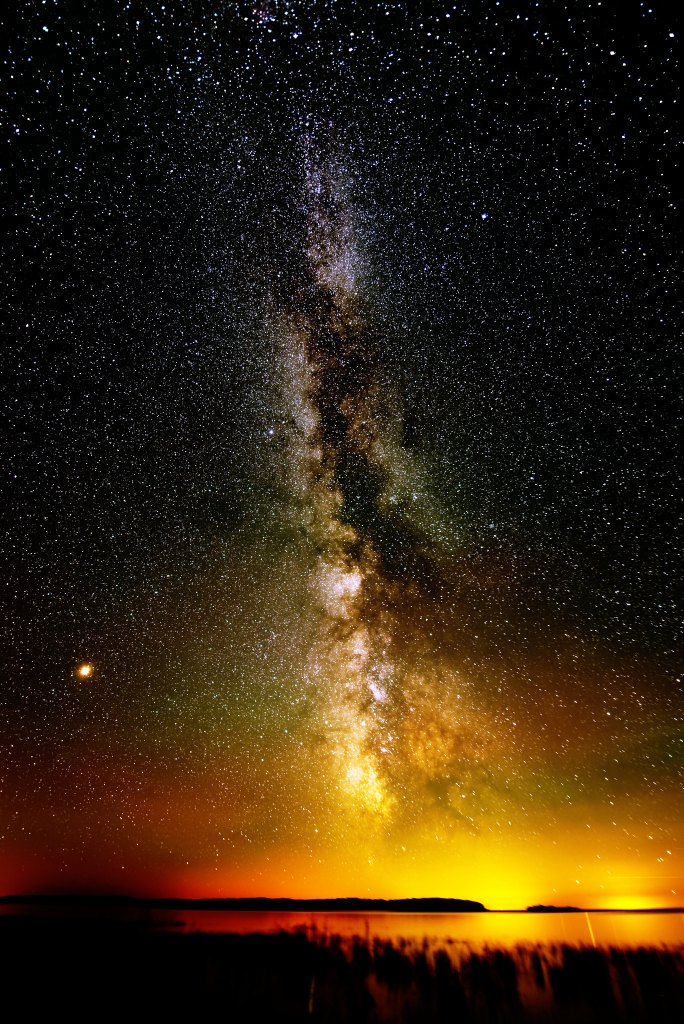
Milky Way + Mars viewed from Garden Peninsula MI by Daniel Sandin

Milky Way + Mars viewed from Garden Peninsula MI by Daniel Sandin

NASA’s Perseverance Rover will land on the surface of Mars today, Feb. 18, 2021 in a search for ancient life that will test the next generation of exploration tools:

Perseverance is the most sophisticated rover NASA has ever sent to the Red Planet, with a name that embodies NASA’s passion, and our nation’s capability, to take on and overcome challenges. It will collect carefully selected and documented rock and sediment samples for future return to Earth, search for signs of ancient microbial life, characterize the planet’s geology and climate, and pave the way for human exploration beyond the Moon.

Perseverance is also ferrying several cutting-edge technologies to the surface of Mars – including a helicopter named Ingenuity, the first aircraft to attempt powered, controlled flight on another planet.

The landing takes place just before 4 PM EST & you can watch online at NASA.

Daniel took this photo back of Mars in July of 2018 on the UP’s Garden Peninsula. See more great night photography on his Flickr & for sure check out his website – he looks like a very interesting guy!

Here’s NASA’s YouTube stream which goes live around 2 PM today.

Support Michigan in Pictures with Patreon

Michigan Lights Up the New Year!

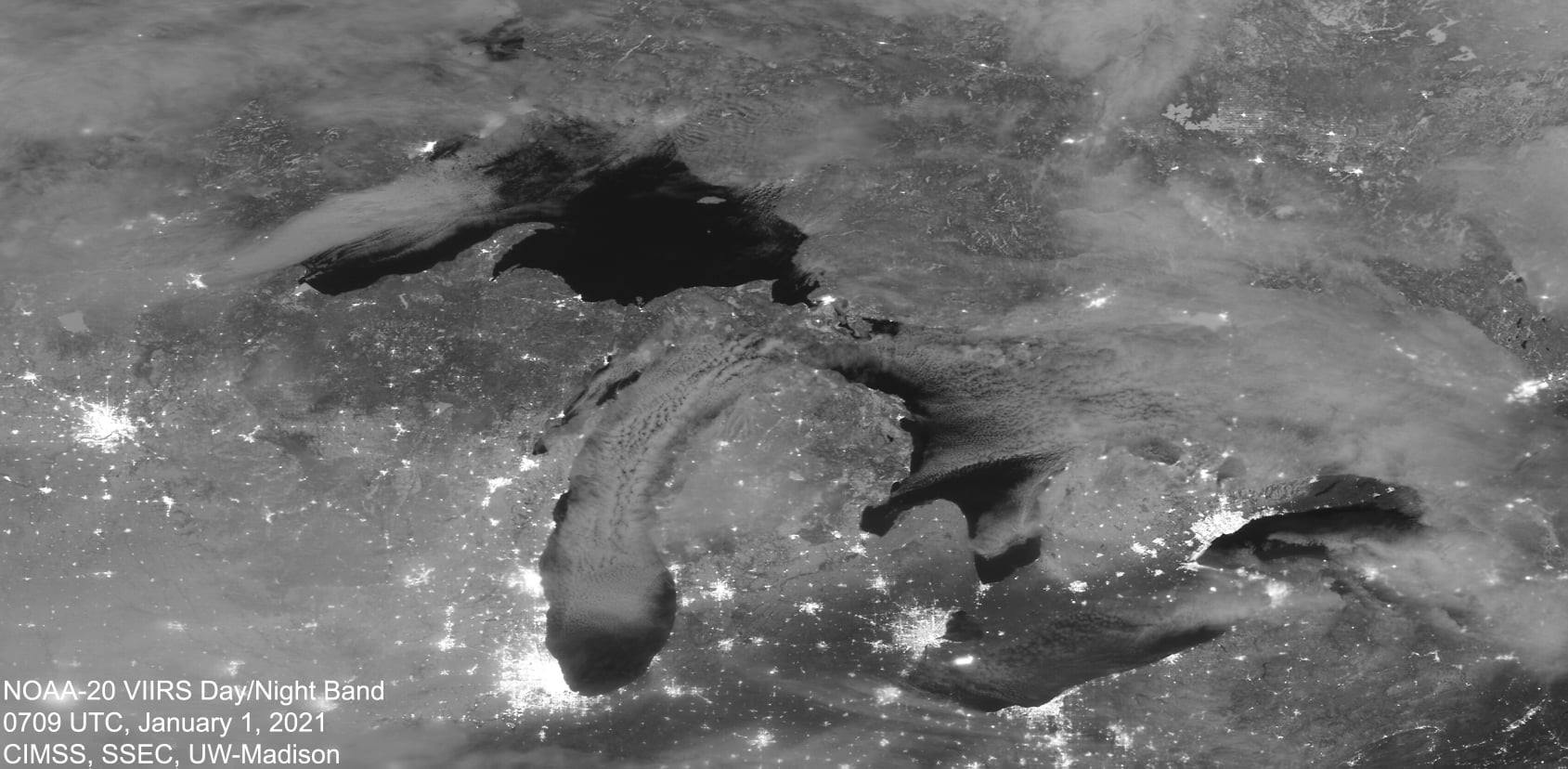
Michigan Lights up the New Year by Cooperative Institute for Meteorological Satellite Studies (CIMSS) UW-Madison

Michigan Lights Up the New Year by CIMSS UW-Madison

This satellite photo from the Cooperative Institute for Meteorological Satellite Studies (CIMSS) at the University of Wisconsin shows:

…two of the first 2021 images from the Suomi-NPP and NOAA-20 satellites when they flew over the U.S. overnight to acquire stunning VIIRS nighttime imagery with light from recently full moon (98% illumination). City lights shimmer in the wintry landscape while a large storm swirls in the Mississippi Valley. Including a zoom into the Great Lakes Region because there’s no place like home!

Indeed!! Head over to their Facebook page for more & congratulations for being a part of the most welcoming state from space on the planet!! ;) 

Support Michigan in Pictures with Patreon

Out of this world shot from Astronaut Christina Koch!

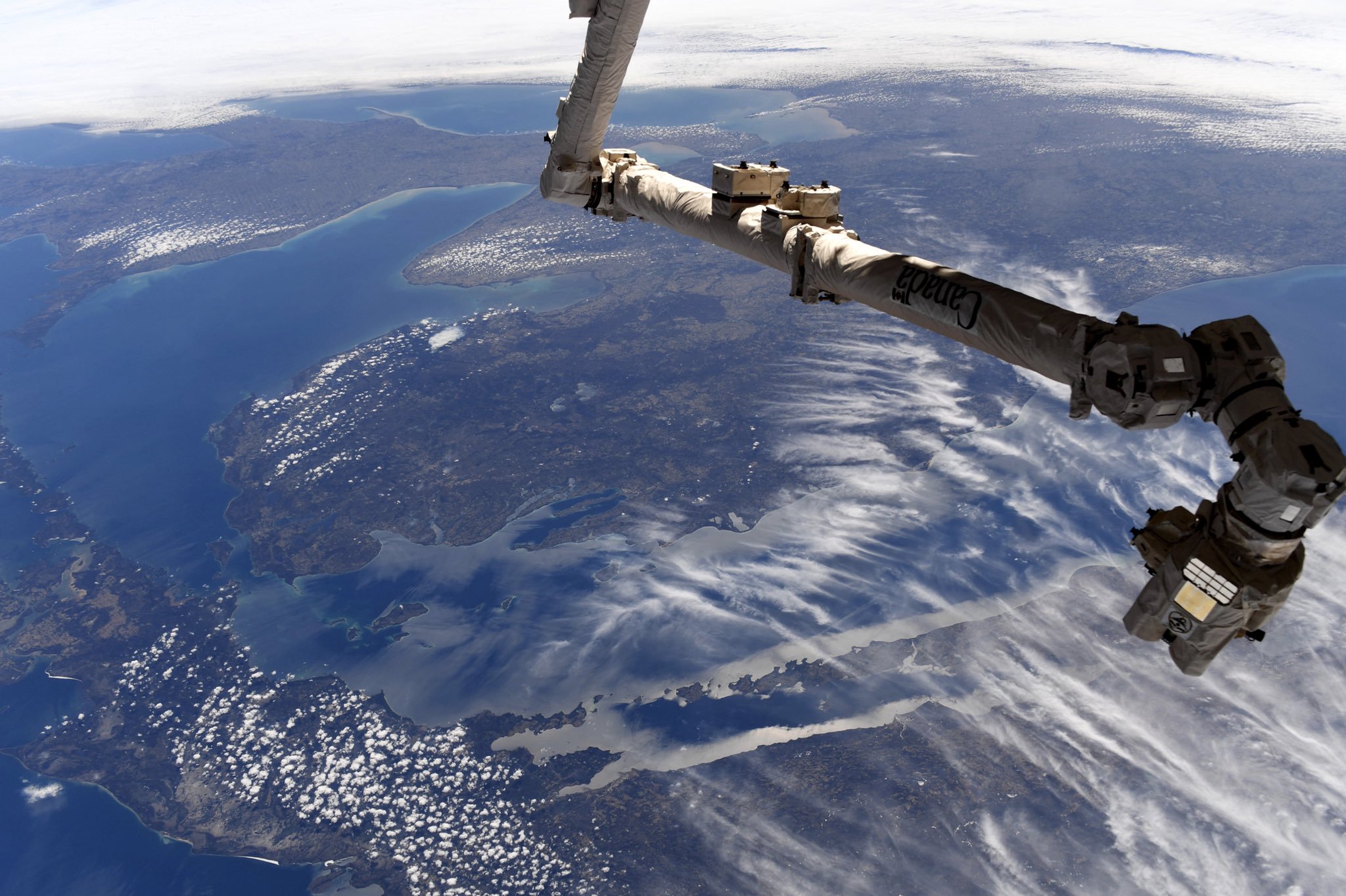
On Wednesday, NASA astronaut & Grand Rapids native Christina Koch tweeted the photo above that perfectly captures Michigan’s Leelanau Peninsula with the caption “Waving to the mitten! Greetings to my friends and family in Michigan. The Great Lakes are as stunning from space as they are in person.”

Indeed!! While Ms. Koch calls North Carolina home now, we appreciate her appreciation for the state she was born in. Even more appreciated is the work she’s doing in space & the contributions to science she’ll make as the new champion in the “longest single spaceflight by a woman” category. The Verge explains:

Koch launched to the ISS on March 14th, along with NASA astronaut Nick Hague and Russian cosmonaut Alexey Ovchinin. But rather than stay for six months, as most of NASA’s astronauts do, Koch is now slated to remain on the station through February 2020. That means she’ll spend 328 days, or nearly a full year, in orbit, which is one of the longest consecutive stays in space by any NASA astronaut. She’ll just miss beating Scott Kelly’s record of 340 straight days in orbit, the all-time record for a NASA astronaut. But she’ll beat Whitson’s time of 288 consecutive days in space … She’ll just miss beating Scott Kelly’s record of 340 straight days in orbit, the all-time record for a NASA astronaut. But she’ll beat Whitson’s time of 288 consecutive days in space.

The lengthy stay could be helpful for NASA to better understand how long-duration spaceflight affects the human body. While Kelly was in space for his year-long mission, he gave samples of his own blood and did other health analyses so that NASA could see how his body changed while in orbit. The space agency then compared Kelly’s health data to that of his twin brother, former NASA astronaut Mark Kelly, who remained on Earth throughout the full year. The experiment revealed a few surprising ways that space messes with the body, like damaging DNA and affecting cognition. NASA noted that Koch’s flight will also add to this growing area of research.

Read on for more at The Verge including plans for NASA’s first all-female space walk & DEFINITELY check out NASA’s photo gallery for Ms. Koch at work (wowzas) and/or all the photos from Expedition 59.