Must be a Monday

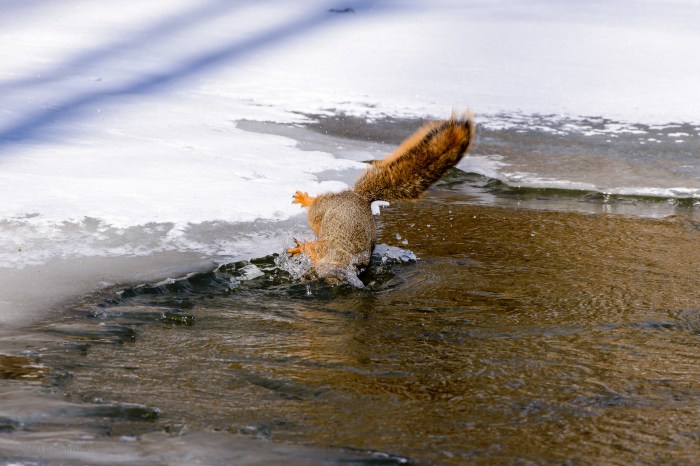
Fox Squirrel Falls in the River

FOX SQUIRREL, photo by John E Heintz Jr

“If one place is as good as any other, it’s high time we decided. Otherwise when we get there, we won’t know we’ve arrived.”
~Dr. Doolittle

I swear that John Heintz is a direct descendent of Dr. Doolittle – gets the best nature photos! View his photo bigger and definitely watch his slideshow for the whole story.

More from the animal kingdom and more funny photos on Michigan in Pictures.

Forecasting sunsets through Sunset WX

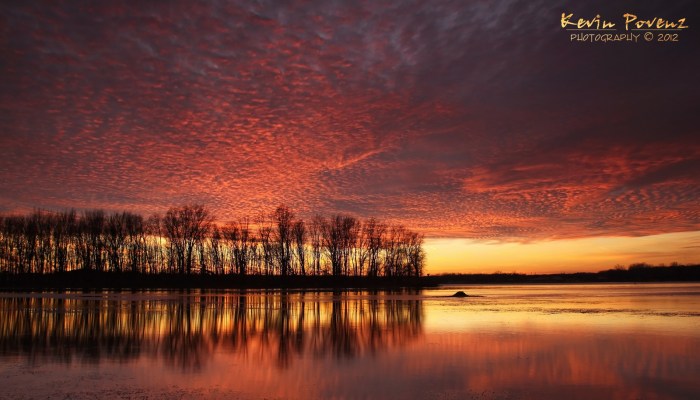
Sunset at the Bend Area

Sunset, photo by Kevin Povenz

If you’re looking to get the perfect sunset, you might want to check out the sunset forecast from Sunset WX. They explain (in part) their model for sunset forecasts:

…we understand there are numerous definitions for the criteria: Vivid, average, and poor. However, as a landscape photographer, there are certain variables I look for each evening before making the decision to take time out of my day and photograph the sunset. The most important factor I look for is sky cover, and more specifically, the existence of high clouds over the area. High clouds not only provide moisture to refract the sunlight, their ‘wispy’ formation also provides “texture” to the sky and are high enough in the atmosphere for the sun to scatter light below. Think of these as a movie theatre screen, in which light can be projected upon.

Because of this, we weighted high clouds the most as stated before, and consider this necessary for a “Vivid” sunset. In general, regions that are displayed “Poor” in the model, are areas of near 100% of total cloud cover, and also areas that are projected to experience precipitation around sunset time. The ‘hard to define’ area comes in between the two. To some, a clear sky at the time of sunset may be the definition of a great one. In this model, it is our intent to weight a clear sky sunset as average, and therefore it would show up as green or light yellow. The oranges and reds are really the areas where we are trying to show that the sunset will be one of those that makes you go ‘Wow’.

Click through to check out the live sunset forecast map – it’s pretty cool!

Kevin took this photo back in December of 2012 at “The Bend Area” in Ottawa County on the Grand River near Jenison. View it bigger and see lots more in his Sunrise/Sunset slideshow.

Lots more great Michigan sunsets on Michigan in Pictures!

Michigan Wild & Scenic Rivers: Over the (Pine) River

HDRtist Pro Rendering - http://www.ohanaware.com/hdrtistpro/

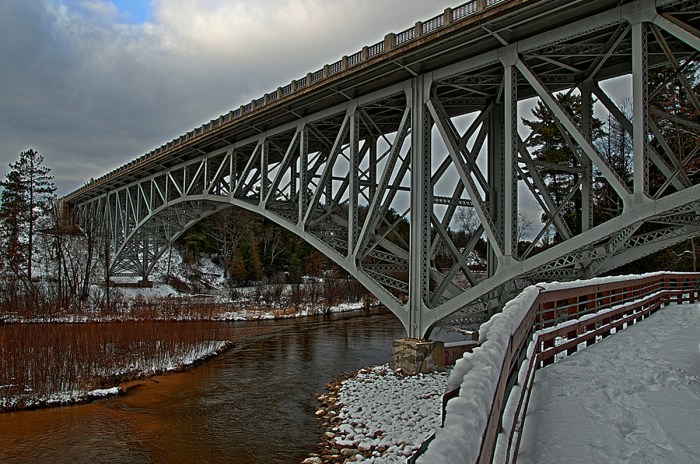
Pine River Bridge Wellston, Michigan, photo by John Mickevich

It is hereby declared to be the policy of the United States that certain selected rivers of the Nation which, with their immediate environments, possess outstandingly remarkable scenic, recreational, geologic, fish and wildlife, historic, cultural or other similar values, shall be preserved in free-flowing condition, and that they and their immediate environments shall be protected for the benefit and enjoyment of present and future generations.
~Wild & Scenic Rivers Act, October 2, 1968

Michigan has 16 nationally designated Wild & Scenic Rivers, and one of these is the Pine River. The Pine River Management Plan says (in part):

Visitors to the Pine River Corridor continue to enjoy a variety of recreation experiences in natural appearing settings. Visitors may encounter both non-motorized and motorized recreation on land within the Pine River corridor (such as hiking, mountain biking, hunting, and auto touring) while only non-motorized recreation is encountered in the river channel. High quality commercial services are available for recreation activities, particularly for boating and fishing.

Watercraft use, particularly canoeing, is an important recreation activity on the Pine River. The river character provides watercraft users with a moderate challenge in practicing boating and water safety skills and a high degree of interaction with the natural environment.

…Fishing on the Pine River is another popular recreation activity. The Pine River is considered a “blue ribbon” trout fishery and many anglers take advantage of the early morning and evening hours and weekdays to fish with some degree of solitude.

Click to view it on a map!

View John’s photo background big and see more in his Manistee County slideshow.

More Michigan Wild & Scenic Rivers on Michigan in Pictures – safe travels everyone!

PS: Marilyn Wilkie shared that this is the Mortimer E Cooley Bridge on M-55. It’s a Metal Cantilever 12 Panel Rivet-Connected Pratt Deck Truss bridge built in 1935.

October Vibes in le détroit du Lac Érie

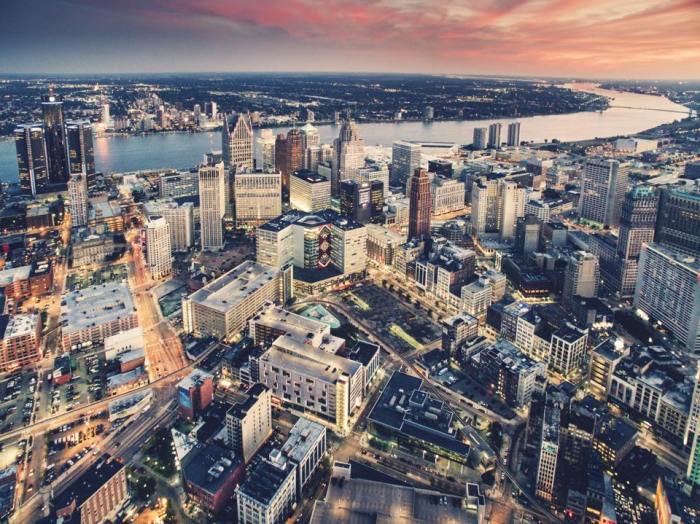
October Vibes by Camera Jesus

October Vibes, photo by Camera Jesus

Simply spectacular view of the city of Detroit.

The name of Detroit comes from “le détroit du Lac Érie” – French for the Straits of Lake Erie and referring to the St. Clair River and Lake St. Clair that link Erie with Lake Huron. Wikipedia has a pretty nice writeup on the Detroit River:

The Detroit River flows for 24 nautical miles (44 km; 28 mi) from Lake St. Clair to Lake Erie. By definition, this classifies it as both a river and a strait — a strait being a narrow passageway connecting two large bodies of water, which is how the river earned its name from early French settlers. However, today, the Detroit River is rarely referred to as a strait, because bodies of water referred to as straits are typically much wider.

The Detroit River is only 0.5 to 2.5 miles (0.80 to 4.02 km) wide. The Detroit River starts on an east to west flow but then bends and runs north to south. The deepest portion of the Detroit River is 53 feet (16 m) deep in the northern portion of the river. At its source, the river is at an elevation of 574 feet (175 m) above sea level. The river drops only three feet before entering into Lake Erie at 571 feet (174 m). As the river contains no dams and no locks, it is easily navigable by even the smallest of vessels. The watershed basin for the Detroit River is approximately 700 square miles (1,800 km2).

Since the river is fairly short, it has few tributaries. Its largest tributary is the River Rouge in Michigan, which is actually four times longer than the Detroit River and contains most of the basin. The only other major American tributary to the Detroit River is the much smaller Ecorse River. Tributaries on the Canadian side include Little Creek and the River Canard. The discharge for the Detroit River is relatively high for a river of its size. The river’s average discharge is approximately 188,000 cubic feet per second (5,324 m³/s), and the river’s flow is constant.

Check out Detroit 1701 for a bit of the river’s history and also be sure to support the Friends of the Detroit River who are doing great work to restore this corridor.

View the photo background bigiliciousfollow Camera Jesus on Facebook for lots more and view & purchase Joe’s Detroit photos (and others) from his website.

More Michigan rivers on Michigan in Pictures!

Waterfall Wednesday: Ogemaw Falls

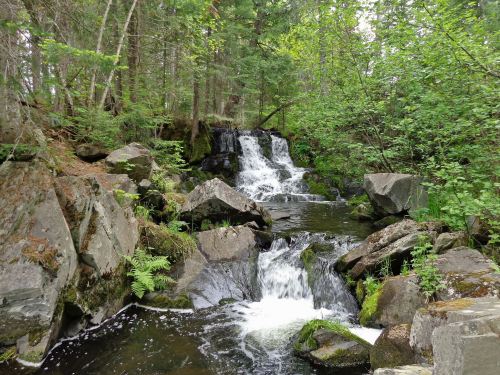
Ogemaw Falls Waterfall

Ogemaw Falls (4), photo by David Hedquist

GoWaterfalling relegates Ogemaw Falls to its Minor Waterfalls page, but it looks like a very pretty spot nonetheless!

Ogemaw Falls is a 12 foot drop on Ogemaw Creek in Baraga County Michigan. It is located off of Baraga Plains Road, which intersects with US-41 just a mile or so north of Canyon Falls. Head west for about 1.5 miles. The road will turn to the left, and there will be a large pond to the left. This is where the road crosses Ogemaw Creek. The falls are a few hundred yards to the left. The road crosses above the falls, so you cannot see them from the road. You have to climb down into the gorge to get a view. This is not difficult, but there is no real trail. This is a small waterfall. Many much more impressive waterfalls can be found in Baraga County.

David Hedquist is the author of Waterfalling in Wisconsin and now he’s turning his attention (and camera) on Michigan’s falls. View his photo background big and see more views including closer up and even a video on his Ogemaw Falls slideshow.

Many (many) more Michigan waterfalls can be found on Michigan in Pictures!

Know your Michigan Turtles: Spiny Soft-shell Turtle

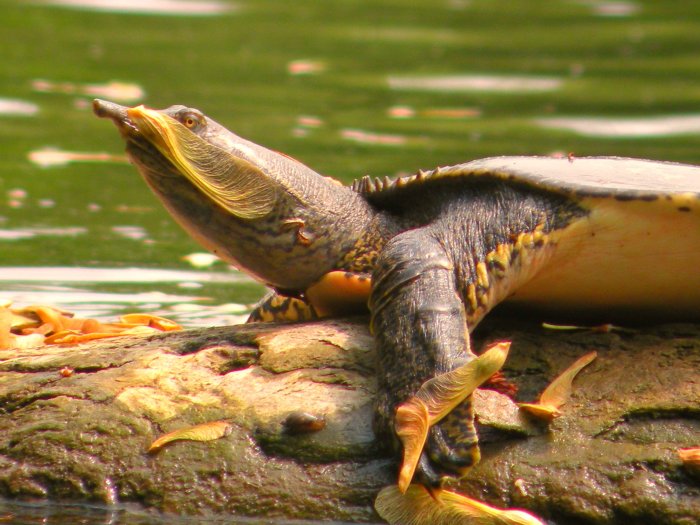
Soft Shell Attracts Seed Pods

Soft Shell Attracts Seed Pods, photo by David Mayer

One of the most popular posts on Michigan in Pictures is Know Your Michigan Turtles where we now have 8 of Michigan’s 10 turtle species profiled. You can click that link for the list of all of them and read on to learn about the soft shell turtle.

The Spiny Soft-shell Turtle (Apalone spinifera spinifera) entry at the University of Michigan Animal Diversity Web says that:

Apalone spinifera inhabits various freshwater systems such as rivers, lakes, marshes, farm ponds as well as bays of the Great Lakes . Apalone spinifera prefers open habitats with a small amount of vegetation and a sandy or muddy bottom and require sandy raised nesting areas close to water.

…Spiny softshell turtles are diurnal animals, spending most of the day basking in the sun and foraging for food. They can be spotted sunning on logs and river banks. If disturbed, they will quickly retreat into the water and bury themselves in sand, leaving only their heads visible. These turtles are also able to breathe underwater for extended periods through their pharyngeal lining, cloacal lining, and skin. Spiny softshell turtles spend October to April in the water buried underneath substrate in a state of dormancy.

Apalone spinifera preys on on various macroinvertebrates such as aquatic insects, crayfish, and occasionally a fish. They find their food underneath objects, along the floor of the lake, and in vegetation. They also hide in the floor substrate and grab prey as they swim by.

Spiny softshell turtle nests are often destroyed by raccoons, skunks, and foxes. Young softshell turtles are eaten by raccoons, herons, and fish. Adults are killed and eaten only by humans, they have few natural predators. When bothered, spiny softshell turtles will extend their long necks and snap viciously at their attacker, inflicting a painful bite. They are wary and can hide themselves quickly.

Read on for a whole lot more including photos.

David says to be sure to check out the seed pod copter on this turtle’s face! View it background big and see more in his Wildlife slideshow.

Polling for Parks: Porcupine Mountain Wilderness State Park

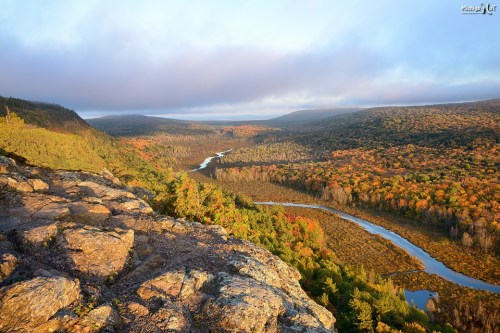
Sunset over Lake of the Clouds, Porcupine Mountains

Sunset over Lake of the Clouds, Porcupine Mountains, photo by John McCormick

USA Today is polling their readers to see what they think the 10 best state parks in the nation are. The entry page for the Porcupine Mountain Wilderness State Park says:

The Porcupine Mountains Wilderness State Park, or the “Porkies” as its known to frequent visitors, encompasses 60,000 acres of lakes, rivers and virgin forest. The park offers camping on the shores of Lake Superior, 90 miles of hiking trails, kayak rentals, mountain biking and, in the winter, access to the Porcupine Mountains Ski Area.

Porcupine Mountains Wilderness State Park – Mich. is currently ranked #2 of 20.

You can click here to vote if you’re so inclined.

John took this evening shot in October 2014 near the east end off the Lake of the Clouds. View it bigger on Flickr, see more staggering photos in his Autumn in Michigan slideshow, and definitely follow him on Facebook at Michigan Nut Photography.

You can click to visit the Porcupine Mountains Wilderness State Park website and get all kinds of Porcupine Mountains rivers, falls and views on Michigan in Pictures.

Happy New Year!

Happy New Year!

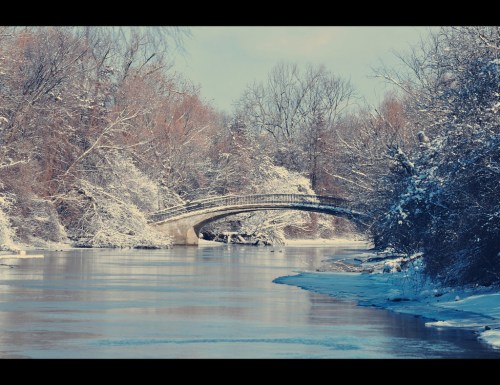
Happy New Year!, photo by Spring Disney

“I hope that in this year to come, you make mistakes. Because if you are making mistakes, then you are making new things, trying new things, learning, living, pushing yourself, changing yourself, changing your world. You’re doing things you’ve never done before, and more importantly, you’re doing something.”
~Neil Gaiman

Happy New Year everyone! Here’s hoping for health & happiness for all of you, but also a mistake or two as the incomparable Mr. Gaiman prescribes.

Spring Disney shared this photo from Elizabeth Park in Trenton for the 2011 New Year. View it bigger on Flickr and see more (including some absolutely stunning owl photos) in her My Favorites slideshow.

More bridges and more New Year on Michigan in Pictures.

Golden Hour on the Rouge River

The Golden Hour on the Rouge

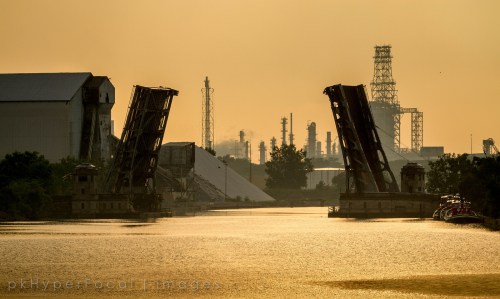
The Golden Hour on the Rouge, photo by pkHyperFocal

The Rouge River Gateway Project relates that the Potawatami referred to the river as Minosa Goink which means “Singeing Skin River” – the place where game animals were dressed. The history continues (with my links to other fun stuff):

The French first settled on the banks of the Rouge River in the 1780s. They named the river “Rouge”, or red. Settlers would claim a few hundred feet of river frontage and extend their farms deep into the forest. Remnants of these “ribbon farms” still exist today in land ownership patterns along the river. Europeans continued to immigrate into the region to take advantage of its resources. They used the reddish clay for brick, mined the area’s salt deposits, and built farming communities along the riverbanks. The native prairie oak savannah and hardwood forests were cleared to make room for agriculture and industry.

Rapid growth and industrial development characterized the late nineteenth century. Henry Ford purchased extensive land holdings along the river. He built a factory in Dearborn to manufacture farm tractors, but kept a good portion of his land in agricultural production, partially for testing equipment. In 1914, he started construction of a permanent residence on the banks of the Rouge River.

A defining moment in the history of the river transpired with the construction of the Ford Rouge Plant during World War I. The development of the plant was motivated by Henry Ford’s desire to supply submarine chasers to the US military. The Ford Rouge Manufacturing Complex grew into a massive self –contained industrial complex that daily employed over ninety thousand men in the early 20th century. Raw materials including coke, iron ore, and rubber were brought in and transformed into cars in less than thirty hours, a process that set a new global standard for industry. The Rouge Manufacturing Complex became the largest manufacturing site in the world.

In his book Burning Rivers, Allen Park native John Hartig relates how heavy manufacturing and population growth seriously impacted the river to the point where the river became one of the most polluted waterways in the nation, catching fire in 1969 shortly after the famous Lake Erie/Cuyahoga River fire.

In 1986, in a Sunday feature on a new organization seeking to restore the Rouge, the Detroit Free Press called it the “sewer for a metropolis, discharge drain for industry, dumping ground for junk and garbage”. They went on to say that “the Rouge River has become so polluted that a cleanup seems unthinkable.”

While the Rouge is certainly far from restored, the organization the Freep was talking about, Friends of the Rouge, has been dedicated along with other public and private efforts to the preservation & restoration of the river. I encourage you to check them out for more information and to learn about their good work on the behalf of the river. Lots more at the Rouge River Project and Wayne County’s Rouge Project.

View pkHyperFocal’s photo big as a boat and see more in their Man Made slideshow.

More industry on Michigan in Pictures.

Sunny skies at Pine Bend

Pine Bend Natural Area

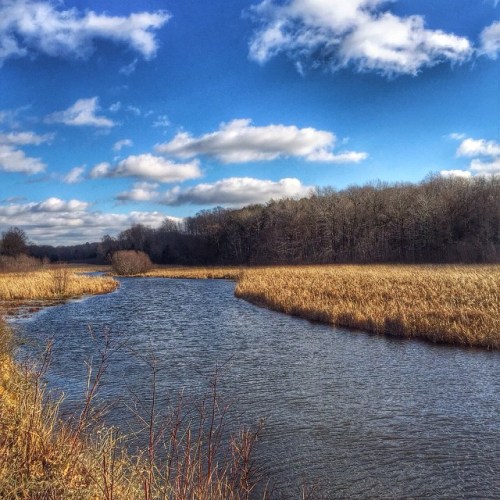
Winding River, photo by paisleyrainboots

Sarah took this last week at Pine Bend County Park and says that it was a beautiful day despite the 30 degree temperatures.

View her photo bigger and follow her on Instagram. You can also tune into her blog.