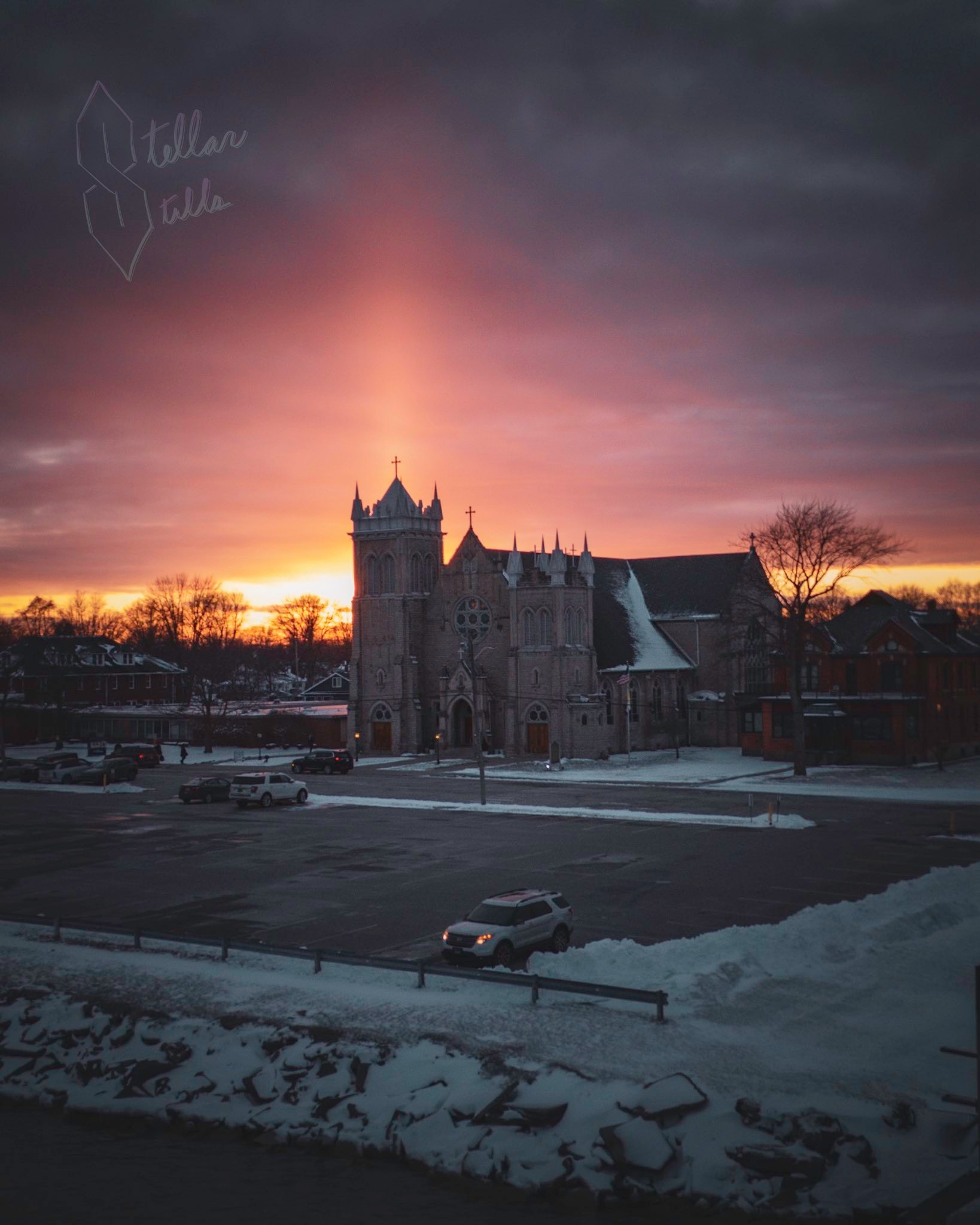
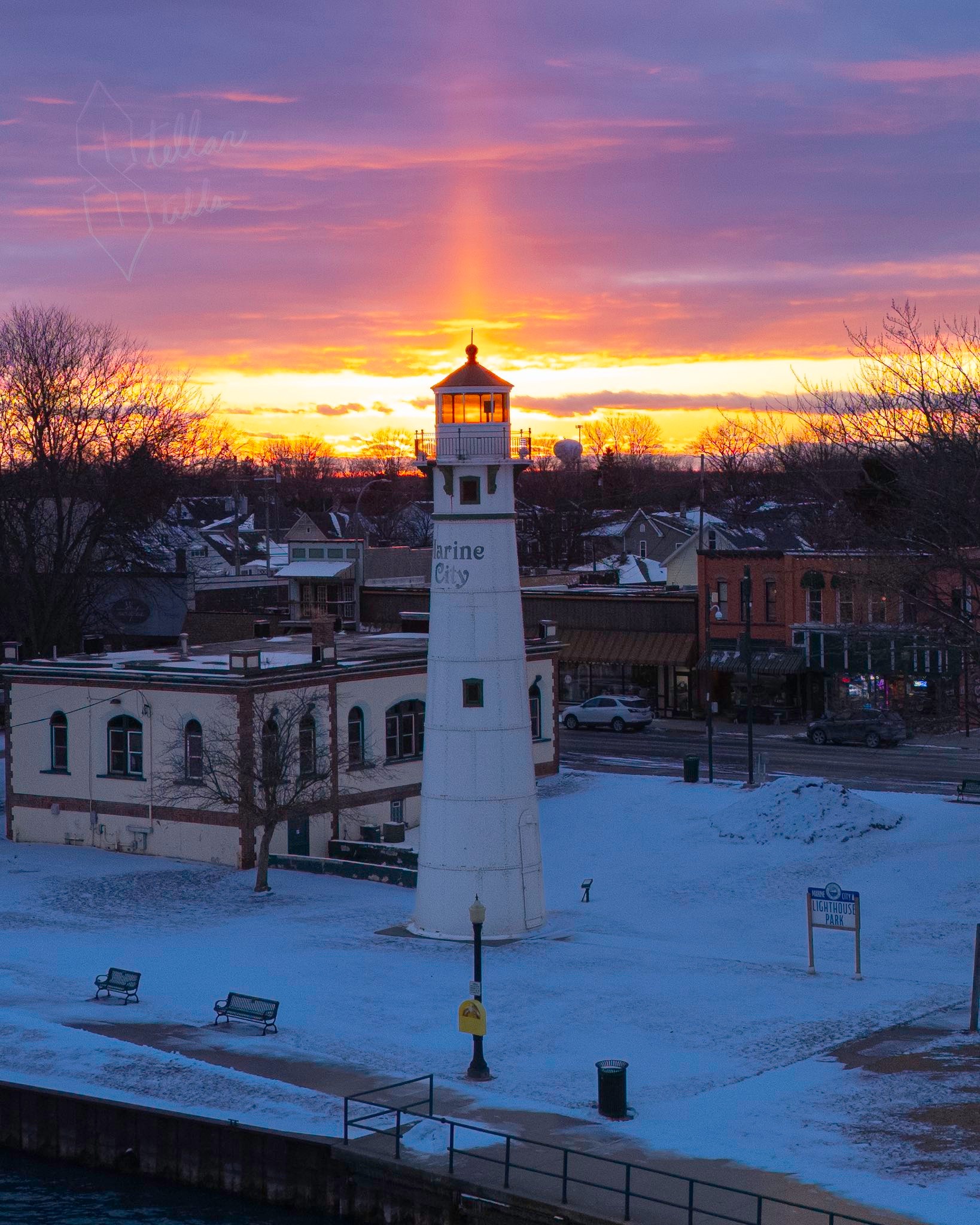
Sun Pillar vs Sun Pillar

Sun Pillars by Stephen Michael Mannina

Atmospheric Optics explains that the mesmerizing solar phenomena known as sun pillars are:

…Typically visible near sunset or sunrise, pillars can reach heights of 5 to 10 degrees, and occasionally even higher. While they may appear as vertical rays, they are actually the collective glints of millions of ice crystals. When it comes to colors, pillars are truly a sight to behold. They take on hues that reflect the sun and surrounding clouds, ranging from brilliant white to various shades of yellow, red, or purple. Depending on the locations of the cloud crystals, pillars can even manifest as several vertically strung patches of light. As the light interacts with the ice crystals in the atmosphere, it creates a stunning display that captivates observers.

Yesterday morning, I came across this photo by Stephen right before I saw him making a positive comment on a photo that Sean – the photographer I featured yesterday – had taken. This was soon after I had seen photos Neil Weaver had taken at an ice cave photography workshop along with fellow Michpics photographer Aubrieta Hope. It made me realize that a huge and underrated part of Michigan in Pictures is the community of real live human beings that are as passionate about their fellow photographers as they are about introducing people to their favorite parts of Michigan. That’s a long way of saying that I am going to be working on ways to showcase the people out there clicking the shutter. One way will be to revive the Michigan Photographer Profiles with a focus on the photographers on my Michigan Photographers page. Stay tuned!!

Thanks to Stephen for allowing me to share both of these awesome sun pillar shots. He’s facing a problem that many photographers face: figuring out which of these two photos is the best to submit for a photography contest? Have a vote? Share it in the comments below or on his Facebook post and for sure view & purchase his work on his website!

Support Michigan in Pictures with Patreon

Groundhog Day is Game Day for Woody

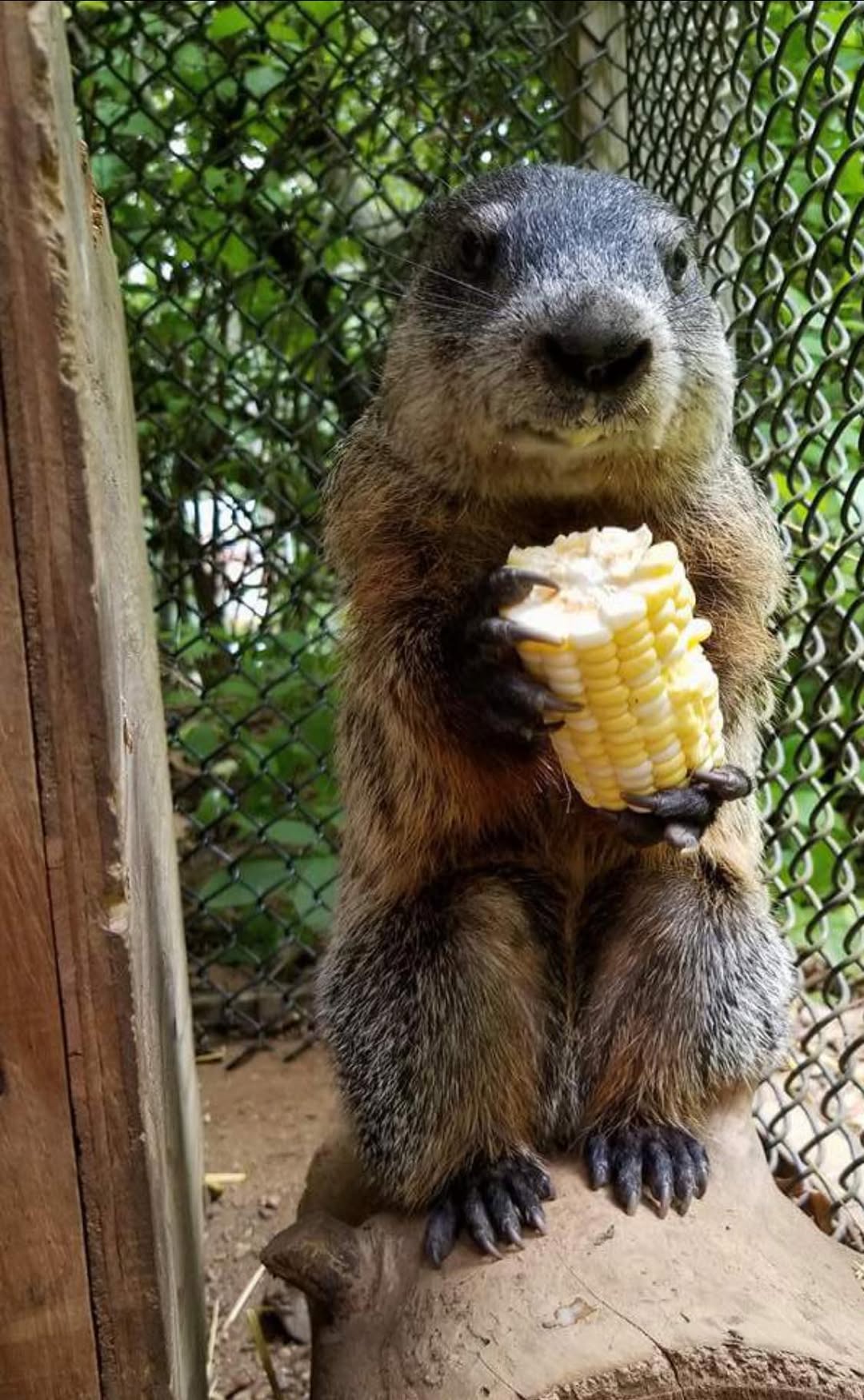
Woody Getting Ready by Howell Nature Center

Woody Getting Ready by Howell Nature Center

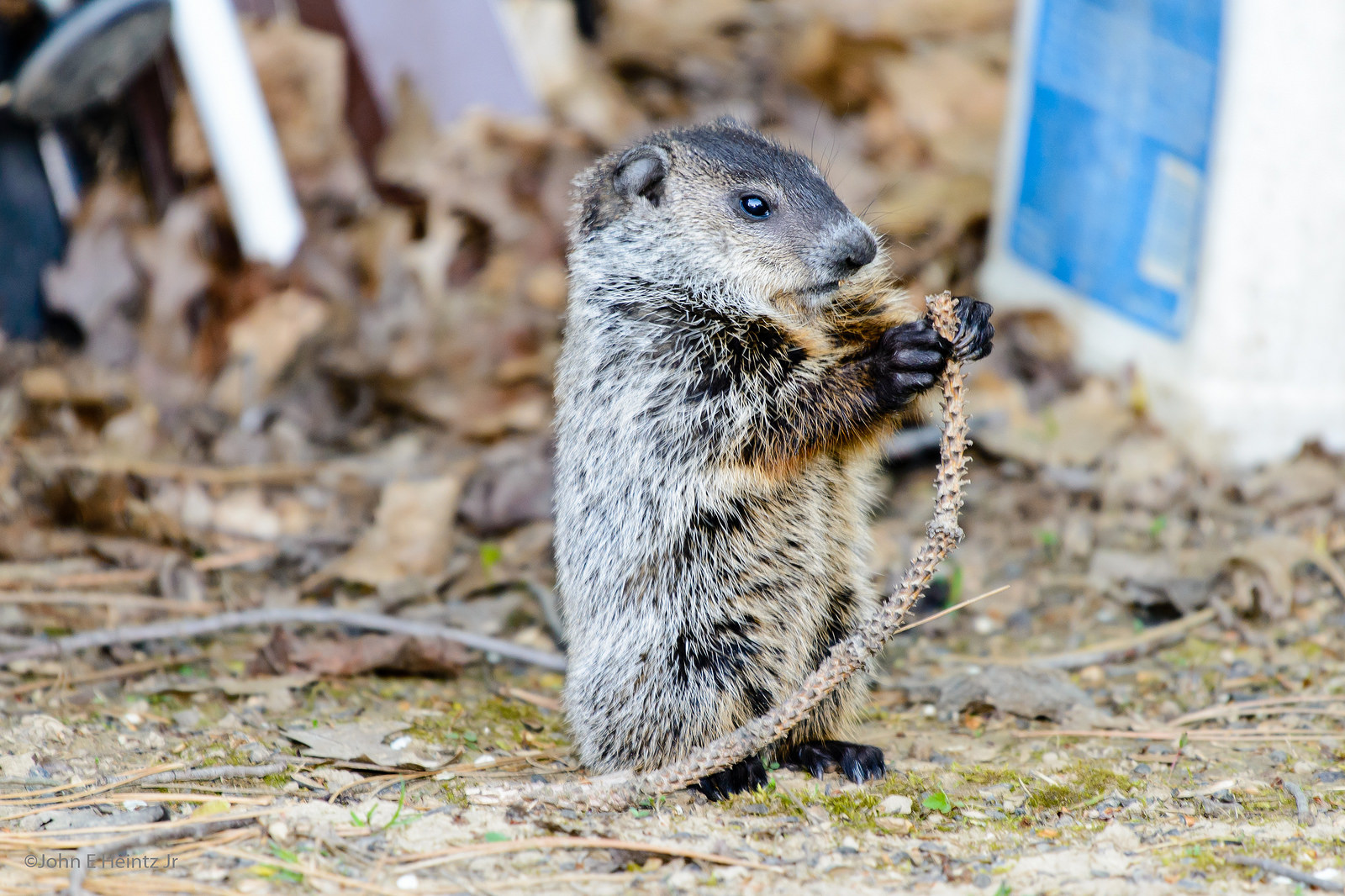
While most of the nation turns its eye towards Punxsutawney Phil, true Michiganders know there’s only one source for your winter woodchuck weathercast: Howell Nature Center’s own Woody the Woodchuck. Woody has been a fixture at the nature center since (at least) 2017 when I shared the photo from John Heinz Jr of lil Woody figuring out if something was or wasn’t food.

If you’re in the neighborhood, their free Groundhog Day Celebration is already underway, but you can also tune into their Facebook livestream that starts at 8:20 am!

UPDATE: They had a little trouble with the livestream but ultimately got it going. Sadly, Woody is in agreement with Phil that we have 6 more weeks of winter on the way!

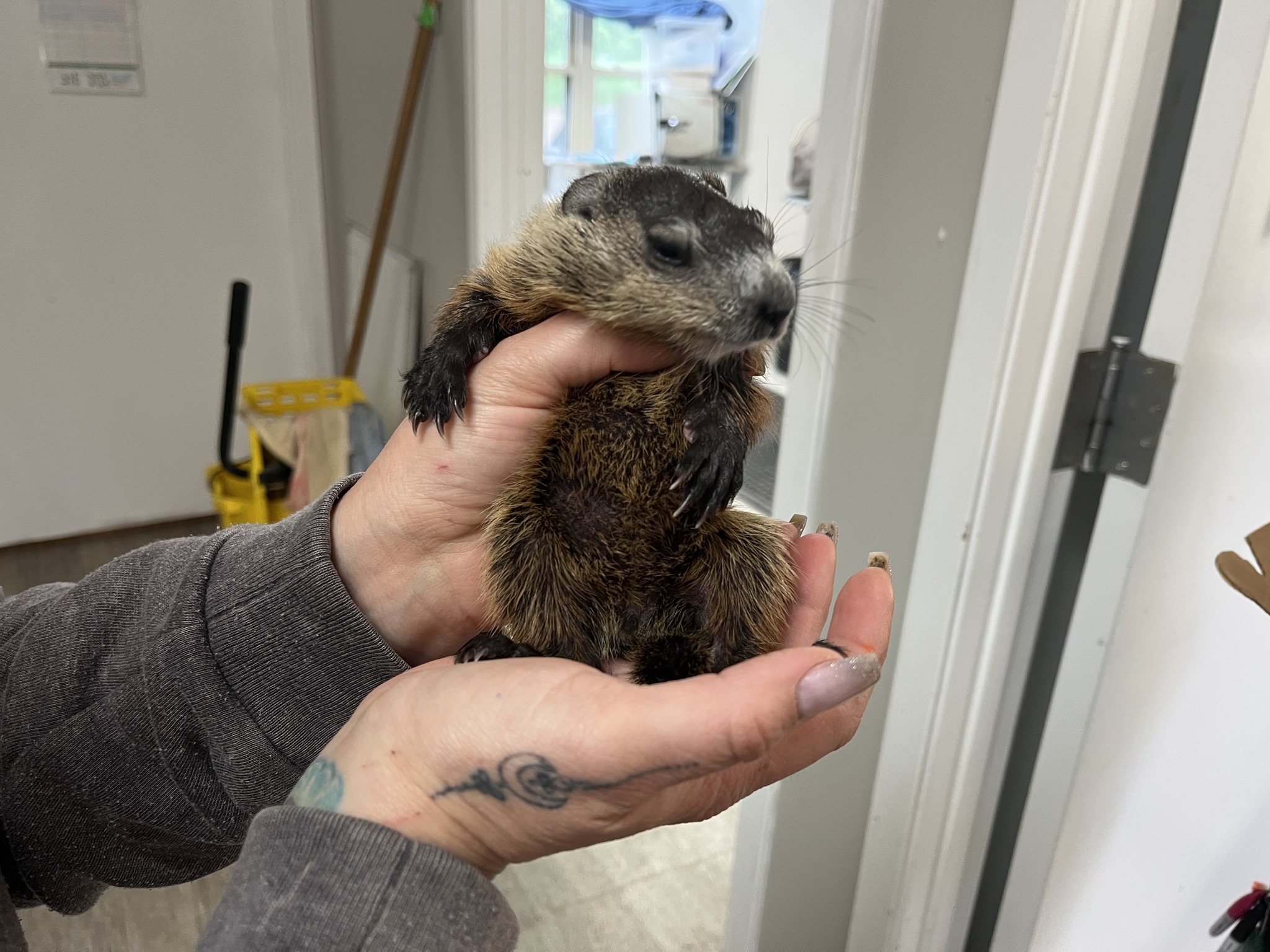
Here are a couple more pics of Woody cause I love her, especially the little baby pic by John! More Groundhog Day, woodchuck & whistle-pig fun on Michigan in Pictures!

Support Michigan in Pictures with Patreon

A Legitimate Snowbird

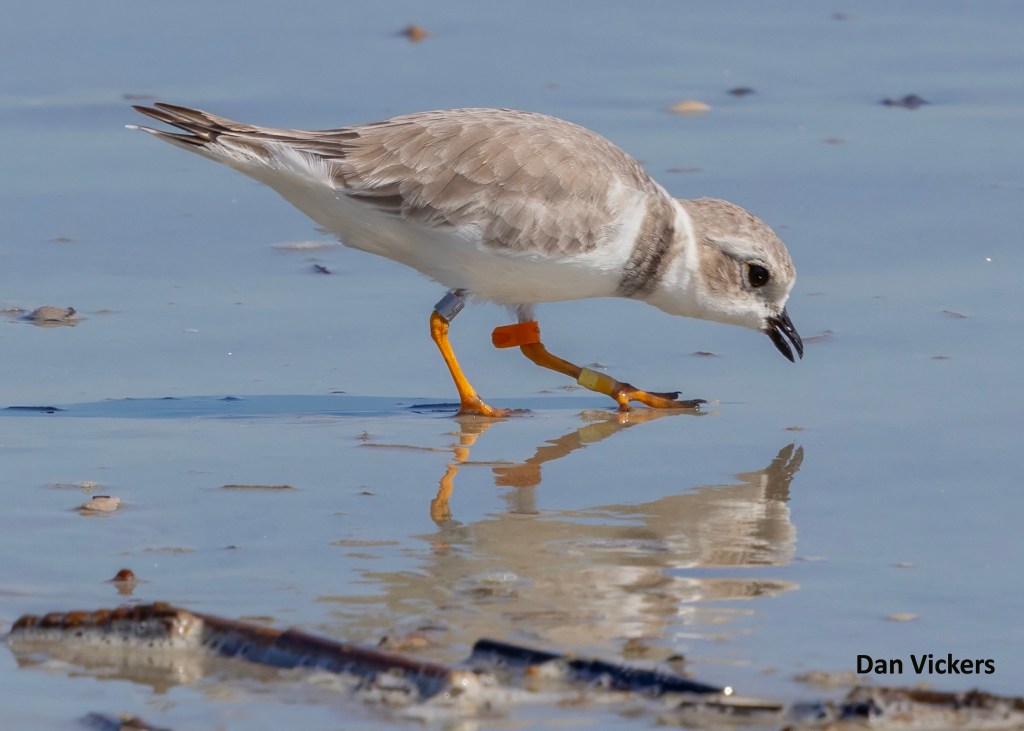
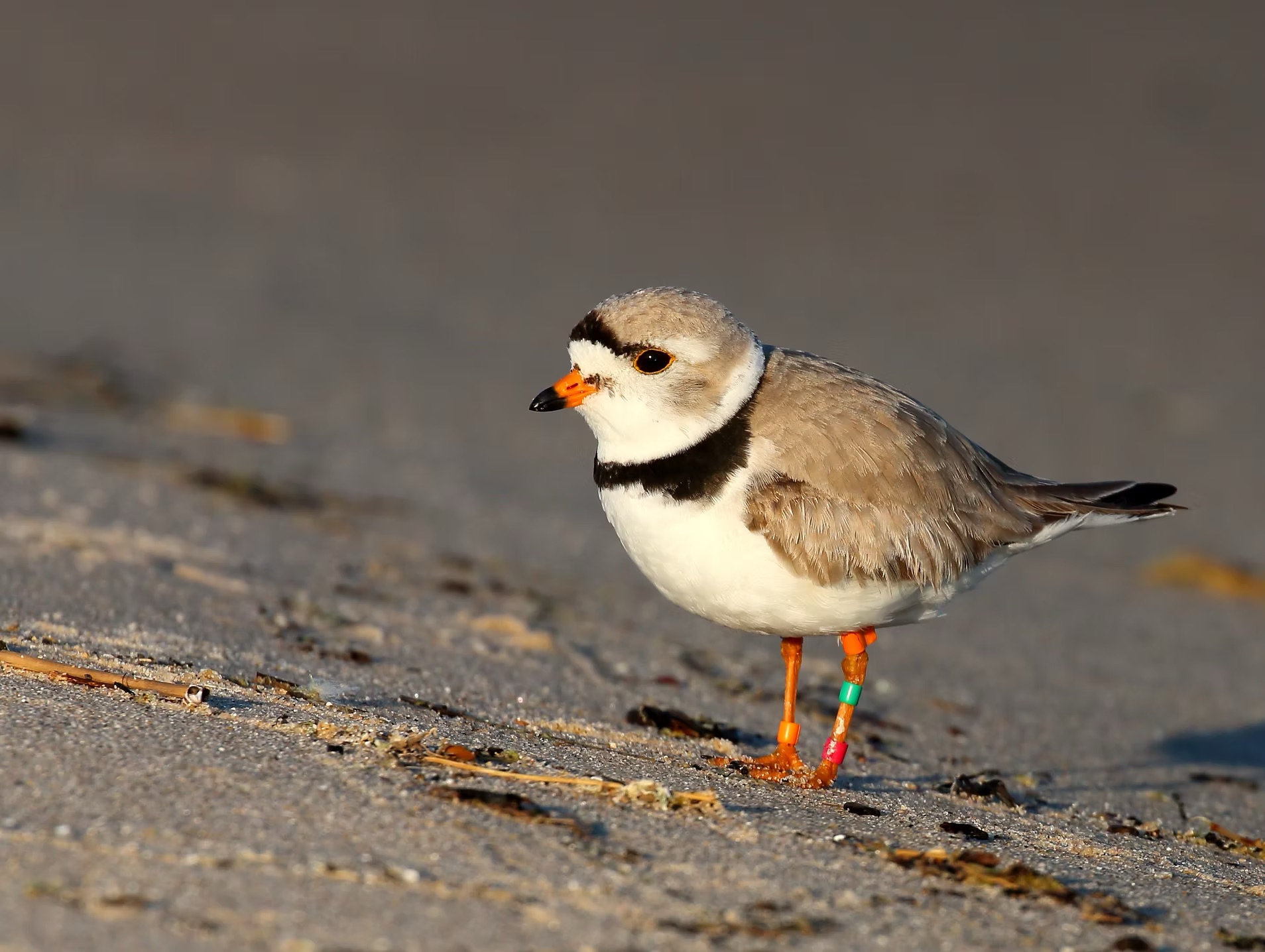
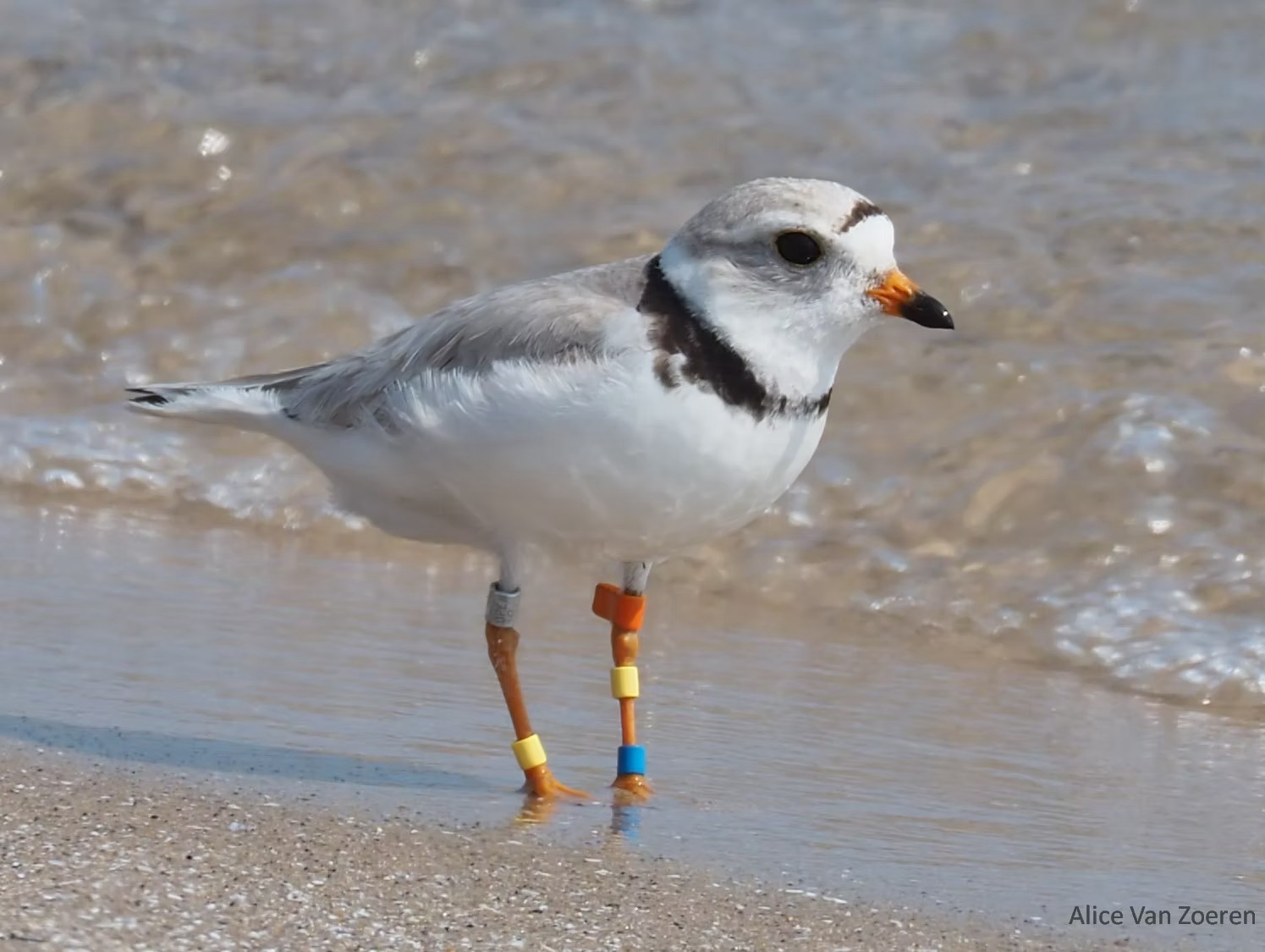
Yogi the Piping Plover at Cumberland Island by Dan Vickers

Yogi the Piping Plover at Cumberland Island by Dan Vickers

“You think YOU’RE a snowbird? Please.” – -Yogi the Great Lakes Piping Plover

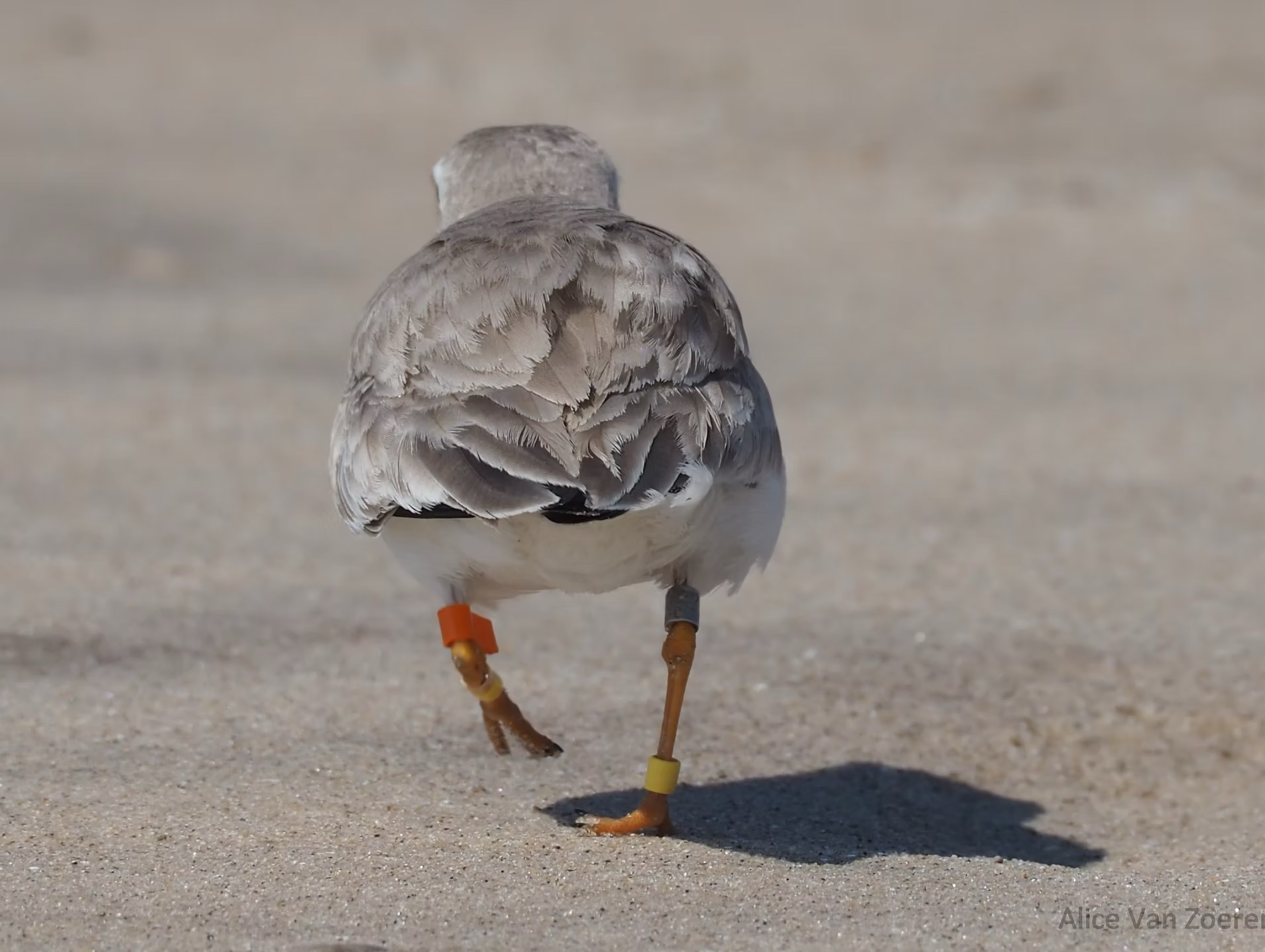
Michigan in Pictures features almost exclusively photos from Michigan, but every so often there’s one that will have me reaching beyond our borders. Such is the case with this photo of Yogi the Piping Plover from Cumberland Island all the way down in Georgia that was recently shared by the Great Lakes Piping Plover Recovery Effort. Yogi hails from the Sleeping Bear Dunes National Lakeshore, but his preferred nesting site is the wild and busy Silver Lake State Park.

They explain that the Piping Plover is a small shorebird that is listed as an Endangered Species and nests in three separate geographic populations in the United States and Canada: The Northern Great Plains, the shores of the Great Lakes, and along the Atlantic coast. Birds from all three populations winter on the southern Atlantic and Gulf coasts in the United States & in the Caribbean.

Regarding the distinctive bands, they say: Great Lakes Piping Plover chicks are banded between five and sixteen days of age. Since shorebirds are precocial (Like chickens, Piping Plover chicks begin running around, feeding themselves within hours of hatching), these chicks have well developed legs, which makes it possible for us to band them with adult-sized bands at a young age. The bands we use are made of either plastic or aluminum, and they are very lightweight. Every sibling in a plover brood gets the same color and arrangement of three or four bands (depending on the band color-pattern used). This is called a “brood-marker combination”. There aren’t enough possible combinations available to give every chick their own unique identifier from hatching, but by giving the chicks from the same family, or brood, the same combination we can study such things as parental success, fledging rates, and return success.

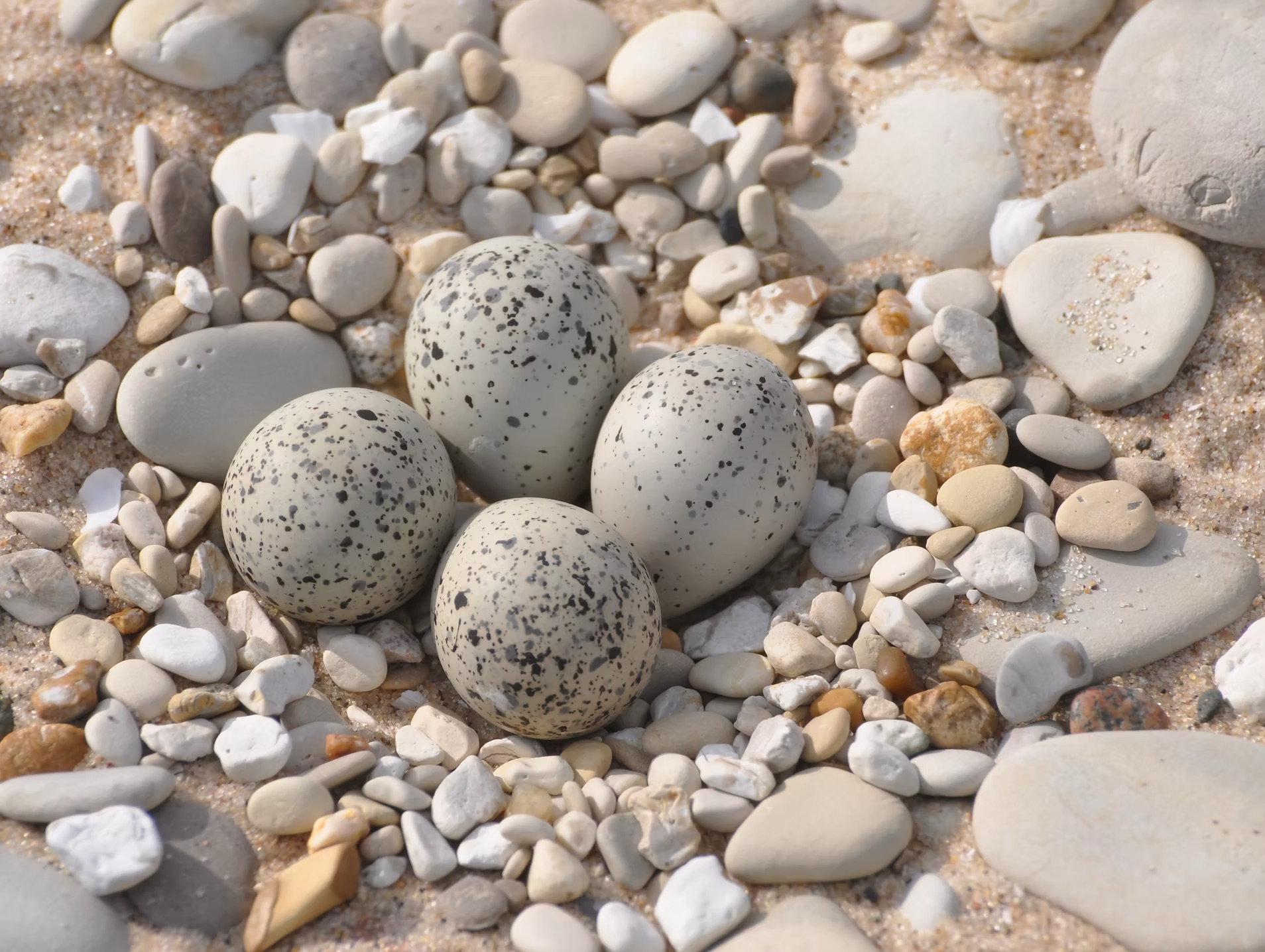
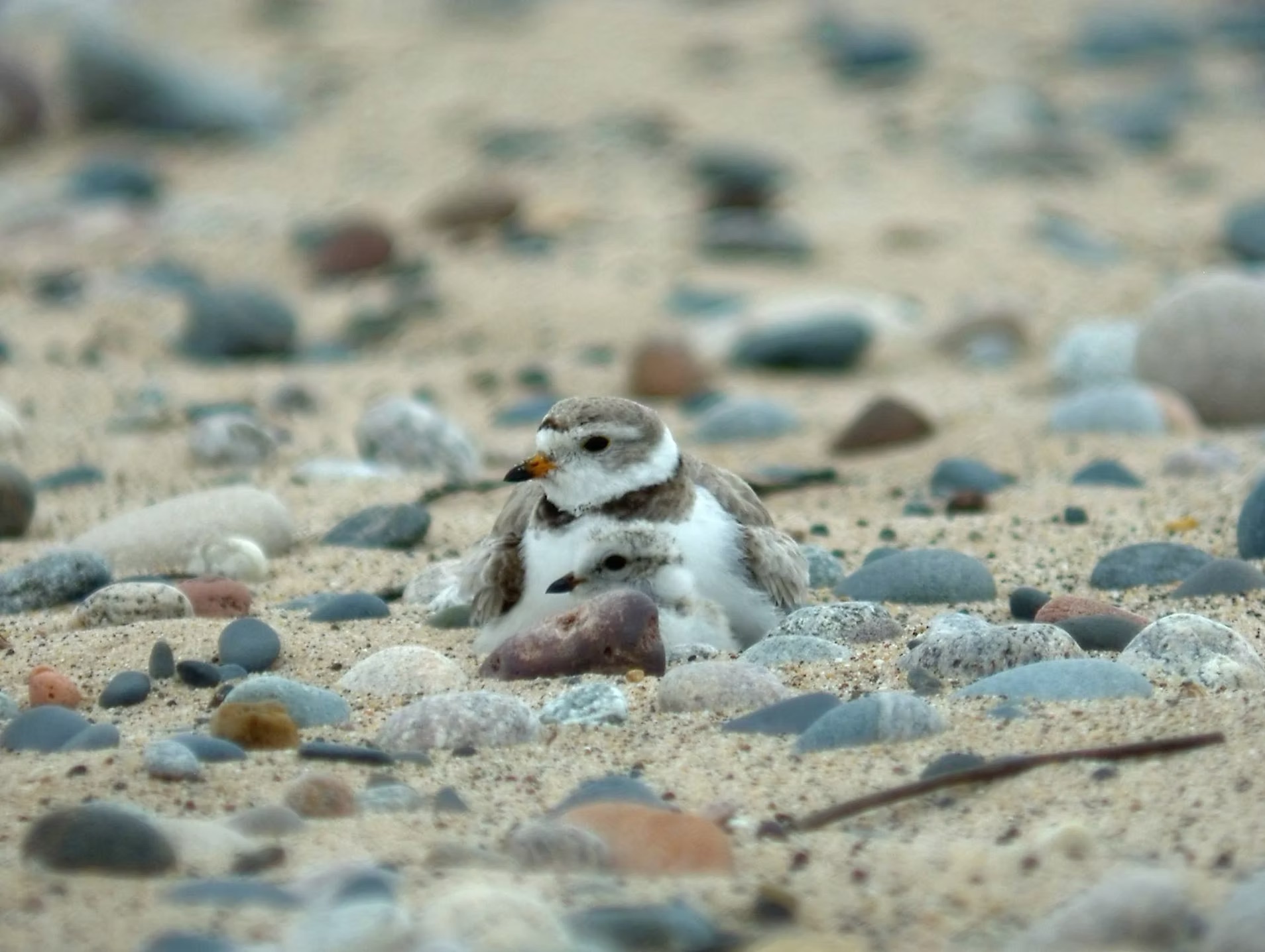
Here’s a few more Piping Plover pics – visit greatlakespipingplover.org for more and to help support their work!

Support Michigan in Pictures with Patreon

Tough to be a bird: How birds handle cold weather

Tough to be a bird by Watermark Photography

Tough to be a bird by Watermark Photography

The U.S. Fish & Wildlife Service shares that birds of all shapes and sizes have special adaptations for living in cold climates:

SHIVERING Birds have much higher metabolic rates and burn more energy to stay warm than we do. Black-capped chickadees weigh less than half an ounce and can maintain a body temperature of 100 degrees Fahrenheit – even when the air is 0 degrees! They do this by having great insulation, being very active and remembering where they store their food. A steady supply of food is essential, because chickadees eat more than 35 percent of their weight every day! Compared to many other birds, chickadees have a large hippocampus – the part of the brain that’s responsible for spatial memory. In the fall, this part of their brain gets even bigger.

FLUFFING FEATHERS All cold-climate birds pack on body weight in the late summer and fall in anticipation of the long, cold winter, but feathers also play an important role. All birds stay warm by trapping pockets of air around their bodies. The secret to maintaining these layers of air lies in having clean, dry and flexible feathers. The cleaning process, generally known as preening, depends on the species of bird. While all birds produce a special oil from a gland near the base of their tails, some cold-tolerant birds use this oil to weatherproof their feathers. Other birds like egrets, herons and mourning doves grow special feathers that disintegrate into a powder that they use to waterproof their feathers. Regardless of what weatherproofing method they use, preening helps birds keep a water resistant top layer and a toasty warm inner layer.

ROOSTING & CUDDLING Similar to people who may cuddle for warmth, small birds like tree swallows crowd together in shrubs, vines and evergreen trees to share body heat. They can also slow down their metabolic rate to conserve energy. Cavity nesters like nuthatches, titmice and downy woodpeckers use tree cavities and nest boxes to stay warm. Cavities and boxes provide protection from the weather and help birds hide from predators. Larger birds like American crows and ring-billed gulls are also known to flock together for warmth.

Read on for ways you can help including providing high energy foods like suet, peanuts and black oil sunflower seeds & a heated water bath.

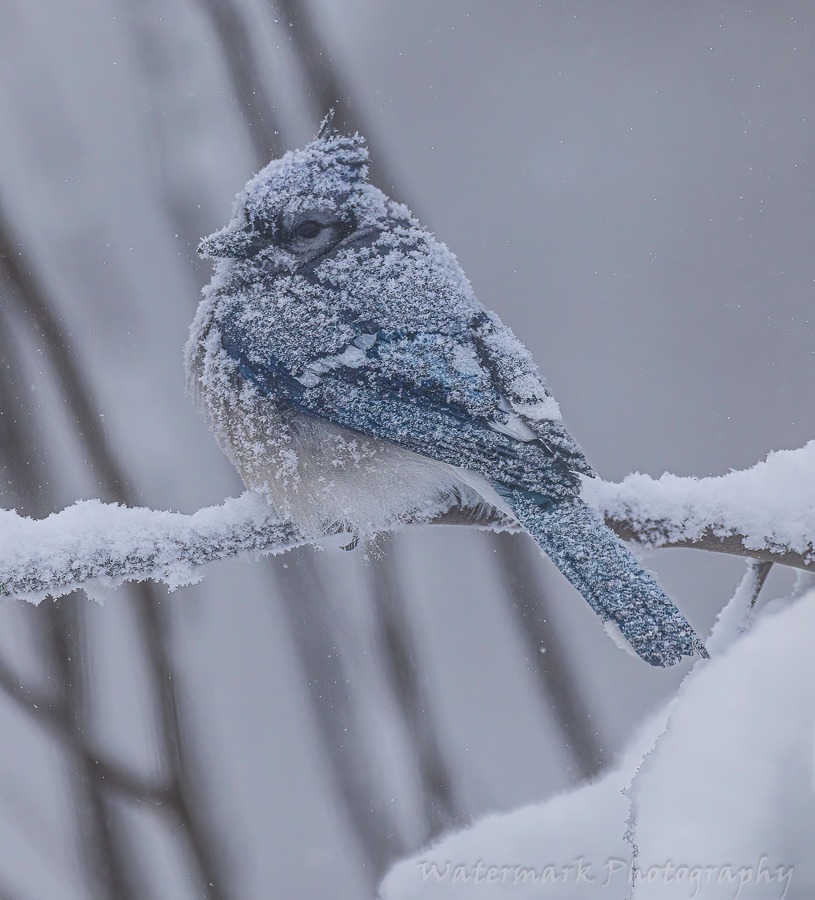
Jeff of Watermark Photography shared this photo of a snow-covered blue jay earlier this week. See more on his Facebook & see more (and purchase photos) in the Birds & Wildlife gallery on his website.

Support Michigan in Pictures with Patreon

Michigan Cougar Kittens are doing well!

Cougar Cub Trailcam via Michigan DNR

Cougar Cub Trailcam via Michigan DNR

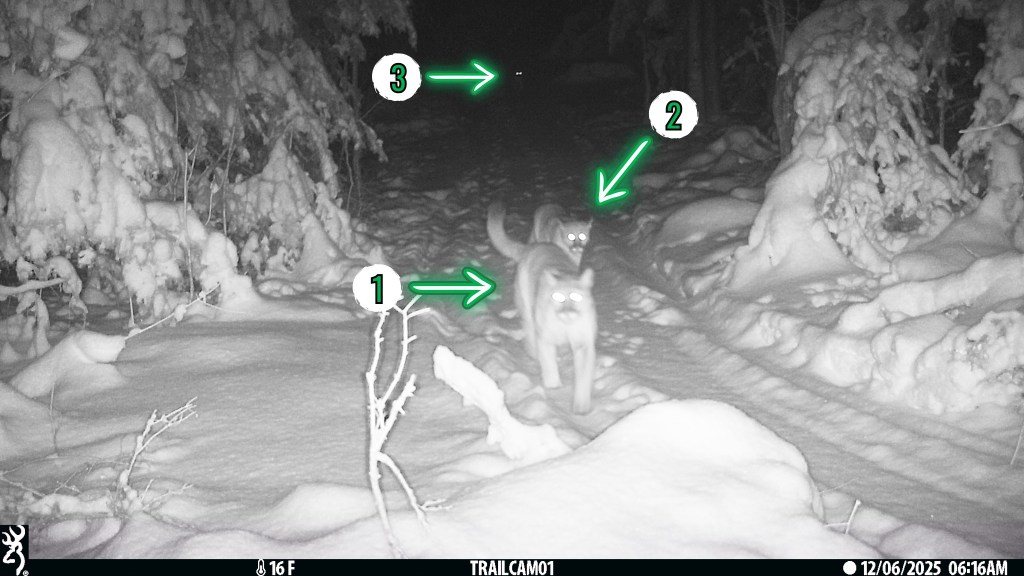
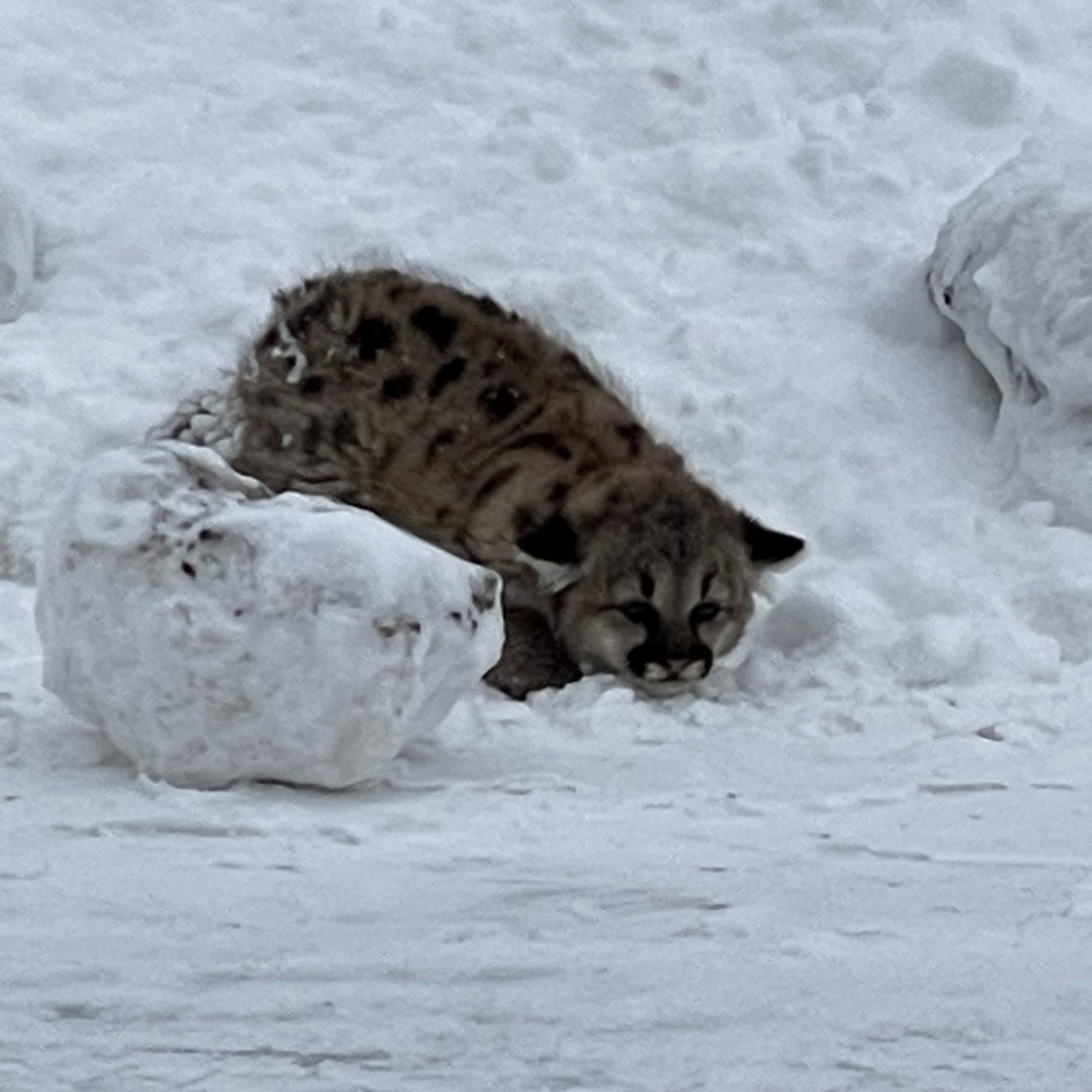
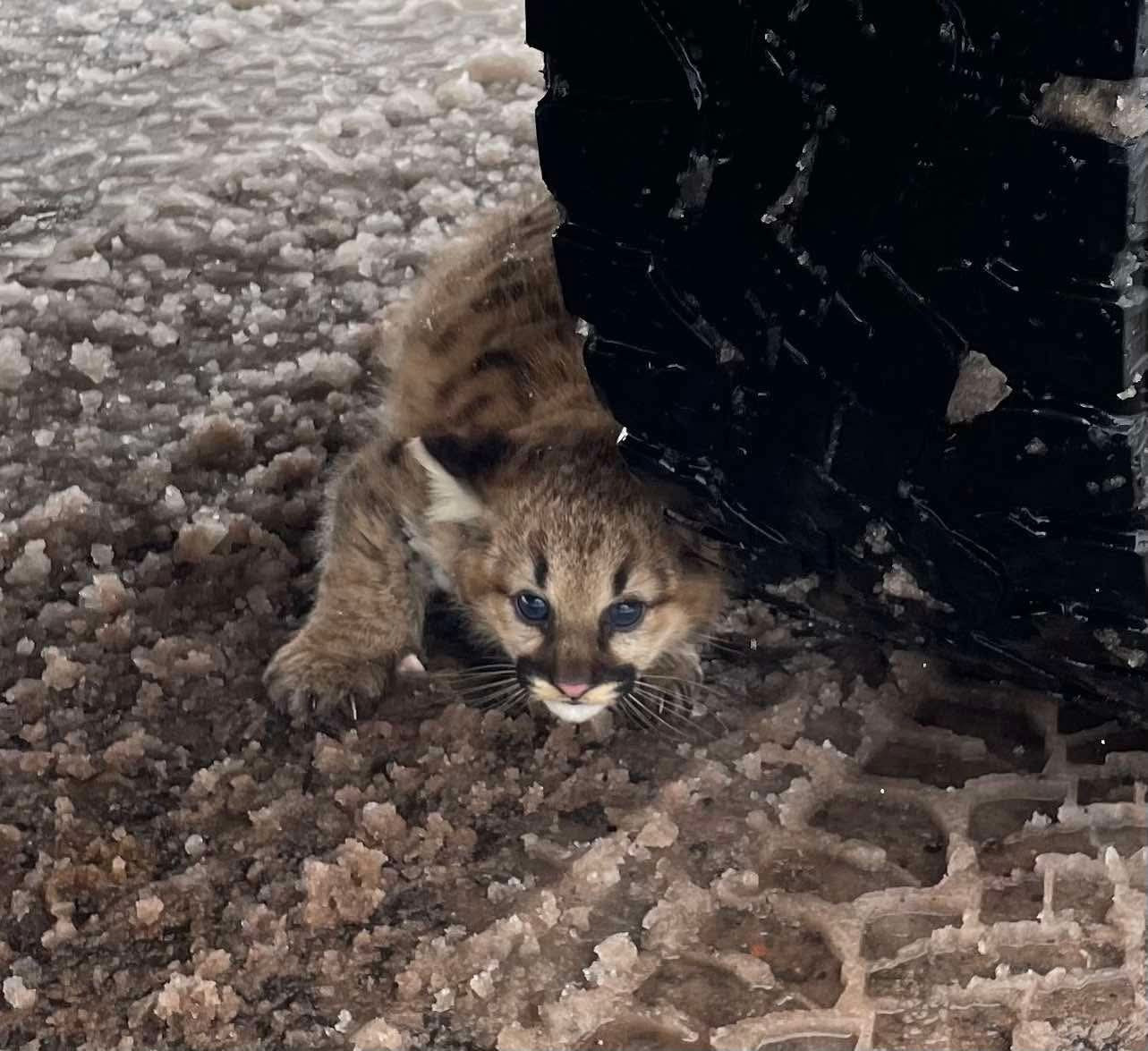
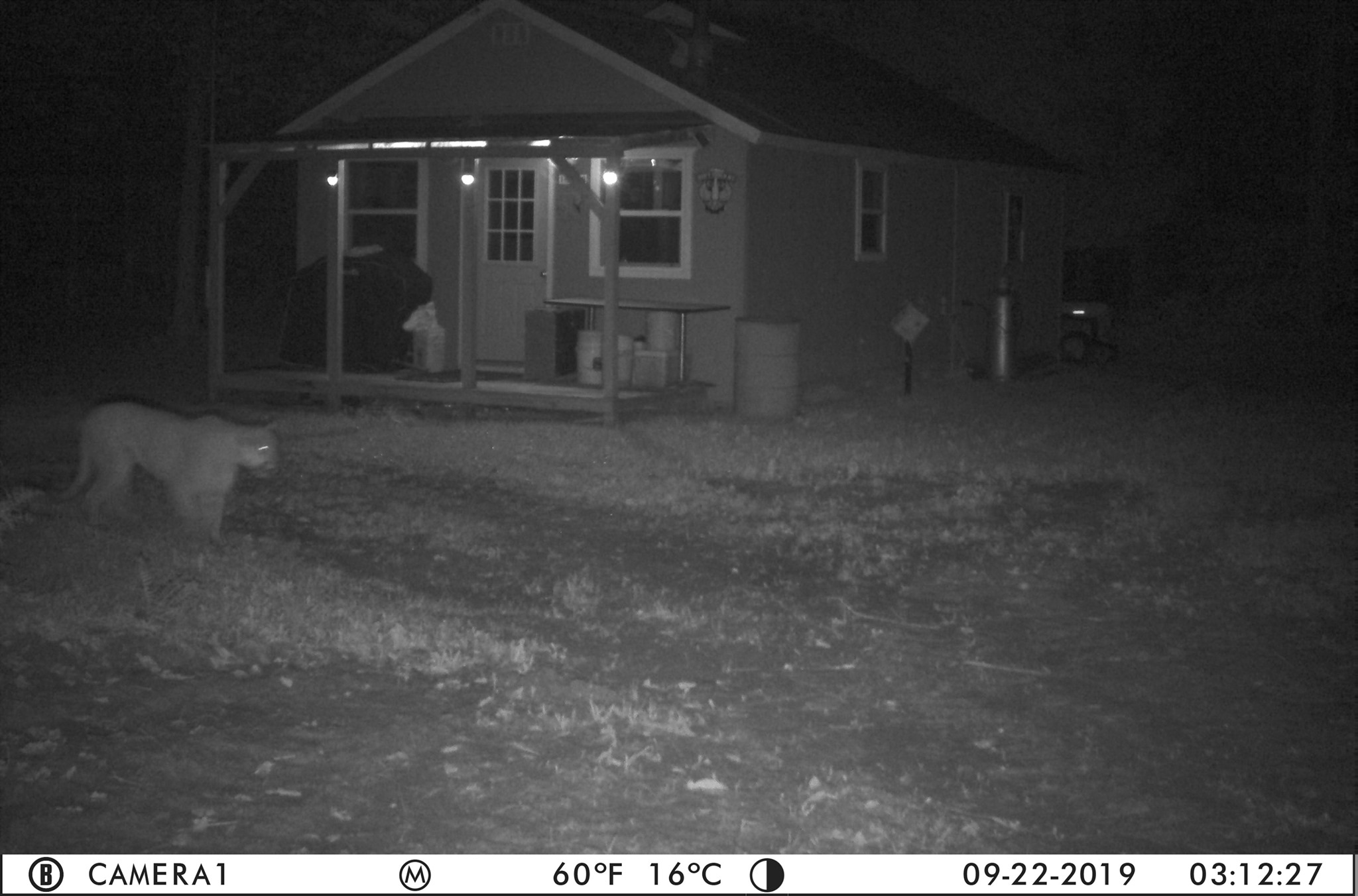
Remember the cougar cubs we met last month? The Michigan Department of Natural Resources shares this December 2025 trail cam photo of the cougar kits & mother saying:

Nine months after two cougar kittens were documented in the Upper Peninsula, a new trail camera photo indicates the elusive animals are still alive and living with their mother.

“This is a historic confirmation for Michigan since it is the first time in over 100 years that verified cougar reproduction has occurred east of the Mississippi River and possible even east of the Missouri River,” Roell said.

A private landowner sent the trail camera photo of the cougars to the DNR on Sunday, Dec. 14. Roell verified the site of the photo Monday and the DNR’s cougar team confirmed the photo Tuesday by enhancing the nighttime image to verify the existence of the three cougars. The sex of the kittens is unknown. Cougar kittens, or cubs, generally stay with their mother for about two years before venturing out on their own. “

The kittens’ chances of survival are actually pretty high because just like bears, cougars invest a lot of their energy into their young,” Roell said. “So these kittens will stay with their mom through this winter and possibly even into next winter. They already have a leg up, seeing as how they’ve been with her for a year now.”

You can read more from the DNR & read lots more about cougars on Michigan in Pictures! Here’s a couple photos of the cubs from the DNR along with a pic of an adult cougar.

Support Michigan in Pictures with Patreon

Waterfall Wednesday: Return to Manganese Falls

manganese-falls

Manganese Falls by John Gagnon

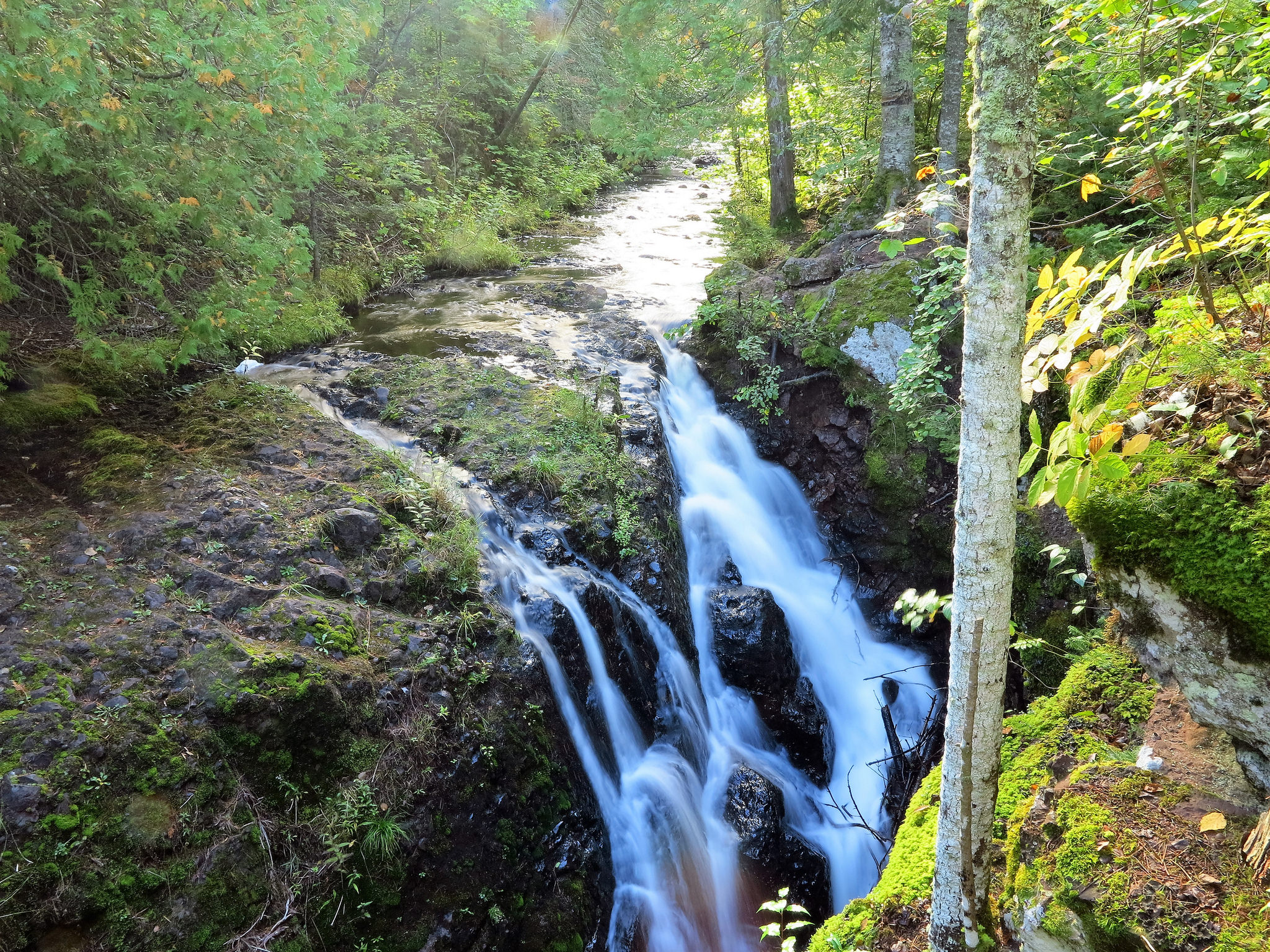
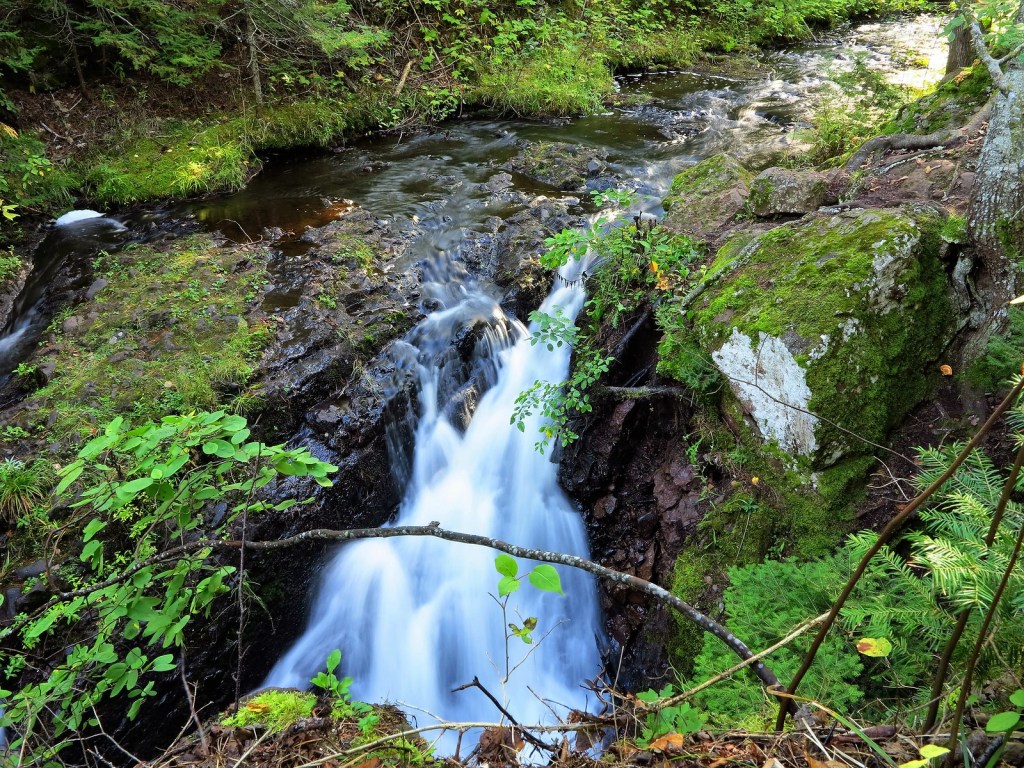
I shared this photo from John nine years ago but came back for a second look! Trip Advisor shares that Manganese Falls are fed by Lake Manganese, a pristine little lake worth visiting too:

The falls are at the mercy of the seasons. The falls run rampant in spring with all the snowmelt (270″ average) and rainfall. Then as the season progresses, they become much less intense ending in fall as not much more than a trickle. The box canyon that surrounds the falls is a beautiful and dramatic 100 foot drop. It is lined with mosses, ferns and other boreal fringe flora, making it worth the stop even in the fall. There is a scenic trail that leads down and over a bridge to the lower end of the falls. It is definitely worth taking if you have the time.

The awesome GoWaterfalling’s page for Manganese Falls has directions & more info!

See more in John’s Rivers/streams gallery on Flickr.

Lots more Michigan waterfalls on Michigan in Pictures!

Manganese Falls by John Gagnon

Manganese Falls by John Gagnon

Support Michigan in Pictures with Patreon

Fat Bear Week: Michigan Black Bear Edition

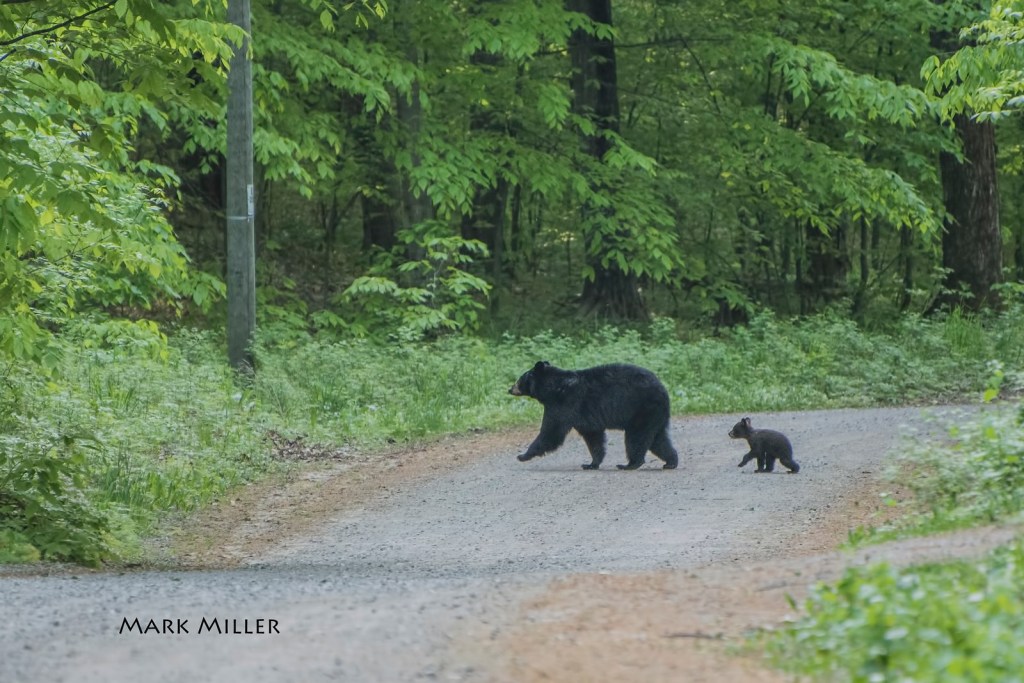
Saturday Morning Stroll by Mark Miller

Saturday Morning Stroll by Mark Miller

We interrupt our mostly Michigan content to bring you important news about Alaska’s Fat Bear Week online competition! Some of the largest brown bears on the planet make their home at Brooks River in Katmai National Park, and in addition to being adorably chonky, the fattest bears are best prepared for winter hibernation.

While Michigan doesn’t have brown bears, our native black bear population is also out there in the woods right now, actively searching for the raw materials to pack on the pounds. The Michigan DNR says that about about 13,000 American black bears live in Michigan. Most of them (around 11,000) live in the Upper Peninsula with around 1,700 in the northern Lower Peninsula. Their Living with Black Bears guide says that the black bear is the only species of bear with an average lifespan of 10 years in the wild. Male black bears live in an area about 100 square miles or more in size, while females live in smaller areas about 10 to 20 square miles. They are solitary animals, a sow (female bear who has birthed at least one cub) and her cubs may be seen together.

Black bears can have various color phases including black (most common in Michigan), brown and cinnamon. In Michigan, adult female black bears range from 100 to 250 pounds while adult males can weigh up to 400 pounds. Adult black bears measure about three feet high on all fours & five feet tall when standing upright.

Black bears are omnivorous & will travel great distances to find food, opportunistically feeding on both plants and animal including tender vegetation, nuts, berries, and insects. Black bears are generally fearful of humans and will leave if they are aware of your presence, but human foods, garbage, pet foods, & birdseed can definitely draw them to your door! In the rare circumstance that a bear doesn’t turn and leave, try to scare it off by yelling while leaving a clear, unobstructed escape route for the bear. If the bear stands its ground, makes threatening sounds or bluff charges, you are too close. Take slow steps backward while continuing to talk to the bear in a stern tone. In the rare event of an attack, fight back with a backpack. DO NOT run or play dead.

Mark captured these black bears out for a Saturday morning stroll near Empire back in June of 2015. You can see more in his In In My Backyard gallery on Flickr.

Support Michigan in Pictures with Patreon

Green Heron, Brown Alert

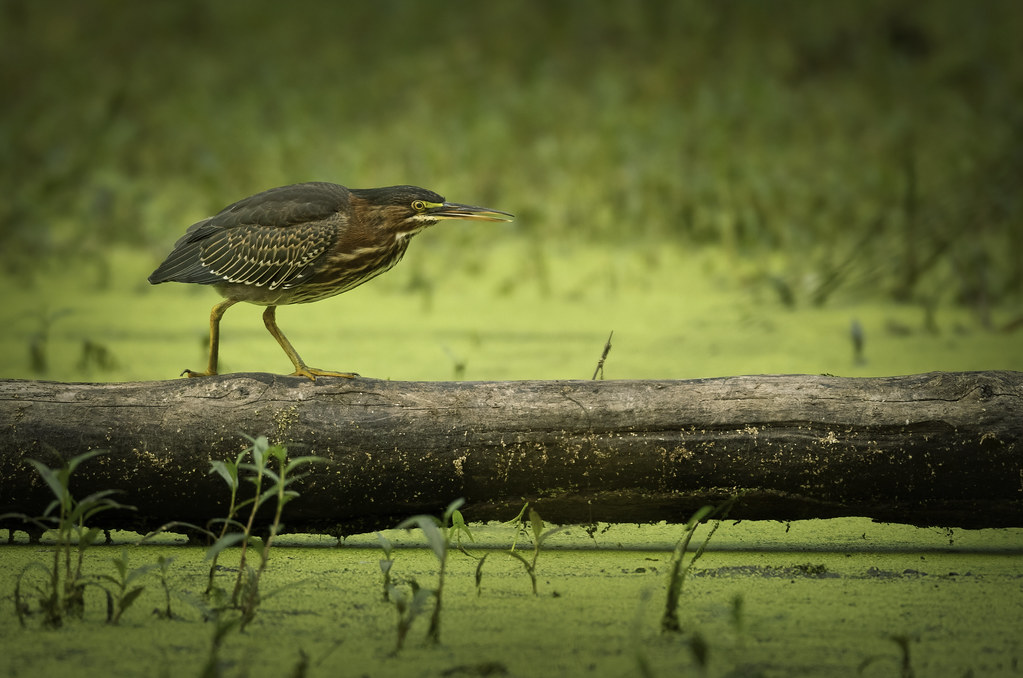
Green Heron by Kevin Povenz

Green Heron by Kevin Povenz

Click on Detroit shares that State Representatives Alicia St. Germaine and Ron Robinson have introduced a bill to establish a “Brown Alert” system modeled after existing emergency notification systems like Amber Alerts:

“Right after a raw sewage discharge, we shouldn’t have people paddleboarding on the Clinton River or launching kayaks. They need timely notifications so they can make an informed decision whether they want to go on that waterway,” St. Germaine said.

The proposed system would require county drain or public works commissioners to notify local emergency managers within 12 hours of the water reaching dangerous contamination levels.

“If something like this were to happen, people should be notified in real-time, and in a lot of cases, it’s not reported for weeks or sometimes months afterwards, and by then, what are you going to do about it?” Robinson said.

Many Harrison Township residents have witnessed signs of water contamination firsthand. “The other day, when we had a big rain and you could see chunks of what I’m going to call ‘things’ floating down the river that appeared to be untreated sewage. It was awful,” said Jim Constantino.

That’s a big no from me on floaty things in our rivers & lakes!! The other day I saw a green heron fishing in a containment pond that had a posted “Don’t Eat These Fish” warning. It always makes me sad when I see animals oblivious to our pollution, but hopefully making more people aware of it will lead to generating less of it.

Kevin took this shot of a young green heron last month in a marshy area at the Grand Ravines. See lots more in his Birds gallery on Flickr.

You can read more about Green herons on Michigan in Pictures!

Support Michigan in Pictures with Patreon

Northern Black Widow in Michigan

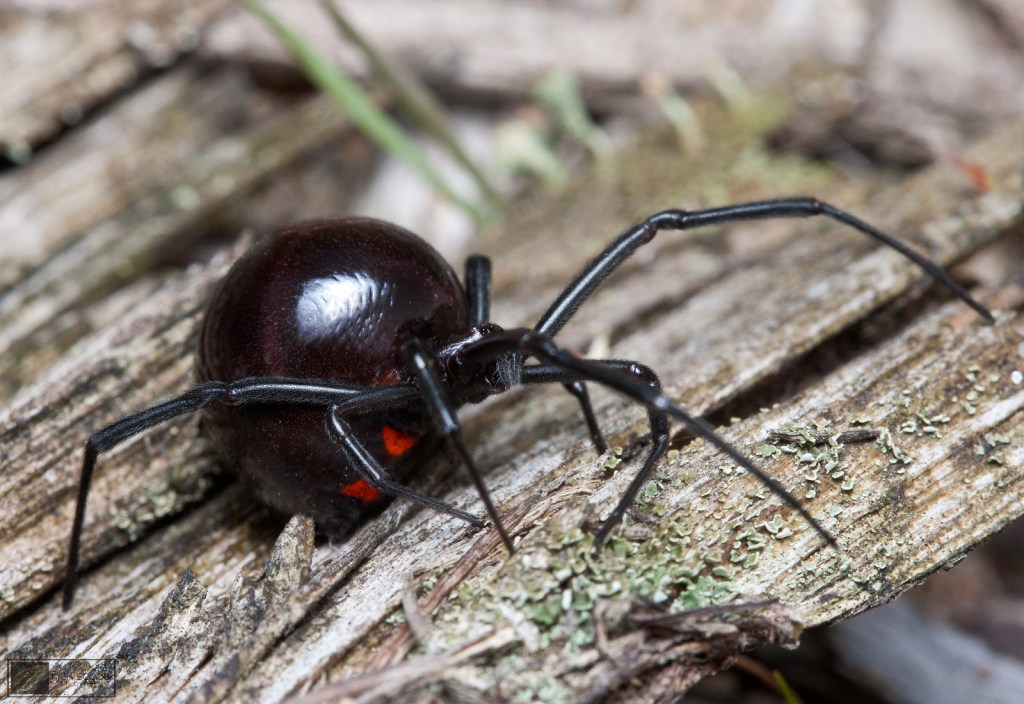
Northern Black Widow Latrodectus variolus by Nick Scobel

Northern Black Widow Latrodectus variolus by Nick Scobel

Last month I shared a pic of a non-poisonous spider, so I figured it was probably a good time to tell you about one of Michigan’s two venomous spiders. MSU Extension shares that the northern black widow spider (Latrodectus variolus) is found throughout the eastern US all the way to east Texas:

In Michigan, they appear to be more common in the western Lower Peninsula. Outdoors, they are found in old stumps, hollow logs, under fallen fence posts, in abandoned animal burrows or piles of brush, and in the corners of sheds and crawlspaces. In the northern black widow, the distinctive hour glass marking on the underside of the abdomen is incomplete or split in the middle. Northern widows also have a series of red spots along the dorsal midline of the abdomen, and many have a series of lateral white stripes on the abdomen. The web of the black widow is an irregular mesh of strands in which the spider hangs in an inverted position.

Surprisingly, as common as this spider is, black widow bites are infrequent because the spider is actually very timid and prefers fleeing when disturbed. That’s a good thing because the venom of a widow spider is 15 times more toxic than that of rattlesnakes. However, due to the small amount of the venom injected into the bite, widow bites are far less serious.

Nick is a longtime Michigan in Pictures contributor with detailed information & pics about Michigan reptiles & amphibians. He got this shot of a gravid female in Manistee County back in 2014. See his latest on Flickr or @swamprattler on Instagram!

Support Michigan in Pictures with Patreon

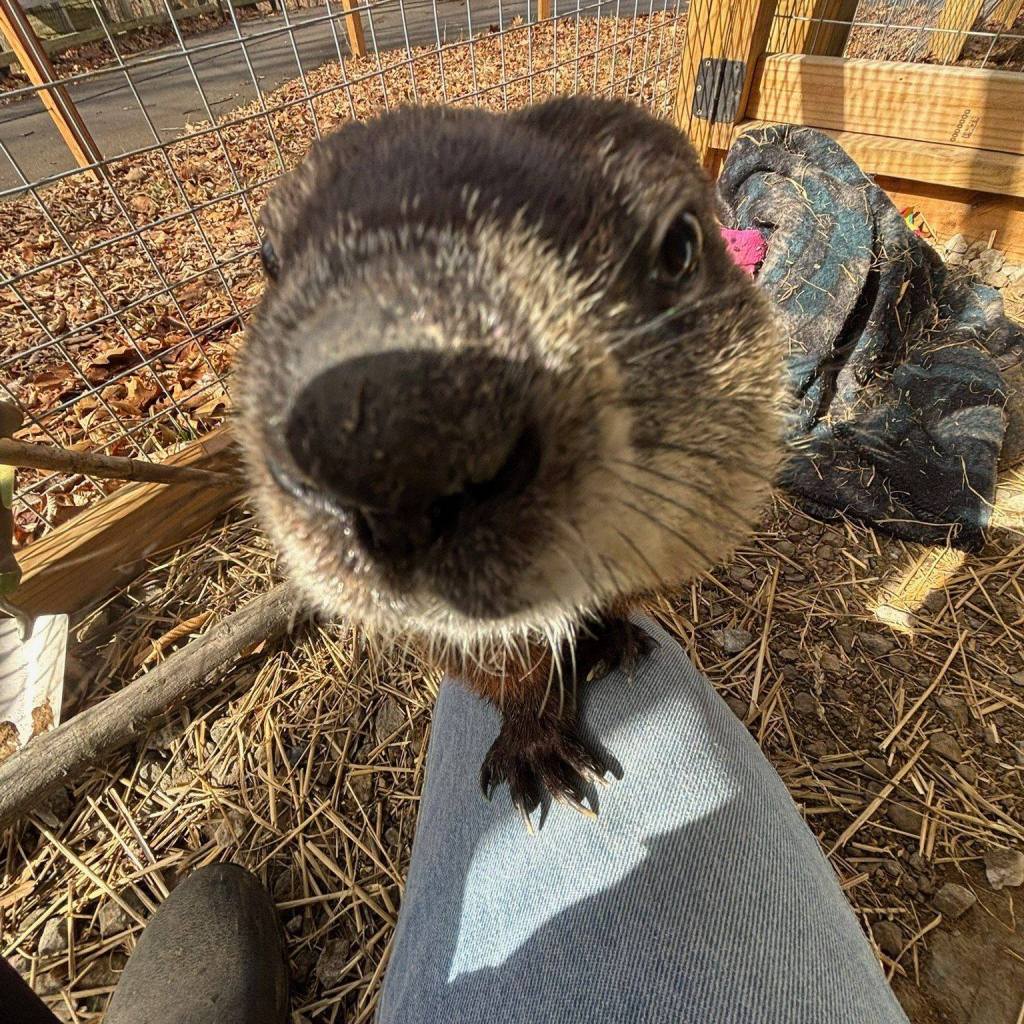
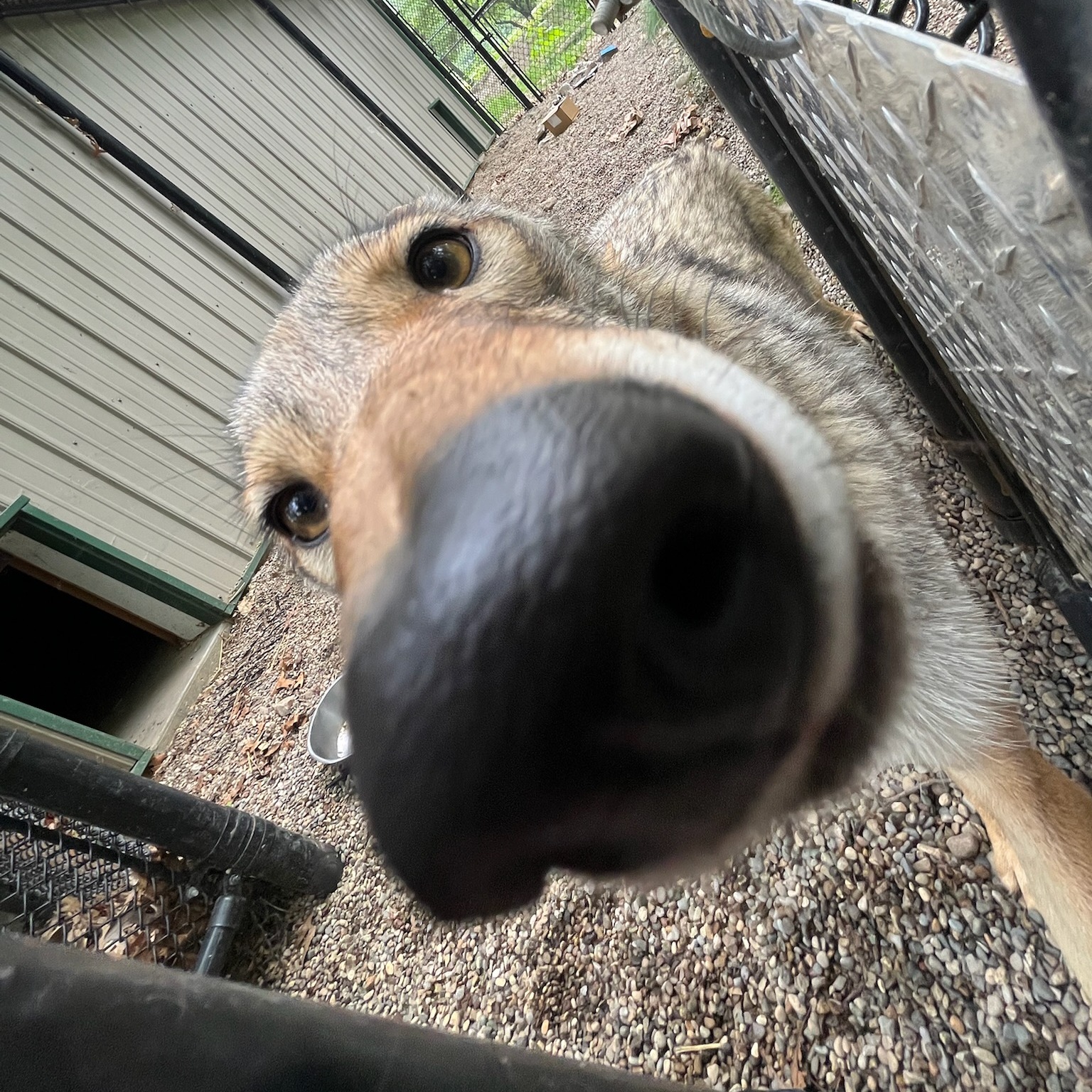
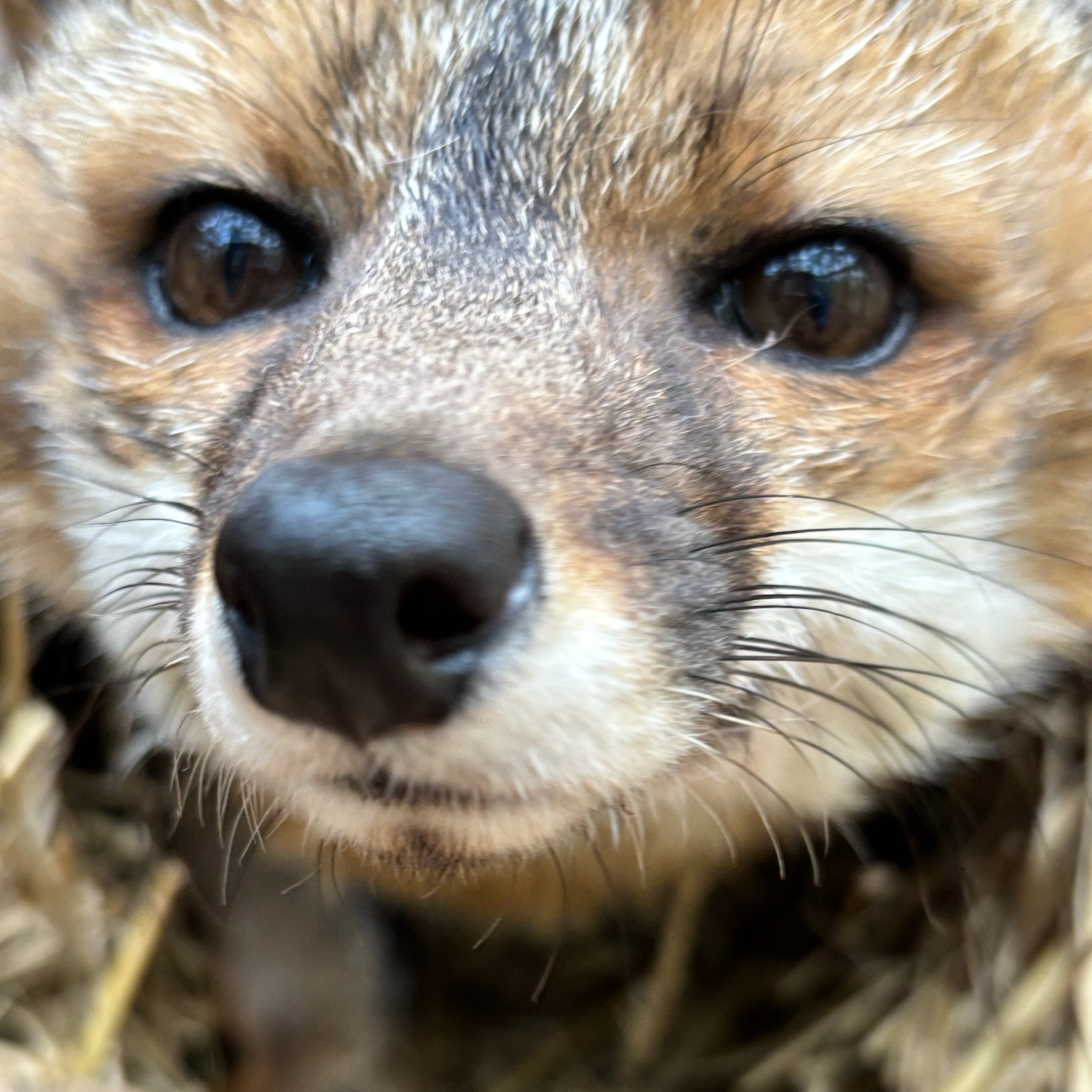
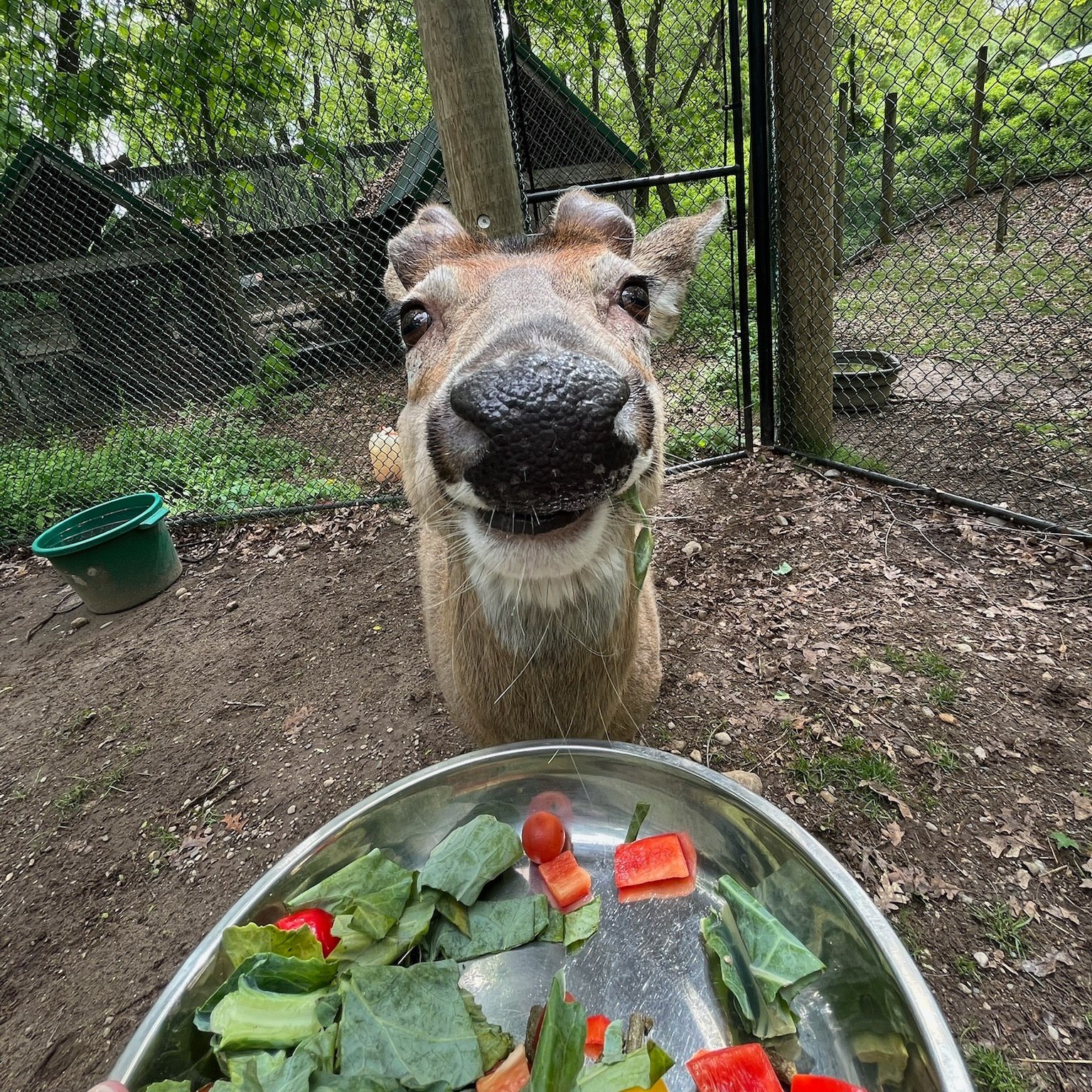
Goofy Glory

Goofy Glory by Howell Nature Center

Goofy Glory by Howell Nature Center

Adjectives commonly applied to nature are typically “grand” or “majestic” but Howell Nature Center reminds us to save a little room for fun. Enjoy these wildly unflattering yet totally adorable photos of our animal ambassadors caught in all their goofy glory 🤪🦊🦉🦝 Come learn their stories and see the real wildlife behind the camera!

Wild Wonders Wildlife Park is open 10am – 5pm every day, and if that first nose seems familiar, it’s because it belongs to Michigan’s Official Groundhog Woody!

More fun stuff on Michigan in Pictures!

Support Michigan in Pictures with Patreon