
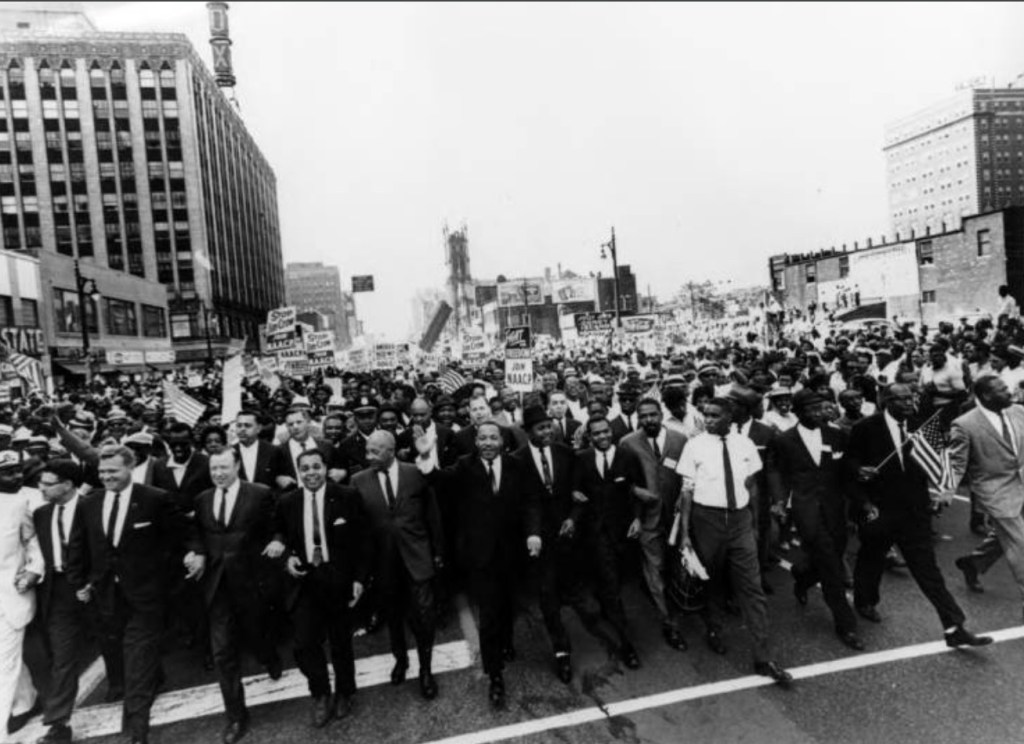
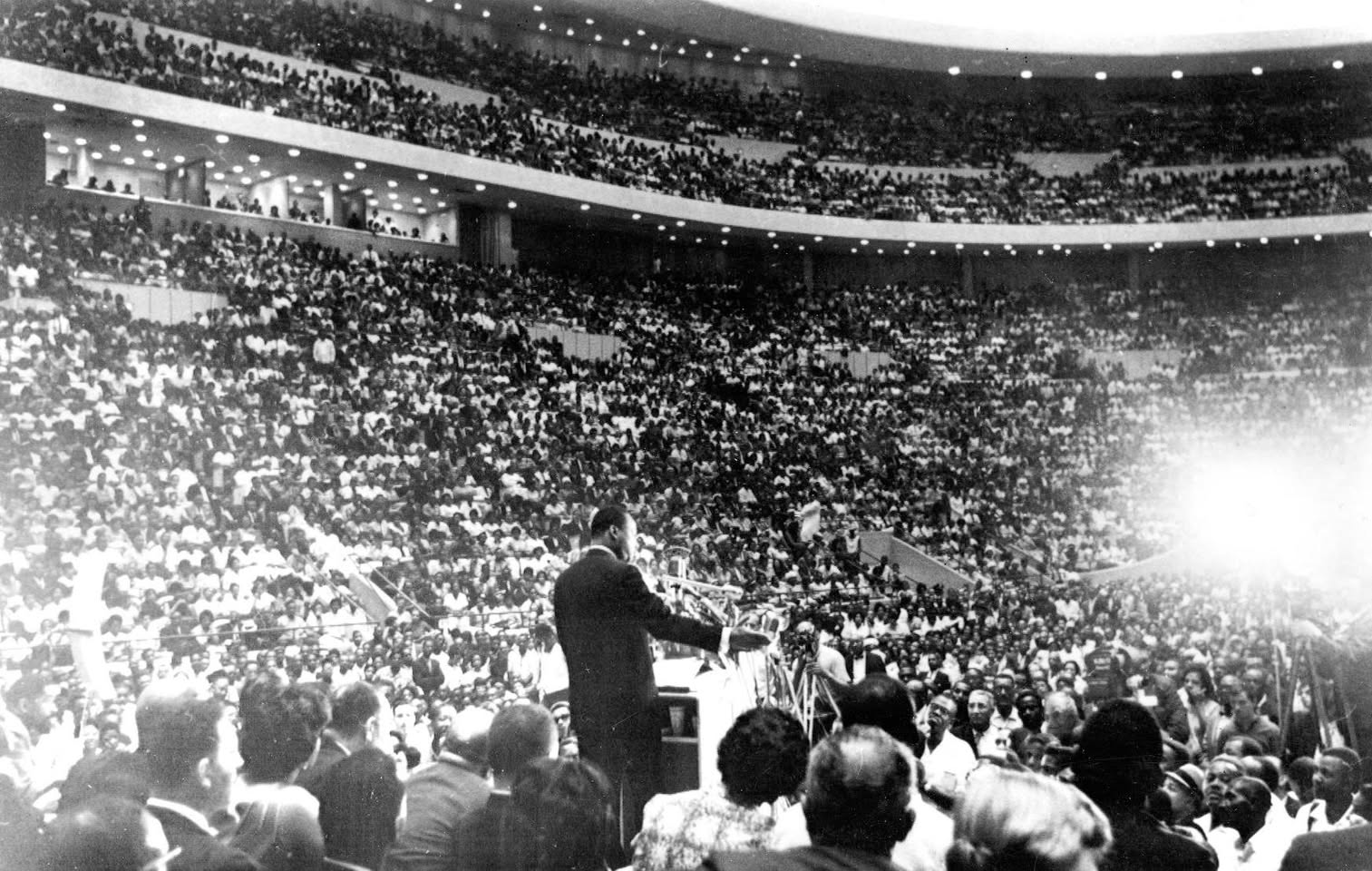
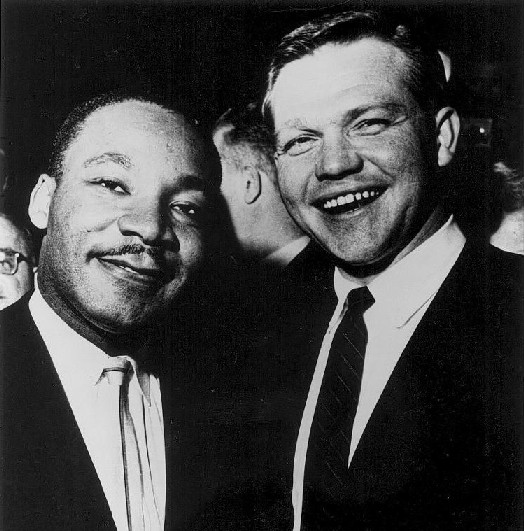
Dr Martin Luther King leads the Detroit March to Freedom by Walter P Reuther Library
The Walter P Reuther Library shares that June 23rd is the 62nd anniversary of Detroit’s Walk to Freedom, described by Dr. King as “one of the most wonderful things that has happened in America”:
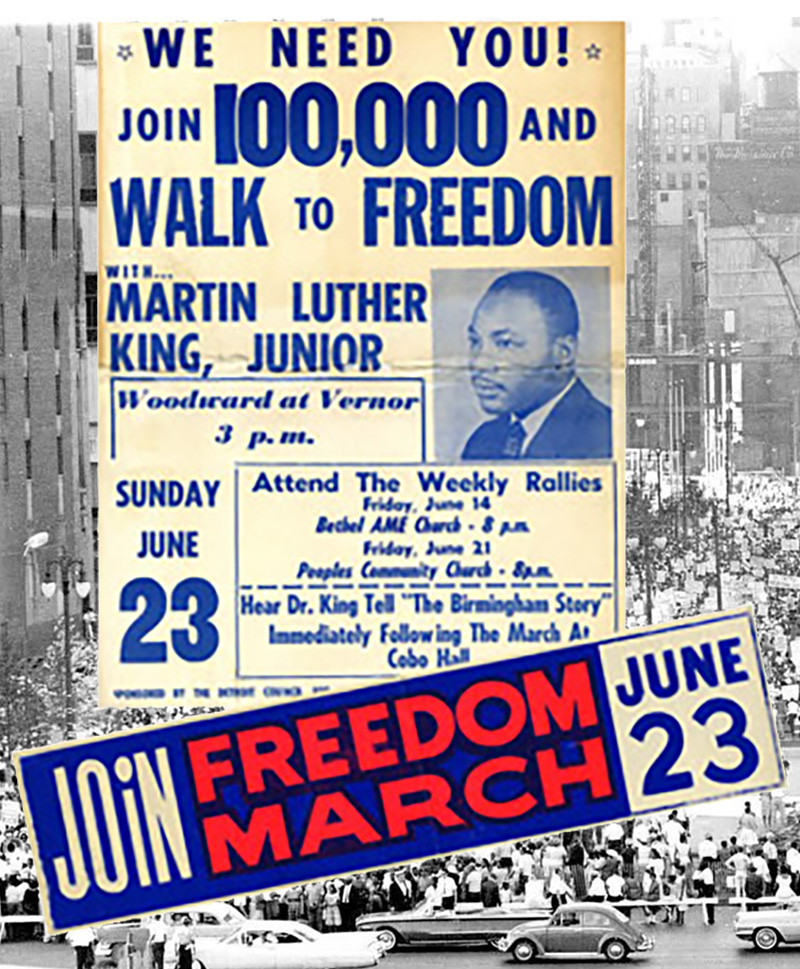
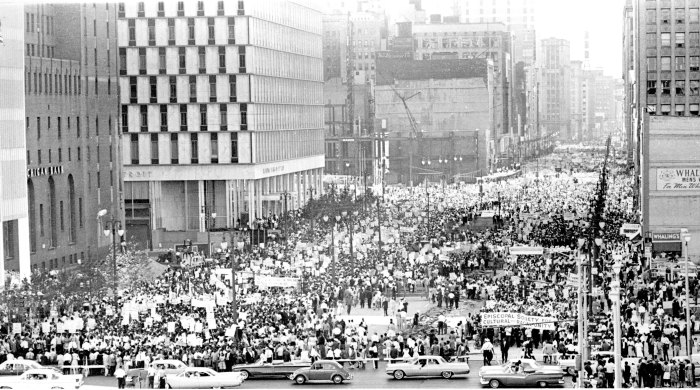
Dr. King led the march and shed light on the status of African Americans in northern industrial cities. Organized by the Detroit Council on Human Rights (DCHR), the Walk to Freedom was the largest civil rights demonstration in the nation’s history. Its purpose was to speak out against segregation and the brutality that met civil rights activists in the South while at the same time addressing concerns of African Americans in the urban North: inequality in hiring practices, wages, education, and housing. The date of the march, June 23, 1963, was chosen to commemorate the 20th anniversary of the 1943 Detroit Riots in which 34 people, the majority of them African American, were killed.
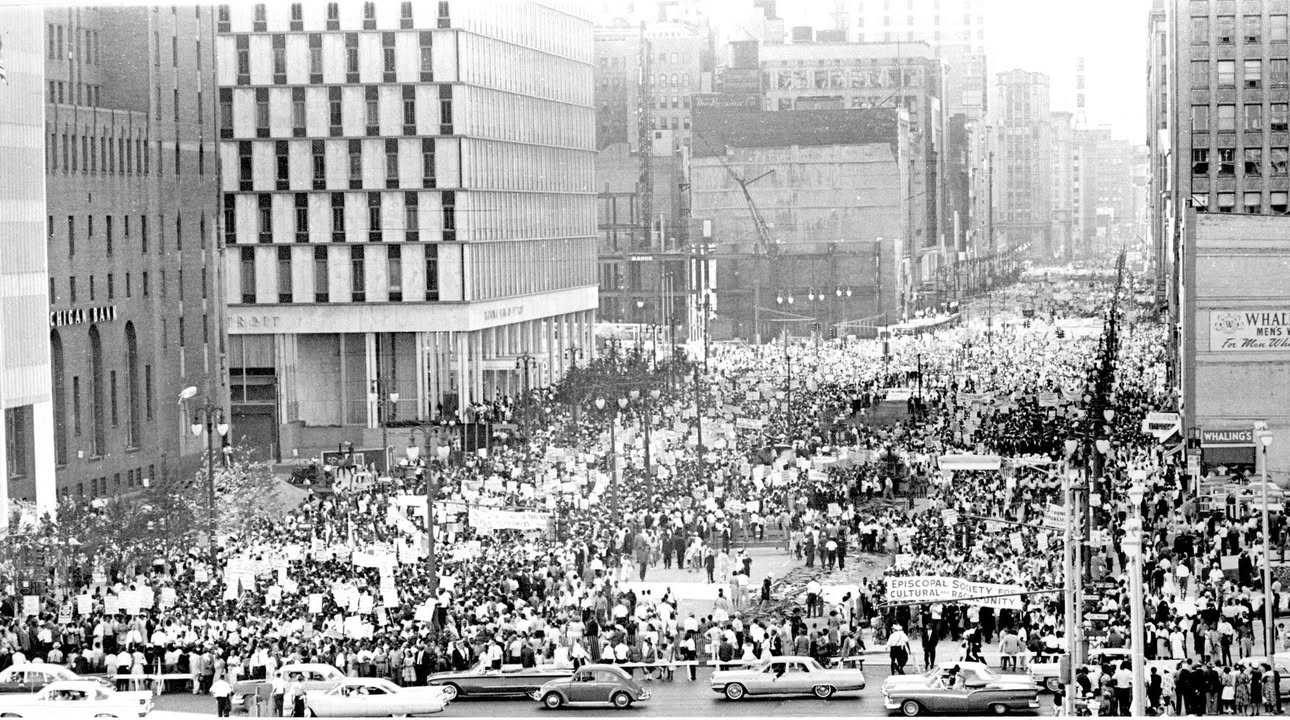
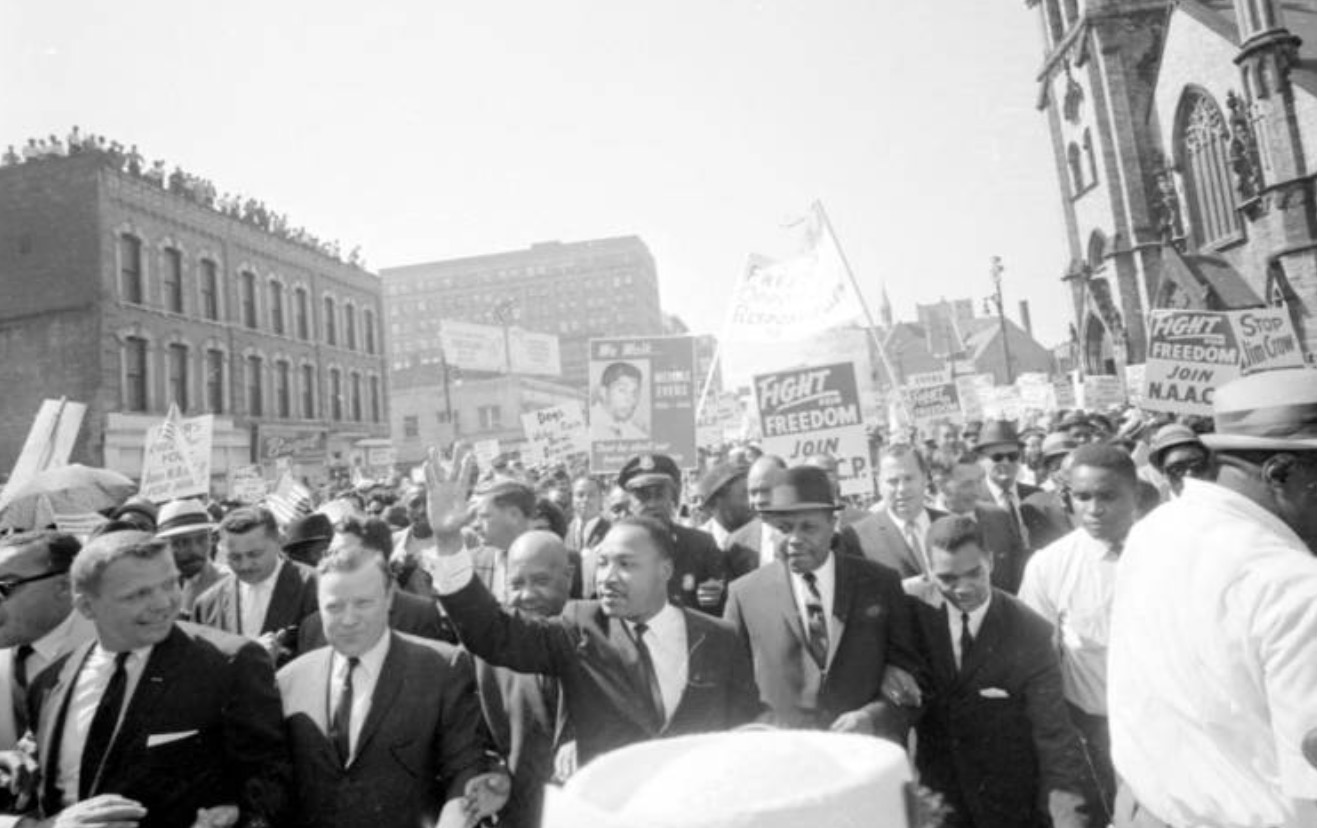
On the afternoon of the march, 125,000 people filled Woodward Avenue curb-to-curb, carried signs that demanded racial equity, and moved in relative silence as 15,000 spectators watched from sidewalks, windows, and the roofs of buildings. Community activists, representatives from organized labor, clergymen, and state and local government officials all participated in the march. Notable figures included Rev. C.L. Franklin, chairman of the DCHR; Walter Reuther, president of the UAW; Rev. Albert Cleage (Jaramogi Abebe Agyeman); Mayor Jerome Cavanagh; former governor John B. Swainson; and Benjamin McFall. In his absence, Governor George Romney proclaimed June 23 “Freedom March Day in Michigan.” The guest of honor, of course, was Dr. King, who was met with song by the crowd as he joined the march at Cadillac Square.
The route of the march started at a twenty-one-block staging area near Adelaide Street. It followed Woodward Avenue to Jefferson Avenue, then headed west through the Civic Center. An hour and a half after it began, it ended at Cobo Hall, where 25,000 people, an estimated 95% of them African American, filled the building to capacity. Thousands of demonstrators who could not find a seat spilled onto the lawns and malls outside, and listened to the programming through loudspeakers. Inside, public officials, African American business and civic leaders, and dignitaries including John B. Swainson, Congressman Charles Diggs, and Rev. Albert Cleage were among the speakers. Yet the rally is remembered primarily because it was here that Dr. King gave an early version of his “I Have a Dream” speech; two months later he delivered it at the historic March on Washington. In it, he proclaimed that the status quo was unacceptable. He advised that African Americans needed to stand up and fight for equality and freedom while standing firm to the principle of non-violence and to “make real the promises of democracy” by supporting the civil rights bill that President Kennedy had put before Congress.
More including photos from Wayne State University’s Walter P Reuther Library.


 Michigan in Pictures