
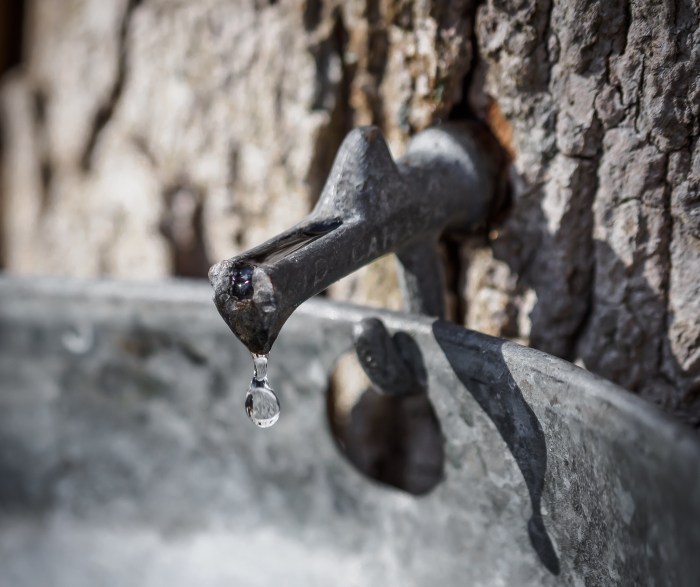
Maple Sap Harvesting by David Marvin
Our recent weather has been perfect for maple sugaring! You can dig into the process at the maple syrup tag on Michigan in Pictures!
Dig into David’s Flickr for more!

Maple Sap Harvesting by David Marvin
Our recent weather has been perfect for maple sugaring! You can dig into the process at the maple syrup tag on Michigan in Pictures!
Dig into David’s Flickr for more!
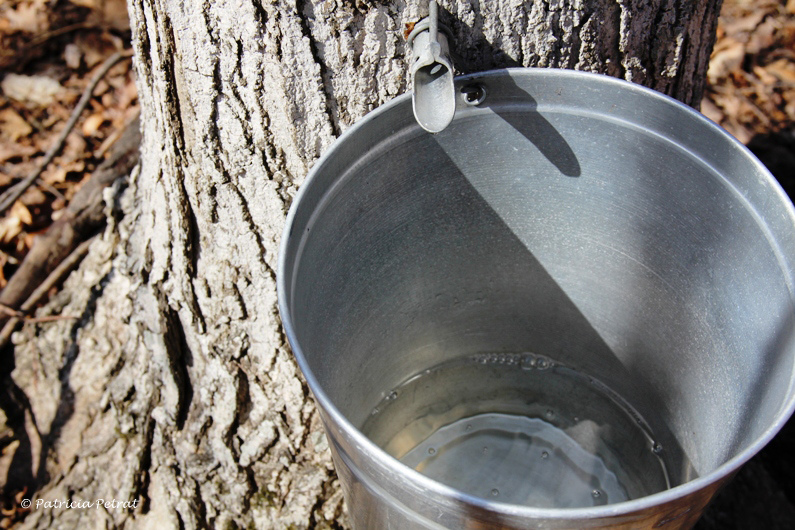
It takes a while ~ 3 of 5, photo by Trish P. – K1000 Gal
I just wrapped up a post about making maple syrup over on eatdrinkTC that you might enjoy. Michigan is 6th in the nation in the production of maple syrup and with a little bit of work and a small investment, you can make it yourself!
One of the photographers we featured is Trish, who has several more from March of 2011. View her photo bigger and see more in her sap slideshow!
More maple syrup on Michigan in Pictures!

Maple syrup 2, photo by Deb Perry Studio
One of the best things about spring for my money is that it’s the one time of year that you can make maple syrup! Michigan ranks 5th in the US in maple syrup production, and the Michigan Maple Syrup Producers Association has a page about the history of maple syrup production that shows we’ve been a maple syrup player for a long time:
Native Americans have many wonderful stories about how they began making maple syrup. The first is the legend of Glooskap. Many, many, many years ago the Creator had made life much easier for man. In fact, in those days the maple tree was filed with syrup and all man had to do was cut a hole in the maple tree and the syrup dripped out. One day the young prince Glooskap (known by other names in other tribes) came upon a village of his people that was strangely silent. There were no dogs barking, no children playing, no women minding the cook fires, and no men getting ready to go hunting! Glooskap looked and looked and finally found everyone in the nearby maple grove. They were all lying at the bases of the trees and letting the sweet syrup drip into their mouths. Even the dogs were enjoying the syrup. “Get up, you people,” Glooskap called. “There is work to be done!” But no-one moved.
Now Glooskap had special powers, and he used these powers to make a large bark container. He flew to the lake, filled the container with water and flew back to the maple grove. When he poured the water over the trees it diluted the syrup so it was no longer sweet. ”Now, get up you people! Because you have been so lazy the trees no longer hold syrup, but only sap. Now you will have to work for your syrup by boiling the sap. What’s more, the sap will soon run dry. You will only be able to make syrup in the early spring of the year!”
…The Chippewas and Ottawas of Michigan tell a similar story of the god NenawBozhoo, who cast a spell on the sugar maple tree many moons ago, turning the near pure syrup into what is now called sap. He did this because he loved his people and feared they would become indolent and destroy themselves if nature’s gifts were given too freely. This legend is unique in that, in various forms, it can be found almost universally throughout the Eastern Woodland Indian tribes. This is unusual for cultures that did not have a written history.
Read on for more about how the process and techniques have evolved through the years. Michigan in Pictures has a ton of photos documenting the process of making maple syrup. that you’ll want to check out as well!
See Deb’s photo on black and see how it fits together in her maple syrup slideshow.
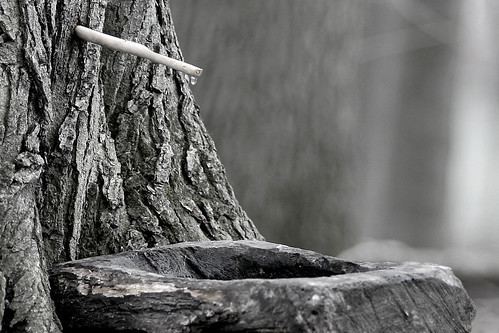
One Drip at a Time, photo by Graphic Knight.
Eric took this photo of an American Indian demonstration on how maple trees were tapped for collecting the sap to make maple syrup at the Kensington Metropark Farm Learning Center. He also has a couple photos of them boiling the say to make maple syrup.
It’s said that there was a time when the sap of the maple tree was as thick and sweet as honey. More practical tales are told of how Nanahboozhoo taught the making of maple sugar:
Then Nanahboozhoo gave the Indians a bucket made of Birch bark, and a stone tapping-gouge with which to make holes in the tree-trunks; and he shaped for them some Cedar spiles or little spouts, to put in the holes, and through which the sap might run from the trees into buckets. He told them, too, that they must build great fireplaces in the woods near the Maple groves, and when the buckets were full of sap, they must pour it into their kettles, and boil it down. And the amount of Sugar they might boil each Spring would depend on the number of Cedar spiles and Birch bark buckets they made during the Winter.
You can learn about a traditional Native American sugarbush from NativeTech and take a look inside the book Ininatig’s Gift of Sugar: Traditional Native Sugarmaking.
Also be sure to check out The Cycle of Sweetness: From Sap to Maple Syrup on Michigan in Pictures for more photos of this fascinating process.
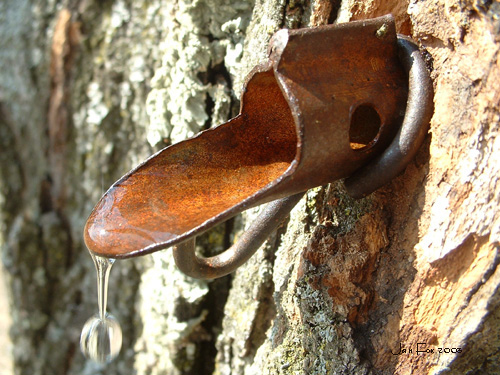
Spile, photo by Jan Fox ©
In an ideal world, I’d be able to lay out the process of making maple syrup using nothing but Michigan photos. Unfortunately, I can’t. I should be able to as my family used to sugar when I was a kid. I can only find a couple of the photos my dad took though. Such is life. I find maple sugaring a fascinating subject, so I’ll try and pull off a whirlwind tour of how it gets made. Bear in mind that we are discussing maple syrup here, Mrs. Butterworth, get outta here!
The roots of maple syrup start with the first Americans, and the fact that somewhere along the line, someone discovered that the sap of maple trees is sweet. If you ever get a chance to taste ice-cold sap in the spring, please do! Be warned that once the trees have budded, sap tastes bitter.
The process of sap collection is relatively simple. A hole is drilled in a maple tree and a spile like the one in the photo above is hammered into the hole. A bucket (or buckets) is then hung on the spile into which sap drips. Cold nights and warm days produce the best sap flow. For a few trees, folk will use a larger bucket while the big sugaring operations use a network of plastic lines.
In any case, the sap is collected and stored until such time as you are ready to boil it down (photo part of a great set of pictures!). This takes hours and hours and it takes 30 or 40 gallons of sap to make one gallon of maple syrup. Anyone who has ever made this knows that there’s no way sugar and carmel coloring are ever going to equal real maple syrup atop a stack of pancakes.
If all goes well, you will be able to see some or all of the photos featured here at the “sweetcycle” tag on Flickr.
View a Collection from 1940 by Marion Post Wolcott in the Library of Congress
How to Make Maple Syrup from the Michigan Maple Syrup Association
Native American Maple Sugaring: One Drip at a Time on Michigan in Pictures
Great information about Michigan maple syrup and maple syrup events from Absolute Michigan
 Michigan in Pictures