The Dogman is Michigan’s Werewolf

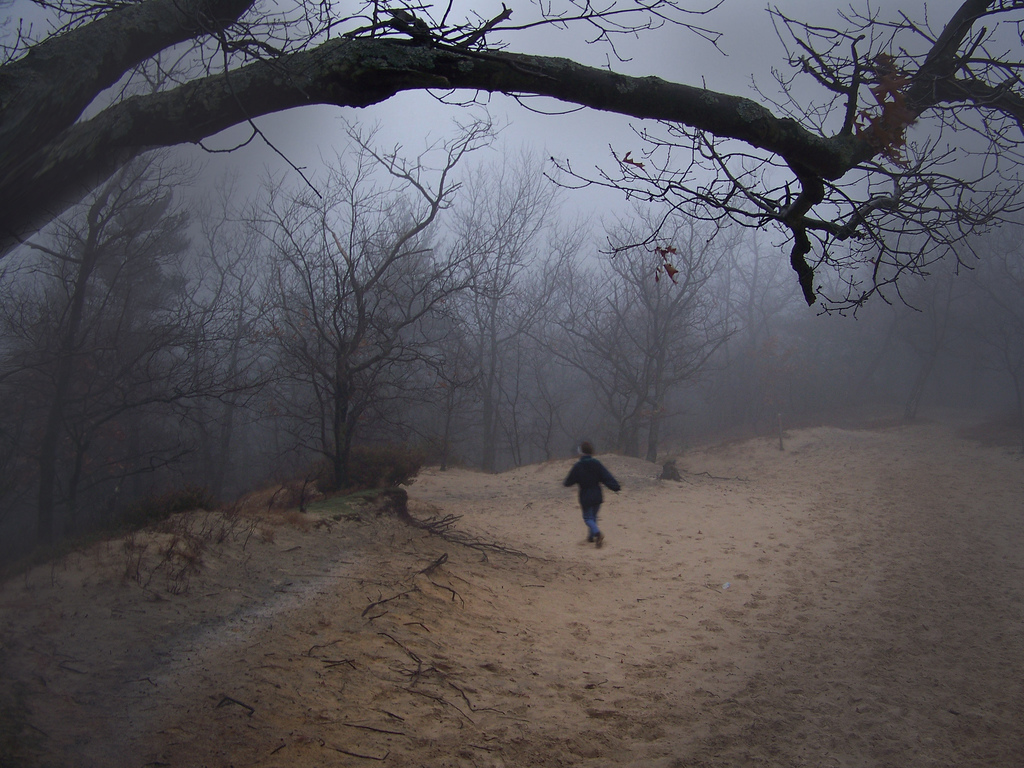
Nightmare at Muskegon State Park II by otisourcat

Nightmare at Muskegon State Park II by otisourcat

“Somewhere in the north woods darkness a creature walks upright, and the best advice you may ever get is don’t go out at night.”
-Steve Cook in The Legend of the Michigan Dogman

The Pacific Northwest has its Sasquatch, West Virginia has their Mothman, Jersey has their Devil, and we in the Great Lakes State have our Dogman, a fearsome werewolf-like beastie that purportedly roams the wilds of Northern Michigan. Discovery UK shares some of the Legend of the Michigan Dogman:

The first of the alleged Dog Man sightings in Michigan was in 1887, during a boom in US lumber production known as the great logging era, which roughly ran from 1870 to 1890. During this time, Michigan was its biggest producer of white pine lumber. Perhaps it’s therefore of little surprise that the initial influx of stories emerged then, with so many workers living and working in the woodlands in the area. The first of these is said to have taken place in 1887 in Wexford County, when a group of lumberjacks stumbled upon a creature they described as having the body of a man and the head of a dog. Its piercing eyes were either blue or yellow and its howl a terrifying scream.

  • 1917: Four horses found dead, all with their eyes wide open. It’s said the examining vet believed they appeared scared to death.
  • 1937: A victim of an attack by a pack of wild dogs claimed one of them walked on two legs.
  • 1957: A newspaper report stated that claw marks found on a church door could only have been made by a creature reaching a height of 7”4.
  • 1997: A farmer was found deceased at his plough from a heart attack, surrounded by dog tracks.
  • Unknown year: An army veteran claimed he saw the Dog Man of Michigan in Manistee National Forest, describing “a wolf head the size of my window” as the animal kept up with his truck travelling at 25 miles per hour. He also recalled it having sharp white teeth, three-inch long fangs, human-like hands some 14 inches across, black pointed ears, and yellow eyes.

Overall, Michigan Dogman stories often share common themes: a sinister canine visage, towering stature, and an unnerving ability to walk upright. What’s more, they all seemingly occurred in years ending in the number seven. This latter point has become a part of the mythos, with enthusiasts suggesting a possible ten-year cycle in the creature’s appearances.

Otisourcat originally shared this photo way back in 2008. Head over to their Flickr for the latest including some awesome shots of a raccoon on a snowman.

Some other Dogman related content you might enjoy includes this post on Michigan filmmaker Rich Brauer’s latest Dogman movie (third in his trilogy), the comprehensive Michigan Dogman entry in Wikipedia that relates the dogman is said to have been stalking the area around the Manistee River since the days when the Odawa tribes lived there, and of course Steve Cook’s song that “started” (or restarted) it all. Enjoy the song, but know that although author Steve Cook loves to claim he started the legend, it has been around for generations.

More of the Michigan dogman and other haunted Halloween fun on Michigan in Pictures!

Support Michigan in Pictures with Patreon

Seagulls probably live longer than you think

Herring and Ring-billed Gulls by John Dykstra

Herring and Ring-billed Gulls by John Dykstra

Recently, I was more than a little shaken to that seagulls can live for DECADES! All About Birds shares that the oldest recorded American Herring Gull was at least 29 years, 3 months old when it was seen in the wild in Michigan in 2015 and identified by its band, and they have reportedly lived as many as FIFTY YEARS in captivity. Also, while they prefer drinking freshwater, they can drink seawater thanks to special glands located over the eyes allow them to excrete the salt when they must.

The Ring-billed gull is somewhat smaller & distinguished from the Herring gull by yellow legs (instead of pinkish) and of course the black ring around the bill. Many and possibly most Ring-billed Gulls return to breed at the colony where they hatched year after year, often nesting within a few meters of last year’s nest site. The oldest recorded Ring-billed Gull was at least 27 1/2 years old, so probably be nicer to them on the beach because they will be back there for years! ;)

John took these photos mostly near Manistee. See more in his Michigan gallery on Flickr!

PS: Even though the first photo was taken way back in 2010, there’s a fair chance that one or both of these birds is still flying today!! 😳

Support Michigan in Pictures with Patreon

Is Michigan’s Best Beach in Manistee?

First Street Beach in Manistee by Tess Bladen

I missed the news back in May, but mLive.com just shared a reminder that First Street Beach was named Michigan’s top beach by USA Today readers.

Now this is no shade to Manistee’s First Street Beach because for my money, it’s one of the best, especially for finding beach glass. I am for sure wondering if readers think this is our best beach or if they prefer another. Let me know in the comments or on the Michigan in Pictures Facebook!!

Manistee Tourism shared Tess’s photo on their First Street Beach + Douglas Park page. Visit for a live web cam and info about the three playgrounds, bathhouse & concessions, dog park/dog beach, and all kinds of other amenities!

Support Michigan in Pictures with Patreon

Manistee’s Giant Sequoia Tree

Giant Sequoia Tree Manistee, Michigan by Charles Bonham

Giant Sequoia Tree Manistee, Michigan by Charles Bonham

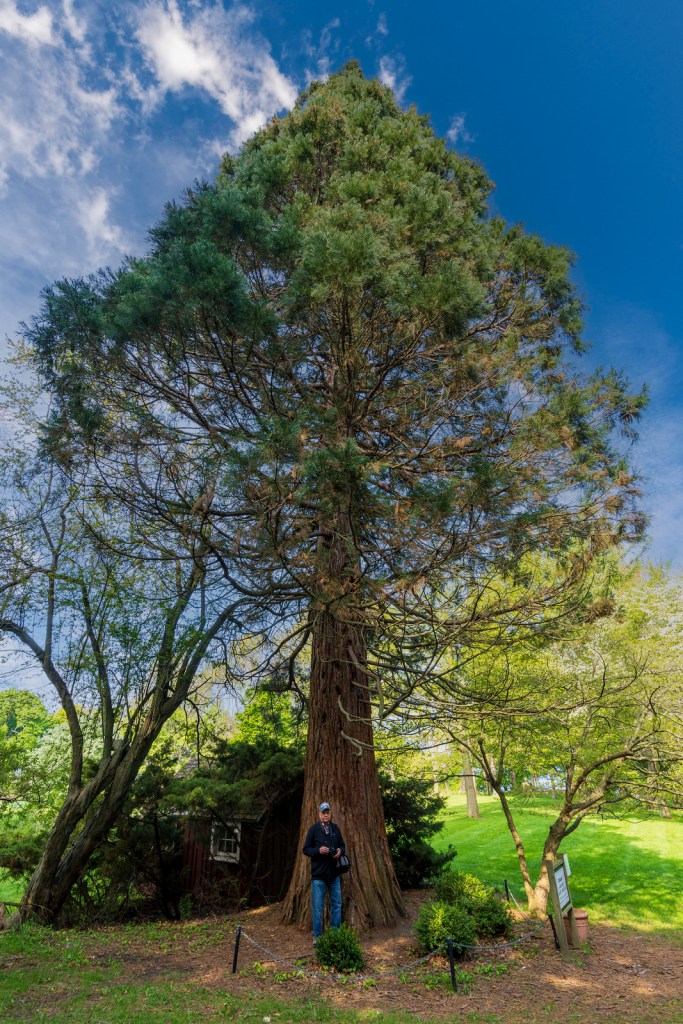
Charles shares that this Giant Sequoia (Sequoiaadendron giganteum) at Lake Bluff Arboretum in Manistee was planted in 1949 on a cliff along Lake Michigan is now over 100 feet tall! You can see another view right here and view lots more on his Flickr!

Support Michigan in Pictures with Patreon

October 8, 1871: The Demon in the Gale

Tinder by Kevin Ryan

Tinder by Kevin Ryan

A sky of flame, of smoke a heavenful, the earth a mass of burning coals, the mighty trees, all works of man between and living things trembling as a child before a demon in the gale. To those who have seen, the picture needs no painting.”
-a history of Sanilac County

The Chicago Fire of 1871 which started on October 8th gets (justifiably) a great deal of attention, but something that is not as well known is the fact that it was only one of a number of major fires across the Midwest that burned millions of acres in October of 1871 and caused over 1200 deaths. Michigan was dealt grievous blows from “The Fiery Fiend” as fires swept across the state, wiping out or endangering entire cities, towns and villages including Holland, Manistee, Grand Rapids, South Haven and Port Huron doing millions of dollars worth of property damage and killing hundreds.

It’s probably impossible for us to fathom what the threat of fire was like in those days. This brief excerpt from a terrifying account account of the burning of Manistee might give a glimmer:

…A bright light came up out of the south, directly in rear of the town, and the fierce gale bearing it on directly toward the doomed city. Those who resided in that part of town, including the writer, rushed to the new scene of danger, the full extent of which few comprehended. The fire had originated two miles south of the city, on the lake shore. It first came upon the farm of L.G. Smith, Esq., which it devoured. Eighty rods north the extensive farm and dairy of E.W. Secor shared the same fate, with all his barns and forage. Another quarter of a mile, and the large farm buildings of Mayor R.G. Peters were quickly annihilated. Here the column of fire divided, the left hand branch keeping to the lake shore hills, and coming in at the mouth; the other taking a northeasterly course and coming in directly south of the town, as before described. Here a small band of determined men, fighting with the energy of despair to protect their homes, kept it at bay till past midnight. But all was vain – at 12:30 o’clock the gale became a tornado, hurling great clouds of sparks cinders, burning bark and rotten wood through the air in A Terrific, Fiery Storm.

Every man now fled to his own house. The fire now came roaring through the dead hemlocks south of the blocks included between Maple and Oak Streets, in the Second Ward. The flames leaped to the summits of the great hemlocks, seventy, eighty or ninety feet high, and threw out great flags of fire against the lurid heavens. The scene was grand and terrible beyond description. To us, whose homes and dear ones and all were in the track of the fire, it was heart-rending.

Read more of these amazing journal style entries from the history of Manistee County. The cause of these fires has been given as a hot dry summer, too many leavings from timbering operations and of course Mrs. O’Leary’s firebug of a cow. There is an interesting theory, however, that the root cause was the earth passing through the tail of a comet. You can read all about it at The Comet and the Chicago Fire where it’s noted that even a steamship passing the Manitou Islands in Lake Michigan noted that they too were on fire.

Kevin took this back in 2009 at a firefighter training in Grand Haven. See more in his Other gallery on Flickr.

Support Michigan in Pictures with Patreon

Sunset on Summer 2020

Summer Glow - Manistee by Stacy Niedzwiecki

Summer Glow – Manistee by Stacy Niedzwiecki

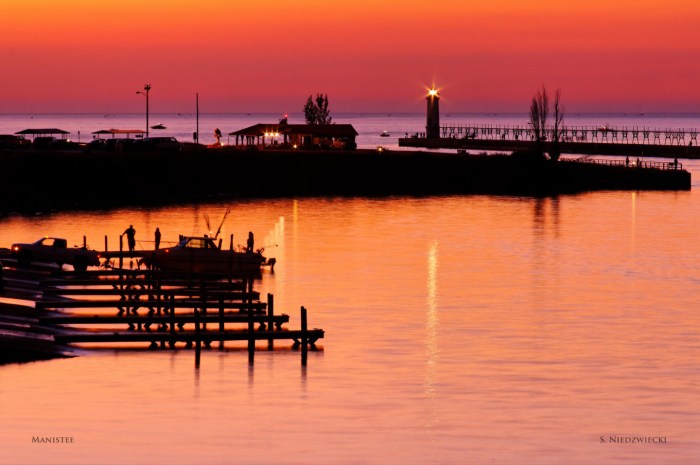
Here’s hoping that you get a chance to enjoy some of Michigan’s gorgeous scenery this Labor Day Weekend & also that it’s the LAST lost summer for a state that relies so heavily on tourism & travel & fun in sun!

Stacy took this back in 2008 on Labor Day Weekend. See more in her Michigan BLUE Summer album on Flickr & visit her website for more great work!

Support Michigan in Pictures with Patreon

Over the river … and over the woods

crossing-over-by-terryjohnston

Crossing Over, photo by Terry Johnston

Here’s hoping that everyone has a safe journey this Thanksgiving. The Freep reports that Thanksgiving 2016 is shaping up to be a busy one for holiday travel:

AAA says it expects that more than 1.5 million people in Michigan will travel 50 miles or more from home this Thanksgiving holiday.

The auto club says Tuesday it would be the most travelers since 2007 and a 2 percent increase from last year. Reasons cited include improvements in the economy during the second half of the year, including rising wages, increased consumer spending and consumer confidence.

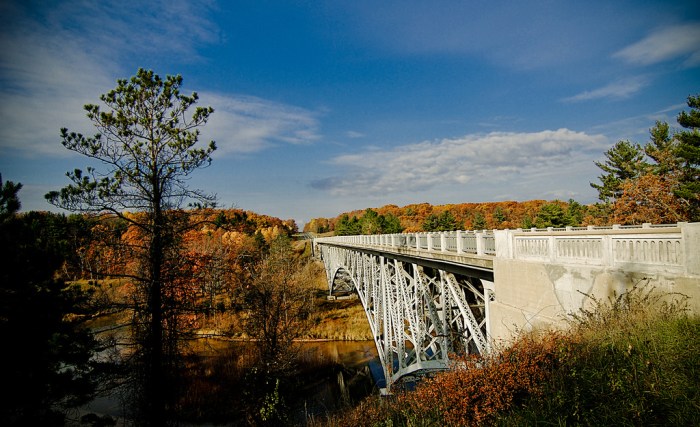
Check Terry’s photo which was coincidentally taken back in November 2007 bigger and view more in his Manistee slideshow.

Morning Light at the Manistee Pierhead Light

Manistee Lighthouse

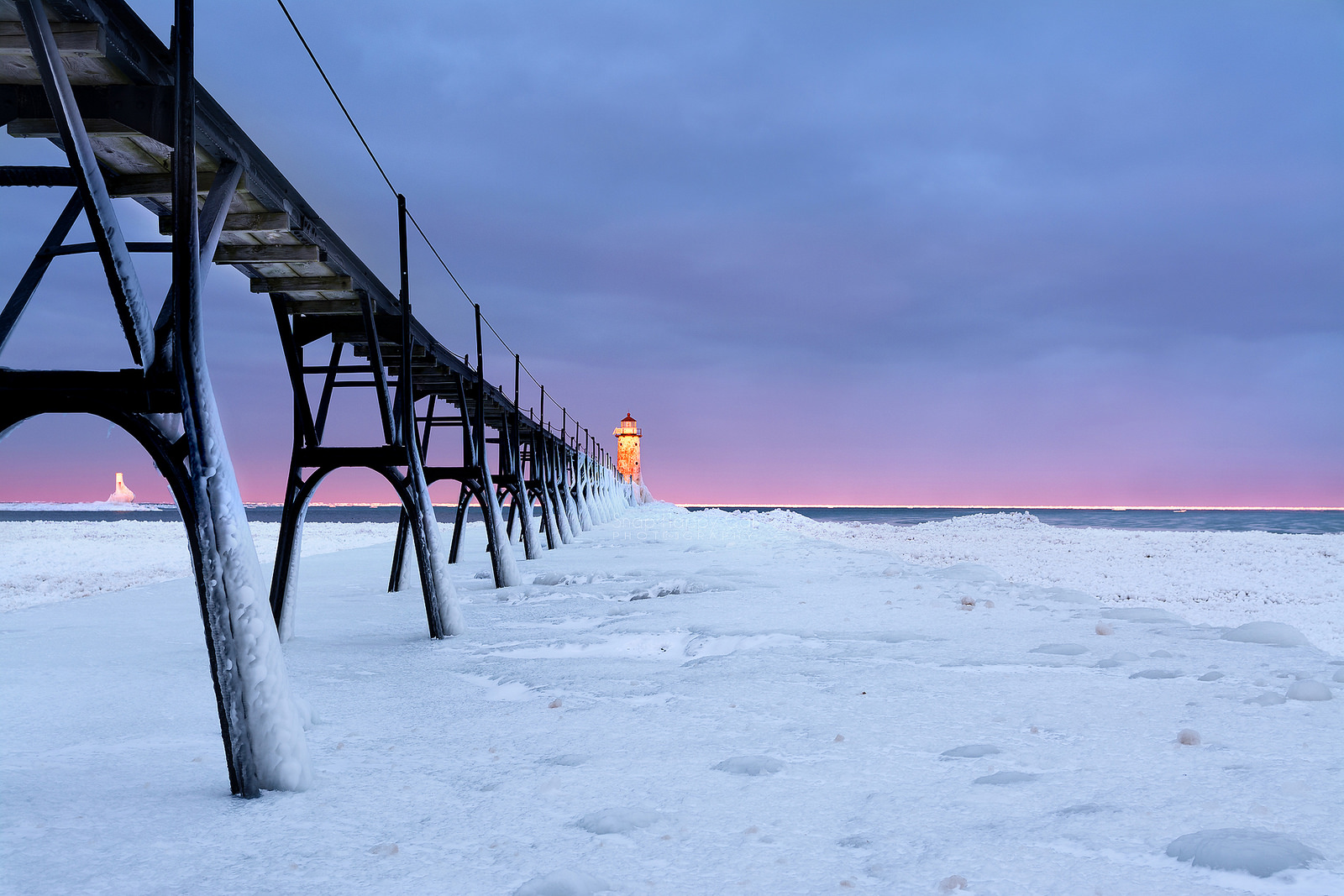
Manistee Morning Light, photo by Heather Higham

Terry Pepper’s Seeing the Light has an extensive entry on the history of the Manistee Pierhead Light with copious information and historical photos. Terry goes deep on Manistee’s history as a lumber port:

Although the first sawmill had been established on the banks of the Manistee in 1841, settlement in the area was not widespread until the Chippewa relinquished their reservation by treaty in 1849, and the federal government offered lands along the Manistee for public sale. It did not take lumber interests long to realize the incredible potential of the Manistee which snaked a hundred miles into the forests, and lumbermen soon began lobbying for federal funding to improve the harbor and to erect a lighthouse at the river mouth. With no appropriation forthcoming, the businessmen of Manistee took the matter into their own hands, erecting a pair of short stub piers at the river mouth in an attempt to stem the deposition of sand and silt.

In 1861, Congress instructed the Army Corps of Engineers to dispatch an Engineer Officer to Manistee to conduct a survey of the river entrance. Water depth in the opening between the piers was found to be from seven to eight feet, and a 250-foot long sand bar with a water depth of less than five feet above it was identified 600 feet off the end of the piers.

…To serve this burgeoning maritime commerce, the piers were extended an additional 150 feet in 1875, and the channel between them dredged to a minimum depth of ten feet. With the main light now standing a considerable distance to the rear of the pierheads, the decision was made to replace the shore light on the north bank with a pierhead beacon on the outer end of the longer south pier. Click to view enlarged image The new south pierhead light consisted of a timber-framed pyramidal beacon typical of the type being erected on pierheads throughout the Great Lakes. With its lower half open, the upper half immediately below the gallery was enclosed to provide a small service room for lamp maintenance. Equipped with windows, the service room also served as a sheltered area in which the keeper could stand watch during inclement weather. Standing 27 feet in height, the beacon was capped with a square gallery with iron handrails and an octagonal cast iron lantern installed at its center.

Read on for a whole lot more.

About the photo, Heather writes:

I still can’t believe I managed to drag myself out of bed this morning. There were 8 minutes of pink light – and a stunning sunrise to the east that I completely ignored – followed by about 90 minutes of interesting (if not sunrise) light.

View it bigger, see more in her Lighthouses slideshow and definitely add Snap Happy Gal Photography to your Facebook follows!

More Michigan Lighthouses and more sweet sunrises on Michigan in Pictures.

Michigan Movie Moment: Christopher Lloyd, Mickey Matson and the City of Milwaukee

Christopher Lloyd on the City of Milwaukee

Christopher Lloyd on the City of Milwaukee, photo courtesy Mickey Matson/10 West

While Michigan hasn’t become the movie mecca that was envisioned when the state created its film incentive – in large part because it was abruptly gutted – movies are still being made here. Pirate’s Code: The Adventures of Mickey Matson, was filmed in Manistee and Muskegon and premiers October 16 at the Grand Rapids Public Museum to kick off their 160th year. If you click that link, you can check out the movie trailer! It’s opening weekend of their new exhibition “Real Pirates: The Untold Story of the Whydah from Slave Ship to Pirate Ship.”

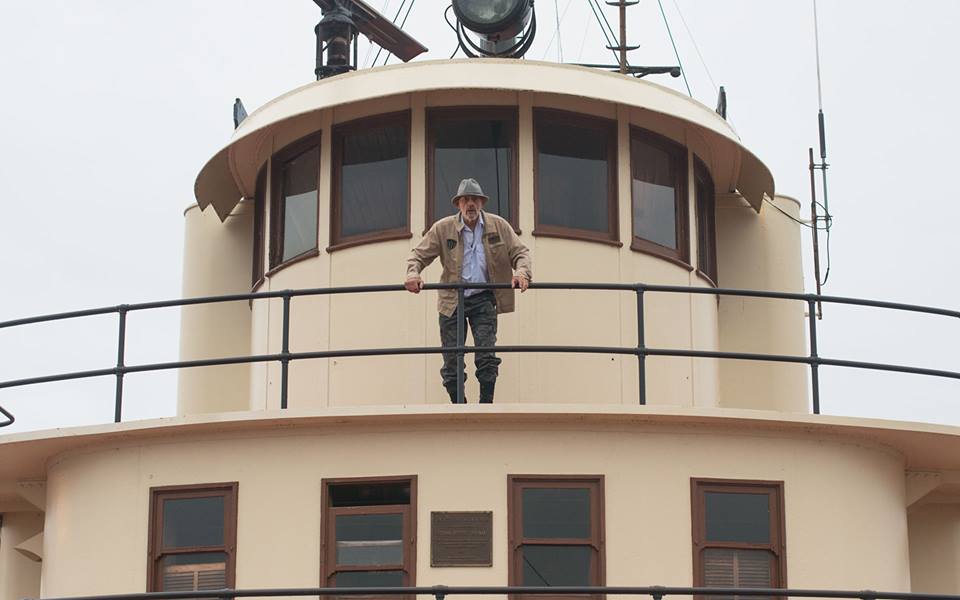
Here’s a production skill showing Christopher Lloyd, one of the film’s stars, on the pilot deck of the SS City of Milwaukee, a car ferry that is now a museum in Manistee that plays a big role in the film.

View the photo bigger and see more and learn more about the movie at the Mickey Matson Facebook page.

PS: Every Friday & Saturday night in October, the City of Milwaukee does a really cool haunted Ghost Ship that’s a blast!