
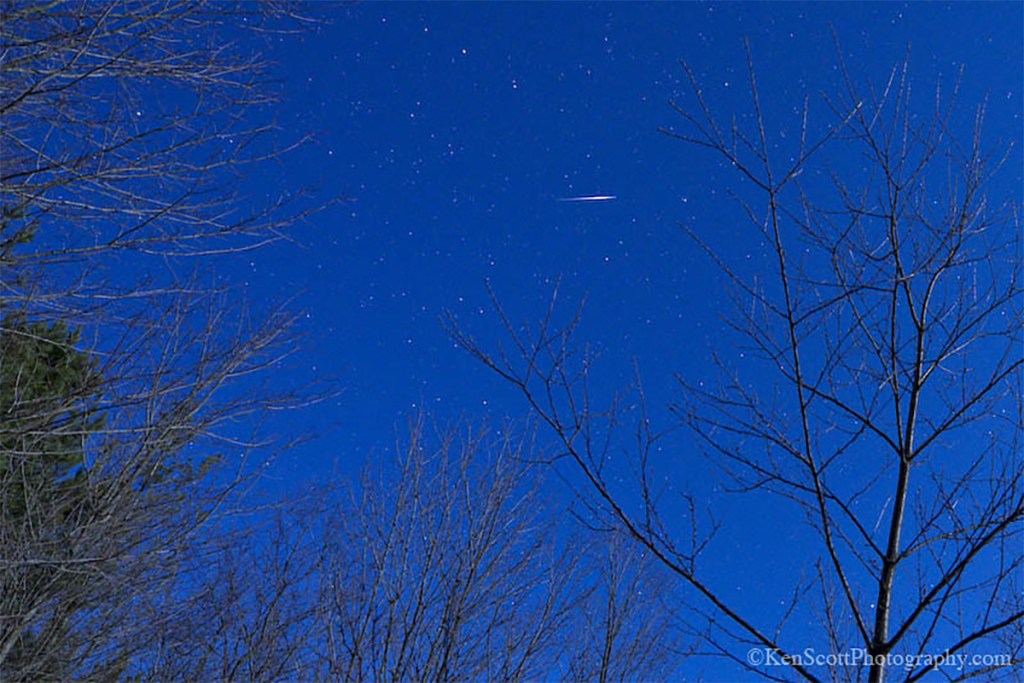
Get ready for the 2024 Lyrid Meteor Shower!

Lyrid Meteor … sprinkle by Ken Scott Photography

Longtime skywatchers know that April’s Lyrid meteor shower is the kickoff to meteor season. Earthsky shares the best time to see the Lyrids:

Late evening April 21 until dawn April 22 is the shower’s likely peak. The predicted** peak is 9:23 UTC on April 22. The peak of the Lyrids is narrow (no weeks-long stretches of meteor-watching, as with some showers). And, in 2024, the full moon will fall at 23:49 UTC on April 23. So your Lyrid meteor watching will be in moonlight this year. Tip: Go to a country location where the skies are as dark and clear as possible. Observe under a wide-open sky. But try to place yourself in a moon shadow. If you can block out the sight of the moon, yet still have some sky left for seeing meteors, you might see some of the brightest Lyrids blaze past in the bright moonlight. Remember, even one bright meteor can make your night!

I’ve shared this photo that Ken shot back in April of 2016 before, and I’ll probably share it again! He shared that he shot over a 3 hour period in hopes to catch the meteor ‘shower’ and only caught this one streaker. See more in his Skies Above album on Flickr and for sure visit Ken Scott Photography to view & purchase his work!
Support Michigan in Pictures with Patreon!

The Lyrid Shower, Comet Thatcher and the Northern Lights

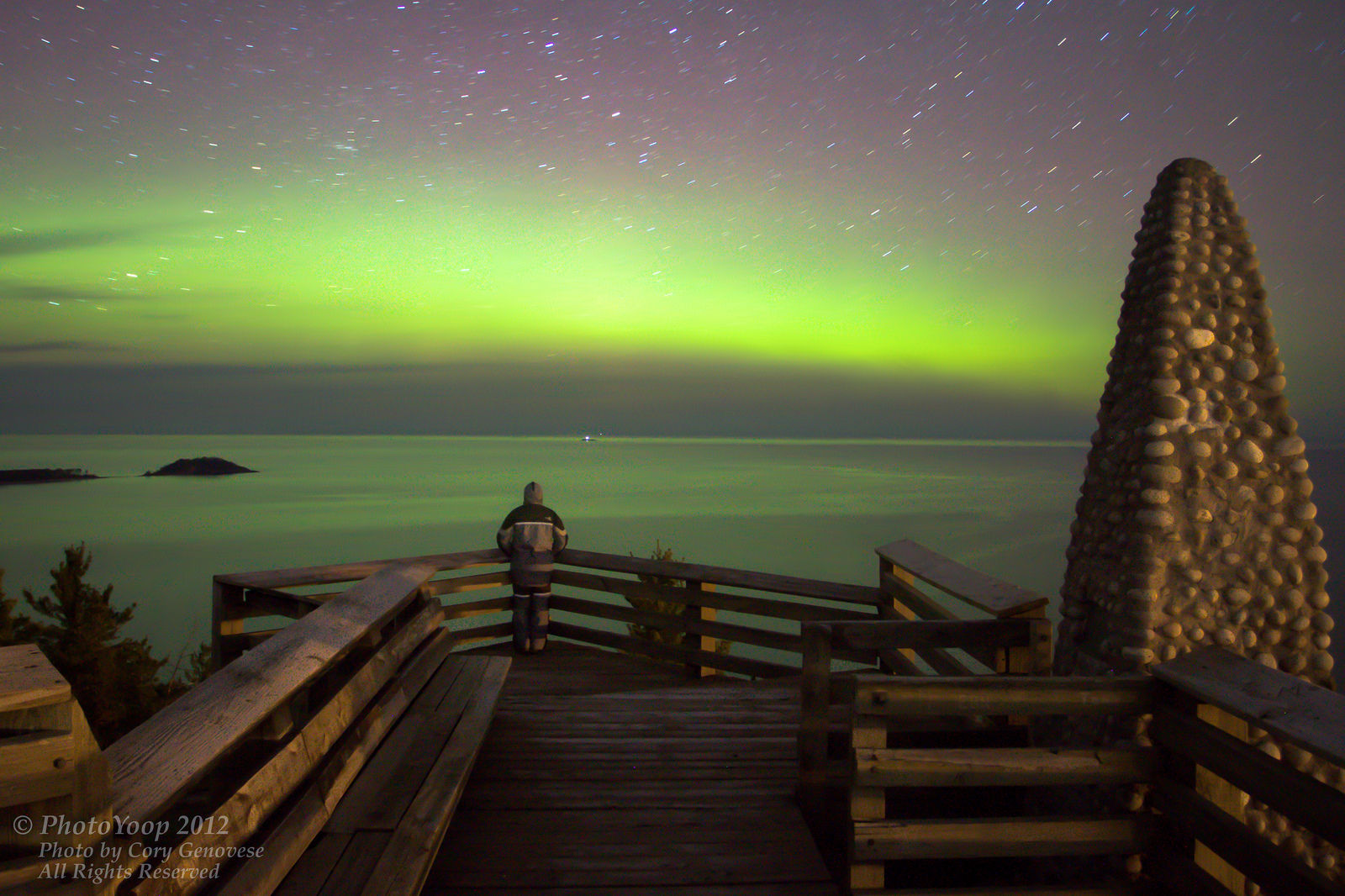
Superior Bow Selfpic by PhotoYoop

Superior Bow Selfpic, photo by PhotoYoop

The Lyrid Meteor Shower at spaceweather.com explains that:

Every year in late April Earth passes through the dusty tail of Comet Thatcher (C/1861 G1), and the encounter causes a meteor shower–the Lyrids. This year the shower peaks on Saturday night, April 21st. Forecasters expect 10 to 20 meteors per hour, although outbursts as high as 100 meteors per hour are possible.

Lyrid meteors appear to stream from the bright star Vega in the constellation Lyra. In fact, Lyrids have nothing to do with Vega. The true source of the shower is Comet Thatcher. Every year in April, Earth plows through Thatcher’s dusty tail. Flakes of comet dust, most no bigger than grains of sand, strike Earth’s atmosphere traveling 49 km/s (110,000 mph) and disintegrate as streaks of light.

Lyrid meteors are typically as bright as the stars in the Big Dipper, which is to say of middling brightness. But some are more intense, even brighter than Venus. These “Lyrid fireballs” cast shadows for a split second and leave behind smokey debris trails that linger for minutes.

Occasionally, the shower intensifies. Most years in April there are no more than 5 to 20 meteors per hour during the shower’s peak. But sometimes, when Earth glides through an unusually dense clump of comet debris, the rate increases.

There’s no way of knowing whether or not this would be a big year, but I’d say that with the Iron Lady’s recent passing, there’s a chance! FYI, Comet Thatcher was named by A.E. Thatcher way back in 1861.

Nobody I know caught the Northern Lights Saturday night, but I thought that Cory’s photo taken when he went looking for Lyrids on April 22, 2012  would be the next best thing! Check it out on black and see more in his Space slideshow.

More northern lights and more meteors on Michigan in Pictures.