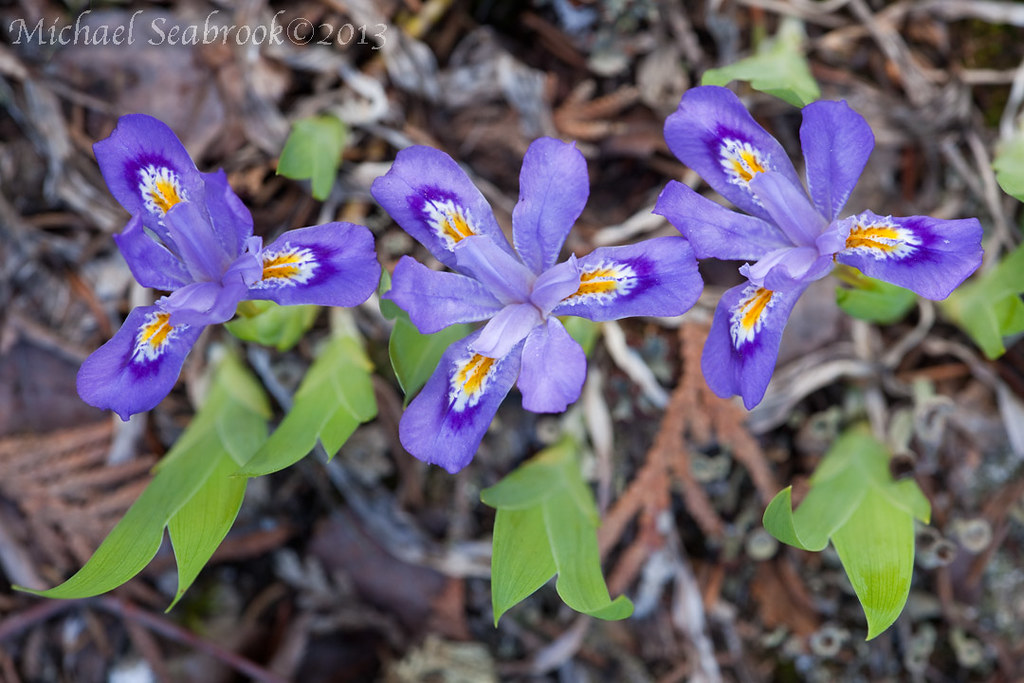
The Dwarf Lake Iris is a Great Lakes original!

Sisters Three by Michael Seabrook

The National Forest Service shares that Michigan’s state wildflower, the Dwarf Lake Iris (Iris lacustris), grows nowhere else but in the Great Lakes region & mostly within Michigan:

The vivid blue, showy flowers (about two inches in height) of Dwarf lake iris are truly exquisite. This miniature iris, honored as the state flower of Michigan, blooms from mid May to early June.

Dwarf lake iris is called a Great Lakes endemic due to its very limited range. It inhabits the northern shores of Lakes Huron and Michigan within Michigan, Wisconsin (Door Co.), and Ontario, Canada (Manitoulin Island, and the Bruce Peninsula). Dwarf lake iris formerly ranged as far south as Milwaukee, Wisconsin, but has never collected on Lake Superior shoreline.

The Latin species name lacustris translates to “of lakes”, which does not speak to the immense size of these two huge inland “seas”. Confined almost exclusively to thin soil over limestone, rich gravel or bedrock, or moist sands and gravels, it can persist in full sunlight on moist sites. This miniature iris is most successful, however, under the light, dappled shade of white cedar. It flowers best in semi-open habitats such as the long and narrow strips of land bordering the high-water line, or large flat expanses behind open dunes. It may also inhabitant old beach ridges of the former shores of these two Great Lakes. The changing water levels of lakes Michigan and Huron serve to create new habitat.

Thomas Nuttall, renowned naturalist and explorer, first found this species in 1810. The type locality, or location where he first found Dwarf lake iris, was Mackinac Island in northern Lake Michigan.

Michael took this photo back in 2013. More in his Michigan Wildflowers gallery on Flickr!

Support Michigan in Pictures with Patreon

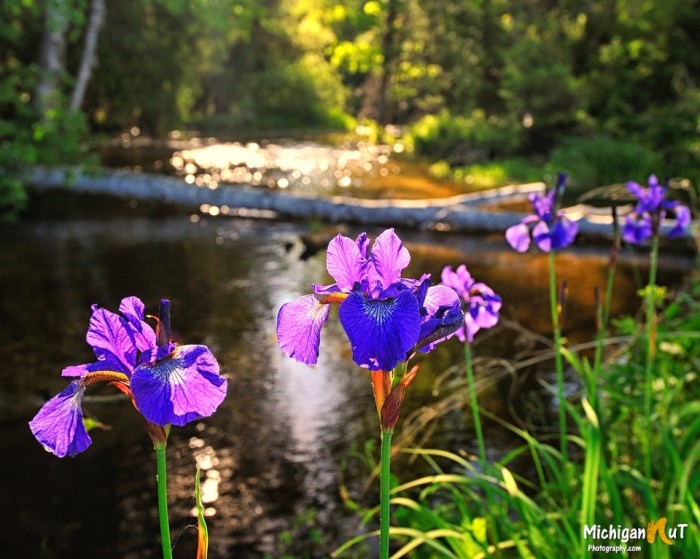
Shalda Creek Iris

via leelanau.com…Shalda Creek Iris by Michigan Nut Photography

Shalda Creek Iris by Michigan Nut Photography

John got this shot of wild Iris along the banks of Shalda Creek in the Sleeping Bear Dunes National Lakeshore.

See more on the Michigan Nut Facebook page and at michigannutphotography.com.

Support Michigan in Pictures with Patreon

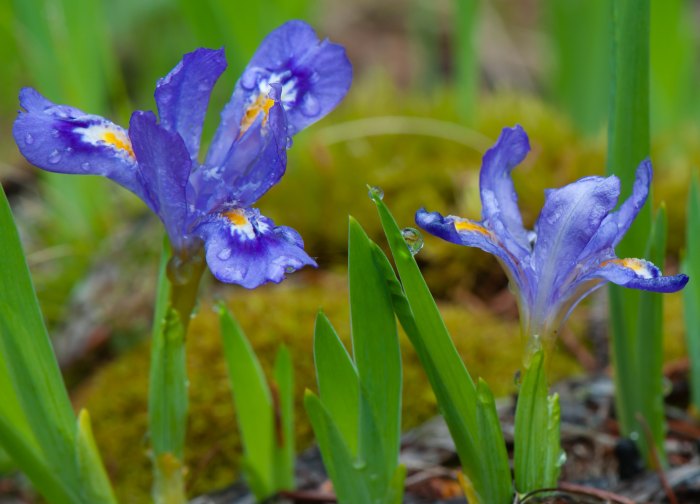
Purple for June: Dwarf Lake Iris

Iris lacustris by Bradford Slaughter

Iris lacustris by Bradford Slaughter

Some of you know that my mother Jill suffered for years from the terrifying effects of Alzheimers disease, ultimately passing last winter. June is Alzheimer’s & Brain Awareness Month, and the Alzheimer’s Association encourages us to wear purple (and of course donate) to raise awareness about a disease that afflicts tens of millions of Americans. 

June is also when you can see Michigan’s official State Wildflower, the Dwarf Lake Iris (Iris lacustris), in bloom:

The official wildflower of the Great Lakes State is right at home anywhere it can get its feet wet along the rocky coast of Northern Lake Huron, but those places are getting harder to come by.

This pint-sized perennial is known for its deep blue flowers that emerge mere inches above the ground for a fleeting few weeks in May and June—individual blossoms last just days. The rest of the time, its yellow-green leaves cling close to the ground, hiding in plain sight until springtime comes around again.

It’s a bit of a miracle this fragile flower exists at all: They grow in the thin, nutrient-poor soil that overlays limestone gravel and bedrock. The Northeast Michigan coast, rich with sand dunes and limestone deposits, creates the perfect habitat for the iris, found nowhere else outside the northern Great Lakes.

Along with a limited range that’s shrinking due to lakeshore development, the plant has been sought out by collectors who replant or sell it elsewhere. For these reasons, the dwarf lake iris was added in 1988 to the list of federally threatened species.

Read on for more at Huron Pines & for sure check out their Dwarf Lake Iris Best Practice Guide for tips on how to protect this flower!

Coincidentally, Bradford took this photo at Beavertail Point Nature Sanctuary on the northern coast of Lake Huron eight years ago on June 2nd, 2014 so I guess it’s a #TBT to boot! See more in his Iridaceae (Iris Family) gallery on Flickr 

Support Michigan in Pictures with Patreon

Perseverance

Perseverance by Mark Smith​

Perseverance by Mark Smith​

Stay strong everyone!!!

Support Michigan in Pictures with Patreon

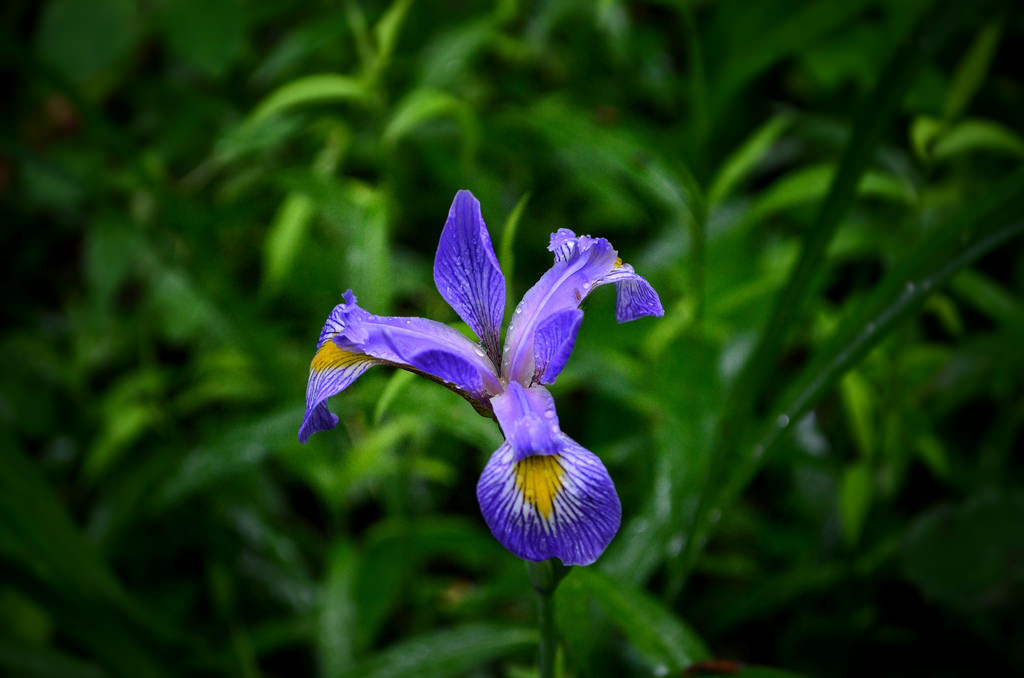
Dwarf Lake Iris: Michigan’s State Wildflower

Dwarf Lake Iris

Dwarf Lake Iris, photo by Mark Swanson

The Michigan DNR relates that Michigan’s state wildflower, the Dwarf Lake Iris (Iris lacustris): grows nowhere else but in the Great Lakes region, and most within Michigan’s boundaries:

In Michigan, Dwarf Lake Iris is especially concentrated along certain stretches of the northern Great Lakes shoreline, where it may occur for miles, interrupted only by habitat destruction, degradation, or unsuitable habitat such as rocky points or marshy bays.

Dwarf Lake Iris usually occurs close to the Great Lakes shores on sand or in thin soil over limestone rich gravel or bedrock. It tolerates full sun to near complete shade, but flowers mostly in semi open habitats. These areas can be very long and narrow strips bordering the high water line, or large flat expanses located behind the open dunes of the Great Lakes shoreline. Many iris locations are on old beach ridges of former shores of the Great Lakes. Fluctuating water levels of the Great Lakes play a vital role in opening up new habitat for Dwarf Lake Iris. During high water years, trees and shrubs along the shoreline may be flooded out. This flooding may open up patches within the forest where the Dwarf Lake Iris may spread. It is usually found growing under White Cedar, although White Spruce, Balsam Fir, and Aspen are also frequently present.

…”Lacustris” translates literally to mean “of lakes” and refers to where this beautiful iris grows. Dwarf Lake Iris was first found on Mackinac Island in 1810 by Thomas Nuttall, a renowned naturalist and explorer. Nuttall reached Mackinac Island after travelling from Detroit by canoe with French Canadian voyagers and the surveyor for the Michigan Territory. At least 1/3 of the species that Nuttall reported from the Great Lakes were new to science.

Read on for much more.

Mark took this along the hiking trail in Riverview Park in St. Joseph. View it bigger and see more in his Michigan – Color slideshow.

More Michigan flowers on Michigan in Pictures.

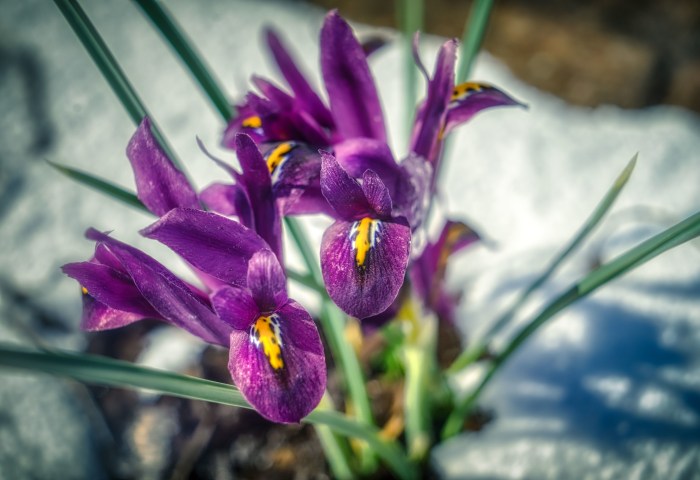
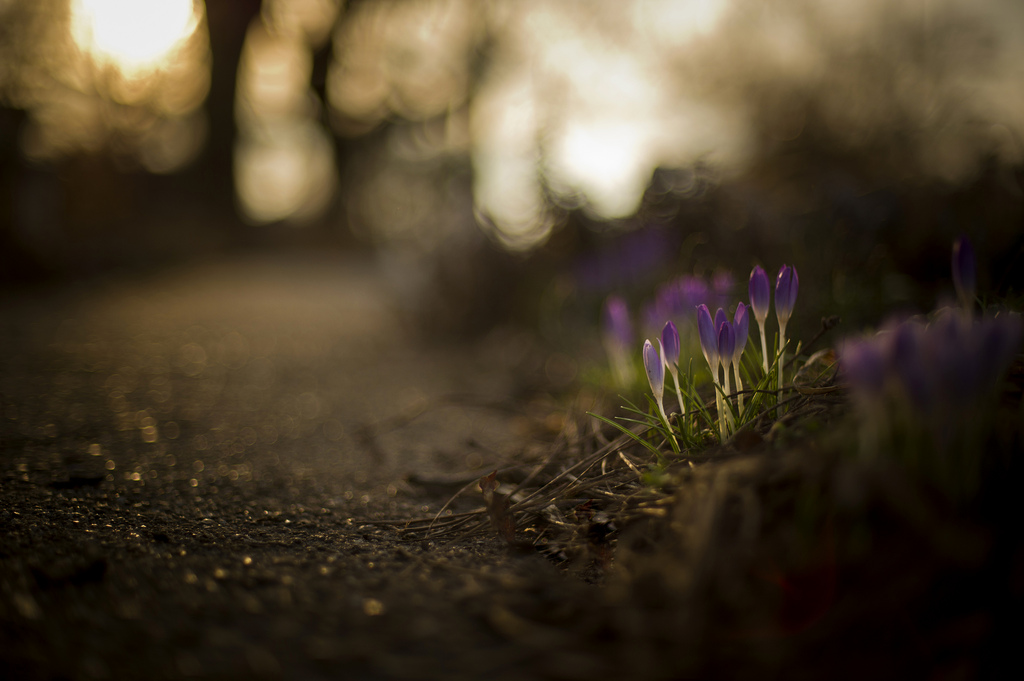
Paging Spring

Crocus bokeh

Untitled, photo by Brooke Pennington

Come on Spring, we know you’re out there.

View the photo bigger, view & purchase photos at brookepennington.com, and definitely check out more in Brooke’s slideshow.