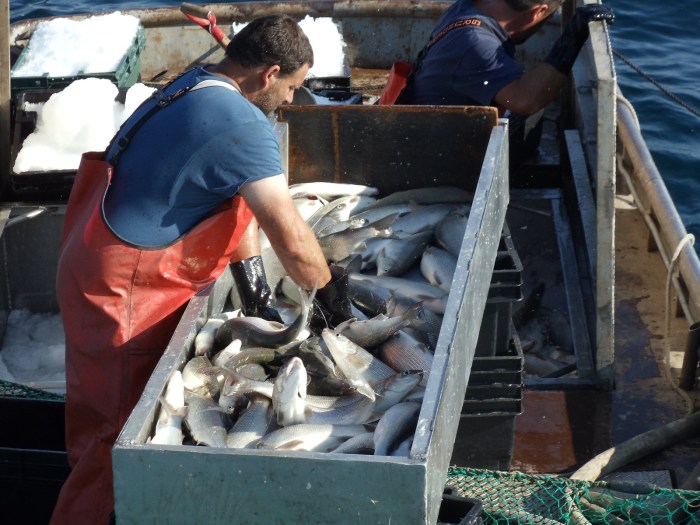
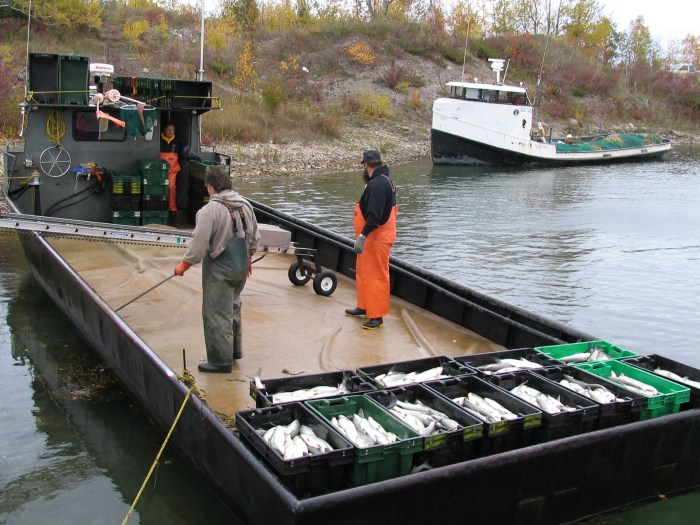
Saving whitefish in the Great Lakes

Fishing in Michigan by Abigail Lynch

Fishing in Michigan by Abigail Lynch

“Since first arriving in the Great Lakes in the 1980s, invasive mussels have spread to all five lakes, and altered the ecosystem in profound ways. Today we understand that zebra and quagga mussels are an existential threat to the Great Lakes and without a coordinated response, they will continue to inflict harm on the environment, infrastructure, and critical species such as lake whitefish. Just as invasive sea lamprey require a coordinated, binational response for effective control, we must partner with national, state, provincial, Indigenous, regional, and local partners to find a solution to the mussel invasion. This bill makes that happen.”Great Lakes Fishery Commission Chair Ethan Baker

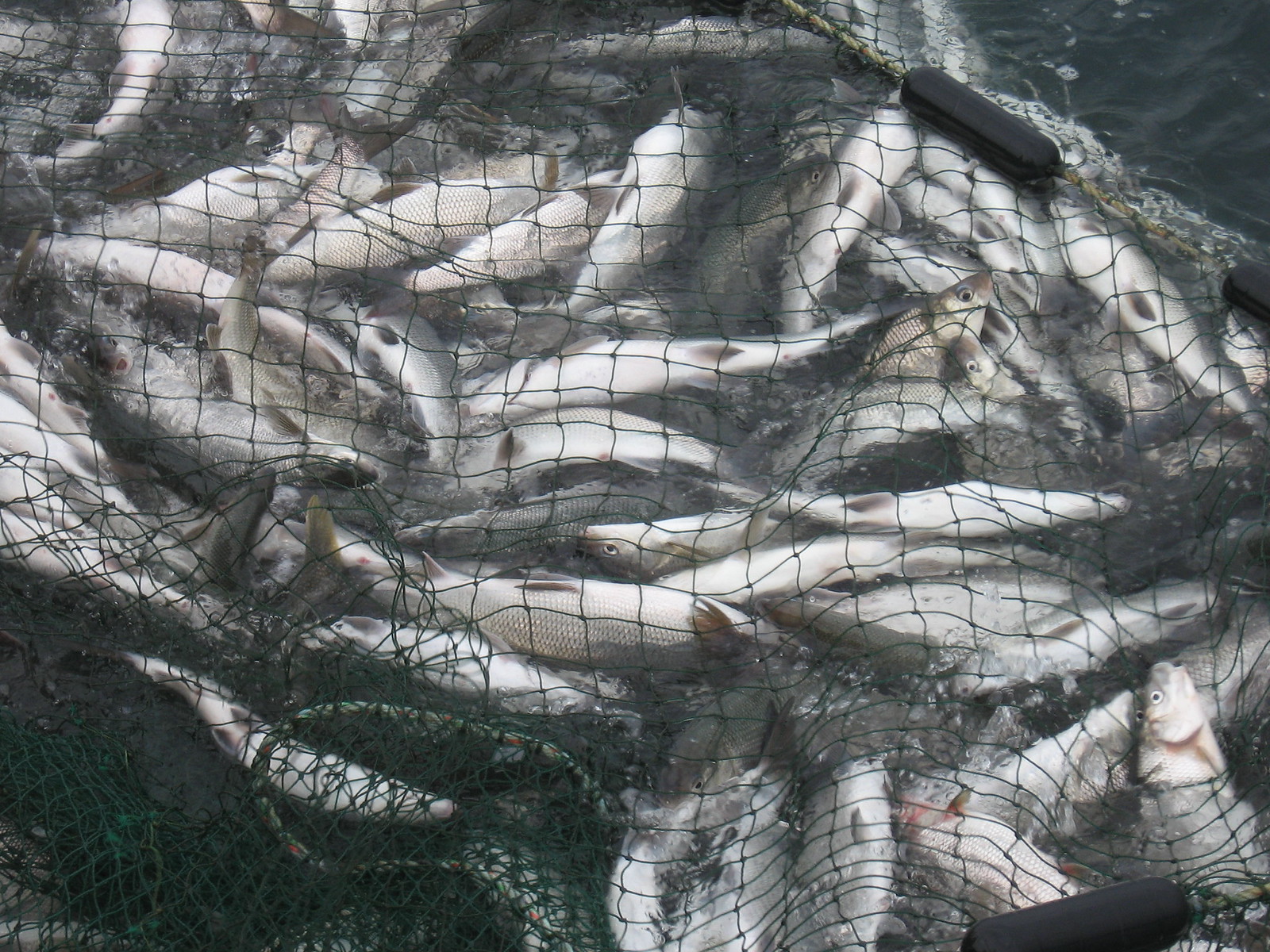
Bridge Michigan shares that two Michigan lawmakers are set to unveil legislation to dramatically increase funding to prevent invasive mussels from wiping out whitefish in the lower Great Lakes:

US Reps. Debbie Dingell, D-Ann Arbor, and Tim Walberg, R-Tipton, want to increase funding for mussel control research more than fiftyfold to $500 million over the next 10 years. (EDITOR: They released it on Tuesday)

Otherwise, the “fish that we take for granted are going to just disappear,” Dingell told Bridge Michigan.

The damage wrought by invasive mussels is among the biggest threats to the Great Lakes in history. Yet Bridge found that while the US government has spent mightily to combat other threats, the fight against mussels has received a comparative pittance.

The main funding program for Great Lakes science has devoted an average of less than $1 million annually to the cause since 2010, according to spending records analyzed by Bridge. The federal government spends about 20 times that amount to keep sea lamprey out of the Great Lakes and has promised 90 times as much to build a barrier against invasive carp.

Read on for much more & kudos to these two Representatives for working together to protect the livelihoods and meals of Michiganders!

The photos are from Michigan Sea Grant and the one of the boat moored was taken by Brandon Schroeder. Sea Grant is an excellent organization that works hard for Michigan waters and the Great Lakes as a whole!
Support Michigan in Pictures with Patreon

Armadillos are marching towards Michigan

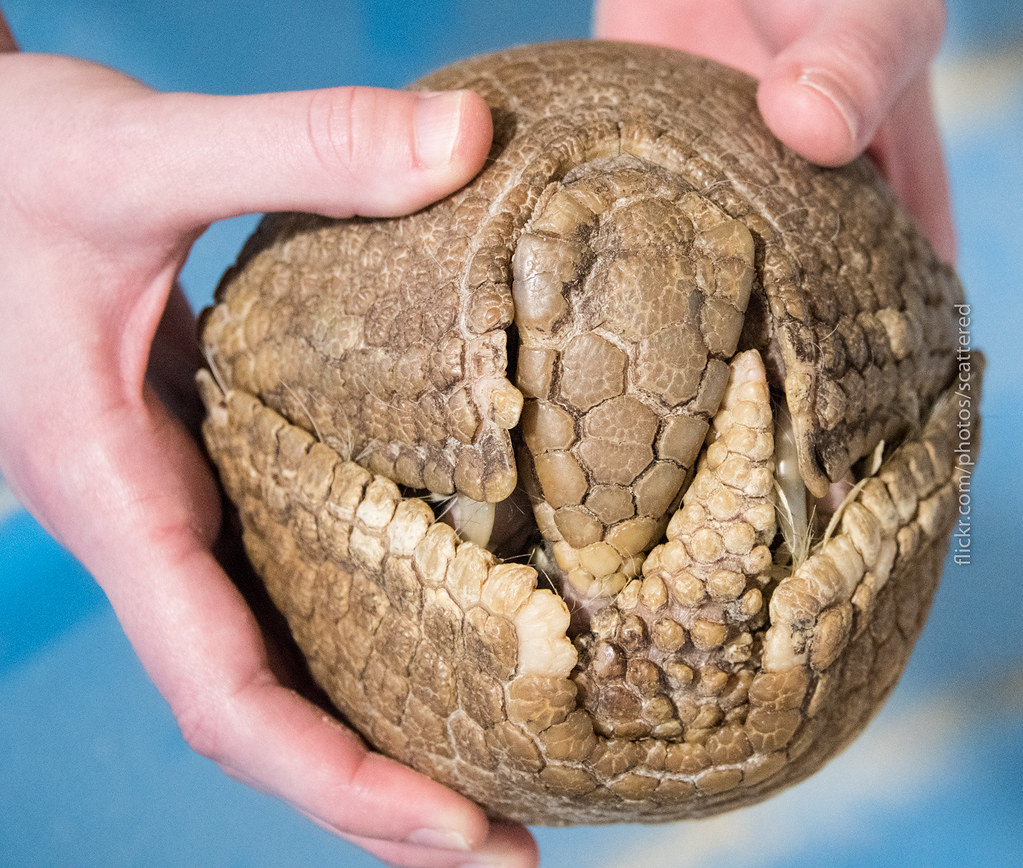
Armadillo Ball by scattered1

Armadillo Ball by scattered1

mLive shares that the nine-banded armadillo found in southwestern Indiana has been moving north according to the US Geological Survey:

There have been 97 armadillo occurrences in Indiana since 2013 with the northernmost sighting in Porter County about five miles from the Michigan border.

Armadillos are considered established in 17 states including Indiana, Illinois, Missouri and Kentucky. There have been occasional reports of armadillos in Michigan, Nebraska, Ohio, and Virginia but no evidence of armadillo detections in Minnesota, Wisconsin or West Virginia.

The report says there is evidence to suggest that armadillos are likely about 56 miles away from reaching Ohio and that they are most likely to first reach the southwest corner of the state along either the Whitewater River or Ohio River. “It will be interesting to monitor when armadillos begin to regularly reach and establish in new states such as Michigan, Wisconsin, and Virginia,” the report said.

Michigan could be reached by armadillos coming north through Indiana or northeast from Illinois, experts say, but the state’s cold and harsh winters are the biggest deterrent to the species survival. The (armadillo) expansion will be slowed and eventually stopped as they encounter winters with extended periods of sub-freezing temperatures, according to the DNR.

Read on for more at mLive, and allow me to remind you that the Michigan DNR denied the existence of a Michigan cougar population for years until they were confronted with undeniable evidence!

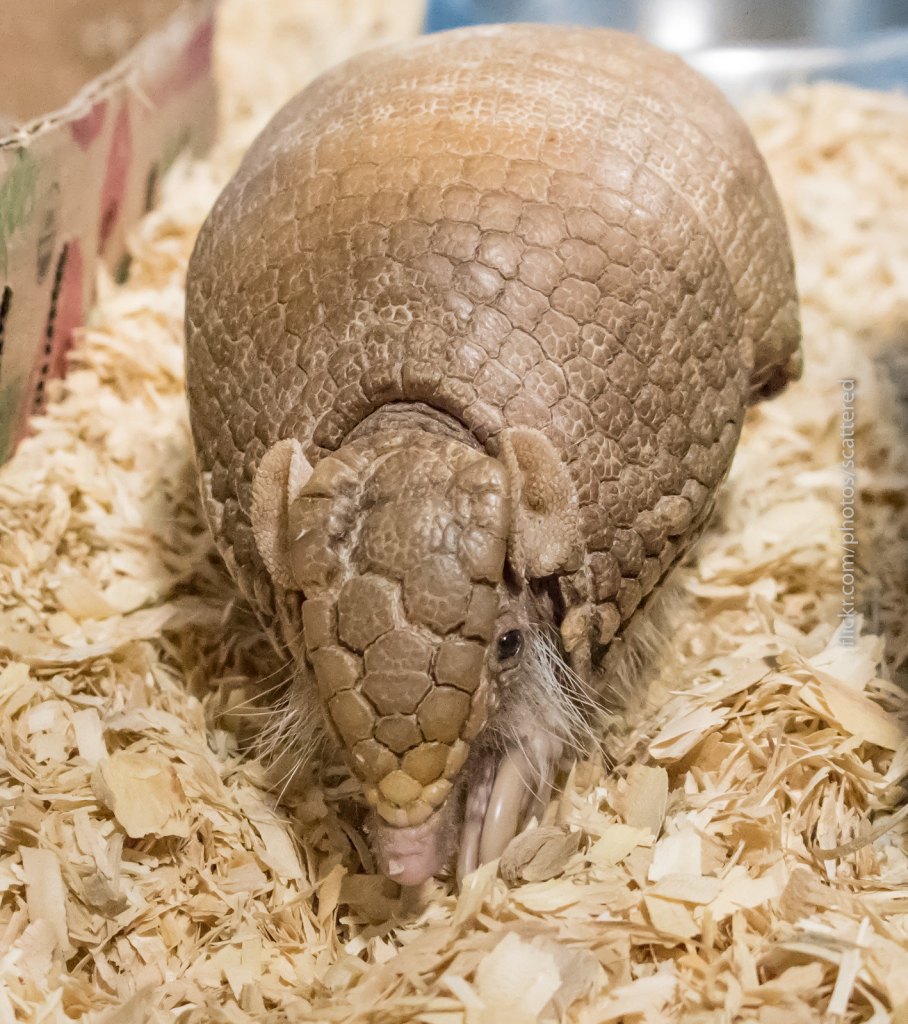
The photographer shares that these are pictures of a southern three-banded armadillo, also known as the La Plata three-banded armadillo from South America. Like the 9-banded armadillo (link to Animal Diversity Web) its shell is made of keratin, the same protein that is in human fingernails. As seen here, the armadillo can roll itself into a ball, only exposing its shell, to protect itself from predators. This armadillo is named Dodge, as in “dodge ball.”

These were both taken at the Creature Conservancy in Ann Arbor back in 2020 – see more in their Captive Animals gallery on Flickr.

Southern Three-Banded Armadillo by scattered1

Southern Three-Banded Armadillo by scattered1

Support Michigan in Pictures with Patreon

Shasta Daisy: Michigan’s most adorable invader?

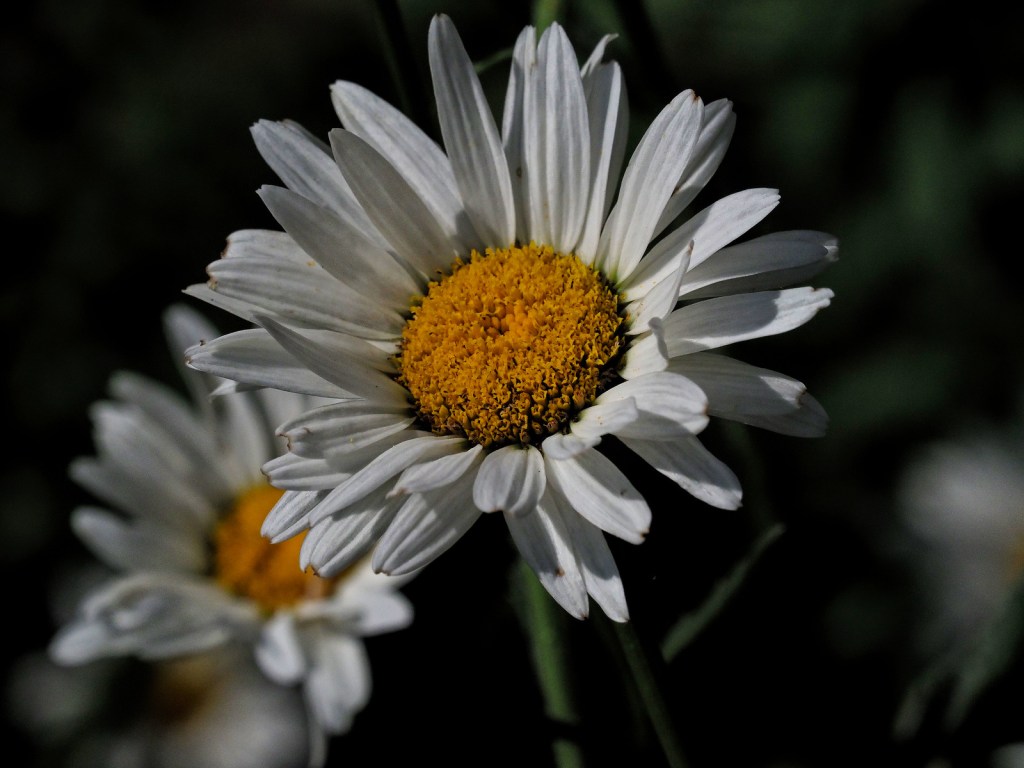
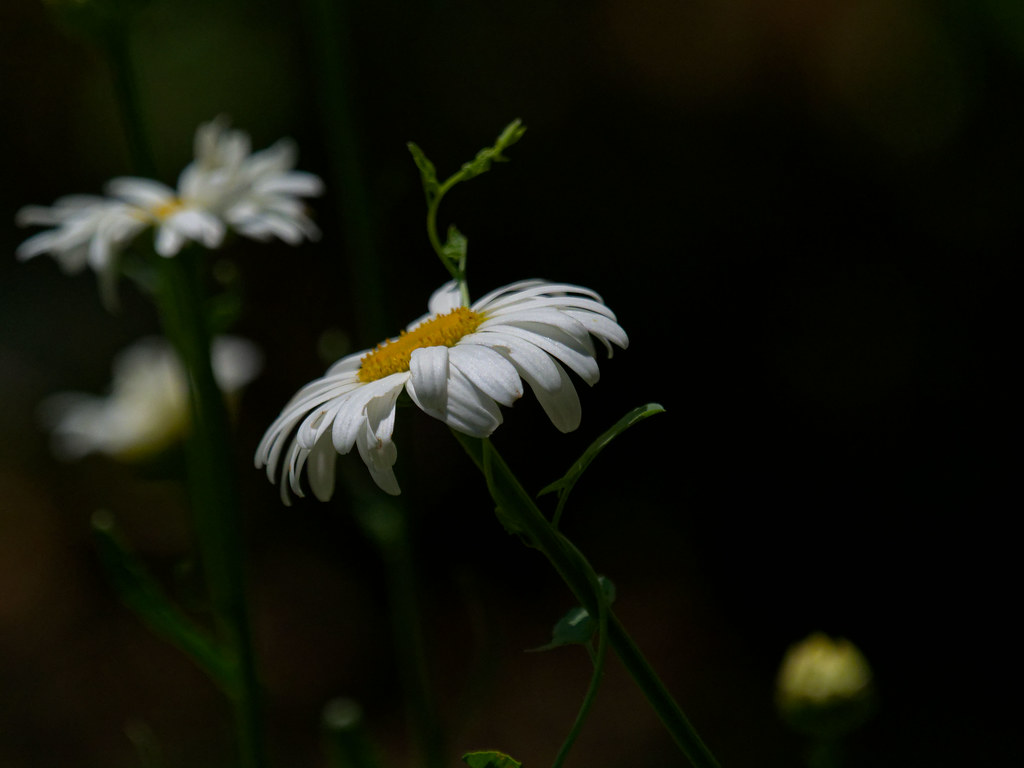
Shasta Daisy by joeldinda

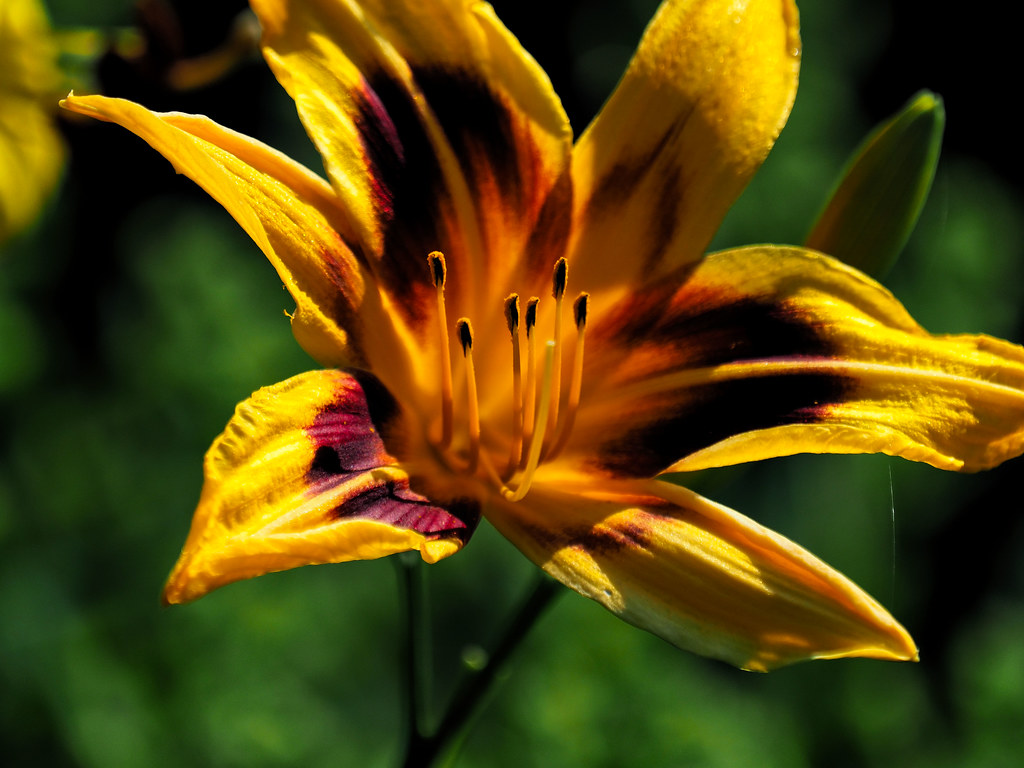
Shasta Daisy by joeldinda

The Midwest Invasive Species Network shares that Shasta daisy (Leucanthemum xsuperbum) is a hybrid cross between Portuguese daisy (Leucanthemum lacustre) and Max chrysanthemum (Leucanthemum maximum) that was created in 1890 by the famed American horticulturist Luther Burbank. While not officially an invasive plant, it is considered invasive in Michigan due to its ability to aggressively spread & outcompete native species.

Joel Dinda is one of Michigan in Pictures’s most enduring supporters. I shared the first photo from him way back in June of 2006, and he’s an active member of the Michigan in Pictures group on Facebook with a penchant for flower photography. See more in his The Showcase gallery on Flickr!

Support Michigan in Pictures with Patreon

Tragic Tree Tuesday: Beech Scale & Beech Bark Disease

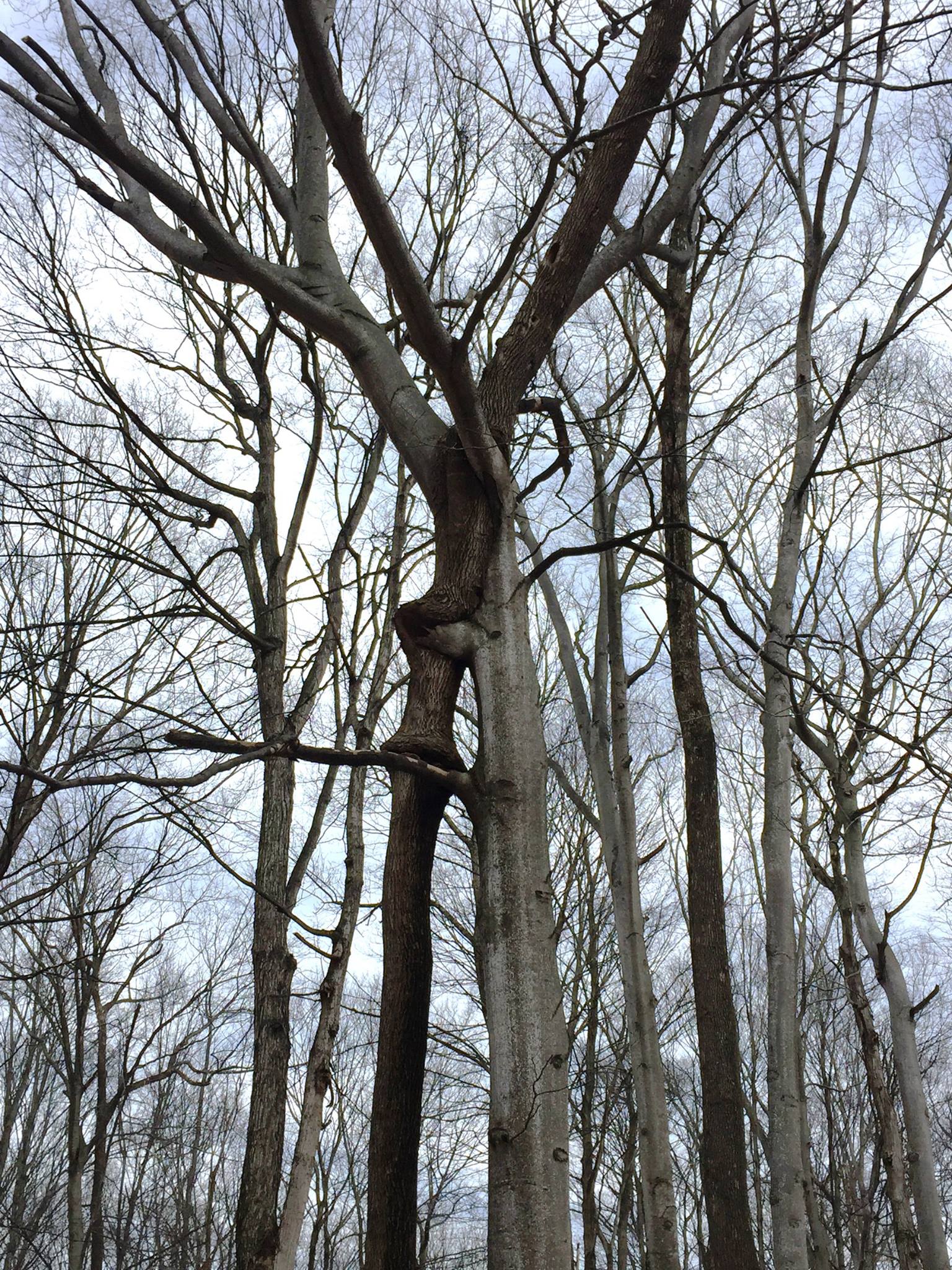
Twined Trees at Treat Farm

Twined Trees at Treat Farm, photo by Sleeping Bear Dunes National Lakeshore

“A glooming peace this morning with it brings;
The sun, for sorrow, will not show his head:
Go hence, to have more talk of these sad things;
Some shall be pardon’d, and some punished:
For never was a story of more woe
Than this of Juliet and her Romeo.”
~William Shakespeare

The Sleeping Bear Dunes National Lakeshore shared this photo from their Tweddle/Treat Farm property saying:

The two hugging trees on the trail to Treat Farm share a similar fate to the star crossed lovers, Romeo and Juliet. The beech scale brings a fungus that is deadly like a poison, and kills off the American beech trees. The Emerald Ash Borers pierce the hearts of the ash trees to take the nutrients.

Invasive species have made their way to the fair Lakeshore of Sleeping Bear Dunes. You can help prevent the spread by purchasing local firewood, and burning it within the local area.

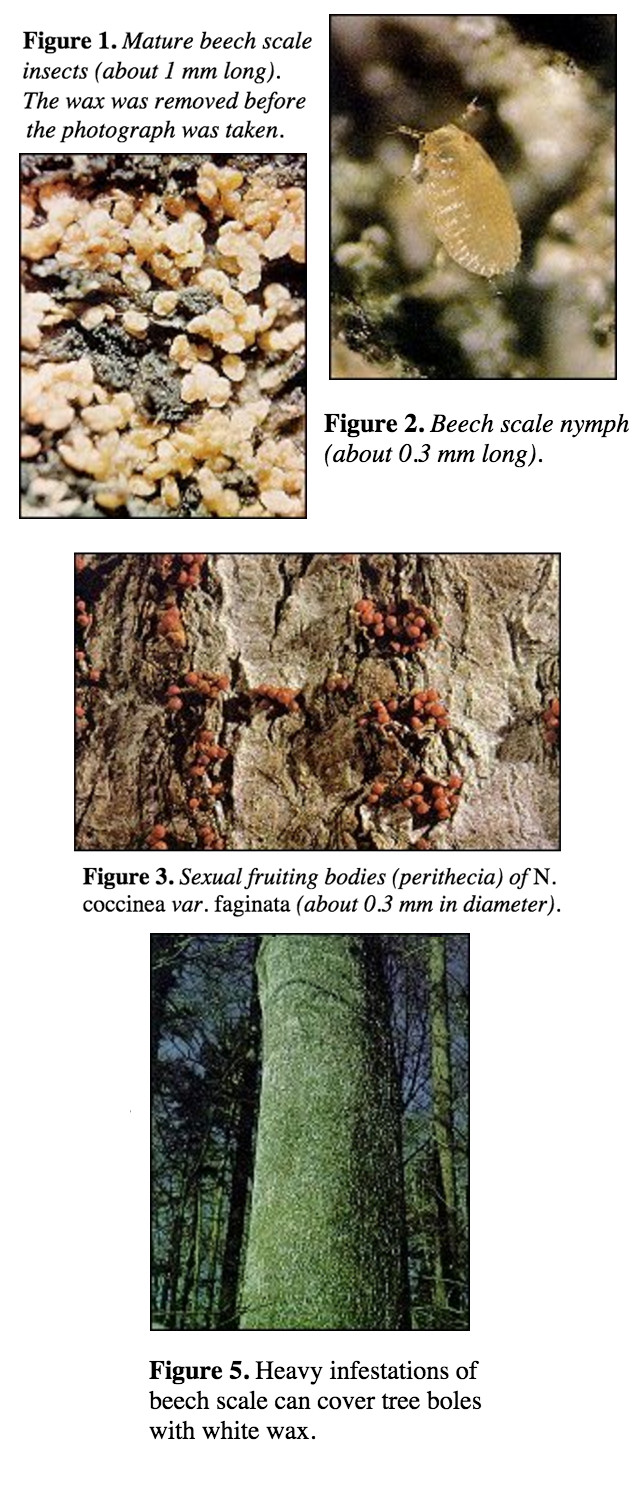
Beech Scale and Beech Bark DiseaseI’ve written about the Emerald Ash Borer on Michigan in Pictures, so here’s a bit about beech scale & beech bark disease from MSU:

Beech bark disease is one of the latest exotic pest problems to plague Michigan forests. Beech bark disease refers to a complex that consists of a sap-feeding scale insect and at least two species of Nectria fungi. Beech bark disease begins when American beech (Fagus grandifolia) becomes infested with beech scale (Cryptococcus fagisuga Lind) (=Cryptococcus fagi Baer.). The tiny scale insects, found on the tree trunk and branches, feed on sap in the inner bark. White wax covers the bodies of the scales.

When trees are heavily infested, they appear to be covered by white wool. Minute wounds and injuries caused by the scale insects eventually enable the Nectria fungus to enter the tree. Nectria kills areas of woody tissue, sometimes creating cankers on the tree stem and large branches. If enough tissue is killed, the tree will be girdled and die. Other trees may linger for several years, eventually succumbing to Nectria or other pathogens. Some infected trees will break off in heavy winds — a condition called “beech snap.” Dense thickets of root sprouts are common after trees die or break.

Read on for lots and also see Beech Bark Disease from the National Forest Service where I got these photos.

View the photo bigger on their Facebook page and learn all about the Lakeshore from their website.

Smallmouth bass eating round gobys

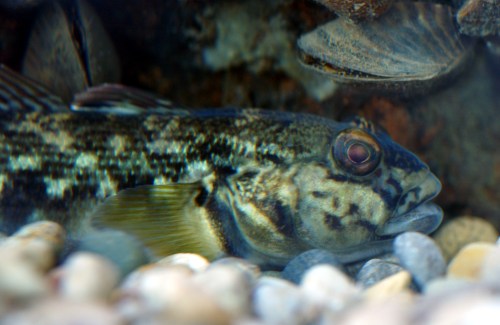
Round Goby

Round Goby, photo by Dave Brenner, Michigan Sea Grant

The Great Lakes Echo reports that although a study has found that invasive round goby are “one of the most successful aquatic invaders” ever in the Great Lakes, smallmouth bass appear to be feasting on gobies:

25 years after their discovery in the Great Lakes, “we’re not documenting specific harms from gobies,” Popoff said, referring to feared environmental, economic and human health concerns.

In fact, there are indications of possible benefits from their presence, he said. For example, “we are seeing amazing smallmouth bass,” as well as some “amazing walleye,” while lake trout have modified their diets from sculpin to round gobies.

One possible exception, according to Popoff, is a decline in sculpin population as documented in Lake Michigan’s Grand Traverse Bay because they compete with round gobies for space and food. However, scientists haven’t determined whether the lake’s overall sculpin population is down or whether they’ve merely moved to deeper areas with fewer round gobies.

…However, the study found the round goby is now a widely available food source for many native fish because of its “extreme abundance, tolerance to a variety of habitat conditions and relatively small size.”

In lakes Erie and Ontario, round gobies accounted for 75 percent of the smallmouth bass diet, Crane said. If all other species have maintained stable populations, that means the bass are putting less pressure on other food sources.

Nice to see the Great Lakes winning a battle – read on for lots more.

View the photo background big and see more in Michigan Sea Grant’s Aquatic Invasive Species (AIS) slideshow.

Our Great Lakes would be a lot less pretty with Asian carp

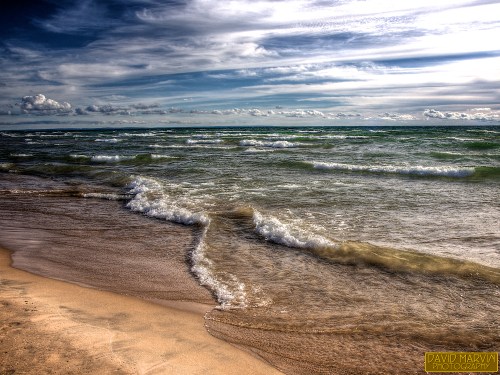
Lake Michigan near Brevort, Michigan

Lake Michigan near Brevort, Michigan, photo by daveumich

I tried to find something amazing about Lake Michigan – a poem, a legend, anything – but I really couldn’t find something to match up with this stunning photo. I’ll fall back on the real & urgent need to protect the beauty of Lake Michigan and the rest of the Great Lakes from the  very real threat of Asian carp.

Asian carp just suck: massive, leaping fish that seriously injure boaters and eat everything else in the lake. They would be an apocalypse for the $7 billion Great Lakes fishing industry, and it is estimated that just 20 fish getting in would be all it would take.

So of course, yesterday John Flesher (IMO the best environmental journalist in the Great Lakes who also happens to be my neighbor) wrote an article on Asian carp that begins:

The recent discovery of a large Asian carp near Chicago underscores the need to protect the Great Lakes from the voracious fish and other invasive species that could slip into Lake Michigan, two members of Congress said Tuesday.

“If Asian carp are not stopped before they enter the Great Lakes, they could destroy the ecosystem, as well as the boating and fishing industries, and hundreds of thousands of jobs,” said Sen. Debbie Stabenow, a Michigan Democrat.

…John Goss said the 53-inch, 82-pound fish was caught about a month ago in Flatfoot Lake, on the Illinois-Indiana state line.

Flatfoot Lake is landlocked and surrounded by a berm that would prevent it from flooding and enabling Asian carp to escape, said Chris McCloud, spokesman for the Illinois Department of Natural Resources.

But it’s very close to Chicago’s Lake Calumet, where commercial fishermen landed a 3-foot-long Asian carp in 2010 about six miles from Lake Michigan. Lake Calumet and Lake Michigan are connected by the Calumet River.

The latest find “is another reminder that we must find a permanent solution to protect the Great Lakes,” Rep. Dave Camp, a Michigan Republican, said Tuesday.

Indeed. How about we work on that? The Great Lakes are far too beautiful to be filled with the likes of Asian carp. If you agree, please share this with others. We can do something about this threat to our lakes.

Check this photo out background bigtacular, see more in Dave’s slideshow and also check out his photography website, Marvin’s Gardens including a shot of what I’m pretty sure was his breakfast up on Brevort Lake!

Regrettably, there’s more Asian carp on Michigan in Pictures.