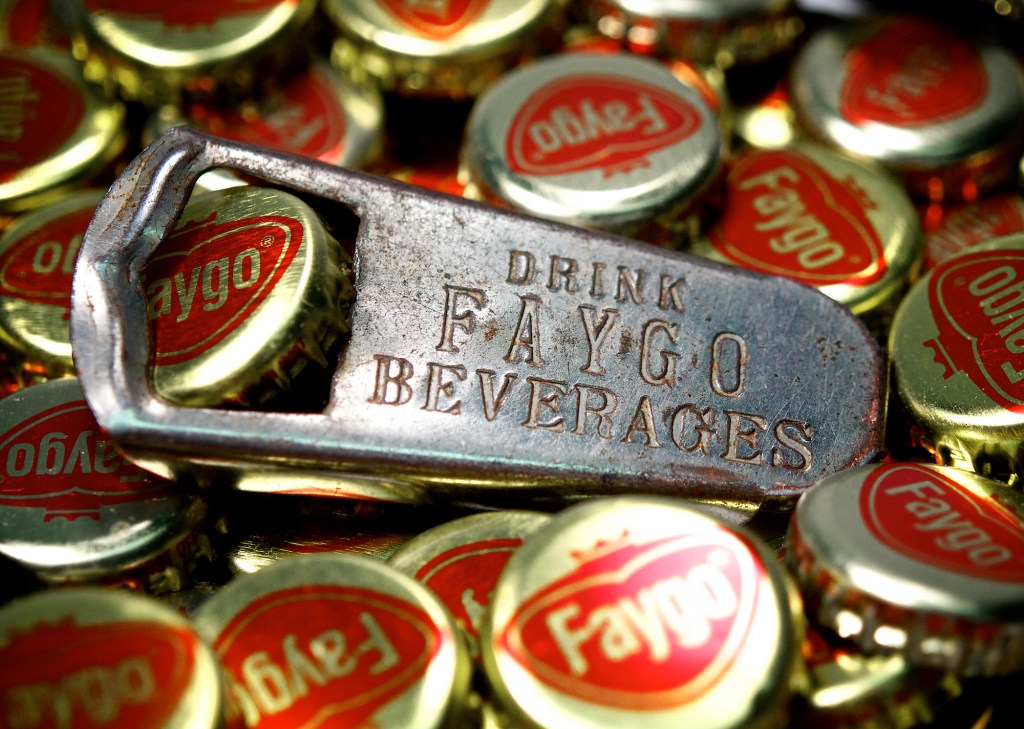
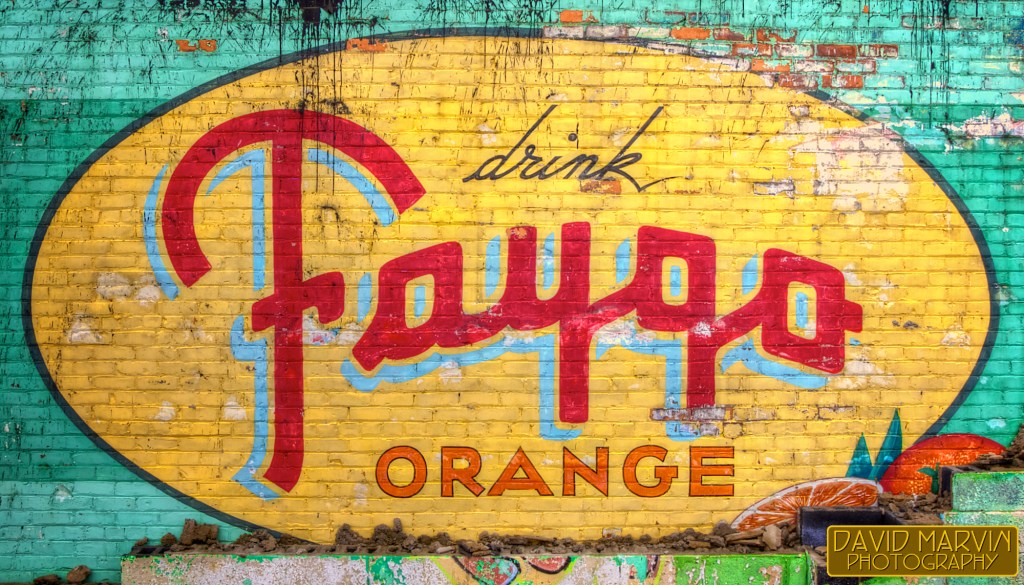
Happy Birthday Faygo … and happy birthday POP!

That's Why We Love Faygo by David Marvin

That’s Why We Love Faygo by David Marvin

Most of us know that Faygo is a Detroit original, but did you know that Faygo is also the reason we call soda “pop” in Michigan??

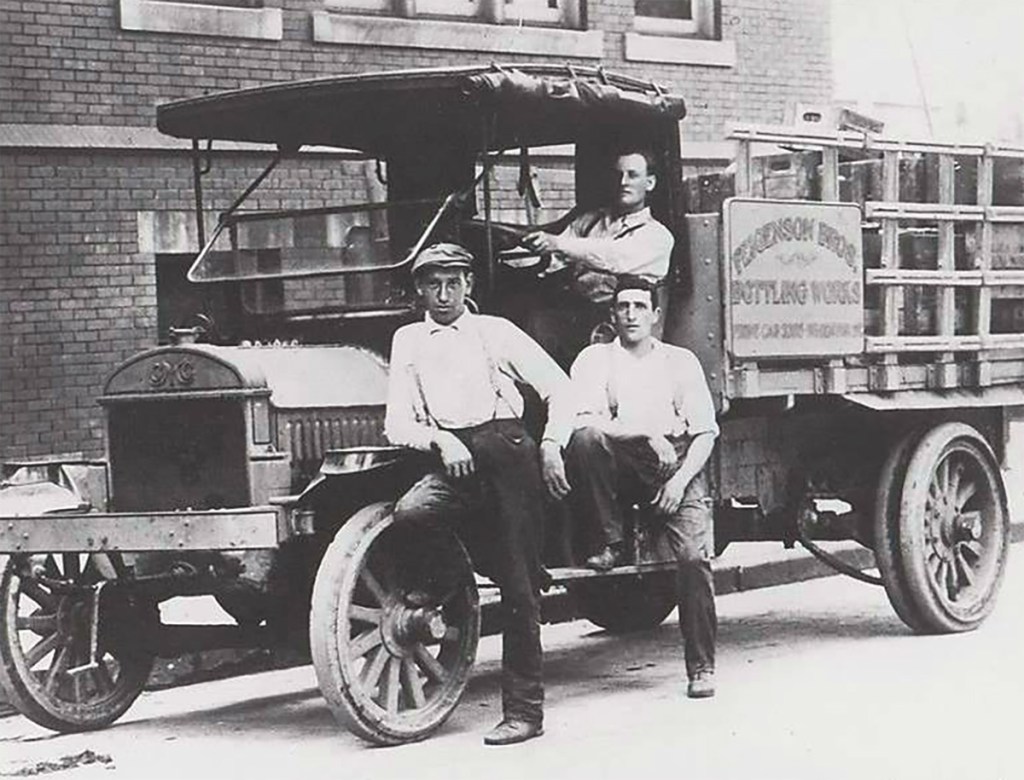
Way back in 1907 Russian immigrant brothers and bakers, Ben and Perry Feigenson started creating soft drinks based on their frosting flavors. They bottled their soda – which they called “pop” because of the sound it made when the lid was removed – in fruit punch, strawberry and grape flavors at a factory on Pingree Street & sold it from their horse-drawn wagon the day after it was made! Faygo made a Faygo Kneecap last year for the Lions playoff run so you know they have kept the magic alive!

David took the photos about a decade ago. You can see his latest on his Flickr and read about the pics on David’s blog.

More about Faygo’s founding Fivenson brothers, their first delivery truck & the history of Faygo pop on Michigan in Pictures! & you can also head over to Faygo for their history & current offerings.
Support Michigan in Pictures with Patreon

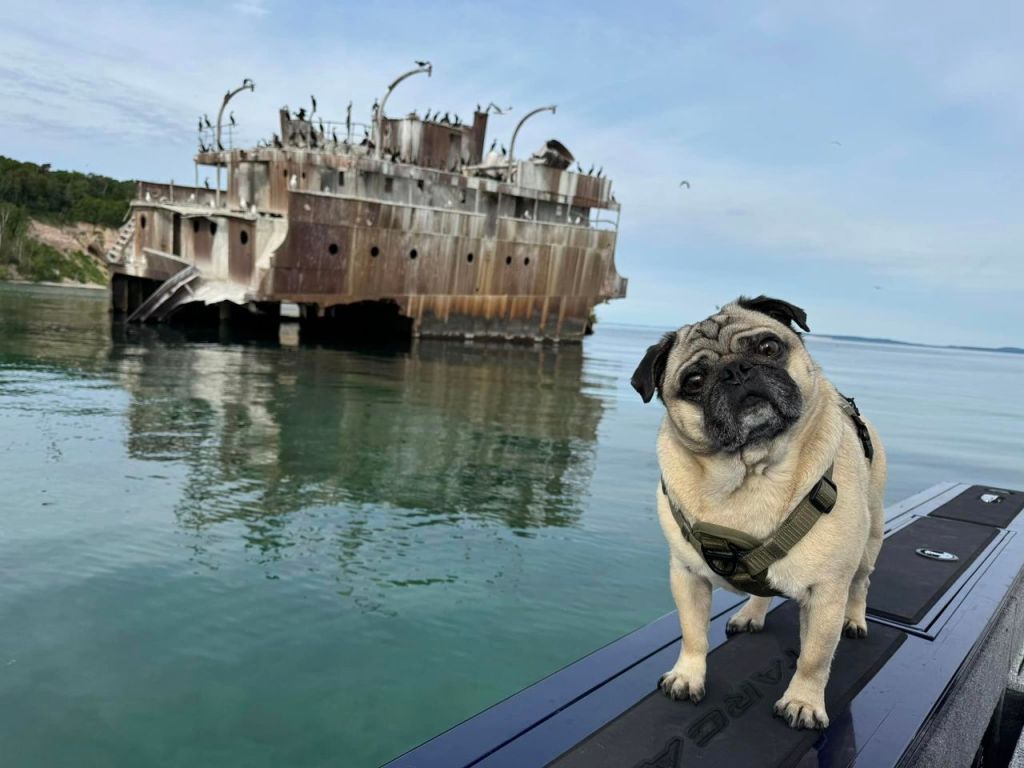
Milo and the Morazan

This photo was the fifth most popular photo of 2024 on Michigan in Pictures!!

Milo and the Morazan by Chris Roxburgh

Milo and the Morazan by Chris Roxburgh

If you love the Great Lakes and aren’t yet following the exploits of Milo’s owner, Great Lakes shipwreck explorer Chris Roxburgh, then today is your lucky day!! Follow Chris on Facebook and view & purchase his work including some awesome coffee table books on his website!

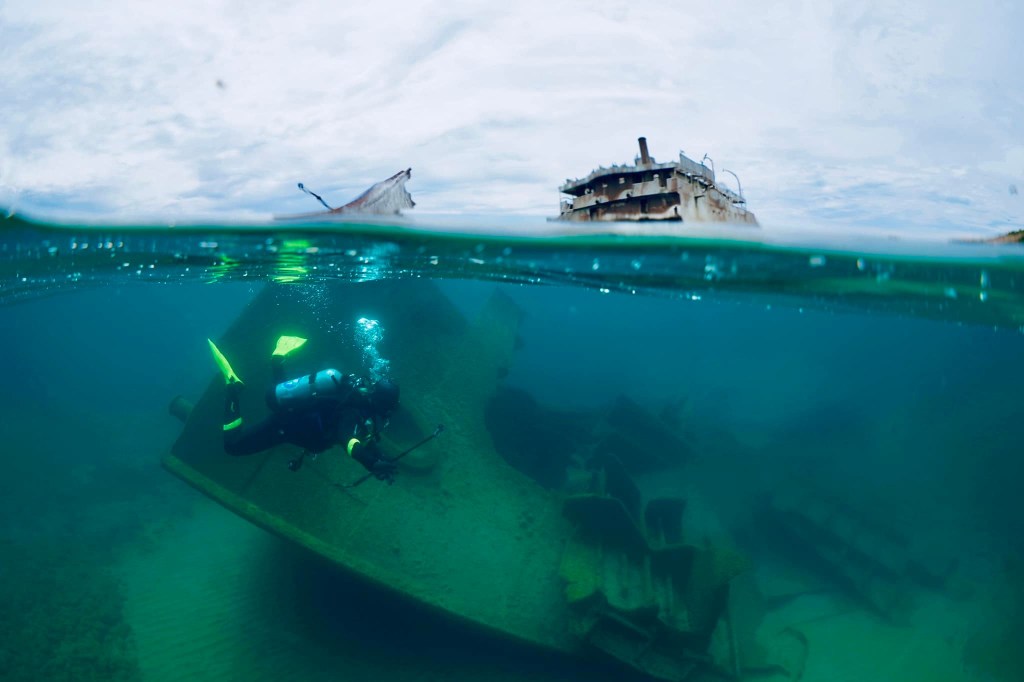
If you’re wondering about the shipwreck of the Francisco Morazan off South Manitou, the Sleeping Bear Dunes National Lakeshore shares:

On the night of November 28, 1960, Lake Michigan would claim one of her most recent victims. The steamship Francisco Morazan ended a 38-year career when she ran aground on South Manitou Island. She had sailed for eleven owners, under six flags, with eight names.

…The Morazan was Captain Eduardo Trivizas’ first command. Onboard were 12 crew, and the captain’s pregnant wife, Anastasia. Fog slowed the ship and a bad feeder pump for the boiler forced the crew to stop and drift in Lake Michigan for eight hours to replace it. The Morazan passed Point Betsie in a blinding snowstorm at about 7:15 pm on the 28th. She was pushed off course and ran aground just 300 yards from the beach on South Manitou Island.

Three Coast Guard vessels and a civilian tug responded to the Morazan’s mayday. On December 4, the crew was removed from the ship after it was determined that she couldn’t be salvaged. Attempts were made to salvage the cargo but were ultimately abandoned. In the years afterward, the wreck became a popular hangout for island residents. They helped themselves to the cargo of canned chicken and toys. The wreck is now protected as a part of the Manitou Passage State Underwater Preserve.

Support Michigan in Pictures with Patreon
Francisco Morazon above & below by Chris Roxburgh

Francisco Morazon above & below by Chris Roxburgh

Knowledge written on stone: the Sanilac Petroglyphs

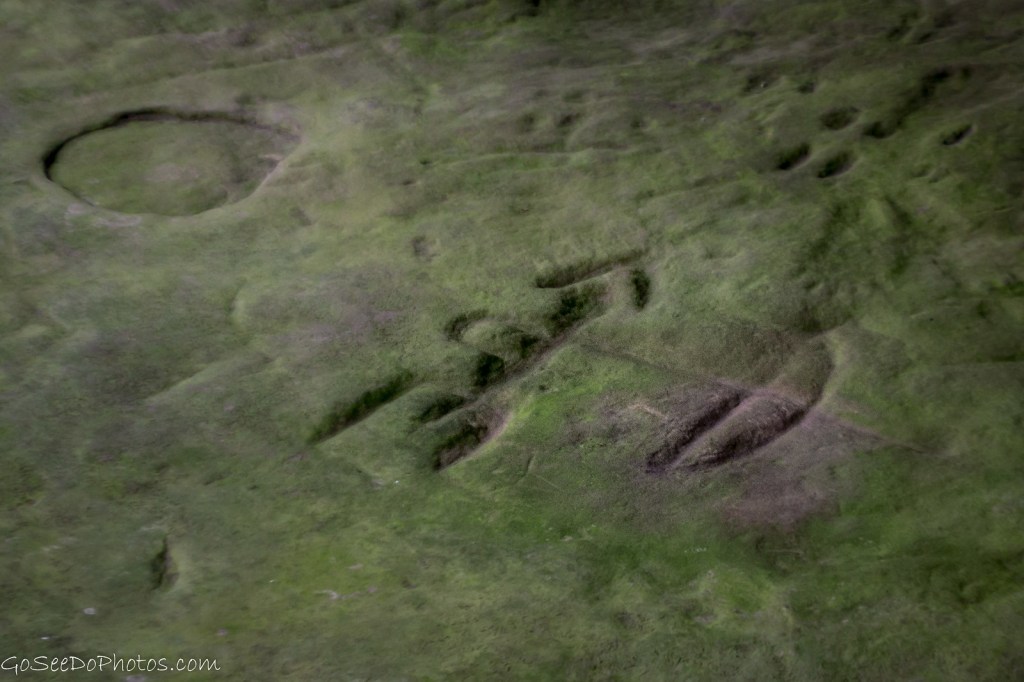
Petroglyphs by Ashleigh Mowers

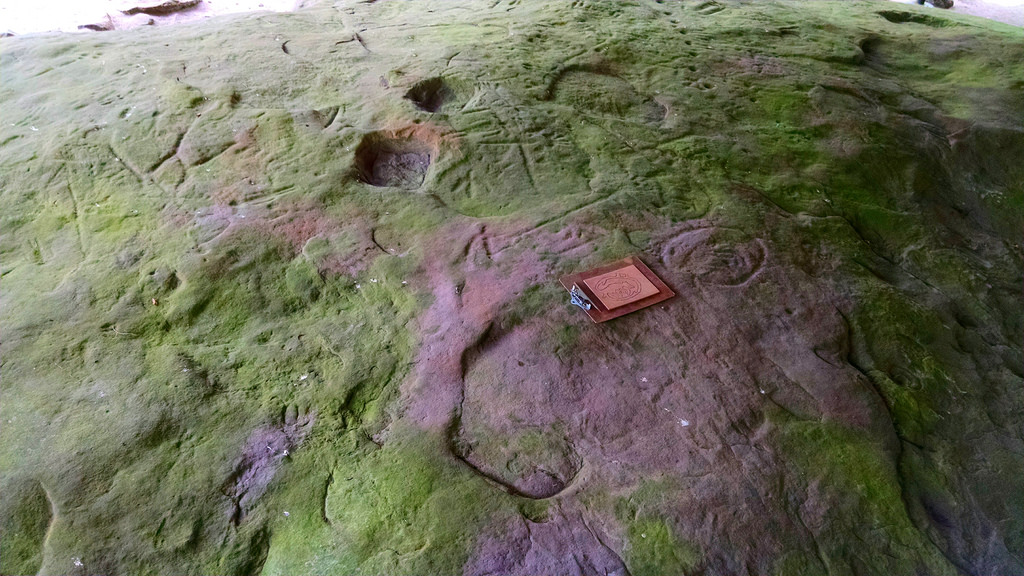
The Sanilac Petroglyphs Historic State Park in Michigan’s Thumb is the home of Michigan’s largest known collection of early Native American teachings carved in stone. The 420-acre park is open seasonally & managed jointly with the Saginaw Chippewa Indian Tribe of Michigan. The excellent Stateside Podcast shares that the name of the park in Anishinaabemowin is ezhibiigaadek asin, which means “knowledge written on stone” and says in part:

One of the most popular petroglyphs in the park is a figure of an archer, known in Anishinaabemowin as ebmodaakowet. The figure’s body is an arrow, as is his hat, and he holds a bow and arrow in his hands.

“Early on, when archeologists who were not consulting with tribes, you know, saw that, they thought, oh, surely this must be a hunting magic. They took it very literally. ” explained Tchorzynski. “But actually, this ebmodaakowet is actually shooting the arrow of knowledge seven generations into the future. And this was a carving that was left with great love and great affection for descendants in the future, to remind people of our responsibilities to be good ancestors, to preserve and remember, and our obligation to shoot the arrow of knowledge into the future as well. We all must be good ancestors.”

The fragile carvings are easily affected by natural forces. The Marshall sandstone is a very soft rock, and so many of the petroglyphs have faded naturally throughout the centuries. Over the years, the petroglyphs have also been damaged by human hands. Parts of them have been vandalized, and pieces of the stone have been chipped away and taken. In order to protect the carvings from degrading over time, a wooden pavilion was erected over the site. A rope now separates visitors from the rock.

Read (or listen to) a lot more at Stateside!

Ashleigh took this photo back in 2017. You can read her great writing about traveling in Michigan (and elsewhere) at Go See Do Explore. She has a brief article about her visit as well.

Support Michigan in Pictures with Patreon

Sanilac Petroglyphs by Leon Baker (don’t have a link for him anymore!)

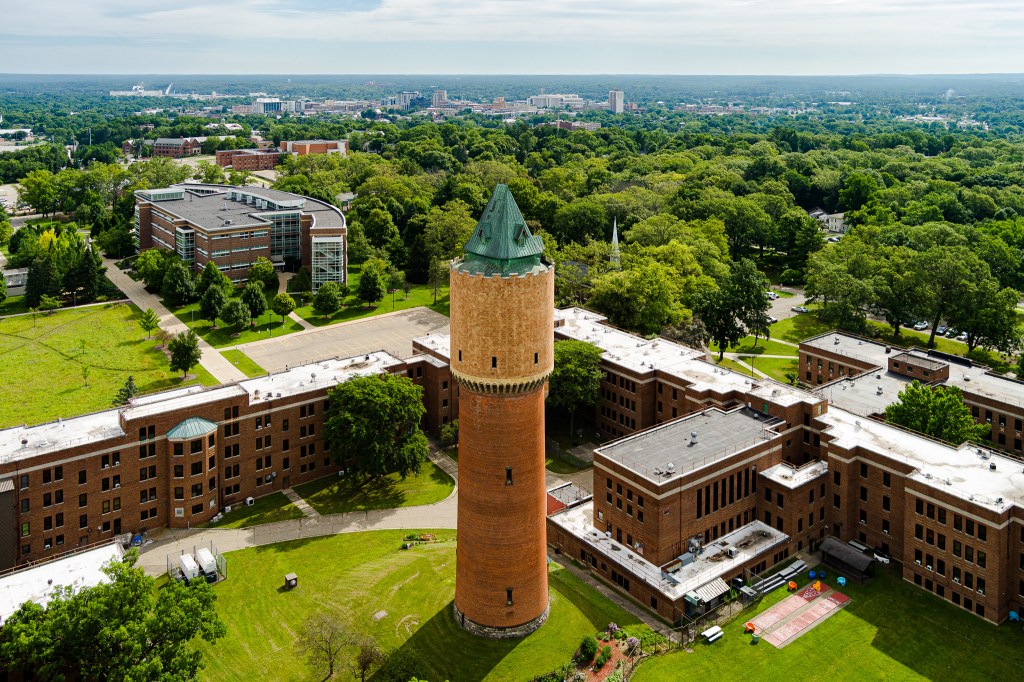
A tower, but make it creepy

Kalamazoo Regional Psychiatric Hospital Tower by William Dolak

Bill shared this photo in the Michigan in Pictures photo group on Facebook & writes:

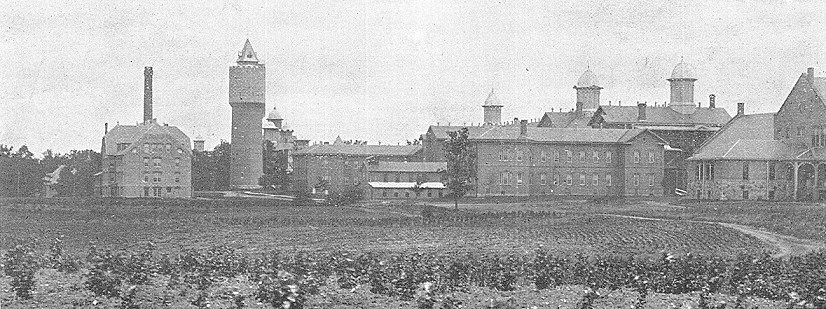
They built the “Kalamazoo State Hospital Water Tower” for the Michigan Asylum for the Insane in 1895. They instructed the architect to design something with a medieval feeling to complement the existing buildings – it looks creepy because it was meant to look creepy. It is no longer used as a water tower; its only function now is a landmark. They planned to demolish it in 1974 (almost none of the original asylum buildings remain), but “The Committee to Save the Tower” raised funds to save it. The National Register of Historic Places added the tower to its list in 1972.

See William’s latest in the Michigan in Pictures group & on his Flickr. Although he shares you can no longer tour the tower, you can watch a YouTube tour of the tower stairs from mLive & read all about the Kalamazoo Water Tower at the Kalamazoo Public Library:

The tower soars 175 feet into the air, rising from a base of cut stone blocks five feet high. The brick begins above this base. Approximately 50 feet wide at its widest point, it contains three water storage tanks inside. The main tank is 40 feet high and 40 feet in diameter and has a capacity to hold more than 200,000 gallons of hard water … The structure is really a tower within a tower. The outer shell tapers from six feet thick at the base to four feet at the top. Enclosed is an inner shell, which is also about six feet thick. Between the inner and outer shells is a wooden circular stairway, which winds upwards until it reaches 100 feet. Then a series of ladders leads to the top of the tower. At the top is a little room, gothic in appearance, that has a window facing in each direction. Four enormous wooden beams meet in the center of the room. They are etched with dozens of sets of initials carved by visitors, the oldest by one W. E. DeLong dated 1898.

Thanks for reading! You may be interested this photo feature on the Grand Traverse Asylum as well!!

Kalamazoo Asylum, early 1900s

Support Michigan in Pictures with Patreon

313 at 323! Happy Birthday Detroit!!

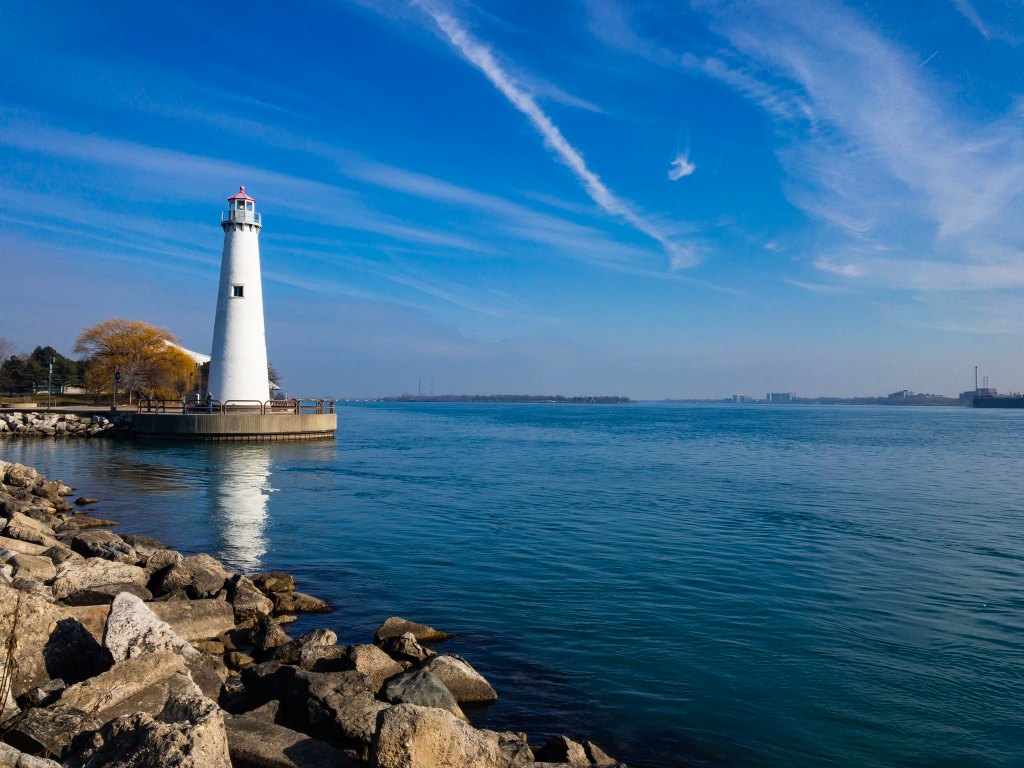
Detroit River Lighthouse by Will Jensen

Antoine de la Mothe, Sieur de Cadillac petitioned King Louis of France to found a settlement at the south of Lake Huron in the fertile region known as le détroit to provide a secure foothold on the Great Lakes. Three hundred and twenty-three years ago, Cadillac, his men, and their Native guides traveled from Montreal and on July 24, 1701, Cadillac founded the settlement Fort Ponchartrain du Detroit in honor of King Louis’s Minister of Marine. Read more about the founding of Detroit by Antoine de la Mothe Cadillac on Michigan in Pictures.

While the buildings, sports & of course the people of Detroit are all vital components, I think nothing speaks more to the three plus centuries of the City on the Strait than the river. It brought the rich soil & trade that enabled early growth, brought raw materials & carried away finished goods in later years, and it remains central to the city’s life through a gorgeous riverfront park system that hosts incredible musical & cultural events.

Will took this back in 2019. See lots more in his massive Detroit gallery on Flickr!

Support Michigan in Pictures with Patreon

The Spirit of ’76 … Grand Ledge Edition

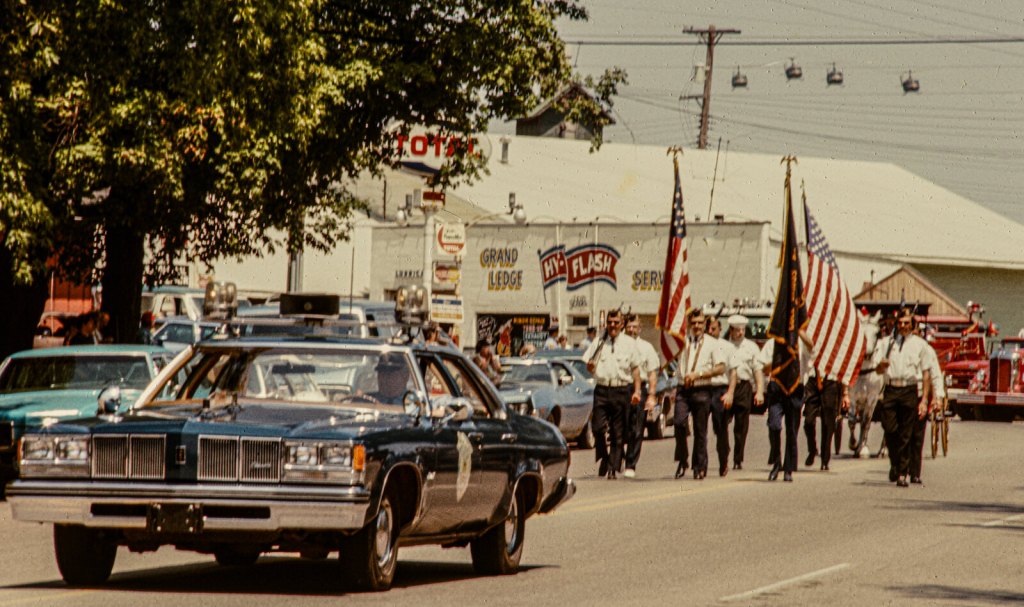
4th of July, 1976 - Grand Ledge, Michigan by Robb

4th of July, 1976 – Grand Ledge, Michigan by Robb

I don’t know if you’re old enough to remember the July 4, 1976 but boy oh boy did my bike have SO MANY STREAMERS 😅

Robb shares “This was the 4th of July parade in my hometown of Grand Ledge, Michigan, commemorating the Bicentennial. I was standing at the north end ot the town’s main drag, Bridge Street, and I got lucky when I shot this photo, showing four Hueys about to do a flyover of the parade. The Air National Guard field was a few miles down the road, to the left of the photo.”

See more in his Vintage Photos – Film gallery on Flickr and have a great Fourth of July.

Support Michigan in Pictures with Patreon

Petoskey stones: more than a souvenir

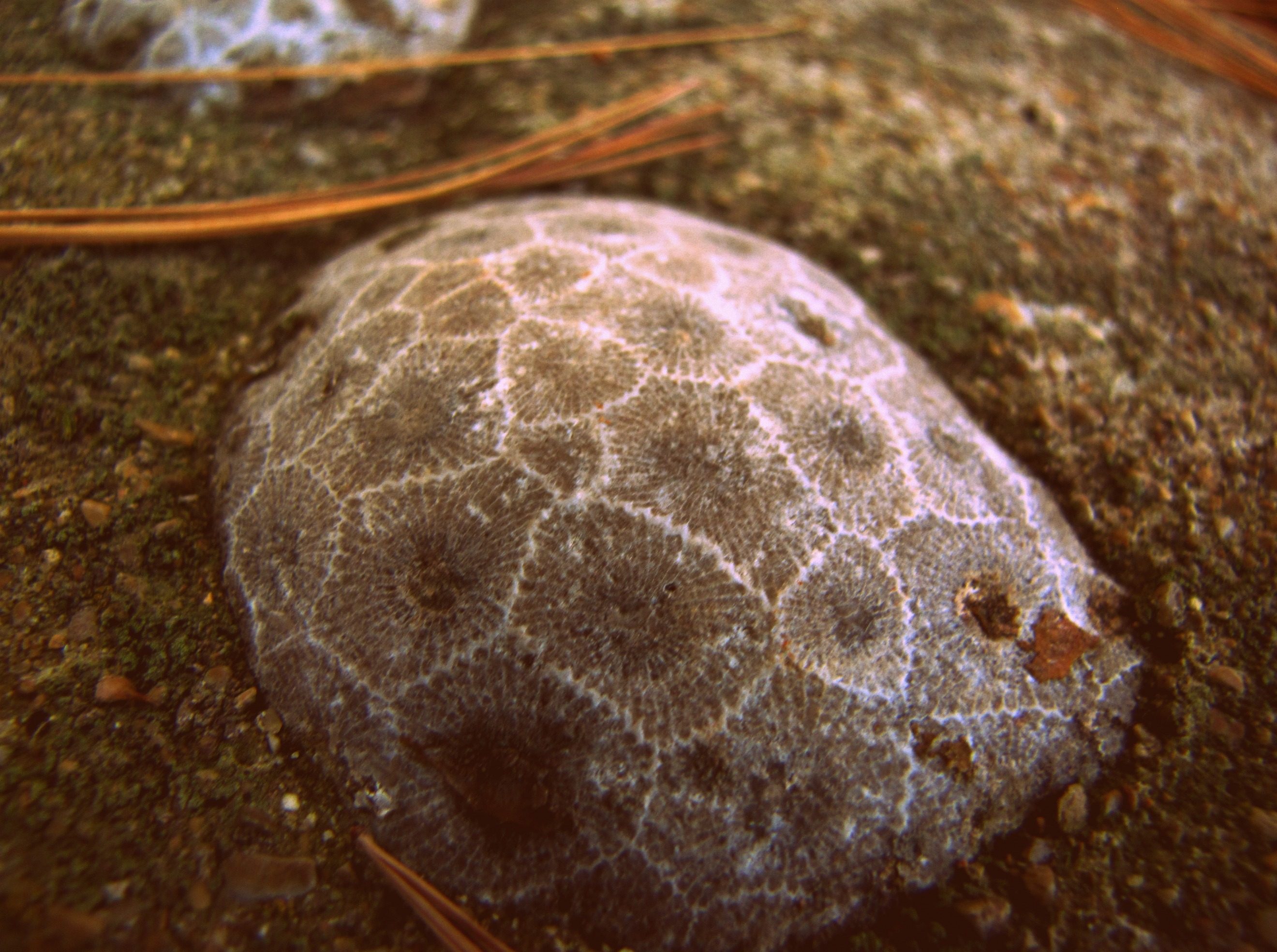
Petoskey Stone by Christopher Cerk

About 20 years ago, Rose Petoskey shared this story about her name. As a lot of you head to the beaches seeking Michigan’s state stone, I thought it was an excellent time to re-share this essay from Rose about her name and the importance of names in Native culture:

My name is Noozeen (Rose) Nimkiins (Little Thunder) Petoskey (Rising Sun) and I am Anishinaabek.

Many people would associate the word Petoskey with the souvenir stone found on the northern Lake Michigan shorelines. However, to my family, the word Petoskey represents much more than a souvenir.

In the Odawa language, the word Petoskey (Bii-daa-si-ga) means the rising sun, the day’s first light, or the sun’s first rays moving across the water. The Petoskey stone is a fossilized coral created by impressions made in limestone during the last Michigan ice age. These stones were named “Petoskey” because the impressions resembled the rising sun coming up over the water. Just as the image of the rising sun is implanted within the Petoskey stone, the archaeology of a person’s names is implanted within. All names within our Anishinaabek culture reflect an individual’s personal history. Rocks go deep, but names go much deeper to reveal the stories of the past.

As an update, Rose Nimkiins Petoskey is now Senior Advisor to the White House Office of Intergovernmental Affairs and Director of Tribal Affairs for the Biden-Harris Administration which is pretty darned cool!!

Christopher took this photo back in 2012. See more in his Flickr!

Support Michigan in Pictures with Patreon

Grand Funk R.R.

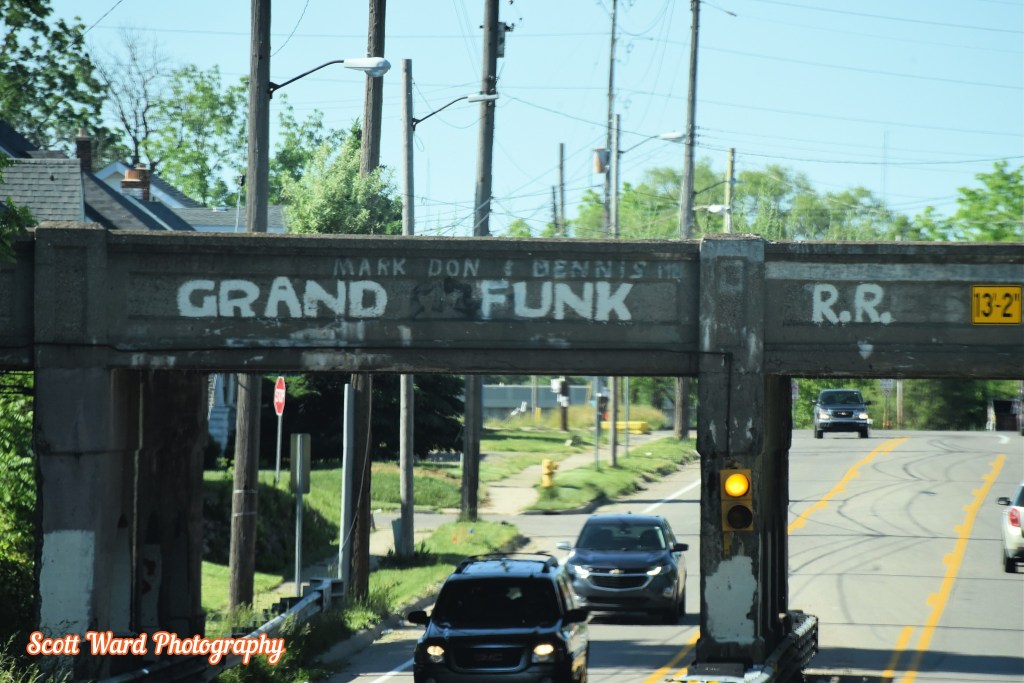
Grand Funk RR by Scott Ward

Scott shared this photo on Monday writing “Bet you can’t guess where we were visiting. At one point these guys were outselling The Beatles! One of the true Michigan iconic bands. Glad to see that this homage to them is still there.”

If you guessed “Flint” you are correct! The band Grand Funk Railroad was one of the biggest bands to come out of Michigan in the seventies, scoring Grand Funk six platinum and seven gold-certified albums between their 1969 debut and first breakup in 1976. The power trio of Mark Farner (vocals, guitar, keyboards, harmonica), Don Brewer (drums, vocals) & Mel Schacher (bass) originally came together in 1969 as “Grand Trunk Railroad”. The Grand Trunk Western Railroad objected, and the band (fortunately) had to change the name to Grand Funk Railroad.

Two of the three original members – Brewer & Schacher – are currently on tour as Grand Funk Railroad while lead singer & primary songwriter Farner tours as Mark Farner’s American Band.

Click the pic above to comment, and you can see more at Scott Ward Photography on Facebook and view & purchase work on his website.

Support Michigan in Pictures with Patreon

Thunder Bay Island Lighthouse

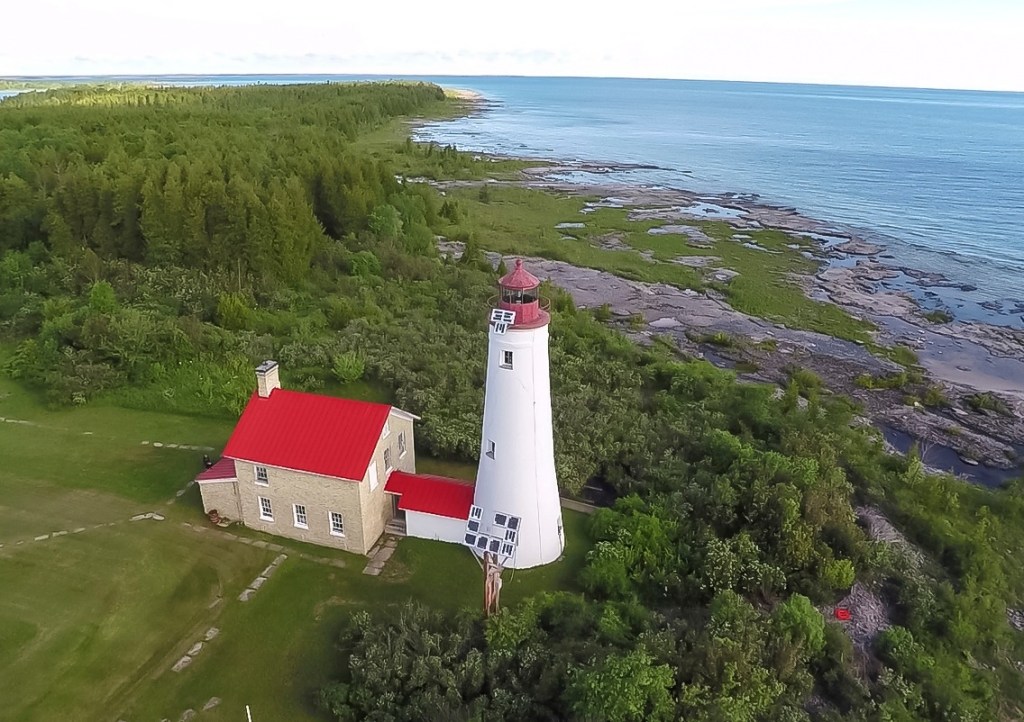
Thunder Bay Island Lighthouse by Presque Isle Township Museum Society

The Presque Isle Township Museum Society reminds you that it’s never too early to start planning your summer Michigan Lighthouse Tour! The drive from Tawas to Mackinaw City along Heritage Route 23 will let you explore the lighthouses of the Sunrise Side. Click that link for a map & much more!!

Lighthouse historian Terry Pepper is no longer with us, but his words still illuminate the rich history of Michigan lighthouses at Seeing the Light. His entry on the Thunder Bay Island Lighthouse says (in part):

Thunder Bay Island sits just three miles East-northeast of the north point of Thunder Bay, and thirteen miles from the harbor at Alpena. This 215-acre limestone island is the outermost of a group of islands connected to the shore by a shallow rocky shoal. As such, it represented both a significant marker for Northbound vessels making the turn toward the Straits, and stood ready to chew the wooden hulls of vessels unlucky enough to stray too close to its rocky shores.

…With rapidly increasing maritime traffic through the 1850’s, the Lighthouse Board determined that the combination of inefficient Lewis lamps and the diminutive 40-foot height of the tower provided a less than effective aid to mariners relying on this important station. To rectify the situation, plans were formulated to increase the height of the tower and to install an improved French Fresnel lenses of the type currently being installed throughout the system. Over 1857, the upper 14 feet of the tower was encased in brick and continued above the upper limits of the old structure to a height of 50 feet, effectively increasing the total height of the tower by 10 feet. The entire exterior of the tower was then given a veneer of Cream City brick to provide a smooth, weather-proof surface. At completion of the masonry work, the renewed walls at the base of the tower stood a massive 79 inches thick, and tapered to a thickness of 20 inches at their uppermost.

Atop this renovated tower, a new gallery with a cast iron hand railing was installed, and a ten-sided prefabricated cast iron lantern installed at its center. Within this new lantern, a Fourth Order Fresnel lens manufactured by Sautter of Paris equipped with six bulls-eye flash panels was installed on a cast iron pedestal and equipped with a clockwork rotating mechanism. This new improved illuminating apparatus provided a characteristic fixed white light varied by flashes, and its enhanced focal plane of 59 feet provided an increased range of visibility of 14 miles at sea.

Read on for much more! Also, a very big thank you to the Great Lakes Lighthouse Keepers Association who have been sharing some great pics in our Michigan in Pictures group on Facebook! They do so much to preserve Michigan’s lighthouse and maritime legacy!!

Support Michigan in Pictures with Patreon

Detroit has gone big before!

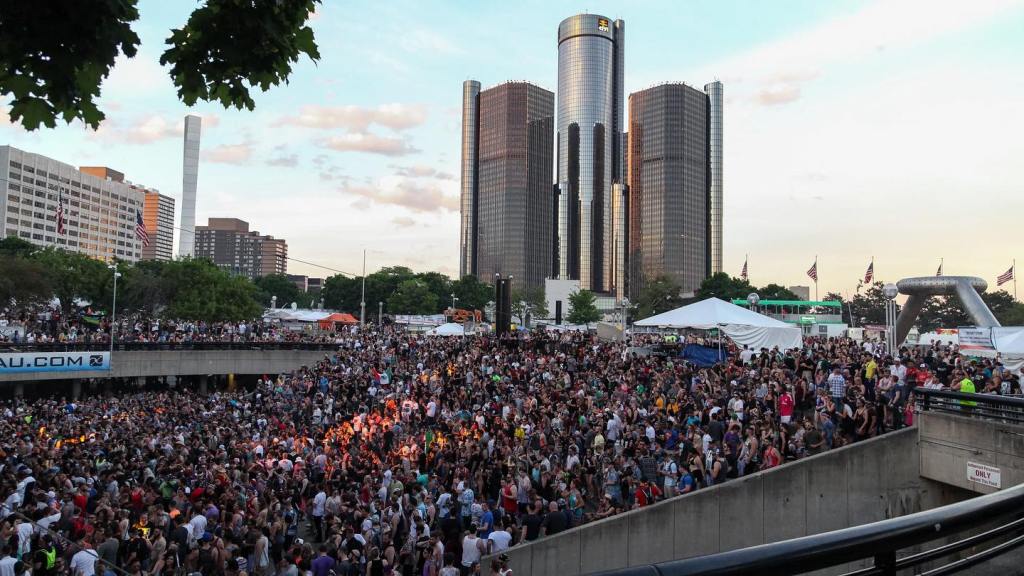
Detroit Electronic Music Festival, 2002 by Black Scroll Network

I’m still recovering from the MASSIVE event that was the 2024 NFL Draft in Detroit which hosted over 3/4 of a million people. There will be more posts, but I thought this post that Jamon Jordan of Black Scroll Network History & Tours shared on Facebook gives some great perspective on some of the massive events the Motor City has hosted over the years:

I’m sure everyone is aware that the crowds at the NFL Draft in Detroit are so large that no one else is being allowed into the 3 entry points. About 275,000 people are right here at, in or near Campus Martius, and Cadillac Square plus another 100,000 people in other venues downtown – Greektown, Hart Plaza, Grand Circus Park.

But Detroit has hosted large crowds before. Take a look at some of the large crowds – 100,000 or above – in Detroit’s history:

June 23, 1963 – Detroit Walk to Freedom – 125,000-250,000 people marched with Dr. Martin Luther King, Jr. & Rev. CL Franklin and heard Dr. King’s “Dream” 2 months before Washington DC.

August 19 – September 5, 1966 – Michigan State Fair – 1.2 Million people (our record attendance) The Temptations was one of the acts performing that year on Woodward between 7 & 8 Mile.

June 6, 1997 – Detroit Red Wings Stanley Cup Victory Parade – 1.4 Million people came down to celebrate with the Wings. And they threw an octopus on the streets too.

July 21, 2001 – 300th Birthday of Detroit/Free Stevie Wonder concert – 500,000-1 Million people listened to Stevie Wonder at Hart Plaza and watched the fireworks.

May 24-27, 2002 – Detroit Electronic Music Festival – 1.7 Million people. The Techno Festival surpassed a million people each of it’s 1st 3 years – 2000, 2001 & 2002 (2002 DEMF is pictured).

There are a TON more in the post on Facebook. You can follow Jamon on Instagram @jamonblackscrollhistorian & for sure check out Black Scroll Network for history tours of Motown!