
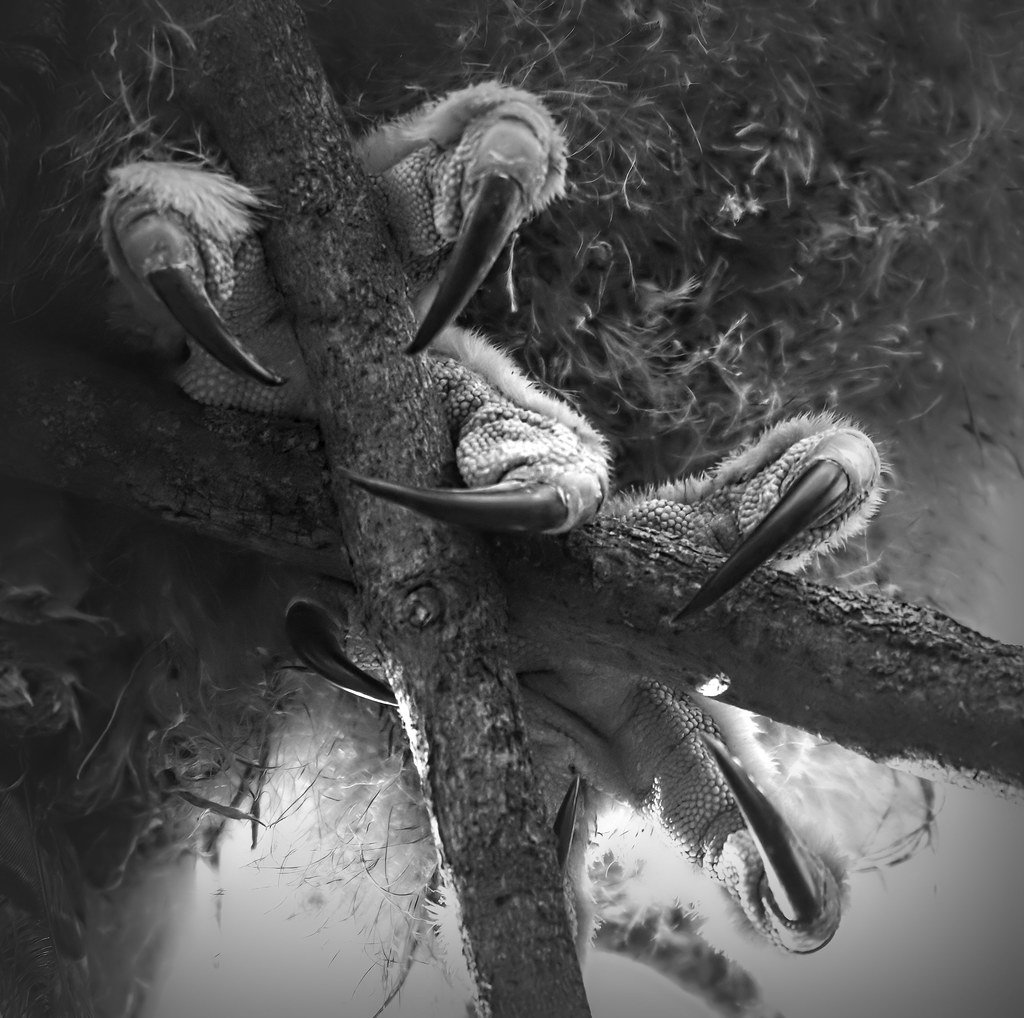
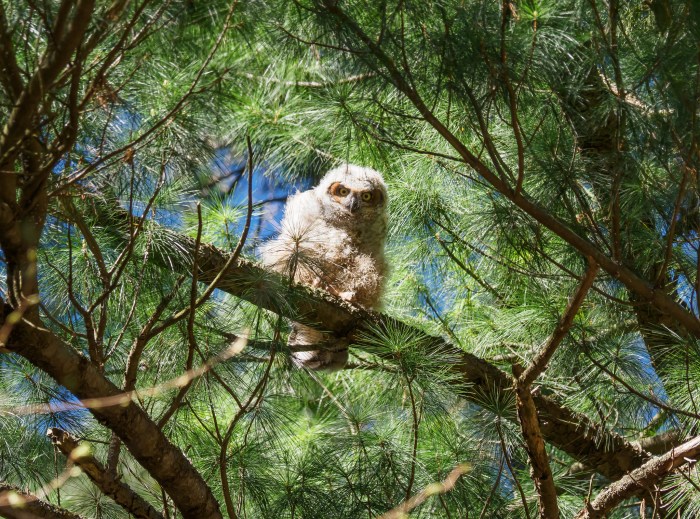
Great Horned Owlets, photo by Kevin Povenz
April is the season for owls to fledge, or learn to fly. The Raptor Education Group from over in Wisconsin has a page about owlets that includes what to do if you come across one of these cute balls of fluff on the ground:
Great-horned Owls do not build their own nest. Instead, they choose an old nest of a crow, hawk, or even a squirrel to call their own.
When the young owls are 6-8 weeks old, they begin to venture from their nest. This is before they can actually fly. Nature’s method provides owlets opportunities to develop their leg muscles that will very soon be catching their own prey. In a natural setting owlets that appear to have fallen from their nest actually have fledged. In a natural wooded area, bushes and smaller trees provide a ladder of sorts and allow the chicks to climb to a higher perch until they can fly. When owls nest in a city with concrete below them rather than a soft forest floor, problems arise. That is also the case with a well-manicured park or lawn setting that has nothing that can function as a ladder for the tykes.
…If you find a young owl, leave it where it is, unless it is in imminent danger. Give us a call and let us help you decide if the adults are in attendance and the chick is just fledging naturally or if there is something wrong with the little one. Remember, owls are nocturnal for the most part and are not easy to see during daylight hours. Mom and dad could be very close and yet be so well camouflaged they are hard to see.
Michigan in Pictures has a feature on Great Horned Owls with a lot more about these birds!
View this on black, check out more from Kevin on Michigan in Pictures and definitely have a look at his great Birds of Prey slideshow.
Share Michigan in Pictures:


 Michigan in Pictures