
Leonid Meteors fight back against Big Moon

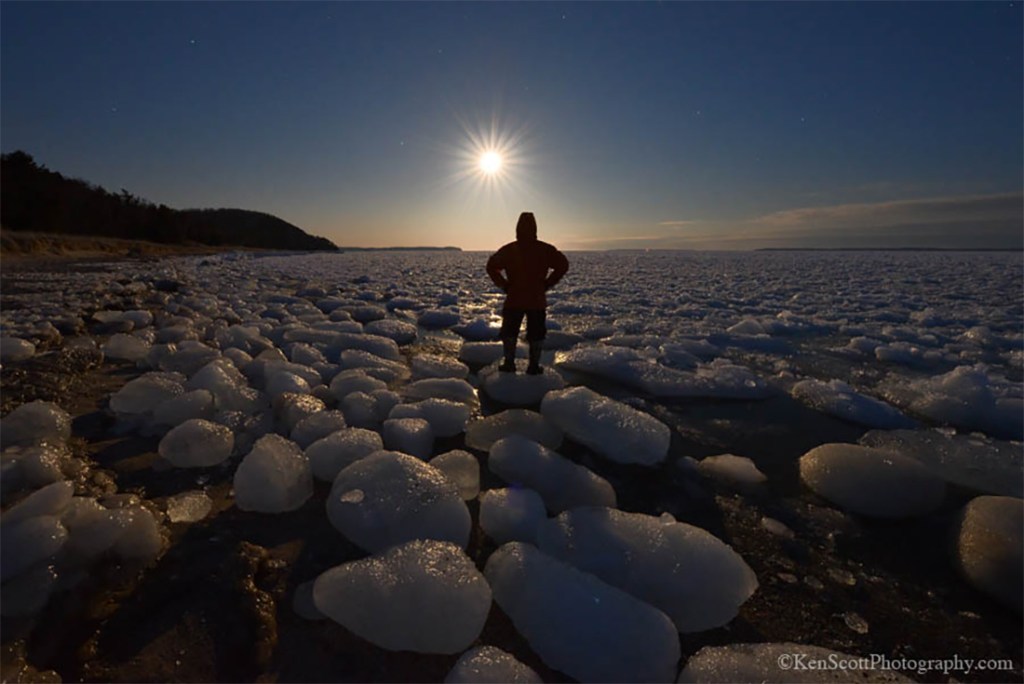
Lake Michigan … anticipation by Ken Scott

Lake Michigan … anticipation by Ken Scott

This story I shared on Leelanau.com about how the Leonid meteors are being recorded hitting the surface of the moon gave me a chuckle when I realized they were doing it becauser the moon is shining on their big show! 😅

EarthSky shares that since the radiant – the point in the sky from which the meteors appear to radiate – for the Geminid Meteor Shower rises in mid-evening, you can watch for these meteors all night long in the days before & after the evenings of December 13-14 as we pass through the Geminid swarm. They say that the radiant is highest at 2am. Although you won’t see the 20 meteors per hour with the nearly full Cold Moon hanging in the sky, they are particularly bright & you will see some if you give it 15 minutes or so!

Speaking of the meteors & the moon, EarthSky & other outlets have shared video of meteor impacts on the lunar surface from Japanese astronomer Daichi Fujii, the curator of the Hiratsuka City Museum! Check it out below along with tips on how to get the best view of this annual meteor shower!

Ken took this back in April of 2015 when he was hoping to catch a lunar eclipse but sadly…

this morning was to be a
Total eclipse of the moon …
it started out fantastic and
then clouds rolled in . . .

Follow Ken Scott Photography on Flickr & Facebook for his latest! Also if you are wondering about the ice balls, Leelanau.com has the info on that too with another pic from Ken & video by Paul May!

Support Michigan in Pictures with Patreon

Geminid Meteor Showers this weekend!

Geminid Meteor ...

Geminid Meteor…, photo by Ken Scott

As you’re making plans for this weekend, consider including some offbeat nightlife. EarthSky has everything you need to know about this weekends Geminid Meteor Shower:

The peak night of the 2014 Geminid meteor shower will probably occur on the night of December 13 (morning of December 14). The night before (December 12-13) may offer a decent sprinkling of meteors as well. Geminid meteors tend to be few and far between at early evening, but intensify in number as evening deepens into late night. A last quarter moon will rise around midnight, but Geminid meteors are bright! This shower favors Earth’s Northern Hemisphere.

…In a year when moonlight doesn’t obscure the view, you can easily see 50 or more Geminid meteors per hour on the peak night. However, in 2014, the waning moon will dampen the display in the peak viewing hours. Don’t let the moonlight discourage you. A good percentage of these yellow-colored Geminid meteors are quite bright and will overcome the moonlit skies.

The moon will rise quite late on December 13 and 14, creating a window of darkness for watching the Geminid shower in the evening. Keep in mind that the moon will rise about an hour earlier on December 13 than it will on December 14. Click here for custom sunrise/set calendar. Check boxes for moonrise/set times..

Even as the moon rises, however, it will be sitting low in the east. If possible, find a hedgerow of trees, a barn or some such thing to block out the moon. Sit in a moon shadow but at the same time, find an expansive view of sky. Or simply look away from the moon.

Read on for all kinds of viewing tips and all kinds of info about about this December meteor shower including the chance of seeing an earthgrazer meteor, a slow-moving, long-lasting meteor that travels horizontally across the sky.

View Ken’s photo from December 14, 2012 bigger and see more in his massive Skies Above slideshow.

More meteors on Michigan in Pictures!