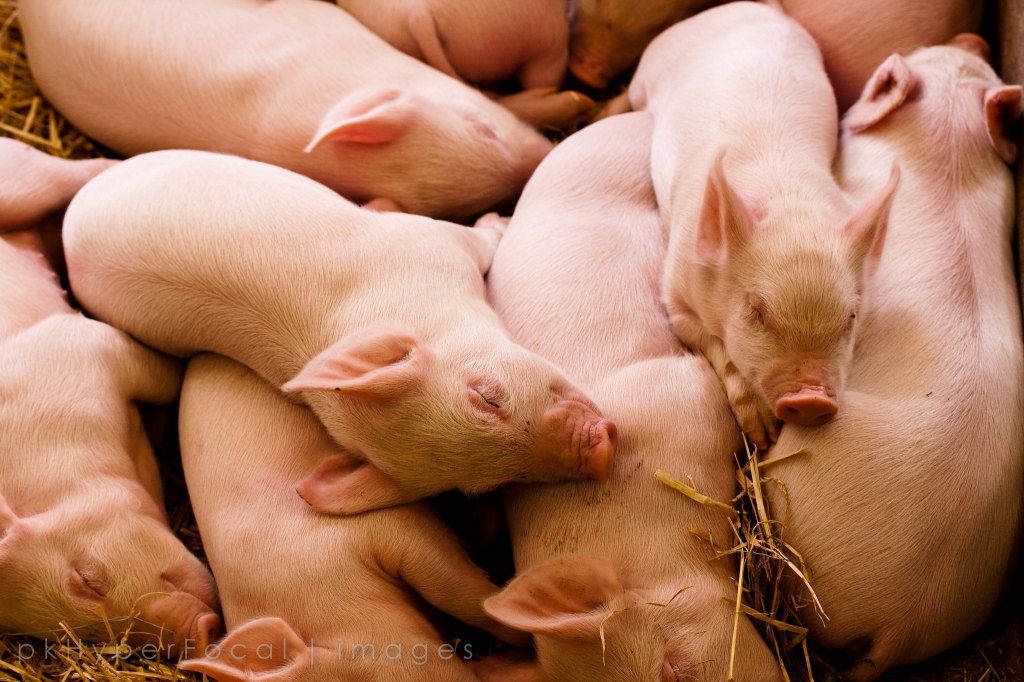
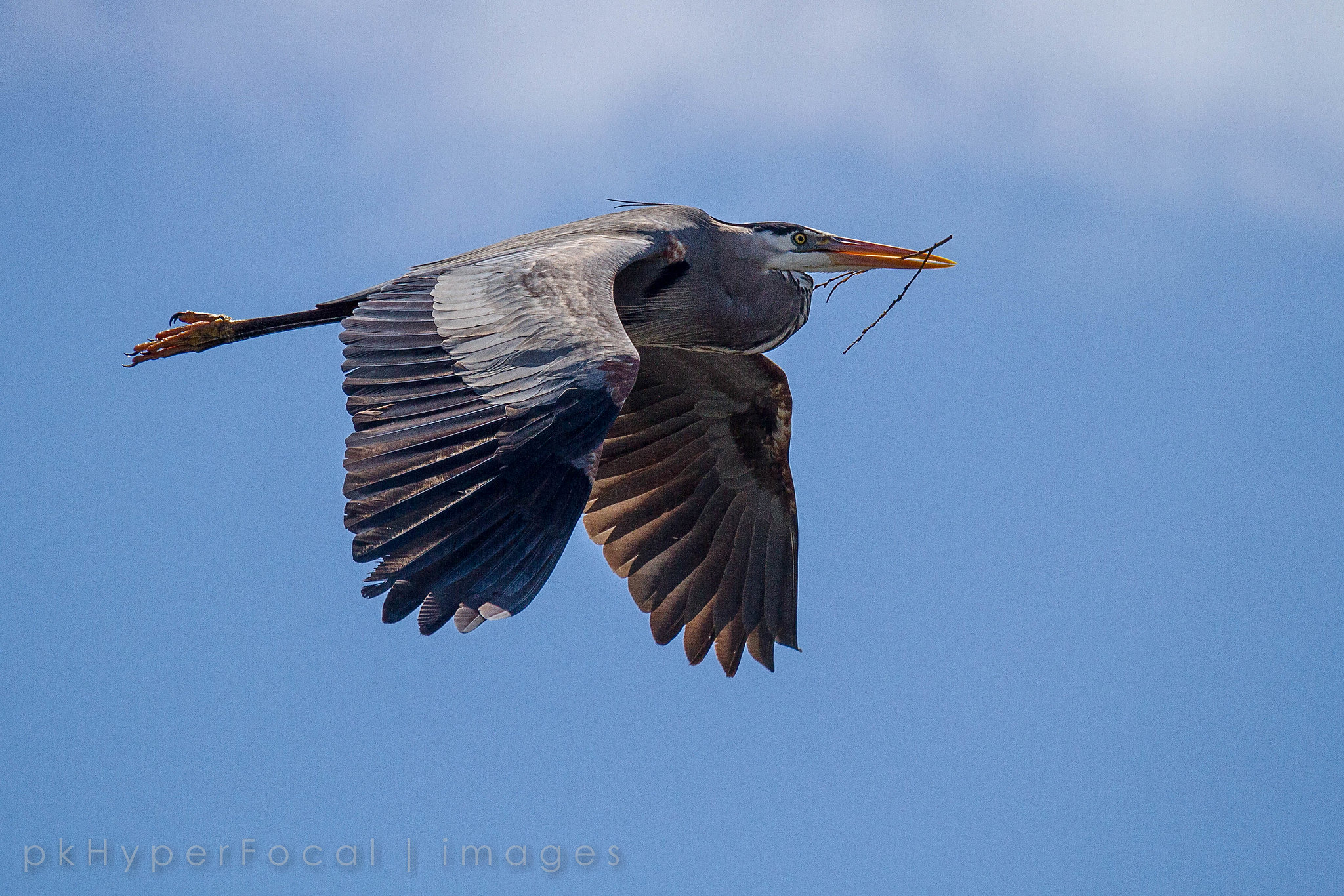
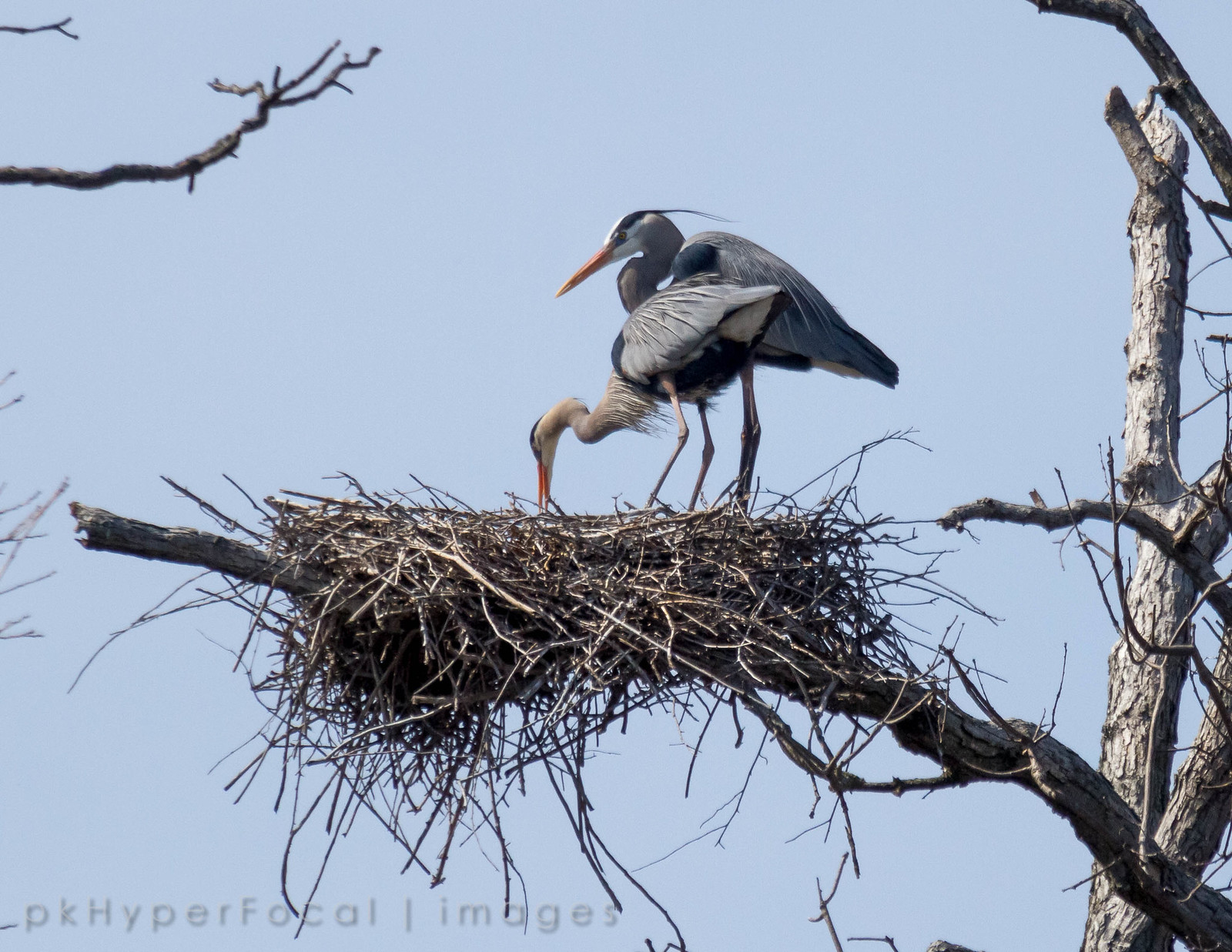
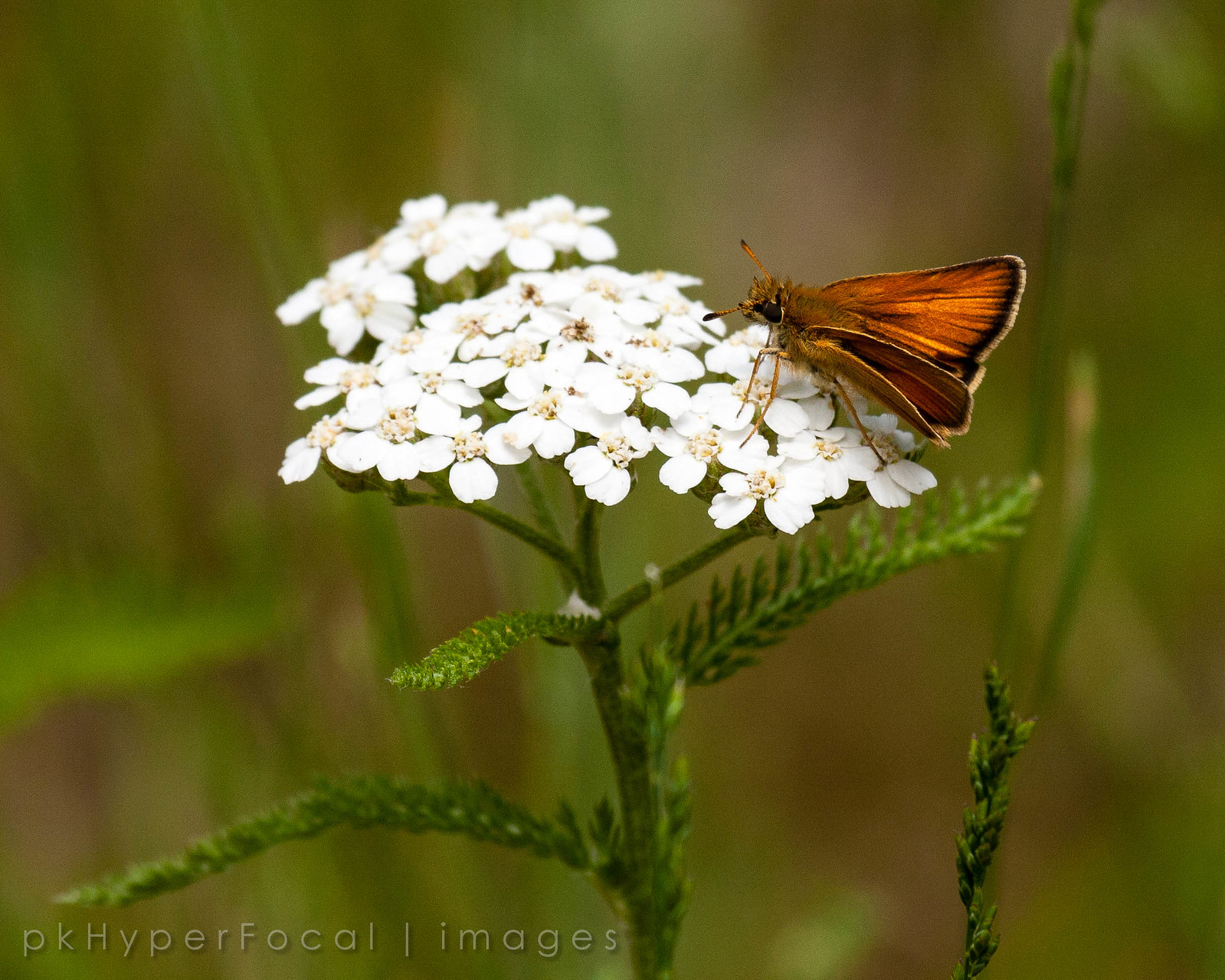
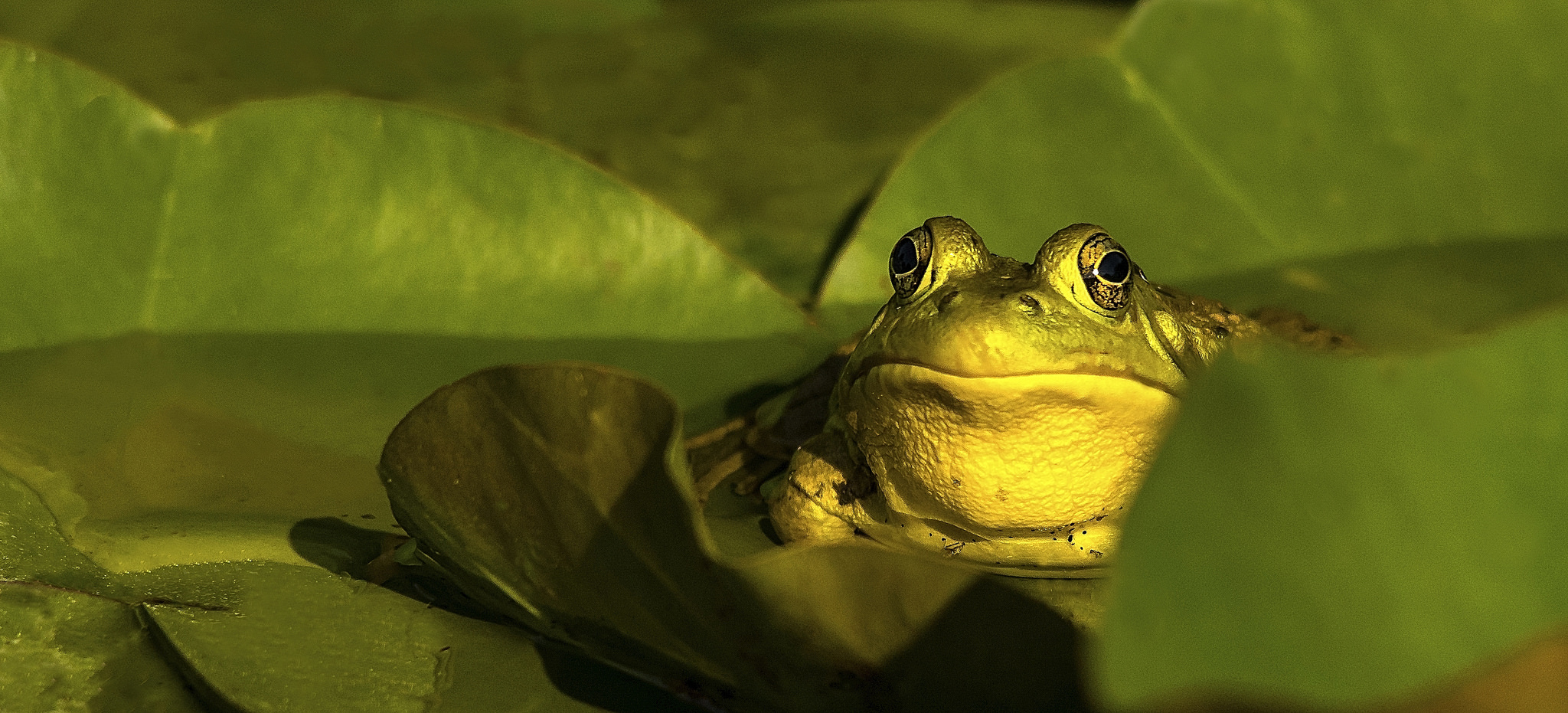
In honor of this brutally cold morning with single digit temperatures covering the state, so I couldn’t resist re-sharing probably the toastiest photo ever to grace Michigan in Pictures. Take a stroll through pics from pkHyperfocal’s Metro Parks gallery & for sure check out all their galleries on Flickr.
…“In the 25 years since chytrid was identified as a major cause of the global collapse of amphibian populations, our results are the first to provide a simple, inexpensive and widely applicable strategy to buffer frogs against this disease,” said Dr. Waddle.
The researchers developed artificial ‘hotspot’ shelters using readily available materials like bricks and PVC greenhouses. These structures create warm environments where frogs can raise their body temperature to levels that are uncomfortable for the chytrid fungus.
“In these simple little hotspots, frogs can go and heat up their bodies to a temperature that destroys the infections,” explained Dr. Waddle. It’s like a natural antibiotic treatment, but instead of popping pills, the frogs just need to bask in their personal saunas.
The results were remarkable. When frogs shifted to these hotspot shelters, chytrid infections were reduced significantly. This simple intervention could have far-reaching benefits for amphibian conservation efforts worldwide.
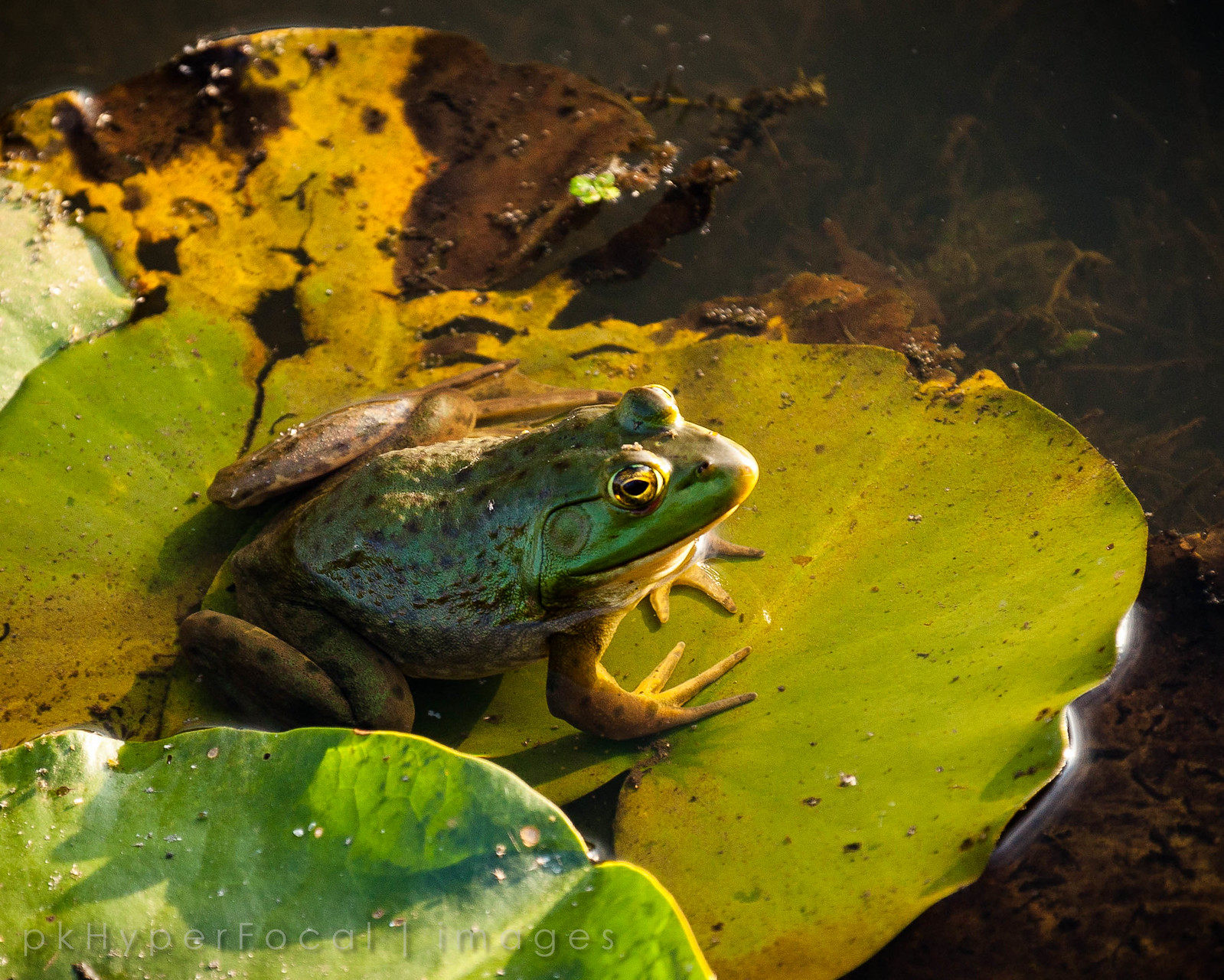
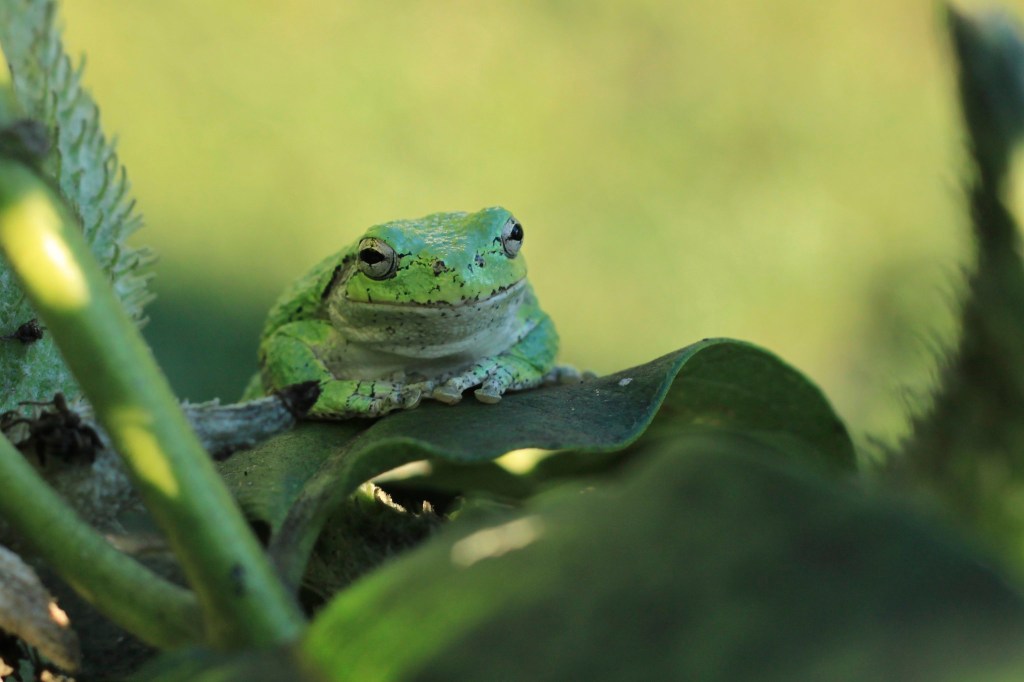
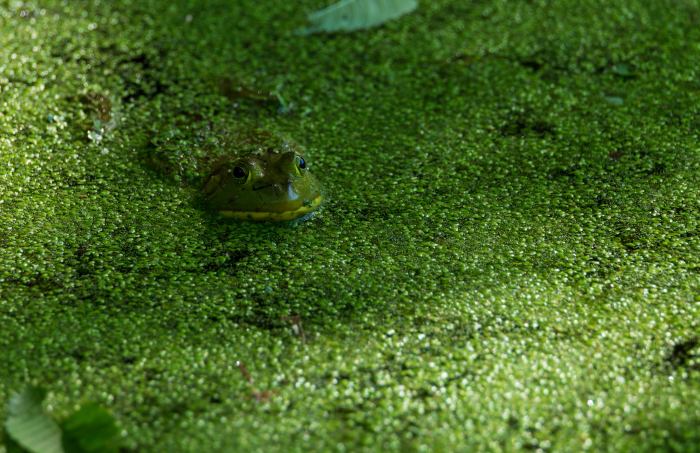
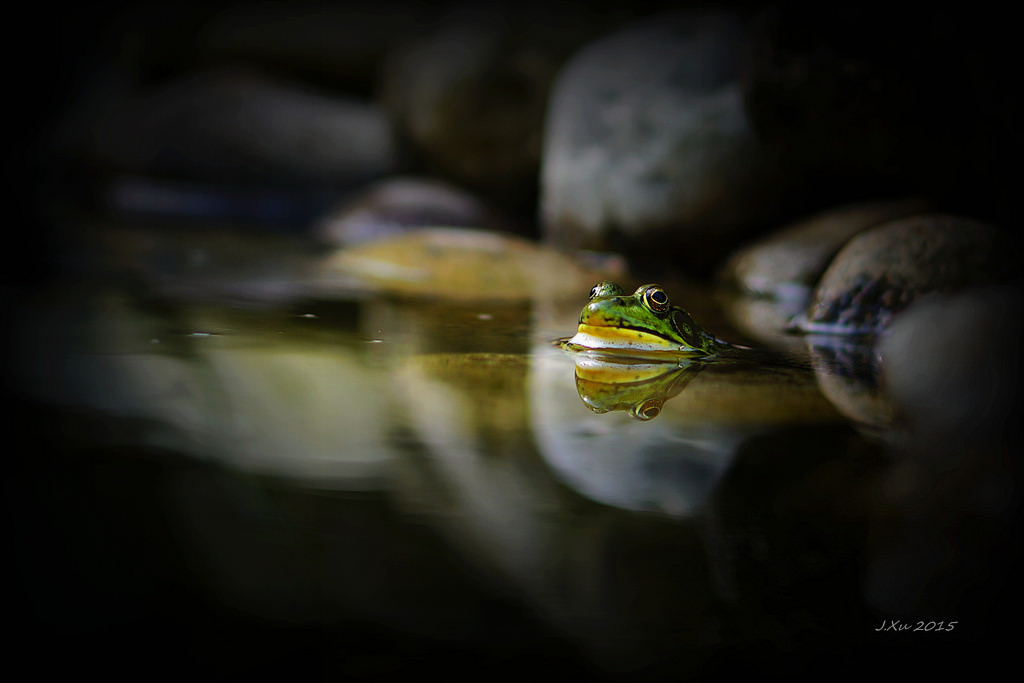
Though Steven titled this It ain’t easy… he wrote actually, on this day, it seemed pretty easy being green. This guy was eating fly after fly as I snapped away. Must’ve had 5-6 flies in about as many minutes. He looked like lack of food was not an issue.
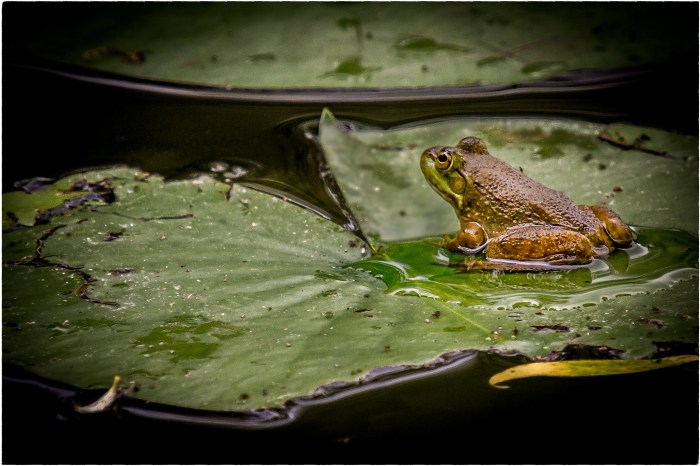
What do you think, internets: is this a Northern green frog or a Michigan bullfrog? The only difference I know of between the two is that the green frog has a fold of skin from the eardrum down each side of the back.
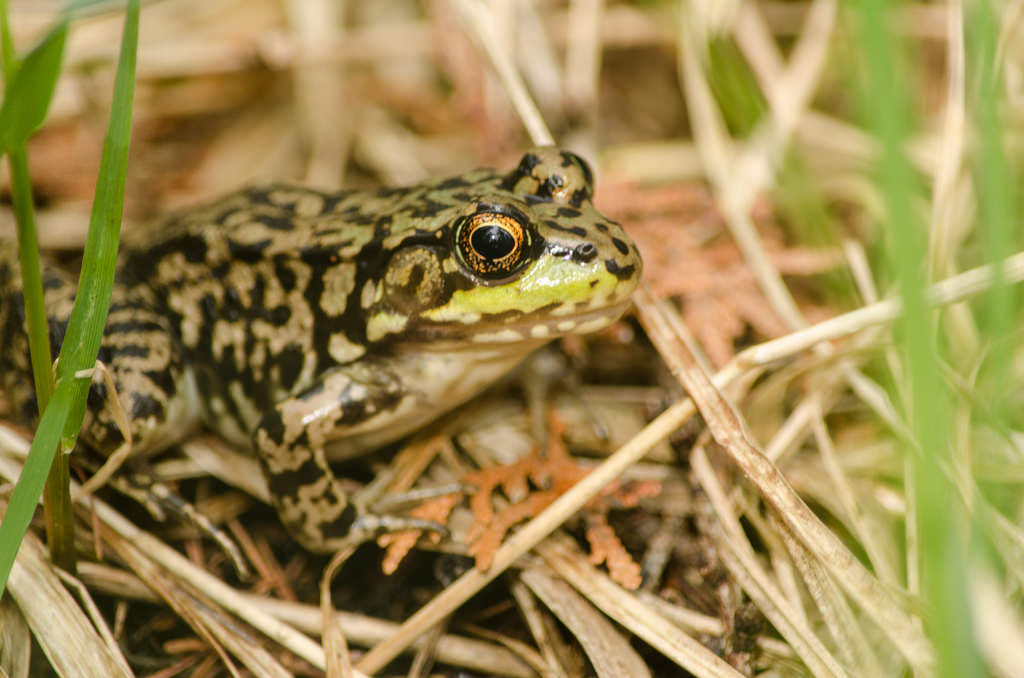
Saturday was World Frog Day so let’s add another Michigan frog to the list, the Mink Frog (Rana septentrionalis) about which the DNR says:
A blotchy, spotted, greenish or brownish frog. Similar to Green Frog, but has spots or blotches instead of cross bands on the hind legs. Bright green upper lip and creamy to yellowish belly. Produces a musky, mink like odor when handled. Medium – 2 to 3 inches long.
HABITAT: Bogs, ponds, and lake edges. Remains close to permanent water.
BREEDING: June-July. Eggs laid on vegetation in deep water. Tadpoles may require more than one summer to become frogs.
VOICE: Likened to distant hammering; “Kuk, kuk, kuk, kuk, kuk.”
RANGE AND STATUS: Found throughout Upper Peninsula, but generally uncommon.
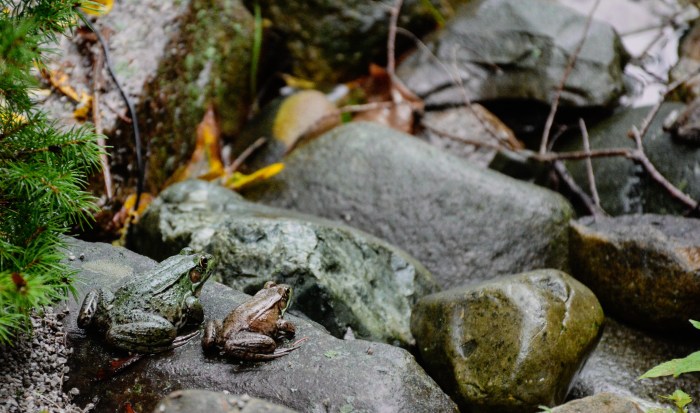
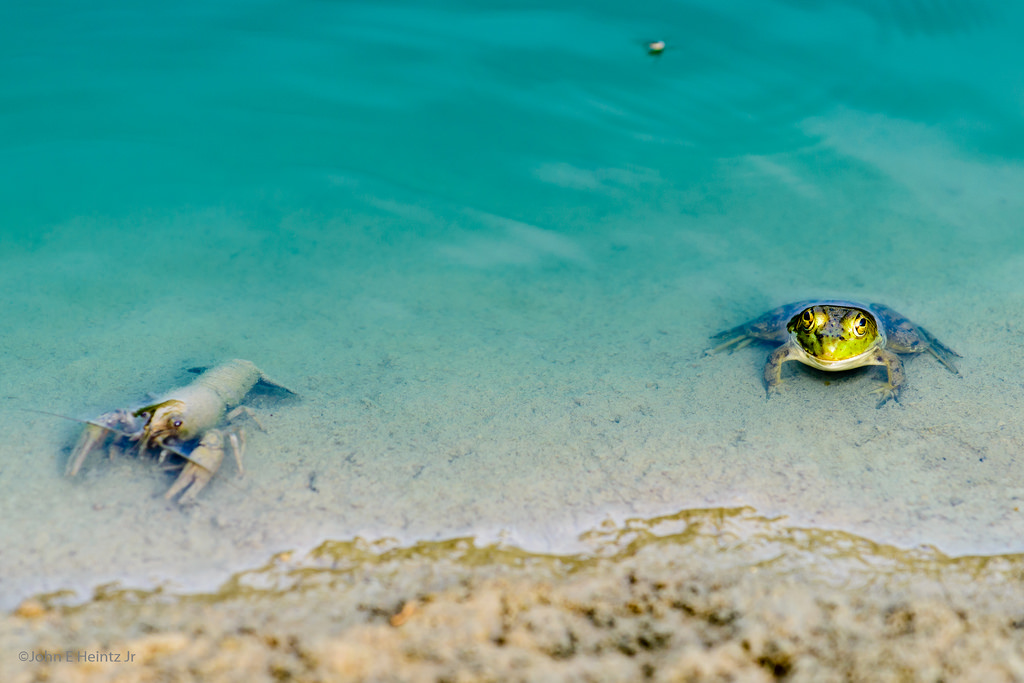
The next installment of the critically acclaimed Michigan in Pictures exclusive “Best Friends in Nature” series. I believe what these two have in common is a long list of shared predators, so this could well be a pond-side support group meeting. ;)
View John’s photo bigger and see more of his cool wildlife photos. Seriously, I feel like he’s the long-lost nephew of Doctor Doolittle when I look at his photos!
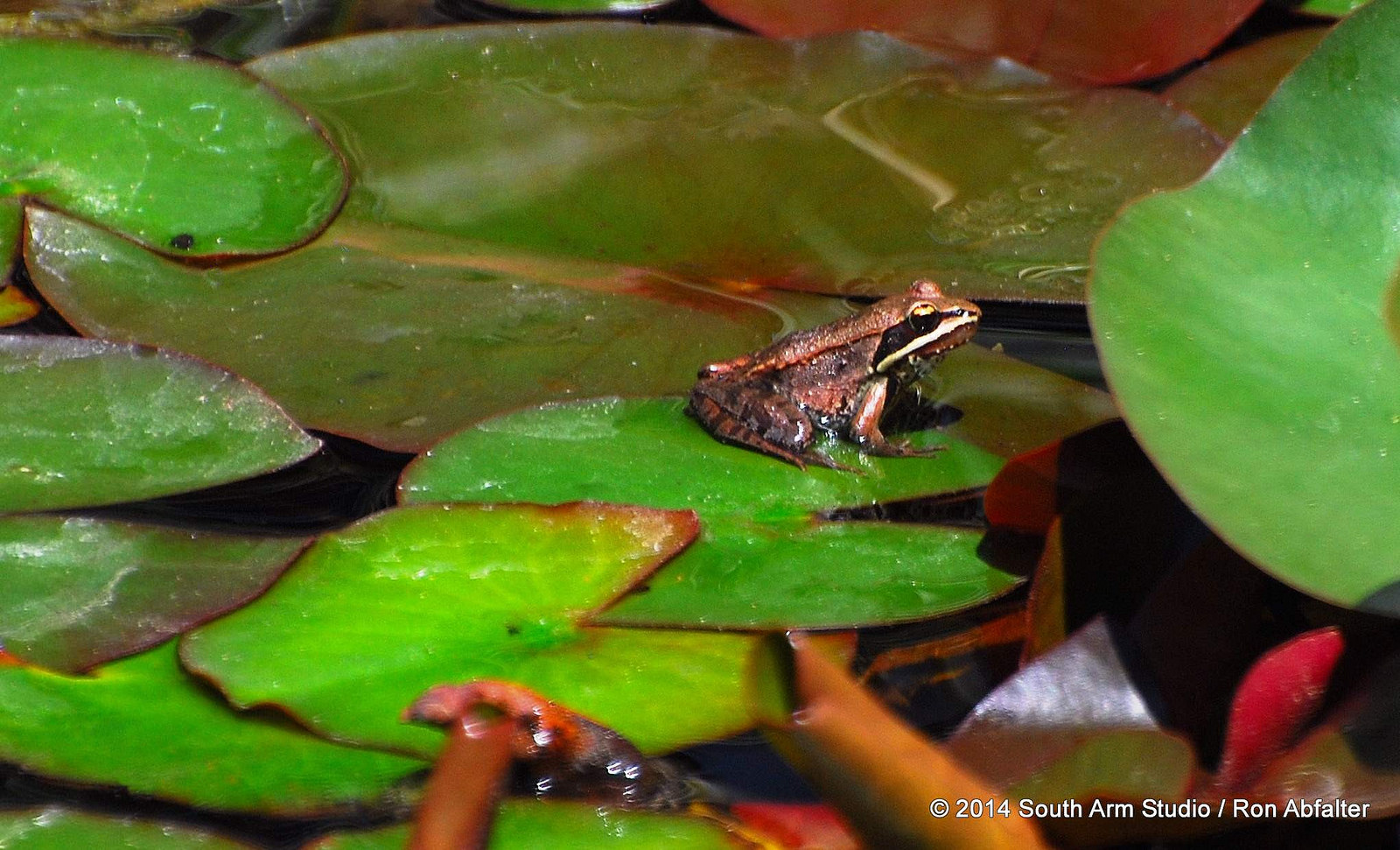
DESCRIPTION: A brown or tan frog with a dark band (“robber’s mask”) through the eye and a white stripe on the upper lip. Small to medium – 2 to 21/2 inches long.
HABITAT: Woodlands, wooded swamps.
BREEDING: March-April, in woodland ponds and swamps often before ice is completely melted from pond. Egg masses are globular; many females may deposit in one area, often in deepest part of pond. Tadpoles will transform about 2 months later.
VOICE: A duck like “quack,” some describe it as “a lot of chuckling.”
RANGE AND STATUS: Common in moist wooded habitats state-wide.


 Michigan in Pictures