Bringing the Busy Bee back to Michigan

the-busy-couple-of-bees

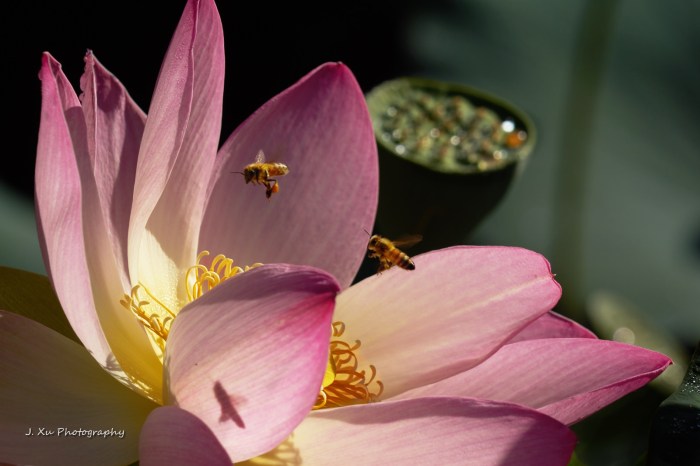
The busy couple, photo by Jiafan (John) Xu

John writes that this photo was taken at a small pond with pink lotus and some other water plants at the Michigan State University farm in Novi, Michigan. That segues nicely to this Greening of the Great Lakes interview with Dr. Rufus Isaacs, bee researcher and professor in the Department of Entomology at MSU about what we can do to make our farms and gardens better for bees.

He (Dr. Isaacs) believes the use of pesticides, disease and reduced natural habitat from the development of land for residential and agricultural purposes have made it difficult for the over 400 different bee species native to Michigan to survive and pollinate.

Among other things, Isaacs and his colleagues hope to expand spaces for wild bees to thrive close to farmland. His strategy to improve pollination sustainability involves luring wild bees to farms so producers don’t have to rent commercial honey bees. By planting wildflowers and using bee-safe pesticides, farmers can become less dependent on high-cost and out-of-state honey bees to pollinate their crops.

“We’re supporting those bees with pollen, nectar and a place to nest, “ he says. “That’s boosting those wild bee numbers to help honey bees when it’s bloom time in the Spring.”

Similar procedures can also be done on a smaller scale to increase pollination and mitigate bee decline. Isaacs explains that home gardeners can look to resources like MSU’s Smart Gardening program to attract pollinators to their fruit and vegetable plantings.

Click through to listen!

View Jiafan’s photo bigger and see more in his slideshow.

Looking Through to Another Time

Looking Through to Another Time

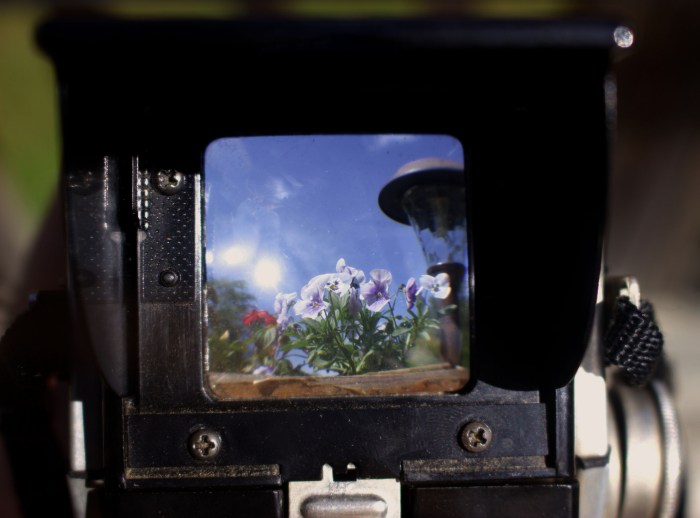
looking through to another time, photo by Anna Newhouse

View Anna’s photo background bigtacular and see more in her My 365 Photo Challenge slideshow.

More spring wallpaper on Michigan in Pictures.

Sunflower Saturday

Sunflowers

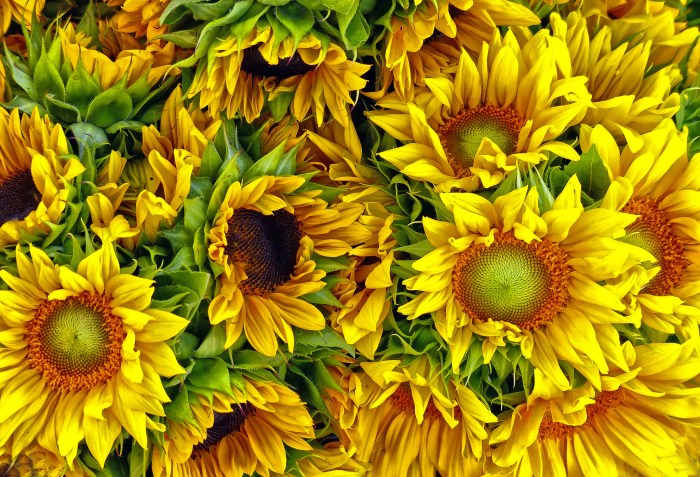
Sunflowers, photo by Sharon

Sharon caught these beautiful sunflowers at the Petoskey Farmer’s Market. View the photo background bigilicious and see more in her Michigan slideshow.

More summer wallpaper on Michigan in Pictures.

Flower Friday: Yellow Lady’s Slippers

Yikes! I got the link for the Michigan Wildflowers database wrong!

Yellow Slippers

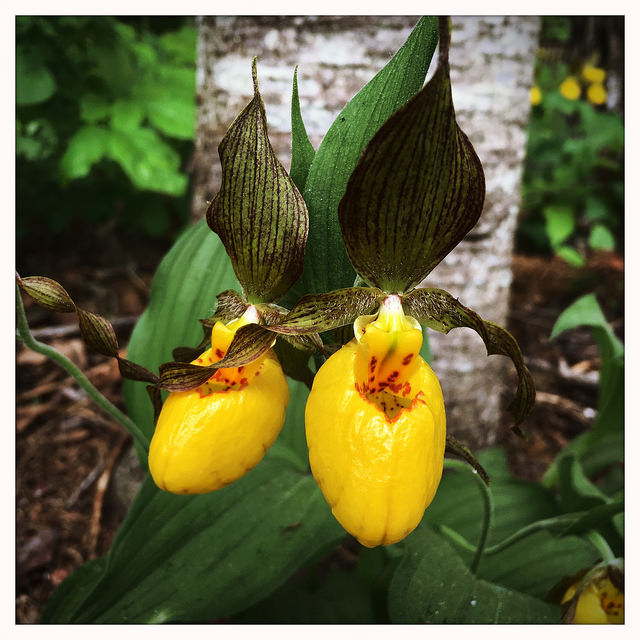
Yellow Lady’s Slippers, photo by Rick Lanting

While I was gathering info for today’s post I came across a really cool resource! MichiganWildflowers.com michwildflowers.com is an online photo database of Michigan’s wildflowers curated by Charles and Diane Peirce that lists 545 Michigan wildflowers and lets you (very quickly) click among them. With multiple photos for each wildflower, it’s pretty darn useful.

The Ladybird Johnson Wildflower Center says that the Yellow Lady’s-slipper Orchid (Cypripedium parviflorum):

…is easily distinguished from others by its large yellow lip, or slipper. It grows up to 2 feet tall and has large, strongly veined leaves 6–8 inches long and half as wide. It has a flower, sometimes 2, at the end of the stem, cream-colored to golden-yellow. Flowers have 3 sepals, greenish-yellow to brownish-purple, the upper sepal larger, usually erect, and hanging over the blossom.

Rick took this photo last weekend at Mill Creek State Park using the Hipstamatic app. View it bigger and see more in his Michigan wildflowers slideshow.

Dwarf Lake Iris: Michigan’s State Wildflower

Dwarf Lake Iris

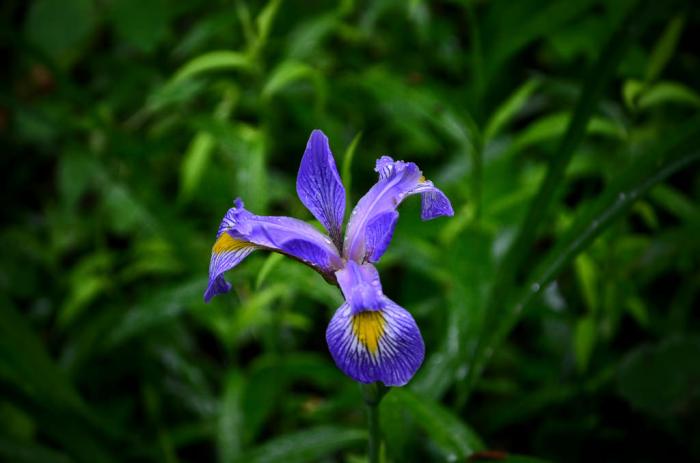
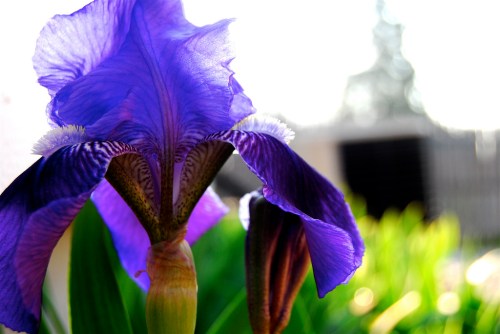
Dwarf Lake Iris, photo by Mark Swanson

The Michigan DNR relates that Michigan’s state wildflower, the Dwarf Lake Iris (Iris lacustris): grows nowhere else but in the Great Lakes region, and most within Michigan’s boundaries:

In Michigan, Dwarf Lake Iris is especially concentrated along certain stretches of the northern Great Lakes shoreline, where it may occur for miles, interrupted only by habitat destruction, degradation, or unsuitable habitat such as rocky points or marshy bays.

Dwarf Lake Iris usually occurs close to the Great Lakes shores on sand or in thin soil over limestone rich gravel or bedrock. It tolerates full sun to near complete shade, but flowers mostly in semi open habitats. These areas can be very long and narrow strips bordering the high water line, or large flat expanses located behind the open dunes of the Great Lakes shoreline. Many iris locations are on old beach ridges of former shores of the Great Lakes. Fluctuating water levels of the Great Lakes play a vital role in opening up new habitat for Dwarf Lake Iris. During high water years, trees and shrubs along the shoreline may be flooded out. This flooding may open up patches within the forest where the Dwarf Lake Iris may spread. It is usually found growing under White Cedar, although White Spruce, Balsam Fir, and Aspen are also frequently present.

…”Lacustris” translates literally to mean “of lakes” and refers to where this beautiful iris grows. Dwarf Lake Iris was first found on Mackinac Island in 1810 by Thomas Nuttall, a renowned naturalist and explorer. Nuttall reached Mackinac Island after travelling from Detroit by canoe with French Canadian voyagers and the surveyor for the Michigan Territory. At least 1/3 of the species that Nuttall reported from the Great Lakes were new to science.

Read on for much more.

Mark took this along the hiking trail in Riverview Park in St. Joseph. View it bigger and see more in his Michigan – Color slideshow.

More Michigan flowers on Michigan in Pictures.

Sunshine, blue sky & lilacs for Michigan moms!

Buds On Blue

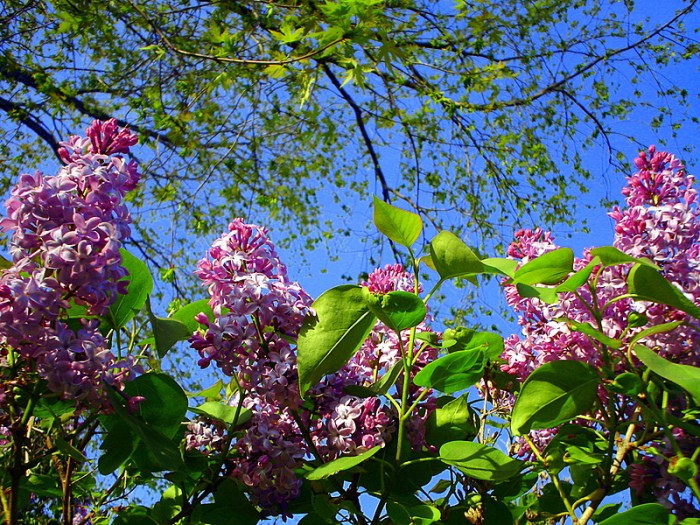
Walking on Sunshine, photo by Sue Fraser

Sue shared this with wishes of “blue skies & sunshine” back in 2007, and I’d like to join her in wishing all of Michigan’s marvelous moms a very Happy Mothers Day!

View Sue’s photo bigger and see more in her slideshow.

PS: To all you moms not of Michigan, a Happy Mother’s Day to you as well! ;)

Beautiful Blossoms

Cherry Orchard Aisles & Blossoms

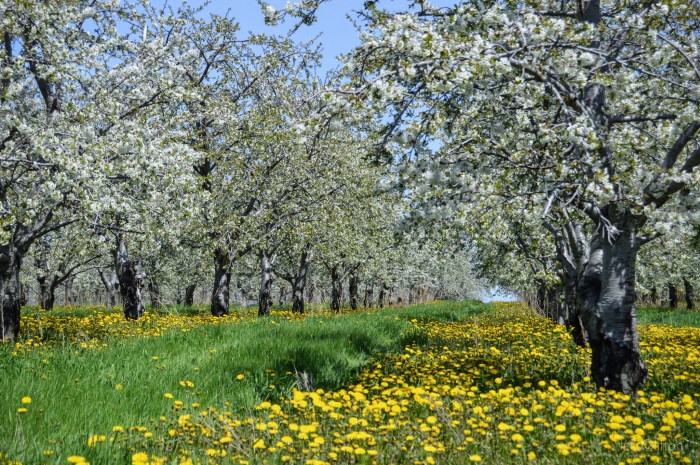
Cherry Orchard Aisles & Blossoms, photo by Jess Clifton

mLive meteorologist Mark Torregrossa writes that the upcoming weather is looking normal, which is also fantastic for an extended time period of blooming here in Michigan:

Tulip Time runs from Saturday, May 7, to May 14 in downtown Holland. The Traverse City area cherry blossoms are also about to erupt with color.

Cool nights and near normal temperature days are just what we want for a long display of color from these two spring performers.

Gwen Auwerda, Executive Director of Tulip Time in Holland, MI says tulip blossoms can last up to 21 days if high heat is avoided. Auwerda says most of the tulips in Holland, MI are at peak right now, with some of the late bloomers expected to peak next week.

The cooler weather has slowed down the cherry blossoms in northwest Lower Michigan. Nikki Rothwell, MSU Extension educator, says now the cherries are right on track to blossom at the typical time.

Rothwell says sweet cherries are only days away from blooming, with peak bloom in northwest Lower Michigan possibly on Mother’s Day. Tart cherries, which make up most of northwest Lower Michigan’s cherry crop, should start blooming May 11 or May 12, and peak around May 14.

Jess took this back in May of 2014 near Traverse City. View it background bigilicious, enjoy her Mother Nature in Michigan slideshow, and check out more of her work at jesscliftonphotography.com.

More spring wallpaper on Michigan in Pictures!

Paging Spring

Crocus bokeh

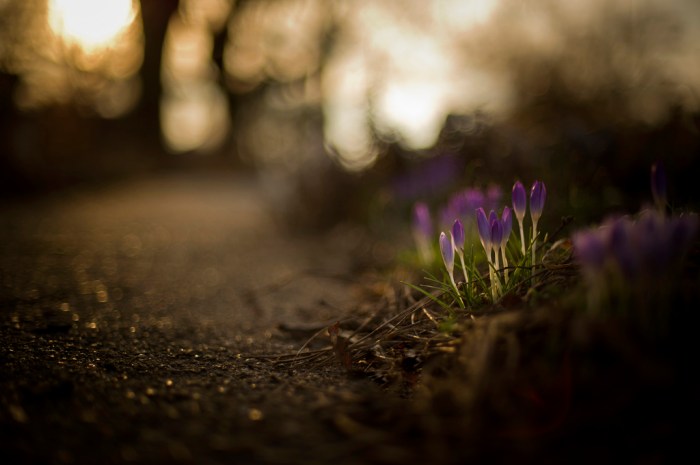
Untitled, photo by Brooke Pennington

Come on Spring, we know you’re out there.

View the photo bigger, view & purchase photos at brookepennington.com, and definitely check out more in Brooke’s slideshow.

Tulips, Tulips, Tulips

Tulips, Tulips, Tulips

Tulips, Tulips, Tulips, photo by Dawn Williams

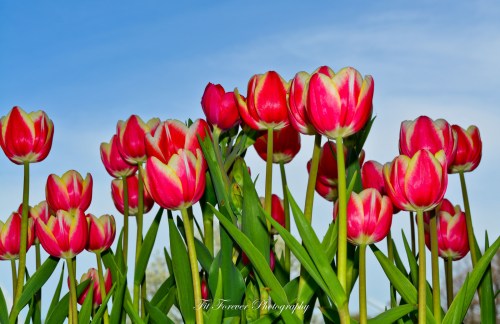
Holland’s annual Tulip Time starts this Saturday (May 2) and continues through May 9th. The annual celebration features parades, music, displays of Dutch Heritage and of course tulips, 4.5 million of them!

Dawn took this photo last year. See it background bigtacular on Flickr and check out more of her Tulip Time photos.

More tulips & Tulip Time and more spring wallpaper on Michigan in Pictures.

Michigan and Earth Day

Flags of our Grandparents

Flags of our grandparents, photo by PhotoLab507

Today is the 45th Earth Day, and many many not be aware of Michigan’s role in this holiday. The Ann Arbor Chronicle has an excellent feature titled Turbulent Origins of Ann Arbor’s First Earth Day that looks at the national movement in the late 60s to call attention to environmental degradation:

One of the first tasks facing the national organization was to choose a date for the proposed mass teach-ins. They settled on April 22 – “Earth Day,” as it would eventually be named – largely because that date fell optimally between spring break and final exams for most American colleges. (The fact that it is also Lenin’s birthday is apparently a complete coincidence.) But the University of Michigan operated then as now on a trimester system, with April 22 falling right in the middle of finals. As a result, the U-M environmental teach-in was scheduled for mid-March 1970.

The fact that it took place more than a month prior to national Earth Day has led to the misconception that the ENACT teach-in launched Earth Day, or that U-M was host to the first Earth Day celebration. In fact there were environmental events on other campuses as early as December 1969. But that does not in any way diminish the importance of the Ann Arbor event, which was to have a huge influence on the course of what has been called the largest mass demonstration in American history – Earth Day 1970, in which an estimated 20 million people participated.

“The University of Michigan teach-in was not the first or even the second or third – a few small liberal arts colleges had environmental teach-ins in January and February 1970,” says Adam Rome, a professor of history at Penn State who is working on a book about Earth Day. ”But the Michigan event was by far the biggest, best, and most influential of the pre-Earth Day teach-ins. The media gave it tremendous coverage. It was the first sign that Earth Day would be a big deal.”

…Events ran from the early morning until well after midnight, on topics such as overpopulation – “Sock It to Motherhood: Make Love, Not Babies” – the future of the Great Lakes, the root causes of the ecological crisis, and the effect of war on the environment. More than sixty major media outlets covered the action, including all three American television networks and a film crew from Japan. It was the biggest such event that had yet been seen in Ann Arbor – and coming as it did at the tail end of the sixties, it would be one of the last.

At the kickoff rally around 14,000 people paid fifty cents to crowd into Crisler Arena and listen to speeches by Senator Gaylord Nelson, Michigan governor William Milliken, radio personality Arthur Godfrey, and ecologist Barry Commoner, and groove to the music of Hair and Gordon Lightfoot. Another 3,000 who couldn’t get in listened on loudspeakers that were hastily set up in the parking lot.

Read on for lots more and you can also view a video from the first Earth Day at the University of Michigan Bentley Library.

The photographer shared a nice lyric too from Carol Johnson:

The Earth is my mother / She good to me / she gives me everything that I ever need
food on the table/ the clothes I wear/ the sun and the water and the cool, fresh air

View the photo bigger and see more in their slideshow.