There’s been nothing in the Absolute Michigan group on Flickr as calming as The Puffs, who Benjamin documented last fall. See more below and in his Puffs gallery on Flickr!
Linda is one of Michigan in Pictures’ biggest fans and yesterday she dropped the fact that much of Michigan was facing what could be the driest September since we started keeping records in 1877 until recently! mLive shared that although September 2024 remains historically dry, the rain of the last few days is helping to combat the drought.
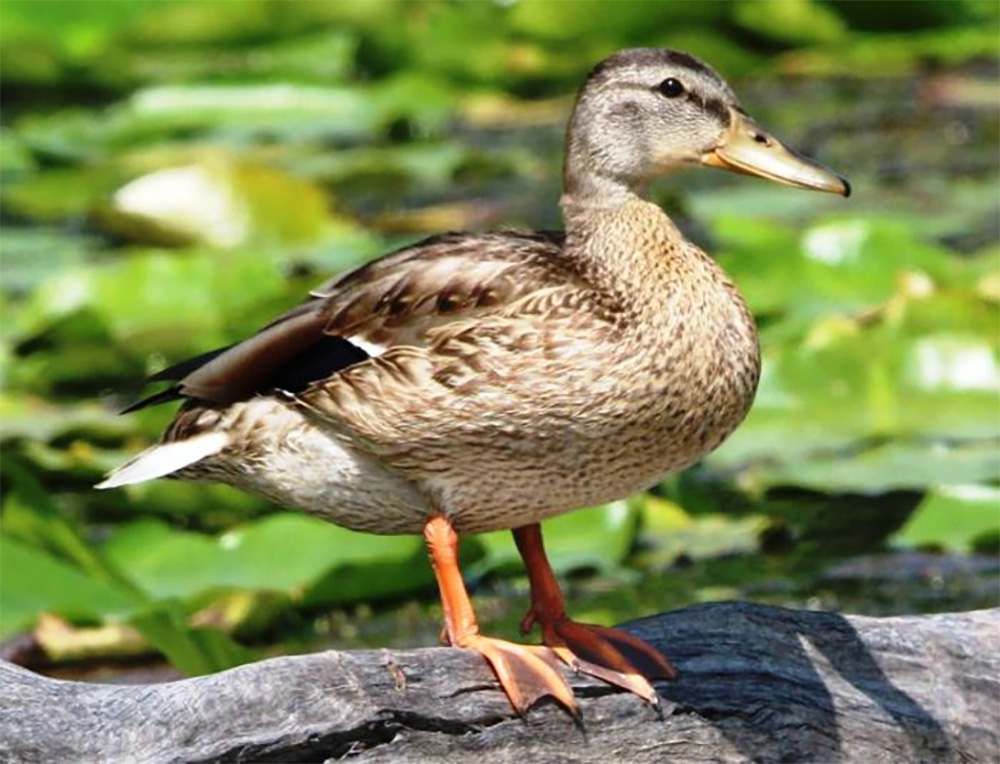
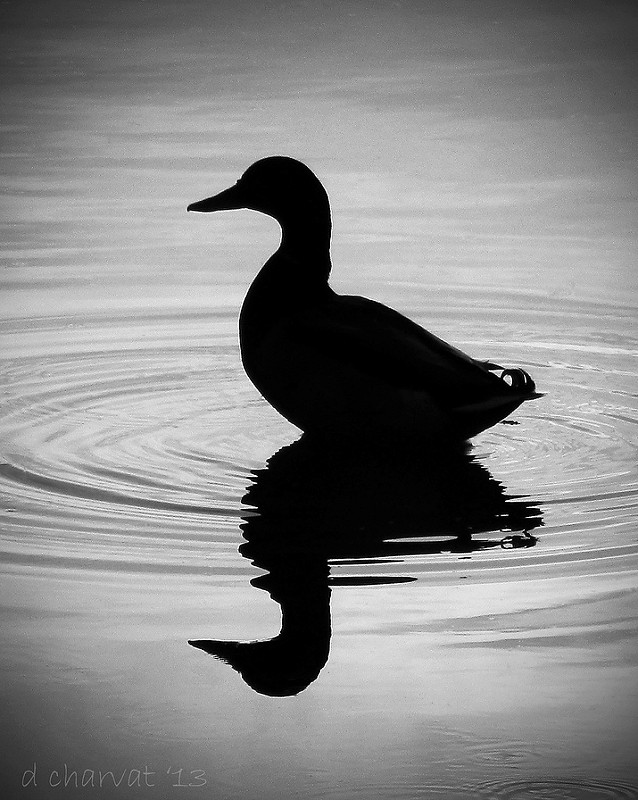
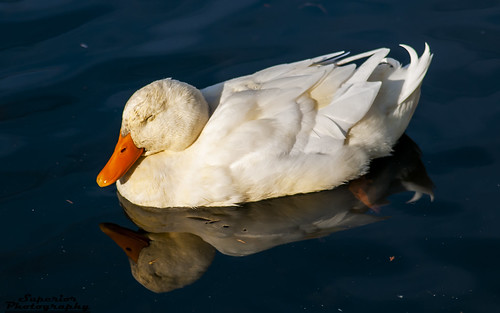
Also I am of course very happy to add the latest photo the Michigan in Pictures Duckie Project, a decade-spanning chronicle of our feathered, floating friends!
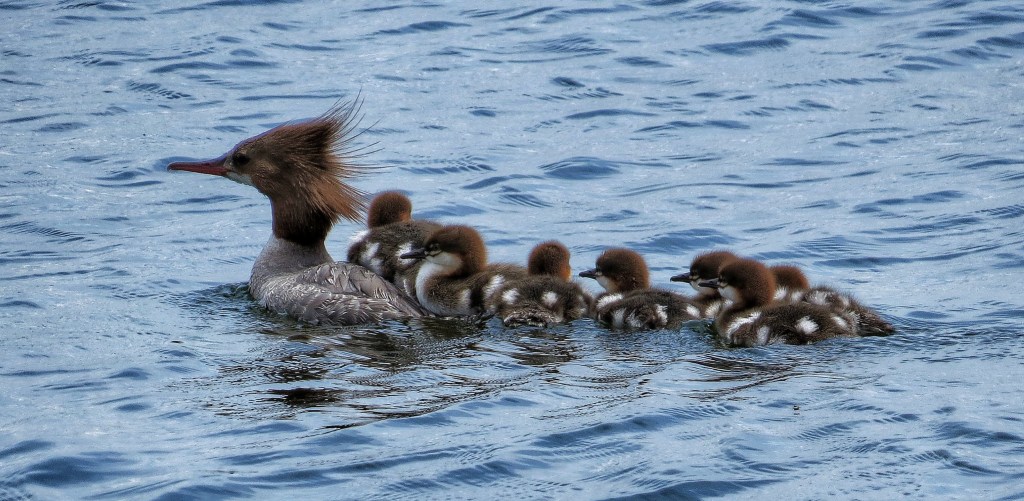
All About Birds says that Common Merganser are large, long-bodied ducks with thin, pointed wings. Their bills are straight and narrow, unlike the wide, flat bill of a “typical” duck, and the females have shaggy crests on the backs of their heads. Although these ducks look pretty punk & cool, the Tip of the Mitt Watershed Council reminds us that Merganser ducks are the main culprit in the spread of swimmers itch:
Swimmer’s itch (cercarial dermatitis) is a skin irritation caused by a larval form of certain flatworms from the family Schistosomatidae. Schistosome flatworms are parasites with complex life cycles usually involving certain species of snails and waterfowl. Upon hatching, free swimming Schistosomatidae larvae seek out an intermediary host, usually snails, to continue the life cycle. The larvae, known as cercariae, are only 1/32 of an inch long and generally invisible to the naked eye. Since humans are not the proper host, the larvae soon die upon mistakenly burrowing into the skin. The resulting skin condition and itching sensation is caused by an immune response to the dead larvae under the skin and symptoms vary by person. In many Michigan lakes, the common merganser duck is the primary or sole vertebrate host.
I am for sure NOT calling for the killing of mergansers, but as someone who has spent a lot of time on lakes with swimmers itch, I encourage you to practice safe swimming where you see these ducks:
Don’t swim first thing in the morning
Swim offshore and away from downwind areas
Rinse your body with clean water and towel off thoroughly after swimming!
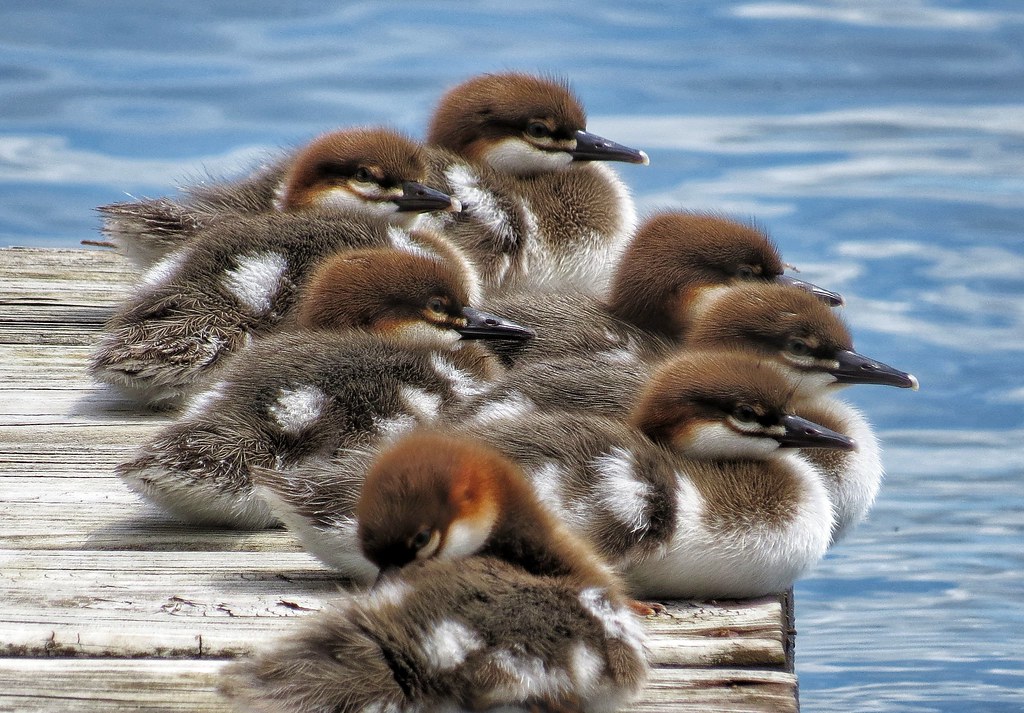
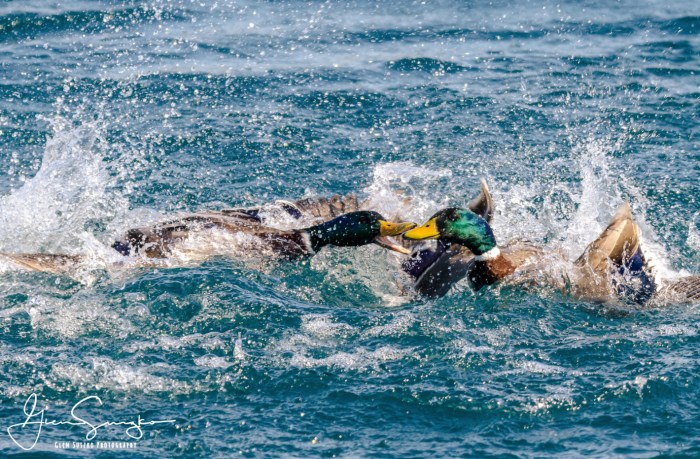
Mike took these on Bear Lake a couple weeks ago. See more in his Bear Lake 2024 gallery on Flickr.
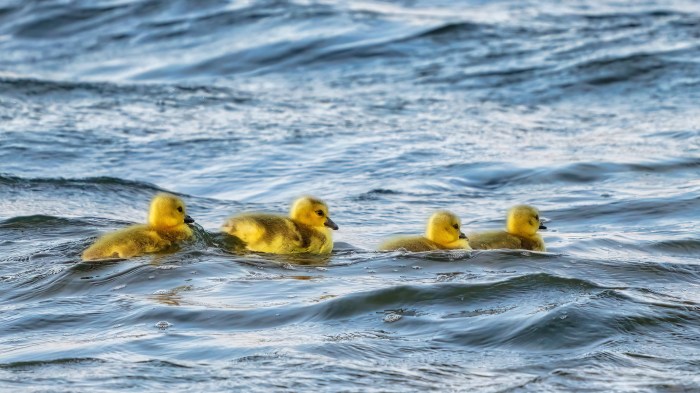
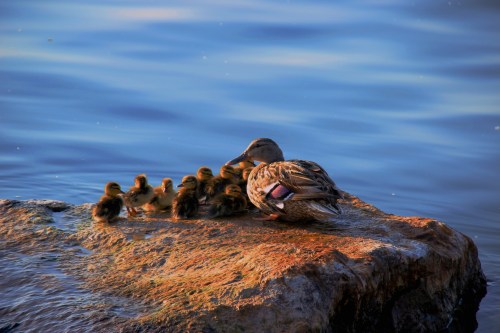
David shares that although these little guys were only hatched last week, they seemed to be holding their own in the waves. See more in his Birds gallery on Flickr.
This is a shout-out to everyone who’s struggling with being alone or simply for the bare necessities of life, and to those who are helping to ease their burden. I was so heartened by stories of friends serving meals, inviting lonely friends, and in general reaching out over the Thanksgiving holiday.
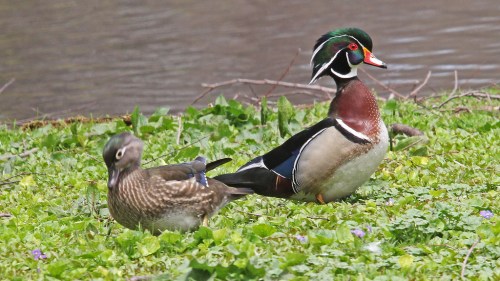
The Wood Duck is one of the most stunningly pretty of all waterfowl. Males are iridescent chestnut and green, with ornate patterns on nearly every feather; the elegant females have a distinctive profile and delicate white pattern around the eye. These birds live in wooded swamps, where they nest in holes in trees or in nest boxes put up around lake margins. They are one of the few duck species equipped with strong claws that can grip bark and perch on branches.
Wood Ducks thrive in bottomland forests, swamps, freshwater marshes, and beaver ponds. They are also common along streams of all sizes, from creeks to rivers, and the sheer extent of these make them an important habitat. Wood Ducks seem to fare best when open water alternates with 50–75% vegetative cover that the ducks can hide and forage in.
Some wood duck facts:
Natural cavities for nesting are scarce, and the Wood Duck readily uses nest boxes provided for it. If nest boxes are placed too close together, many females lay eggs in the nests of other females. (click for info about building a nest box)
The Wood Duck nests in trees near water, sometimes directly over water, but other times up to 2 km (1.2 mi) away. After hatching, the ducklings jump down from the nest tree and make their way to water. The mother calls them to her, but does not help them in any way. The ducklings may jump from heights of up to 89 m (290 ft) without injury.
Wood Ducks pair up in January, and most birds arriving at the breeding grounds in the spring are already paired. The Wood Duck is the only North American duck that regularly produces two broods in one year.


 Michigan in Pictures