Hiking to happiness

expedition

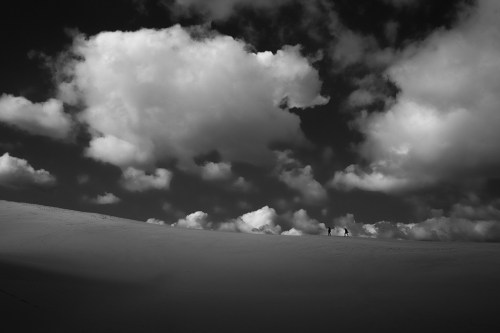
expedition, photo by brian

A couple months ago, Trish P shared an article from Outside Magazine about findings from British & Michigan researchers that Hiking Makes You Happier:

Researchers from the University of Michigan and Edge Hill University in England evaluated 1,991 participants in England’s Walking for Health program, which hosts nearly 3,000 walks per week for more than 70,000 regular participants. They found that the nature walks were associated with significantly less depression in addition to mitigating the negative effects of stressful life events and perceived stress. The findings were published in the September issue of Ecopsychology.

Sara Warber, associate professor of family medicine at the University of Michigan Medical School and senior author of the study, said that the large sample was a defining factor.

“We observed behaviors of a large group, in which some chose to walk and some chose not to, instead of us telling them what to do,” she said. “After 13 weeks, those who walked at least once a week experienced positive emotions and less stress.”

Easy enough! Read on for more, and explore Michigan’s vast trail network at Pure Michigan.

Brian took this shot at Silver Lake Dunes State Park. View it bigger and see more in his Fractions slideshow.

More black & white photography and more dunes on Michigan in Pictures.
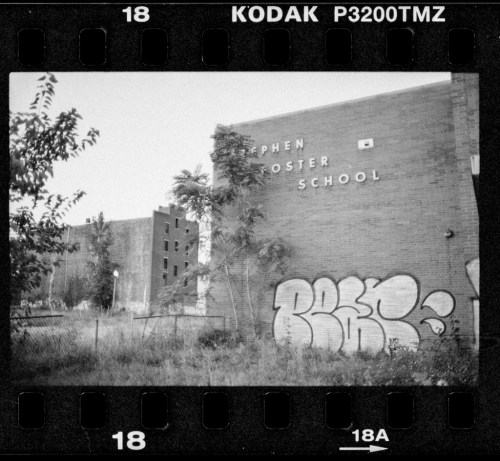
Stephen Foster School, Brush Park

Detroit T3200 Roll 2 exp. 18

Detroit T3200 Roll 2 exp. 18, photo by Marty Hogan

You’ve seen a lot of Marty’s ranging in the U.P. and lost rural places on Michigan in Pictures and he recently posted photos from a visit to Detroit.

View his photo background big and see more in Marty’s Detroit Kodak T3200 Film slideshow.

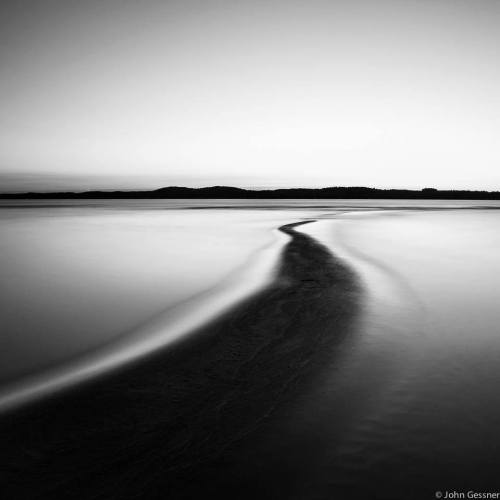
Reflecting

Reflecting by John Gessner

Reflecting, photo by John Gessner

John is a Michigan in Pictures contributor and friend whose photo “Reflecting” was named the first place winner at the Crooked Tree Arts Center’s 34th Annual Juried Photography Exhibition. If you make it up top Petoskey, check out the show which runs through April 5th.

View the photo bigger on Facebook and see more at John A Gessner Photography.

More black & white photography on Michigan in Pictures.

Locally Known as “the Bowl”

Locally Known as "the Bowl"

Locally Known as “the Bowl”, photo by karstenphoto

EDIT: Wow I really messed this one up, sleepily citing an article that gave the dune’s age in the millions of years. Thanks to Tom Burrows for the catch. Let’s see if this information on coastal dunes from the DNR makes more sense:

Michigan’s glacial history provides an explanation for the formation of dunes. The Great Lakes dune complex is relatively young, in terms of geological time. As recently as 16,000 years ago, Michigan was covered with glacial ice thousands of feet thick. This glacial ice contained a mix of boulders, cobbles, sand, and clay. During glacial melting, this deposit was left and is known as glacial drift.

This glacial drift is the source of sand in most of Michigan’s dunes. The sands were either eroded from glacial drift along the coast by wave activity or eroded from inland deposits and carried by rivers and streams. Only the hardest, smallest, and least soluble sand grains were moved. Waves and currents eventually moved these tiny rocks inland, creating beaches along the Great Lakes shoreline.

…Blowouts are saddle shaped or U shaped (parabolic) depressions in a stabilized sand dune, caused by the local destabilization of the dune sands. Blowouts, which originate on the summit or windward face of a dune, are often rapidly formed by the wind, creating narrow channels and exposing plant roots. Blowouts can create interruptions in the shape of parallel dunes that may result in deeply carved indentions called parabolic dunes. It is the combination of interwoven parallel dune ridges and U shaped depressions, including parabolic dunes, that characterizes the classic dunes from Indiana, northward to Ludington, in Michigan.

Awesome Michigan wrote a little about The Bowl at Holland saying:

The Bowl is an gigantic sand bowl, resembling a sort of concave desert. Along with the other dunes and Lake Michigan itself, The Bowl was carved out of the earth by glaciers millions of years ago and was likely a small lake before drying up. Standing at the center of The Bowl and being surrounded on all sides by enormous walls of sand is quite breathtaking. The landscape is truly like no other. This awesome sight alone makes a trip to Laketown a summer necessity and a great, relaxing place to bring friends and family.

You can also check in there on Foursquare. Here’s another shot from the bowl from all the way back in 2007. Amazing to me how long Michigan in Pictures has endured – thank you all for staying with me!

Check Stephen’s photo out big as the Bowl and see this and many more in his FILM! slideshow.

More dunes on Michigan in Pictures.

Michigan Wild & Scenic Rivers: Manistee River

Manistee River, near Sharon, Michigan

Manistee River, near Sharon, Michigan, photo by gregorydseman

It is hereby declared to be the policy of the United States that certain selected rivers of the Nation which, with their immediate environments, possess outstandingly remarkable scenic, recreational, geologic, fish and wildlife, historic, cultural or other similar values, shall be preserved in free-flowing condition, and that they and their immediate environments shall be protected for the benefit and enjoyment of present and future generations.
~Wild & Scenic Rivers Act, October 2, 1968

Michigan has 16 nationally designated Wild & Scenic Rivers. The stretch of the Manistee River from the DNR boat ramp below Tippy Dam to the Michigan State Highway 55 Bridge is the designated stretch (click for map and river management plan). They explain:

The Manistee Wild and Scenic River is well known for beautiful scenery, excellent fishing and a variety of recreational activities. In the spring and fall, high numbers of anglers are attracted to the superb salmon and steelhead runs. During the summer, walleye and pike fishing become the primary recreational activity. The river supports a variety of other recreational uses including wildlife viewing, hiking, canoeing and hunting.

Private businesses and government agencies have developed a variety of facilities and services to meet the expanding recreation demands of the public. Commercial guided fishing is one of the most popular activities on the Manistee River. The amount of recreational use fluctuates from year to year, mostly based on the fishing runs and local economic factors. There are eight developed river access sites within the wild and scenic river corridor. The Forest Service maintains sites at High Bridge, Bear Creek, Rainbow Bend and Blacksmith Bayou. The state of Michigan operates a river access site at Tippy Dam. Private recreation sites include Big Manistee Riverview Campground and Coho Bend Campground. The U.S. Forest Service developed recreation sites along the Manistee River require a vehicle parking pass under the Recreation Enhancement Act.

Greg says he took this photo back in 1998 when the river had more water – check it out bigger and see more in his slideshow.

More Wild & Scenic Rivers on Michigan in Pictures!