Fat Bear Week: Michigan Black Bear Edition

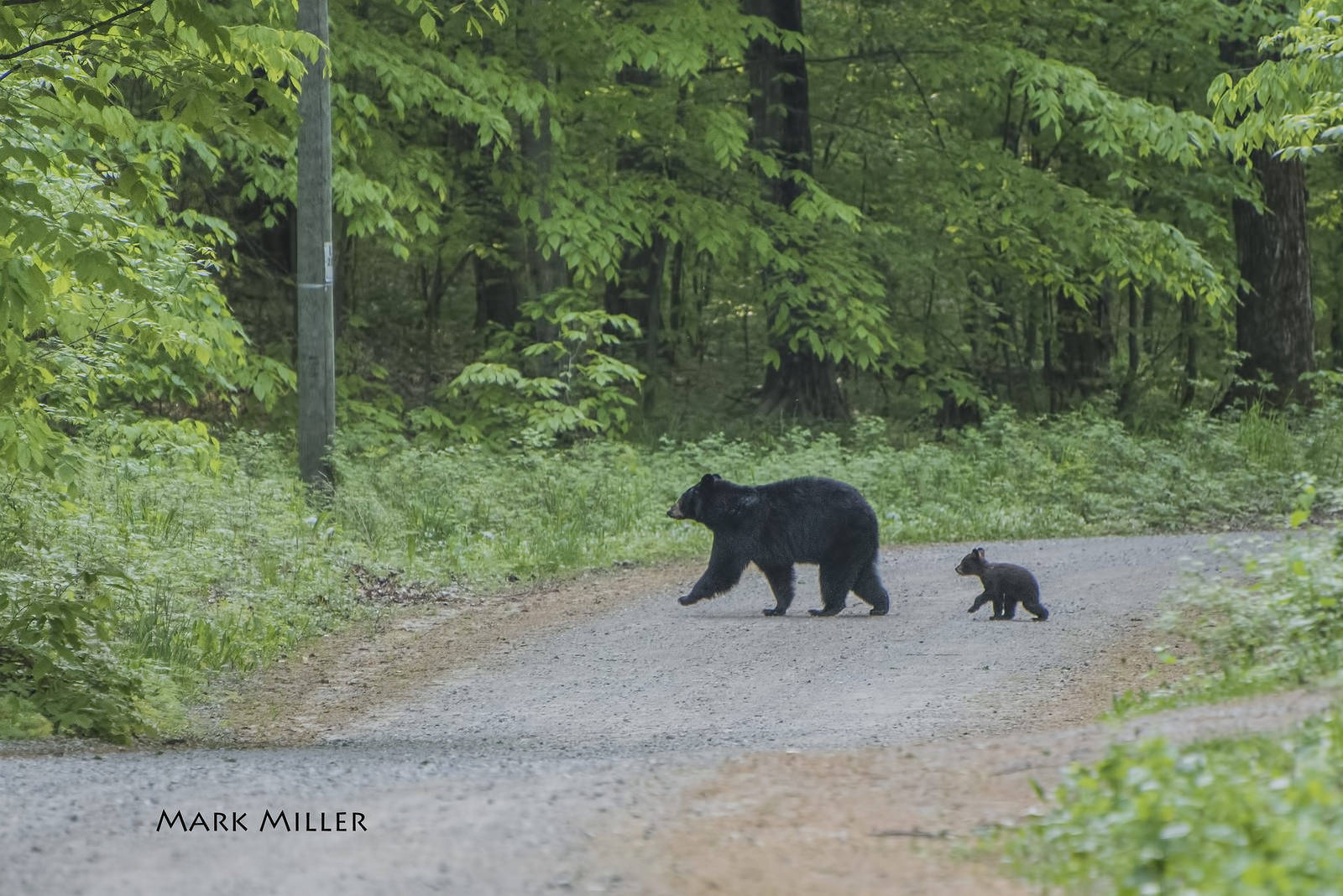
Saturday Morning Stroll by Mark Miller

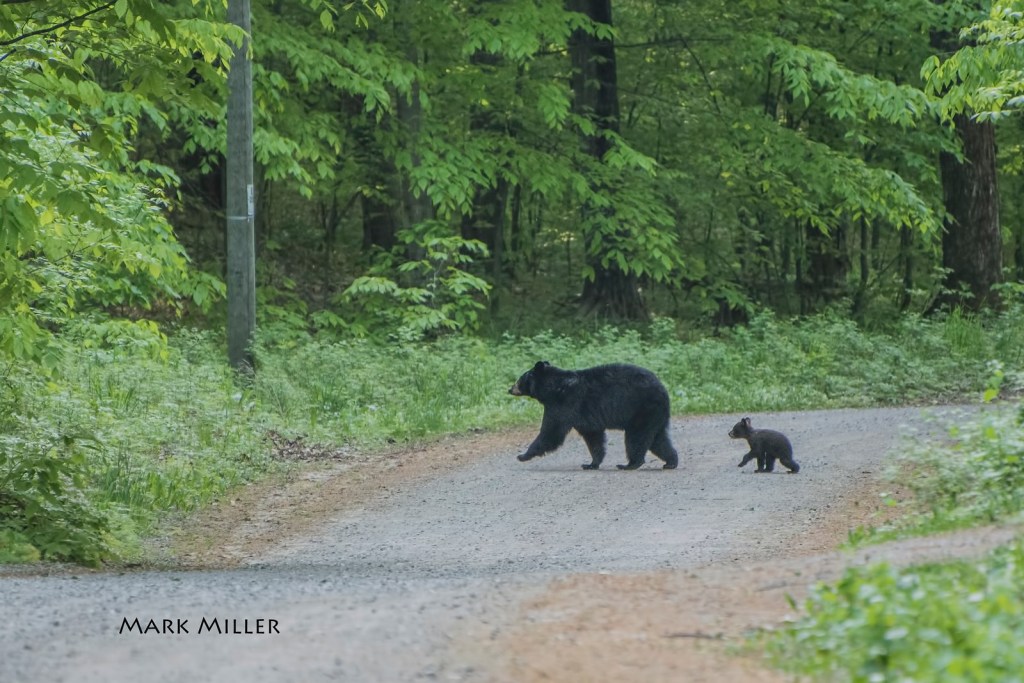
Saturday Morning Stroll by Mark Miller

We interrupt our mostly Michigan content to bring you important news about Alaska’s Fat Bear Week online competition! Some of the largest brown bears on the planet make their home at Brooks River in Katmai National Park, and in addition to being adorably chonky, the fattest bears are best prepared for winter hibernation.

While Michigan doesn’t have brown bears, our native black bear population is also out there in the woods right now, actively searching for the raw materials to pack on the pounds. The Michigan DNR says that about about 13,000 American black bears live in Michigan. Most of them (around 11,000) live in the Upper Peninsula with around 1,700 in the northern Lower Peninsula. Their Living with Black Bears guide says that the black bear is the only species of bear with an average lifespan of 10 years in the wild. Male black bears live in an area about 100 square miles or more in size, while females live in smaller areas about 10 to 20 square miles. They are solitary animals, a sow (female bear who has birthed at least one cub) and her cubs may be seen together.

Black bears can have various color phases including black (most common in Michigan), brown and cinnamon. In Michigan, adult female black bears range from 100 to 250 pounds while adult males can weigh up to 400 pounds. Adult black bears measure about three feet high on all fours & five feet tall when standing upright.

Black bears are omnivorous & will travel great distances to find food, opportunistically feeding on both plants and animal including tender vegetation, nuts, berries, and insects. Black bears are generally fearful of humans and will leave if they are aware of your presence, but human foods, garbage, pet foods, & birdseed can definitely draw them to your door! In the rare circumstance that a bear doesn’t turn and leave, try to scare it off by yelling while leaving a clear, unobstructed escape route for the bear. If the bear stands its ground, makes threatening sounds or bluff charges, you are too close. Take slow steps backward while continuing to talk to the bear in a stern tone. In the rare event of an attack, fight back with a backpack. DO NOT run or play dead.

Mark captured these black bears out for a Saturday morning stroll near Empire back in June of 2015. You can see more in his In In My Backyard gallery on Flickr.

Support Michigan in Pictures with Patreon

Black Bear Boom!

black-bear-cub

Black Bear & Cub, photo by Mark Miller

The Detroit Free Press reports that the black bear population is booming in northern Michigan:

The black bear population has risen 29 percent in the region since 2012 and almost 50 percent since 2000, according to wildlife management specialist Kevin Swanson of the Department of Natural Resources.

Swanson says complaints about nuisance bears are increasing, especially in the Baldwin management unit, which extends from Muskegon County north to Leelanau County. Mlive.com says Swanson recently told the state Natural Resources Commission the bear harvest should be increased significantly in the Baldwin area.

He says the Upper Peninsula population has grown by a more manageable 11 percent since 2012. There are about 9,700 bears in the U.P. and over 15,000 statewide. Swanson is proposing a quota increase from 5,806 in 2016 to 5,925 for the 2017-18 season.

About the photo, Mark says: After yelling a quick “hey” at mama to get her to turn around, there was a moment that I wondered if I had done a dumb thing. I was about the same distance from the house, as she was to me (100 yds.) I guess me and my Nikon didn’t pose much of a threat, as they slowly went on their way.

View the photo bigger and see more in his In My Backyard slideshow.

PS: I realize that back in May of 2015, I featured another photo of this pair along with general info about black bears in Michigan.

Saturday Morning Stroll: Black Bear in Michigan

Saturday Morning Stroll Michigan Black Bears

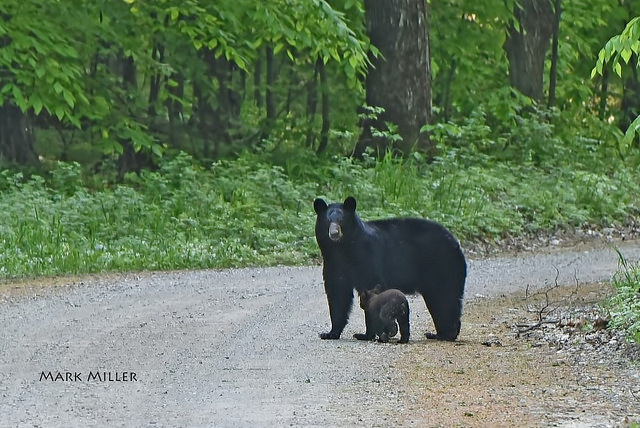
Saturday Morning Stroll, photo by Mark Miller

Recently there have been several reports of black bear sightings in Michigan, in traditional ranges like Leelanau County where these bear were photographed and even as far south as the state line in southwest Michigan and Washtenaw County, where  The Hastings Banner shared that while some are escapees from private facilities, others are ranging south:

“We’re interested in learning more about how they use the landscape in southern Michigan,” explained DNR wildlife research biologist Dwayne Etter. “The landscape in southern Michigan is very different from traditional bear habitat further north.”

…The Saginaw County bear is the southernmost collared bear in Michigan. Other collared bears south of traditional Michigan bear country include a male that was trapped and collared outside of Whitehall in orchard country, as well as a sow with cubs in Newaygo County, and a male in Oceana County. “We got a good break getting this bear collared this far south,” said Etter, who is studying how bears disperse in southern Michigan.

In recent years, bears have been documented in Washtenaw, Ionia and Ingham counties. “There was a bear sighted just north of Lansing several years ago,” Etter said. “We have photos of tracks from Sleepy Hollow State Park in April.

Read on for more including how they tranquilized and collared the Saginaw in an effort to learn more about bear movements. The DNR’s Living with Bears page shares some good tips for staying safe:

With the exception of baiting for hunting purposes in remote areas, placing food to attract bear near homes, cottages, parks, campgrounds and picnic areas may teach them to associate people with food. This may place them and people at risk of injury.

Black bear have enormous appetites and an excellent sense of smell, and are capable of remembering the locations of reliable food sources from year to year. They will travel great distances to find food. When natural foods such as tender vegetation, nuts, berries and insects are scarce, bear are likely to come into contact with people. Problems occur when bear attempt to feed or actually feed on human foods, garbage, pet foods or birdseeds.

Although most bear are secretive and shy by nature, they will tolerate contact with people when their natural food is scarce. Because they are large and powerful animals, they must be respected.

Black bear are generally fearful of humans and will leave if they are aware of your presence. In the rare circumstance that you encounter a bear that does not turn and leave, first try to scare it off by yelling while leaving a clear, unobstructed escape route for the bear. If the bear stands its ground, makes threatening sounds or bluff charges, you are too close. Take slow steps backward while continuing to talk to the bear in a stern tone. In the rare event of an attack, fight back with a backpack, stick or your bare hands. Black bears have retreated in similar situations.

Mark took this photo on the Leelanau Peninsula and wrote: When my neighbor called me early on a Saturday morning to tell me a bear was heading my way, I had to go looking for him. View his photo bigger and see more in his In My Backyard slideshow.

Want to know more about bear cubs with triple the bear cuteness? Check out Bear Triplets on Michigan in Pictures!


Bear Triplets

Bear Triplets

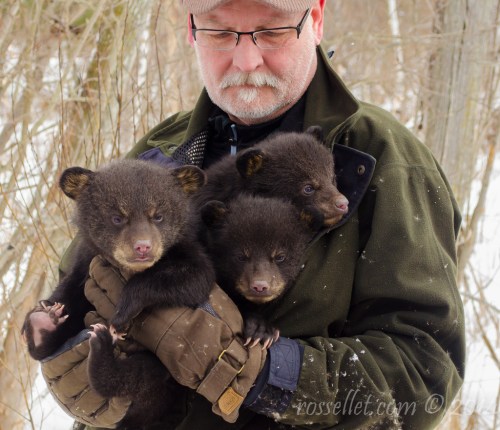
Bear Triplets, photo by Ross Ellet

I feel like the one on the left says everything I have to say about snow, cold and Winter. Here’s three facts from the DNR’s Michigan Black Bear Facts page – click through for more:

What is the status of black bear in Michigan?

Approximately 15,000 – 19,000 black bears (including cubs) roam the hardwood and conifer forests of northern Michigan. About 90 percent of the bear live in the Upper Peninsula, while the remaining ten percent are mainly found in the northern Lower Peninsula. However, it is becoming increasingly common to see bear in the southern half of the Lower Peninsula. …

When do bear breed?

Breeding takes place in June and July and cubs are born in early January while females are in dens. A litter may consist of one to four cubs, with two or three cubs being most common. An adult female bear usually breeds every other year, but may mate in consecutive years if cubs are lost before mid summer. A female bear will generally breed for the first time at 2’/z years of age in the northern Lower Peninsula, and at 3’/2 years of age in the Upper Peninsula.

What are bear cubs like?

At birth, bear cubs weigh less than one pound, but mother’s rich milk helps them grow quickly. Mother and cubs emerge from the den in spring, with the cubs weighing up to ten pounds. Cubs are under the watchful eyes of their mother throughout the summer and fall seasons. As autumn nears its end, the female once again searches for a suitable den site for herself and her cubs. After emerging from the den the following spring, the adult female will stay with her offspring until she is ready to breed again in June. At that time, she aggressively discourages the companionship of these now yearling bear and they are forced to fend for themselves.

Lots more about American black bears (Ursus americanus) at the UM Animal diversity web. About the photo Ross writes:

Baby black bears being held during a bear den visit in late March 2014. These baby bears are being counted, measured, weighed and analyzed so researchers can understand more about the overall health of the black bear population in Michigan. Researchers are also tracking their movement as some bears shift into southern Michigan.

View his photo big as a bear, see more in hisNature slideshow and view & purchase photos at rossellet.com.

More animals on Michigan in Pictures.