
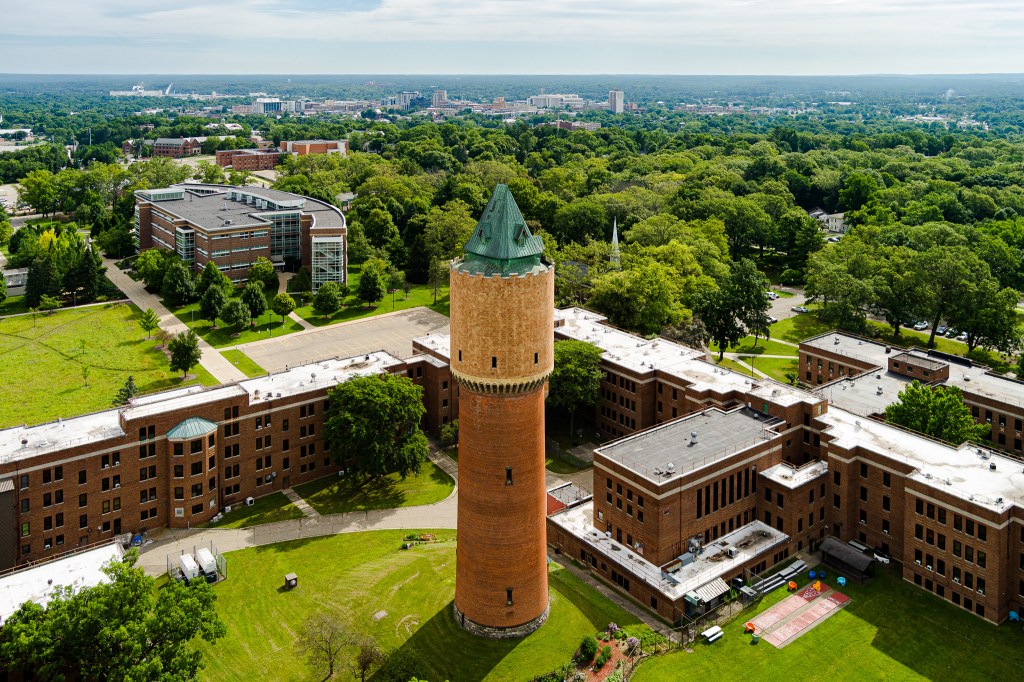
A tower, but make it creepy

Kalamazoo Regional Psychiatric Hospital Tower by William Dolak

Bill shared this photo in the Michigan in Pictures photo group on Facebook & writes:

They built the “Kalamazoo State Hospital Water Tower” for the Michigan Asylum for the Insane in 1895. They instructed the architect to design something with a medieval feeling to complement the existing buildings – it looks creepy because it was meant to look creepy. It is no longer used as a water tower; its only function now is a landmark. They planned to demolish it in 1974 (almost none of the original asylum buildings remain), but “The Committee to Save the Tower” raised funds to save it. The National Register of Historic Places added the tower to its list in 1972.

See William’s latest in the Michigan in Pictures group & on his Flickr. Although he shares you can no longer tour the tower, you can watch a YouTube tour of the tower stairs from mLive & read all about the Kalamazoo Water Tower at the Kalamazoo Public Library:

The tower soars 175 feet into the air, rising from a base of cut stone blocks five feet high. The brick begins above this base. Approximately 50 feet wide at its widest point, it contains three water storage tanks inside. The main tank is 40 feet high and 40 feet in diameter and has a capacity to hold more than 200,000 gallons of hard water … The structure is really a tower within a tower. The outer shell tapers from six feet thick at the base to four feet at the top. Enclosed is an inner shell, which is also about six feet thick. Between the inner and outer shells is a wooden circular stairway, which winds upwards until it reaches 100 feet. Then a series of ladders leads to the top of the tower. At the top is a little room, gothic in appearance, that has a window facing in each direction. Four enormous wooden beams meet in the center of the room. They are etched with dozens of sets of initials carved by visitors, the oldest by one W. E. DeLong dated 1898.

Thanks for reading! You may be interested this photo feature on the Grand Traverse Asylum as well!!
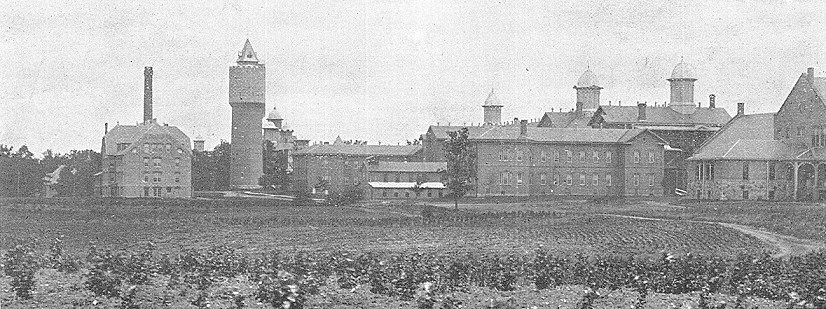
Kalamazoo Asylum, early 1900s

Support Michigan in Pictures with Patreon

Kirkbride’s beliefs became his buildings

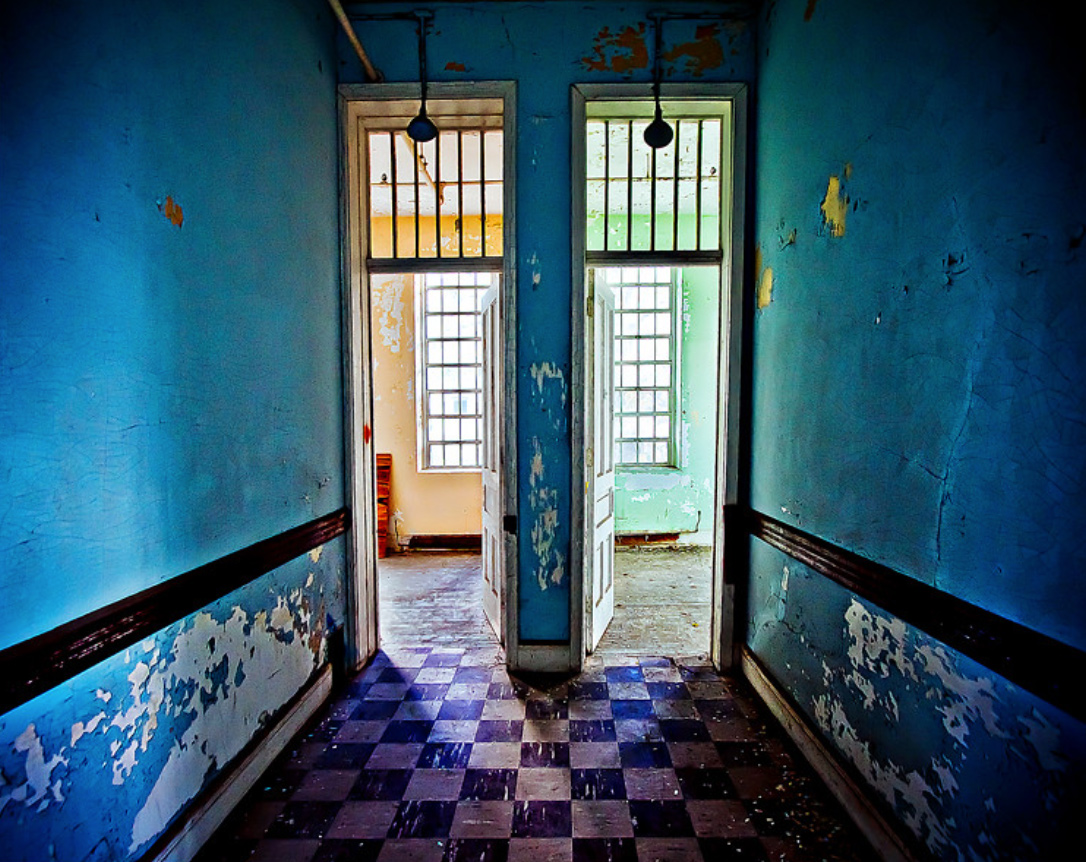
2 Doors Down by Carolyn Gallo

2 Doors Down by Carolyn Gallo

CMU’s Clarke Historical Library says that on Nov 30, 1885, the Northern Michigan Asylum for the Insane opened in Traverse City. It’s now known as the The Village at Grand Traverse Commons and 10 years ago I worked there and was able to lead and was able to lead a group of photographers including Carolyn on a tour of the then un-renovated parts of what was known as Building 50. FYI, the section we toured is now the luxurious Cordia senior residential club

The facility was a Kirkbride Institution, designed by Dr. Thomas Story Kirkbride. Kirkbride was a Pennsylvania Quaker and founding member of the Association of Medical Superintendents of American Institutions for the Insane who developed a concept of treatment known as the Kirkbride Plan. This plan proposed a particular way of housing patients that included segregating by severity of mental illness and fresh air and natural light where possible:

It was believed crucial to place patients in a more natural environment away from the pollutants and hectic energy of urban centers. Abundant fresh air and natural light not only contributed to a healthy environment, but also served to promote a more cheerful atmosphere. Extensive grounds with cultivated parks and farmland were also beneficial to the success of an asylum. Landscaped parks served to both stimulate and calm patients’ minds with natural beauty (enhanced by rational order) while improving the overall aspect of the asylum. Farmland served to make the asylum more self-sufficient by providing readily available food and other farm products at a minimal cost to the state.

Patients were encouraged to help work the farms and keep the grounds, as well as participate in other chores. Such structured occupation was meant to provide a sense of purpose and responsibility which, it was believed, would help regulate the mind as well as improve physical fitness. Patients were also encouraged to take part in recreations, games, and entertainments which would also engage their minds, make their stay more pleasant, and perhaps help foster and maintain social skills.

There’s lots more from Kirkbride Buildings where the author has done some spectacular scholarship and created an excellent resource for these amazing structures. The Kirkbride System produced a photographic environment of uncommon richness that is evident in the photos from the group A little trip up north… It’s also reflected in the grounds and the shops, restaurants & businesses that are part of the Commons today.

See this photo bigger in Carolyn’s Photogs Up North gallery. You can learn more about her on her website or Facebook page!

Support Michigan in Pictures with Patreon