
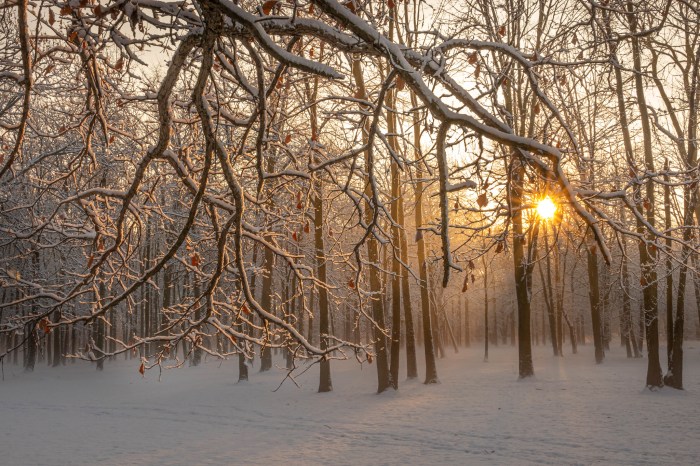
Simply gorgeous photo taken earlier this week by Emanuel. Head over to his Michigan gallery on Flickr for more & have a magical weekend!

Simply gorgeous photo taken earlier this week by Emanuel. Head over to his Michigan gallery on Flickr for more & have a magical weekend!
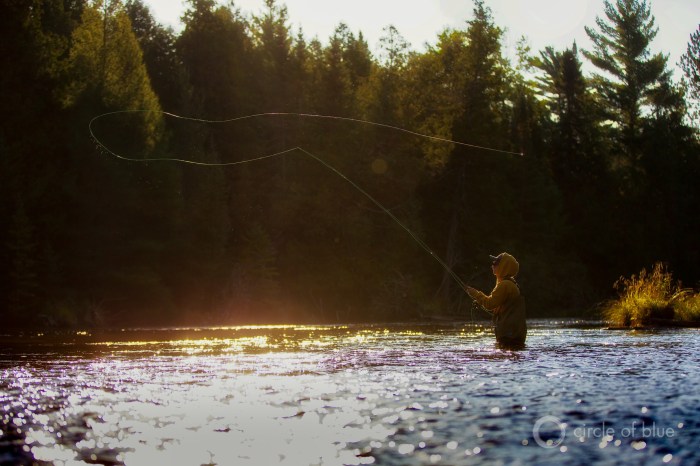
Fishing on Michigan’s Au Sable by J Carl Ganter
“I grew up hearing stories about how great fishing was just five years ago. It’s sad, knowing that I’ll most likely never be able to experience the amazing fish that these waters used to have … that these rivers will never be what they used to be.”
-Michigan angler Landen Finkel
The above quotation & photo are from an excellent Circle of Blue article on the impact of climate change on our nation’s trout streams. It’s a great read with a focus on Michigan that I hope you can check out:
In some places, the effects of climate change manifest as immediate catastrophe. Violent storms. Extreme heat. Deep drought. On the Au Sable, the threat is a slow burn. Intensifying weather patterns have gradually added stress to the ecosystem, chipping away at wildlife’s ability to adapt. As the atmosphere continues to warm, severe weather events have gone from occasionally urgent to relentless assault.
“The guides of the Au Sable, we’re on the front lines,” (Au Sable River Guide) David McCool said. “Just a small change in temperature can have a massive impact on this resource. We need to make sure we still take care of it, as things change in our environment.”
Ecologically speaking, fish are the canary in the coal mine. Trout are an indicator species in the Au Sable ecosystem, meaning that their well-being reflects the health of the ecosystem. “Healthy trout is indicative that the whole system is healthy,” said Randy Claramount, a biologist with Michigan’s Department of Natural Resources. Likewise, unhealthy populations are an alarm bell: the poor water quality conditions that cause trout to suffer are likely also stressing invertebrates and other biota.
“You start piling these things on top of one another, and it just gets harder for those fish to adapt to what nature’s throwing at them,” said Keith Curley, a conservationist with Trout Unlimited.
…The decline of river ecosystems is intensifying young anglers’ anxieties about the health of the planet. At just 14 years old, Landen Finkle worries about the condition of the river near his home in Traverse City, Michigan. He’s particularly concerned about the loss of biodiversity.
Like a majority of his generation, climate and environmental issues weigh on his mental health. Finkle is fascinated with freshwater ecology, and hopes to guide fishing expeditions one day. But increasing signs of the river’s decline make him feel helpless at times, and fearful for the future of the pastime.
“River fishing is a really calming thing. And just to know that that could be coming to an end here is kinda sad,” he said. “It creates a lot of anxiety. There are a lot of things we can do to help, but there’s not really enough resources to help.”
Read on for more including more pictures from J. Carl Ganter & even some video of Landen fishing! Be sure to check out Circle of Blue for all kinds of features on climate & resources in Michigan and worldwide.
PS: If you still think climate change is a hoax, I not only do not want to hear about it, I would prefer that you find someplace else for your daily Michigan photos. It’s not & it’s long past time for you to have woken up to reality.
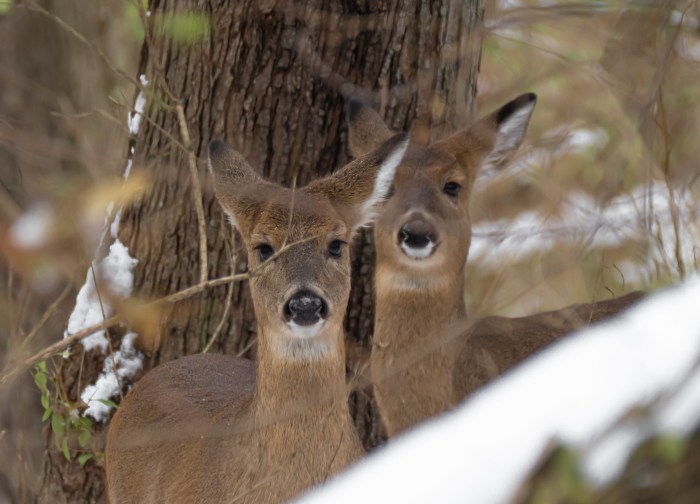
While I have yet to get any elected officials on board with an official holiday declaration, I will once again wish all of you a very happy Back Into the Woods Day!
As longtime Michpics readers know, Back Into the Woods Day celebrates the end of Michigan’s annual firearm deer season making most of the state’s wild places off limits. Here’s hoping you get a chance to get outside this week or weekend … and that you see some of our many forest friends while you’re there!!
David took this photo last weekend at the Fenner Nature Center. Head over to his Flickr for more.
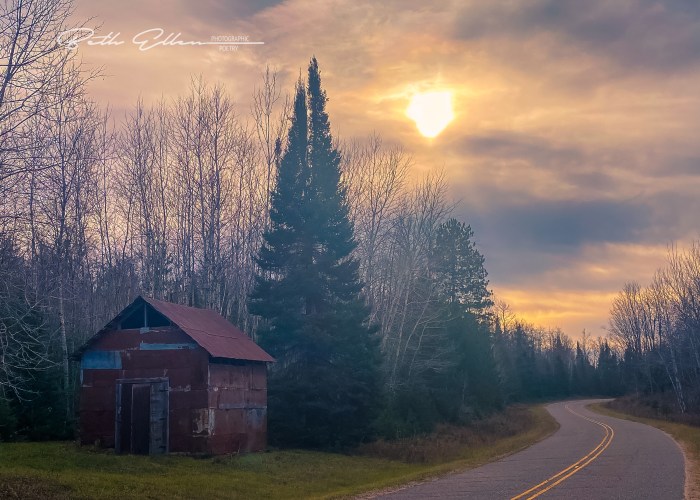
Fall Expectations by Fire Fighter’s Wife
“You expected to be sad in the fall. Part of you died each year when the leaves fell from the trees and their branches were bare against the wind and the cold, wintery light … but you knew there would always be the spring, as you knew the river would flow again after it was frozen.”
― Ernest Hemingway, A Moveable Feast
As usual, Beth has a great photo/quotation pairing to start your day with! See more in her For the love of Camp! gallery on Flickr.
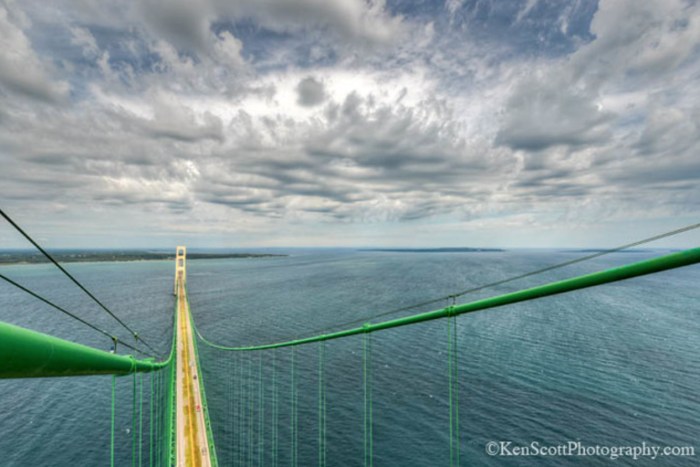
View from the Top … of the Mackinac Bridge by Ken Scott Photography
On Saturday, the Michigan Wolverines defied recent history and absolutely thrashed the Ohio State Buckeyes 42-27 in the Big House. While this is certainly a huge victory by Michigan over Ohio, it pales in comparison to one the greatest fleecings in history, the trade of the 468 square mile Toledo Strip for the entire Upper Peninsula. Not bad eh? Read all about it in Michigan, Ohio & the Best Worst Deal Ever on Michigan in Pictures.
Ken took this photo looking north at a portion of Michigan’s haul from one of the towers on the Mighty Mac with St. Ignace, Mackinac Island and Round Island on the horizon. See more in his Mackinac Stuff gallery on Flickr & for sure view and purchase his work at kenscottphotography.com
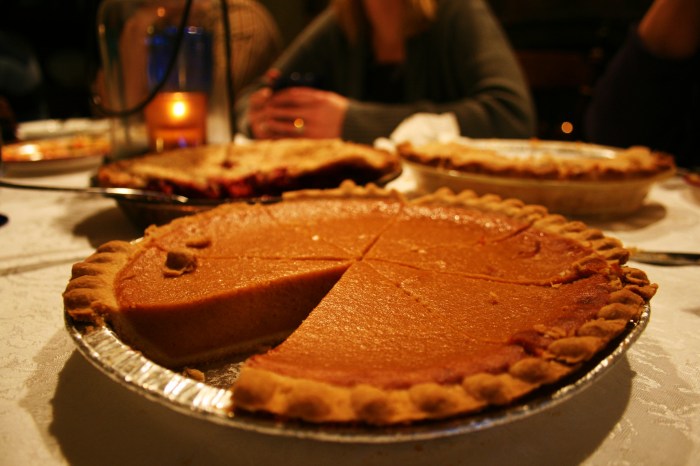
“I love Thanksgiving because it’s a holiday that is centered around food and family, two things that are of utmost importance to me.”
—Marcus Samuelsson
Can’t agree more with Chef Samuelsson!
I’ve featured this photo from PepOMint before on Michigan in Pictures. Sadly, she has passed on but you can view more of her photos in her Bits & Pieces gallery on Flickr.
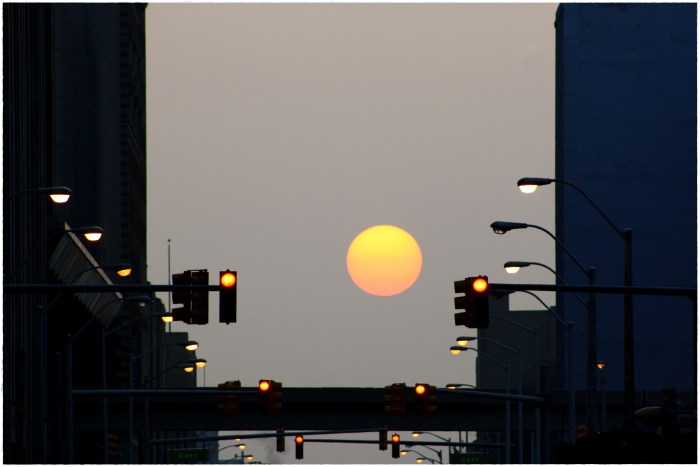
Sunset Boulevard by Derek Farr
Here’s a stunning shot of Detroit’s Michigan Avenue that was featured on Michigan in Pictures thirteen Novembers ago. See Derek’s latest on his Flickr.
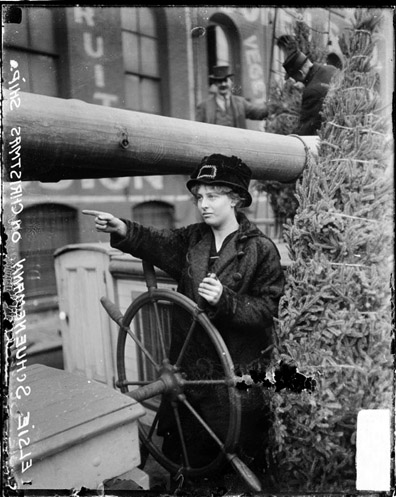
Above is a portrait of Elsie Schuenemann at the wheel of the Christmas Ship, near the Clark Street Bridge on the Chicago River in the Loop community area of Chicago, Illinois. The boat carried Christmas trees to Chicago from Michigan. Her father, Captain H. Schuenemann, died when the Rouse Simmons, a ship carrying Christmas trees, sank in 1912.
The trees behind her likely came from the woods of Escanaba. Though the story of Barbara Schuenemann and her three daughters carrying on the tradition of the Christmas Tree Ships has perhaps been a little over-romanticized, there can be little doubt that the Schuenemann family and the many others who participated in the difficult trade of hauling Christmas trees south as the storms of winter closed in were heroes cut from a cloth that isn’t found too often today.
If you’d like to read more about all the Christmas tree ships (there were many more than just the famous Rouse Simmons) I recommend Christmas Tree Ships from Fred Neuschel. He has also written a book called Lives and Legends of the Christmas Tree Ships (available from UM Press). The National Archive also has The Christmas Tree Ship: Captain Herman E. Schuenemann and the Schooner Rouse Simmons that details the Schuenemann’s story.
You can also see Rich Evenhouse’s cool video of diving the Rouse Simmons.
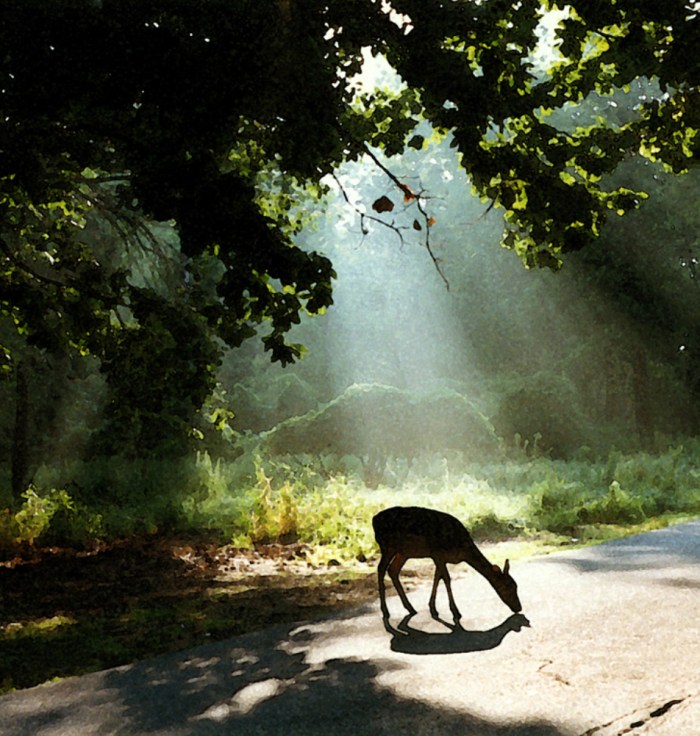
Deep Thoughts & Work Comps by Cave Canem
Reaching all the way back to November of 2007 for a sweet shot from one of my favorite photographers & Michigan in Pictures fans, Cave Canem. He no longer lives in Michigan, but regularly shares photos from other photographers in our Facebook group. Check out more in his My Belle Isle gallery & have a great weekend!
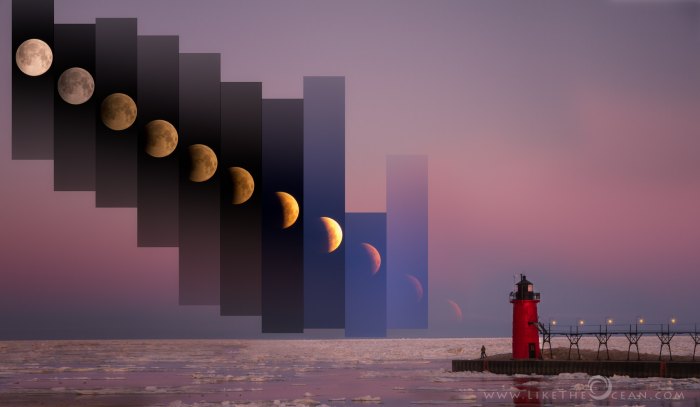
Lunar Eclipse by the Lighthouse by Sathya
If the weather cooperates, tonight & early tomorrow morning hold a whole lot of skywatching potential for Michiganders! In addition to the peak of the Leonid meteor shower, NPR shares the details on tonight’s lunar eclipse:
West Coast night owls and East Coast early risers will have the best view of the upcoming lunar eclipse this Friday. Overnight, the moon will pass into the shadow of Earth cast by the sun, illuminating the gray orb with a red hue.
It will be the second and final eclipse of the year. NASA predicts the eclipse will last over 3 hours and 28 minutes. That would make it the longest partial lunar eclipse in 580 years, according to the Holcomb Observatory at Butler University.
…For U.S. viewers the peak of the eclipse — when the moon is the most covered by Earth’s shadow — will be at 4:03 a.m. ET.
But the moon will begin to pass into the Earth’s shadow much earlier, around 1:00 am ET. At 2:19 a.m. ET the moon will move into the umbra, the inner part of Earth’s shadow, and begin to look like a chunk is missing from it. It will turn red around 3:45 a.m. ET
Sathya shares the story behind this photo from April 2015, saying in part, “Witnessing the lunar eclipse was magical. Planning and shooting the same was a lot of fun. Out here, in the north east of US, the lunar eclipse was not total, so missed out on the blood moon, but it was still a scintillating experience. As the moon was getting into total eclipse, it set over the horizon … This shot is a mix of landscape and time slice – in an attempt to highlight the lunar eclipse in the context of the surrounding landscape. This was a panorama made out of a composite. Though it does not look like a wide view, that is what helped capture the moon and the lighthouse in context.”
See more in his Showcase gallery on Flickr & on his website Like the Ocean.
 Michigan in Pictures