

up on the rooftop, photo by n.elle.
Be sure to check this out background bigalicious and in Nicole’s rural exploring set (slideshow).
up on the rooftop, photo by n.elle.
Be sure to check this out background bigalicious and in Nicole’s rural exploring set (slideshow).
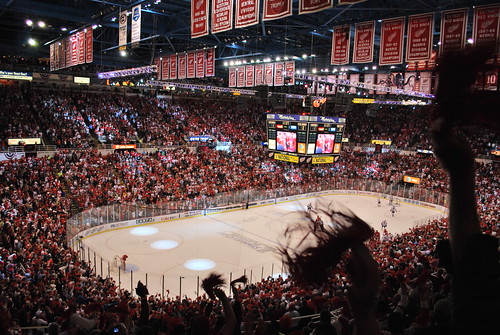
beating the Blackhawks, photo by dnj_Brian.
The Detroit Red Wings have a chance to put the Chicago Blackhawks on ice tonight, where a win will give them a chance to defend the Stanley Cup vs the Pittsburgh Penguins.
Be sure to check this out bigger or in Brian’s massive All Detroit slideshow. Here’s the Flickr slideshow of the most recent Detroit Red Wings photos and the Red Wings on Absolute Michigan.
Go Wings!
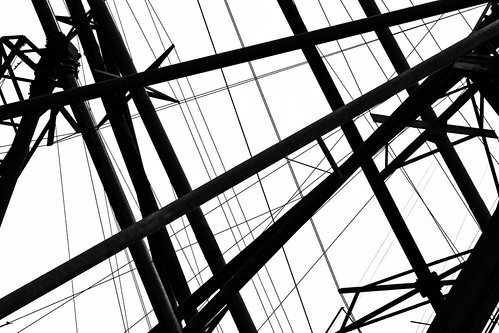
It’s Surprising Anything Gets Done Around Here, photo by MightyBoyBrian.
You can take a look bigger (The Urban slideshow) and see this in context right here.

foundersboatsrise_autolv, photo by TheDailies.
Kim has a great set of photos from Founder’s Day (slideshow).
On her blog, she relates the story of the Marquette’s first Founder’s Day (May 18, 2009):
While researching Marquette history, particularly the lower harbor and Founders Landing, Joe Constance, a partner with the Landing Development Group, ran across an address Peter White gave to Marquette’s YMCA in 1889. “On May 18, 1849, Peter White and Robert Graveraet first arrived in what would become Marquette,” says Constance. “Reading about their arrival at sunrise and meeting with Chief Kawbawgam, I started thinking about what that friendship meant for our community,” adds Constance. “The 160th anniversary of that date and event in our city’s history needs to be recognized.”
…According to White’s story, the party expected the trip to take three hours, but, “the seven oarsmen were pulling with a will-long strong, deep, regular strokes, that, made the boat show what the sailors call a bore in her teeth for these boys had been told that morning when breaking camp at 4 o’clock at Shot Point, that their destination was in sigh, and if they did as well as they sometimes did that a landing would be made inside of two hours, that the long trip–nine days of coasting would be ended, and the new Eldorado would be reached–and it was accomplished.”
Be sure to check this out bigger too!

lilac after morning rain, photo by grdadof6.
I don’t know if there’s anything that says to me more that spring has well and truly sprung than the appearance of lilacs. Although they are still a week or so away here in northern Michigan and further off in the UP and on Mackinac Island (home of the annual Lilac Festival) lilacs are flowering in the southern half of the Lower Peninsula.
MSU’s page on Syringa vulgaris, the Common Lilac lists a ton of cultivars in case you want to amaze your friends with musings as to whether that lilac is a Atheline Wilbur or a Frank Paterson.
Be sure to check this out bigger and For more lilac photos check out lilacs on Michigan in Pictures and the lilac slideshow from the Absolute Michigan pool.

As yesterday’s Traverse City Record-Eagle reported:
The bald eagle is now off both state and federal endangered species lists for Michigan. But the federal Bald Eagle Protection Act of 1940 makes it a crime to hunt, kill or otherwise harm them.
Fewer than 100 nests existed in the state in 1969, DNR officials said. In 2006, there were nearly 500 occupied nests, and the number is growing.
The Michigan DNR page on the Bald Eagle in Michigan has lots of information about their seasonal behavior (they are beginning to hatch their eggs right now) and documents the history of the bald eagle in Michigan:
Before European settlement, bald eagles probably nested in all regions of Michigan where food was available. In the early 1900s they were described as being “generally distributed,” but “nowhere abundant.” A decline through the early and mid-1900s was probably related to slow but consistent loss of suitable habitat and available food, and predator control by humans. These eagles are so disturbed by the presence of humans near their nest that they may be induced to abandon the nest, or even chicks that have already hatched. By 1959, the species was considered, “largely restricted to the northern half of the state.”
Through the 1950s, the slow decline accelerated dramatically, until suddenly, bald eagles were on the brink of extinction in the lower 48 states. The population crash was due to several factors that had reduced reproductive success of nesting pairs, but was mostly the result of increased use of pesticides with chemicals such as PCB and DDT. These chemicals affected the eagles in many ways, including causing them to delay their breeding until it was too late in the season, or even to not breed at all. Eggs that were laid often had thin shells, causing them to break in the nest. At its worst in 1967, only 38 percent of the Michigan population of bald eagles were able to raise at least a single chick. Productivity must be at least 70 percent for a bald eagle population to remain stable.
Recognition of the plight of bald eagles in the US and its cause finally occurred in the 1960s. By the 1970s DDT had been banned in the US. Intensive monitoring of eagles in Michigan began in 1961. Although bald eagles had been protected at federal and state levels since 1940 and 1954, respectively, they received much greater protection after the ratification of the Endangered Species Act in 1973, and the Michigan endangered species act in 1974.
Reproductive success began to improve and in 1975, the 70 percent productivity mark was reached, although it dropped off again soon after. The population remained at around 86 nesting pairs through the 1970s. In 1981, the population at last began to increase. The 1999 survey found 343 nests that produced 321 young. The productivity was calculated as 96% (young per nests with known outcomes). But some problems still exist. Eagles nesting along the Great Lakes coasts have higher contaminant levels in their blood than inland nesting pairs.
The American Bald Eagle information site has all kinds of sighting information from Michigan and will help you find places to see bald eagles.
If you’d like to check them out from your computer, you can see the above photo background big or in Bob’s Eagles set (slideshow, check out the Bald Eagle slideshow in the Absolute Michigan pool and/or Michigan Bald Eagles on Flickr.

No Swimming., photo by telemudcat.
Also swimming is out for all but the thermally insensitive today, sand castle building is A-OK!
Get this photo bigger right here or in Kevin’s Big Blue Marble set (slideshow).

We have tulips!, photo by StormchaserMike Photography
Holland’s 2009 Tuliptime Festival starts today and runs May 2-9, 2009. In addition to parades, music, celebrations of Dutch heritage, kids events and fireworks and somewhere around 6 million tulips, they are celebrating the 80th anniversary of Holland’s signature celebration this year. All who attend are entered to win all kinds of prizes including a trip to Mexico, $1000, dinner for 6 at the B.O.B., a night at the JW Marriot and a party at New Holland Brewing!
You can get Mike’s photo bigger or check out his whole Flower set (slideshow).
If you’re still feeling tulip mania, check out past tulip posts from Michigan in Pictures, the tulip slideshow from the Absolute Michigan group and Absolute Michigan’s tulip page.

Among the blossoms, photo by gerrybuckel.
Gerry says that this little hummingbird seemed to like her weeping cherry tree blossoms.
See this larger right here or in her slideshow.
Check out more spring

This photo is part of Paul’s Detroit Aerial Photography set (slideshow).
Be sure to check it out bigger.
 Michigan in Pictures