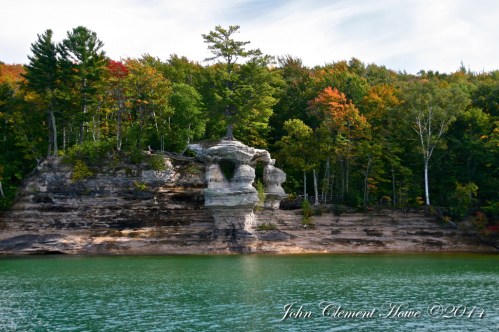
Early fall color at Chapel Rock

Chapel Rock Fall Colors

IMG_4776, photo by John Clement Howe

Around the end of September every year the request start to roll in regarding the state of fall color around Michigan, so it’s great to have photos like this one from last Wednesday to point them to! It shows one of my personal Seven Wonders of Michigan, Chapel Rock in the Pictured Rocks National Lakeshore.

View John’s photo bigger and see more in his Pictured Rocks National Lakeshore slideshow.

Lots more fall color on Michigan in Pictures!

PS: Check out John’s first appearance on Michigan in Pictures back in October of 2006!

The Science of Fall Color, Revisited

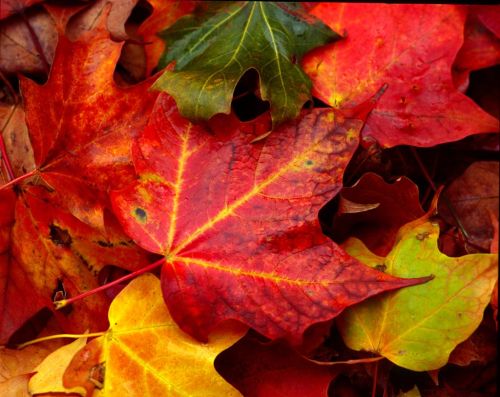
"Autumn Leaves" by Michael G.O'Callaghan

“Autumn Leaves”, photo by Michael G.O’Callaghan

Three years ago I posted this. It’s such good and useful information that I thought I’d share it again! #TBT?

The Science of Color in Autumn Leaves from the United States National Arboretum explains that process that starts the cascade of events that result in fall color is a growth process that starts in late summer or early autumn. When the nights get long enough, a layer of cells called the abscission layer forms that begins to block transport of materials from the leaf to the branch.

During the growing season, chlorophyll is replaced constantly in the leaves. Chlorophyll breaks down with exposure to light in the same way that colored paper fades in sunlight. The leaves must manufacture new chlorophyll to replace chlorophyll that is lost in this way. In autumn, when the connection between the leaf and the rest of the plant begins to be blocked off, the production of chlorophyll slows and then stops. In a relatively short time period, the chlorophyll disappears completely.

This is when autumn colors are revealed. Chlorophyll normally masks the yellow pigments known as xanthophylls and the orange pigments called carotenoids — both then become visible when the green chlorophyll is gone. These colors are present in the leaf throughout the growing season. Red and purple pigments come from anthocyanins. In the fall anthocyanins are manufactured from the sugars that are trapped in the leaf. In most plants anthocyanins are typically not present during the growing season.

As autumn progresses, the cells in the abscission layer become more dry and corky. The connections between cells become weakened, and the leaves break off with time. Many trees and shrubs lose their leaves when they are still very colorful. Some plants retain a great deal of their foliage through much of the winter, but the leaves do not retain their color for long. Like chlorophyll, the other pigments eventually break down in light or when they are frozen. The only pigments that remain are tannins, which are brown.

The explain that because the starting time of the whole process is dependent on night length, fall colors appear at more or less the same time every year and are not overly dependent on temperature, rainfall or other factors, other than the fact that weather can shorten or prolong the show by stripping leaves from trees.

Click through to the US Arboretum for more and also see Fall & Fuit from the Science of Color and Wikipedia’s entry on Autumn leaf color.

View Mike’s photo background big and see more in his Autumn slideshow.

Lots more fall color on Michigan in Pictures!

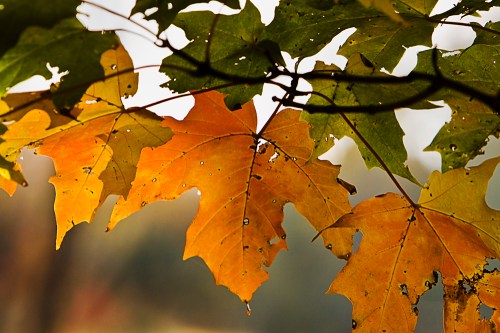
Fall Transition

Fall Transition

Fall Transition, photo by Terry Clark

The autumnal equinox happened last night at 10:29 PM, so today will our the first full day of fall. Here’s hoping this will be a warm & wonderful autumn for Michigan!

View Terry’s photo background big and see more of his fall photos.

Get your computer background updated for the season with more fall wallpaper on Michigan in Pictures. More fall photos too!

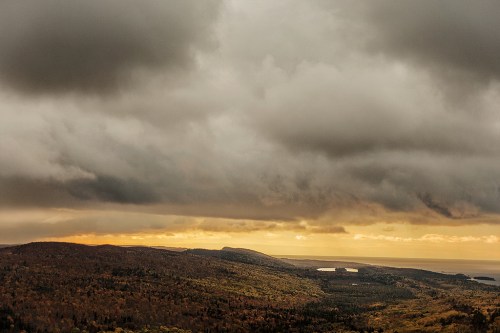
Sunset over the Keweenaw

Sunset over the Keweenaw

Sunset over the Keweenaw, photo by Ashley Williams

Here’s a beautiful shot from late October last year on the Keweenaw Peninsula in the U.P. With temps this cold, it won’t be long until the color returns! Hope you get a chance to get out and enjoy the outdoors this weekend.

View Ashley’s photo background bigtacular and see more in her slideshow. You can also follow her on Facebook or Instagram and visit her photography website.

More from the Keweenaw and more fall wallpaper on Michigan in Pictures.

Slice of Wonder

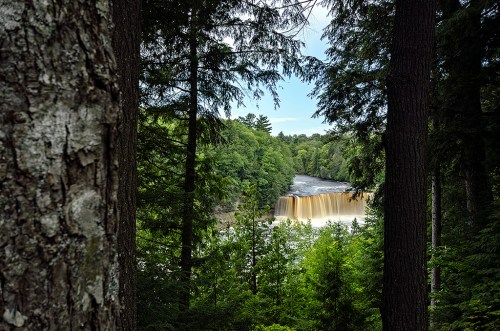
Upper Tahquamenon

Upper Tahquamenon, photo by Jasondoubleuel

Jason shared this shot of one of my favorite views in Michigan, the Upper Tahquamenon Falls, in the Michigan Cover Photos Group. It’s the new cover photo for the Michigan in Pictures Facebook page and (in my opinion) looks just about perfect.

View his photo bigger and see more in his Summer slideshow!

Much more about the Tahquamenon Falls on Michigan in Pictures.

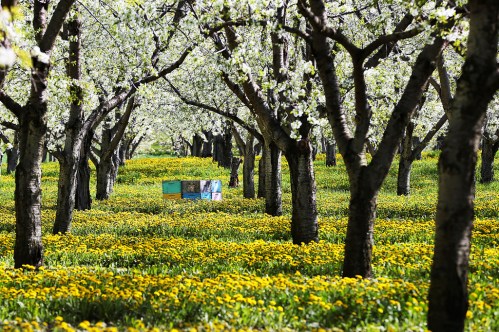
Bees & Blossoms

Bees and Blossoms by 45th parallel exposure

Blossoms & Bees, photo by Lee Lynn Awe

View Lee Lynn’s photo background bigtacular and see more in her slideshow.

More spring wallpaper on Michigan in Pictures.

Blossom Time

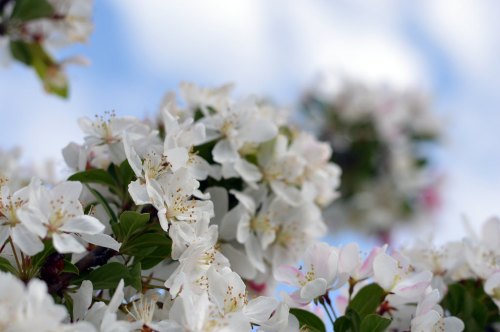
White Blossoms

White Blossoms, photo by cncphotos

In addition to Michigan in Pictures, I run the website Leelanau.com. The most common question this time of year over there is “When will cherry blossoms be out?” Although this year has been slow going, I was out and about yesterday and caught some of the first blooms of the season. Click that link to see them on Leelanau.com and also a pile of morels!

Visit Traverse City’s cherry blossom section says that the blossoms on the trees last on average of four to five days, but because different parts of the region bloom at different times, it’s a safe bet you can see blossoms for one to two weeks on average if you make the rounds.

View CNC’s photo background bigilicious and see more in his Spring slideshow.

Lots more blossoms and more spring wallpaper on Michigan in Pictures.

Snowshoe on out of here, Winter!

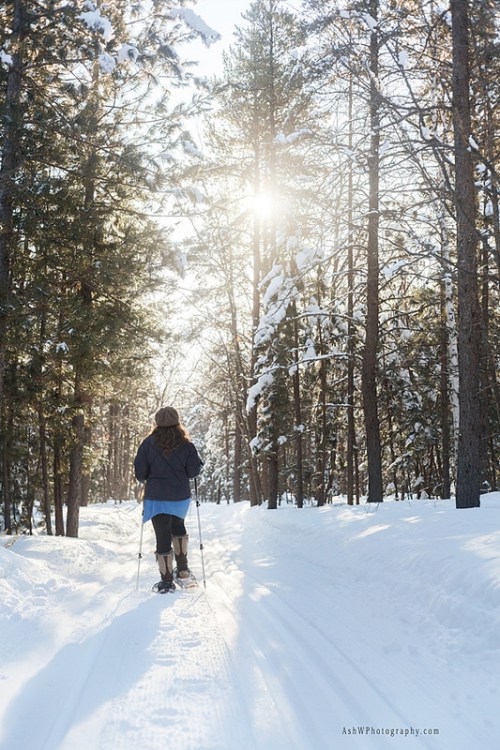
Snowshoeing the U.P.

Snowshoeing the U.P., photo by Ashley Williams

Ashley took this shot in February in the Upper Peninsula, and by “February” I mean “this Monday”. It’s a beautiful scene for sure, but I think I speak for most of us when I say, “You’re drunk, Winter. Go home.”

View her photo bigger and see more in her Nature slideshow.

Lunar Eclipse Tonight!

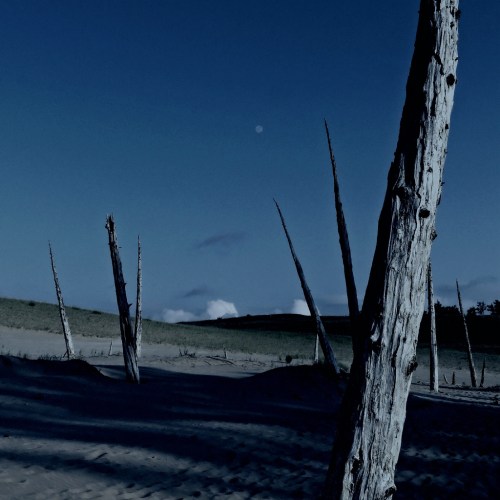
Inside the Ghost Forest

Inside the Ghost Forest, photo by jimflix!

There’s an eclipse of the full moon tonight! It begins at 2 AM Eastern time with the total eclipse lasting 78 minutes and starting about 3 AM. While the forecast is not great, it looks like there’s a chance that those brave souls who trade sleep for a shot at viewing the eclipse won’t be disappointed.

Eastern Daylight Time (April 15, 2014)
Partial umbral eclipse begins: 1:58 a.m. EDT on April 15
Total eclipse begins: 3:07 a.m. EDT
Greatest eclipse: 3:46 a.m. EDT
Total eclipse ends: 4:25 a.m. EDT
Partial eclipse ends: 5:33 a.m. EDT

If you’re up in the Sleeping Bear Dunes area, they are having a star party tonight. If anyone knows of other viewing gatherings, post them in the comments! If the eclipse ends up getting clouded out locally, you can always take to the net and watch via the live stream from the Griffith Observatory. As I wrote about last week, this eclipse is the first of four total eclipses without a partial in between known as a Lunar Tetrad.

This photo is of the ghost forest on Sleeping Bear Point created when sand of the world’s largest shifting sand dune covered living trees.

View Jim’s photo background bigtacular and see more in his Sleeping Bear Dunes slideshow.

More of the moon and more dunes on Michigan in Pictures!

Blood Moon kicks off the Lunar Eclipse Tetrad

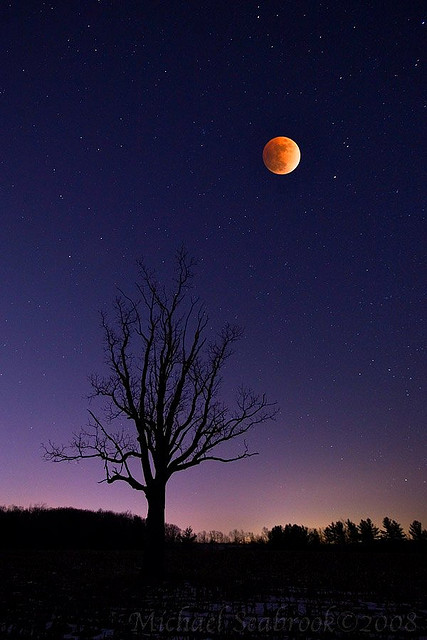
Shadow Moon by Michael Seabrook

Shadow Moon, photo by Michael Seabrook

For as long as we know, celestial signs have been read to signify calamity and change, and apparently the total lunar eclipse in the early morning hours of April 15, 2014 that kicks off a two-year tetrad of lunar eclipses is no exception.

In What is a Blood Moon? on one of my favorite blogs, EarthSky, Bruce McClure and Deborah Byrd explain (in part) a subject you might be hearing about this week:

We’ve been receiving a number of inquiries about Blood Moons in 2014 and 2015. The Blood Moons most people are asking about are not part of astronomy. Their origin is religious, at least according to Christian pastor John Hagee, who wrote a 2013 book about Blood Moons. However, both astronomers and some proponents of Christian prophesy are talking about the upcoming lunar tetrad – a series of total lunar eclipses – which begins on the night of April 14-15, 2014. We at EarthSky don’t have any special knowledge about the purported Blood Moons of Biblical prophesy. But, since they’re moons, and since people are asking us, we wanted to reply.

The full moon nearly always appears coppery red during a total lunar eclipse. That’s because the dispersed light from all the Earth’s sunrises and sunsets falls on the face of the moon at mid-eclipse. Thus the term blood moon can be and probably is applied to any and all total lunar eclipses…

Both astronomers and followers of certain Christian pastors are talking about the lunar tetrad of 2014-2015. What is a tetrad? It’s four successive total lunar eclipses, with no partial lunar eclipses in between, each of which is separated from the other by six lunar months (six full moons)

We’re not experts on prophecy of any kind. But we’ll tell you what we know about the new definition for Blood Moon that has raised so many questions recently.

From what we’ve been able to gather, two Christian pastors, Mark Blitz and John Hagee, use the term Blood Moon to apply to the full moons of the upcoming tetrad – four successive total lunar eclipses, with no partial lunar eclipses in between, each of which is separated from the other by six lunar months (six full moons) – in 2014 and 2015. John Hagee appears to have popularized the term in his 2013 book Four Blood Moons: Something is About to Change.

As if we didn’t have enough to look forward to on April 15th! Read on for lots more. The four eclipses are this one, October 8 2014 and April 4 & September 28, 2015. Here’s the eclipse viewing times for Michigan – times for other time zones can be found on EarthSky.

The April 15th eclipse begins at 2 AM Eastern time when the edge of the moon first enters the amber core of Earth’s shadow. Totality occurs during a 78 minute interval beginning around 3 o’clock in the morning on the east coast, midnight on the west coast. Weather permitting, the red moon will be easy to see across the entirety of North America.

Eastern Daylight Time (April 15, 2014)
Partial umbral eclipse begins: 1:58 a.m. EDT on April 15
Total eclipse begins: 3:07 a.m. EDT
Greatest eclipse: 3:46 a.m. EDT
Total eclipse ends: 4:25 a.m. EDT
Partial eclipse ends: 5:33 a.m. EDT

Michael took this photo of the lunar eclipse on February 20, 2008. View it bigger and see more in his The Moon slideshow.

More of the moon on Michigan in Pictures!